WOT Condition using Powertrain blockset (SIMULINK)
AIM: To understand and use the powertrain blockset, and thus answer the given questions.
OBJECTIVE:
- What is the difference between mapped and dynamic model of engine, motor and generator? How can you change model type?
- How does the model calculate miles per gallon? Which factors are considered to model fuel flow?
- Run the HEV ReferenceApplication with WOT drive cycle. Change the grade and wind velocity in the environment block. Comment on the results.
- Keeping all other parameters same, compare the simulated results of hybrid and pure electric powertrains.
THEORY:
Powertrain blockset:
Powertrain Blockset™ provides fully assembled reference application models of automotive powertrains, including gasoline, diesel, hybrid, and electric systems. It includes a component library for simulating engine subsystems, transmission assemblies, traction motors, battery packs, and controller models. Powertrain Blockset also includes a dynamometer model for virtual testing. MDF file support provides a standards-based interface to calibration tools for data import.
Powertrain Blockset provides a standard model architecture that can be reused throughout the development process. You can use it for design tradeoff analysis and component sizing, control parameter optimization, and hardware-in-the-loop testing. You can customize models by parameterizing components in a reference application with your own data or by replacing a subsystem with your own model.
- What is the difference between mapped and dynamic model of engine, motor and generator? How can you change model type?
A mapped system refers to one where the performance characteristics of either the engine, motor or the generator are plotted in the model using the mapped data given in the look up table, Ie given motors characteristics can imported to the simulation,if we have the data
A Dynamic system is one in which the running of the motor,generator or the engine is simulated in real time and detailed parameters affecting the motor performance can be modified and the resulatant performance characteristics can be used in the simulation
Given below is an example of a model with the mapped and dynamic blocks available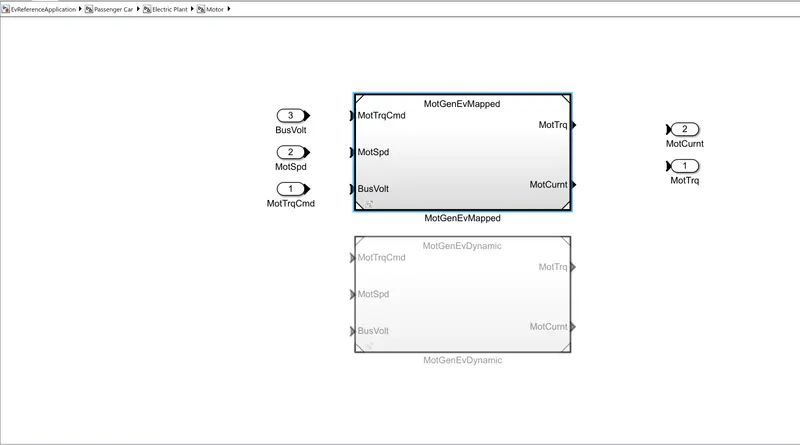
This is what the mapped subsystem looks like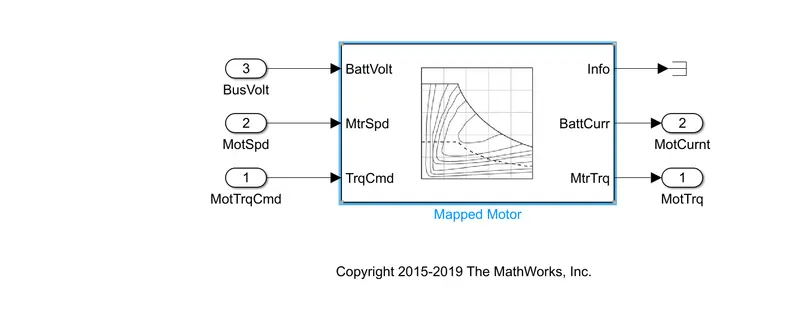
This is what the dynamic blocksets look like.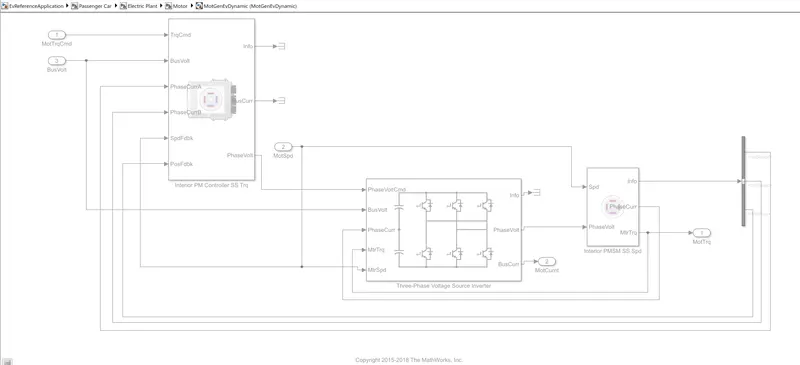
The model type can be changed by changing the inputs from the mapped selection to the dynamic selection(first image).
The dynamic simulation will cause a steep increase in the simulation time - How does the model calculate miles per gallon? Which factors are considered to model fuel flow?
The calculation of the miles per gallon is done in the visualisation blockset, It is calculated from the values of vehicle speed and the batterpower/ fuel power. Given below are images of the said blockset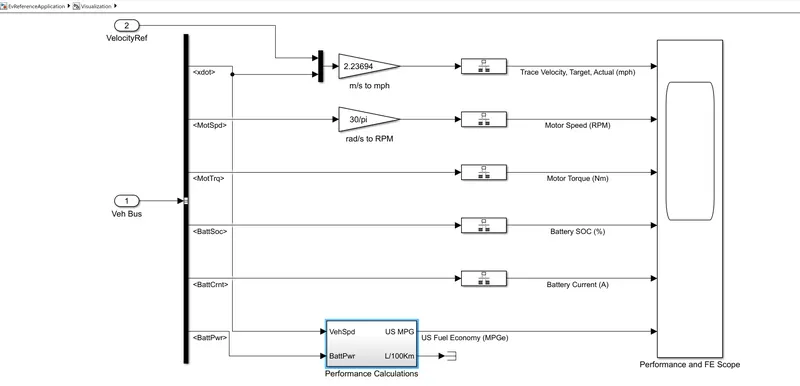
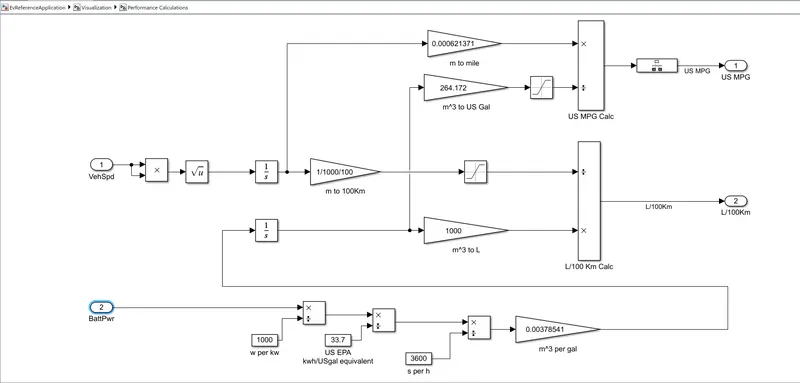
As we can see from the above block the battery power input signal is converted into an equivalent miles per gallon value, this along with the value of distance covered (from vehicle speed) is used to calculate the efficiency of the drive cycle. - Run the HEV ReferenceApplication with WOT drive cycle. Change the grade and wind velocity in the environment block. Comment on the results.
The images from the simulations run are shown below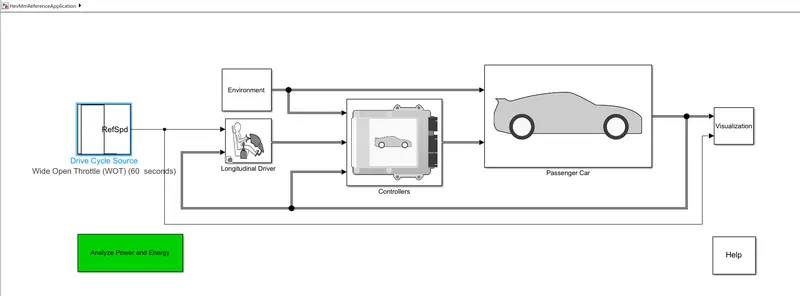
Shown below are the blocks in the visualisation blockset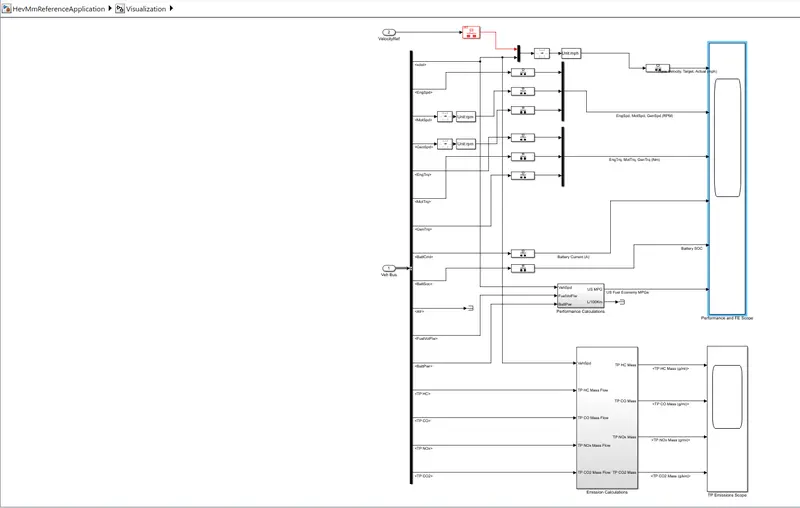
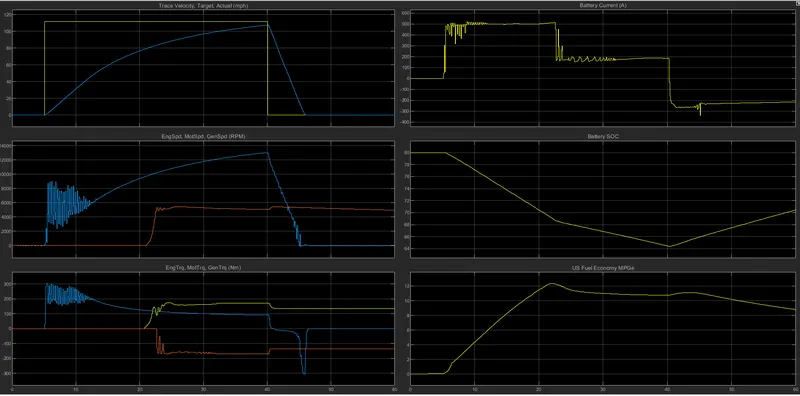
The results for no change in the environment settings are shown below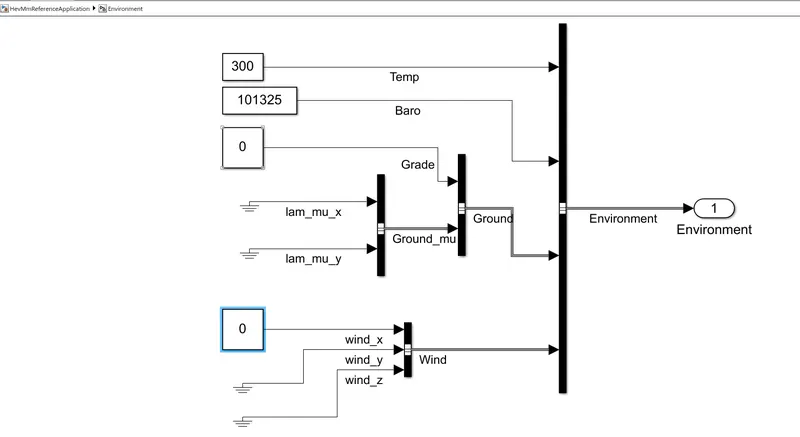
The results with the change in the environmental factors are shown below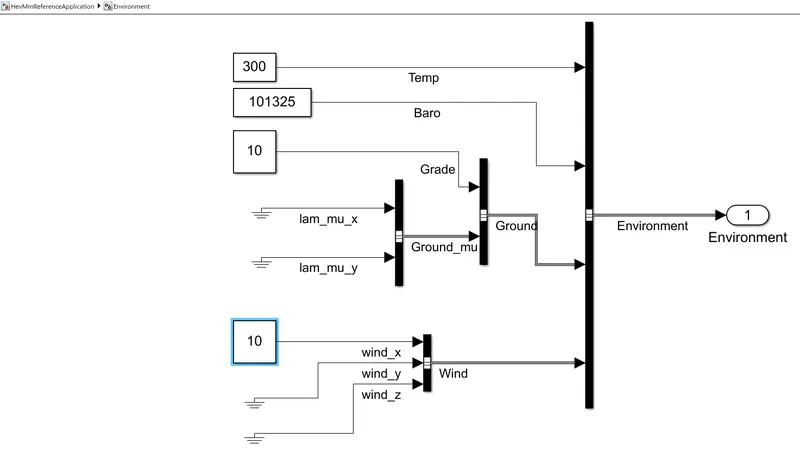
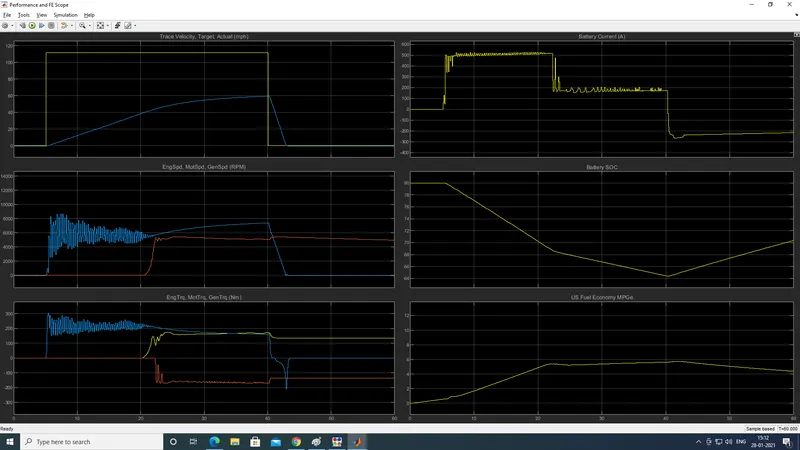
We can see that by changing the environmental factors:
1) the value of attained velocity is lower
2) motor RPM is considerably higher, while engine RPM remains relatively the same
3) The fuel economy reduces drastically
4) As this is a HEV the battery SOC is maintained to a similar level in both cases
- Keeping all other parameters same, compare the simulated results of hybrid and pure electric powertrains.
The drivecycle input given to each simulation is shown below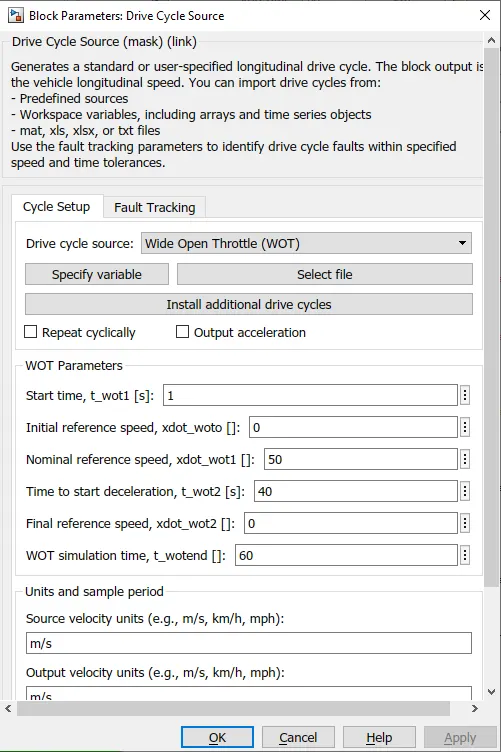
The simulation results for the HEV powertrain is shown below
The simulation results for the EV powertrain is shown below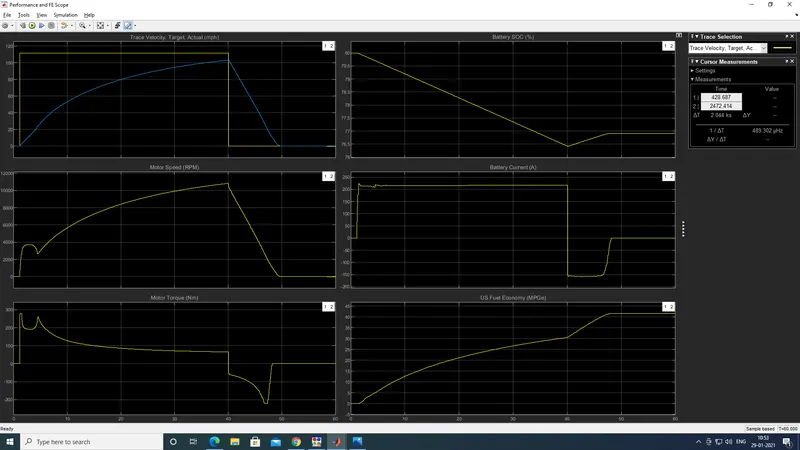
We can observe that:
1) the way the battery discharges is different, in the HEV the IC engine is used to boost the battery soc; in the EV powertrain this is not the case, the regenerative braking aspect only helps to maintain the battery SOC
2) The motor speed is relatively lesser in the EV case
3) The EV powertrain provides a better MPH rating(relative) as it is more efficient.
4) The torque provided by the motor is higer in the EV case, Ie the motor size will be bigger
5) For the EV case the battery current graph is way less convoluted, and simpler to understand
CONCLUSION:
The simulations were successfully run in simulink and the concepts were understood.