Week-4 Challenge WOT Condition Part-2
Aim: To simulate the model of WOT (WIDE OPEN THROTTLE) Condition.
1. What is the difference between mapped and dynamic model of engine, motor and generator? How can you change model type?
Powertrain Blockset :
Powertrain Blockset provides fully assembled reference application models of automotive powertrains, including gasoline, diesel, hybrid, and electric systems. It includes a component library for simulating engine subsystems, transmission assemblies, traction motors, battery packs, and controller models. Powertrain Blockset also includes a dynamometer model for virtual testing. MDF file support provides a standards-based interface to calibration tools for data import.Powertrain Blockset provides a standard model architecture that can be reused throughout the development process. You can use it for design tradeoff analysis and component sizing, control parameter optimization, and hardware-in-the-loop testing. You can customize models by parameterizing components in a reference application with your own data or by replacing a subsystem with your own model. Powertrain Blockset provides two types of combustion engine models: mapped and dynamic.
Mapped Model
Mapped engines represent macro engine behavior as a set of lookup tables (brake torque, fuel flow, air mass flow, exhaust temperature, efficiency, and emissions) as functions of commanded load and measured engine speed. Mapped engine models are suitable for analysis and design activities that do not require engine subsystem dynamic characteristics, for example, in engine and transmission powertrain matching analysis for fuel economy, emissions, and performance tradeoffs. Basically when they are used is
-
If you have engine data from a dynamometer or a design tool like GT-POWER.
-
For quasi steady-state engine simulations.
Dynamic Model
Dynamic engines decompose engine behavior into individual component models that account for engine dynamics, most notably intake airflow and turbocharger dynamics. Dynamic engine models are suitable for designing control, estimator, and diagnostic algorithms that depend on dynamic subsystem states, for example, in closed-loop AFR control algorithm development. The use of Dynamic Combustion Engine Model is
-
If you need a more detailed dynamic model and have component-level data.
-
To analyze the impact of individual engine components on the overall performance.
To change the type of model :
- Open the powertrain module blockset for the required vehicle.
- Click on passenger car/vehicle block and select electric plant or engine.
- Right click on Engine/EV motor/generator based on vehicle model and select variant.
- Under variant, scroll to label model active choice and choose mapped or dynamic for the required calculation.
2.How does the model calculate miles per gallon? Which factors are considered to model fuel flow?
MILES PER GALLON:
Miles per gallon(MPG) is the distance, measured in miles, that a car can travel per gallon of fuel. MPG is also the primary measurement of a car's fuel efficiency. The higher a car's MPG, the more fuel efficient it is. The powertrain blockset has a inbuilt block which is Visualization block to find the Performance calculations of the fuel economy.
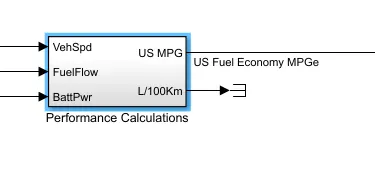
In this ,we are considering the powertrain blockset of Hybrid Electric Vehicle Input Power-Split Reference Application model to find the performance Calculations.
In the performance the vehicle speed, fuel flow and battery power which are inputs to be calculated.
The vehicle further undergoes a integration and multiplies with a value of 0.000621371 and is measured in US MPG.
The fuel flow and battery power undergoes integration and it multplies with a value of 264.172.
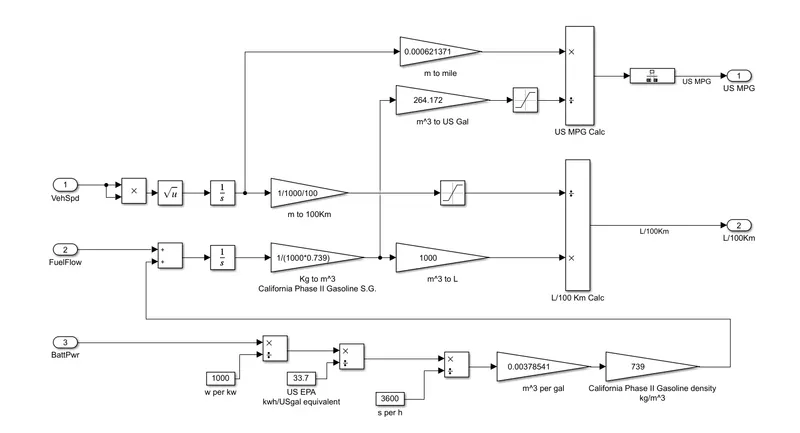
Factors considered to model fuel flow:
1. Fuel Economy
2.Fuel consumption
3. Run the HEV Reference Application with WOT drive cycle. Change the grade and wind velocity in the environment block. Comment on the results.
HEV Reference Application
The hybrid electric vehicle (HEV) reference application represents a full HEV model with an internal combustion engine, transmission, battery, motor, generator, and associated powertrain control algorithms. Use the HEV input power-split reference application for HIL testing, tradeoff analysis, and control parameter optimization of a power-split hybrid like the Toyota Prius.
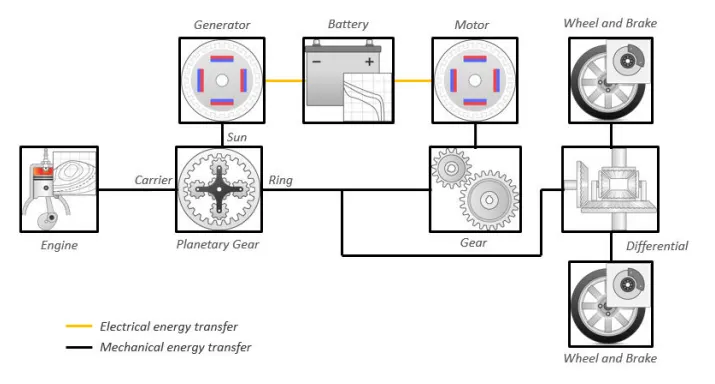
Here we are going to run the HEV Reference Application with WOT drive cycle.
HEV POWERTRAIN BLOCKSET:
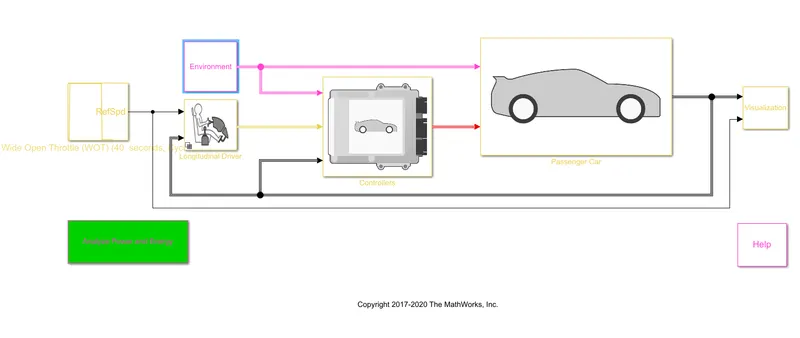
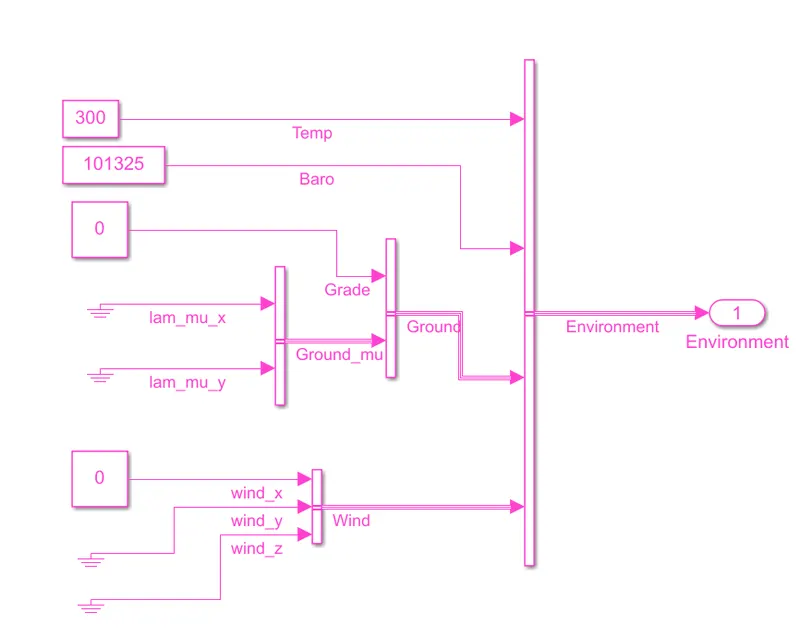
Case 1
grade angle and wind velocity remains 0.
total simulation time: 60 sec
drive cycle - Wide Open Throttle.
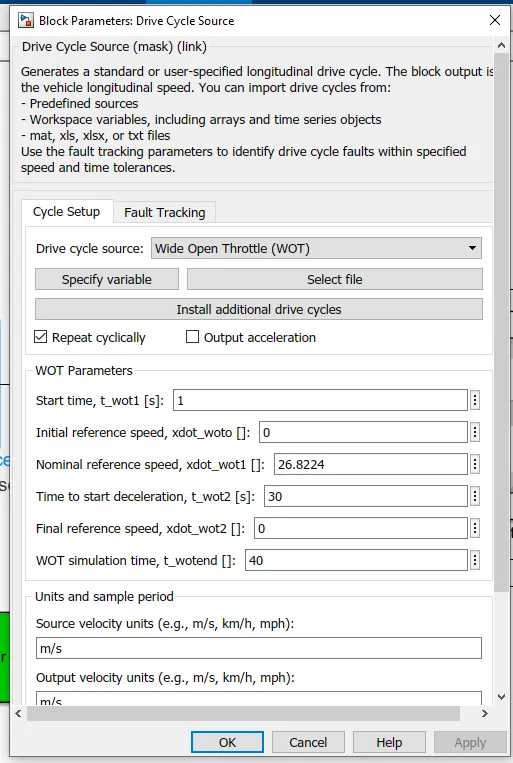
In the environment block ,the grade angle andwind velocity are kept 0.
Result: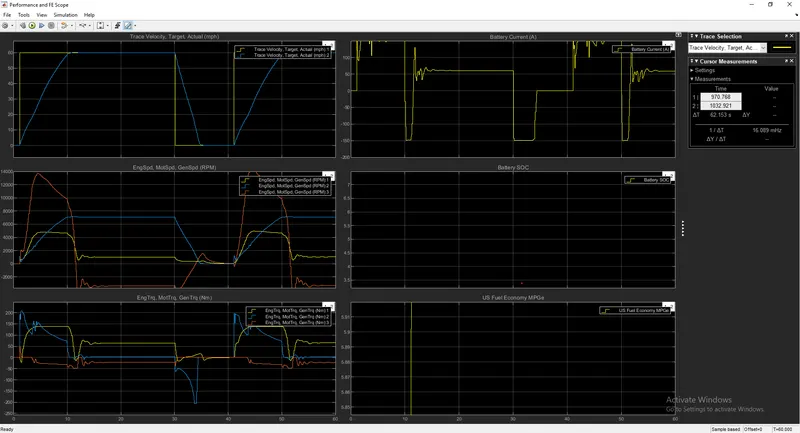
case-2:
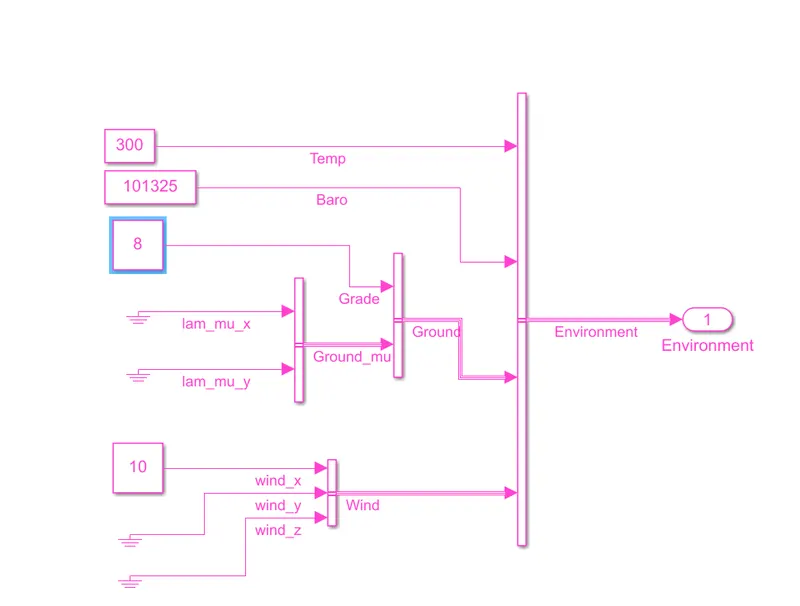
Grade angle is 9 degrees and wind velocity 12 m/s .
total simulation time: 60 sec
In the environment block ,the grade angle and wind velocity are kept as 9 degrees and 12m/s.
Result:
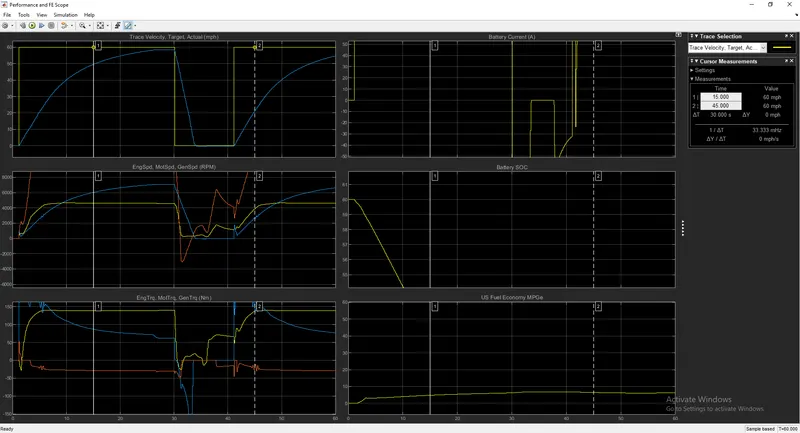
Result Comparison:
From above comparison table we can say that Case-1 is more efficient than Case-2 as there is no wind velocity and grade angle.
4. Keeping all other parameters same, compare the simulated results of hybrid and pure electric powertrains.
Ev vehicle Power Trains:
The electric vehicle reference application represents a full electric vehicle model with a motor-generator, battery, direct-drive transmission, and associated powertrain control algorithms. Use the electric vehicle reference application for powertrain matching analysis and component selection, control and diagnostic algorithm design, and hardware-in-the-loop (HIL) testing.
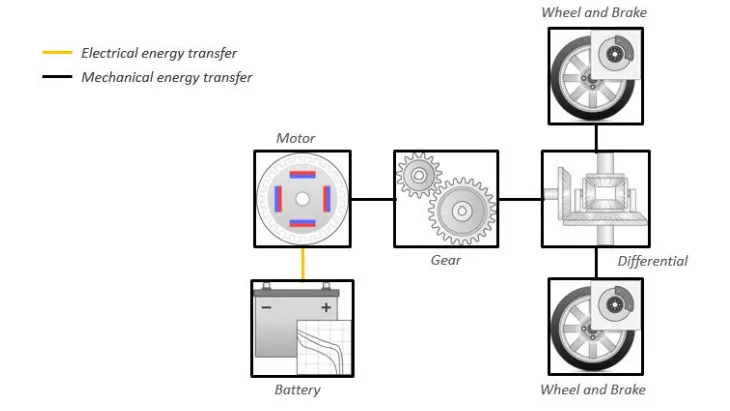
EV configuration:
Here we are have to select drive cycle as Wide Open Throttle and in the Environmental block the grade angle and wind velocity are taken as 9 degrees and 12 m/s.
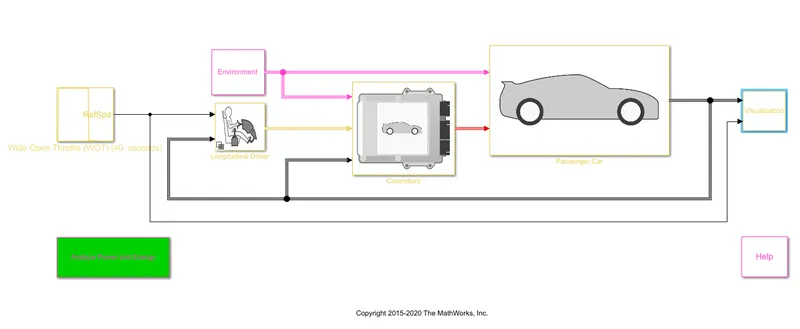
Result:
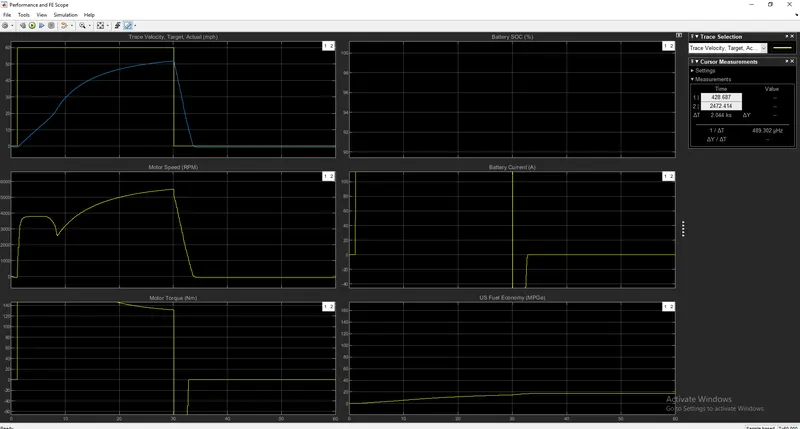
Comparison between HEV and EV powertrains :
| Parameters | HEV | EV |
| Grade (Deg) | 9 degree | 9 degree |
| Wind velocity (m/s) | 12m/s | 12 m/s |
| Top speed | 60 mph | 60 mph |
| Acceleration time to reach 60mph | 30sec | 30 sec |
| Deceleration time from 60mph to minimum | 5 .2sec | 4.5 sec |
| Peak Motor speed | 7000 rpm | 5400 rpm |
| Peak Motor torque | 200 Nm | 280 |
| Peak current dischared from battery | 165 A | 225 A |
| State of charge | 51 to 44% in 60sec | 79.3 to 78.3 in 60 sec |