Week-4 : Basic Calibration of Single cylinder CI-Engine
AIM:
To do basic Calibration of Single cylinder CI-Engine
OBJECTIVE:
- To Compare SI vs CI and list down differences
- Too Comment on following parameters-
BSFC,Exhaust Temperature,A/F ratios
- To Change MFB 50 and observe impact on performance.
PROCEDURE:
COMPARISON BETWEEN SI AND CI ENGINE:
| SI Engines | CI Engines |
| Fuel with a higher octane number and lower Cetane number | Fuel with a higher Cetane number and Lower Octane number |
| Lower compression ratios | High compression ratios |
| Uses Spark to start combustion | Ignition starts after fuel reach its self-ignition temperature |
| Higher RPM and lower torque is obtained | Lower Rpm and Higher torque is obtained |
| Fuels like petrol, CNG, Lpg are used | Diesel fuel is used |
| Emissions like CO, Nox are the main pollutants | Emissions like Particulate matter CO, NOx, HC are obtained after combustion |
| After treatment devices like 3-way catalytic converter are used | DOC, DPF, SCR used as after-treatment devices |
| Direct port tumble motion is desired | Swirl motion is desired so Helical ports are desired |
| Engine knocking is a common phenomenon in SI engines and it happens at the end of the combustion | Engine Detonation is a common phenomenon in CI engines and it happens at the start of the combustion |
| Thermal, volumetric efficiencies are lower | Higher Thermal and volumetric efficiencies |
| Used in Race cars, high-performance cars | Used in heavy-duty applications like Tractors, Trucks, Bulldozer etc |
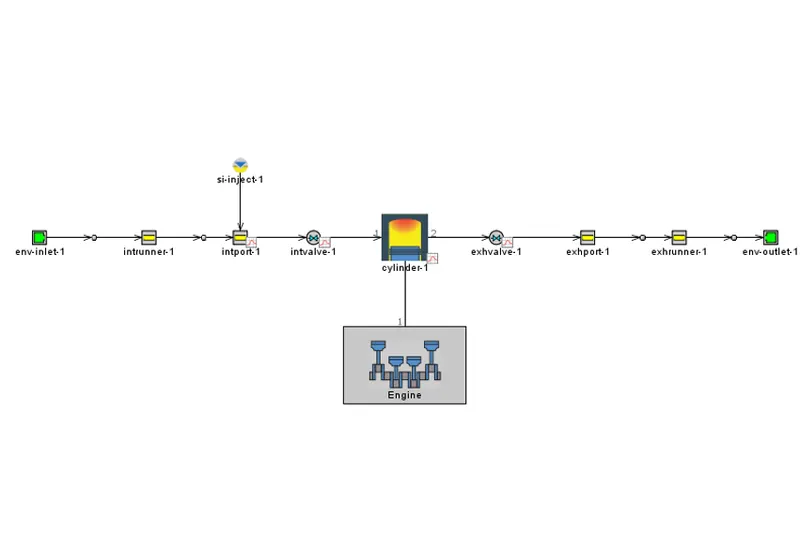
SI – Engine:
CI – Engine:
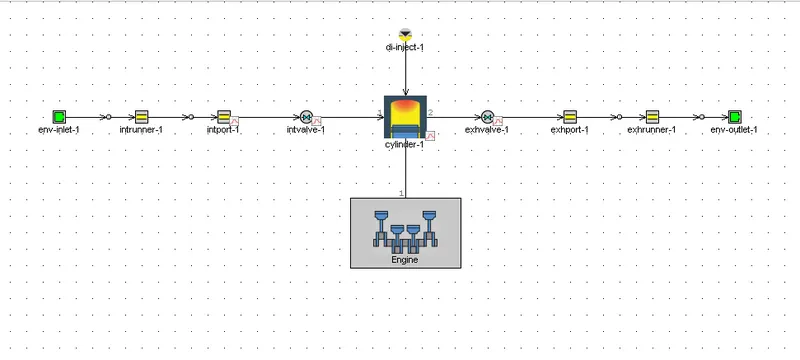
Here we can see the difference between both is the placement of fuel injector. In SI engine, the fuel and air mixture enters the combustion chamber in the form of a homogeneous mixture. But in the CI engine, air enters the combustion chamber, after which the fuel is injected and thereby forming a heterogeneous mixture.
BSFC(Brake-specific fuel consumption):
Brake-specific fuel consumption (BSFC) is a measure of the fuel efficiency of any prime mover that burns fuel and produces rotational, or shaft power. It is typically used for comparing the efficiency of internal combustion engines with a shaft output. It is the rate of fuel consumption divided by the power produced.
SI engine:
CI engine:
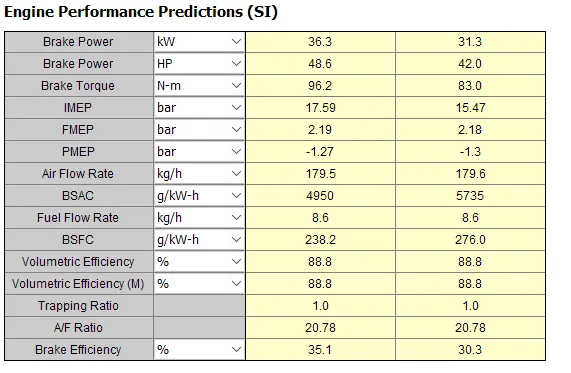
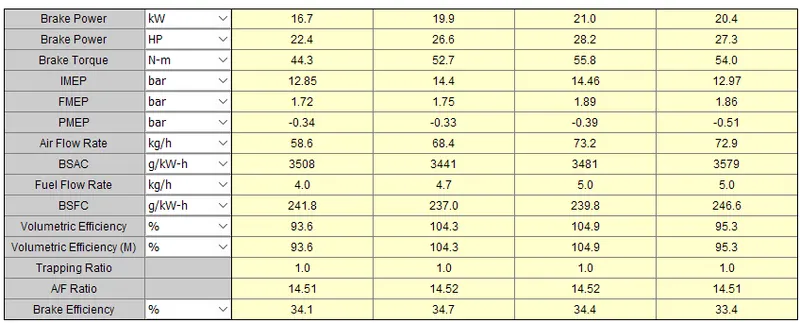
The BSFC is higher in SI engine when compared to CI engine 241.8 g/kW-h and 238.2 g/kW-h
Exhaust Temperature:
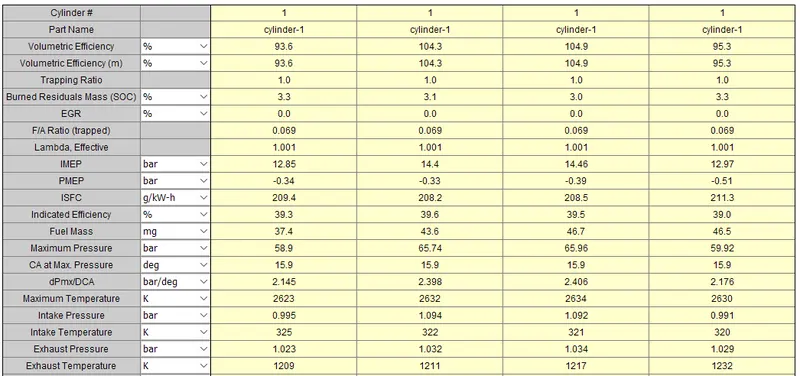
In modern internal combustion engines, the knowledge of the exhaust gas temperature is necessary for the management and diagnosis of the exhaust gas aftertreatment system, as well as for the protection of components that may be sensitive to thermal overloads.
In the diesel engine, aftertreatment components that are often actively managed based on exhaust gas temperature include diesel particulate filters (DPF) and NOx reduction catalysts such as SCR catalysts and NOx adsorber catalysts. In stoichiometric petrol engines, the engine management strategy depends on the temperature of the three-way catalyst (TWC).
SI engine:
CI engine:
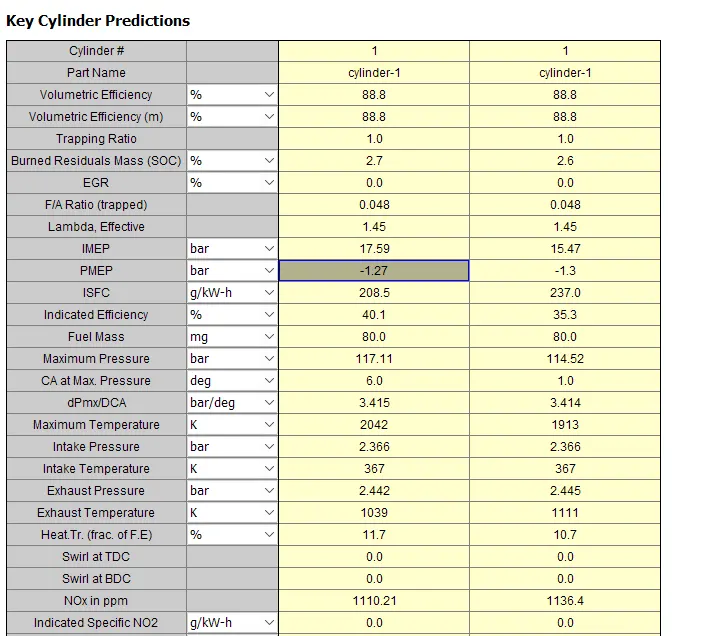
We can see that the exhaust temperatures are higher in the SI engine 1039K and 1209K
A/F ratios:
Air fuel ratio is defined as the ratio of air and fuel of a mixture prepared for combustion.
When you press the accelerator pedal in a diesel engine, this drops the air/fuel ratio. Significantly more fuel is injected relative to the air ingested, which increases horsepower. Soot is created when diesel engines operate in low air/fuel ratios, which is why you may see black smoke from diesel trucks when they floor the throttle pedal.
A diesel engine generally operates from 18:1 to as high as 70:1, and is capable of operating in super lean ratios.
SI engine:
CI engine:
We can see Higher A/F ratio in CI engine 20.78 and 14.51 is contributing to the higher power and torque in CI engine as well
SETUP:
The model is opened File -> tutorials -> modelling applications -> engine_performance -> 1cylDi-final.gtm
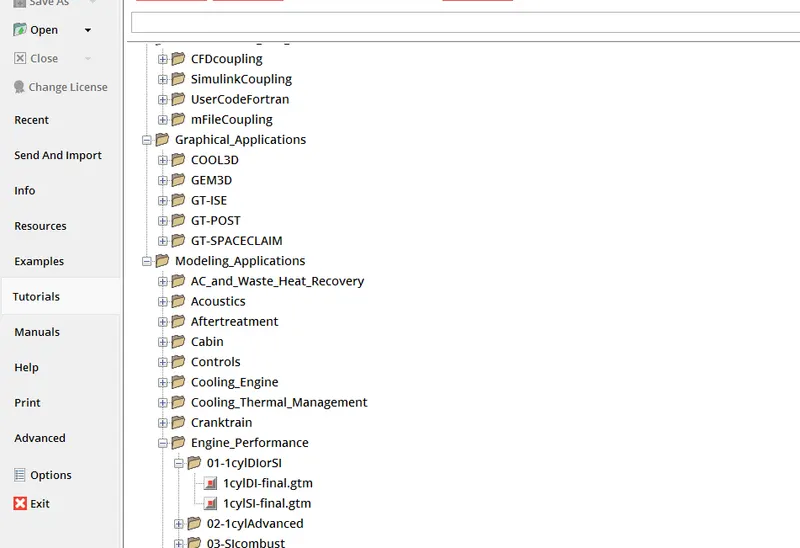
1cylDi-final.gtm file:
SETUP:
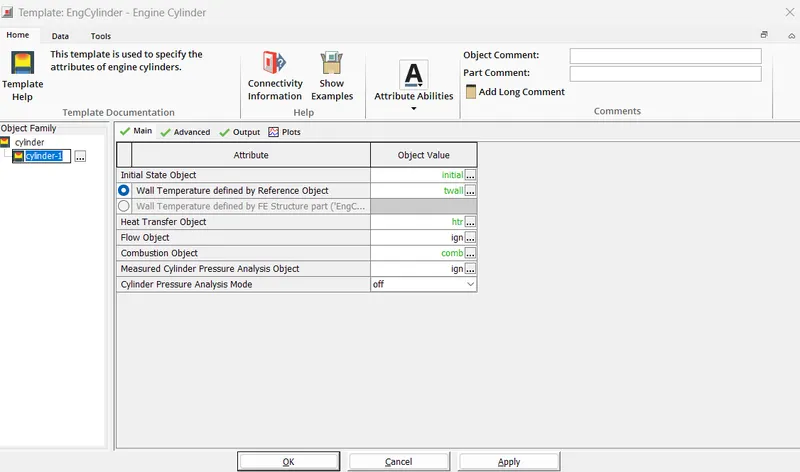
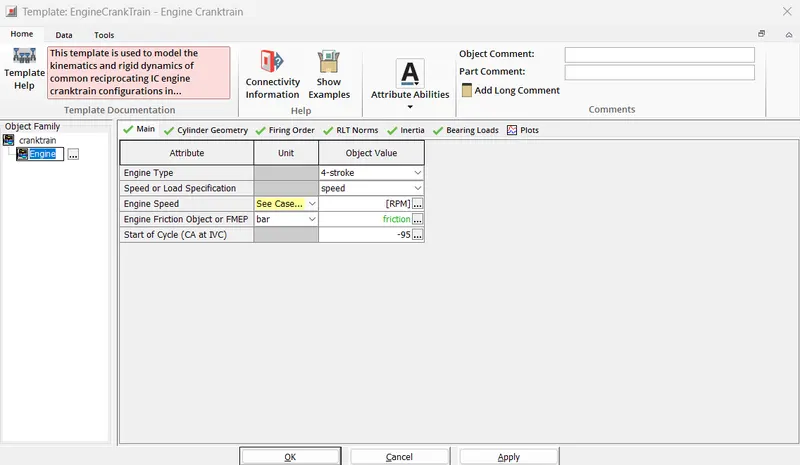
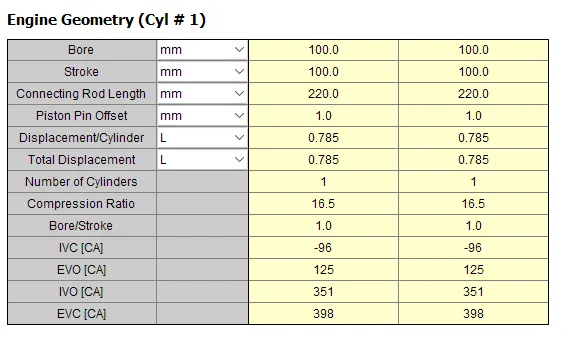
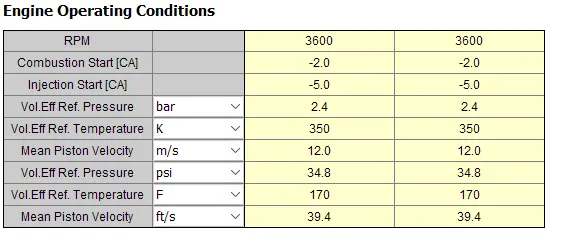
We wil set parameters as per our requirements :
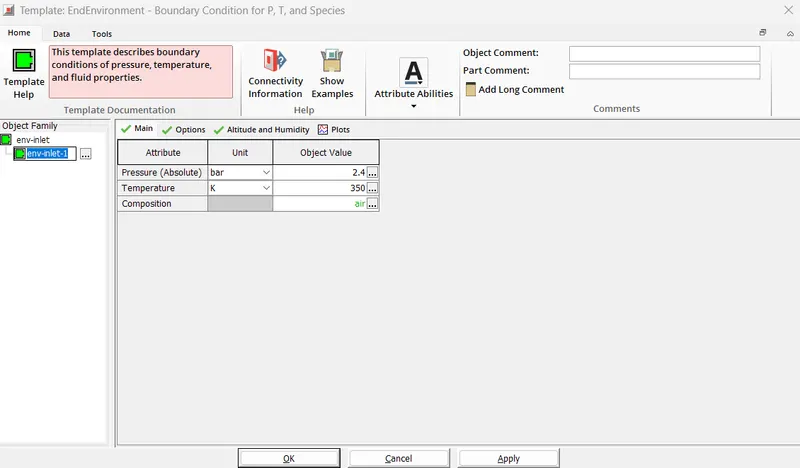
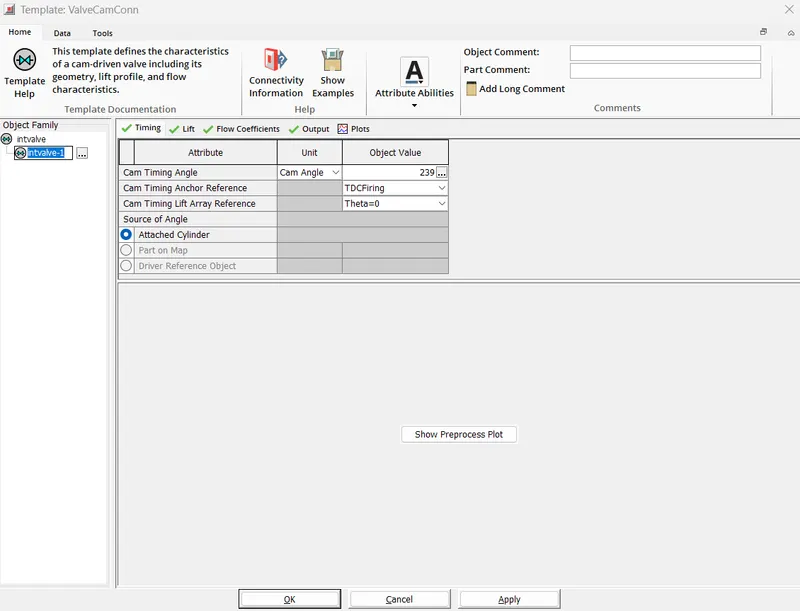
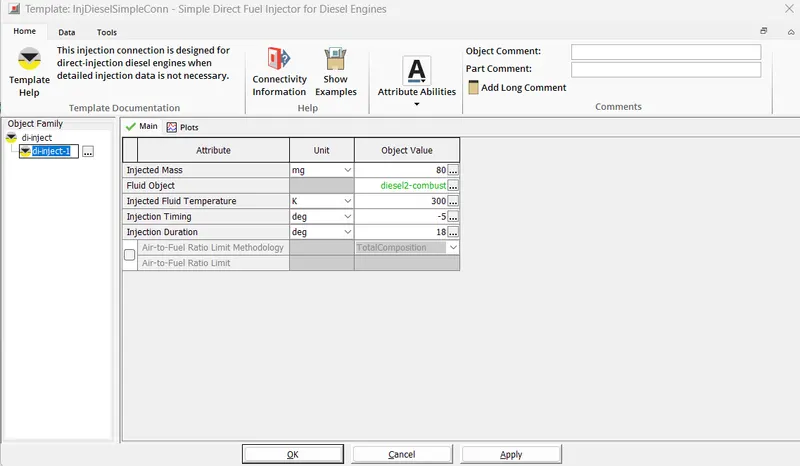
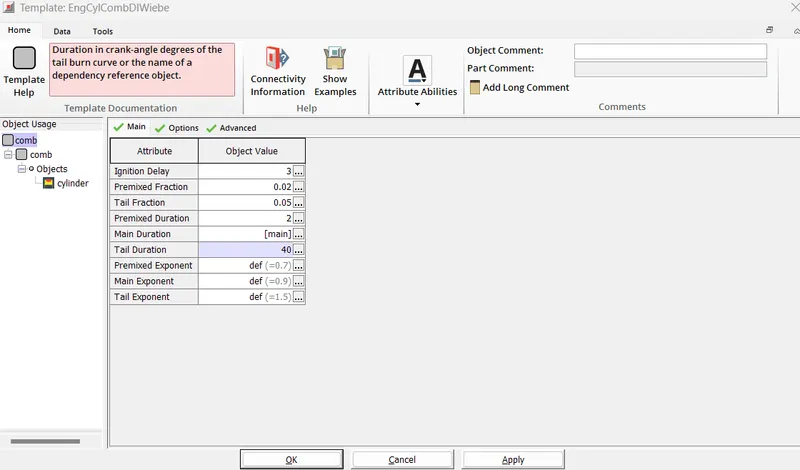
As per our challenge, we will change MFB 50 and run the simulation:
CASE SETUP:
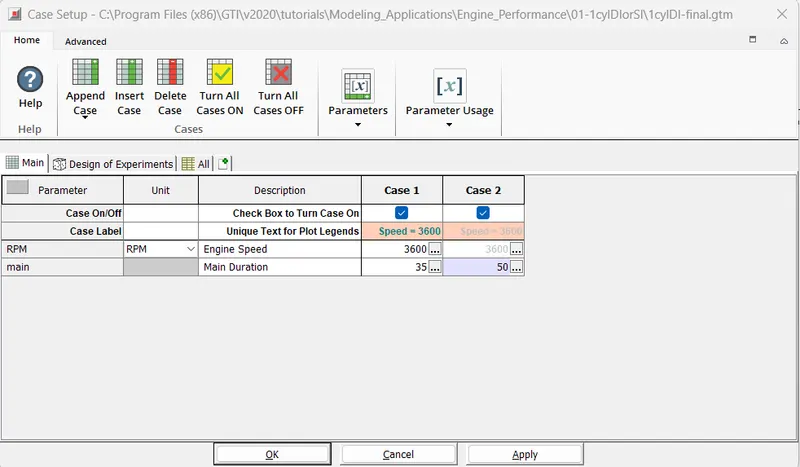
we will run the simuation at constant speed of 3600 rpm by changing the MFB at 35 and 50 as two cases
Output in the GT-Post:
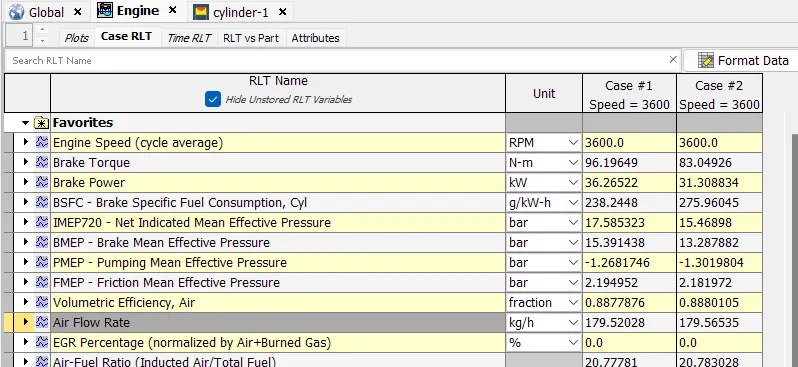
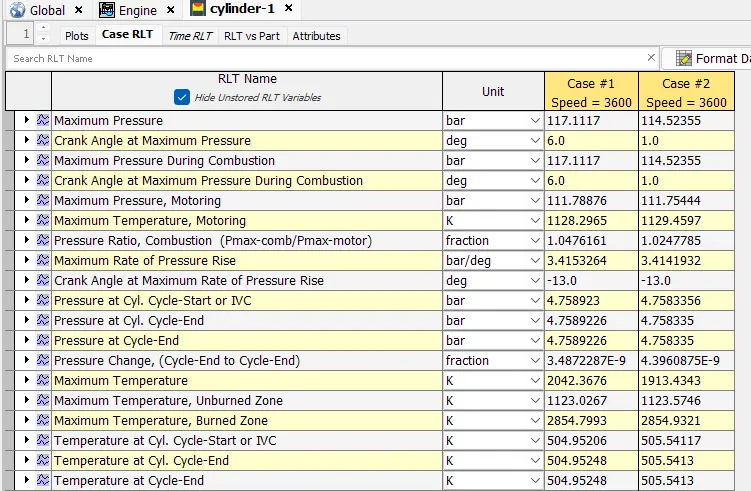
We can combine both result data First column is case 1 with MFB 35 and Second column is case 2 with MFB 50
From the above results ,
| PARAMETERS | CASE 1(35) | CASE 2(50) |
| BSFC | 238.2 (g/kw-h) | 276 (g/kw-h) |
| EXHAUST TEMPERATURE | 1039 K | 1111K |
| A/F RATIO | 20.78 | 20.78 |
We can see from the above table that the values of BSFC and Exhaust temperature increase as we increase our MFB from 35 to 50 at same RPM 3600. As the MFB50 increases, brake power and brake Torque also decreases.
CONCLUSION:
- Basic Calibration of Single cylinder CI-Engine is done
- Comparison is also done for SI vs CI and listed down differences
- Also Commented on following parameters-
BSFC,Exhaust Temperature,A/F ratios
- Changed MFB to 50 and observed impact on performance.