Week-4 : Basic Calibration of Single cylinder CI-Engine
AIM:
- To Compare SI vs CI and list down differences (assignment no 2-SI)
- To observe on following parameters
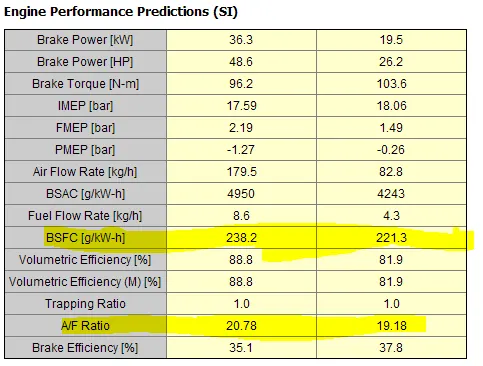
- BSFC
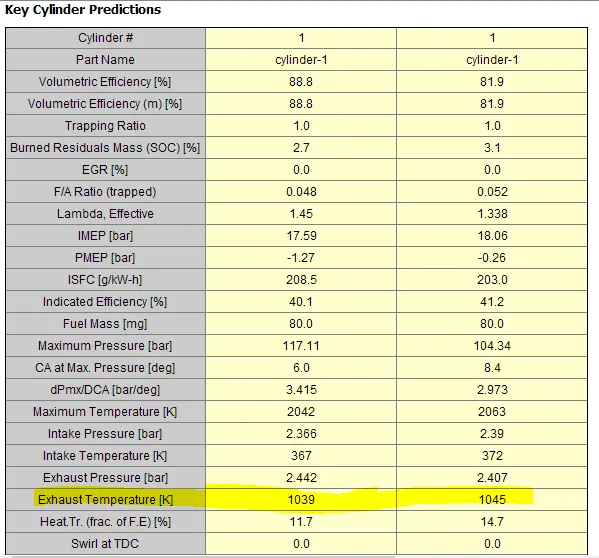
- Exhaust Temperature
- A/F ratios
3. To change MFB 50 and observe the impact on performance.
Difference between SI & CI Engine:
| S.No | SI Engine | CI Engine |
| 1 | It works on OTTO Cycle or constant volume heat addition. | It works on DIESEL Cycle or constant pressure heat addition. |
| 2 | During the intake or suction process, air and fuel are used. | During the intake or suction process, only air is used. |
| 3 | The fuel used Petrol which is highly volatile. Self Ignition temperature is high. | The fuel used Diesel which is low volatile. Self-ignition temperature is low. |
| 4 | The fuel is supplied by Carburetor. | The fuel is supplied by Injector. |
| 5 | High speed because due to lightweight and homogeneous combustion. | Comparatively low speed because due to heavyweight and heterogeneous combustion. |
| 6 | It is used in Small Vehicles. | It is used in Heavy Vehicles. |
| 7 | The compression ratio is 6 to 10. The upper limit is fixed by the antiknock quality of the fuel. | The compression ratio is 16 to 20. The upper limit is limited by the weight increase of the engine. |
| 8 | The stating of this engine is easy. | Starting is a little difficult comparatively SI engine. |
| 9 | Due to lower peak pressure, this is having a lighter weight. | Due to higher peak pressure, this is having a Heavier weight. |
| 10 | The maintenance cost is low. | The maintenance cost is high. |
| 11 | Engine cost is less. | Engine cost is high. |
| 12 | Less production of hydrocarbon. | In this high production of hydrocarbon. |
| 13 | Less noise produces. | It produces high noise. |
| 14 | Lower thermal efficiency because of the low compression ratio. | High thermal efficiency because of the high compression ratio. |
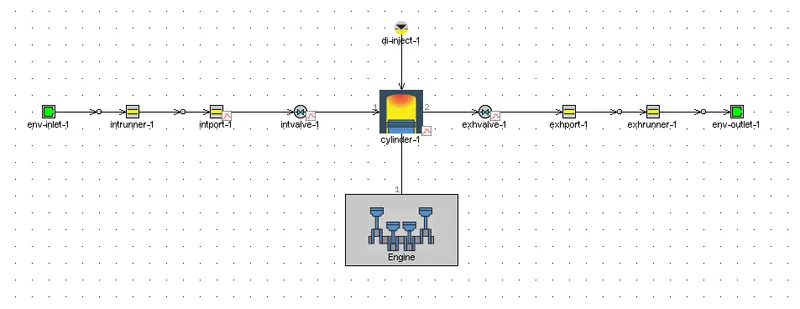
Single Cylinder Diesel Engine:
The following is the single-cylinder Diesel engine we are using for simulation.
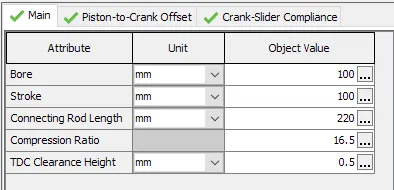
Engine cylinder geometry:
Engine Cylinder:
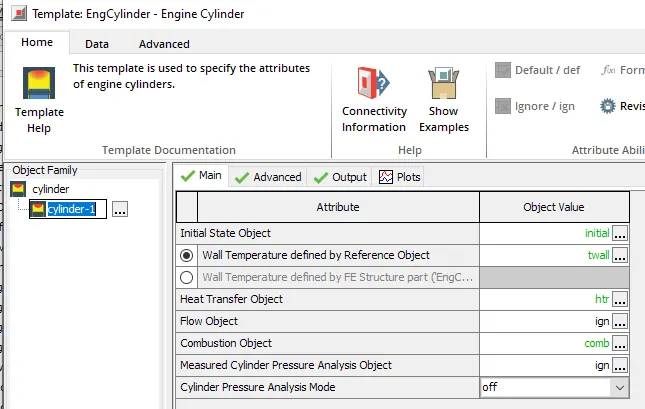
Combustion Object:
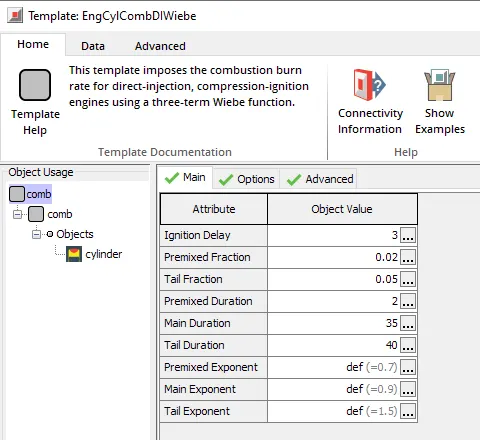
Injector Valve:
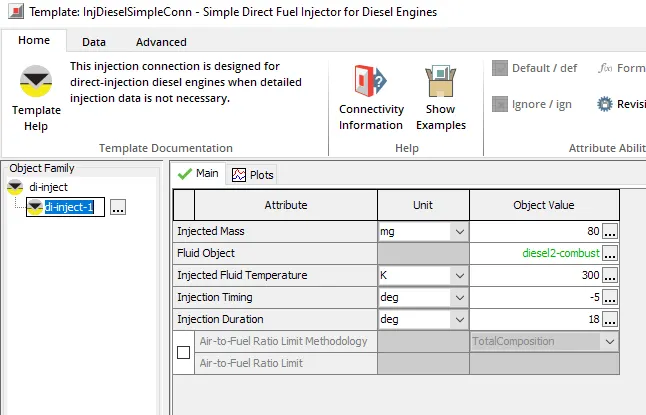
Results:
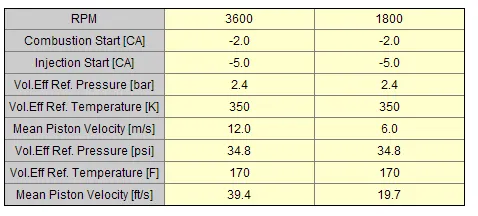
Engine Operating Conditions:
Engine Performance Predictions (SI):
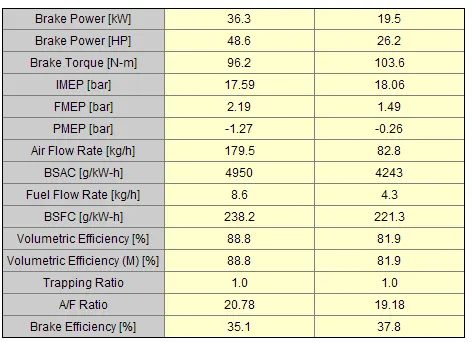
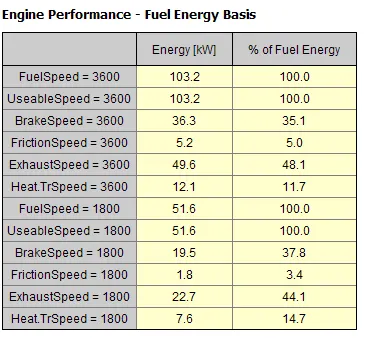
From the above data, we can say that,
by increasing rpm, the power increased.
The brake power is increased from 26.2Hp at 1800rpm to 48.6Hp at 3600rpm.
BSFC: Exhaust Temp: A/F ratio:
The BSFC & A/F ratio is increased by increasing RPM.
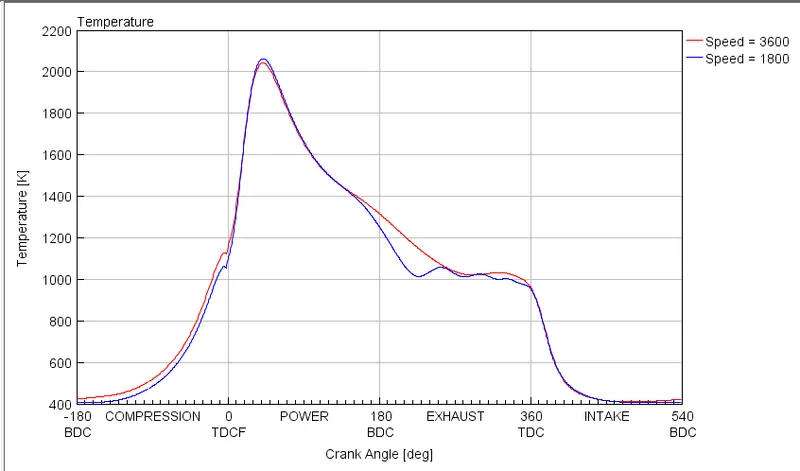
The exhaust temperature is slightly decreased.
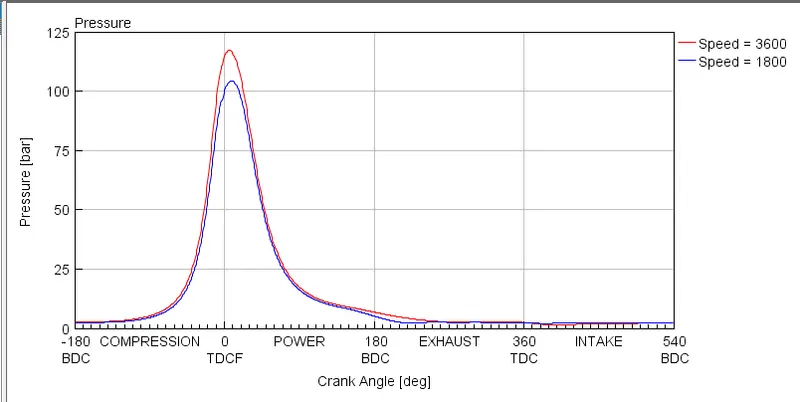
Pressure Plot:
Temperature Plot: