Week - 4
CHALLENGE 1:
AIM: To implement the control logic of a “washing machine” using Stateflow.
GIVEN SEQUENCES:
- If the power supply is available, the system gets activated
- If the Water supply is not available, stop the process & indicate through LED
- Soaking time should be 200s followed by Washing time of 100s.
- Then rinsing happens for the next 20s & dryer runs for 50s
THEORY:
Centrifugation is used by a washing machine to clean and partially dry the garments that are fed into it. A washing machine spins at 800-1600 rpm, which causes soap and filth to accompany it to leave the surface of the material and into outlet pipes. Therefore, processes like controlling the drum, valves, pump, motor, and heating are electrically controlled. The valve reopens, allowing the contaminated water to drain from the drums. Working to remove the water is the pump. The valve allows clean water to enter the drums once more.
There are 4 steps in the washing machine to complete a cycle.
- SOAKING: To get the dirt off garments, it is used to immerse them in detergent water. Using the soak function, the machine will soak the clothes for 27 minutes and then wash them for 15 minutes in the 42-minute cycle.
- WASHING: The garments are agitated through the water by a sizable plastic agitator (green) as the wash cycle progresses. The pump empties the water from the outer drum after the wash is finished.
- RINSING: The Cloths are "rewashed" in clean water once the washing machine has been filled with clean water after the filthy, soapy water has been drained. Centrifugal force is used to quickly spin your garments after they have been entirely emptied of all water, removing any remaining moisture.
- DRYER: They operate by forcing warm, dry air through the wet laundry to remove moisture, then chill the newly humid air in a heat exchanger to condense the moisture, which is either collected in a tank or flushed down the drain. Reheating the air after it has dried out completes the cycle.
STATE FLOW:
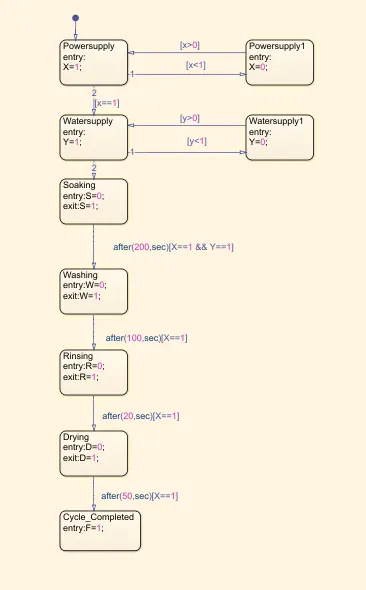
A finite process step set that is sequential, clear-cut, and realizable allows for the systematic solution of problems. The "algorithm" set is one of the most crucial components of programming languages. In this study, Simulink Stateflow is used to illustrate how to learn an algorithm.
State flow for the working of washing machine is shown in figure below:
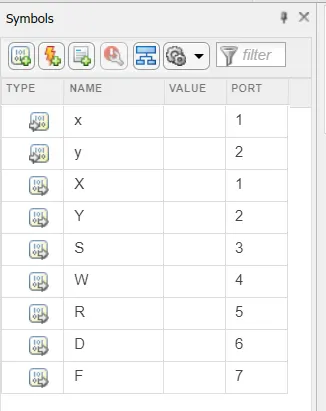
SYMBOL PANE:
BLOCKS REQUIRED:
- Toggle switch
- Constant
- Display
- Lamp
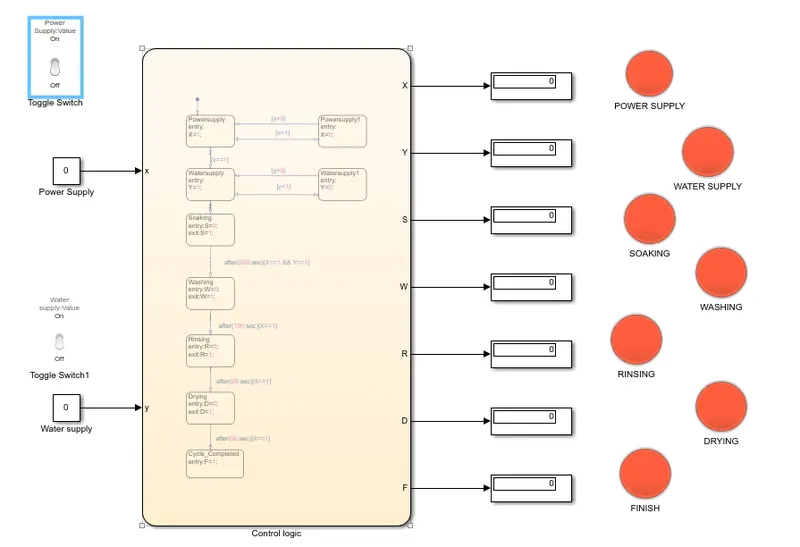
BLOCK MODEL:
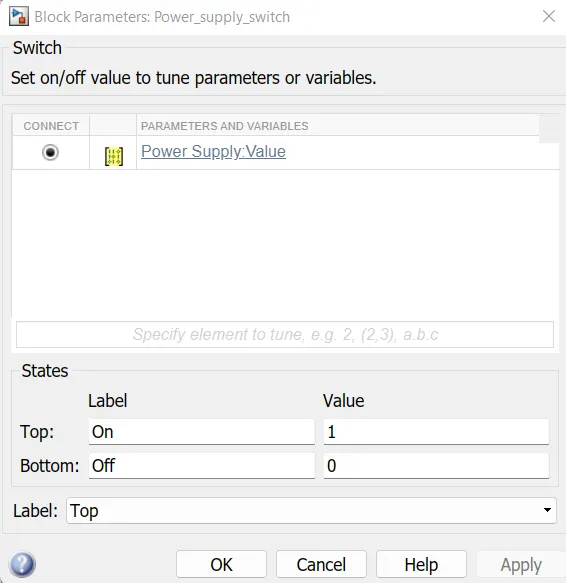
POWER SUPPLY SWITCH:
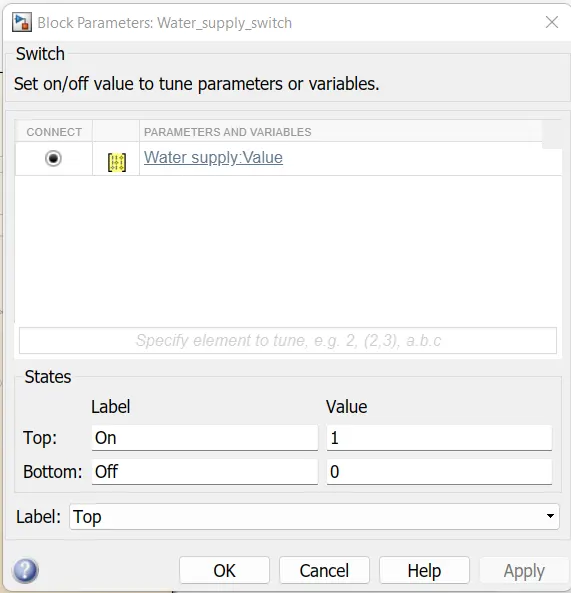
WATER SUPPLY SWITCH:
STEPS
- When the power supply and water supply are off, the machine will not turn on.
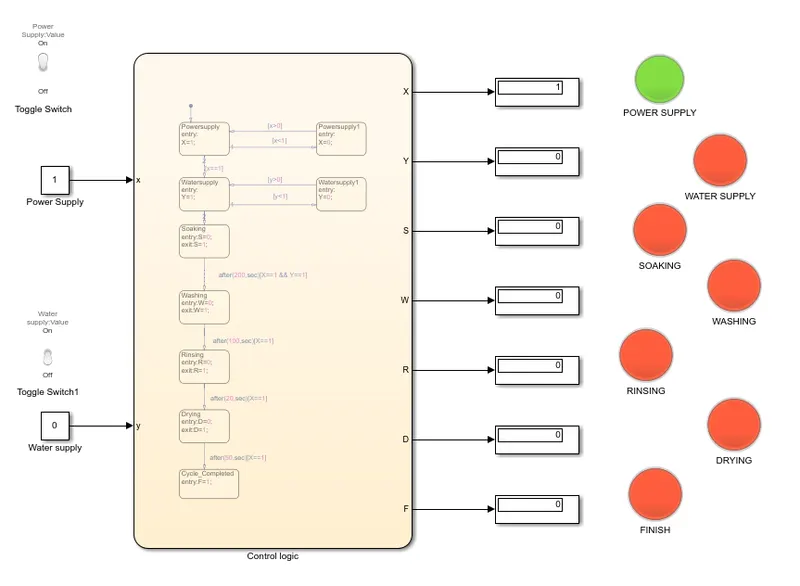
- When the only Power supply is turned on, the machine will light up the power supply lamp as shown in the figure below.
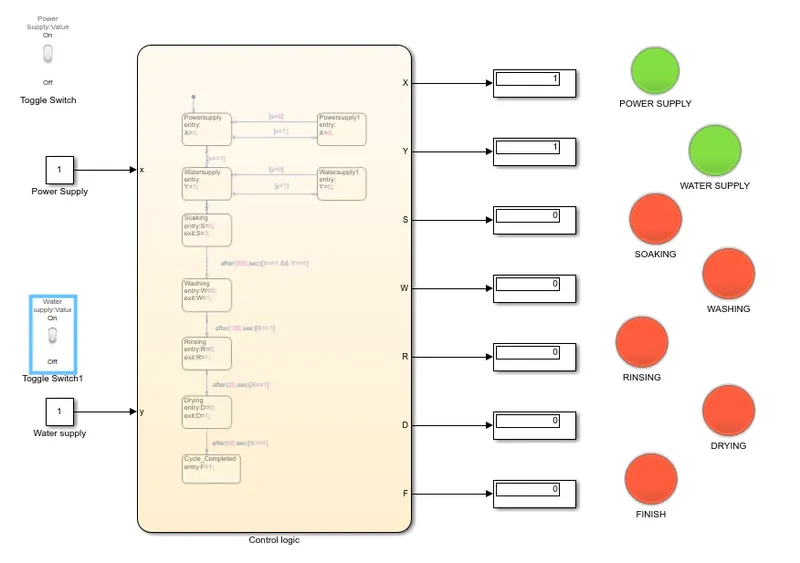
- When the power supply and water supply are turned on, the machine will light up the power supply and water supply lamp as shown in the figure below.
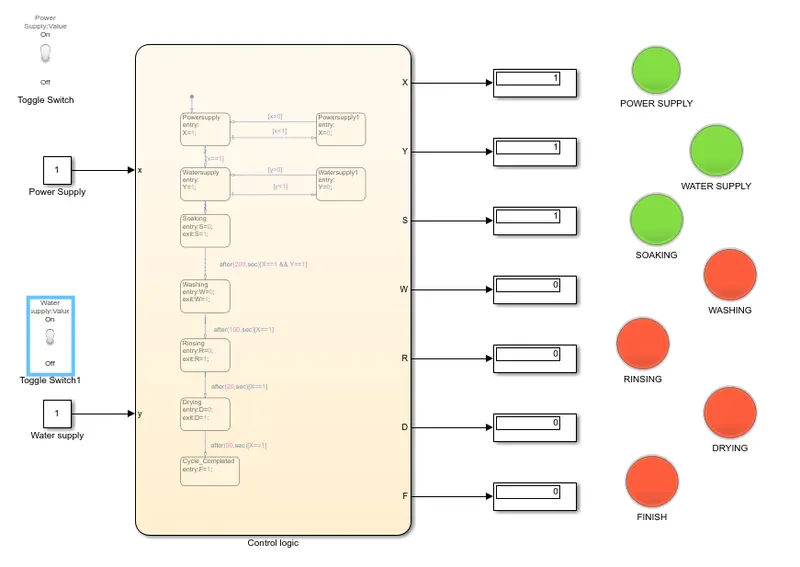
- When both power and water supply are on, for the first 200 sec, the soaking process will run.
- After that for 100 sec, the washing process will run turning the washing lamp green. Washed water will be drained out.
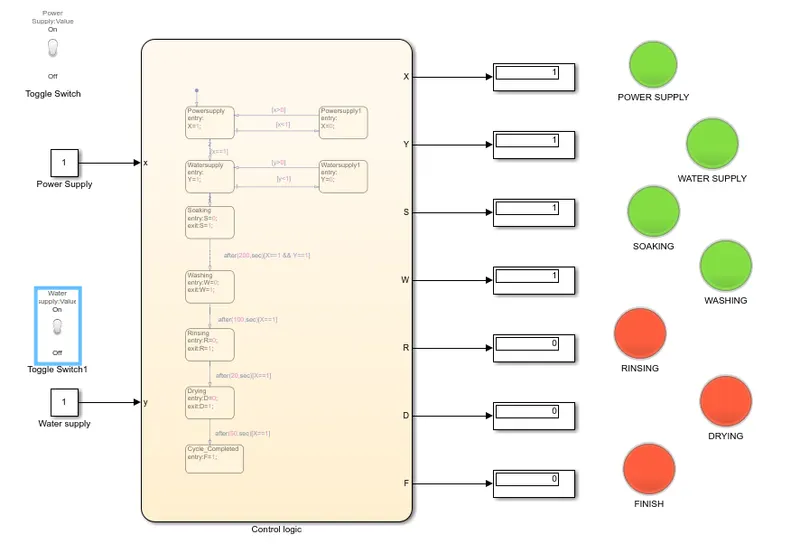
- Again fresh water will enter the machine. The rinsing process will run for 20 sec turning the rinsing lamp green.
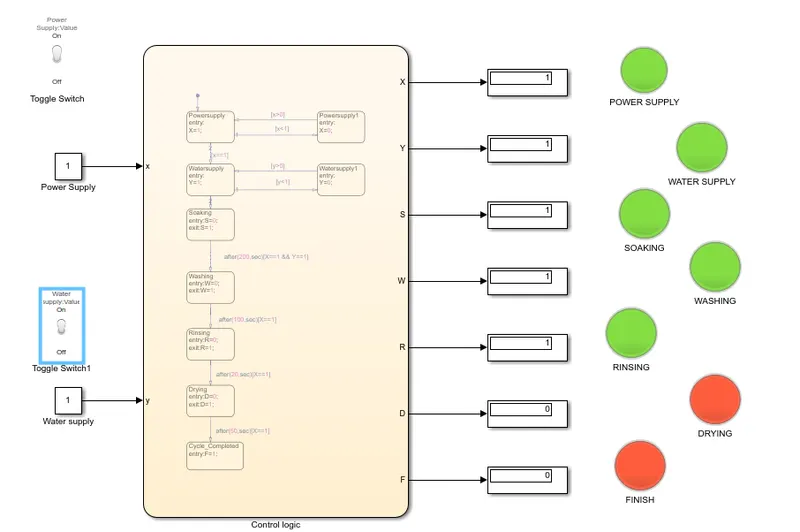
- At last, the drying step runs for 50 sec. The cycle gets completed by turning all the lamps green.
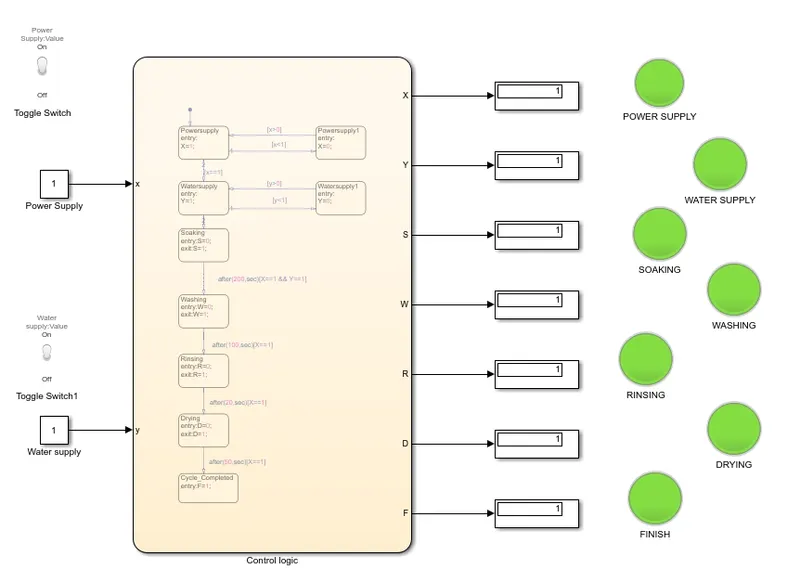
CONCLUSION: In this way, the logic system for a washing machine was created using stateflow.
*****************************************************************************************************************
CHALLENGE 2:
AIM:
- To create a Simulink chart for the “Gear shift” logic.
GIVEN:
-
Speed Range(kmph) Gear
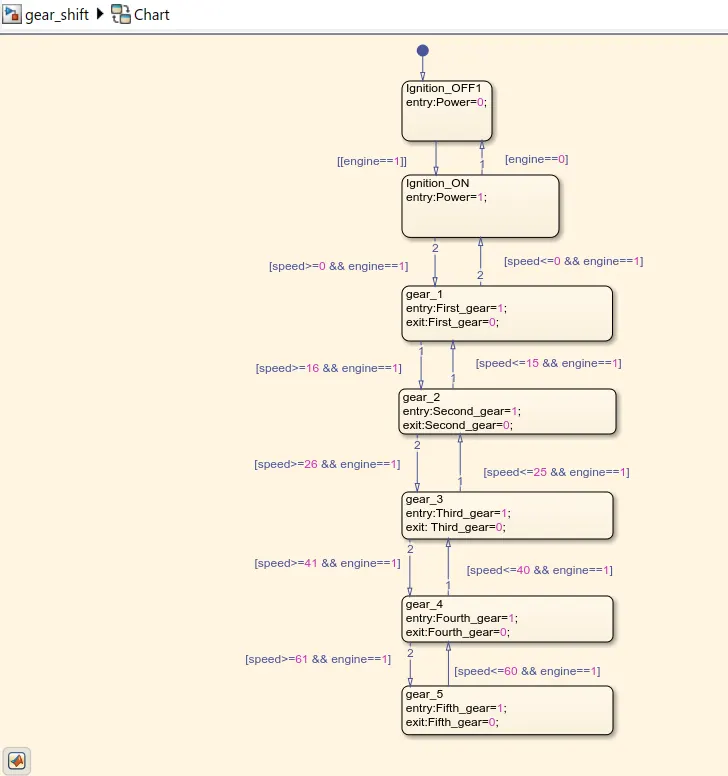
0 to 15 1
16 to 25 2
26 to 40 3
41 to 60 4
Above 61 5
THEORY:
Gear shifter is an important component of the transmission system of automobiles. The state flow as per the given conditions is designed to simulate the gear shifter mechanism.
STATE FLOW:
A finite process step set that is sequential, clear-cut, and realizable allows for the systematic solution of problems. The "algorithm" set is one of the most crucial components of programming languages. In this study, Simulink Stateflow is used to illustrate how to learn an algorithm.
State flow for the working of the gear shifter is shown in the figure below:
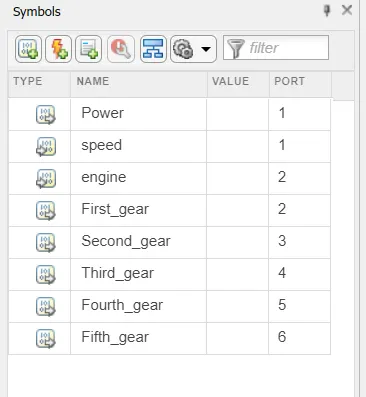
SYMBOL PANE:
BLOCKS REQUIRED:
- Switch
- Slider Block
- Constant
- Display
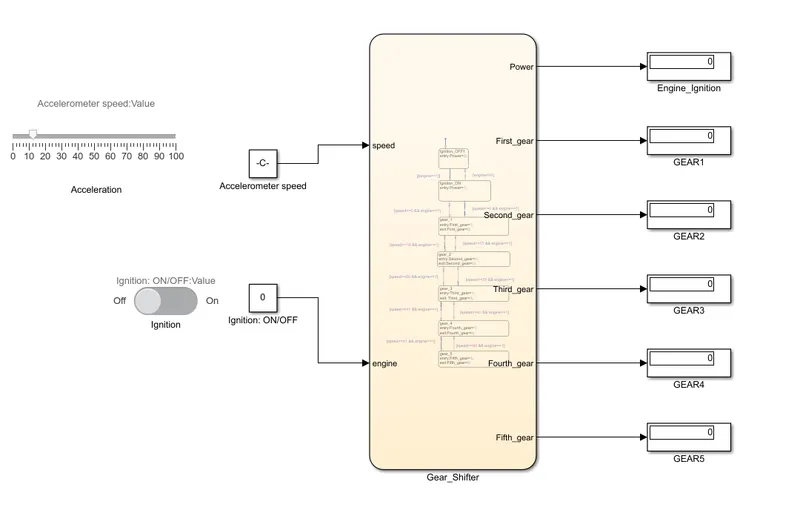
BLOCK MODEL:
STEPS
- When the ignition is off, the vehicle will be stationary.
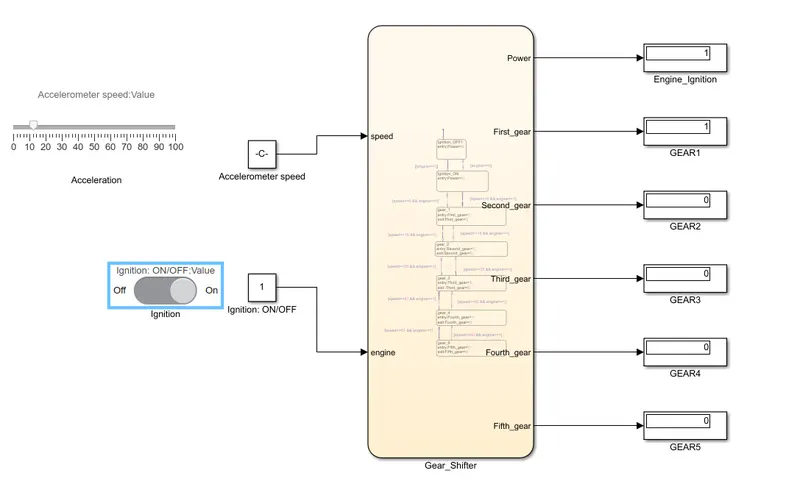
- When the ignition is on and the speed is 12kmph then the block display that the gear is 1st as shown in the figure below.
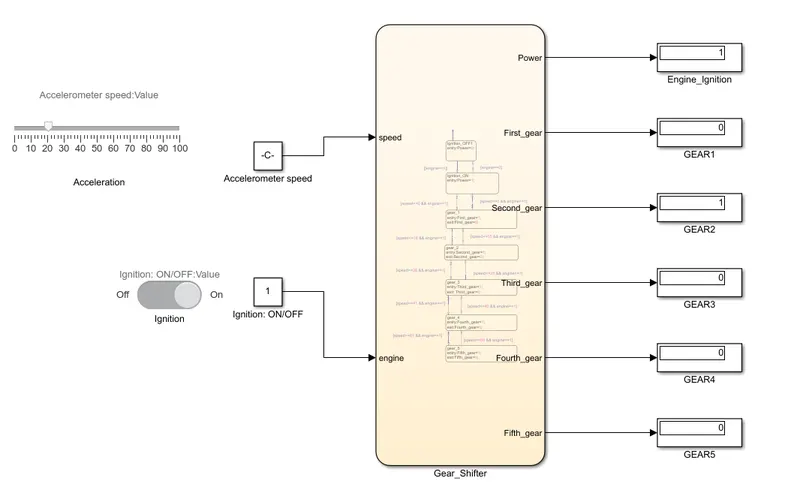
- When the speed is 20 kmph then the block display that the gear is 2nd as shown in the figure below.
- Similarly, When the speed is 30 kmph then the block display that the gear is 3rd as shown in the figure below.
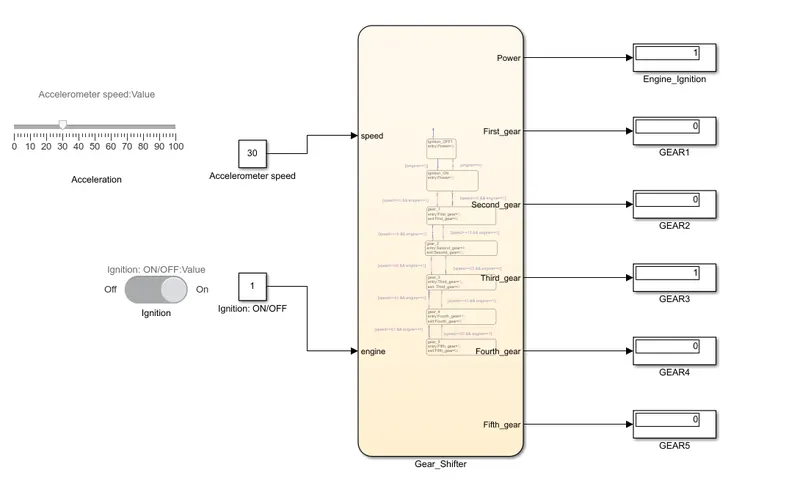
- Similarly, When the speed is 56 kmph then the block display that the gear is 4th as shown in the figure below.
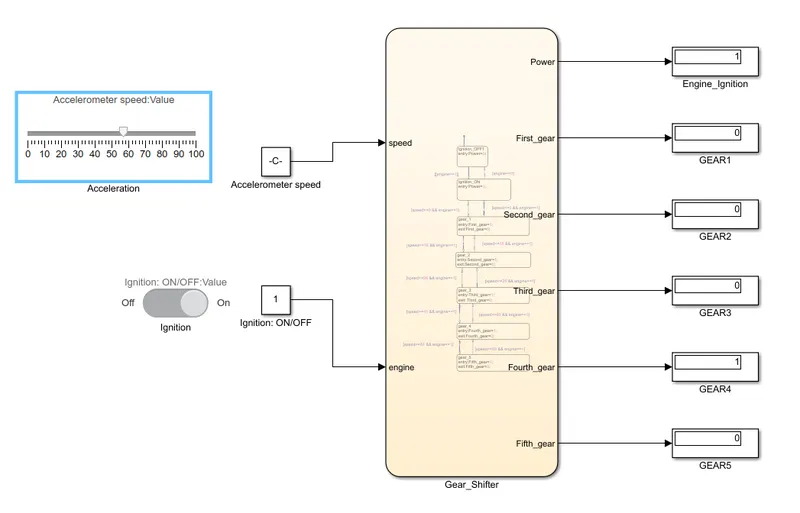
- At last, When the speed is beyond 60 kmph then the block display that the gear is 5th as shown in the figure below.
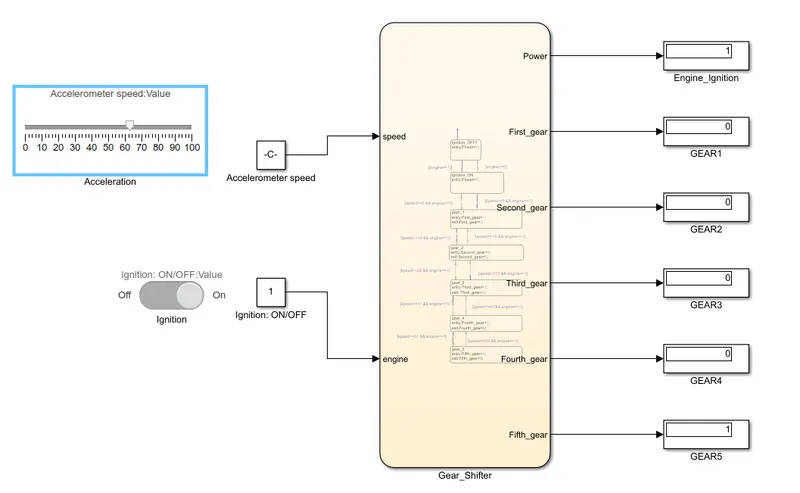
CONCLUSION: In this way, the logic system for a gear shifter was created and studied using Stateflow.
*****************************************************************************************************************