Week - 4 - 2D meshing for Plastic components
Aim:
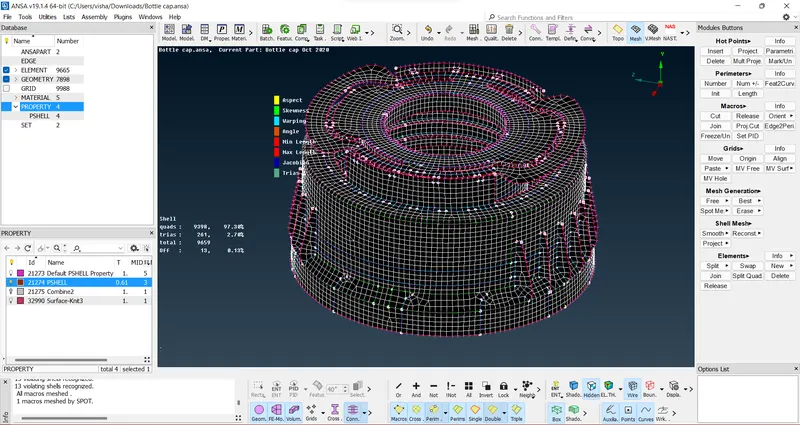
For the given Plastic Bottle Cap model, check for the geometrical errors and take the mid surface by suitable mid surfacing techniques. PID and Thickness assignment has to be done for all the mid surfaces. Mesh the same with given element Quality criteria. (Refer the table Below for the Quality criteria)
|
S.No |
Quality Criteria |
Value |
|
1 |
Target/Average length |
1 |
|
2 |
Minimum Length |
0.5 |
|
3 |
Maximum Length |
3 |
|
4 |
Aspect |
3 |
|
5 |
Warpage |
15 |
|
6 |
Skewness |
45 |
|
7 |
Jacobian |
0.7 |
|
8 |
Minimum Quad Angle |
45 |
|
9 |
Maximum Quad Angle |
135 |
|
10 |
Minimum Tria Angle |
30 |
|
11 |
Maximum Tria Angle |
120 |
|
10 |
Tria Percentage |
15 |
Step by step Procedure:
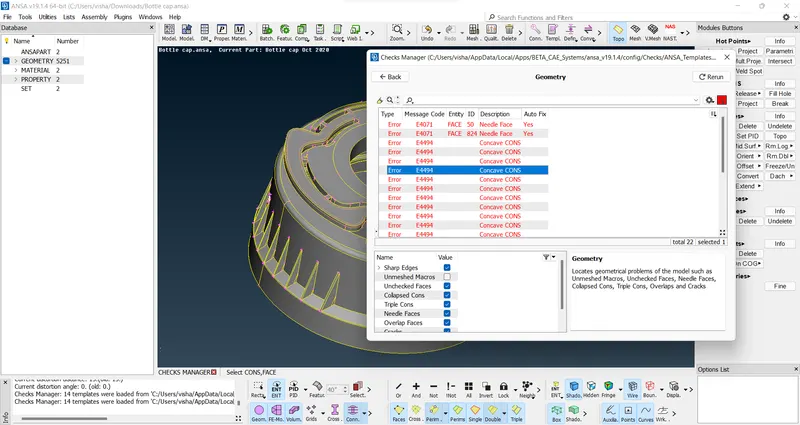
1. Import the geometry and check for geometrical errors
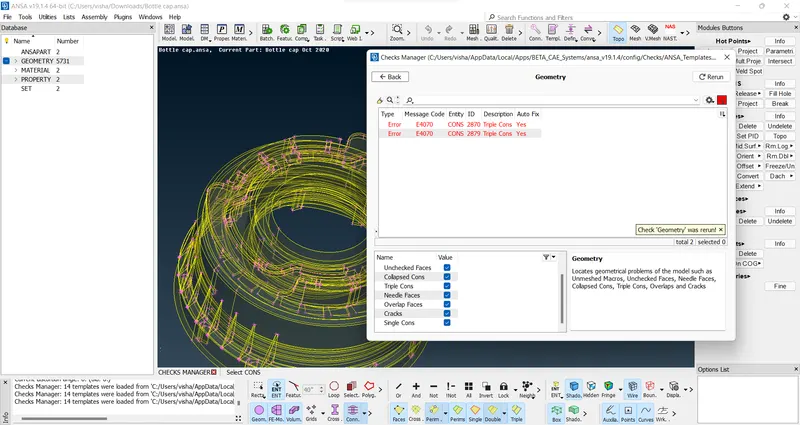
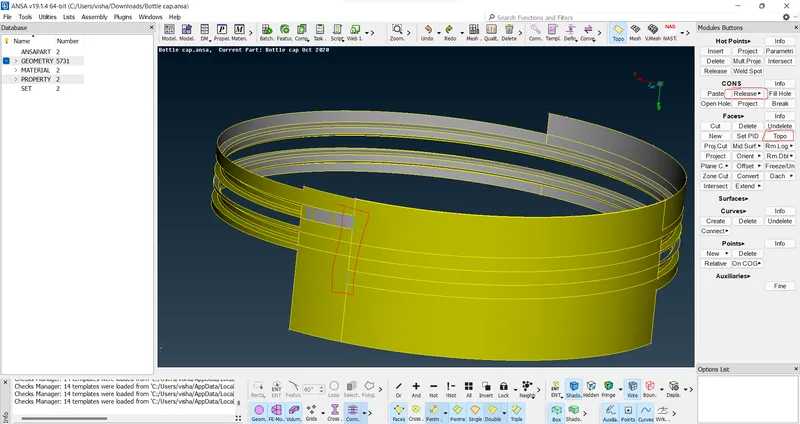
2. Use fix command to automatically fix the errors and manually fix some cons error if necessary.
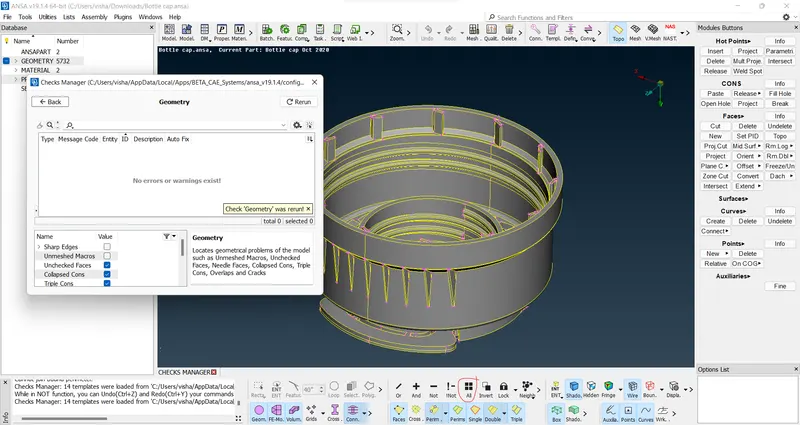
3. Check the geometry for no errors present
4. Generate the mid-surface of the model manually as ANSA is not able to handle such a model on auto mid-surfacing and crashes.
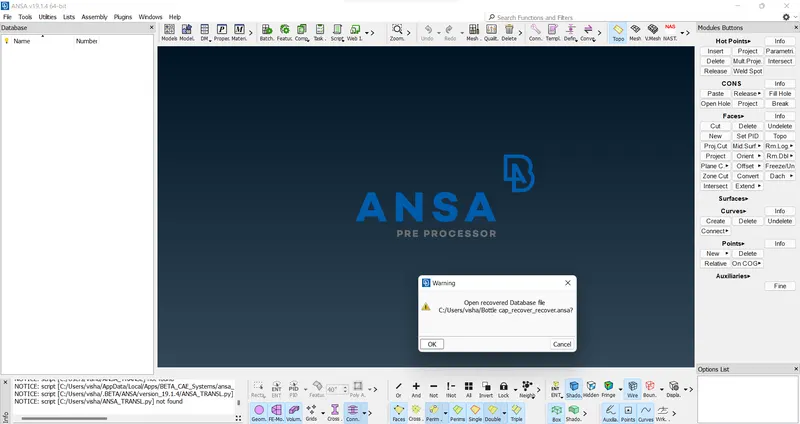
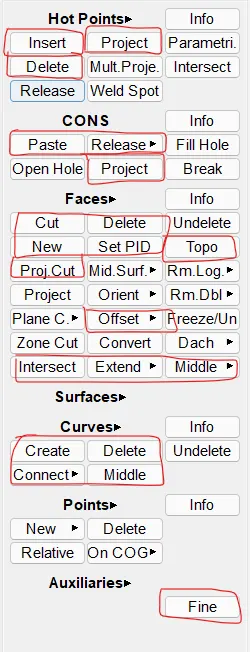
5. Using a wide array of tools such as offset, middle, new face, delete and many more to generate the midsurface of the model
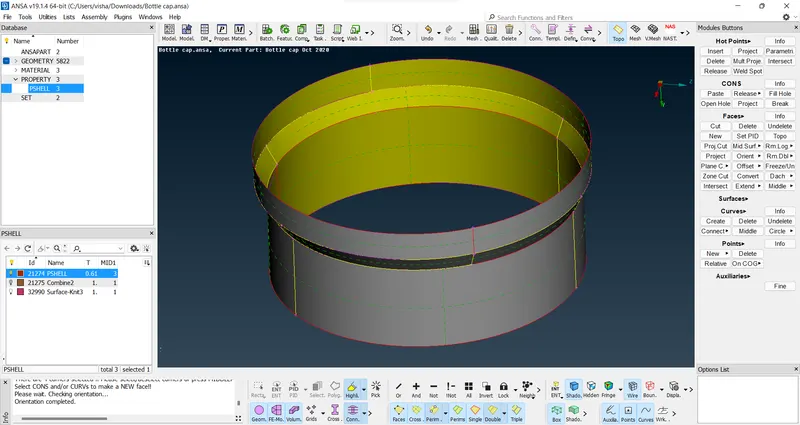
6. The model had many complex shapes that were extracted into mid-surfaces by using the middle curve command and help from FAQ section to generate a proper mid-surface
7. Check the generated surface for geometrical errors and fix them with the available tools
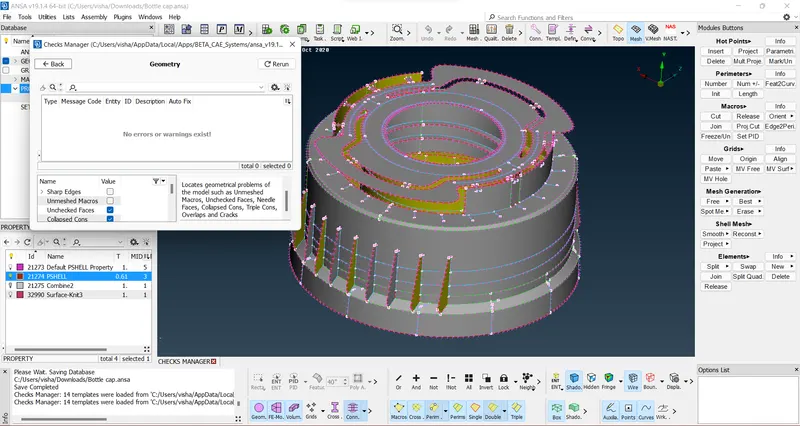
8. Input the mesh requirements, quality criteria as given and the length parameters(Macros and perimeter)
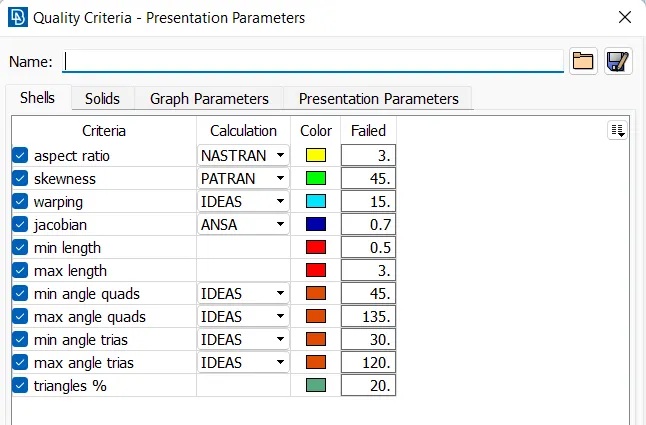
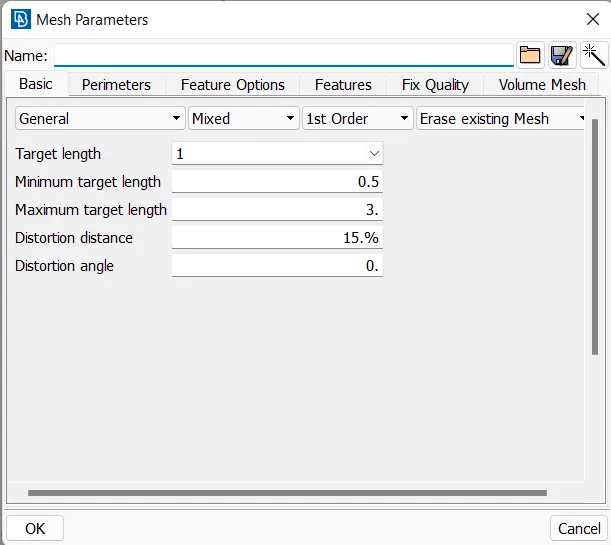
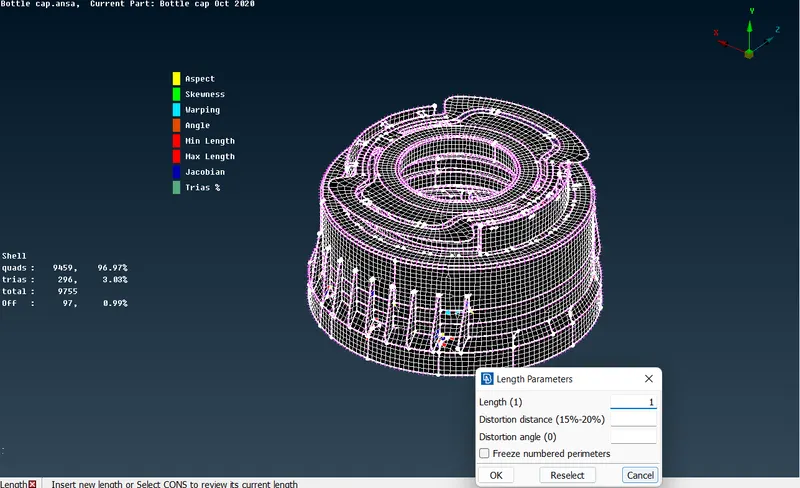
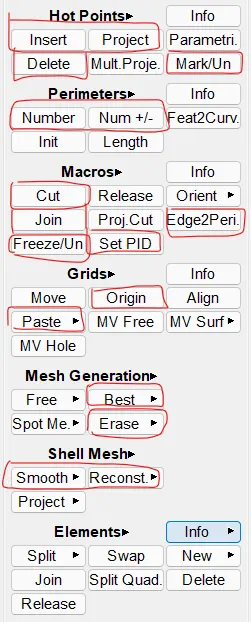
9. Start meshing by using best mesh option for different regions to achieve best mesh quality and remove the tria element whenever possible while also removing the quality failing elements to achieve a perfect mesh by using the available options such as
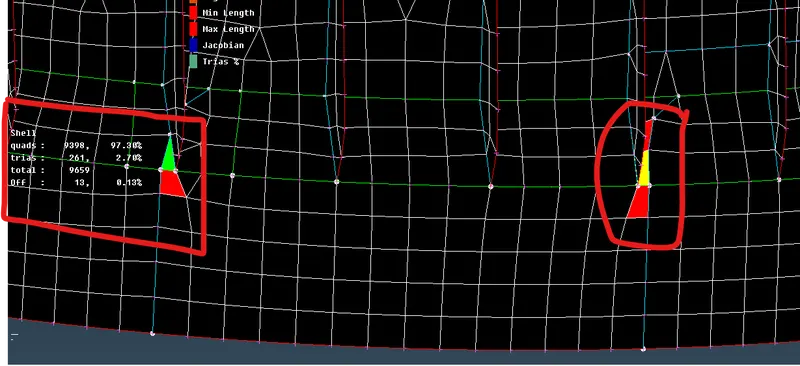
10. There might still remain some failing elements due to the geometrical constraint of the model and can thus be ignored as it does not highly affect the mesh flow.
Learning outcomes:
The understanding of pre-processing of a complex plastic model and how to approach such models to achieve good mid-suface and mesh flow.
Became familiar with the use of multiple complex operations such as 3point circle curve and more, to achieve a perfect midsurface.
Geometrical constraint can cause element failure and how can we minimize the failing elements to achieve maximum efficient mesh pattern.
Better understanding of surface generation and meshing process and how to effectively process a model.
Conclusion: A highly efficient mesh pattern is generated with minor element failure due to geometrical constraint.
Reference: Skill-lync FAQ section for mid-surface generation
The model is attached.