Week - 4 - 2D meshing for Plastic components
PRE-PROCESSING OF PLASTIC BOTTLE CAP MODEL USING ANSA
Aim: For the given plastic bottle cap model a two dimentional shell mesh should be generated on the mid surfce and thickness should be assigned.
Methodology:
- Import the CAD model into ANSA.
- Geometry cleanup before mid surfacing.
- Extract the mid surface.
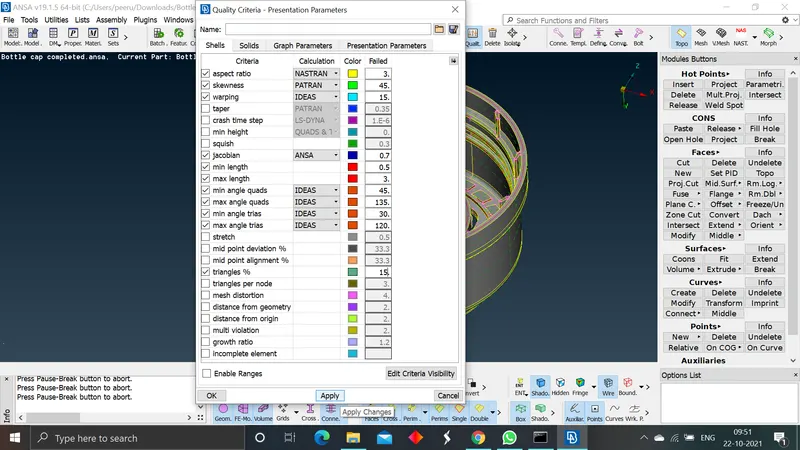
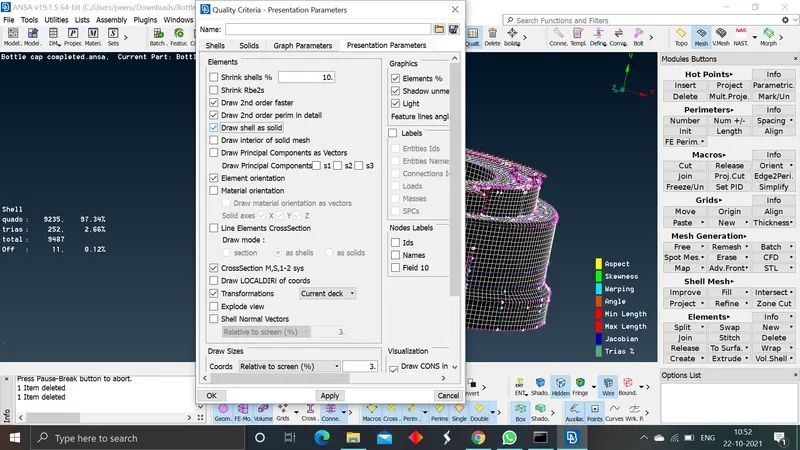
- Quality criteria setup.
- Defining the appropriate thickness for respective elements in PID.
- Performing meshing and improving the mesh flow.
- Assigning thickness for meshed midsurface.
Quality criteria:
|
S.No |
Quality Criteria |
Value |
|
1 |
Target/Average length |
1 |
|
2 |
Minimum Length |
0.5 |
|
3 |
Maximum Length |
3 |
|
4 |
Aspect |
3 |
|
5 |
Warpage |
15 |
|
6 |
Skewness |
45 |
|
7 |
Jacobian |
0.7 |
|
8 |
Minimum Quad Angle |
45 |
|
9 |
Maximum Quad Angle |
135 |
|
10 |
Minimum Tria Angle |
30 |
|
11 |
Maximum Tria Angle |
120 |
|
10 |
Tria Percentage |
15 |
Theory: In this challenge pre processing of the plastic model bottle cap is acheived using ANSA. The complex shapes in the bottle cap will be captured for mid surface and meshing is performed which will help the engineer to react to the complex shaped plastic model in real time projects. In this model the thicknes of bottle cap is changing according to different shapes and features, Due to varrying thickness of bottle cap engineer should their respective thickness for the mid surface. Bottle cap is a complex plastic model and due to its complexity while meshing the mid surface there will be lot of failures in acheiveing the quality criteria in some particular areas engineer should try to reduse those errors upto his/her best.
Process:
Import the CAD model into ANSA and check for the geometry error in the checks manager and try to fix with them with auto fix command.
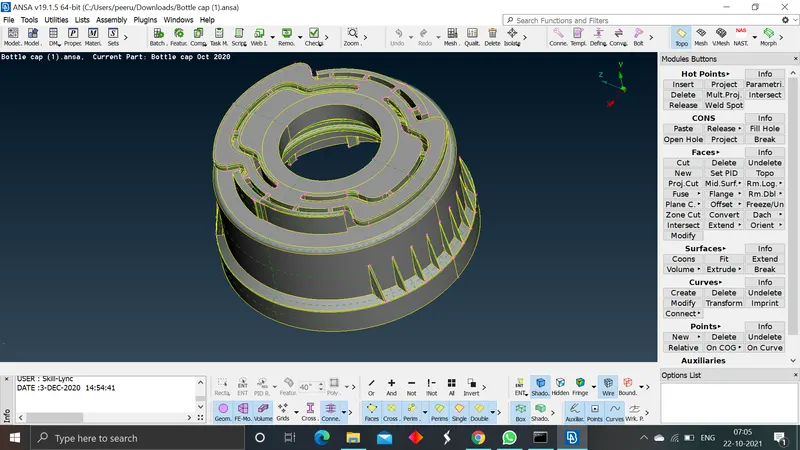
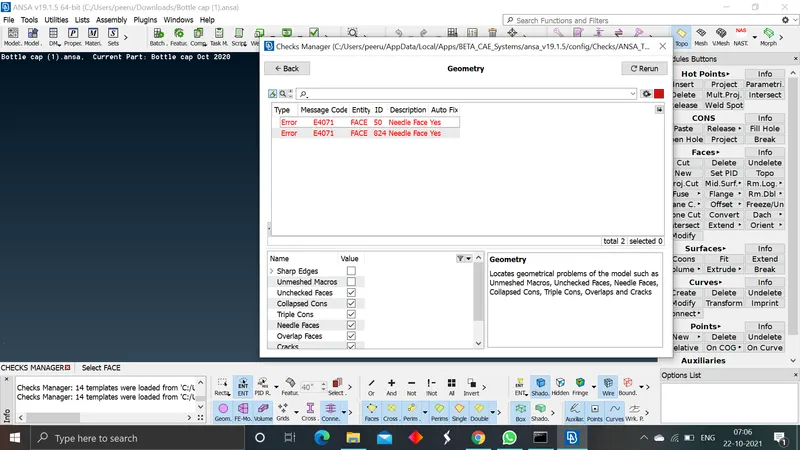
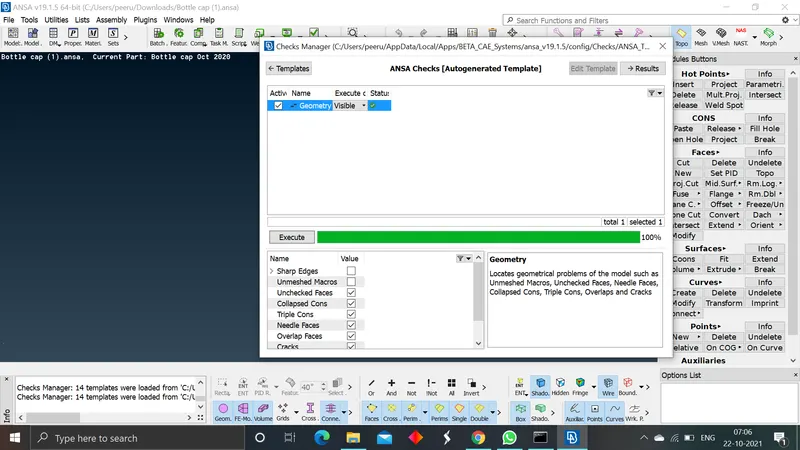
we will perform fine option for better visualisation where ever it is required
- Extract mid surface: Due to bottle cap having complex shave which come in varrying thicknesses we will generate the mid surface with different type of approaches according to the shape of the feature. we use the offset method, faces middle, transform rotation method for similar shaped elements like ribs andflinges which are in a equi-distant from one another and situated in a circular shape.
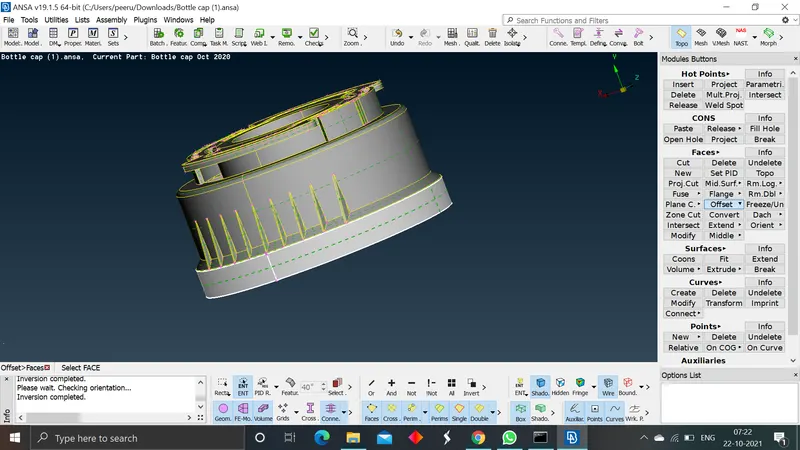
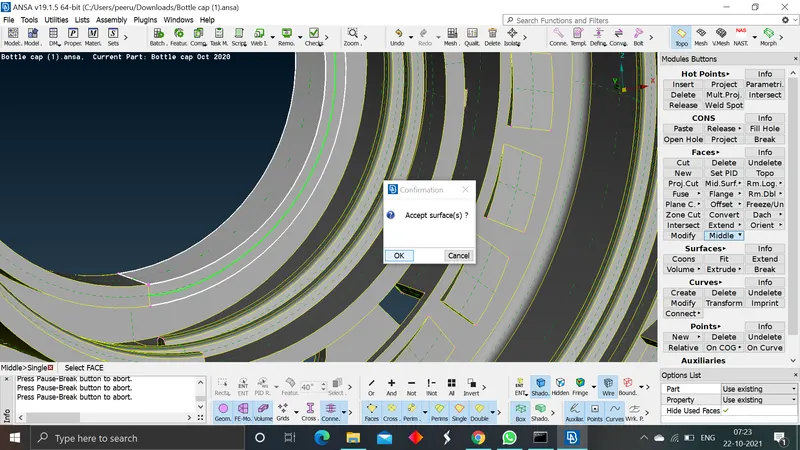
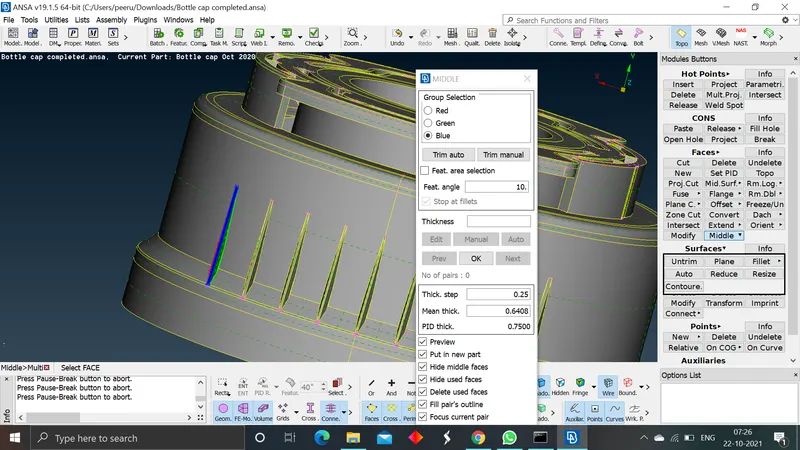
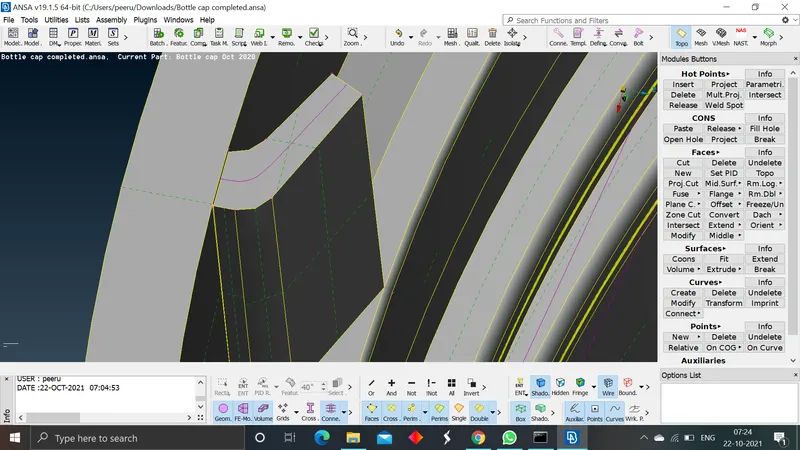
we use middle multi option for generating a multi faces in one shot. For uneven thickness components like inner fins and spiral shaped quadratic bottle thread with fillet shape catching the mid surface with conventional methods will be difficult and we were unable to create the perfect shape of mid surface , so we use curves middle option and try to catch the approx area of the complex component.
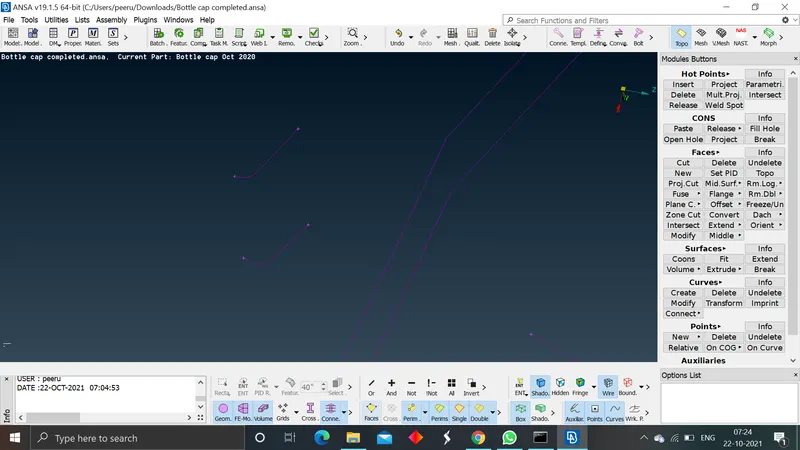
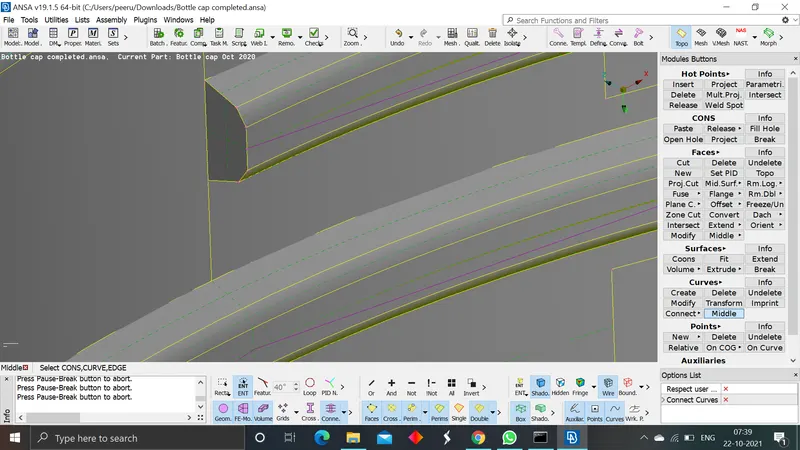
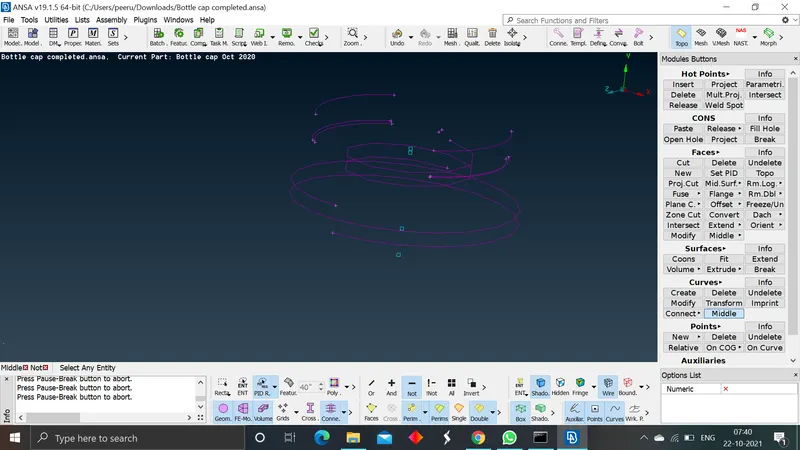
For similar shaped elements like fins and ribs we use the rotation option in transform, for performig the rotation option first we need to catch the COG at 2 different heights to perform it go to points>COG> select the near by circular cons in loop mode so that we can catch the cog for that circular con at center repeat the process on different height circular con loop. There will be two points representing the COG odf the respective circular cons.
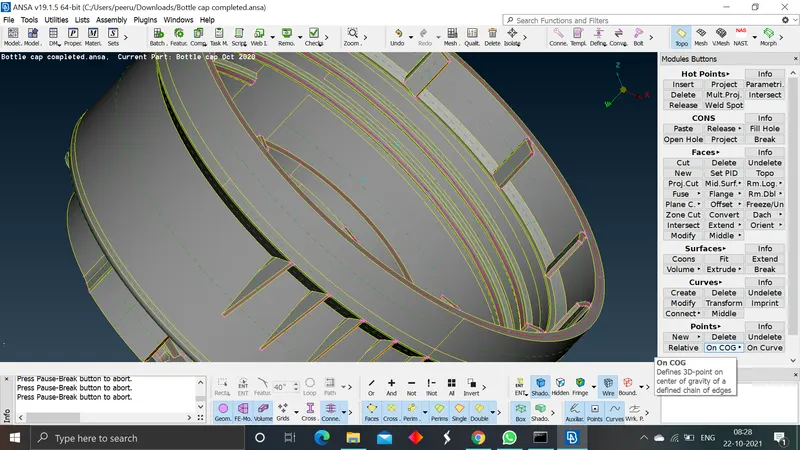
now go to transform and seect the entity and select the rotation in x column select the any point of COG it will the co-ordinates in the column automatically, now select the second COG to fill the dx column and give no. of steps need to be performed leaving the selected entity from total steps. now for angle get the total angle of the loop need to be duplicated divided by the no. of total elements including the selected entity.( angle = 360/13 ) for the inner fins on bottom of the bottle.
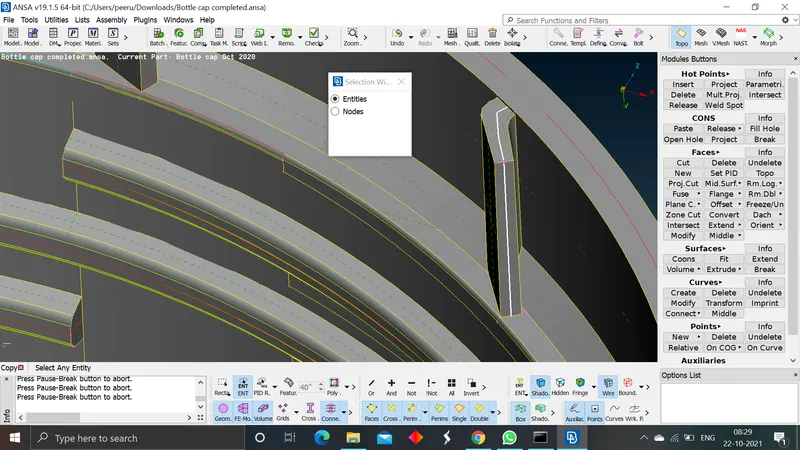
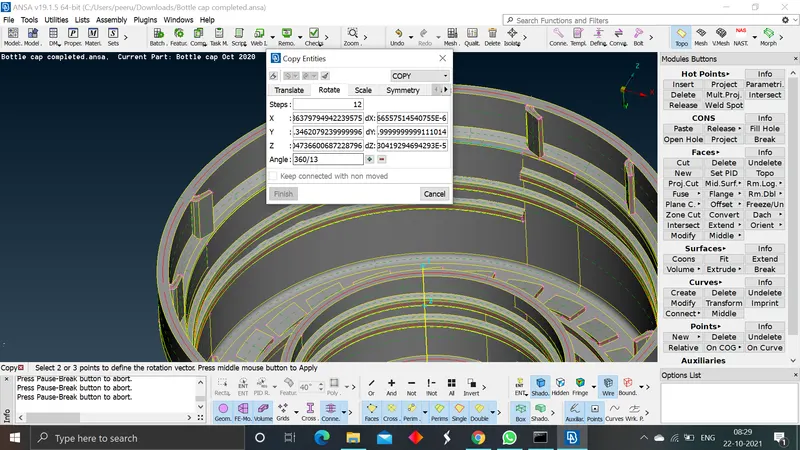
like this we will perform the rotation otion to duplicate the similar elements in the model. after duplication of element by rotation we will extend the cons to respective faces to replicate the parent surface. Based on type of the face and their shape engineer should opt for the appropriate method to extraxt the mid surface. As mentioned by performing the different mid surface extraction methods we generated the mid surface.
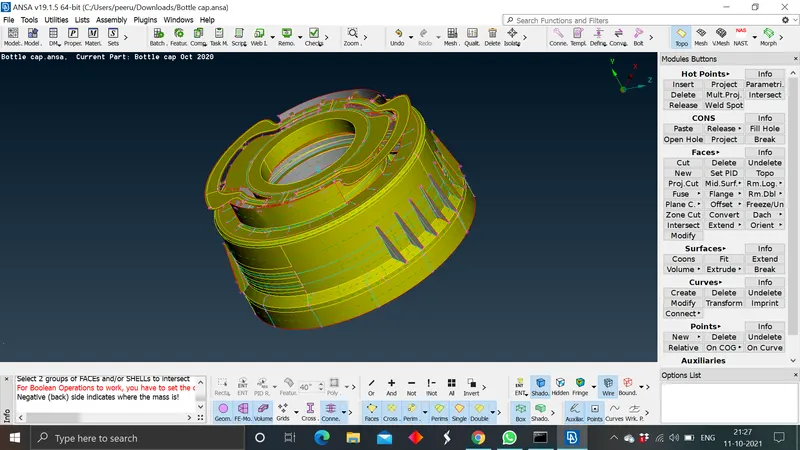
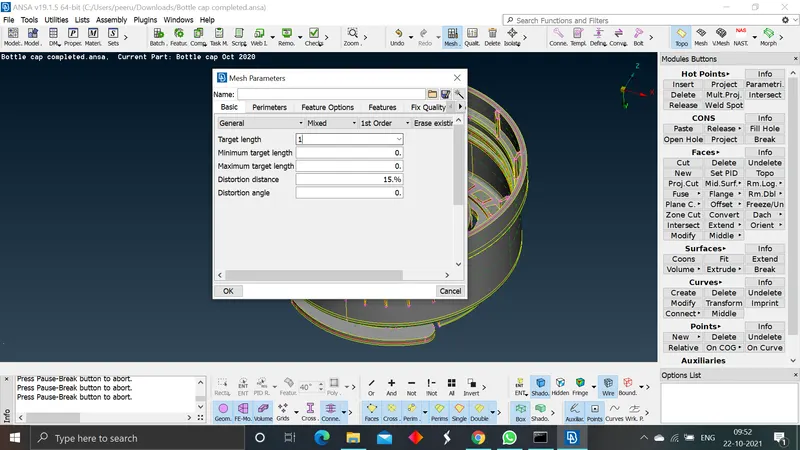
- Quality criteria setup: As per the required criteria given to us we set the mesh and quality criteria in ANSA.
- Defining the respective thickness to the elemnts in the model: In this bottle cap plastic model thickness of every element is not same, thickness is varrying from element to element so we need to define the appropriate thickness in PID to assign the thickness for the mid surface in the last step.
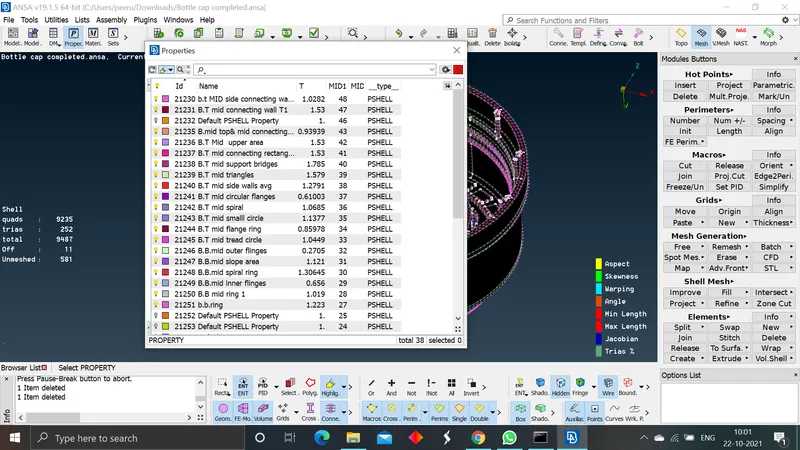
we will take an average of adjcent element thickness for some undefined shaped elements in the model and which is acceptable.
- Performing mesh and improving the mesh: Before performing the mesh we need to assaign the target length for correct length between the nodes and we need to check for the min length between cons if any two double cons or double con & triple cons are so close on the same face we need to remove them by using the cut option in mesh mode.
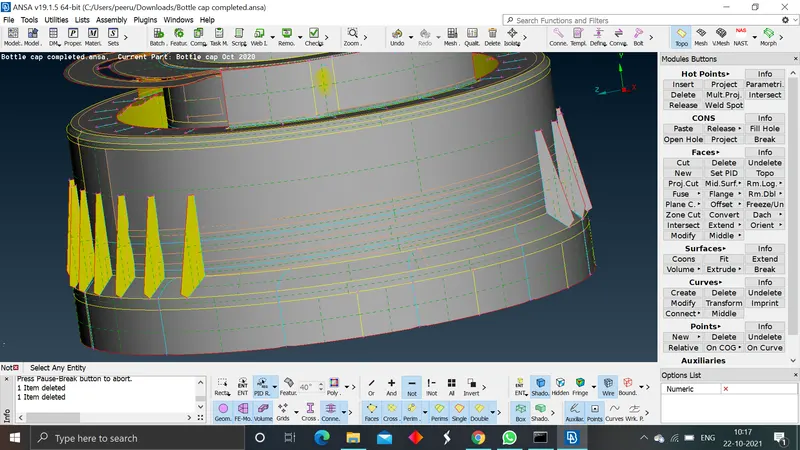
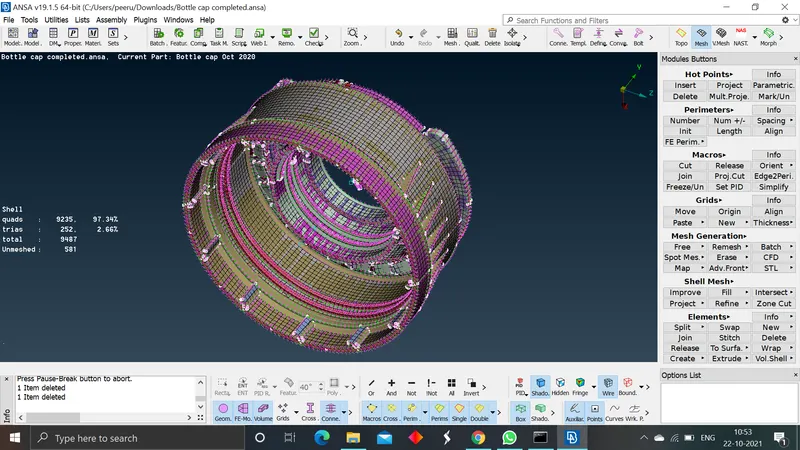
we removed the cons which are failing to reach the min length criteria. now we can perform the mesh using options like batch mesh, spot mesh etc,. and based on requirement we perform reconstruct, smooth, split, options to improve the mesh flow. split option is to adress the trias and off elments individually.
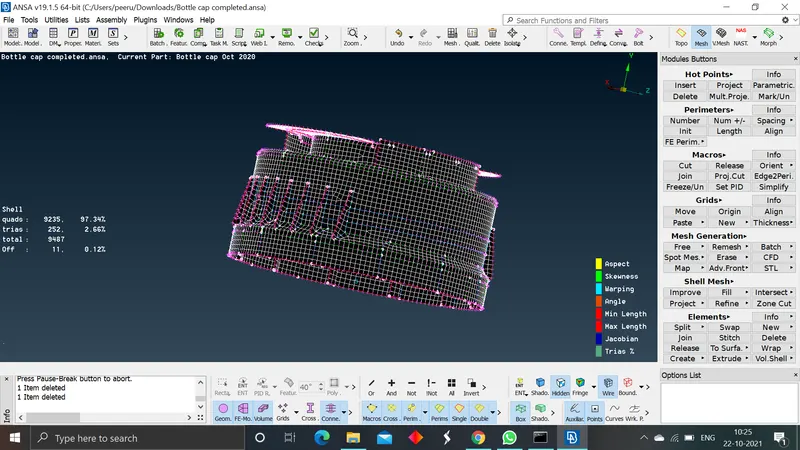
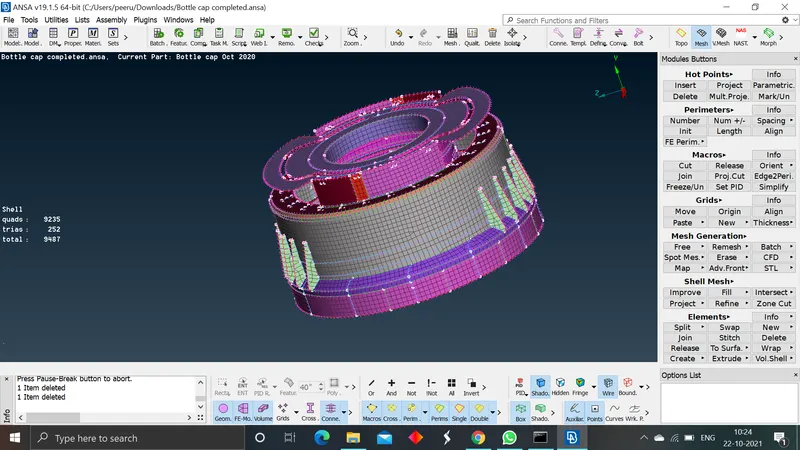
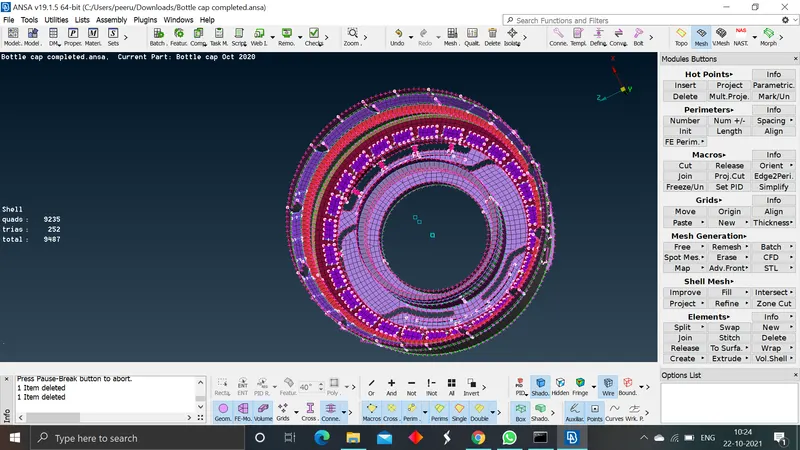
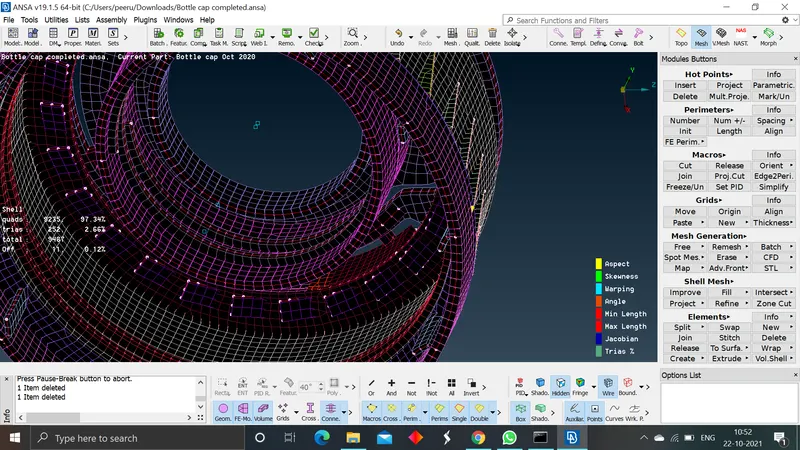
while generating the mesh there will be lot of off elements and engineer should adress them and should solve them to reduse off elements to optimum level, Beacause of having the varrying thickness and complex shape it is impossible to eliminate the off elements in plastic models and a min failure of mesh elements is acceptable. In this bottle cap model we have total of 11 off elements.
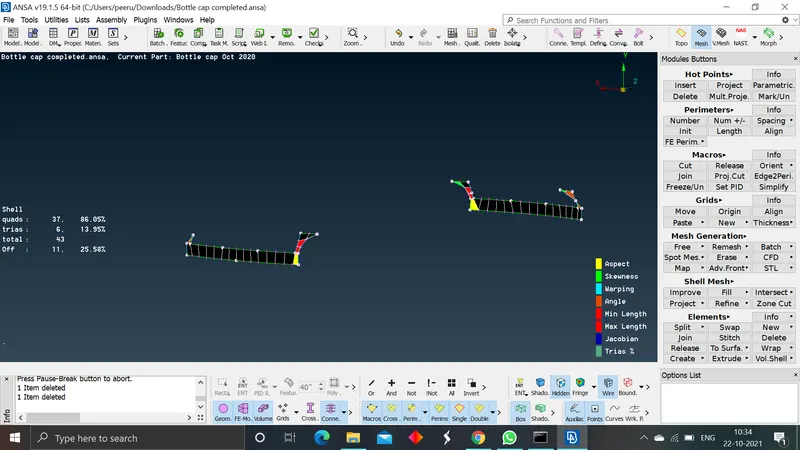
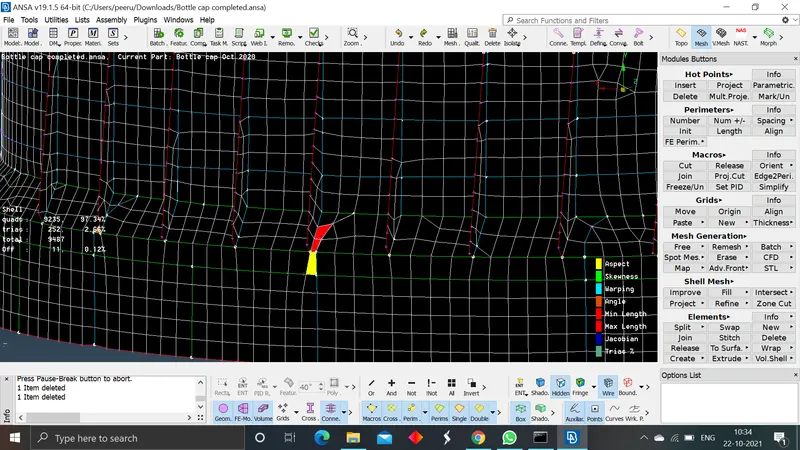
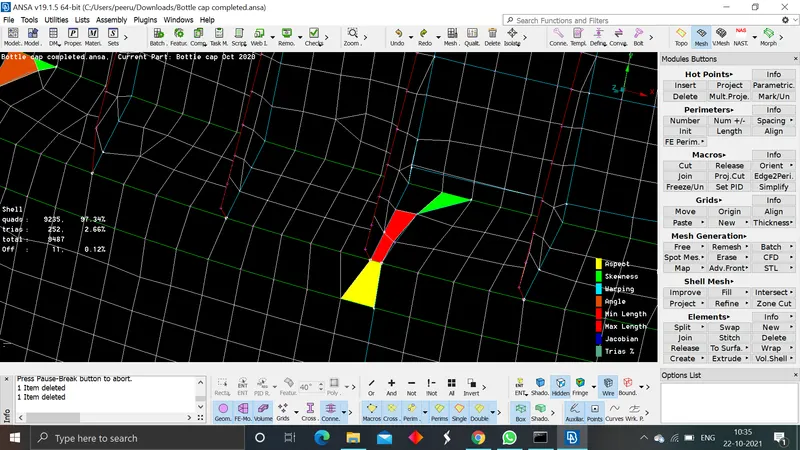
In the model we have off elements in between two triple cons so it is acceptable. if we try to resolve them by using move, move free options it will distrub the shape of the FE geometry and we didnt want that, so we compromise on these off elements over FE geometry failure.
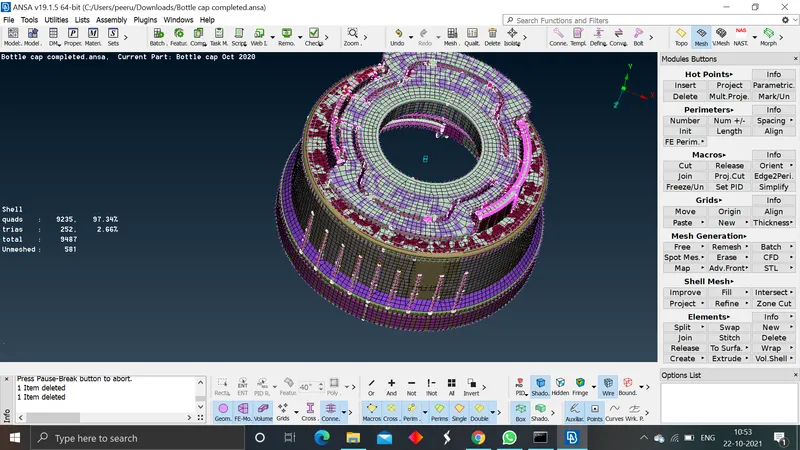
- Assigning the thickness for mid surface: It is the final step in pre processing we enable the thickness for the mid surface all the rectangles change to quad elements and triangles to trapezoids. If the defined thickness is not correct then that can be observed on parent surface having plane surface without any mesh on that area. we accept this disappearence of mesh on the parent surface where we taken the average thickness for undefined shapes and If mesh was not appeared on a face whose thickness was not taken as average then which means the defined thickness for that face is incorrect, one should resolve that issue.
Learning outcomes:
- In this challenge I learn to mesh the complex plastic model and got to know the different methods to generate the mid surface.
- Learned about assigning the different thickness to varrying thickness elements in the model.
- Also introduced to how to use the rotation option to duplicate the similar elements in circled position with equidistant between each other.
- In this model to eleminate the off elements we will small compromisation on the shape of geometry deformation and it is a new learning outcome in this challenge.
- we accept the off elements in plastic model for some extent speciallly in between two triple cons which are so close and also between triple con and double con which are so close.
Result: Hence the objective of the generating mid surfacing manually and generating the 2D shell mesh is performed on the mid surface reaching the max quality criteria and having minimum element failure and with trias of 2.66% where normalization is 15%.