Week 3 Verification of Weld Joints
WELD JOINTS
Aim
To setup a 3 different types of welding for a load of 15000 and determine the directional deformation, strain and stresses involved
Case 1: Weld Material Stainless steel, material of plates and ribs is also stainless steel
Case 2:Weld Material: Aluminium wrought alloy, material of plates and ribs is stainless steel
Case 3:Weld Material:Bronze, material of plates is stainless steel and ribs is copper alloy
Theory
Welding is a fabrication process that joins materials, usually metals or thermoplastics, by using high heat to melt the parts together and allowing them to cool, causing fusion. Welding is distinct from lower temperature metal-joining techniques such as brazing and soldering, which do not melt the base metal.
Brazing is a metal-joining process in which two or more metal items are joined together by melting and flowing a filler metal into the joint, with the filler metal having a lower melting point than the adjoining metal..
Procedure
- Start a new static structural model in ansys and import the model
- Add the nonlinear materials of Aluminium, copper , bronze and stainless steel located in Ansys Granta.
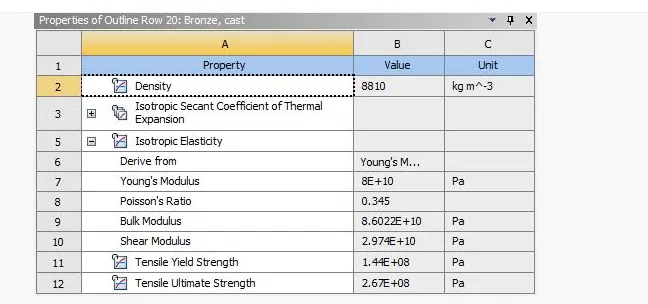
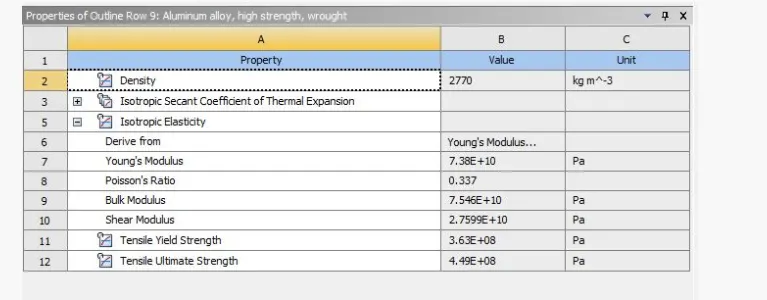
- Open Ansys mechanical by double clicking the icon

- Check that the materials were properly assigned to the model
- Change the contacts to rename based on definition
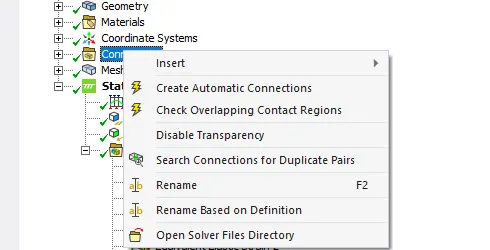
- Change the following to frictional and set friction coefficient to 0.2
- In mesh, create a sizing group for the 2 plates and set mesh size to 7mm.
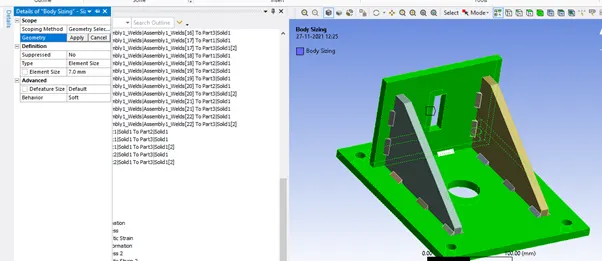
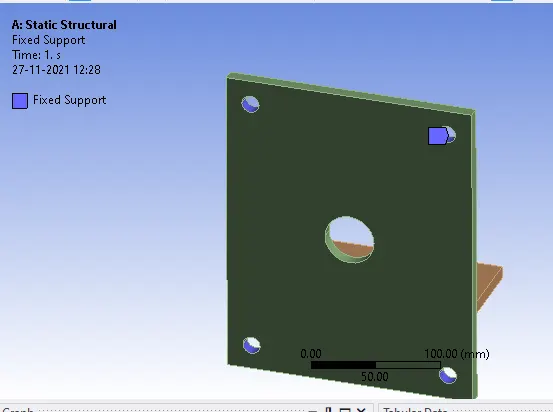
- Define fixed support at the holes as shown, found in analysis settings.
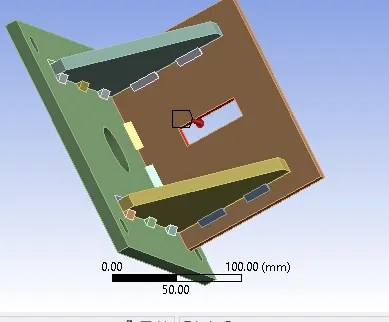
- Apply a load of 15000N at the centre hole of the other plate, define by components and on the y axis.
Analysis Settings
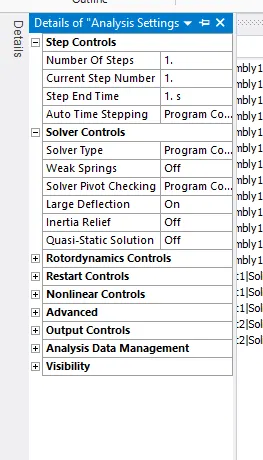
Set the analysis settings as shown.
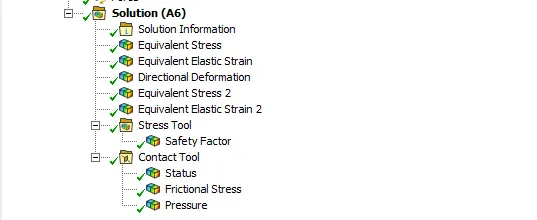
Set your output blocks as shown
Post Processing
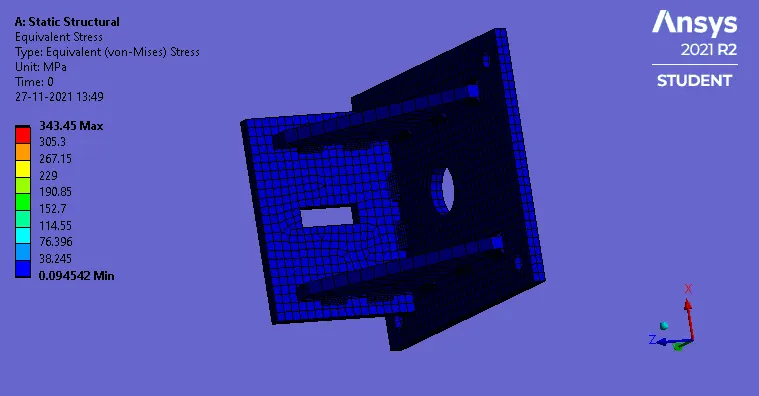
Case 1 Stainless Steel for welds ,plates and ribs
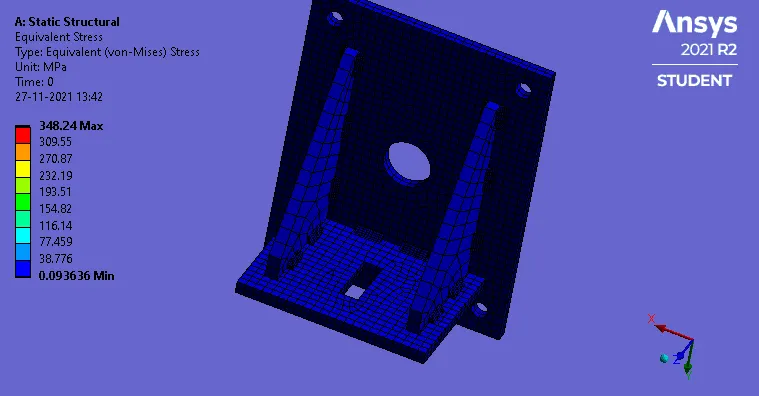
Case 2 Aluminium Alloy for weld and stainless steel for plates and ribs
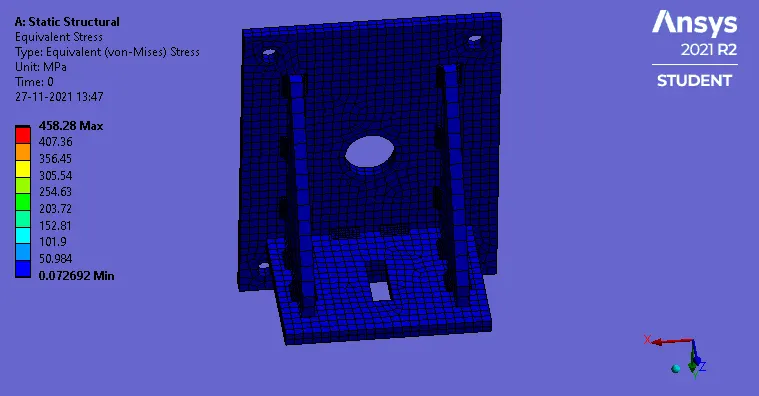
Case 3: Bronze alloy for weld and Copper Alloy for ribs
Tabulated Results of Case1 and Case 2
|
Material |
Stainless Steel |
Aluminium |
Bronze and copper ribs |
|
Maximum Stress (MPa) |
343.45 |
348.24 |
458.23 |
|
Maximum Strain |
0.0018 |
0.003345 |
0.14582 |
|
Maximum Stress on weld joint (MPa) |
296.5 |
246.76 |
435.22 |
|
Maximum Pressure on weld joint (MPa) |
39.686 |
38.084 |
47.175 |
|
Directional Deformation (mm) |
0.090 |
0.0895 |
0.1457 |
|
Frictional Stress on weld joint (MPa) |
4.005 |
4.353 |
9.5429 |
|
Maximum Strain on weld joints |
0.0014 |
0.0035 |
0.14582 |
|
Safety Factor |
0.799 |
1.3515 |
0.5481 |
From the animation files, it can be seen clearly that the joints nearest to the rectangular hole experience maximum stresses.
It can be seen that the safety factor is highest in Aluminium weld material and stainless steel ribs (1.3515) followed by steel plates and weld (0.799).
It is minimum in bronze weld and copper ribs (0.5481) indicating a very low lifetime if bronze welds are chosen.
If we look at deformation and elastic strain, it can be seen clearly that stainless steel welds are optimal due to the minimal strain experienced (0.0018 compared to 0.0033 in aluminium and 0.1458 in bronze) and will provide good stability.
However from a design point of view, aluminium welds are optimal due to an acceptable safety factor of 1.3515, stainless steel welds need more strengthening to increase the safety factor to atleast above 1.0 .
It is important to reach a good balance between stability and safety of every component for optimal life of the system.
Conclusion
Welding is the process by which two pieces of metal can be joined together. The process of welding doesn’t merely bond the two pieces together as in brazing and soldering, but, through the use of extreme heat and sometimes the addition of other metals or gases, causes the metalic structures of the two pieces to join together and become one.
In this project, different weld materials were used to simulate a simple system and it was determined by comparing the strain and deformation that stainless steel welds were optimal.However if we take safety factor into account, aluminium alloy welds are much more desirable due to the high safety factor and stainless steel welds need to be strengthened a bit more.