Week 3 Verification of Weld Joints
OBJECTIVE:
A) To Simulate three different types of welding using three different weld materials to find Directional Deformation and equivalent strain.
B) To Identify the weld joint that experiences the highest equivalent stress in each case and compare the results for all three cases.
Material to be use:
Case 1. Stainless Steel for both weldments and plates.
Case 2. Aluminium Alloy for both weldments and Stainless Steel to the plates
Case 3. Bronze for both weldments, Stainless Steel to the plates both plates, and Copper to the "Ribs".
Software used: ANSYS Workbench 2019 R3.
Boundary Conditions:
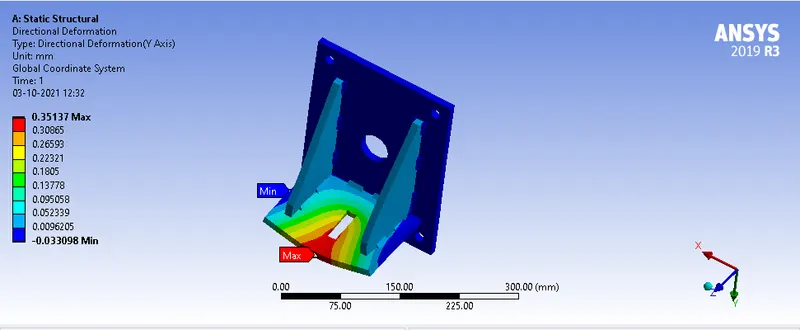
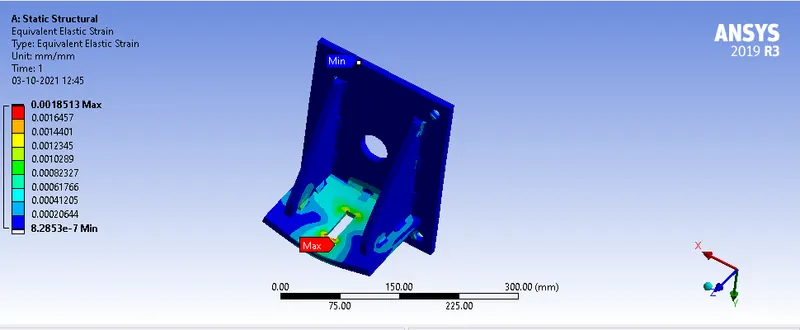
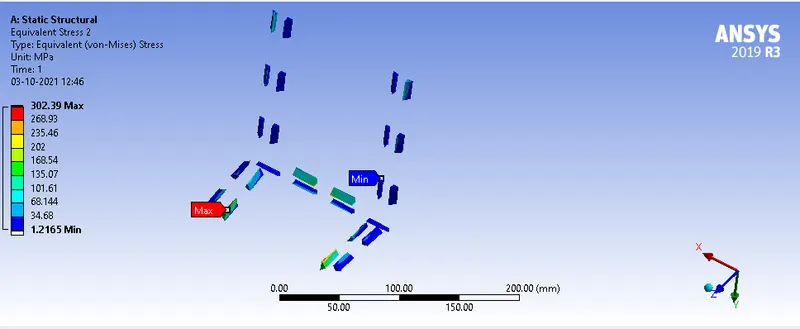
Case 1: Stainless Steel for both weldments and plate
1. a) Directional Deformation:
1. b) Equivalent Strain:
1. c) Equivalent Stress-Weld joint:
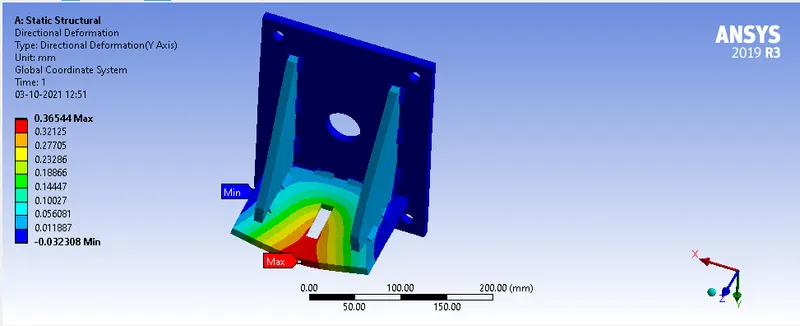
Case 2: Aluminium Alloy for both weldments and Stainless Steel to the plates
2. a) Directional Deformation:
2. b) Equivalent Strain:
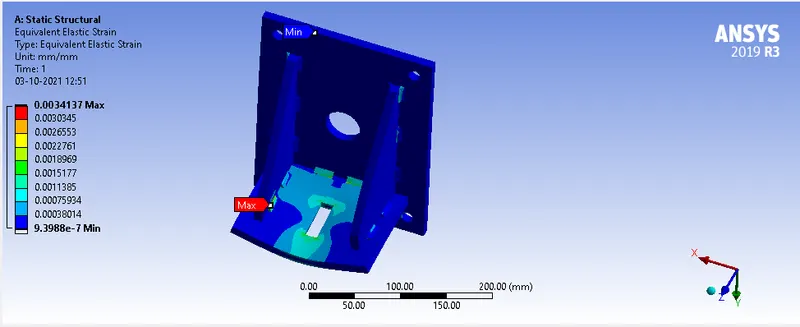
2. c) Equivalent Stress-Weld joint:
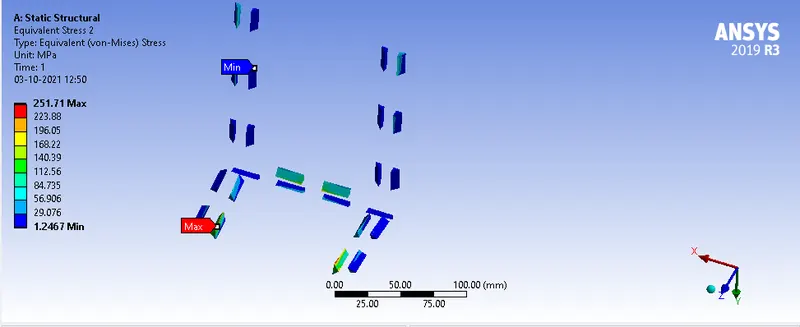
Case 3: Bronze for both weldments, Stainless Steel to the plates both plates, and Copper to the "Ribs".
3. a) Directional Deformation:
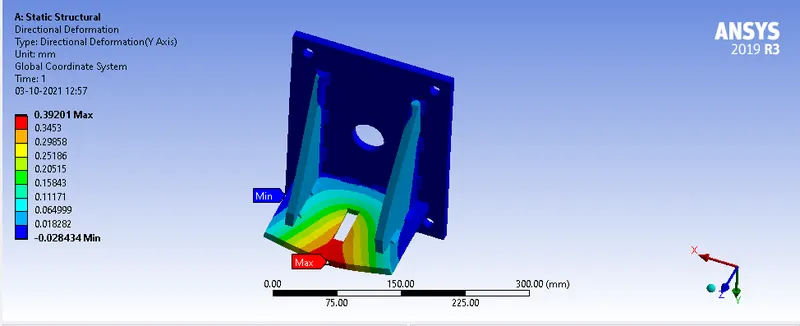
3. b) Equivalent Strain:
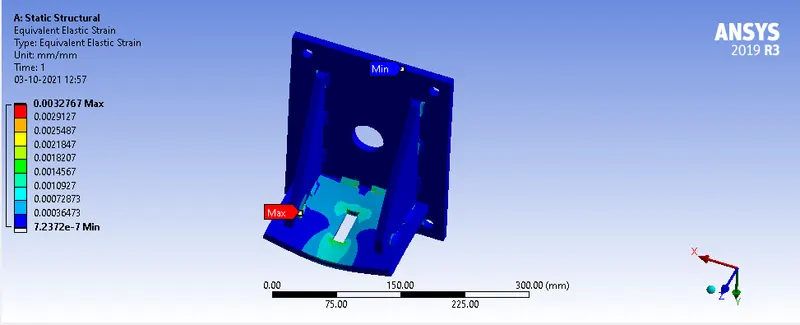
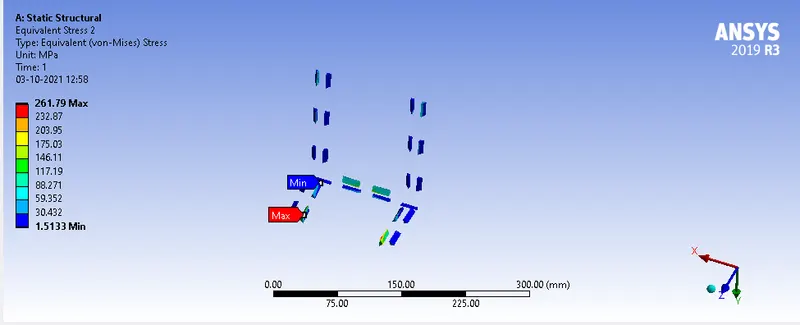
3. c) Equivalent Stress-Weld joint:
CONCLUSION:
A) Simulated three different types of welding using three different weld materials to find Directional Deformation and equivalent strain.
| CASE | DIRECTIONAL DEFORMATION IN Y-AXIS (mm) | EQUIVALENT STRAIN (mm/mm) |
| 1 | 0.351 | 0.0018 |
| 2 | 0.365 | 0.0034 |
| 3 | 0.392 | 0.0032 |
B) Identified the weld joint that experiences the highest equivalent stress in each case and the comparison of the results for all three cases is as follows:
| CASE | EQUIVALENT STRESS (Mpa) |
| 1 | 302.39 |
| 2 | 251.71 |
| 3 | 261.79 |
Maximum for Stainless Steel & Lowest for Aluminium.