Week 3 Verification of Weld Joints
VERIFICATION OF WELD JOINTS
AIM:
To analyze and stimulate for the verification of the welded joints in the model for three different materials: stainless steel, stainless steel and aluminum alloy (high drought) and brazing using bronze, copper and stainless steel.
MODEL:
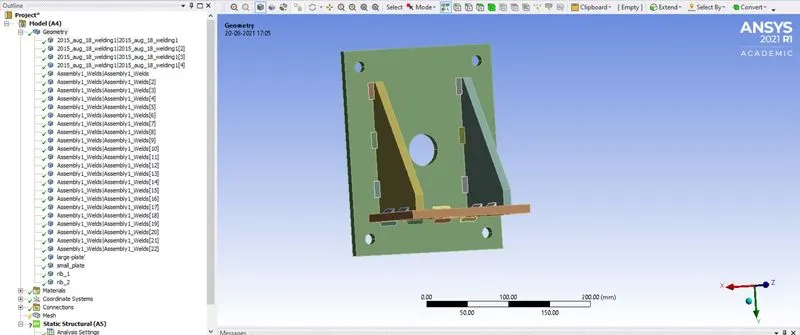
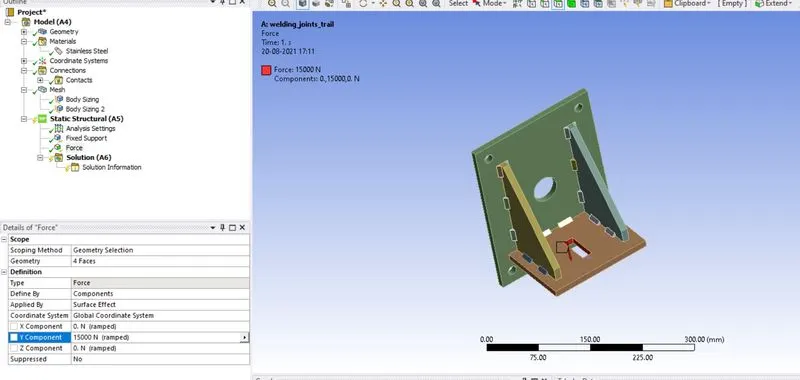
THIS MODEL CONTAINS LARGE PLATE WITH HOLES AND THE SMALL PLATE ALSO WITH HOLE AND THE RIBS USED TO CONNECT THESE TWO PLATES BY MEANS OF WELDMENTS .
MATERIALS:
THIS SIMULATION IS CARRIED BY MEANS OF THREE DIFFERENT CONDITIONS EACH WOTH THREE DIFFERENT MATERIALS.
MATERIAL 1 :
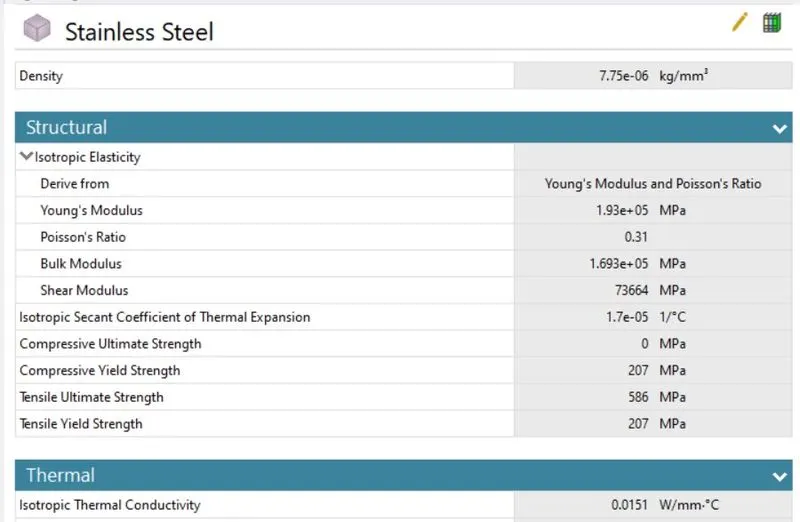
STAINLESS STEEL :
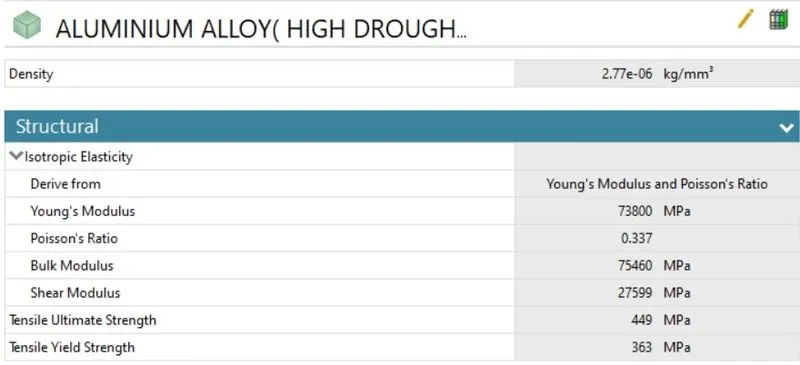
ALUMINIUM ALLOY ( HIGH DROUGHT ) :
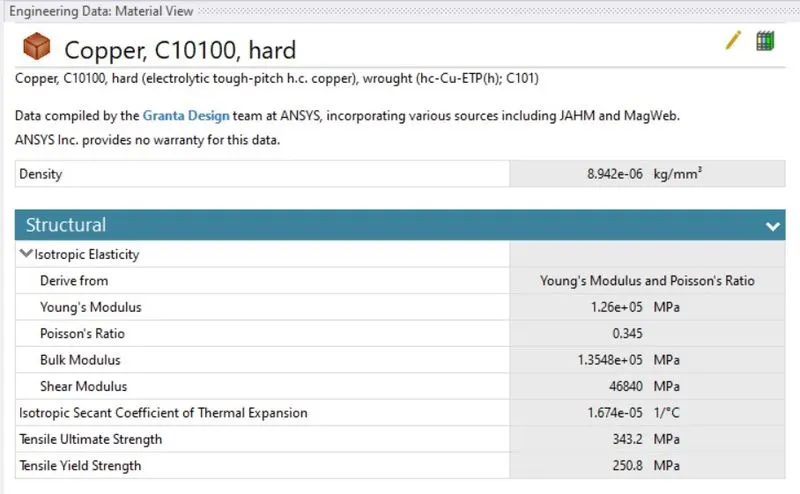
COPPER :
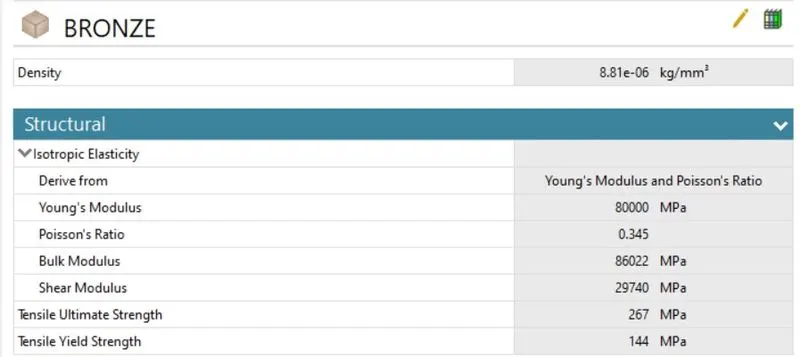
BRONZE:
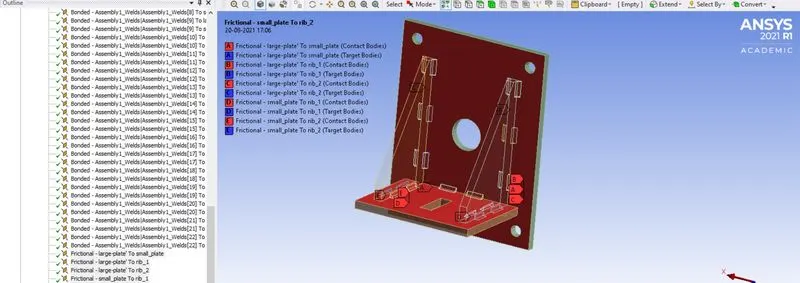
CONTACTS:
THE CONTACTS HAVE BEEN MODIFIED ACCORDING TO THEIR DEFINITION
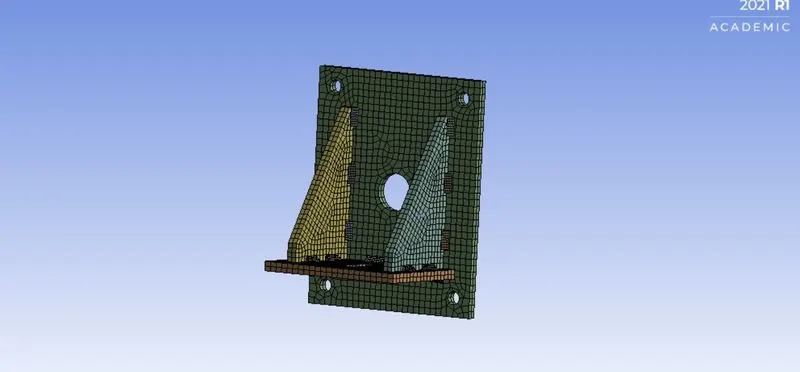
MESH:
THE MESH REFINEMENT HAS BEEN MADE TO THE REST OF THE MODEL EXCEPT FOR THE PLATES , HAS WE HAVE A[PPLIED THE MESH SIZE OF 7mm . AND 6mm MESH SIZE TO THE RIBS AND THE WE ARE USING THE ADAPTIVE MESH REFINEMENT TO THE REST OF THE WELDMENTS.
ANALYSIS SETTINGS:
- The given model consists of two plates (small plate and big plate) both of the plates are connected by the ribs by means of the welding flux.
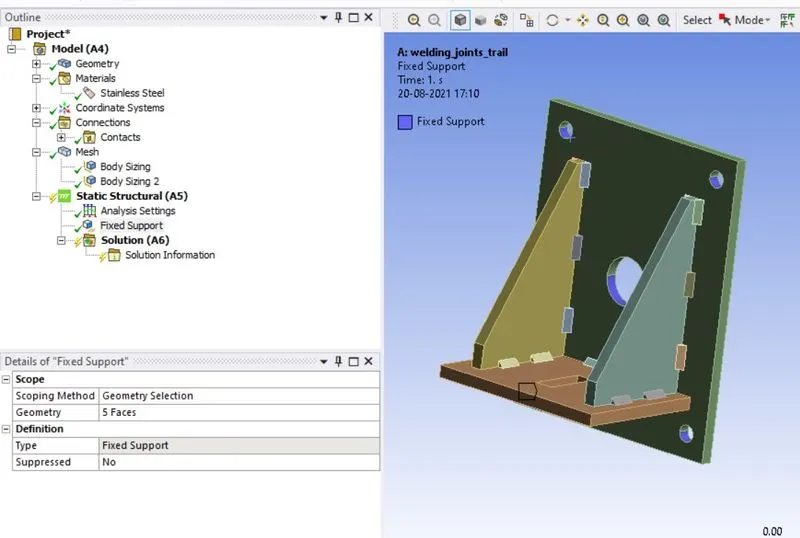
- In this case the simulation is carried out by means of fixing the big plate in the wall by means of giving the plate with fixing support and the load is applied on the small plate.
- While applying the load in the small plate which is connected to the big plate by means of the welding material, experiences a stress on the welding flux and the plate.
- This analysis is done by this means, to find out the which welded portion experience more stress when applied with 15K N force on the model.
SUPPORT SETUP :
THE MODEL HAS BEEN FIXED ON THE BIG PLATE , LIKE FIXING THE SETUP IN A WALL BY MEANS OF SCREWING .
FORCE SETUP :
THE FORCE OF 15kN HAS BEEN APPLIED ON THE MID PLATE ( SMALL PLATE ) .
Condition (1):
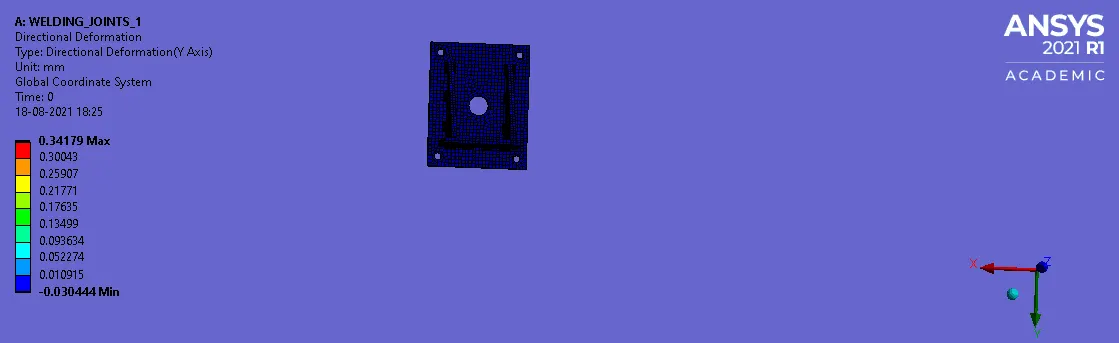
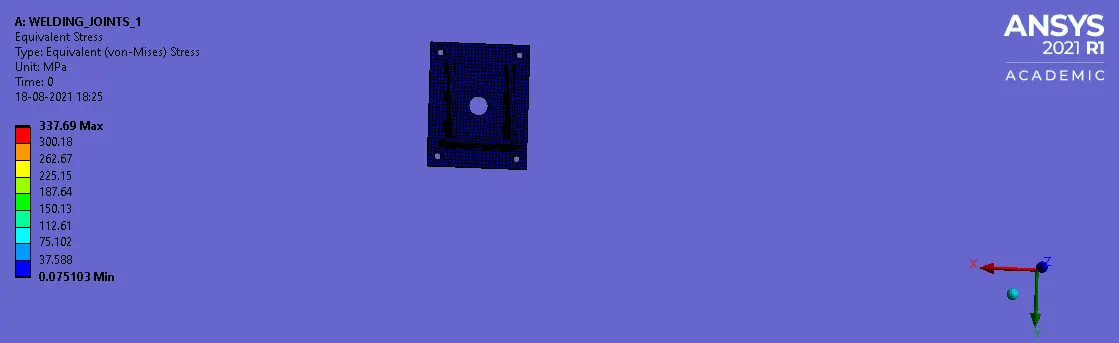
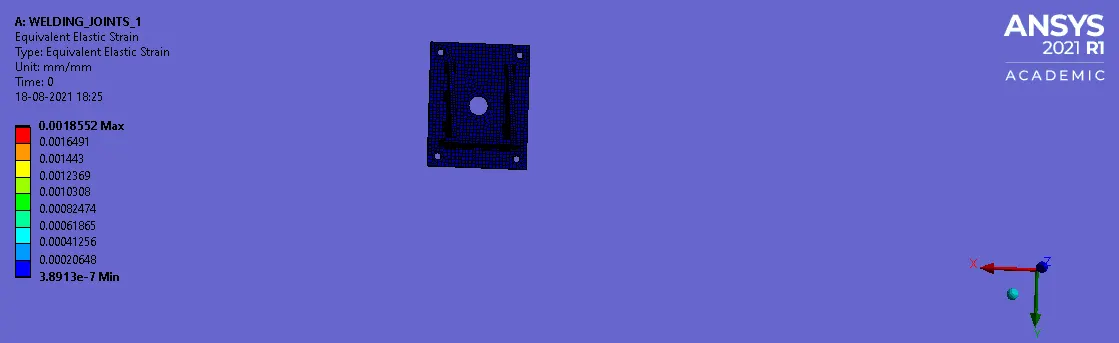
Material used: stainless steel (both the plates and ribs and also the welding material)
Directional deformation:
Equivalent stress:
Equivalent strain:
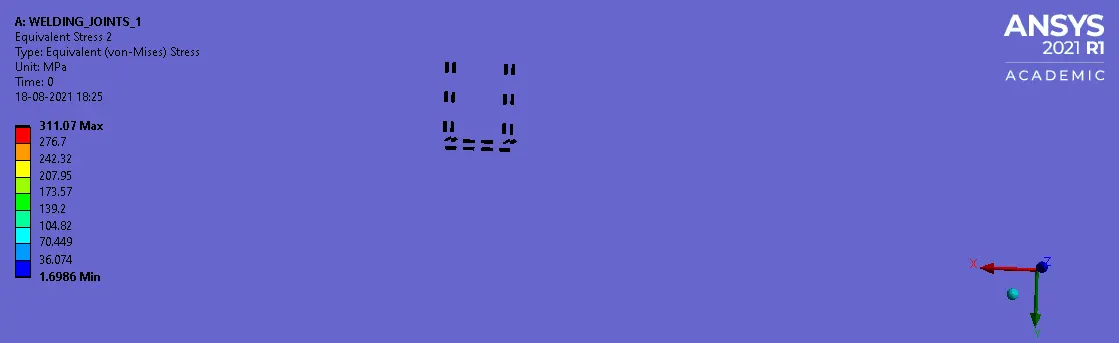
Equivalent stress (welding portion):
Contacts:
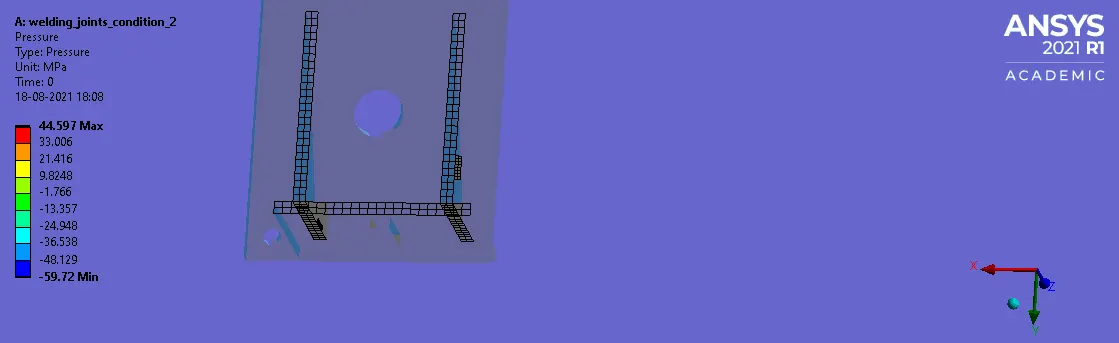
PRESSURE:
STATUS :
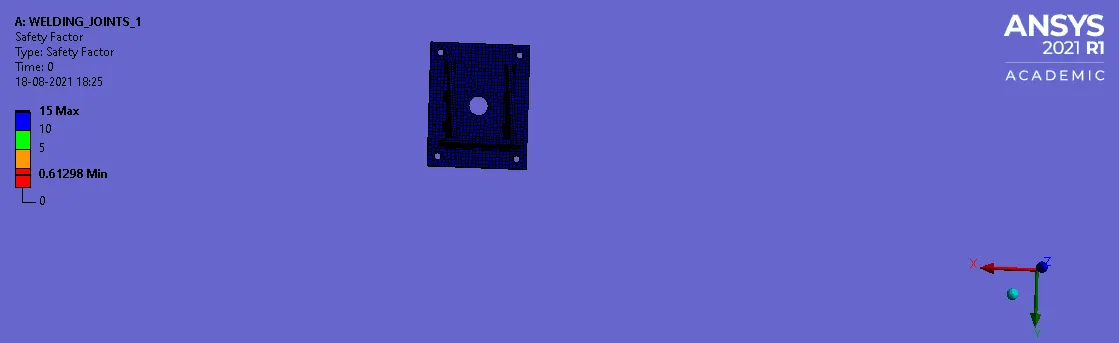
SAFETY FACTOR :
Force convergence:
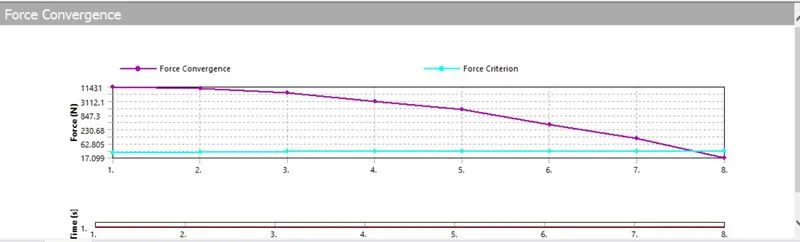
FROM THE ABOVE SIMULATION USING THE MATERIAL STAINLESS STEEL FOR ALL THE PARTS INCLUDING THE WELDMENTS , SHOWS THAT THE SAFETY FACTOR IS AT LESS THAN 1 .
Condition (2):
Material used: aluminum alloy (high drought) for the ribs and the welding flux and stainless steel for the plates.
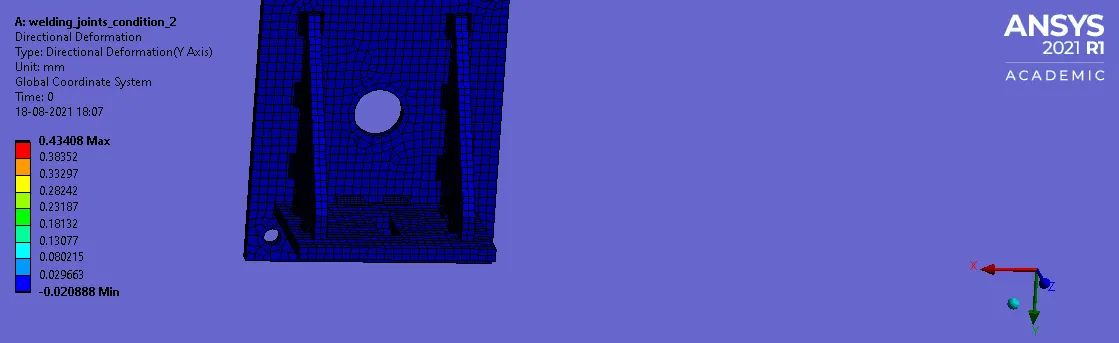
Directional deformation:
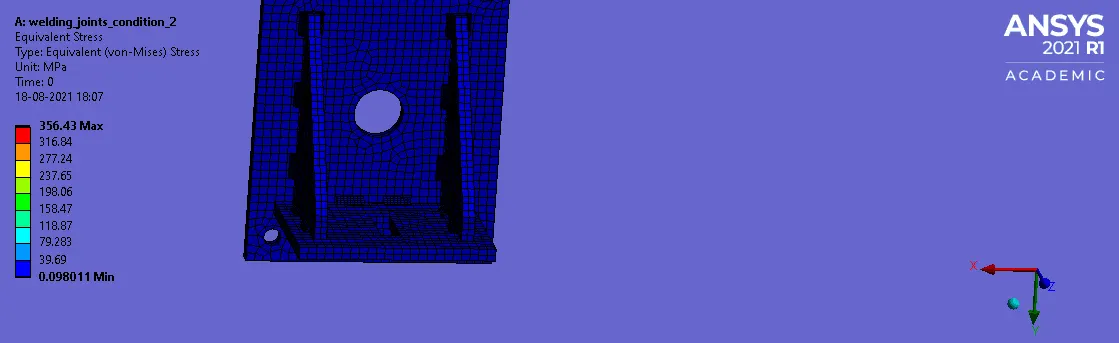
Equivalent stress:
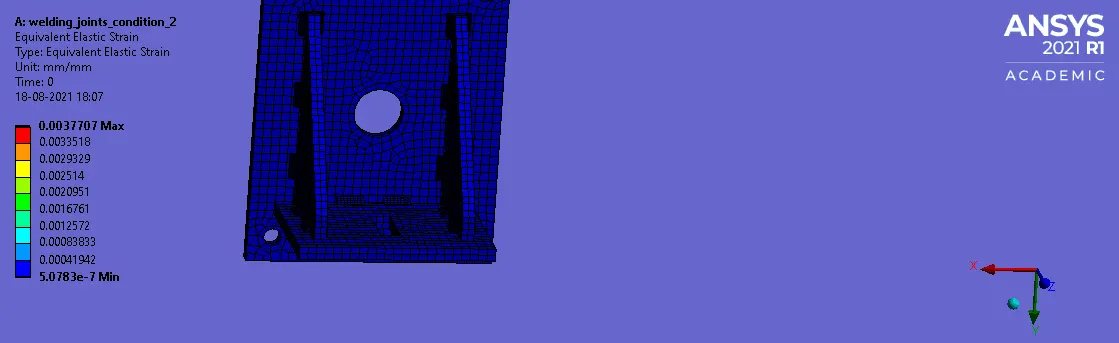
Equivalent strain:
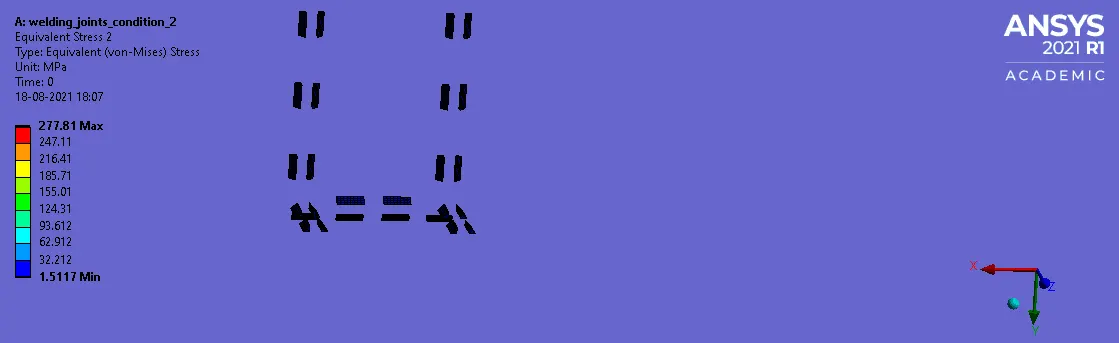
Equivalent stress (welding portion):
Contact:
PRESURE:
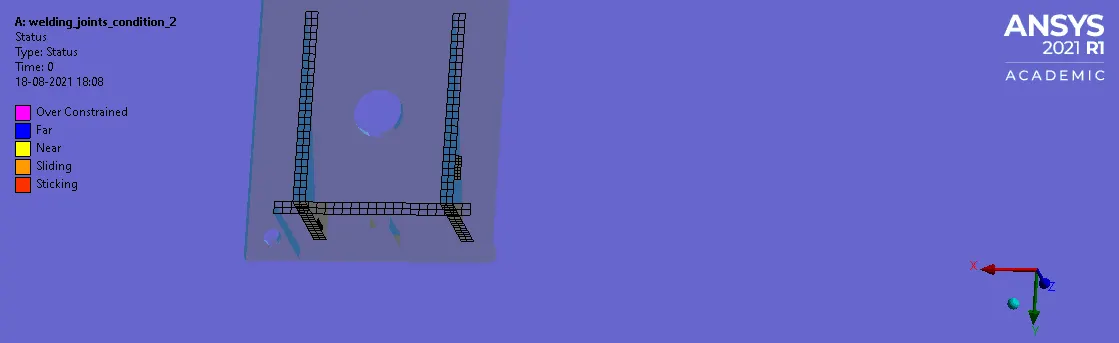
STATUS:
SAFETY FACTOR:
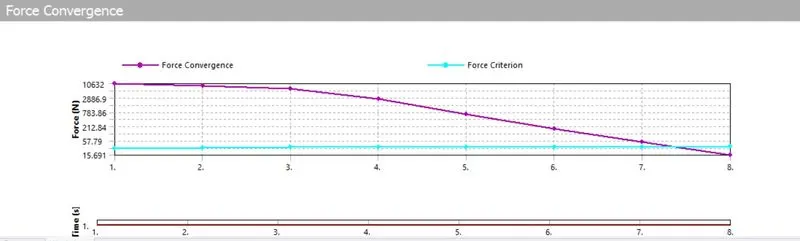
Force convergence:
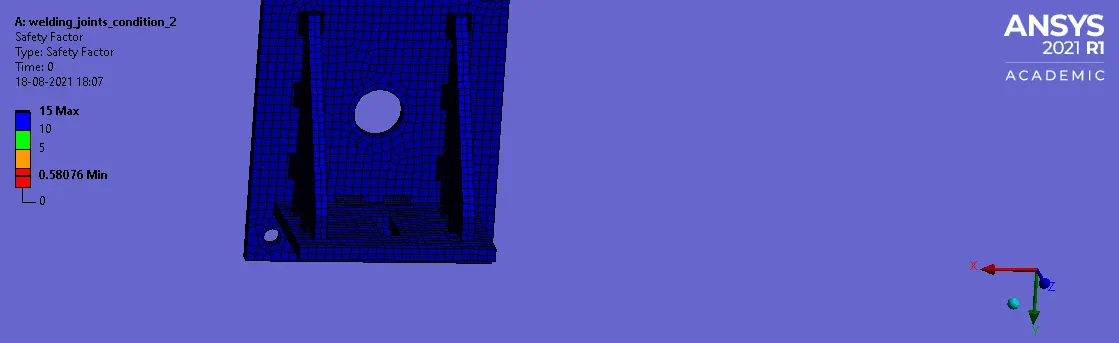
FROM THE ABOVE SIMULATION USING THE ALUMINIUM ALLOY AS WELDMENT MATERIAL AND STAINLESS STEEL FOR THE PLATES , WE CAN SEE THE SAFETY FACTOR IS 0.580 .
Condition (3):
Material used: brazing process – plates with the stainless steel and the welding material used here is brass and the ribs has the copper material
Directional deformation:
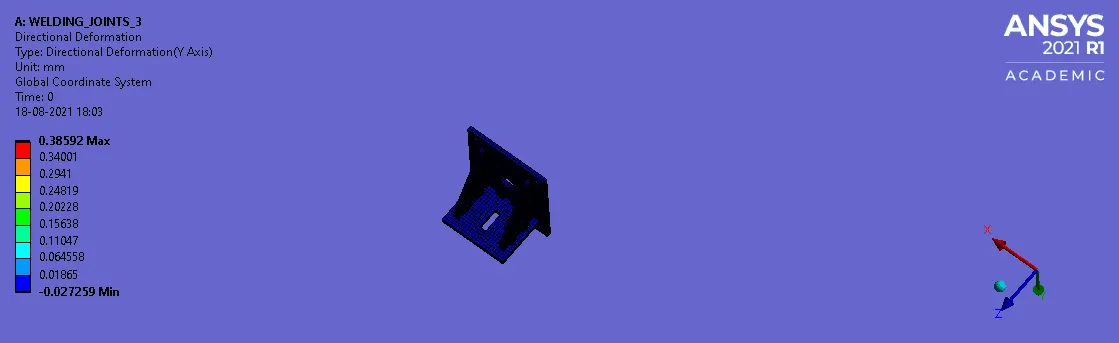
Equivalent stress:
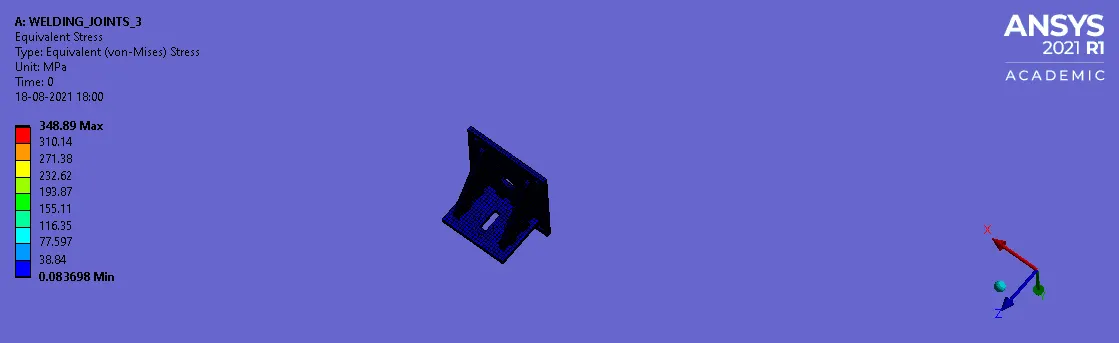
Equivalent strain:
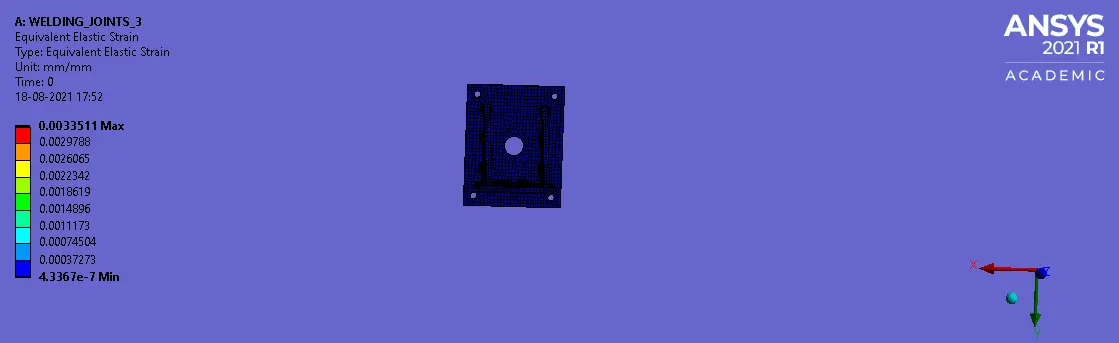
Equivalent stress (welding portion):
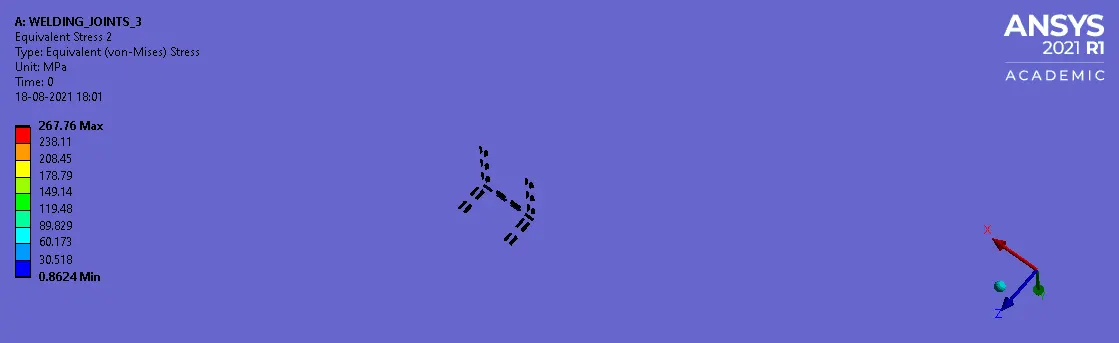
Contacts:
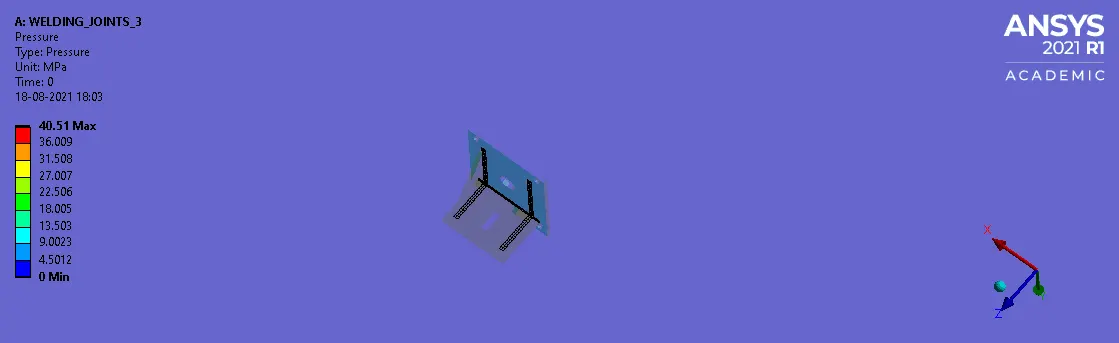
PRESSURE :
STATUS:
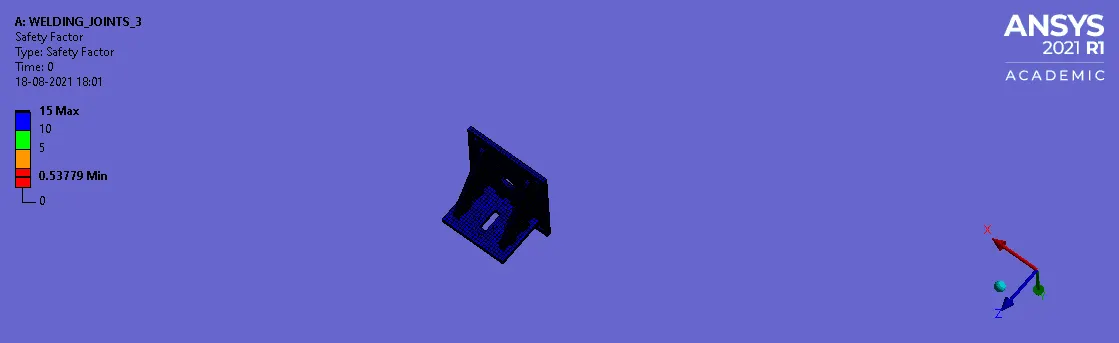
SAFETY FACTOR :
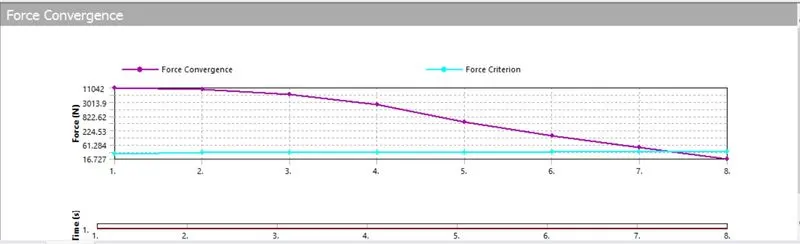
Force convergence:
FROM THE ABOVE SIMULATON WE CAME TO CONCLUDE THE SAFETY FACTOR FOR THE BRAZING PROCESS IS 0.530 .
Conclusion:
From the analysis, the maximum stress experienced by each of the material is weld joint 2 , where the small plate and big plate are welded together adhesively , it experiences the most stress of 311.1 MPa for stainless steel , and 277.81 MPa for aluminium alloy ( high drought ) material , finally 267.76 MPa for brazing material . THUS, WE COME TO CONCLUDE THAT THE MODEL WITH SAME MATERIAL OF WELDMENTS AND THE SETUP CAN WITHSTAND MAXIMUM AMOUNT OF LOAD AND IT ALSO PROVIDE LONG LIFE .