Week 3 Verification of Weld Joints
OBJECTIVE :-
Simulate three different types of welding using three different weld materials
Weld Material used:
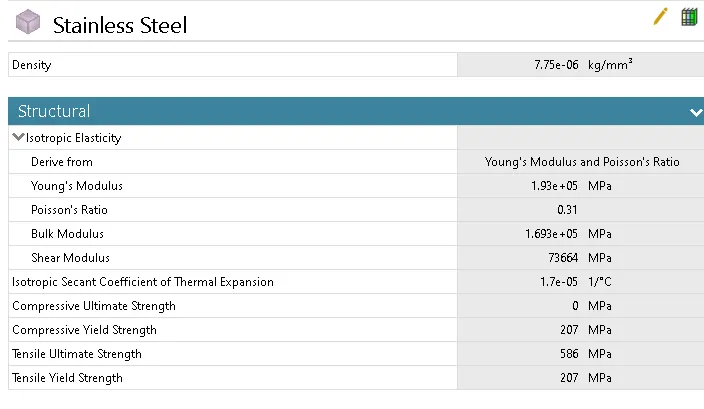
Case 1. Stainless Steel: In this case, the material of the plates must also be the same. Use Stainless steel for both weldments and plates. No need to add flux to the weldments.
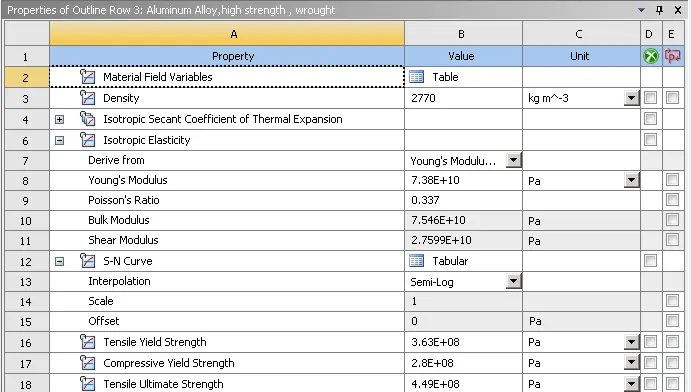
Case 2. Aluminium Alloy:The material to be chosen for this case is Aluminium alloy(high strength, wrought). [Plate material to be used is stainless steel]
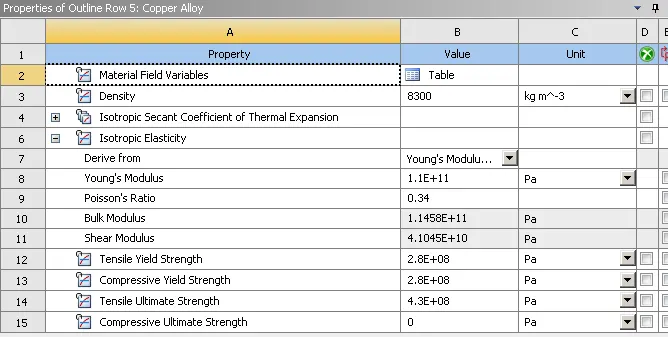
Case 3.Bronze: In order to simulate "Brazing", you should be using bronze as the weld material. Assign Stainless Steel to both plates and Copper to the "Ribs".
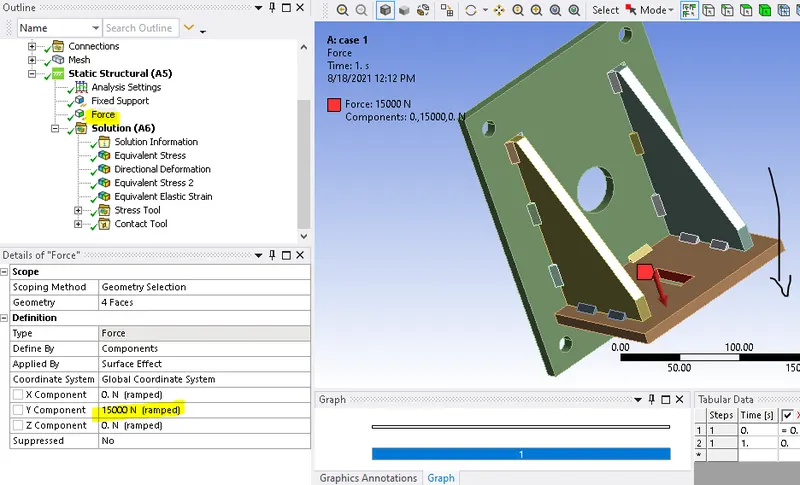
Run the simulation for a load of 15000N that is to be applied at the rectangular hole in the small plate.
CASE SETUP:-
- open ansys workbench and drop down the static structure onto the project window.
- Select/create materials (Aluminium Alloy,Stainless Steel,Bronze,and Magnesium Alloy NL) from Engineering data sources with required properties.
- Import the geometry.
- Open the mechanical module.
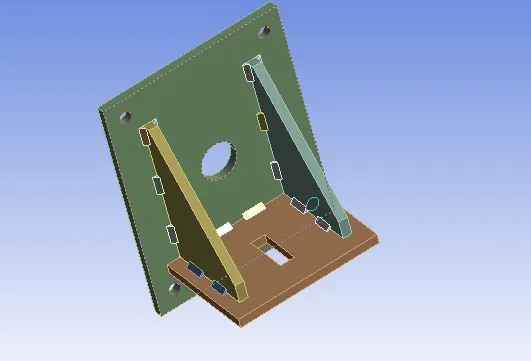
- in this project we used 4 different materials , they are Stainless Steel, Aluminium Alloy, Copper and bronze
Properties of stainless steel
Properties of Aluminium alloy
Properties of copper alloy
Properties of bronze
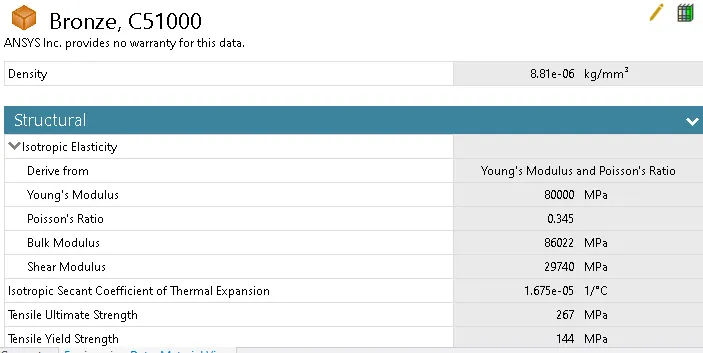
Contacts
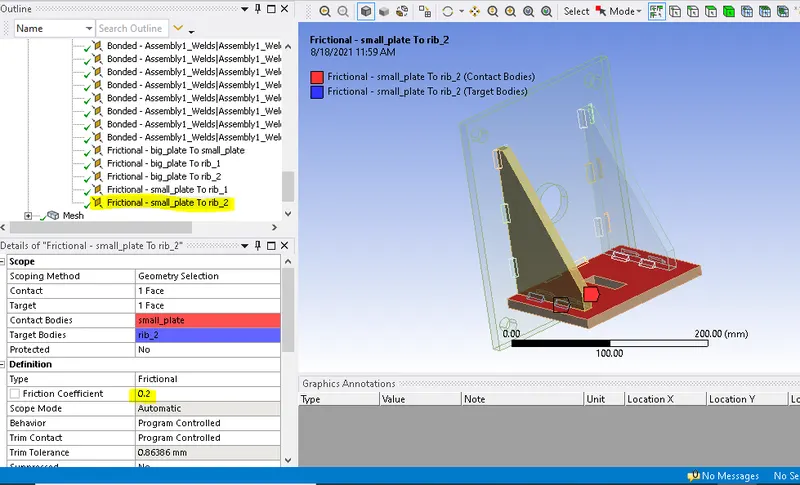
- Create 5 frictonal contacts between plates and ribs with a co-efficient of 0.2
- contact -1, between big plate and small plate
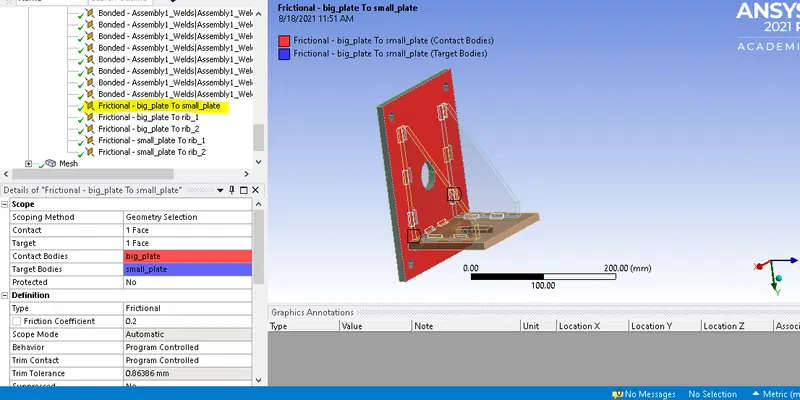
- contact -2, between big plate and rib1
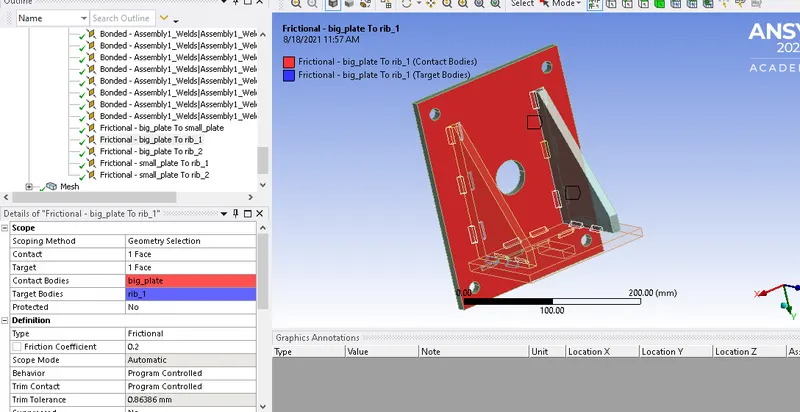
- contact -3, between big plate and rib2
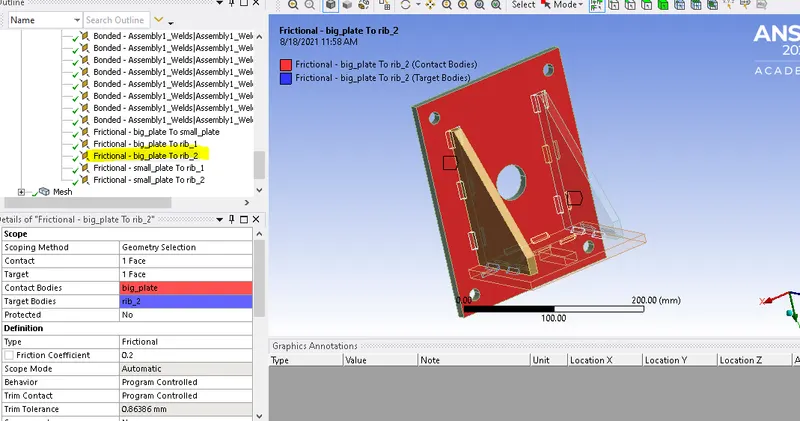
- contact -4, between small plate and rib 1
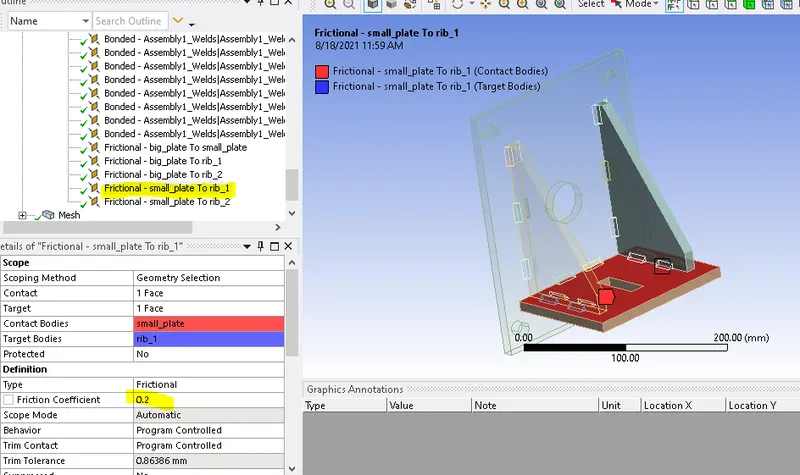
- contact -5, between small plate and rib2.
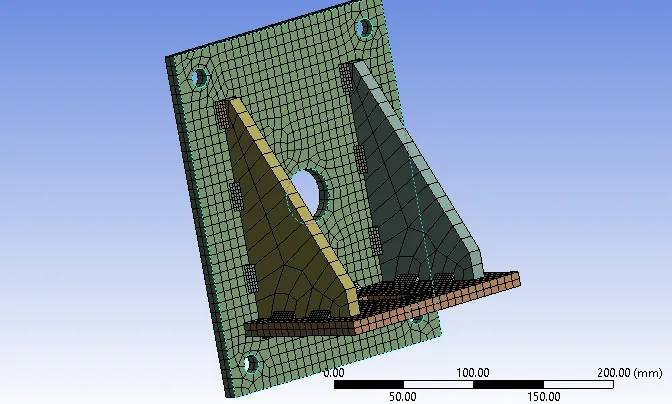
MESH
- Created a 7mm mesh for both big and small plates using body sizing option
- For ribs and weld parts take default mesh
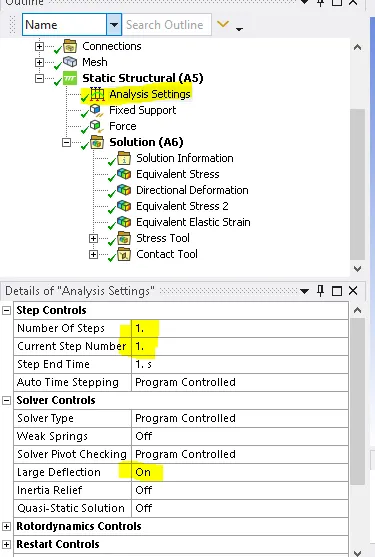
Analytical settings - this analysis setup for 1 step, this doesn't control time step, but it is only indication of points where boundary conditions change. the time step is auto controlled by minimum ,initial maximum and time steps.
BOUNDARY CONDITIONS
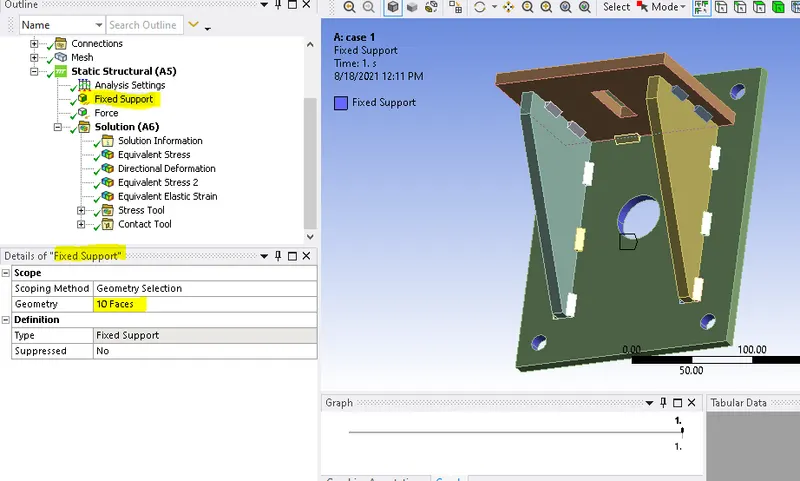
- We have to give fixed support for the 5 holes of a big plate
- We have to apply force of 1500N in the Y- direction to the rectangular hole present in the small plate
RESULTS
case 1- Use Stainless steel for both weldments and plates
deformation scale factor - 99(2*auto)
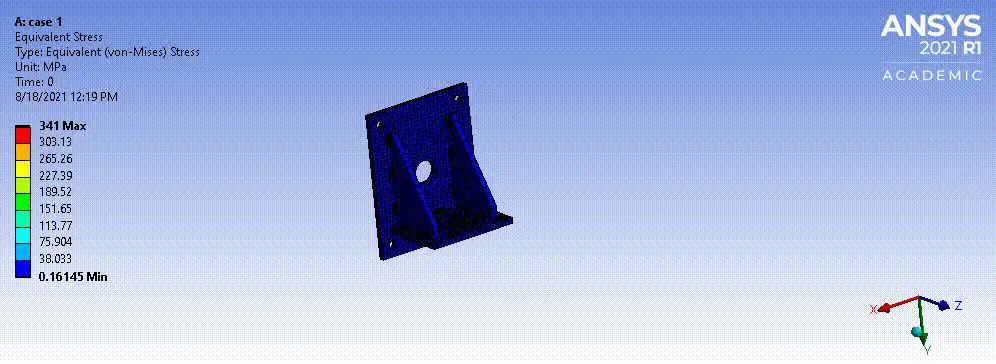
Equivalent stress
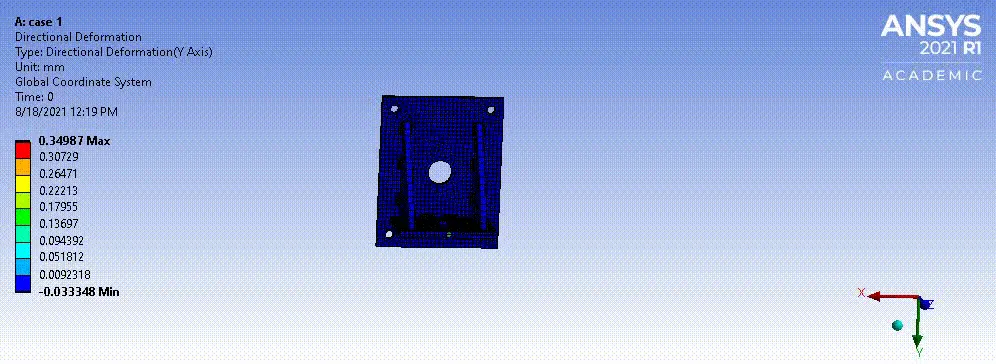
Y- directional deformation
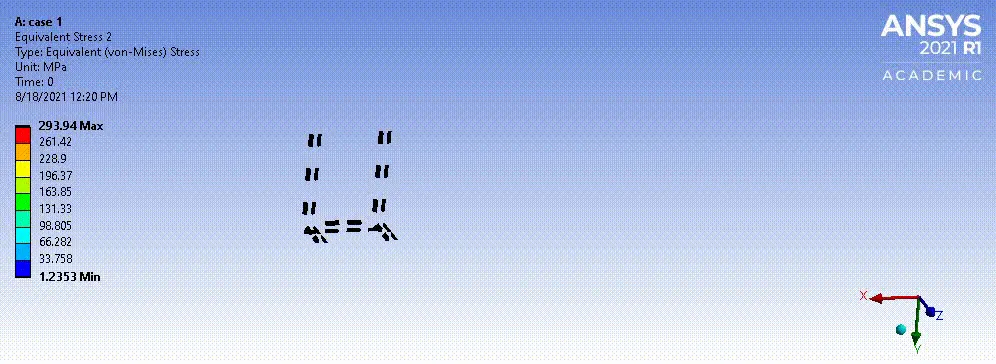
Equivalent stress - only on weldments
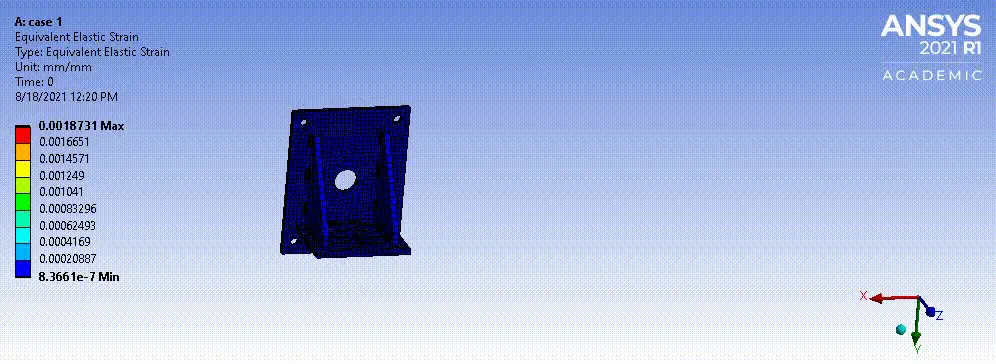
Equivalent elastic strain
case 2- Aluminium alloy(high strength, wrought) for wedments and stainless steel for plates and ribs
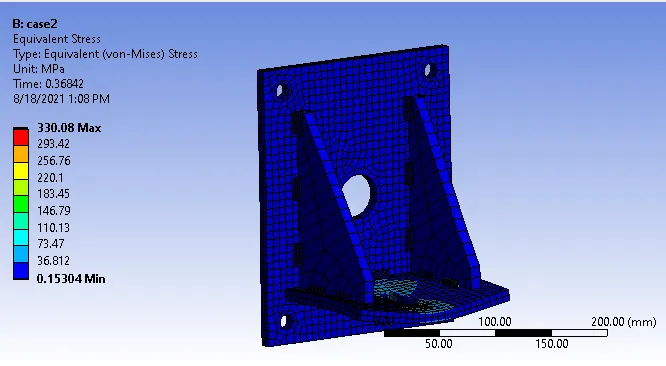
Equivalent stress
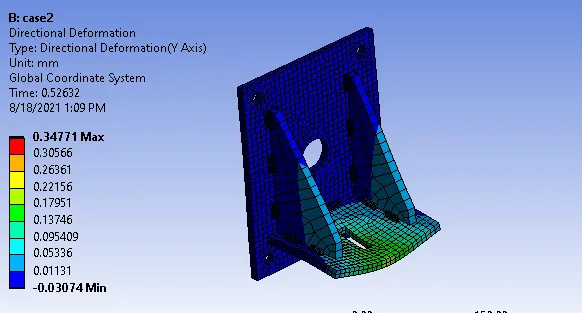
Y- directional deformation
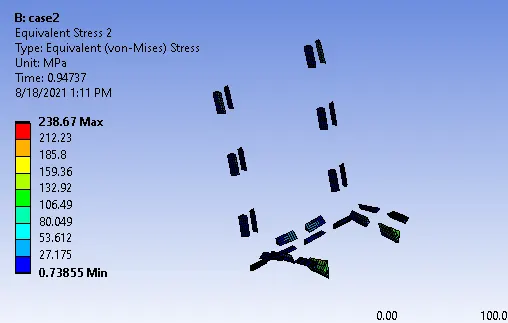
Equivalent stress - only on weldments
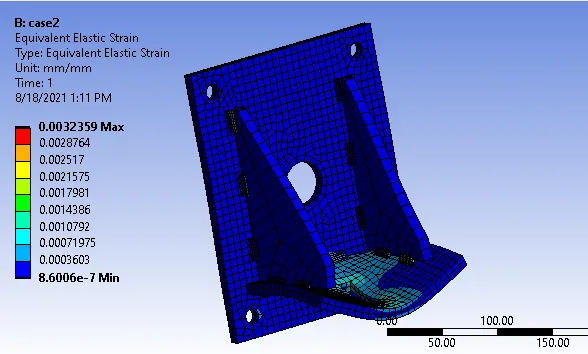
Equivalent elastic strain
case 3- Bronze for wedments, stainless steel for plates and copper for ribs
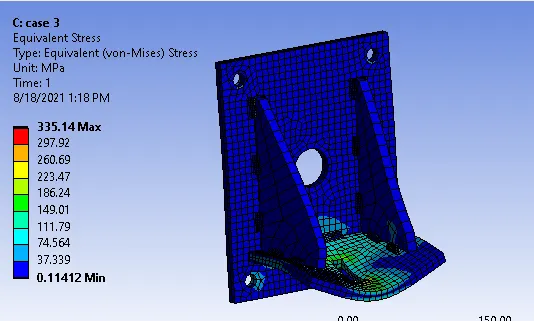
Equivalent stress
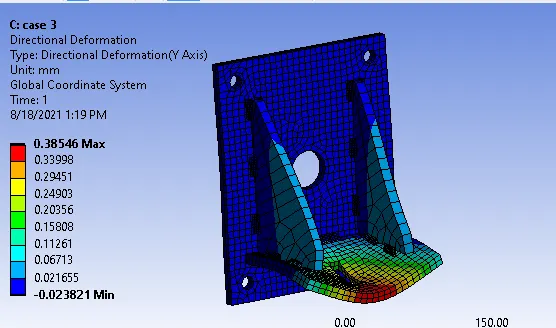
Y- directional deformation
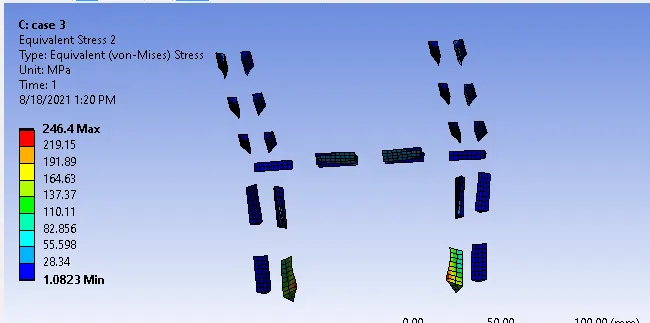
Equivalent stress - only on weldments
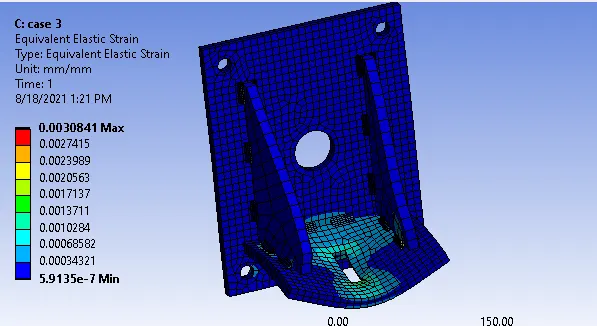
Equivalent elastic strain
comparision of results
| Equivalent stress | Directional deformation | Equivalent stress on weldments | Equivalent elastic strain | |
| case - 1 | 341 | 0.34987 | 293.94 | 0.0018731 |
| case - 2 | 330.08 | 0.34771 | 238.67 | 0.0032359 |
| case - 3 | 335.14 | 0.38546 | 246.4 | 0.0030841 |
conclusion
- we can see that stress on weldments is more in case 1, bcz for case 1 we taken steel as weld material and it has maximum youngs modulus (E=193000mpa) among other materials.and less stress on weldments for case2 therefore weldments with Aluminium alloy(high strength, wrought) will be having max strength to withstand the failure compared to other matrials in list and stainless steel weldmnts has min strength.
- for case 3, weldments will be deform permanently because in this case we taken bronze material for weldments, yield strength of bronze material is 144mpa but 246.4mpa stress generated on weldments in this case so weldments will be deform permanently.
- Deformation is low in case 2, followed by case 1 and case 3.