Week 3 Verification of Weld Joints
OBJECTIVE:
- Set up the model to verify how the weld behaves in load condition for different materials
STEPS:
Import materials:-
- Initally open the engineering data and import the materials mentioned above
- Add new materials with properties which is not in the library
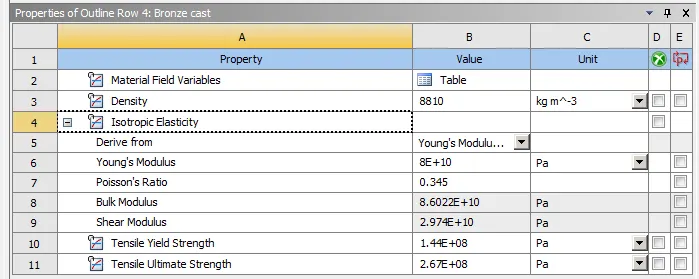
- Bronze cast property
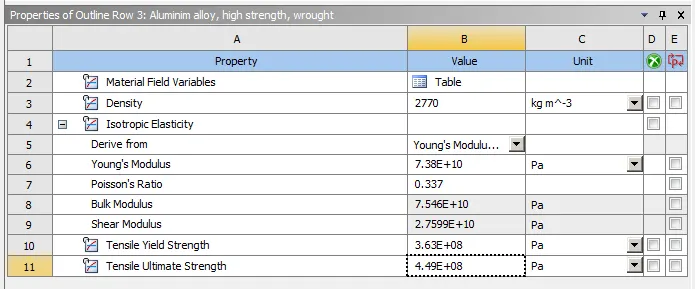
- Aluminim alloy property, high strength , wrought
Import geometry:-
- Import the geometry from saved location
- Open the geometry in space claim and check for any abnormality in mode
- Once the model is proper, further proceed with next step
Mechanical workbench:-
- Rename the geometry according to the convinience
- Go to connection and rename the connection based on definition
- Let the weld connection be bonded type
- Connection between big plate, small plate and ribs be type frictional with co-efficient of 0.2
- Mesh the model, perform body sizing on plates with element size 7mm, generate mesh
- Go to analysis setting in this case we have only one step, let the large deflection be ON
- Now define the fixed support and force load
- Fixed support on the holes in big plate
- Force on the rectangle cut outin global Y direction with 15000N
- The above mentioned will be same only the materials of plates, weldements and weld materials will change accordingly
Output Request:-
- Get the solution of for
Equivalent stress for weld materials,
Equivalent strain,
Directional deformation for global Y direction
RESULTS:
Case 1:-
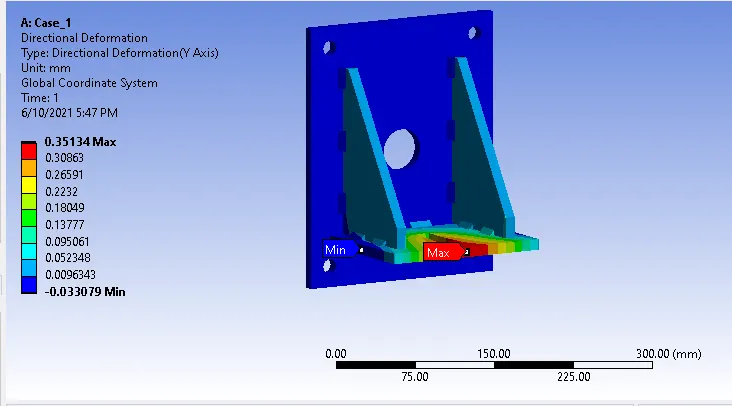
- Directinal Deformation
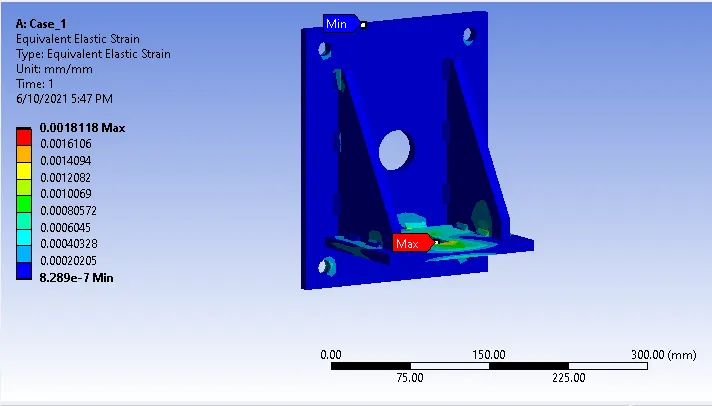
- Equivalent Strain
- Equivalent Stress
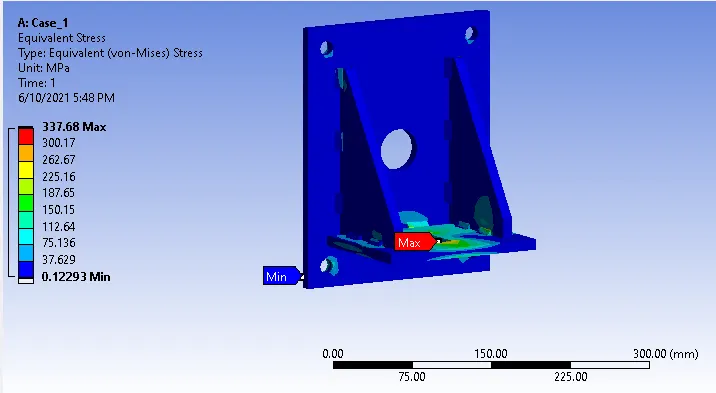
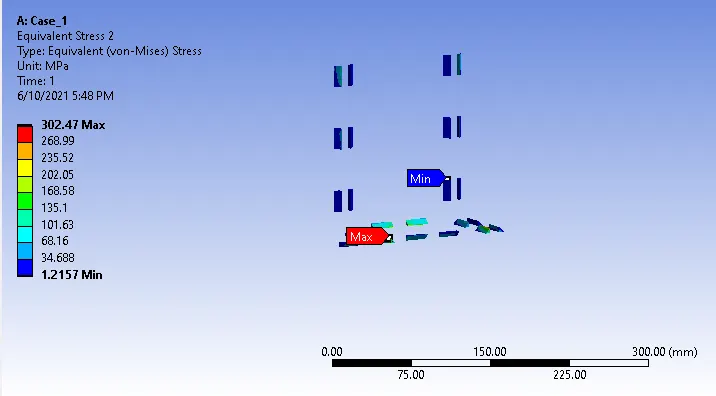
- Equivalent Stress for weld materials
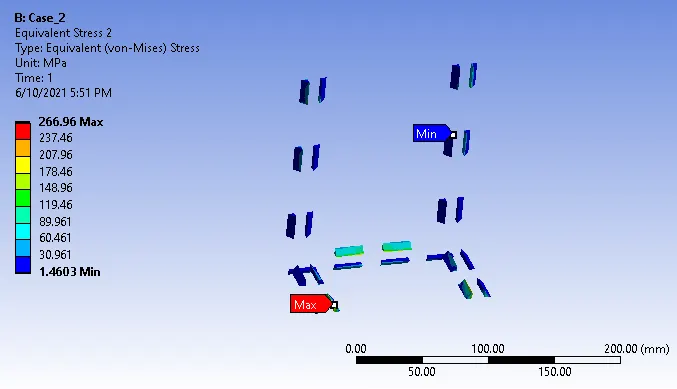
Case 2:-
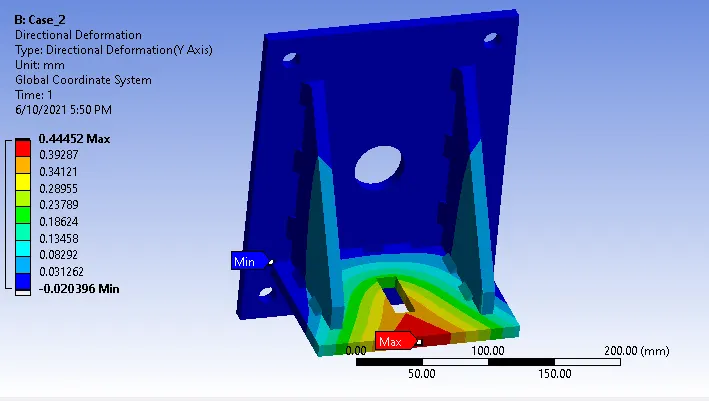
- Directinal Deformation
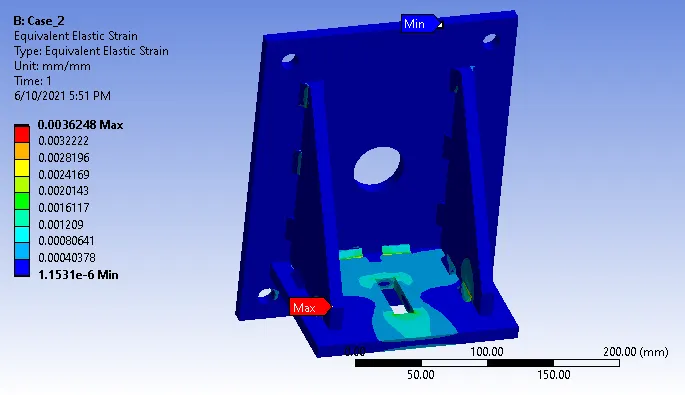
- Equivalent Strain
- Equivalent Stress
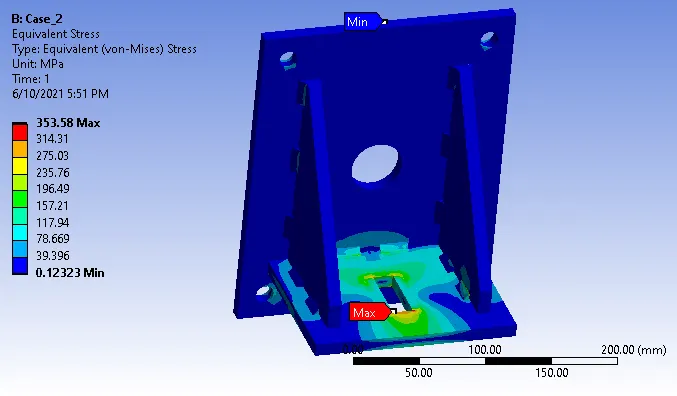
- Equivalent Stress for weld materials
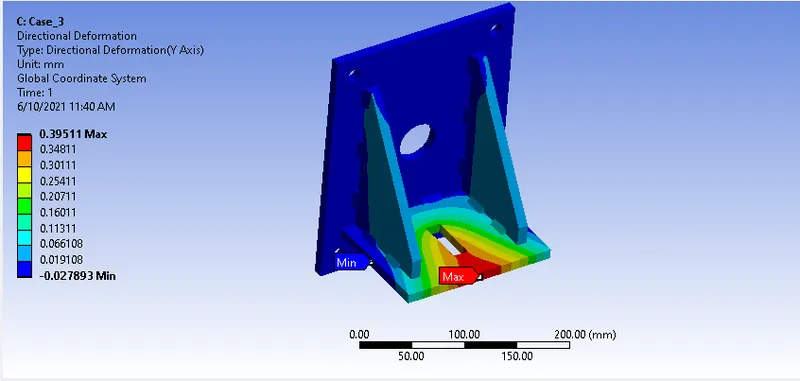
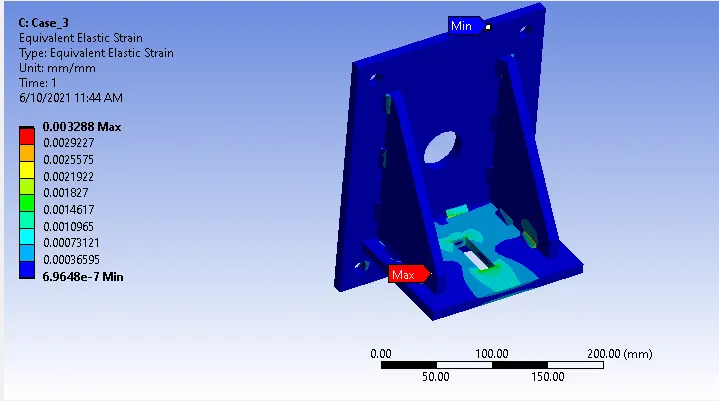
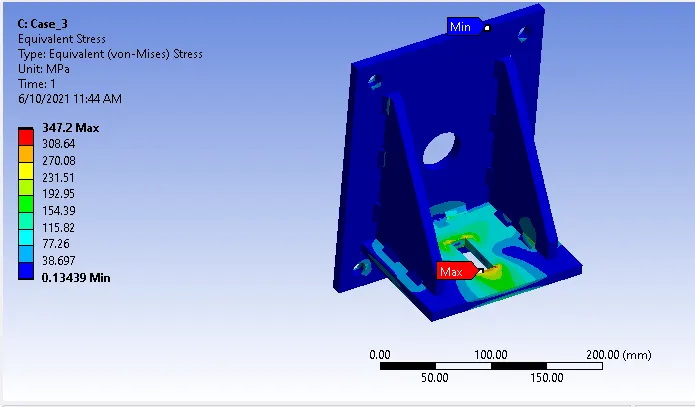
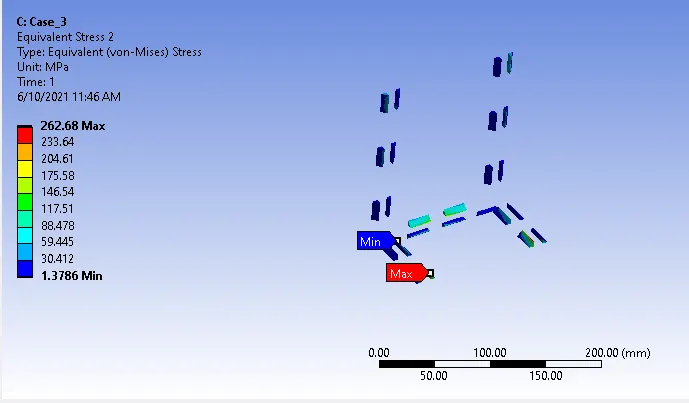
Case 3:-
- Directinal Deformation
- Equivalent Strain
- Equivalent Stress
- Equivalent Stress for weld materials
-
Case Directional Deformation (mm) Equivalent strain (mm/mm) Equivalent Stress (Mpa) Equivalent Stress for weld materials (Mpa) 1 0.35134 0.0018118 337.68 302.47 2 0.44452 0.0036248 353.58 266.96 3 0.39511 0.003288 347.2 262.68
CONCLUSION:
- From the above results we can see the maximum stress occurs in case 2
- Deformation is high in case 2 comparitively
- Case 1(stainless steel) is having the highest equivalent stress developed in weld element
- Due to brazing in case 3, the equivalent stress in weld is lower than the other two cases
- In all the cases weld which is closer to the force load is experiencing the maximum stress