Week 3 Verification of Weld Joints
Aim of the Analysis:
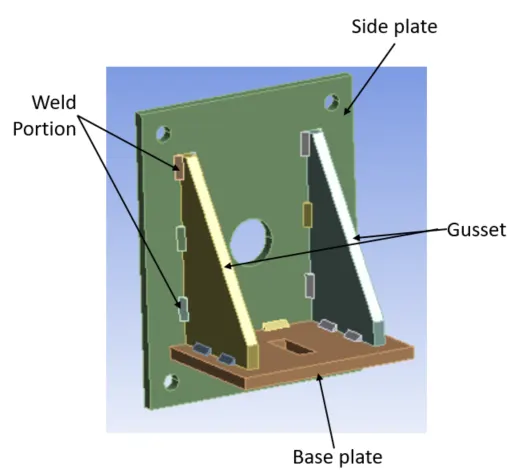
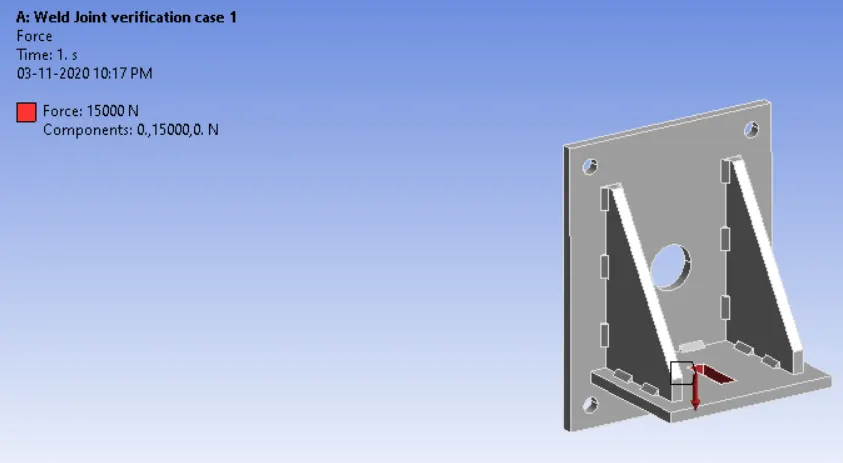
Run the below simulation cases with load of 15000 N applied at the rectangular hole in the small plate.
Case 1. Stainless Steel: In this case, the material of the plates must also be the same. Use Stainless steel for both weldments and plates. No need to add flux to the weldments.
Case 2. Aluminium Alloy:The material to be chosen for this case is Aluminium alloy(high strength, wrought). [Plate material to be used is stainless steel]
Case 3.Bronze: In order to simulate "Brazing", you should be using bronze as the weld material. Assign Stainless Steel to both plates and Copper to the "Ribs".
Objective:
The Verification of weld joints analysis to find Directional Deformation, Equivalent Strain and Equivalent Stress in the Rectangular hole based on the diffferent weld materials.
with this use of different welding material we will have different strength of the part and failure analysis is important due to which this analysis will provide better idea on the better weld material to be used for the applied load of 15000 N in any application.
Analysis Parts used & Weld Material properties Details:
| Details | Structural Steel | Stainless Steel | Aluminium Alloy | Bronze | Copper(ribs) |
| Density Kg/m3 | 7850 | 7750 | 2770 | 8810 | 8942 |
| Tensile Yield Strength (MPa) | 250 | 207 | 363 | 144 | 250.8 |
| Tensile Ultimate Strength (MPa) | 460 | 586 | 449 | 267 | 343.2 |
| Possion Ratio | 0.3 | 0.3 | 0.34 | 0.345 | 0.345 |
| Young's Modulus(MPa) | 2e+05 | 1.93e+05 | 73800 | 80000 | 1.26e+05 |
Connection Details:
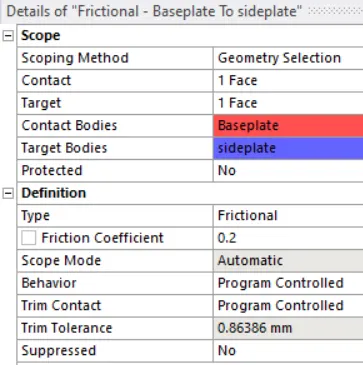
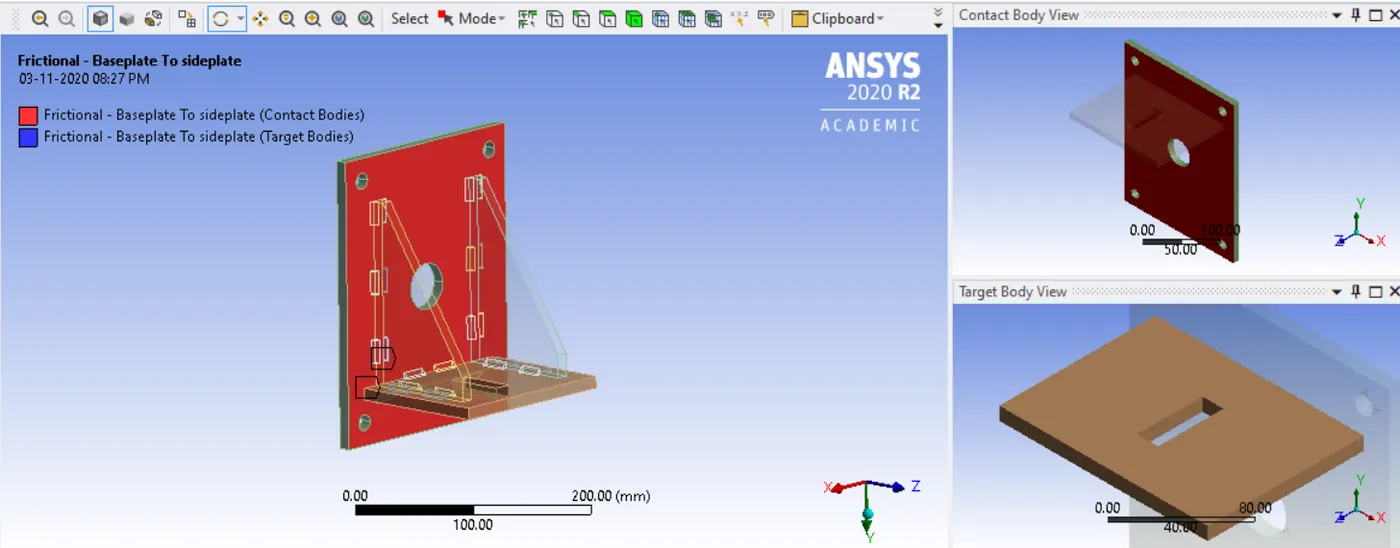
1. Baseplate to Sideplate:
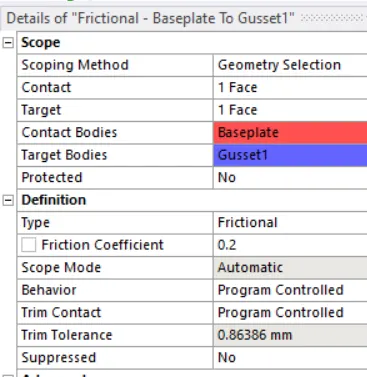
2. Baseplate too Gusset 1:
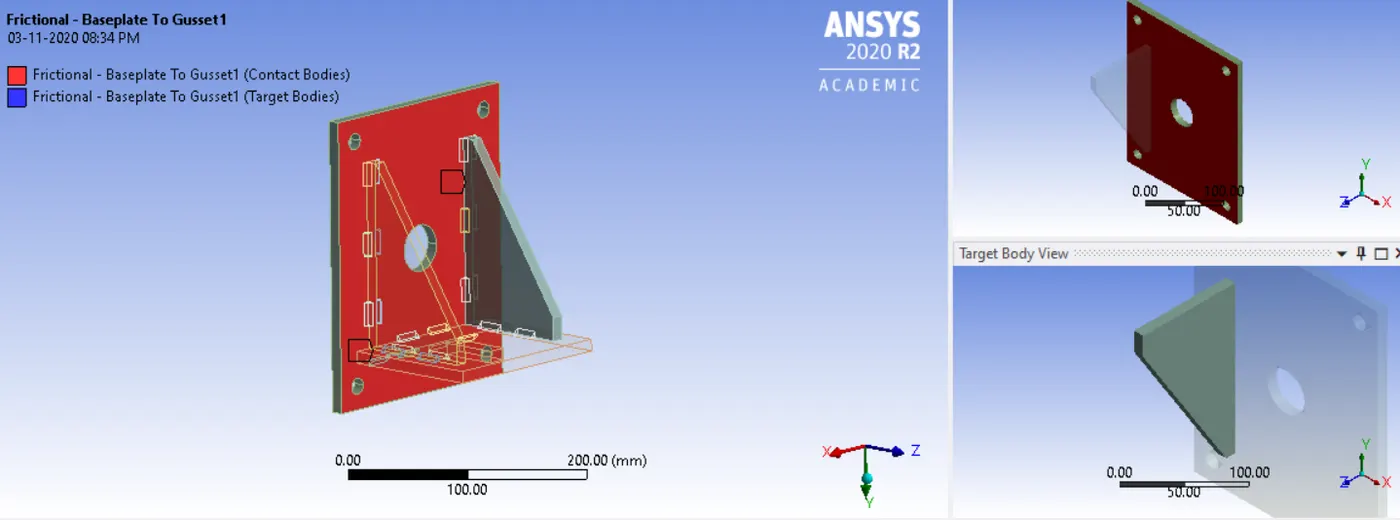
3. Baseplate to Gusset 2:
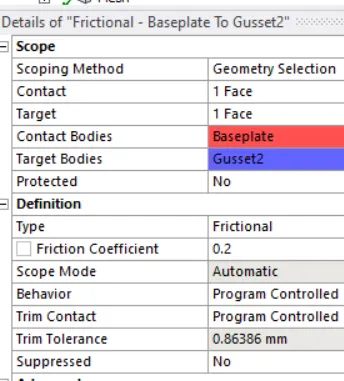
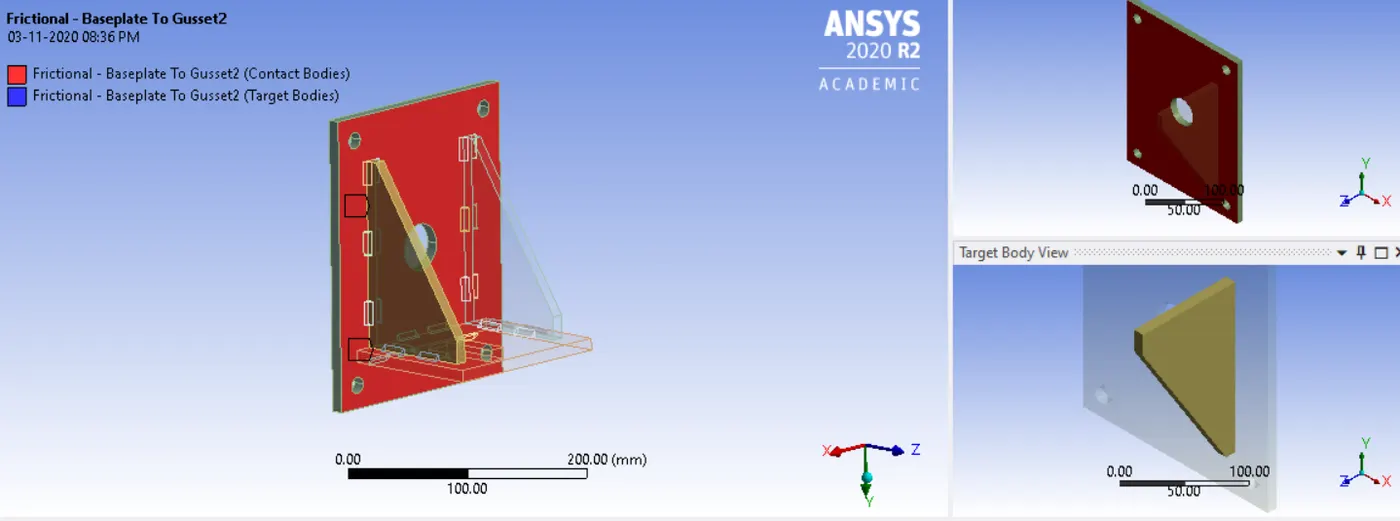
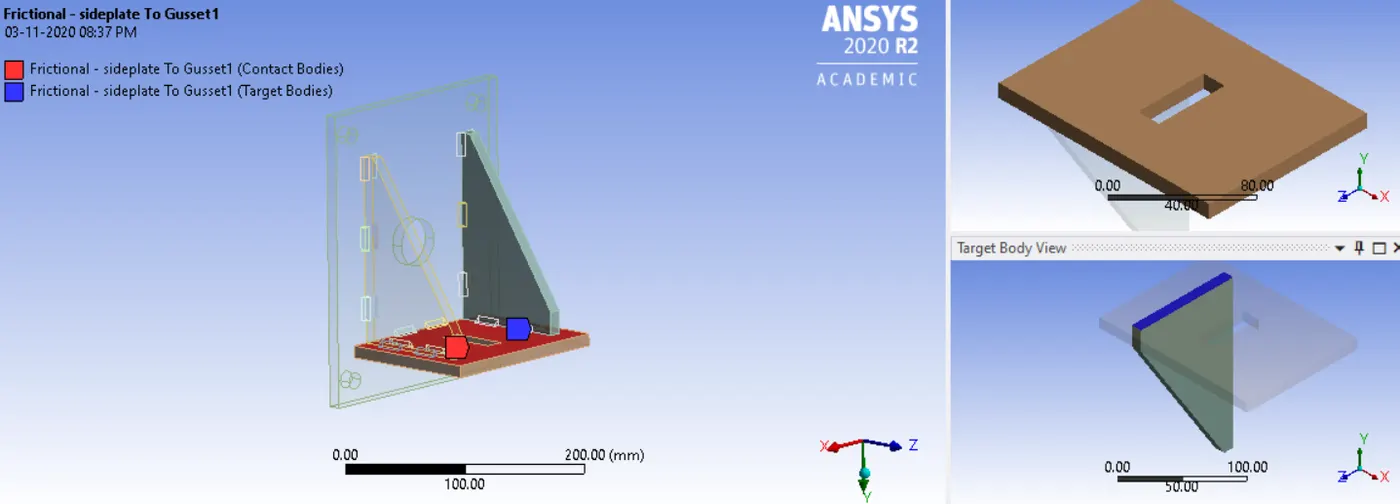
4. Sideplate to Gusset 1:
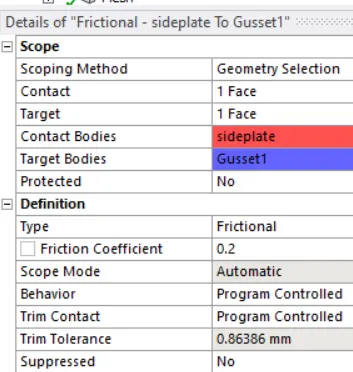
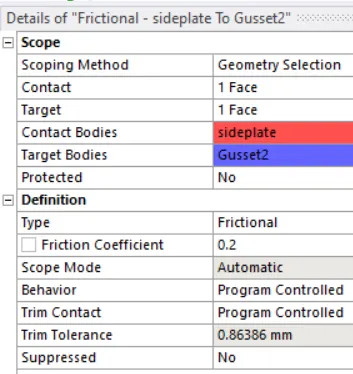
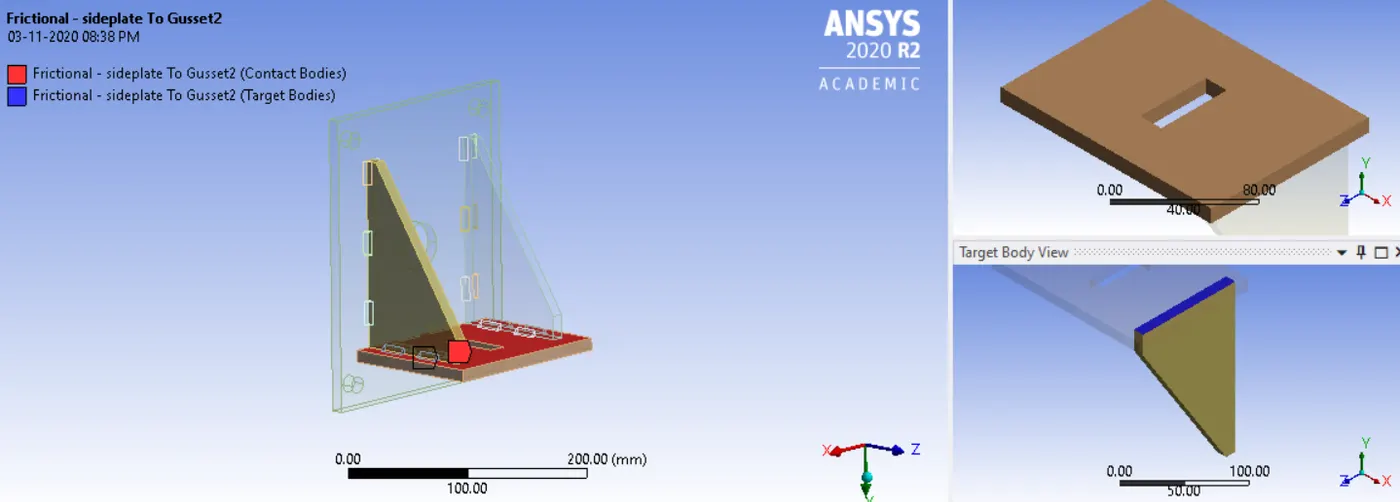
5. Sideplate to Gusset 2:
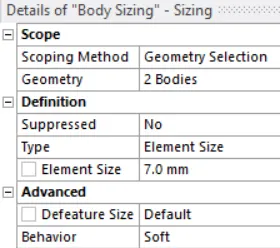
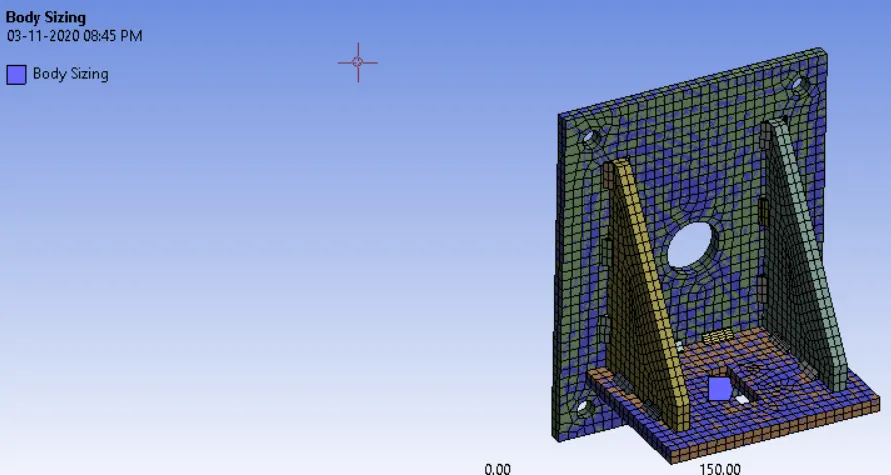
Body Mesh Sizing Details:
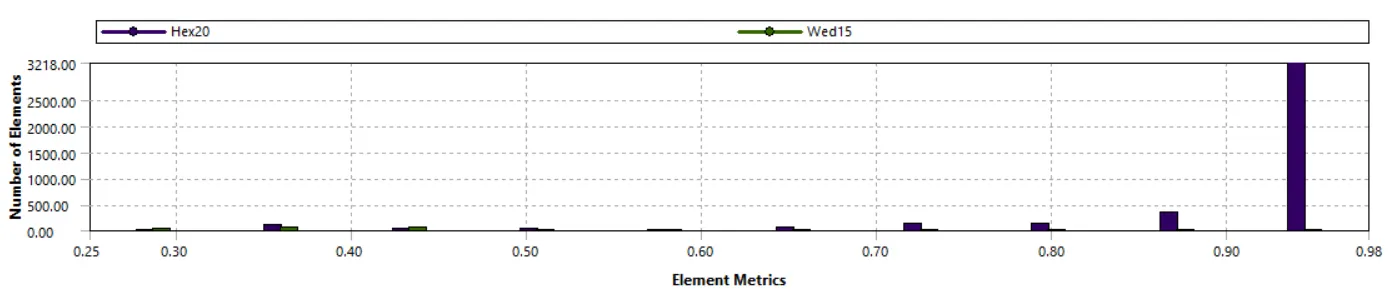
With Element size of 7 mm for the body in all cases for all the weld material with below Element metrics details:
Analysis Setting & Output Control Details:
With Large deflection is switched on, Stress , Strain for the output controls.
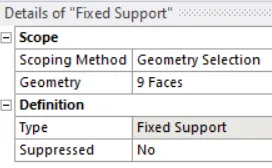
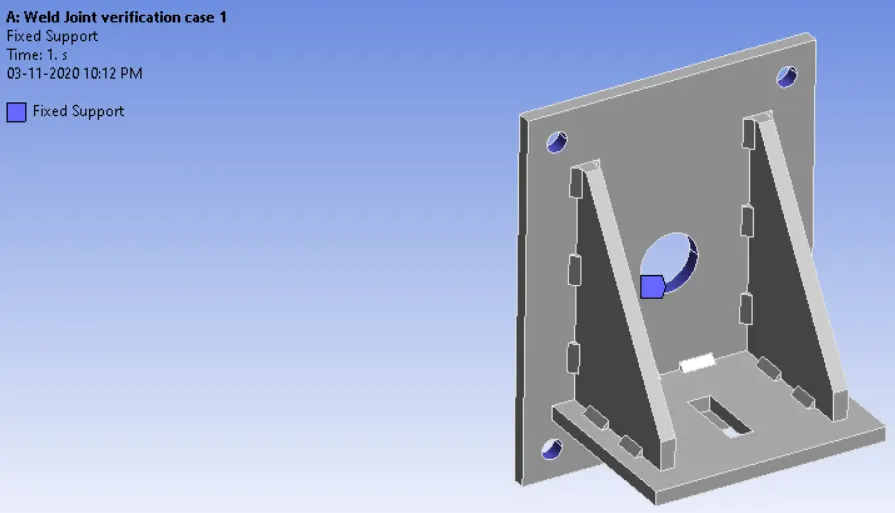
Fixed Support details:
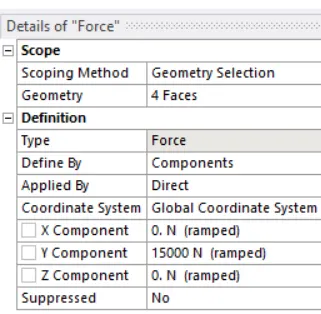
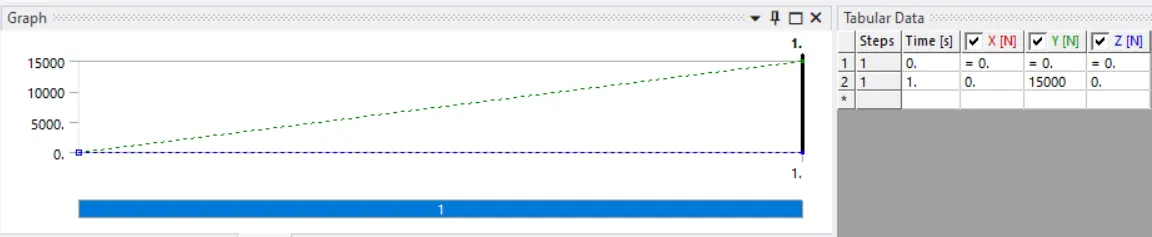
Force Details:
Load applied at the rectangular hole
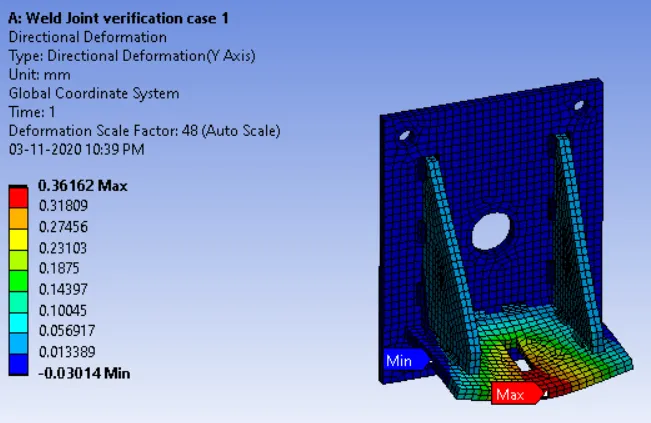
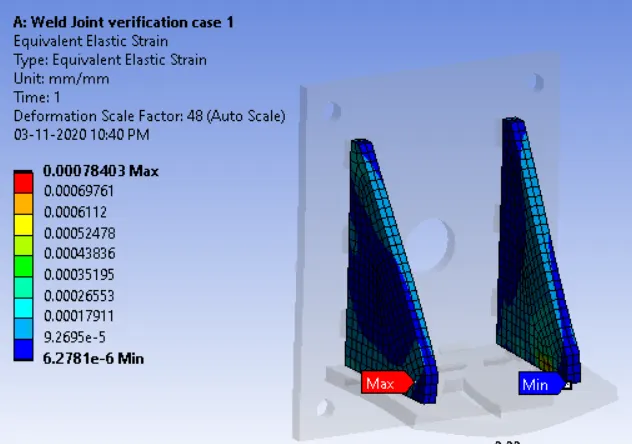
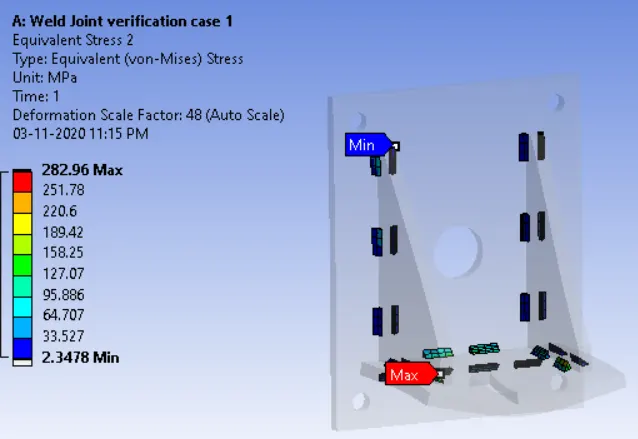
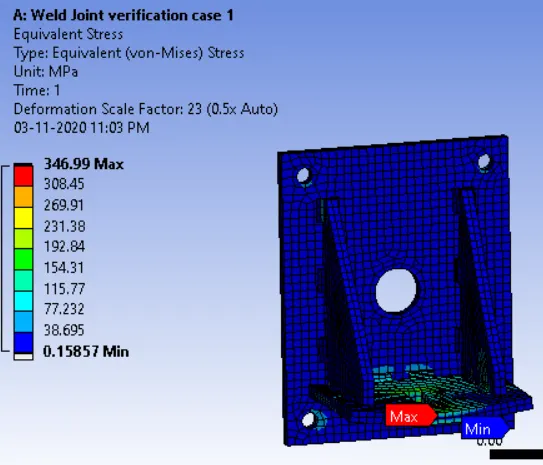
Case 1. Stainless Steel: In this case, the material of the plates must also be the same. Use Stainless steel for both weldments and plates. No need to add flux to the weldments.
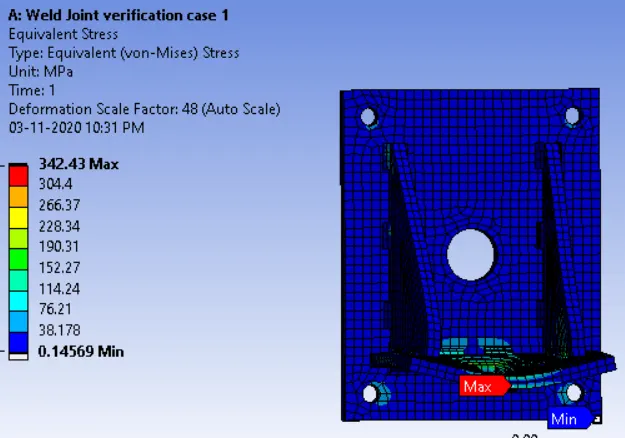
The results are provided below for this case :
Equivalent Stress (MPa):

Directional Deformation(mm):

Equivalent Elastic Strain:

Weld Material Equivalent Stress details:

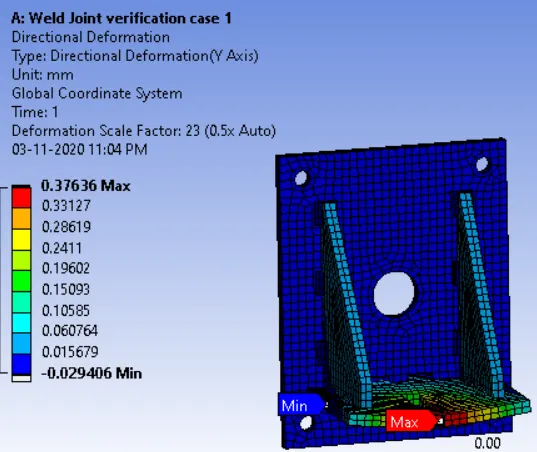
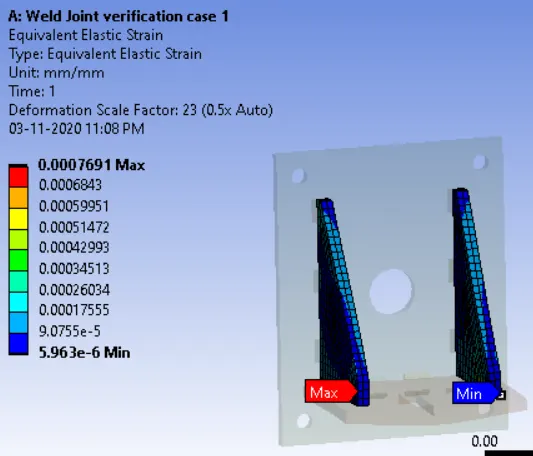
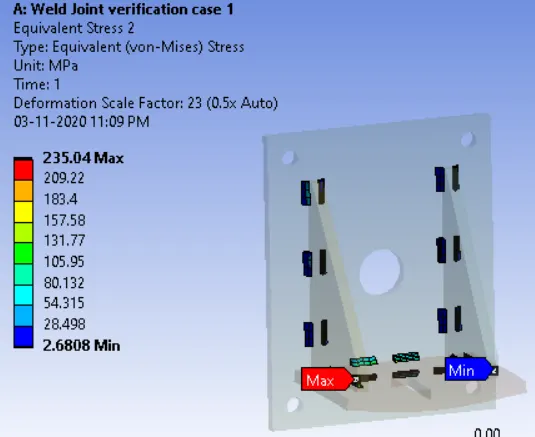
Case 2. Aluminium Alloy:The material to be chosen for this case is Aluminium alloy(high strength, wrought). [Plate material to be used is stainless steel]
The results are provided below for this case :
Equivalent Stress (MPa):

Directional Deformation(mm):

Equivalent Elastic Strain:

Weld Material Equivalent Stress details:

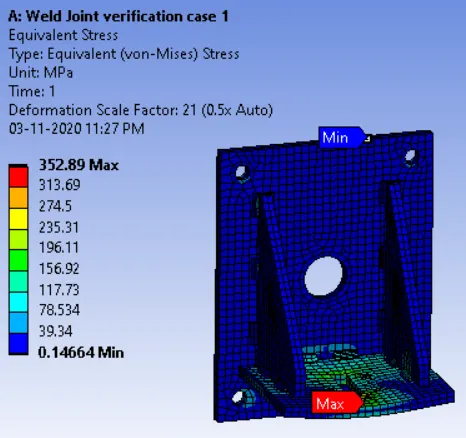
Case 3.Bronze: In order to simulate "Brazing", you should be using bronze as the weld material. Assign Stainless Steel to both plates and Copper to the "Ribs".
The results are provided below for this case :
Equivalent Stress (MPa):

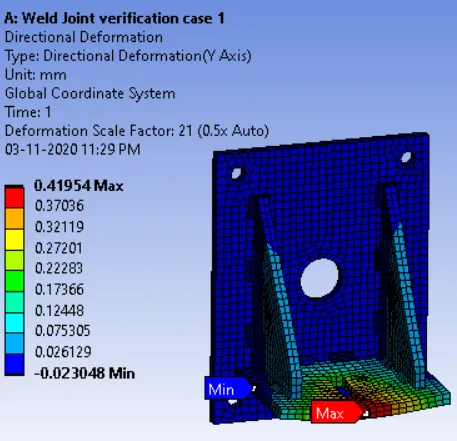
Directional Deformation(mm):

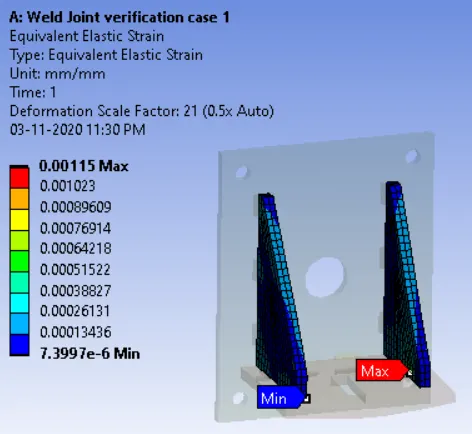
Equivalent Elastic Strain:

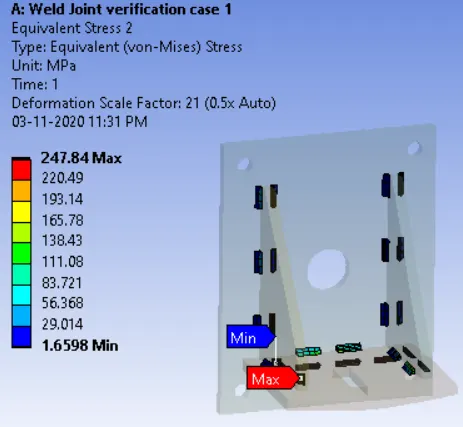
Weld Material Equivalent Stress details:

Conclusion:
| Weld Material | Equivalent Stress (Mpa) | Directional Deformation(mm) | Equivalent Elastic Strain | Stress in weld material(Mpa) | ||||
| Maximum | Average | Maximum | Average | Maximum | Average | Maximum | Average | |
| Stainless Steel | 342.4 | 23.3 | 0.36 | 3.38E-02 | 7.84E-04 | 9.19E-05 | 282.96 | 37.32 |
| Aluminium Alloy | 347 | 22.7 | 0.38 | 3.55E-02 | 7.69E-04 | 9.06E-05 | 235.04 | 30.73 |
| Bronze(Copper Ribs) | 352.9 | 22.6 | 0.42 | 4.06E-02 | 1.15E-03 | 1.32E-04 | 247.8 | 31.06 |
By comparing Equivalent Stress and Deformation data we can conclude that Bronze (Brazing) with Copper ribs weld material
are weaker compare to Aluminium alloy and Stainless steel.
We need to note that the selection of the weld material basically depends on the application where part will be used. If we generalise
the process like good Welding , Thermal Properties and Strength we can categories the weld material sequence like below:
Stainless Steel > Aluminium Alloy > Bronze should be the order of selection for the weld material in this application.
I have attached Archieve files of the project of all the cases for reference.