Week 3 Verification of Weld Joints
Aim: simulate three different type of welding using three different weld material in static structural analysis.
Procedure:
open static structural model and select the material which required from simulation for here we will select ,
1. Stainless steel, 316, annealed and mechanical property of the material is given as below
Density: 7.969e-06 kg/mm³
Young's Modulus: 1.95e+05 MPa
Isotropic Thermal Conductivity: 0.01458 W/mm·°C
Specific Heat Constant Pressure: 4.861e+05 mJ/kg·°C
Poisson's Ratio: 0.27
Bulk Modulus: 1.413e+05 MPa
Shear Modulus: 76772 MPa
Tensile Ultimate Strength: 565.1 MPa
Tensile Yield Strength: 252.1 MPa
2.aluminium alloy high tension wrough and mechnical property of the material is given below
Density: 2770 kg/m³
Young's Modulus: 73800 MPa
Poisson's Ratio: 0.337
Bulk Modulus: 75460 MPa
Shear Modulus: 27599 MPa
Isotropic Thermal Conductivity: 0.1553 W/mm·°C
Specific Heat Constant Pressure: 9.157e+05 mJ/kg·°C
Isotropic Secant Coefficient of Thermal Expansion: 2.278e-05 1/°C
Tensile Ultimate Strength: 494 MPa
Tensile Yield Strength: 363 MPa
3. Bronze cast and mechanical property of the material is given below
Density: 8.81e-06 kg/mm³
Young's Modulus : 80000 MPa
Poisson's Ratio: 0.345
Bulk Modulus: 86022 MPa
Shear Modulus: 29740 MPa
Isotropic Secant Coefficient of Thermal Expansion: 1.675e-05 1/°C
Isotropic Thermal Conductivity: 0.07735 W/mm·°C
Specific Heat Constant Pressure: 3.845e+05 mJ/kg·°C
Tensile Ultimate Strength: 267 MPa
Tensile Yield Strength: 144 MPa
4. Copper,C10100, Hard and mechanical property of the material is given below
Density : 8942 kg/m³
Young's Modulus: 1.26e+05 MPa
Poisson's Ratio: 0.345
Bulk Modulus: 1.3548e+05 MPa
Shear Modulus : 46840 MPa
Isotropic Secant Coefficient of Thermal Expansion: 1.674e-05 1/°C
Isotropic Thermal Conductivity: 0.3967 W/mm·°C
Specific Heat Constant Pressure: 3.833e+05 mJ/kg·°C
Tensile Ultimate Strength: 343.2 MPa
Tensile Yield Strength: 250.8 MPa
after selecting material we will import geonmetry and update that is Spaceclaim in ANSYS workbench.
now we will open mechanical module in ANSYS workbench for analysis.
rename plates and rib for better understanding
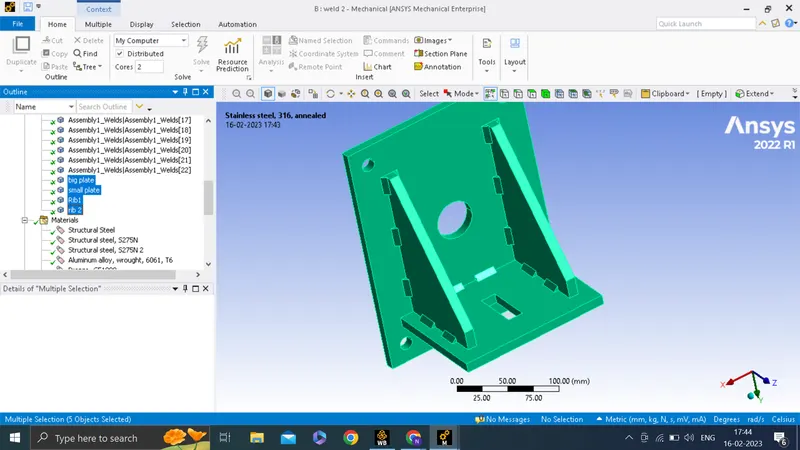
case 1:
for this case we will assign stainless Steel 316 material to all weld and 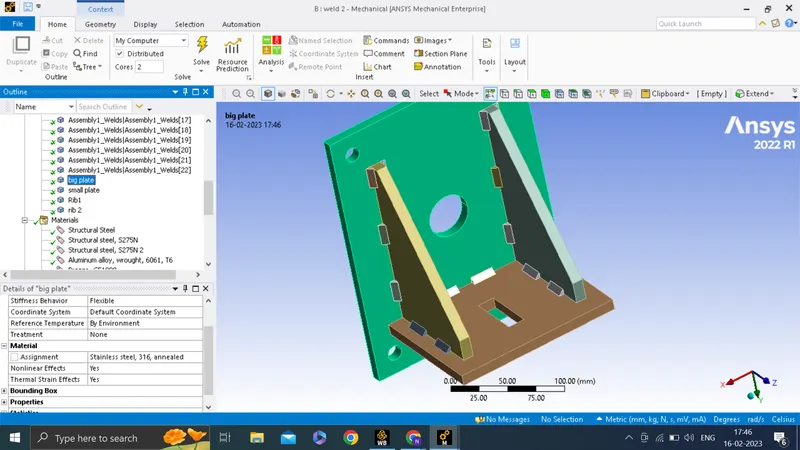
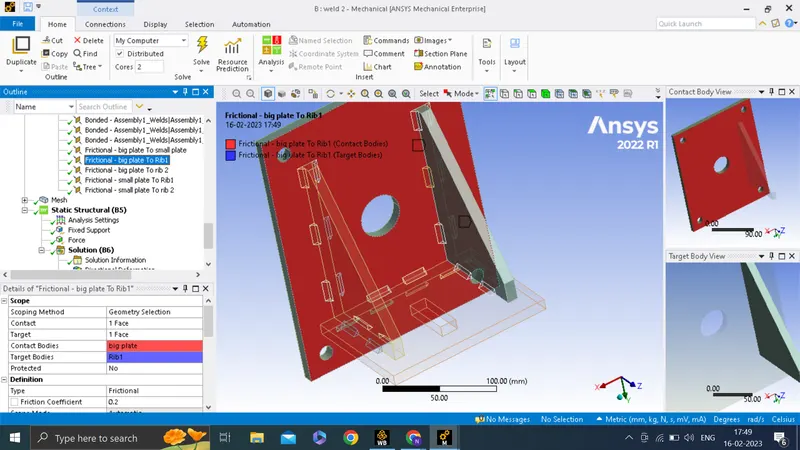
for connection : select all connection and give name based on connection , thus it will provide all connection as bonded , after that we will change the plate and rib conenection with each other as frictional with frictional co-efficient as 0.2.
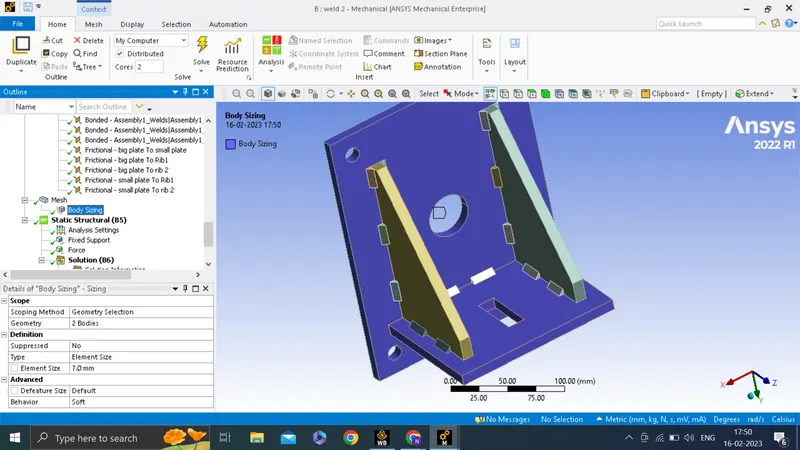
for mesh : select the plates and apply mesh os size 7 mm rest is programm controlled .
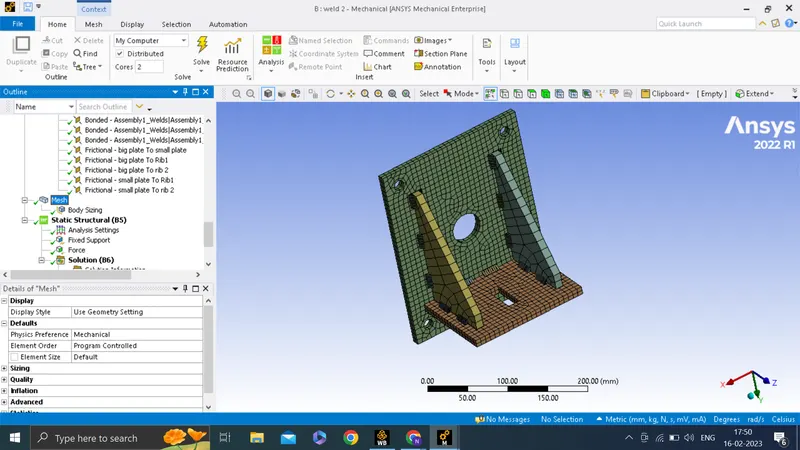
the element quality of mesh is good as most of the element have quality criteria between 0.9 to 1
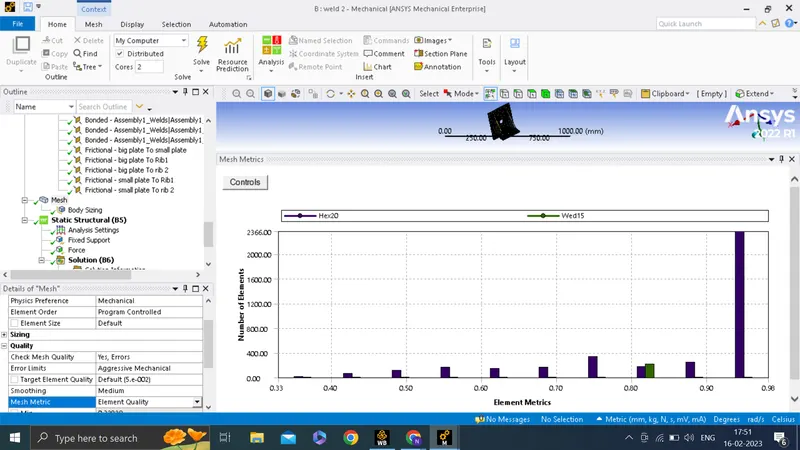
The above mesh have below statics which are in under acedemic version for simulation
Number of node:24913
Number of Element: 3976
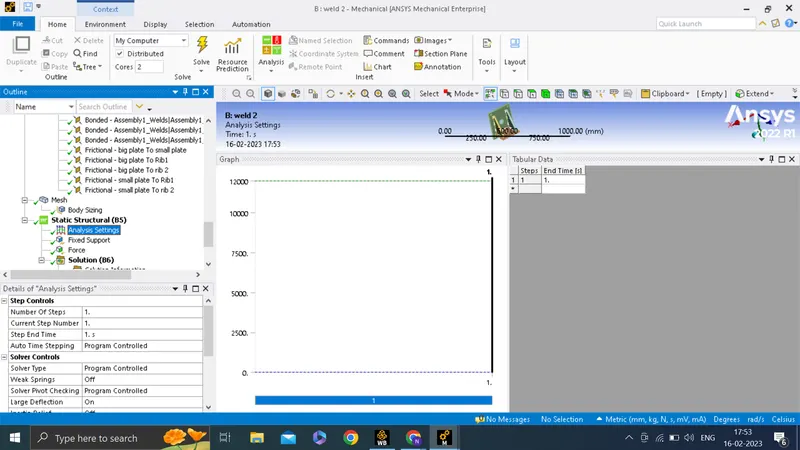
for analysis setting , we keep large deflection as on
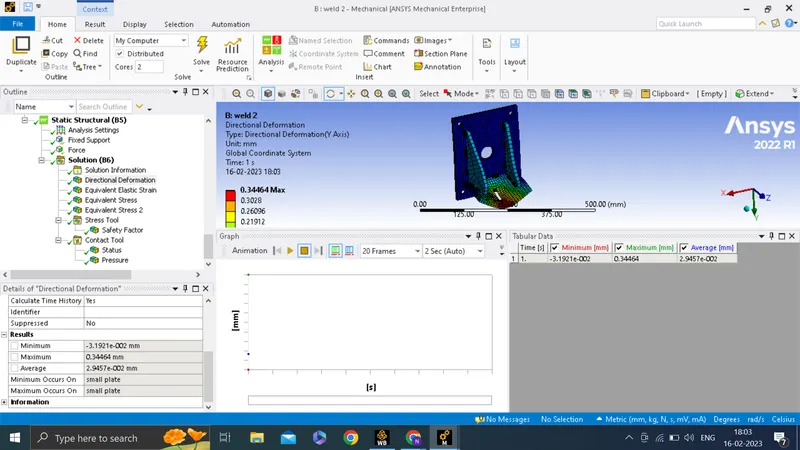
for fix the big plate using all 5 holes on big plate .
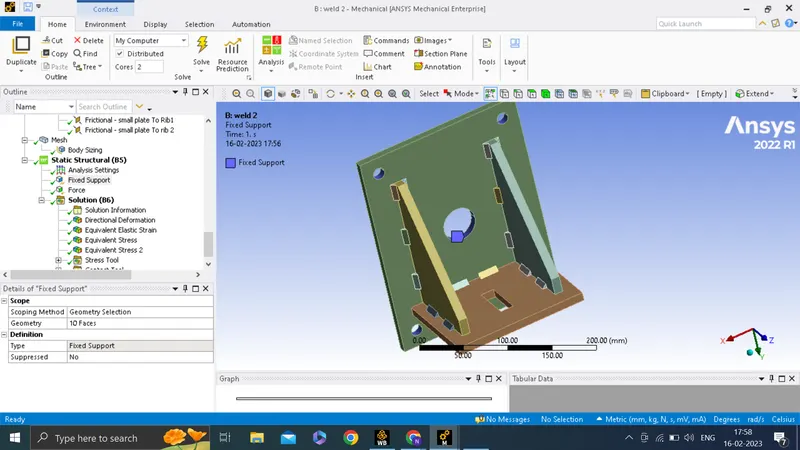
and assign force of 15000 N load on postive Y direction on small palte ( at hole)
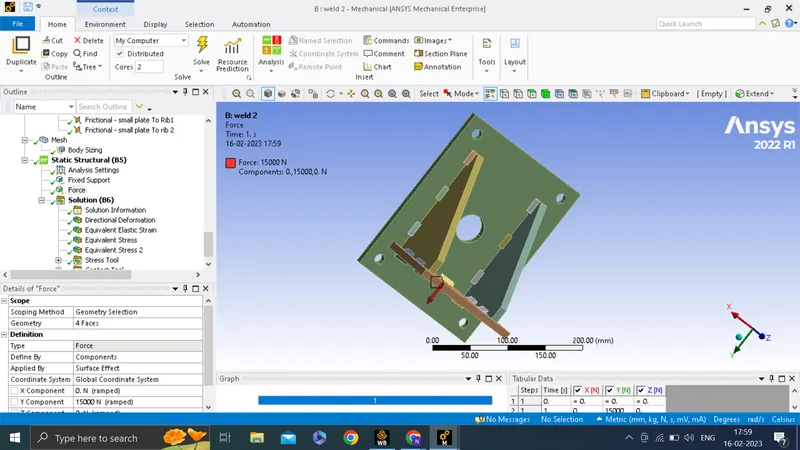
select required output criteria whose result we required after simulation
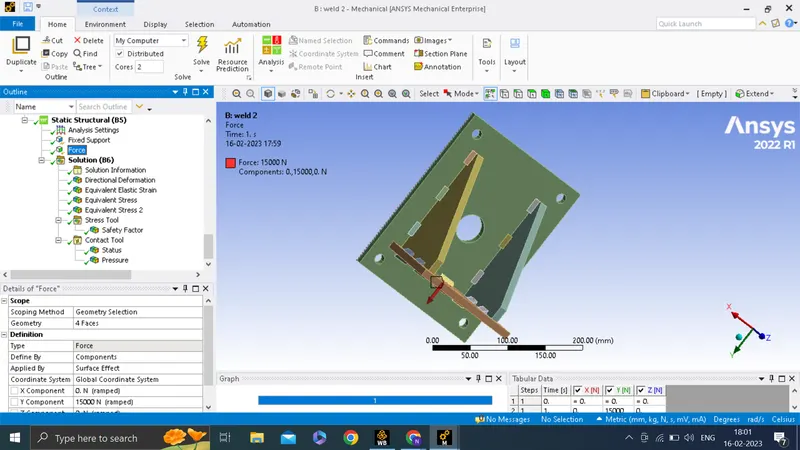
now click on solve to run the simulation .
Picture:
Direction deformation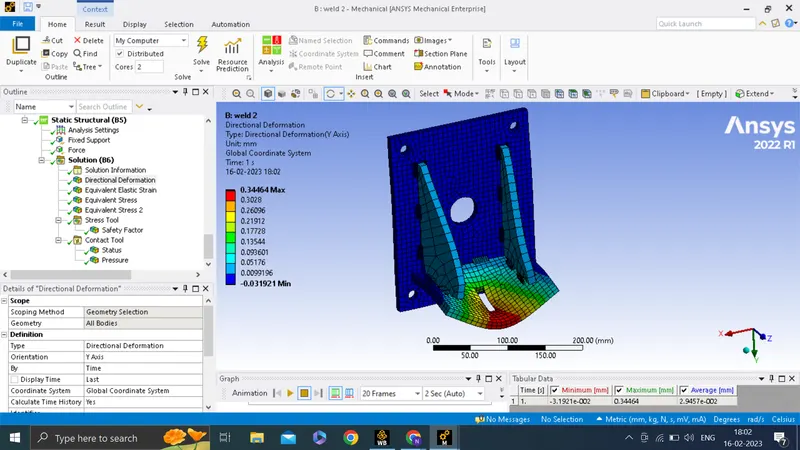
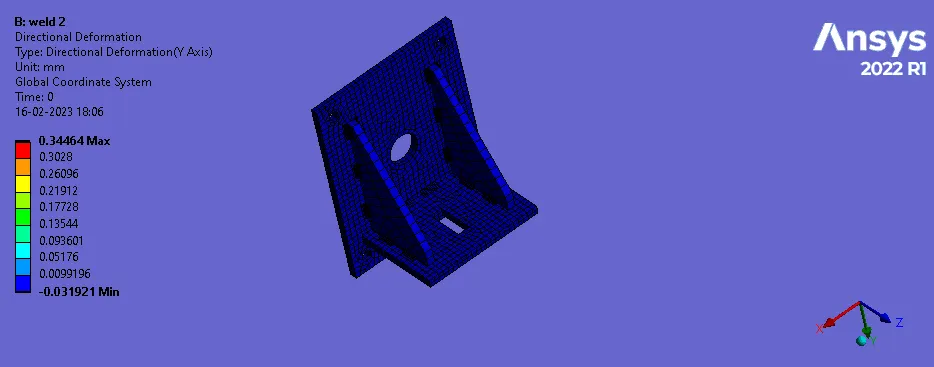
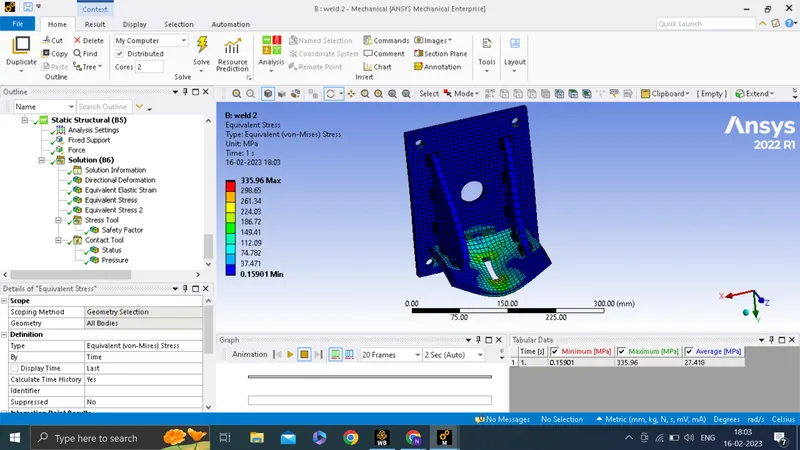
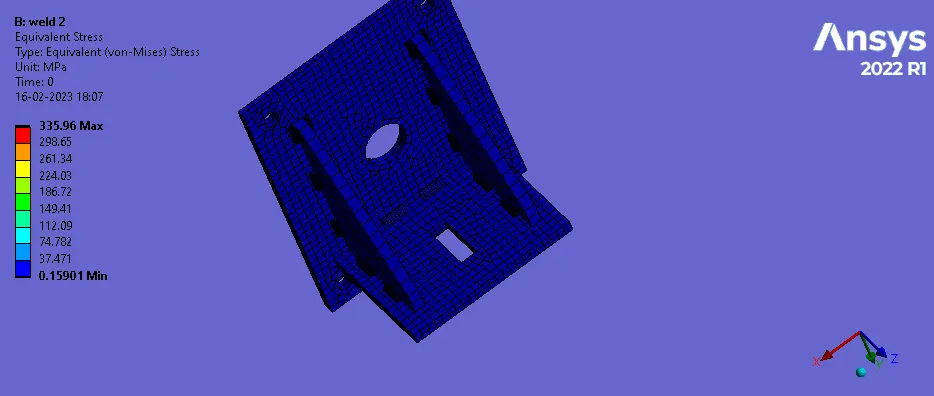
Equivalent stress :
Equivalent stress on weld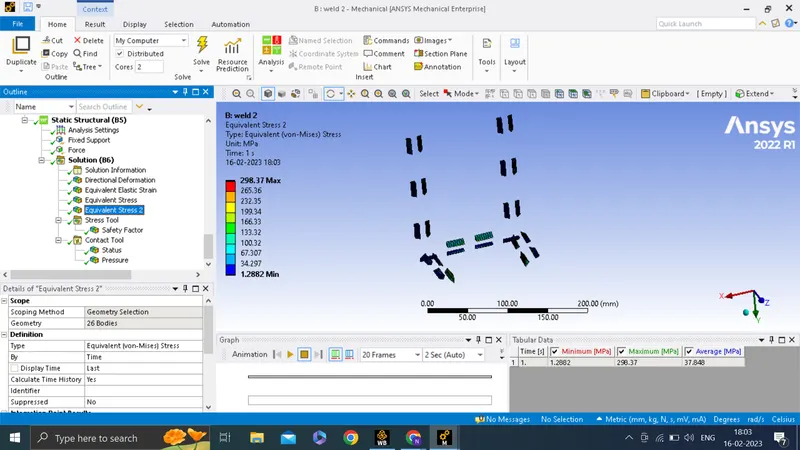
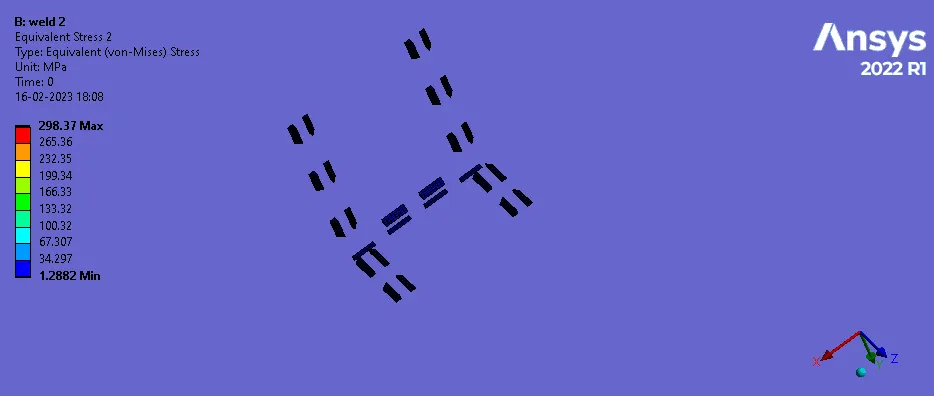
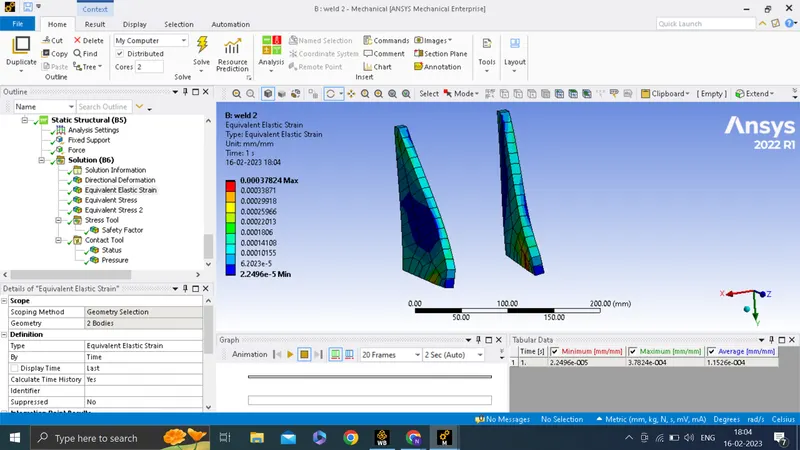
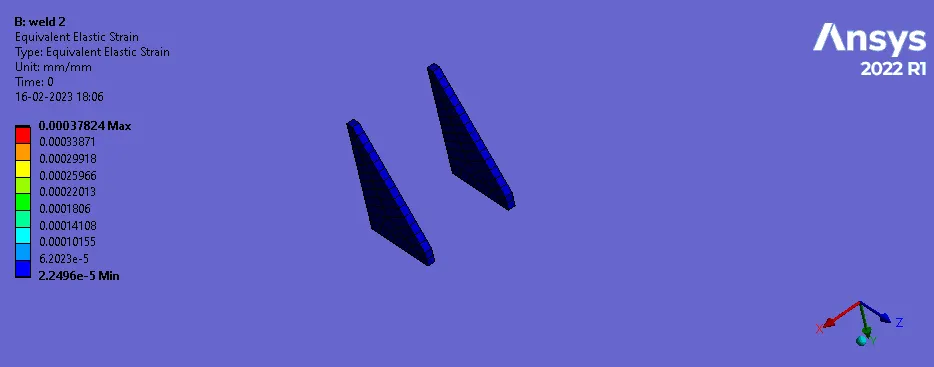
Equivalent strain on ribs:
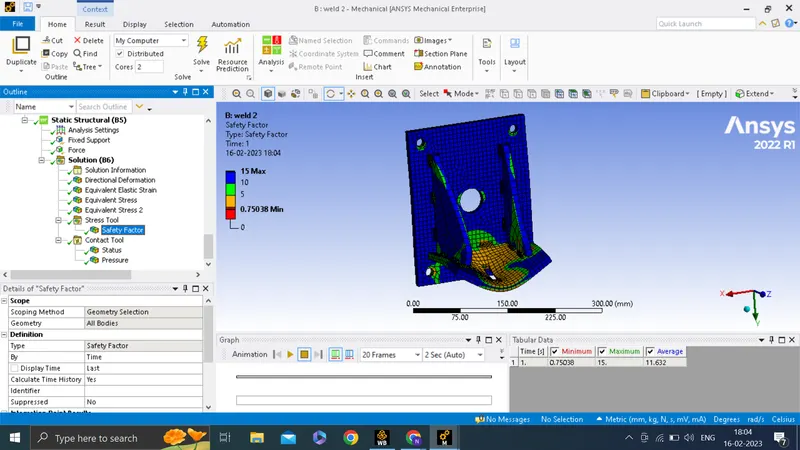
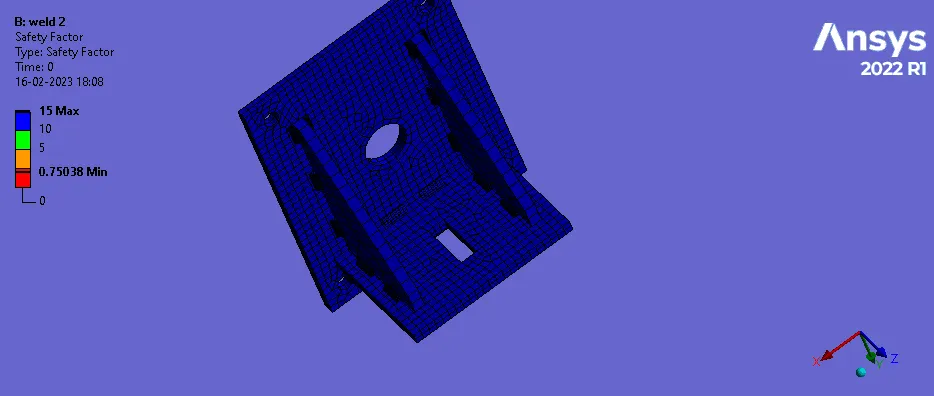
Safety Factor :
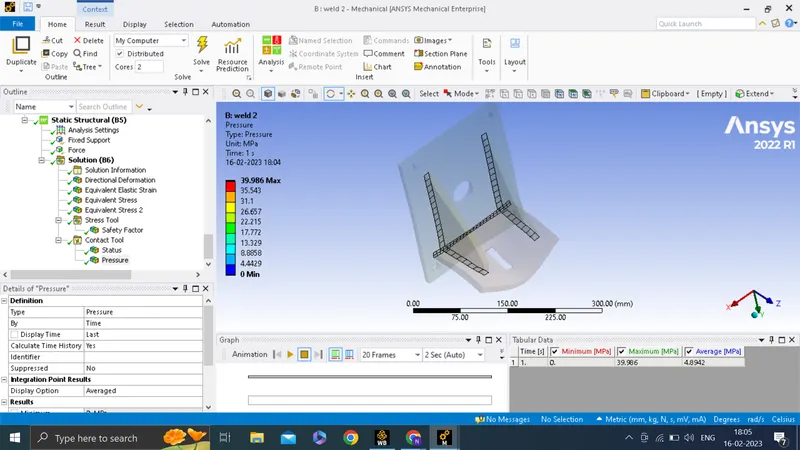
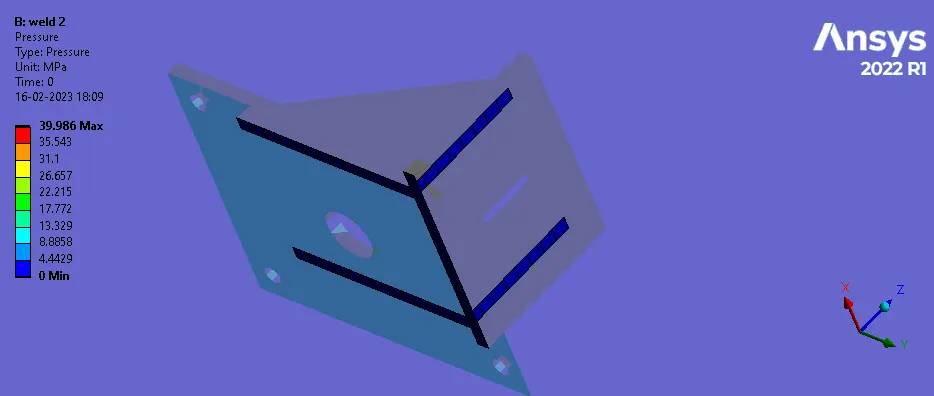
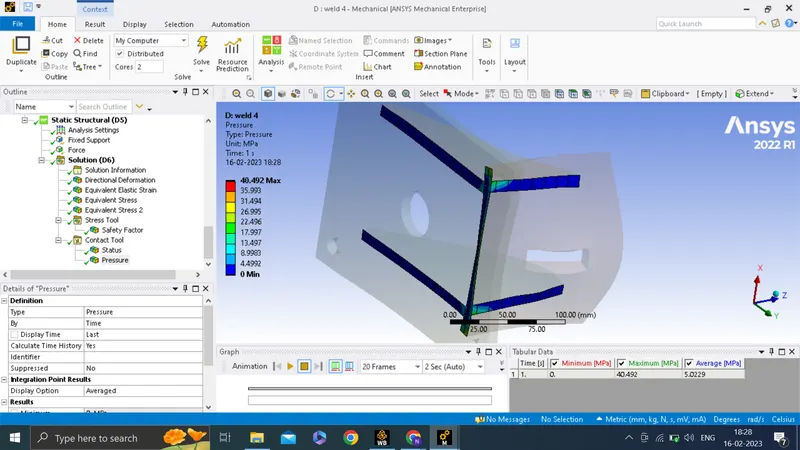
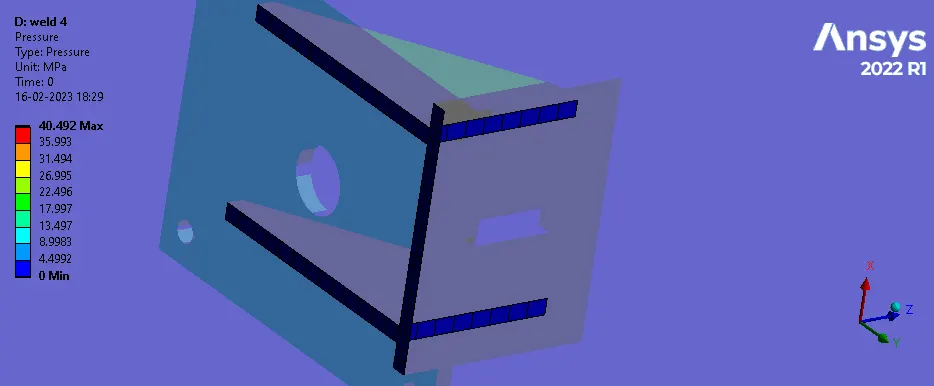
Contact pressure :
Case 2: Material use for weld are aluminium alloy , wrought high strength and for plate and ribs we select stainless steel 316 .
and the rest settinf as above
Picture:
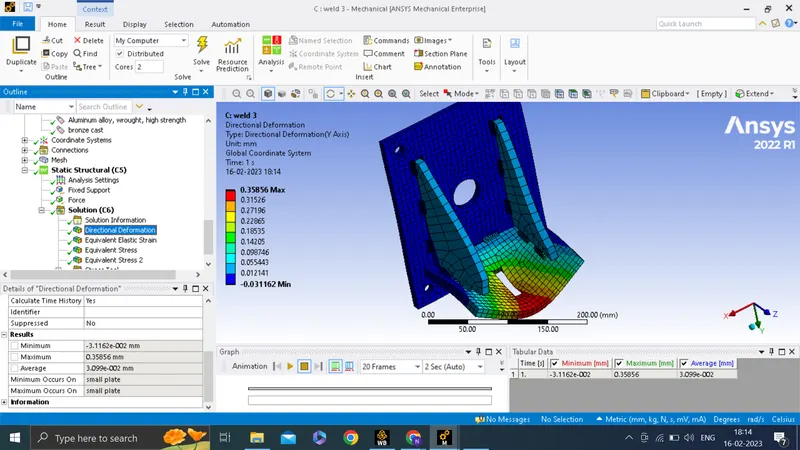
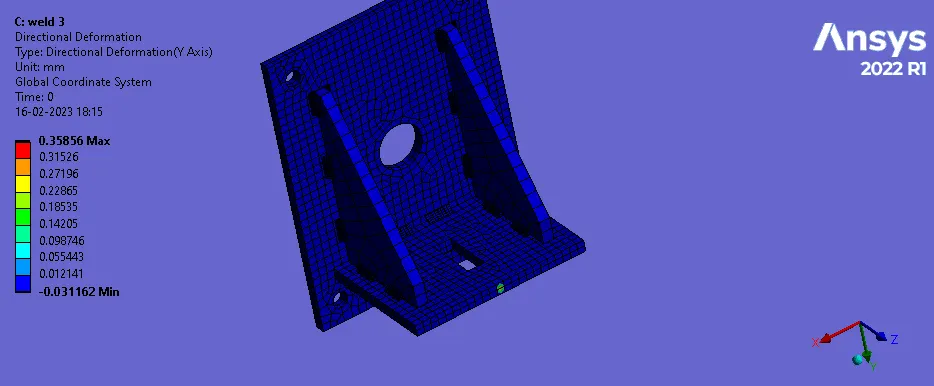
Directional deformation:
Equivalent stress
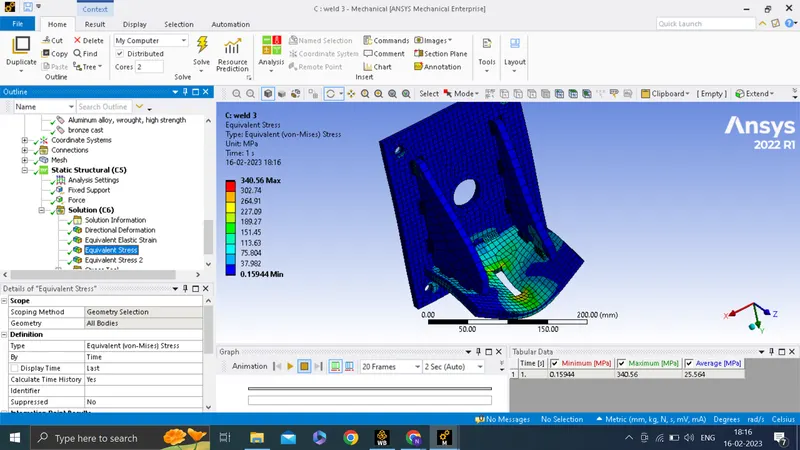
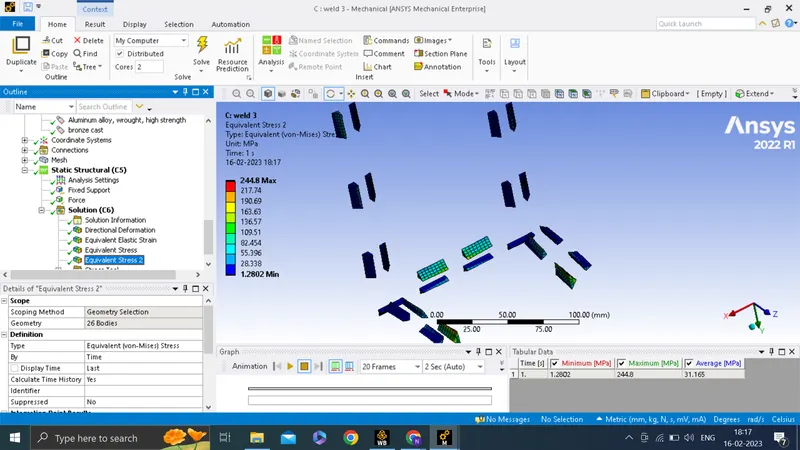
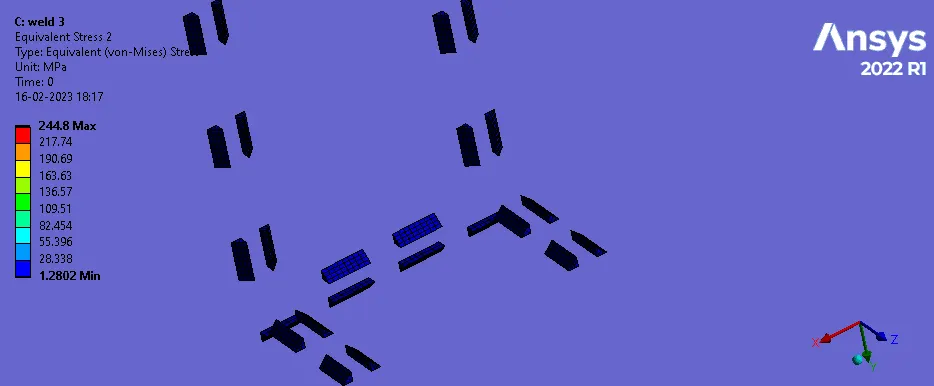
Equivalent stress on welds
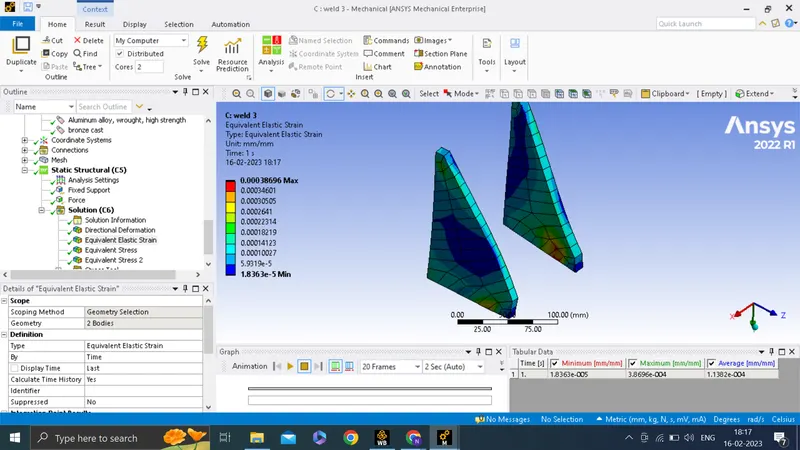
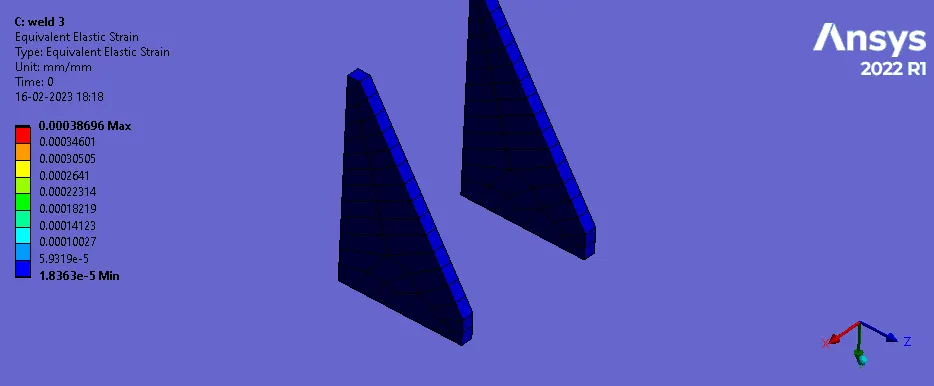
Equivalent strain on rib
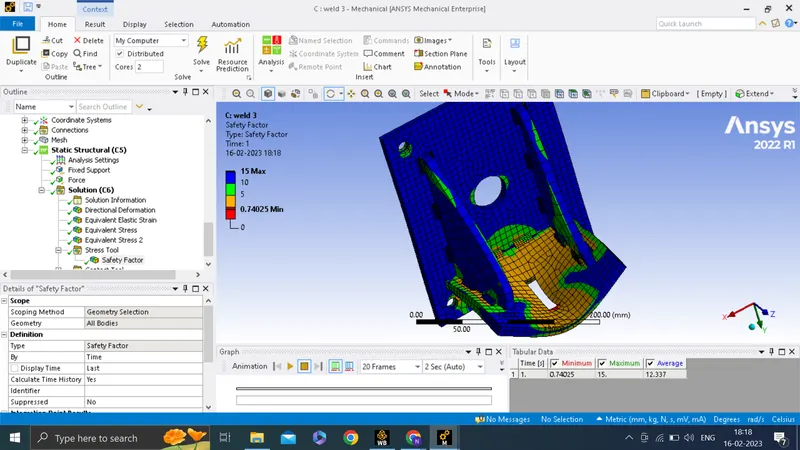
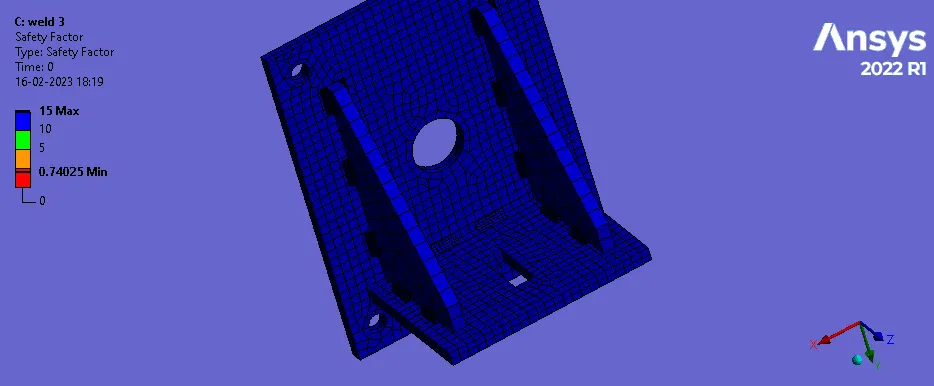
Safety factor
Contact pressure :
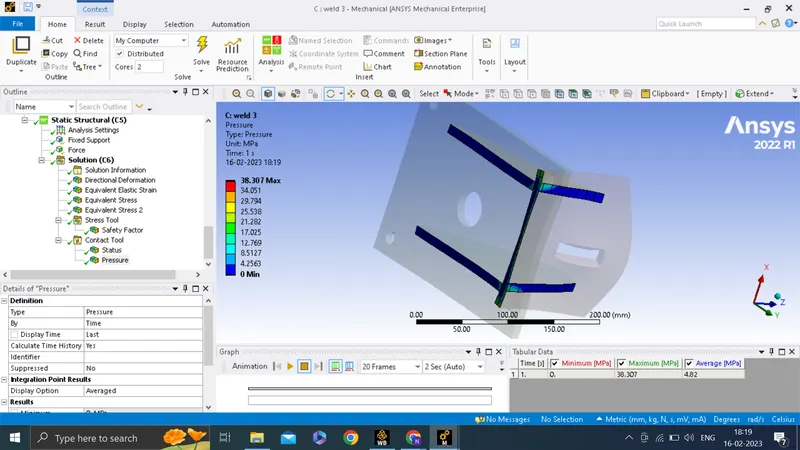
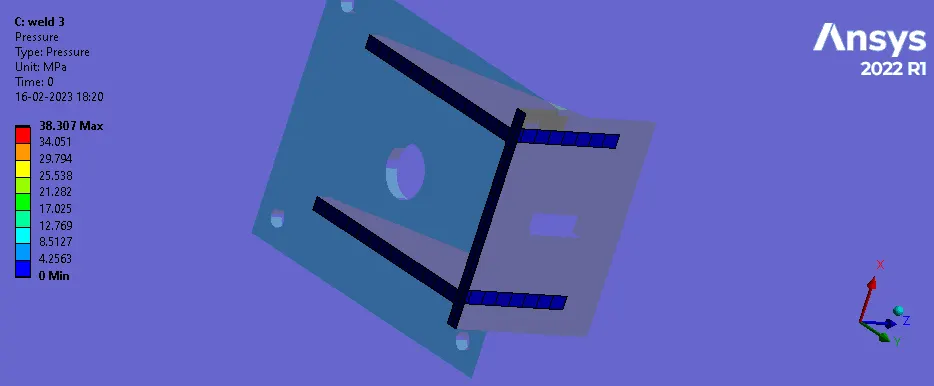
Case3 :
Used bronze as weld material , stainless steel for plates and copper for ribs
Rest setting will be same as above
Pictures :
Directional deformation :
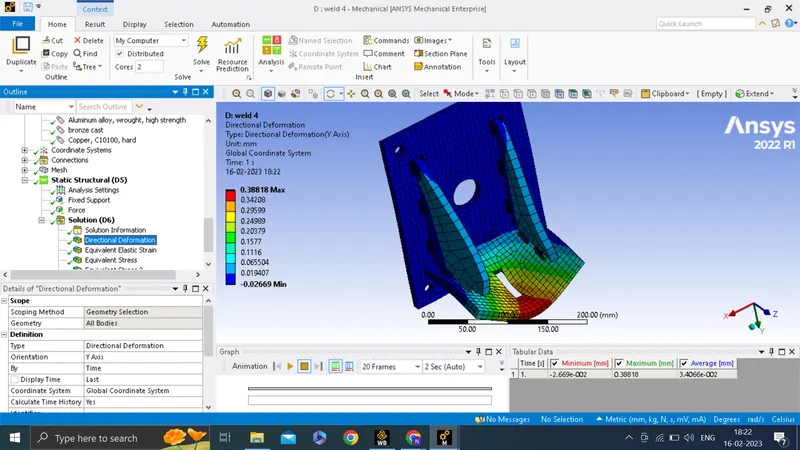
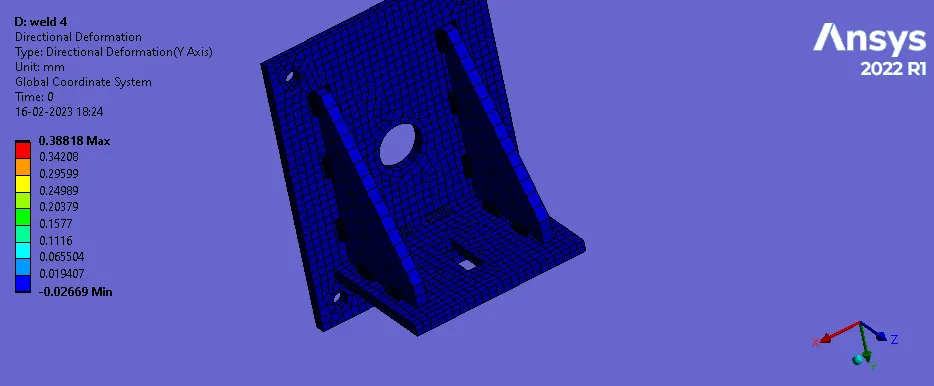
Equivalent stress
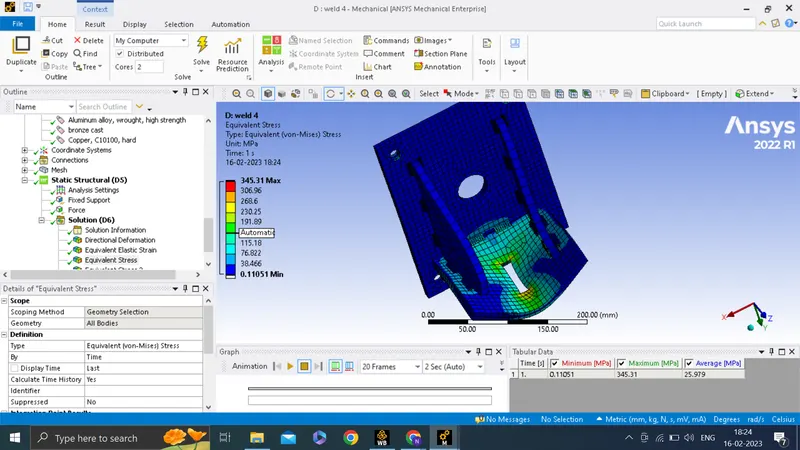
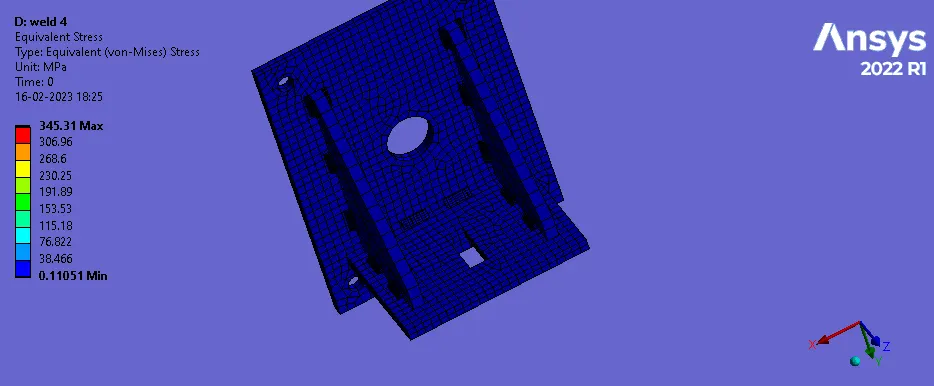
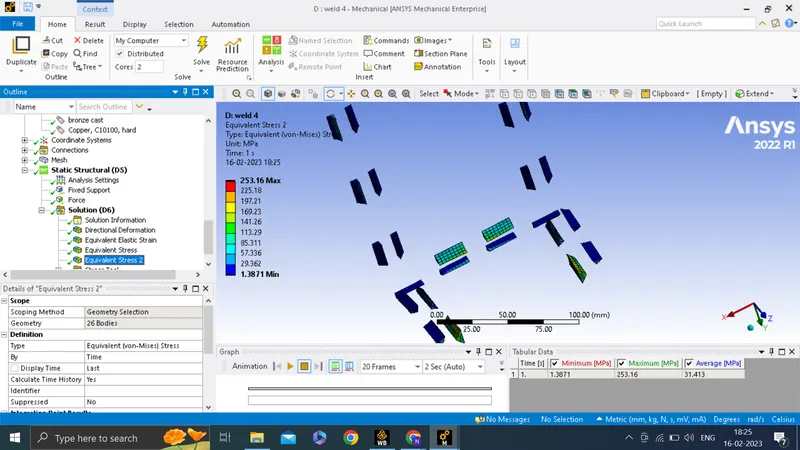
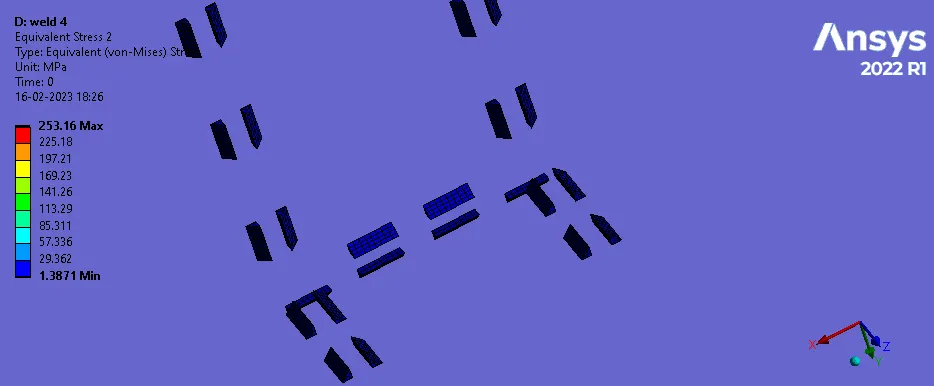
Equivalent stress on ribs
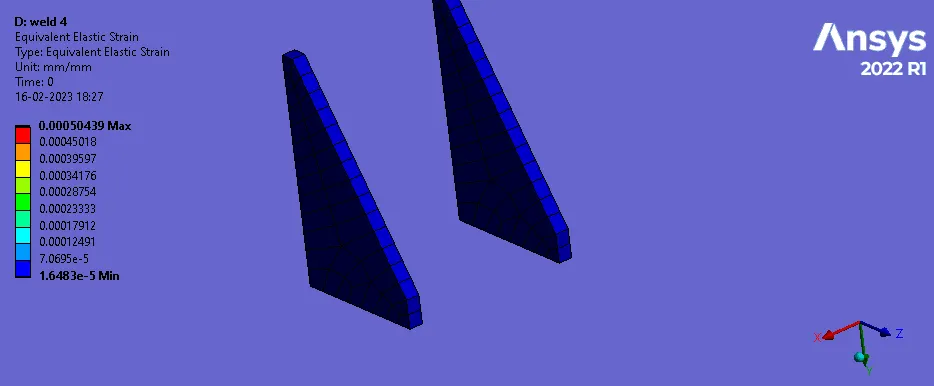
Equivalent strain on ribs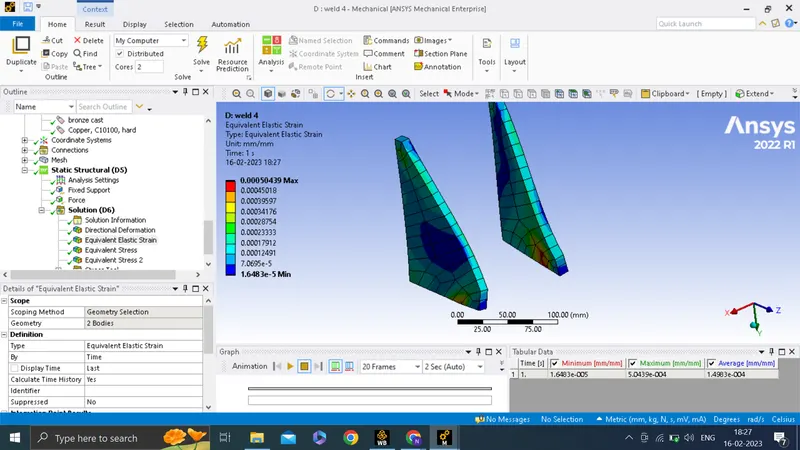
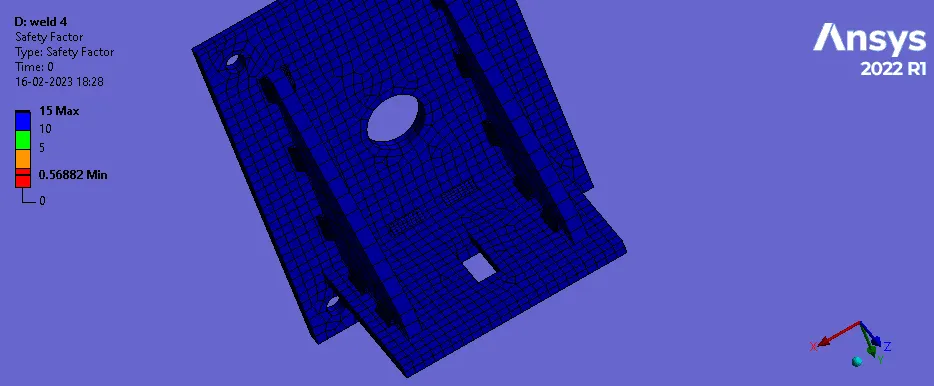
Safety factor 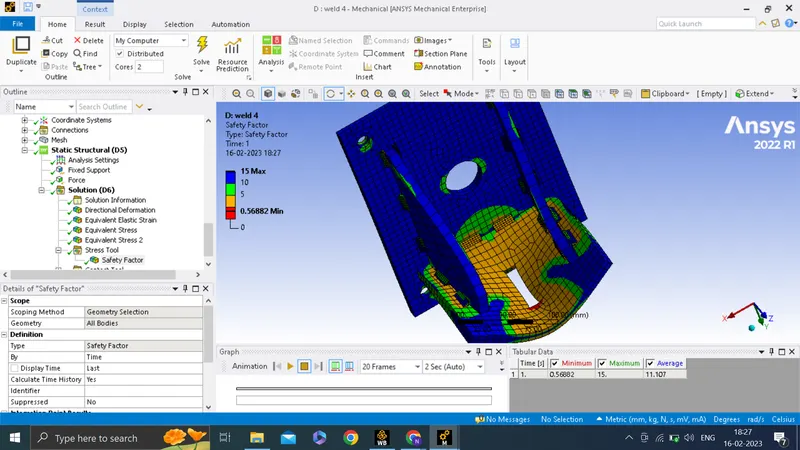
contact pressure:
Result:
The comparison for totoal deforamtion in Y directrion, equivalent strain , equivalent stress and safety factors are compared below
| directional deformation (mm) | Equivalent stress (Mpa) | Equivalent stress on weld (Mpa) | Equivalent strain | Safety Factor | |
| Case 1 | 0.34464 | 335.96 | 298.37 | 3.78E-04 | 0.75038 |
| Case 2 | 0.35856 | 340.56 | 244.8 | 3.87E-04 | 0.74025 |
| Case 3 | 0.38818 | 345.31 | 253.16 | 5.04E-04 | 0.56882 |
Conclusion :
on comparing the all cases we found minimum direction deformation in case 1 and maximum directional deformation in case 3.
Minimum stress on in case 1 and maximum stress in case 3, AND MAXIMUM weld stress in case 1 and mimumum stress on weld on case 2 .
equivalent strain also in case 1 we found minimum and iin case 3 we found max strain .
Minimum safety factor in case 2 and maximum saftery factor in case3 .