Week 3 Verification of Weld Joints
Aim :
To analyse the given model to find the max equivalent stress in the weld joints applied in the given model.
Objective :
To compare the solution of the given model by approaching the analysis with different materials.
Given model and Condition :
The given model has two plates and two ribs attached by using weld joints.
The two plates are big plate and small plate. The big plate is designed like to be fixed in a wall. The small place is to carry the load at the centre slot face.
The two ribs are same in dimension to provide additional support to the plates.
The plates are connected by using 26 welded joints at the required locations.
The condition of analysis is to apply the different material property as it is asked to be and by comparing the solution of different conditions point out the weld joint which experience higher equivalent stress in each case.
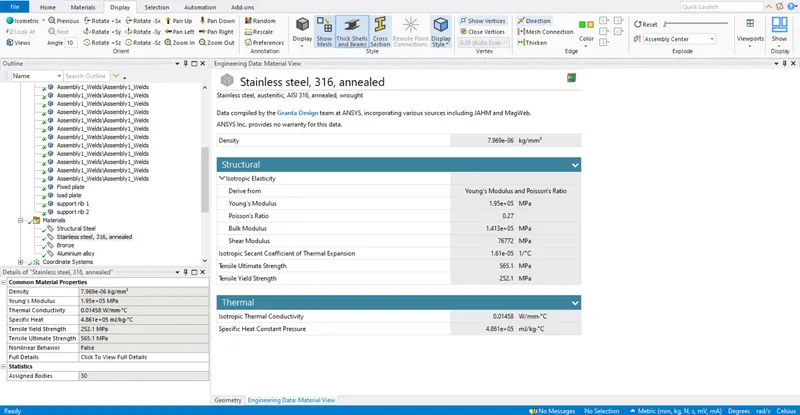
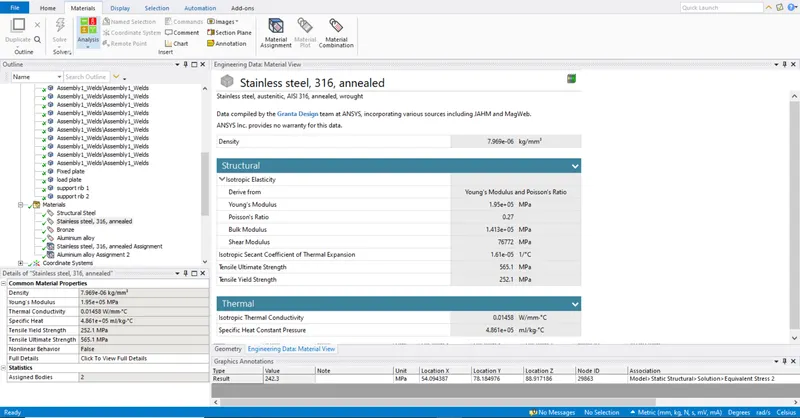
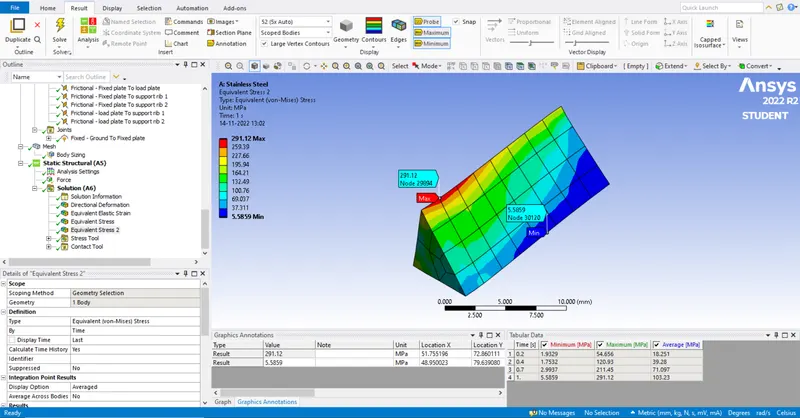
Case 1 : material property - Stanless Steel (for all),
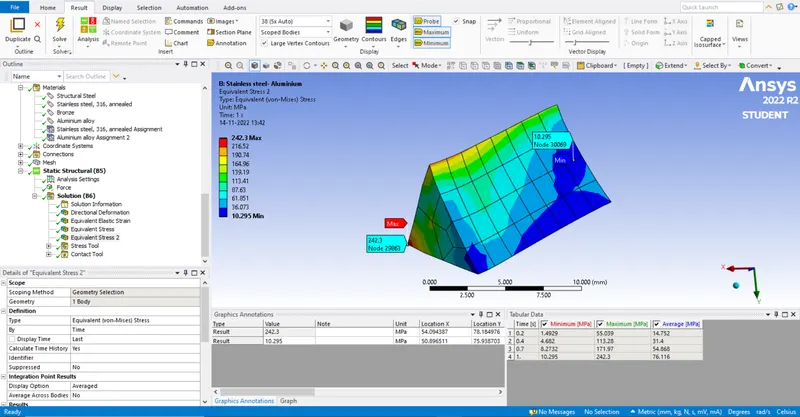
Case 2 : material property - Stainless Steel (for plates) and Aluminium alloy (for ribs and weld joints),
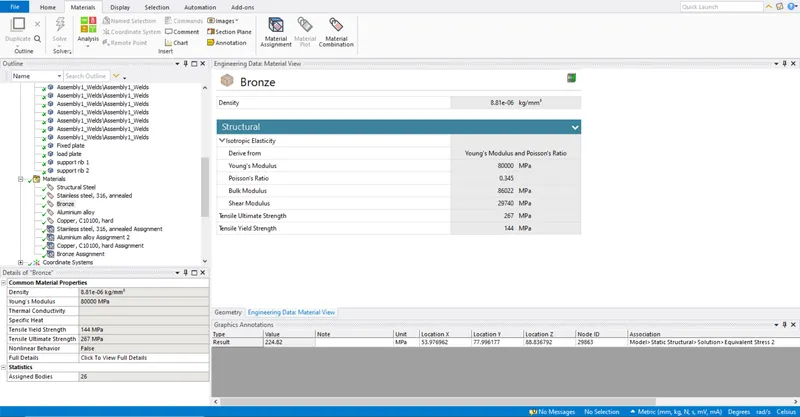
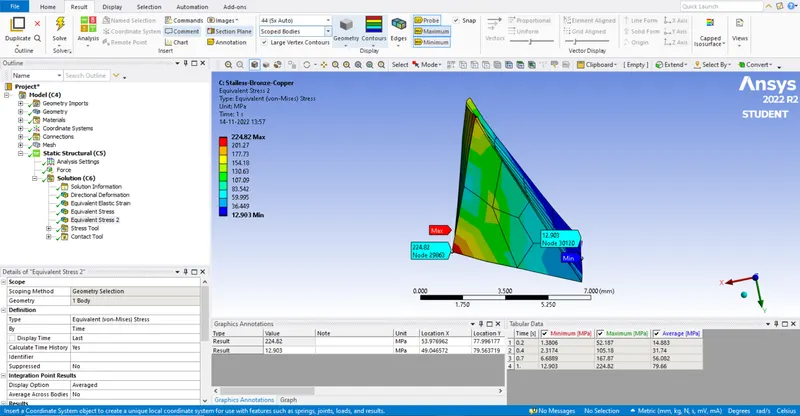
Case 3 : material property - Stainless Steel (for plates), Copper (for ribs) and Bronze (Weld joints).
Procedure :
- We perform Structural analysis here so we select and place it in the main screen.
- We have to add the material and material data in engineering tab.
- Next step we have to import the geometry to the geometry tab.
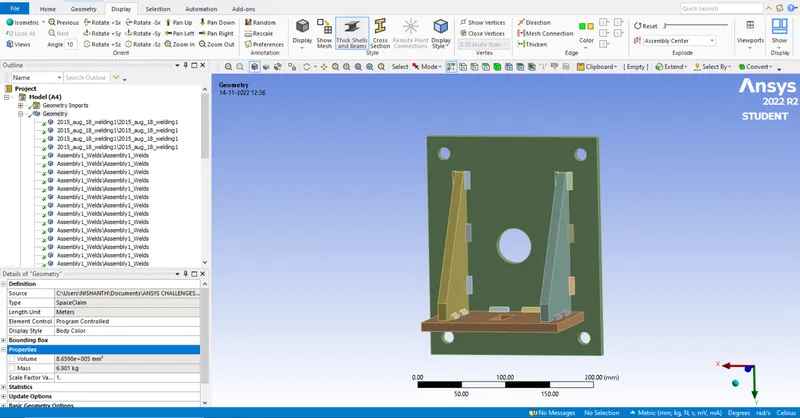
- These operations are performed in work bench and for model tab we move to mechanical setup screen.
- In mechanical window we add data which is required to solve the process.
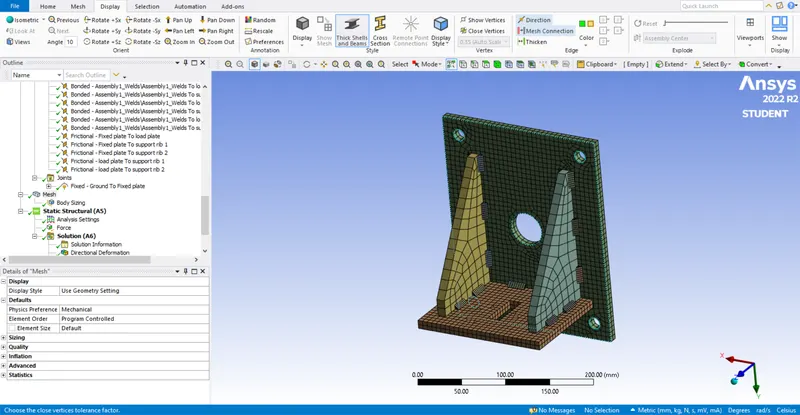
- For mesh we change the element size to be 6mm for the two plates and rest as default. In student edition we have limitations for nodes and elements.
- In contacts we dedfine the frictional contact and bonded contact.
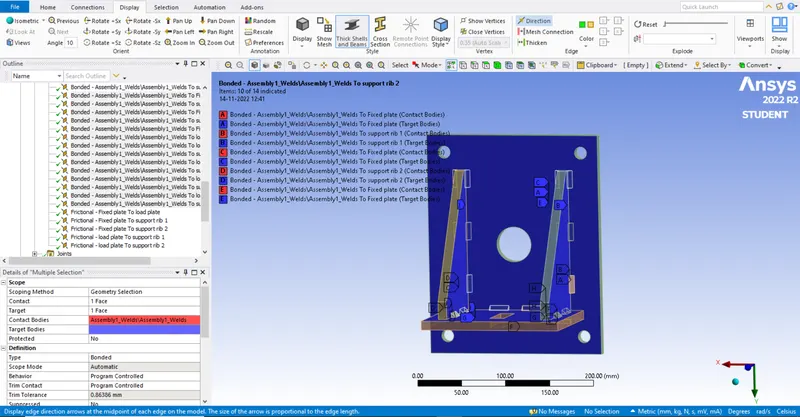
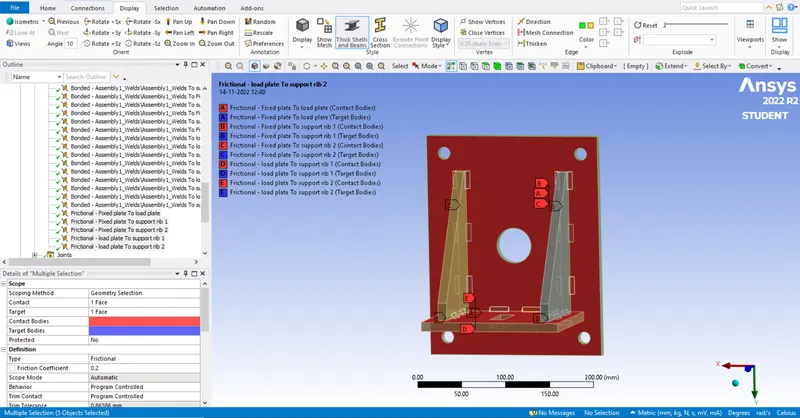
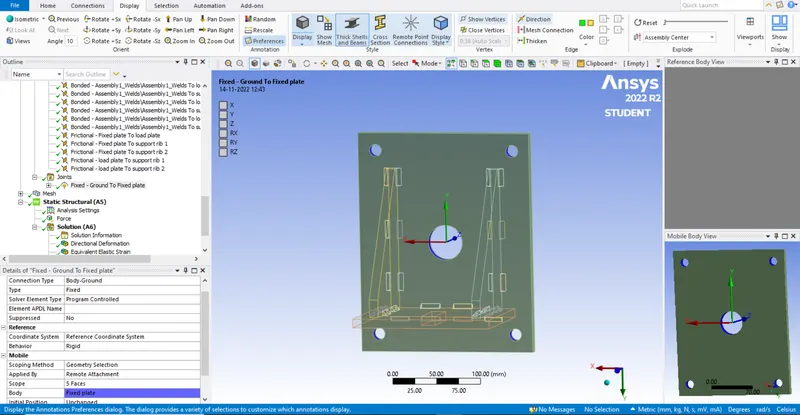
- In contacts we define the connection type in joint option as body to ground and the connection as fixed connection for the big plate.
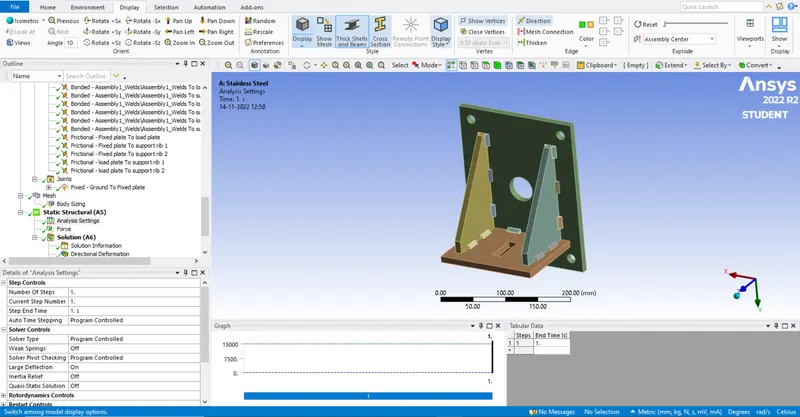
- In analysis settings we change the large deflection to on and rest remains default.
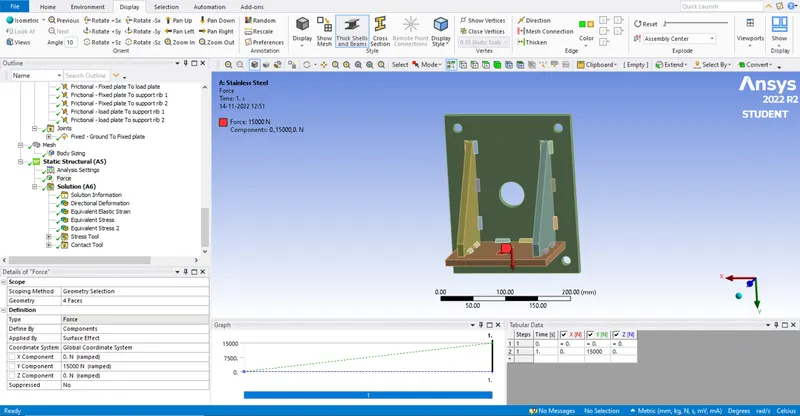
- We add the force of 15000N to the face of the slot in the small plate.
- In solution part we perform the solution which is asked to perform for the given model.
they are,
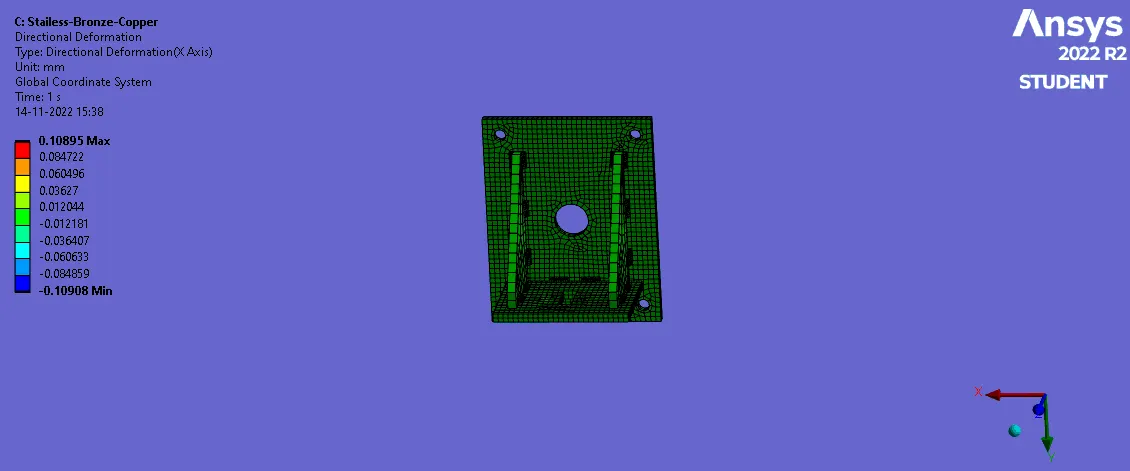
Case 1 : material property - Stanless Steel (for all),
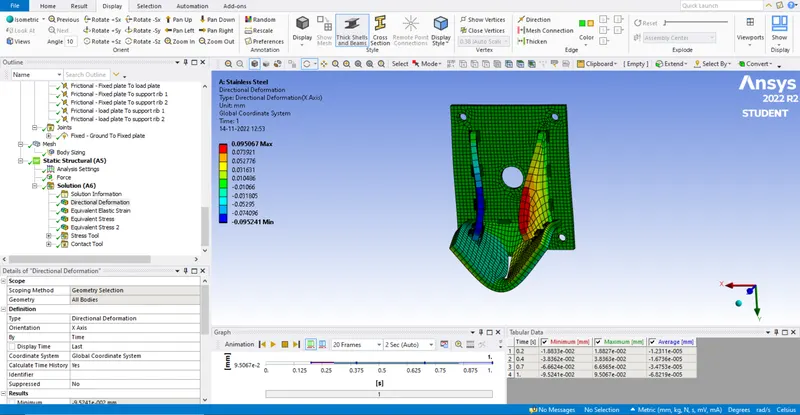
Directional deformation,
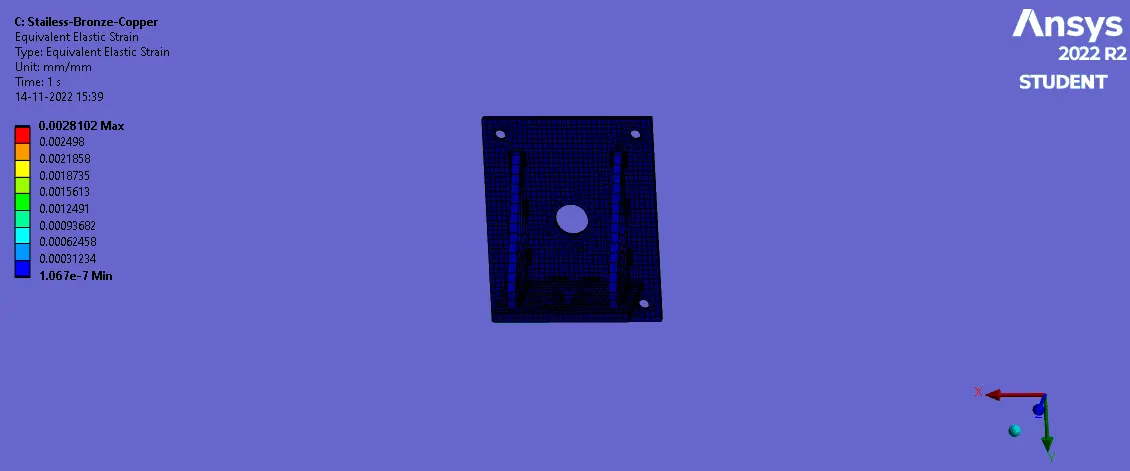
Equivalent strain,
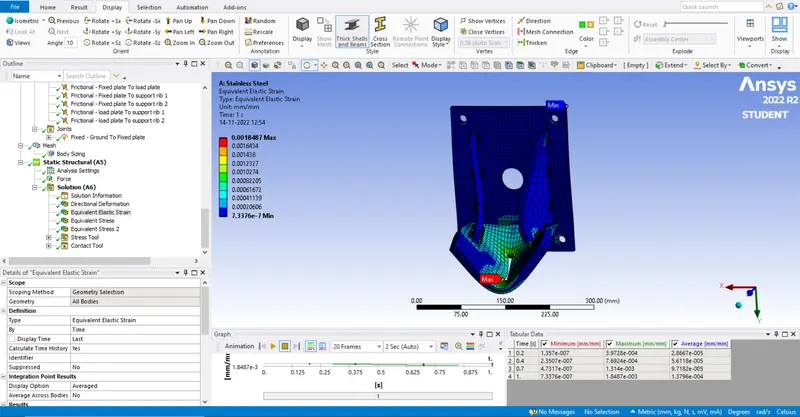
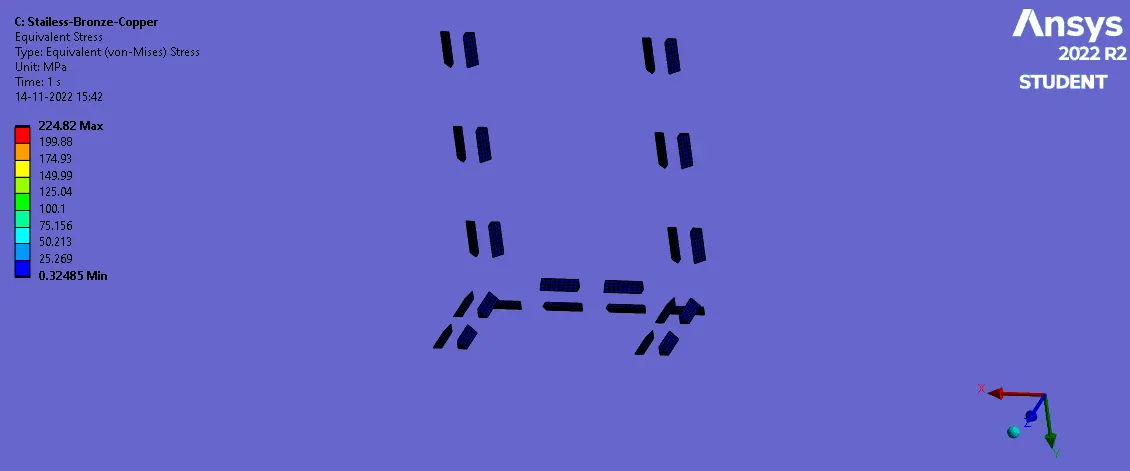
Weld joint that experience the highest equivalent stress.
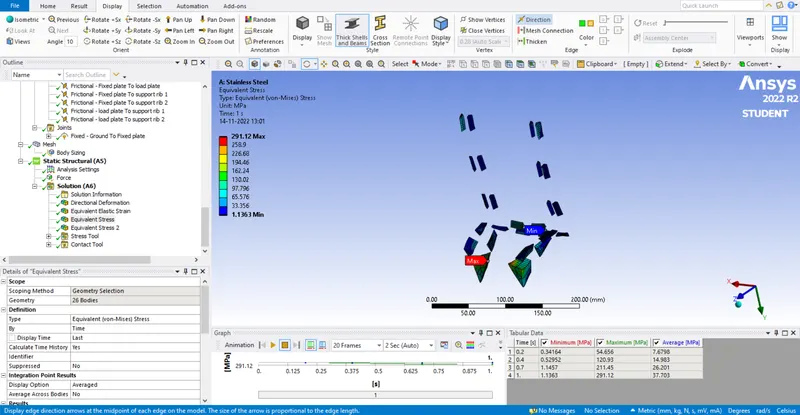
Case 2 : material property - Stainless Steel (for plates) and Aluminium alloy (for ribs and weld joints),
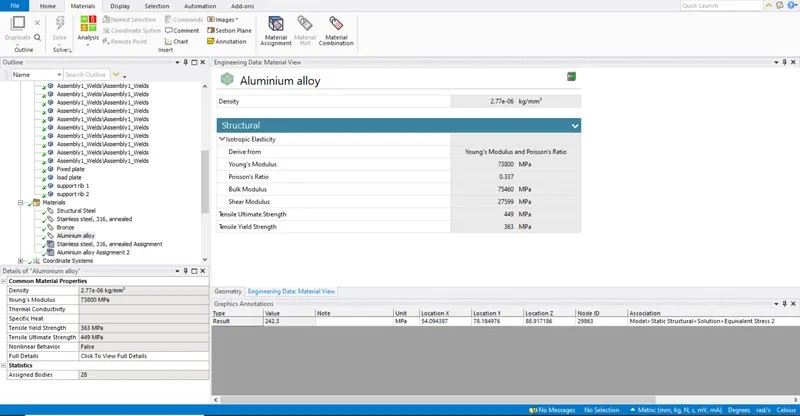
Directional deformation,
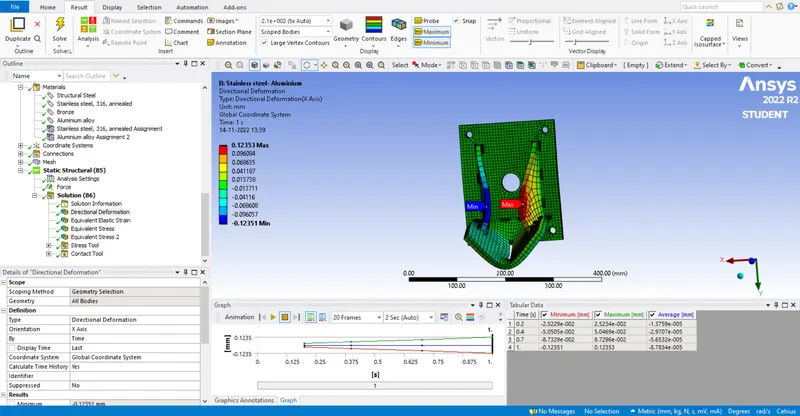
Equivalent strain,
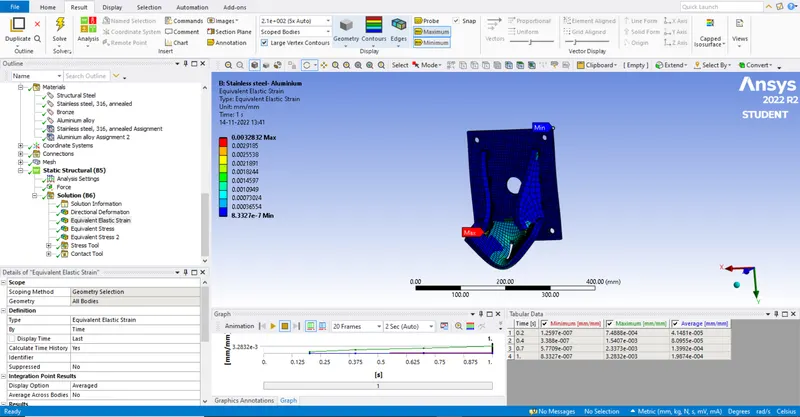
Weld joint that experience the highest equivalent stress.
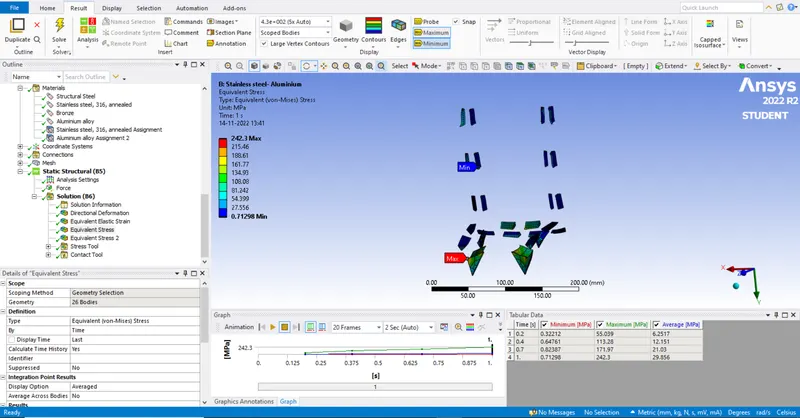
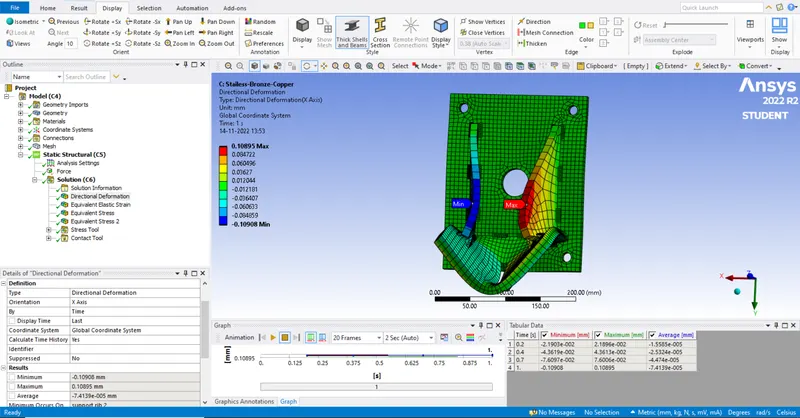
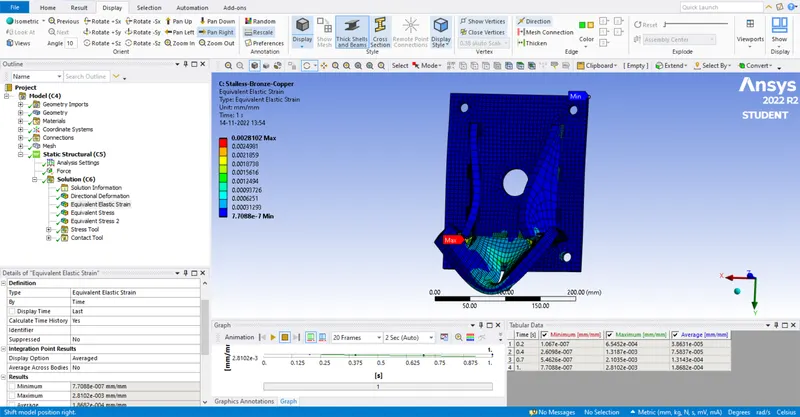
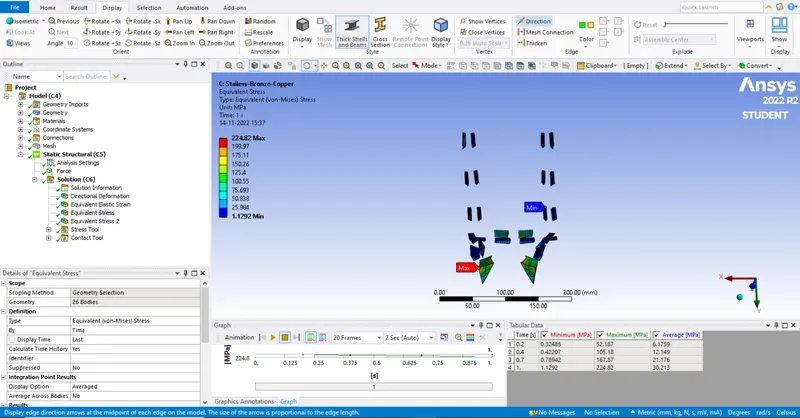
Case 3 : material property - Stainless Steel (for plates), Copper (for ribs) and Bronze (Weld joints).
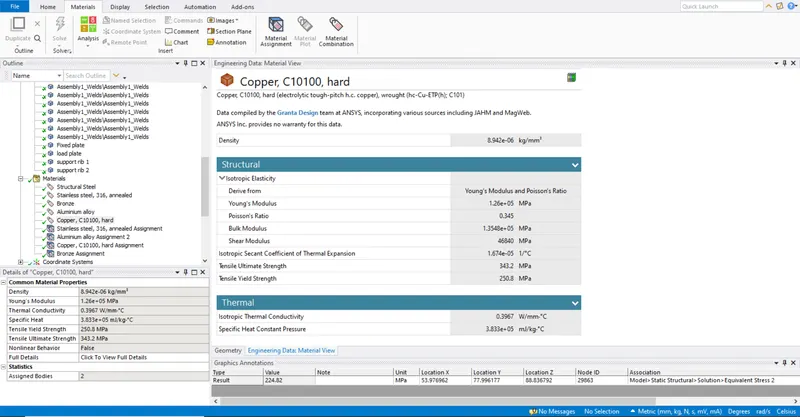
Directional deformation,
Equivalent strain,
Weld joint that experience the highest equivalent stress.
Conclusion :
From the above analysis we got the required solution of Weld joint that experience the highest equivalent stress for all the three cases are,
Result :
We have performed the analysis and got the required solution for the given model using ANSYS software.