Week 3 Verification of Weld Joints
Objective:
The objective of this challenge is to verify the strength of the weld joints in 3 different cases described in the question.
Case setup and execution:
Case 1:
First Static structural module was opened in Ansys Workbench.
The engineering dat was opened to add the stainless steel, aluminium alloy, copper and bronze to the material library. The properties of the aluminium alloy and bronze were edited as per the values given in the question.
Then the geometry given in the question was imported.
Then the "model" was opened. In Geometry tab in the model tree, all the welds and the plates & ribs were assigned stainless steel material.
Then the contacts were renamed as per the definition. The contacts among the plates and the ribs was made frictional with 0.2 as coefficient of friction.
The mesh was provided, wherein the body sizing was used for the plates and 7 mm mesh size was given.
In the analysis settings, large deflection was turned on.
In structural analysis, the fixed support was inserted for the holes in the bigger plate and the load of 15000 N was applied on rectangular hole in smaller plate, in the positive Y-direction.
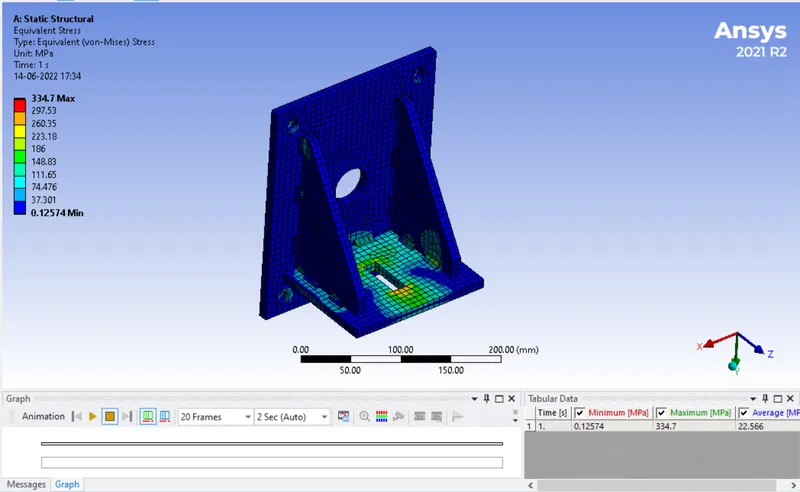
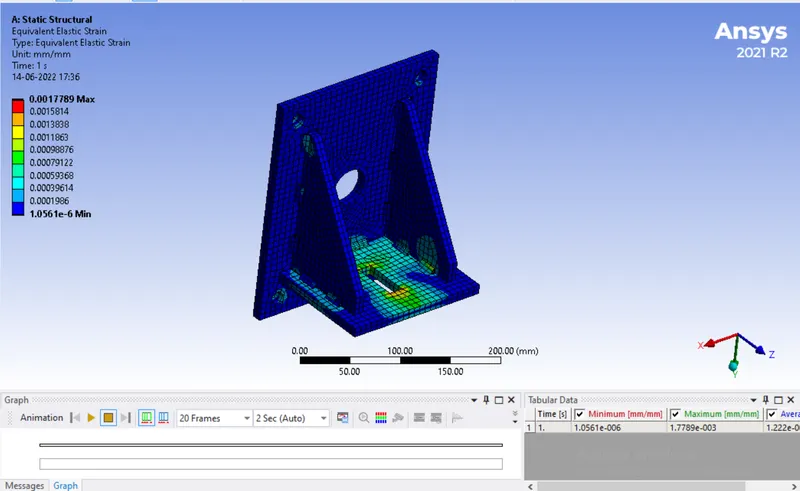
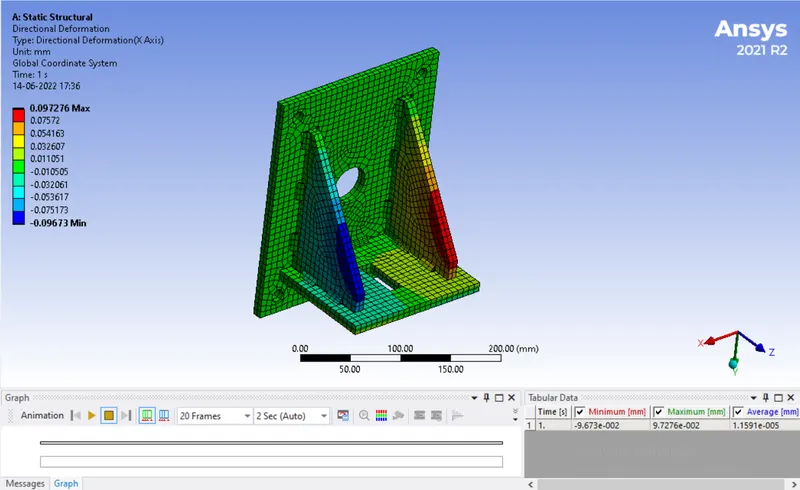
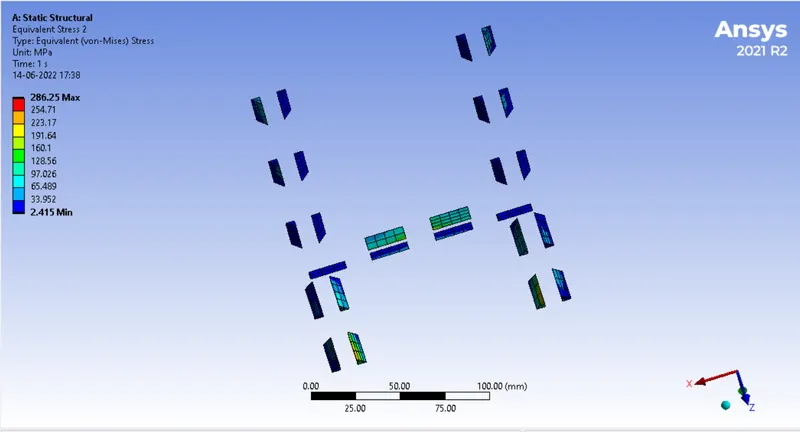
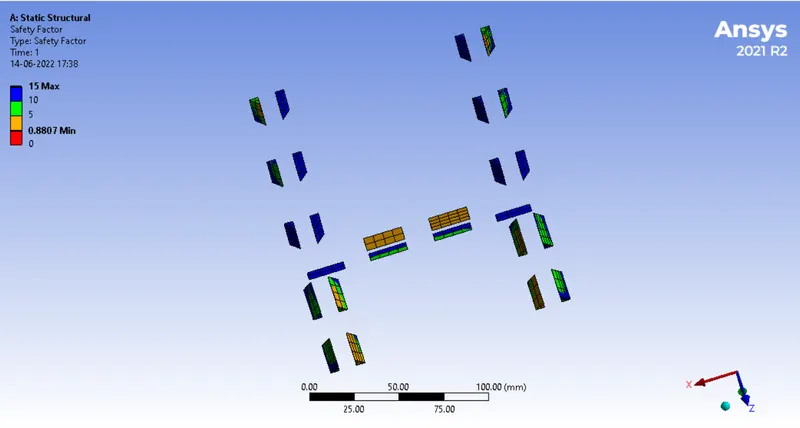
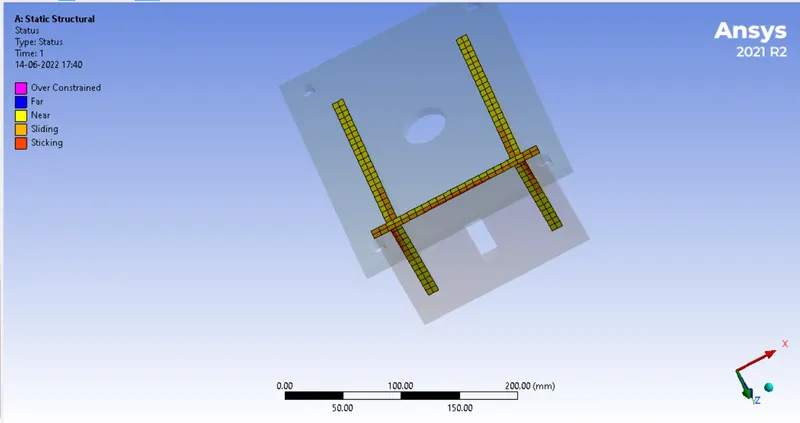
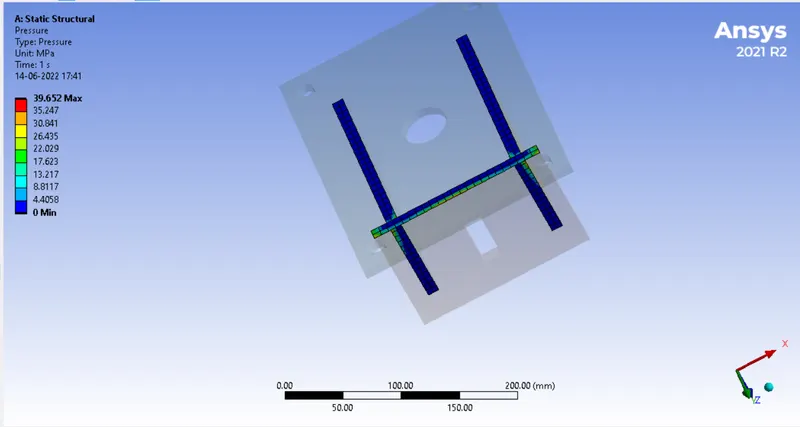
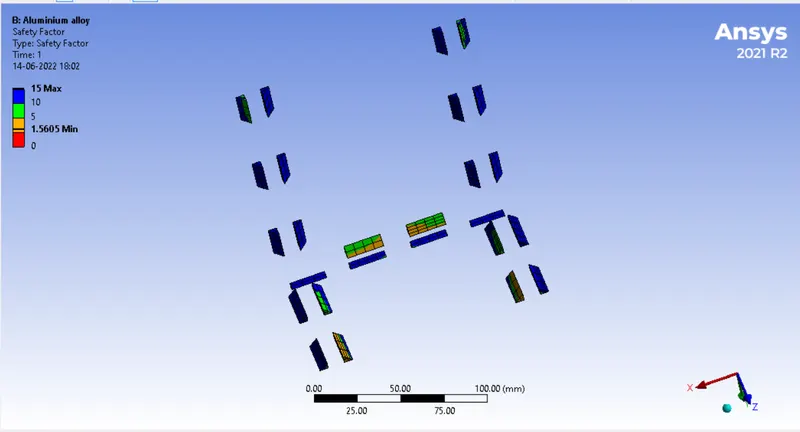
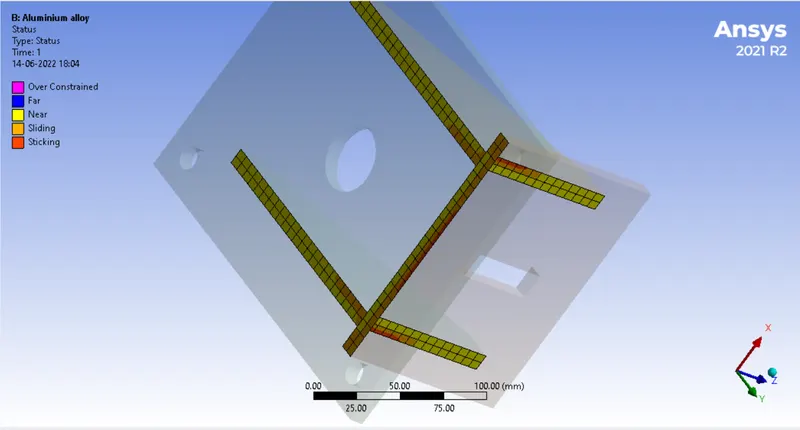
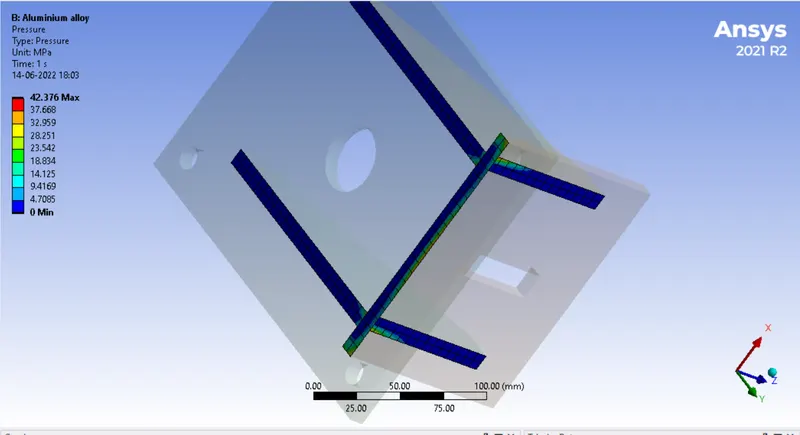
In the Solution, the output was requested for equivalent stress and strain, directional deformation, equivalent stress & safety factor (using stress tool) for the welds, the contact status and contact pressure.
The contact tool was applied only to the contacts between the plates and the ribs. excluding the welds.
The model was run. The results are explained below.
Case 2 :
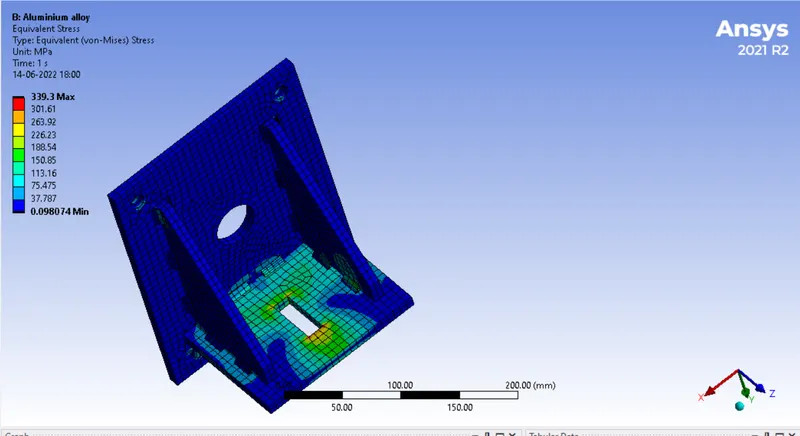
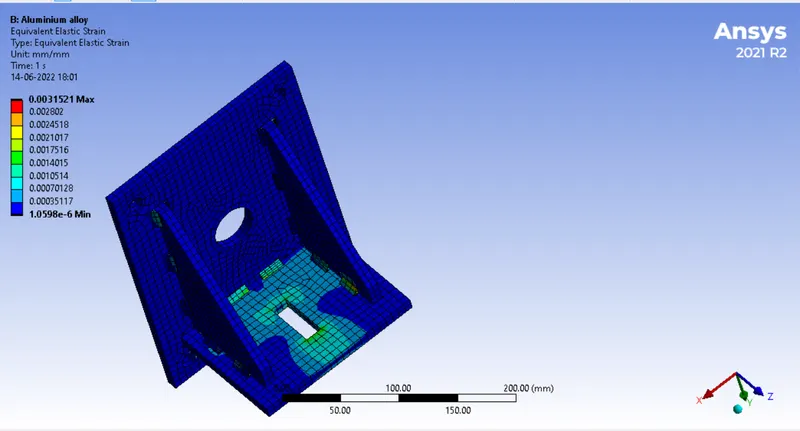
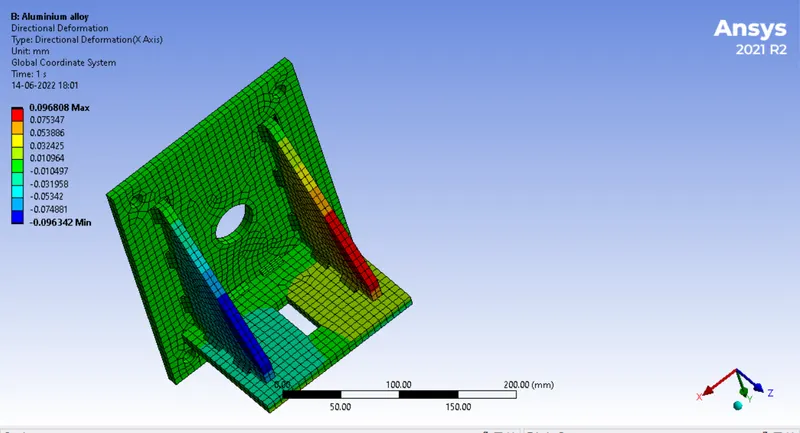
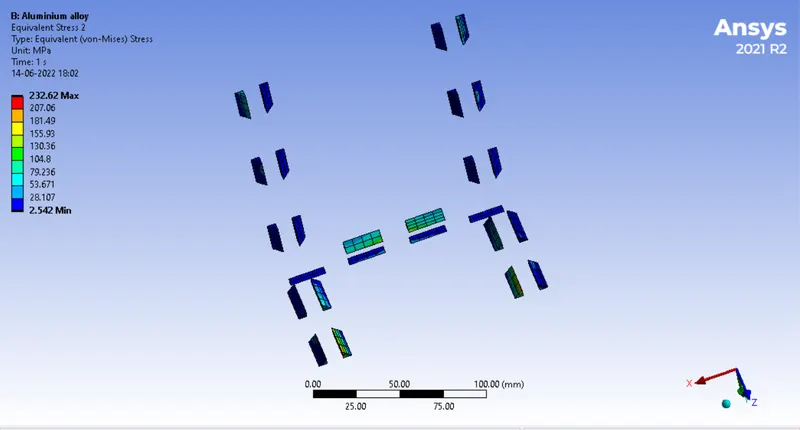
Here the material for welds was changed to aluminium alloy. Rest of the procedure was same as in case 1. The model was run. The results are explained below.
Case 3 :
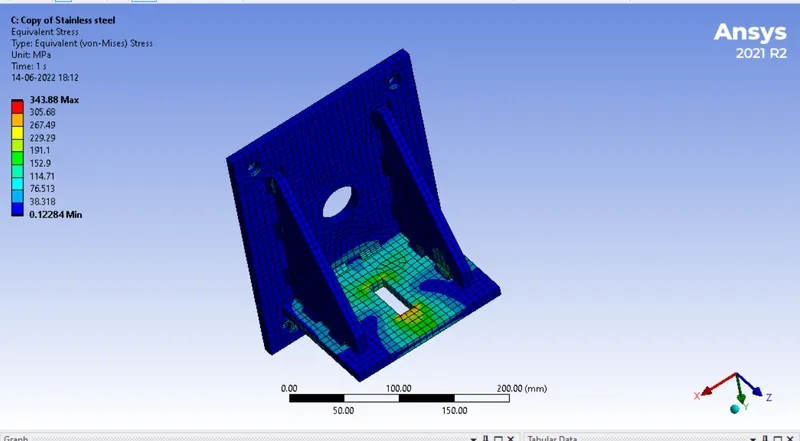
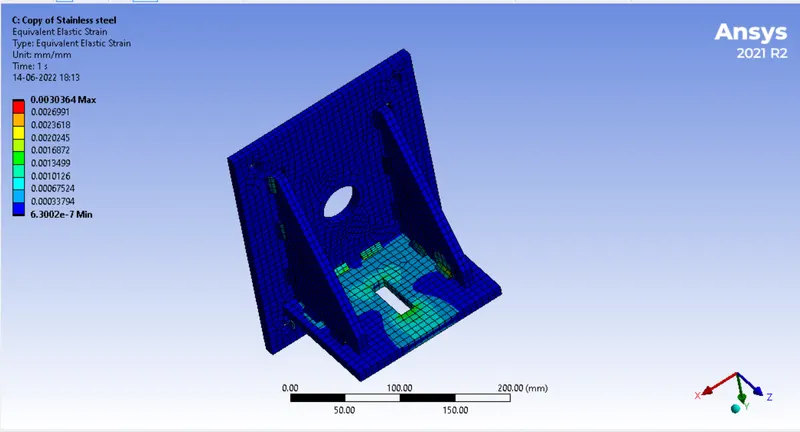
Here the material for welds was changed to bronze and that of ribs was changed to copper. Rest of the procedure was same as in case 1. The model was run. The results are explained below.
Results:
Case 1:
Case 2:
Case 3:
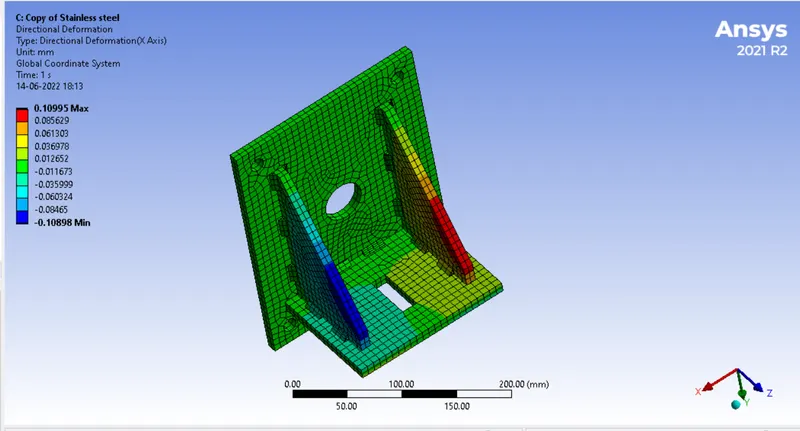
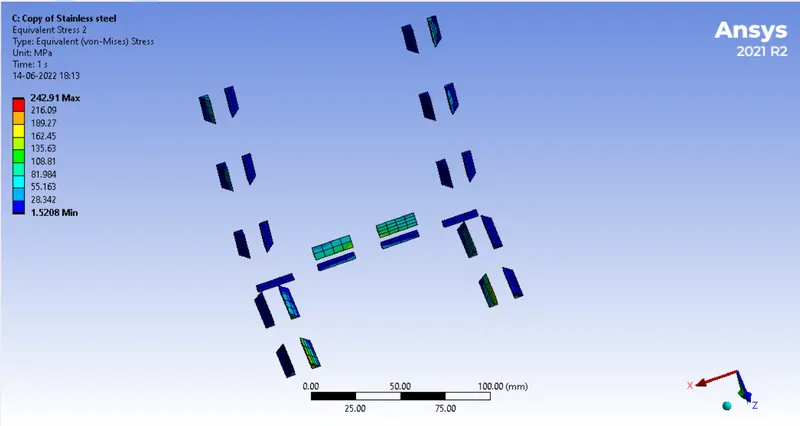
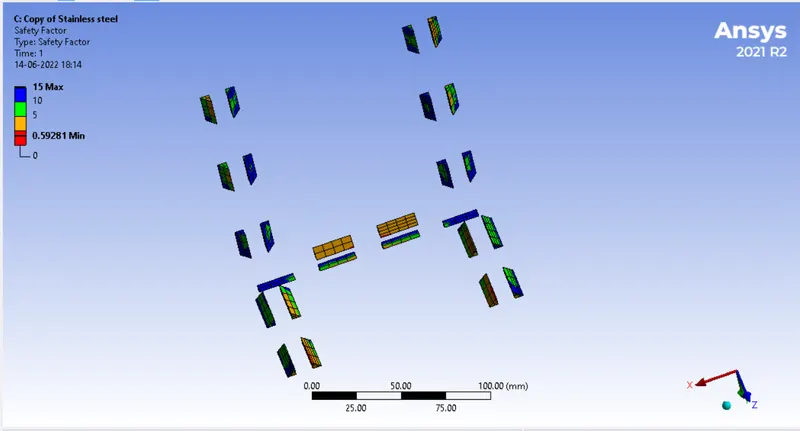
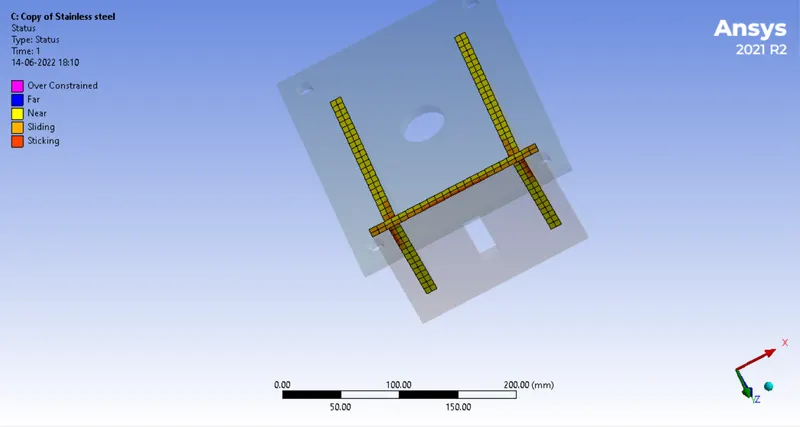
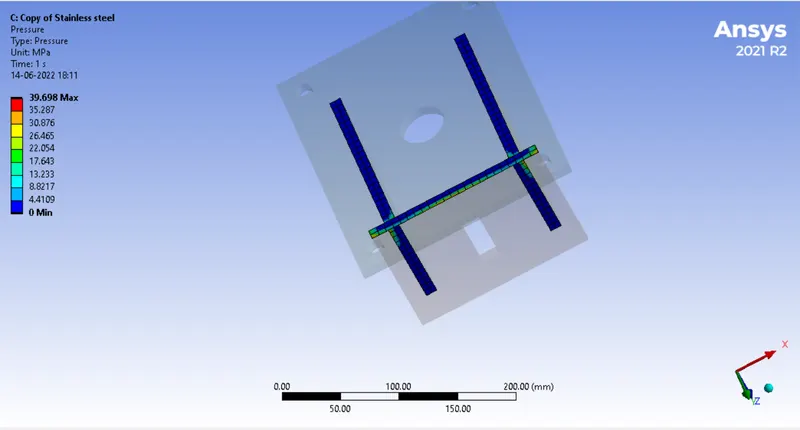
The following table summarises the maximum values of major results of the 3 cases:
| Case | Case 1 | Case 2 | Case 3 |
| Directional Deformation (mm) | 0.097276 | 0.096808 | 0.10995 |
| Equivalent strain | 0.0017789 | 0.0031521 | 0.0030364 |
| Equivalent stress (MPa) | 334.7 | 339.3 | 343.88 |
| Stress in welds (MPa) | 286.25 | 232.62 | 242.91 |
Explanation of results:
From the above table, following inferences can be drawn:
The directional deformation is almost similar in first 2 cases, but a bit higher in case 3.
Since in Case 1, plates, ribs as well as welds are assigned stainless steel, which has the highest Young's modulus (195 GPa), the equivalent strain is lowest of all cases, although the directional deformation is almost similar. This is because the equivalent strain takes into account the strains in all directions as well as strain in welds. But as welds are made of stainless steel, the equivalent strain is the lowest. But due to Highest Young's modulus, the stresses developed in the welds are highest of all cases. But due to overall lowest value of equivalent strain, the equivalent stress is lowest of all cases.
This is further substantiated in case 2, wherein plates & ribs are of stainless steel, but welds are of aluminium alloy. This has lead to almost similar directional deformation, but the equivalent strain is the highest, because the welds are made of aluminium alloy having lower Young's modulus (73.8 GPa).
In case 3, welds are made of bronze (E=80 GPa) and ribs are made of copper (E=126 GPa). Hence the equivalent strain is lower than in case 2, but higher than in case 1. Also due to lower Young's modulus of ribs, the directional deformation is the highest, leading to highest equivalent stress. Also as "E" of bronze is more than that of aluminium, the stresses in welds are also more than those in case 2.
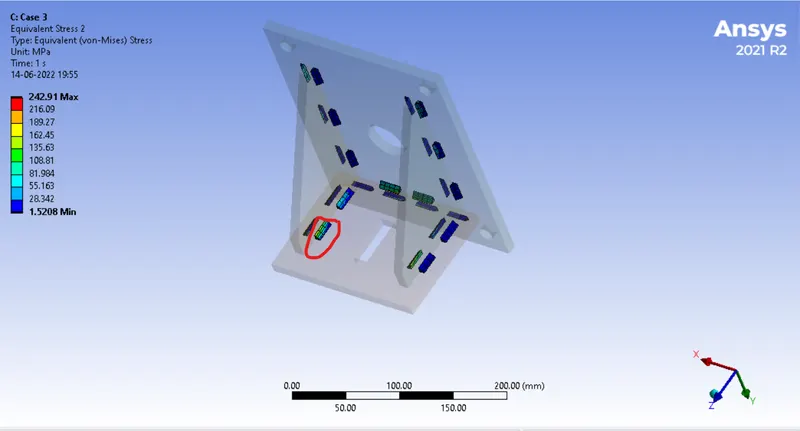
Also in all the cases, the weld joint encircled in image below experiences the highest equivalent stress.
Conclusion:
Thus, it is clear, that the material properties of both the weld joints as well as the plates & ribs affect the results. Going by the obtained results, the Case 1 with stainless steel would be the preferred choice.