Week 3 Verification of Weld Joints
OBJECTIVE:
To perform spur gear simulation using three different materials given in the problem using ANSYS Workbench. The equivalent stress, total deformation, and stress intensity have to be compared between all the materials and possible fracture location must be identified.
PROCEDURE FOR CASE SETUP:
1. Open ANSYS›>Drag and drop static structural model in the project schematic window.
2. Go to the engineering data. Structural steel material is defined in the library by default. For the remaining two materials, they are defined using the above properties. New material is selected from the Engineering Data and after which desired properties are selected from the Toolbox and the values are inputted. The materials necessary for the
challenge is shown below.
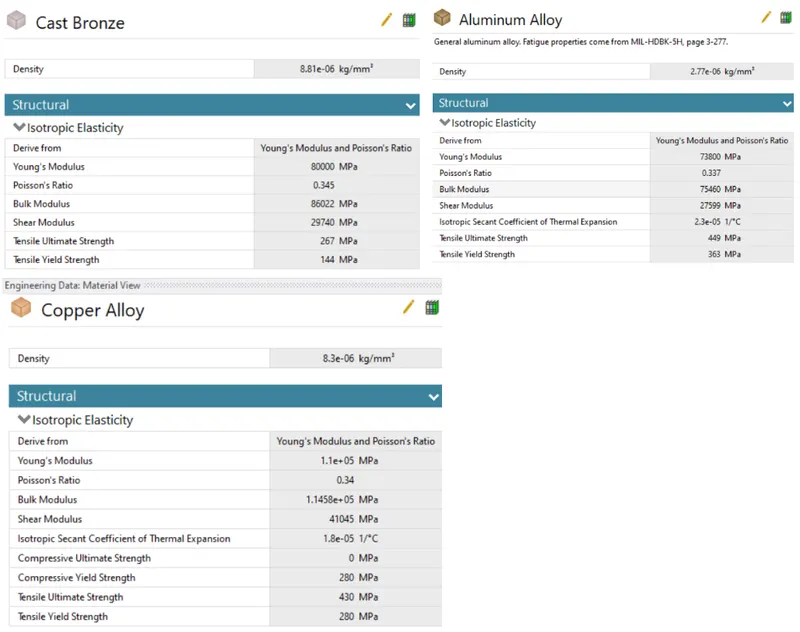
For the initial simulation, stainless steel is chosen for the weld joints.
3. Go to the model tab for meshing and doing the case setup.
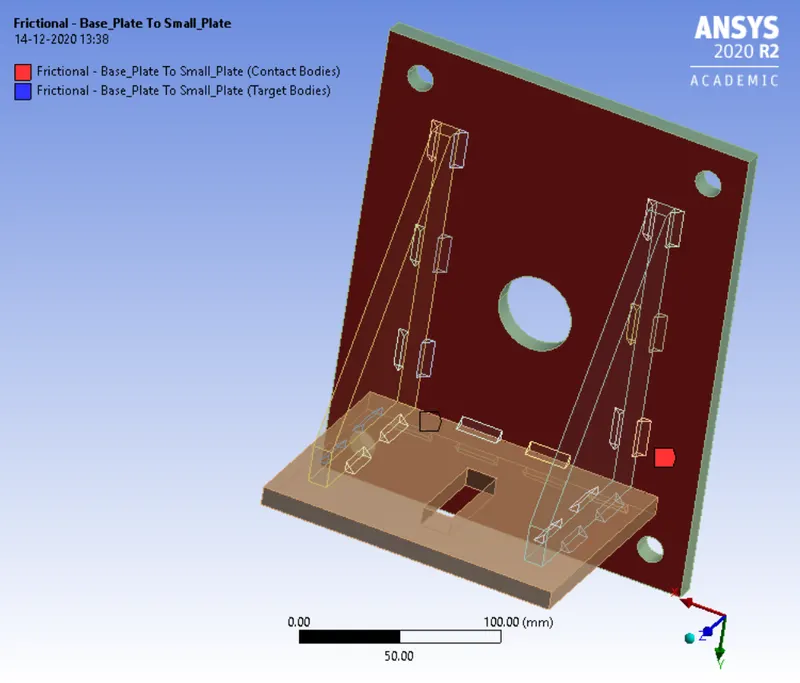
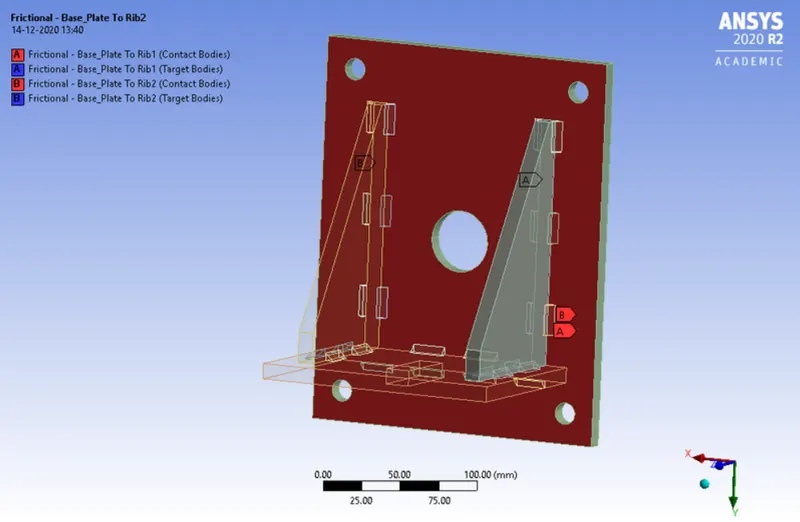
4. In the geometry rename the gear using a convenient name so that while assigning the boundary conditions it is easier to identify. In this case, the structure which is to be welded is renamed as small plate, base plate, and ribs respectively.
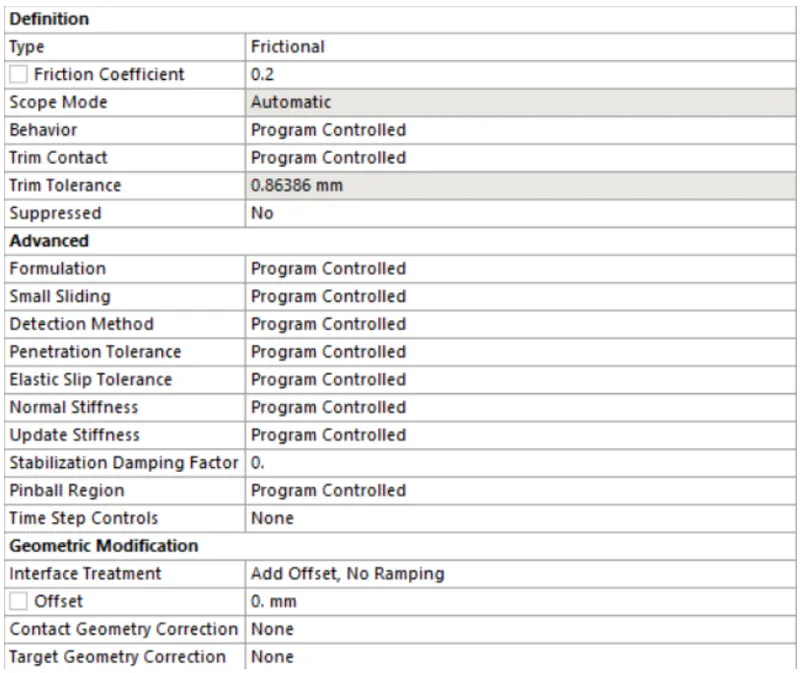
5. Go to contacts››Rename based on the definition. The contact between the plates and ribs are defined using frictional contact with a frictional coefficient of 0.2. The rest of the contacts are default. There are five contacts between the plates and rib.
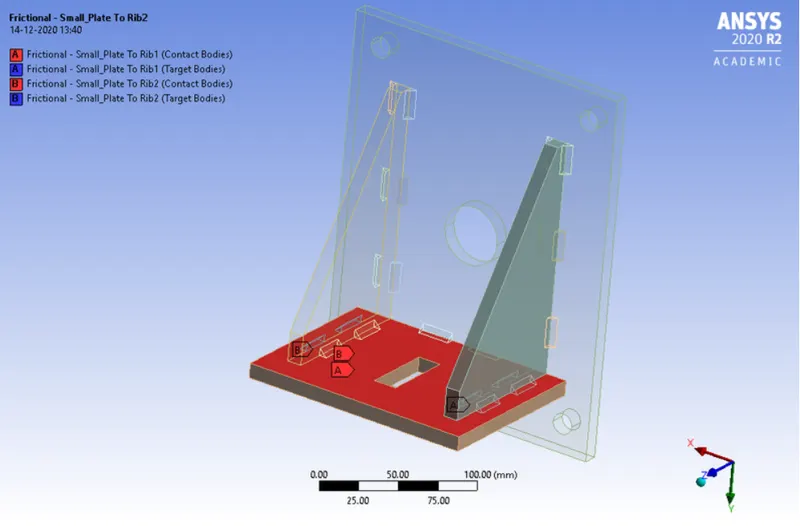
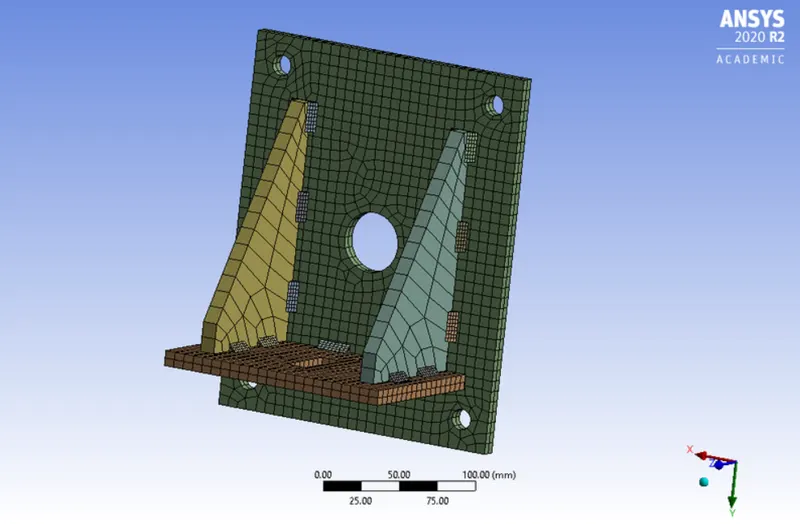
6.In the meshing tab, the body sizing has to be defined with a mesh size of 7 mm. The final meshed model is shown in the figure below.
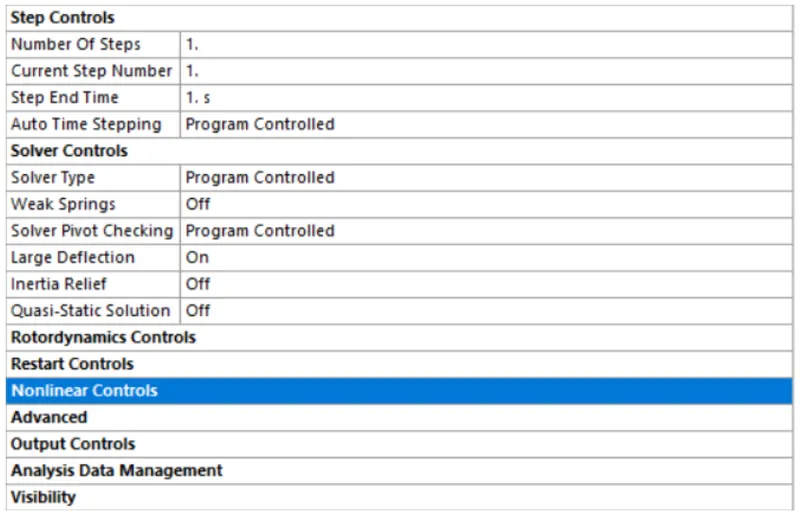
7. The following analysis settings are defined for the simulation.
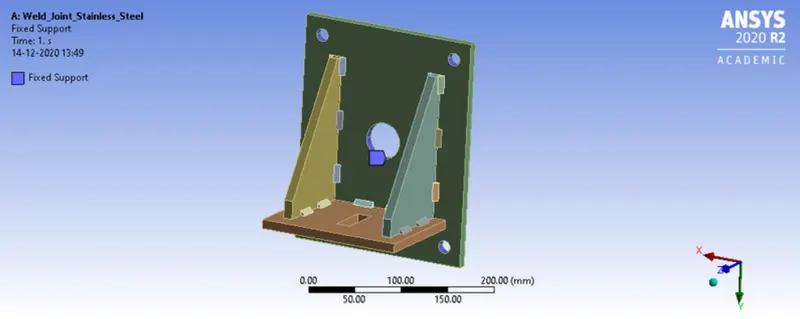
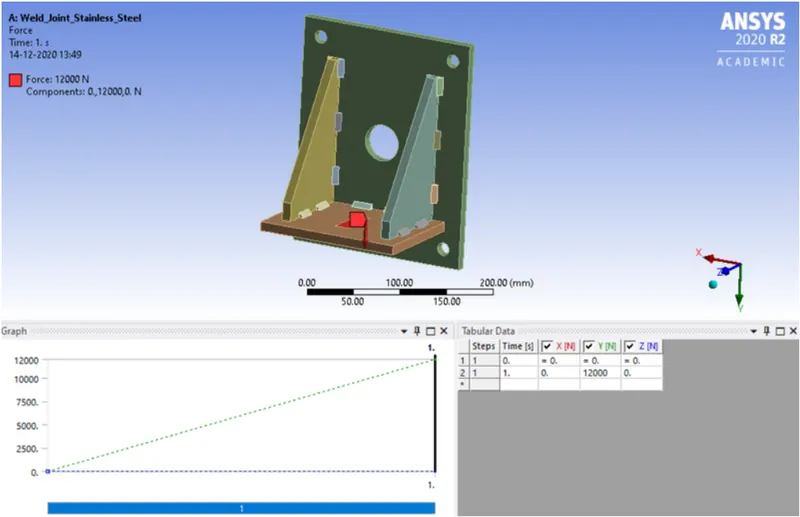
8. Fixed support is defined for the hole in the bigger plate. A force of 12000 N is given in the hole of the base plate.
9. From the solution option the results for directional deformation, equivalent stress, and equivalent strain are requested.
10. From the analysis settings, hit on solve to start the simulation.
11. The simulation has to be carried out for all the materials simply by changing the materials in the geometry tab.
RESULTS AND DISCUSSION:
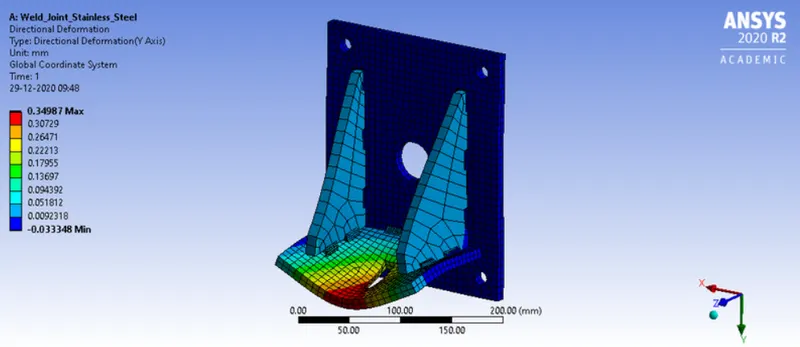
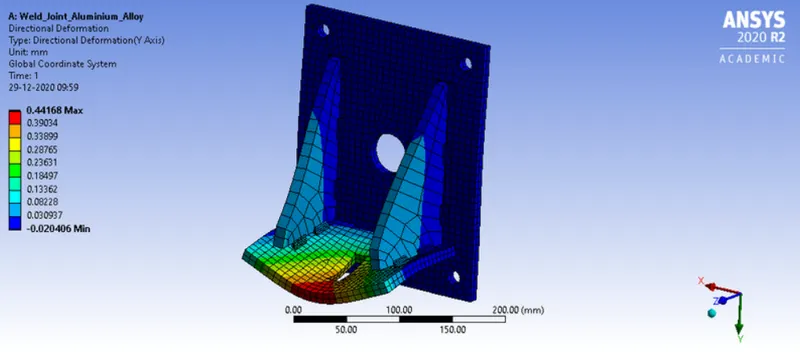
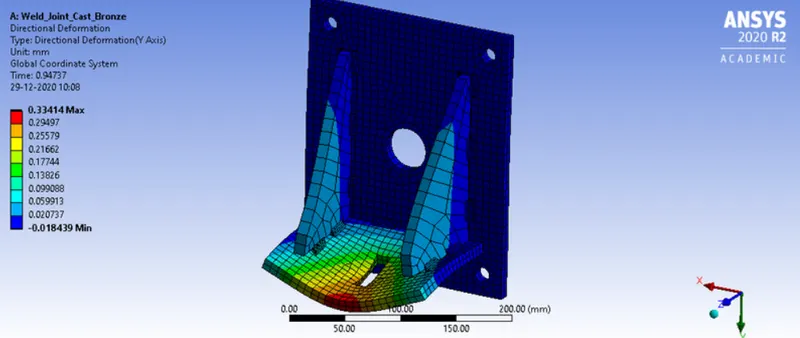
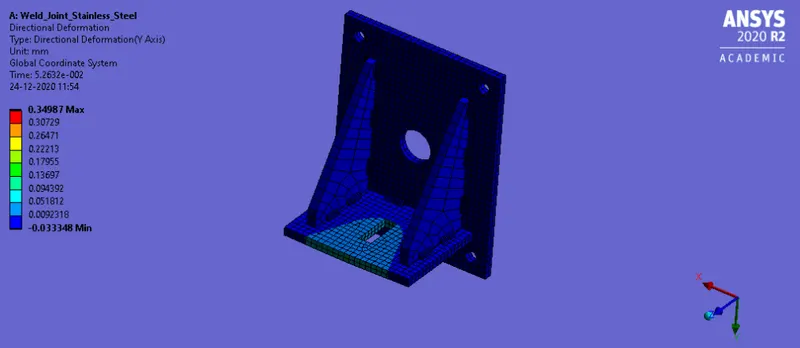
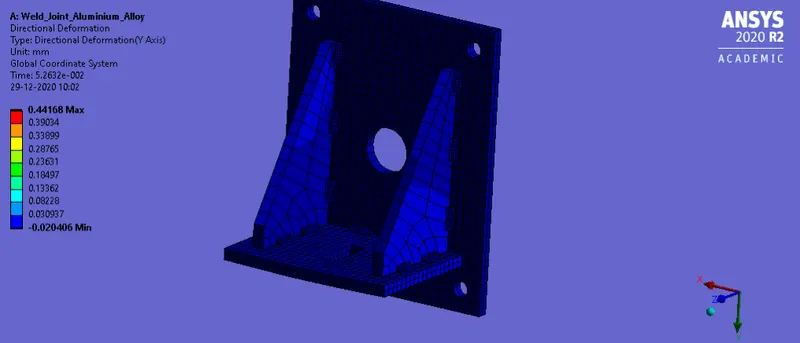
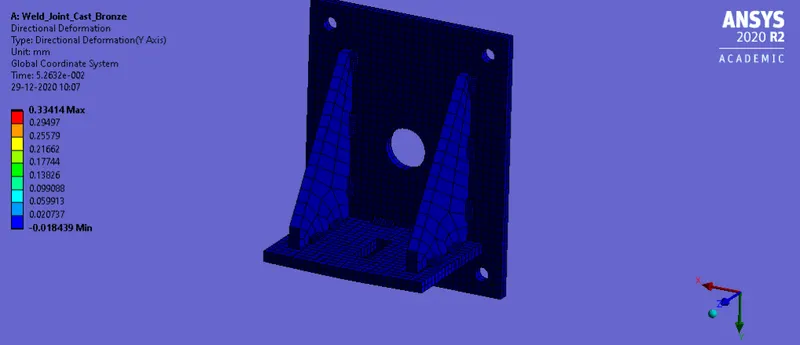
1. The directional deformation for the three cases is shown in the figure below.
2. The equivalent elastic strain of the setup is shown below.
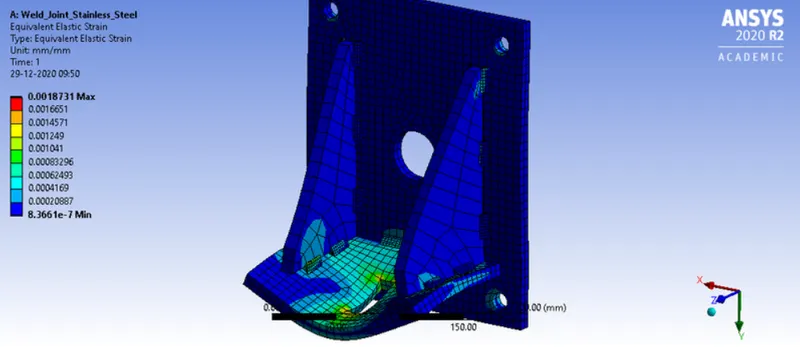
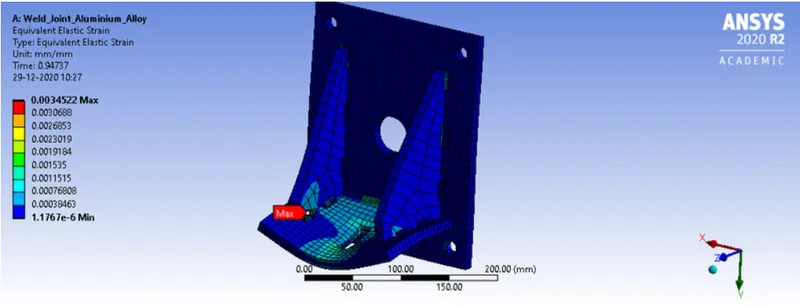
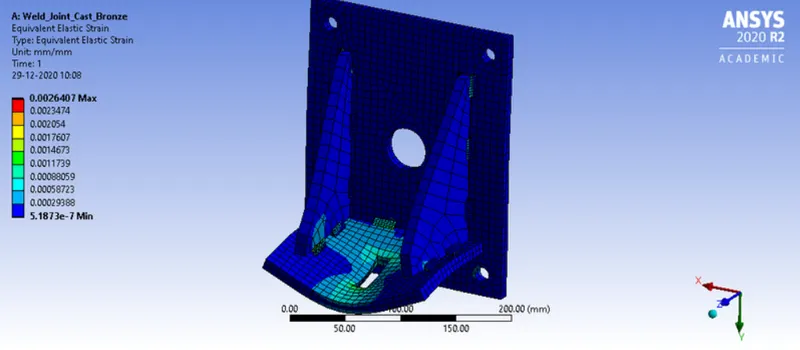
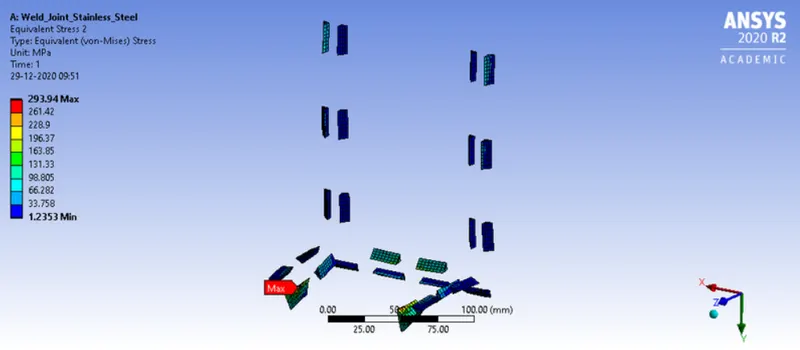
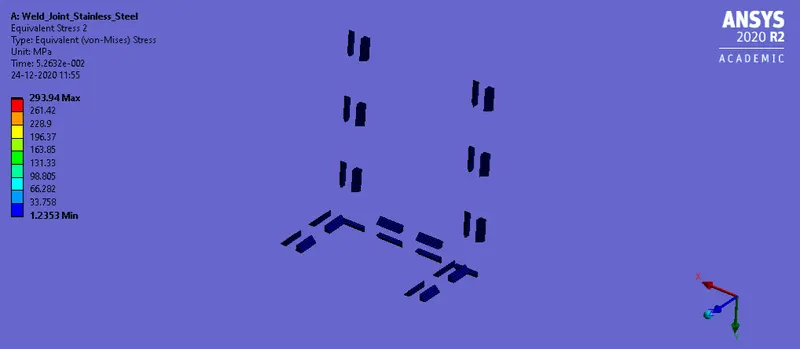
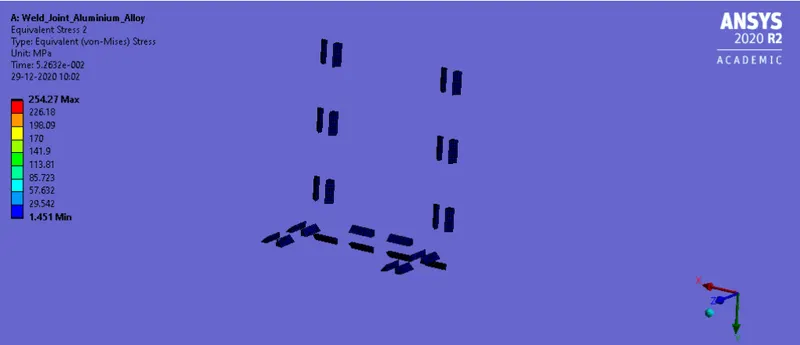
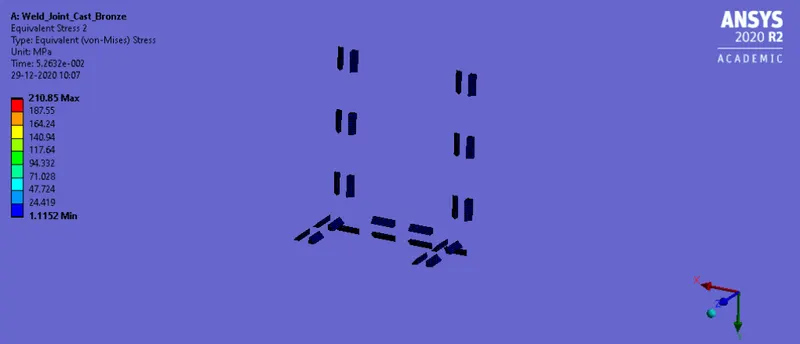
3. The equivalent stress experienced by the weld joints is shown below.
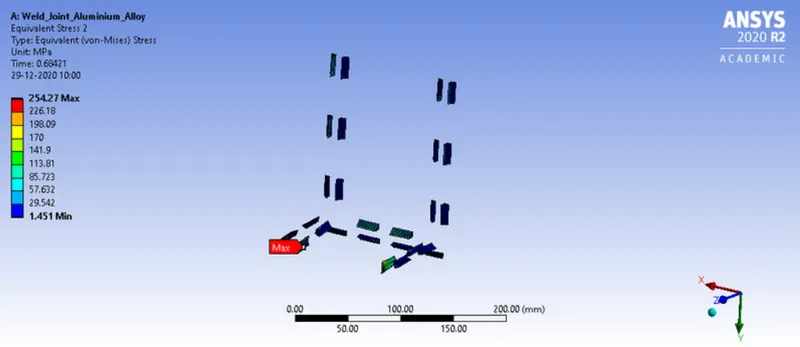
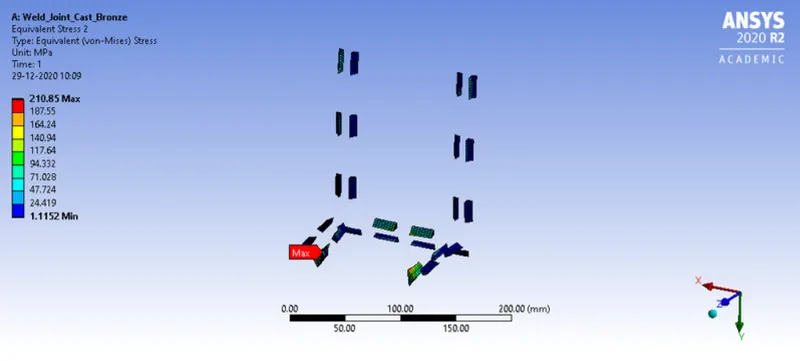
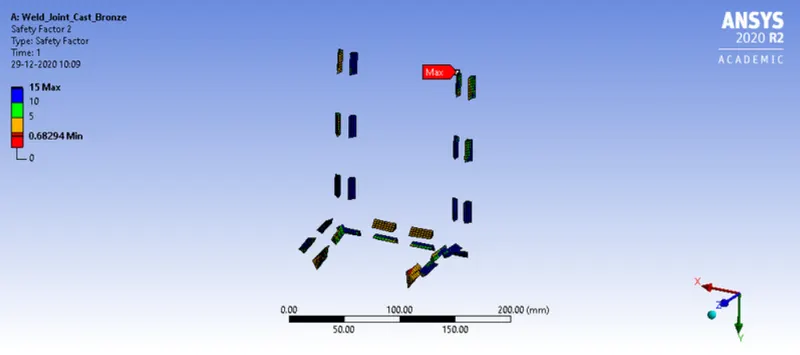
4. The safety factor of the welds are shown below.
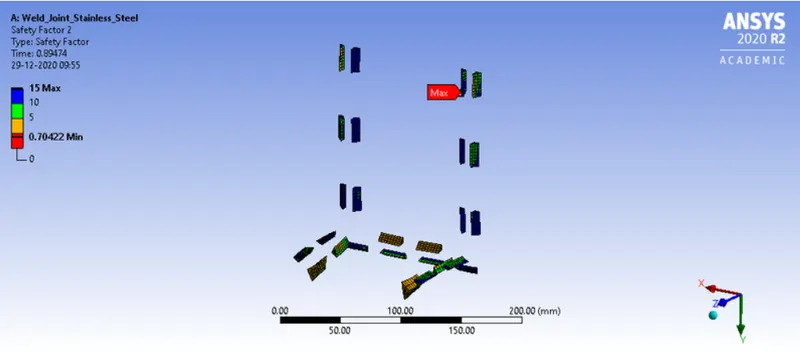
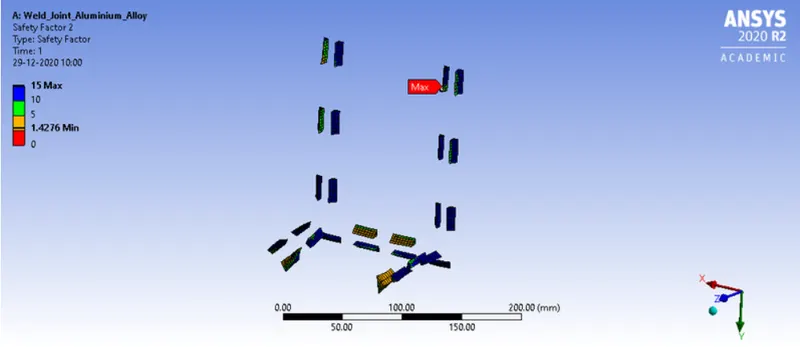
ANIMTION FILES :
1. The total deformation is shown below.
2. The equivalent elastic strain is shown below.
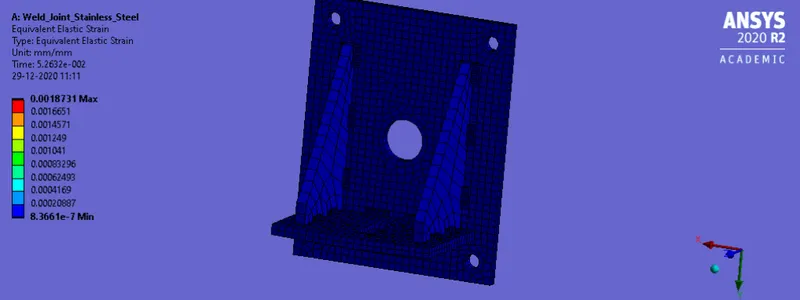
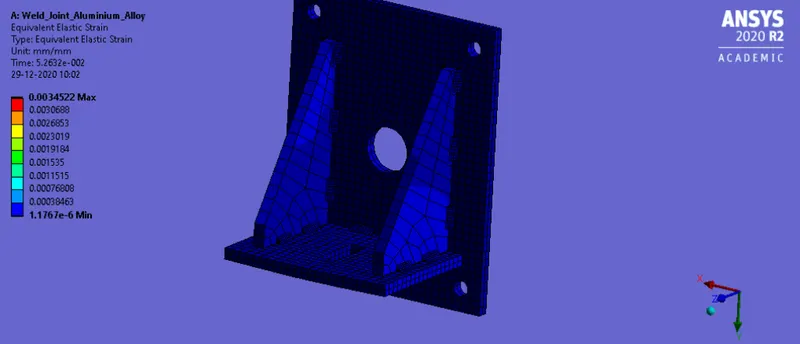
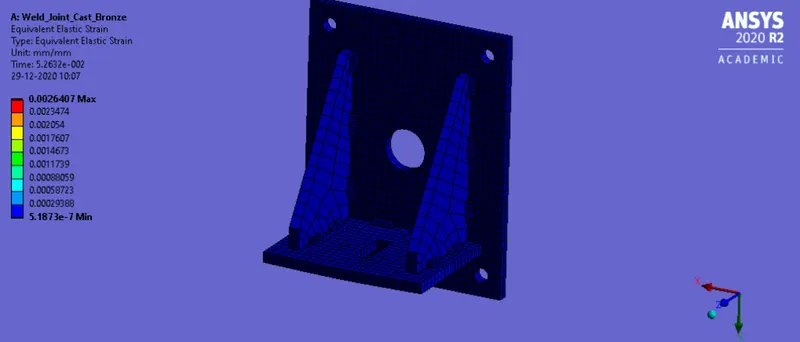
3. The equivalent stress observed in the weld joints is shown below.
CONCLUSION:
From the simulation, it can be seen that for all the cases the solution converged without any errors.
The output parameters are tabulated below.
| Material | Directiona deformation(mm) | Equivalent stress(Mpa)(in weld joints) | Equivalent Elastic Strain |
| Stainless steel | 0.34987 | 293.94 | 0.0018731 |
| Aluminium alloy | 0.44168 | 254.27 | 0.0034522 |
| Cast Bronze | 0.33414 | 210.85 | 0.0026407 |
From the above table, it can be seen that magnitude of directional deformation is the highest for the aluminum alloy with a value of 0.44168 mm. The value obtained for cast bronze and stainless steel are 0.33414 and 0.34987 mm respectively.
The equivalent stress observed in the weld joints is highest for stainless steel with a value of 293.94 MPa. The value of equivalent stress observed for cast bronze is 210.85 MP which is the least value observed.
The equivalent elastic strain observed for the aluminum alloys the highest with a value of 0.0034522. Also, from the above results, it can be seen that the equivalent stress of the welds between the base plate and rib is the highest for all the materials used.
Therefore, it can be concluded that directional deformation is highest for aluminum alloy. The equivalent stress observed in stainless steel is the highest. This is due to its higher yield stress. The equivalent elastic strain observed in the aluminum alloy is the highest and least in stainless steel. Hence, all the objectives are satisfied.