Week 3 Verification of Weld Joints
Objective: To verify the strength of weld for different material.
Case 1: Structural Steel
Case 2: Aluminium Alloy
Case 3: Bronze
Experiment setup.
i. Geometry
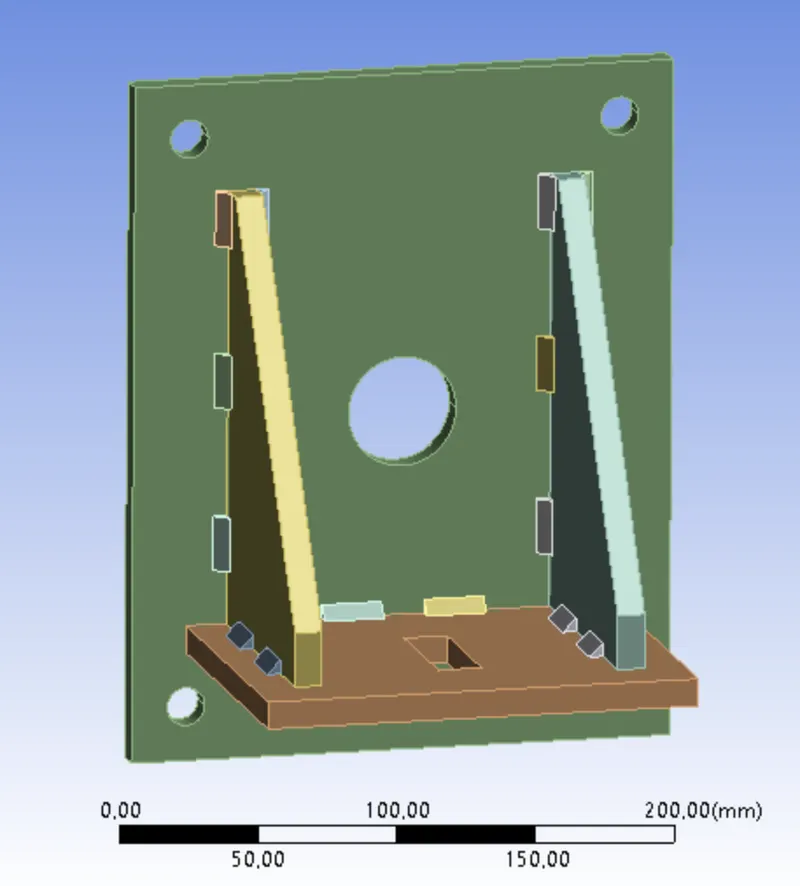
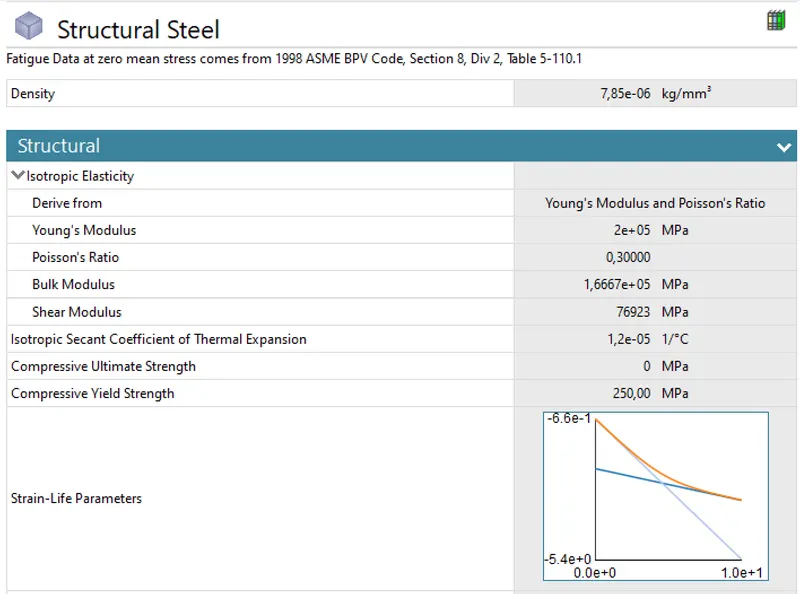
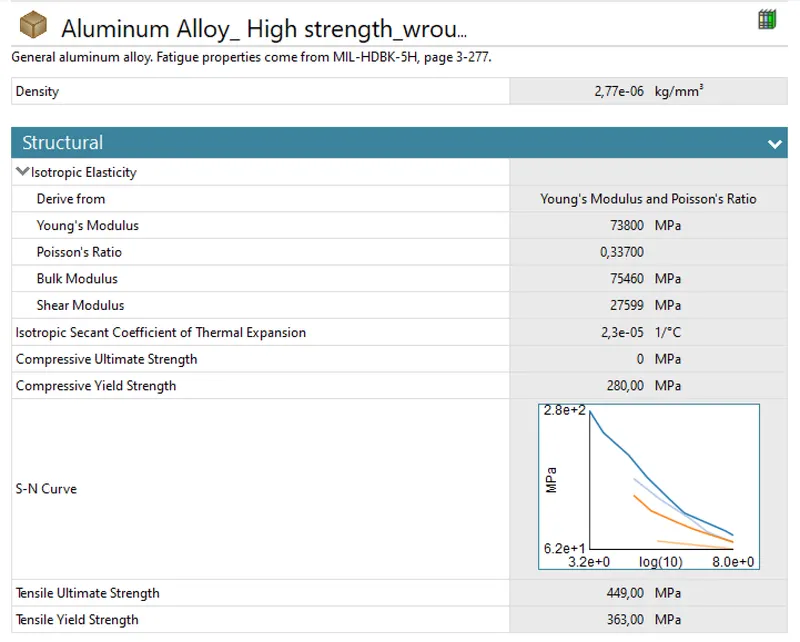
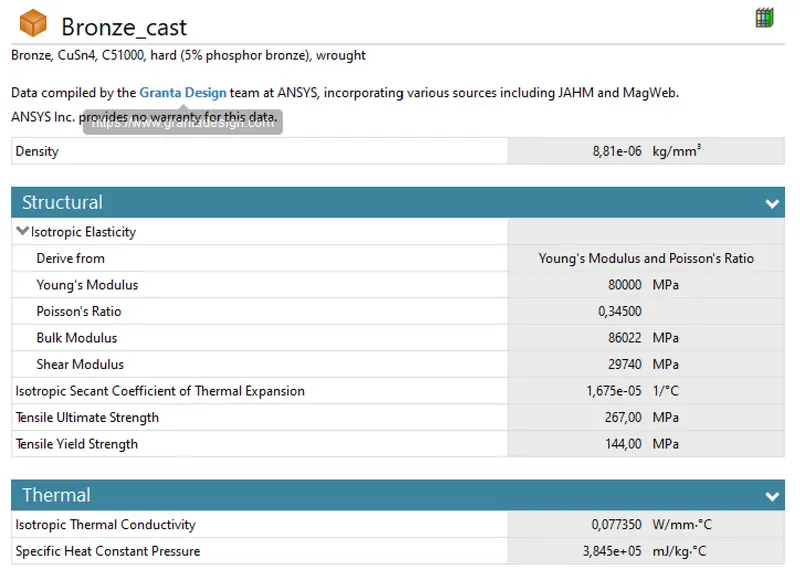
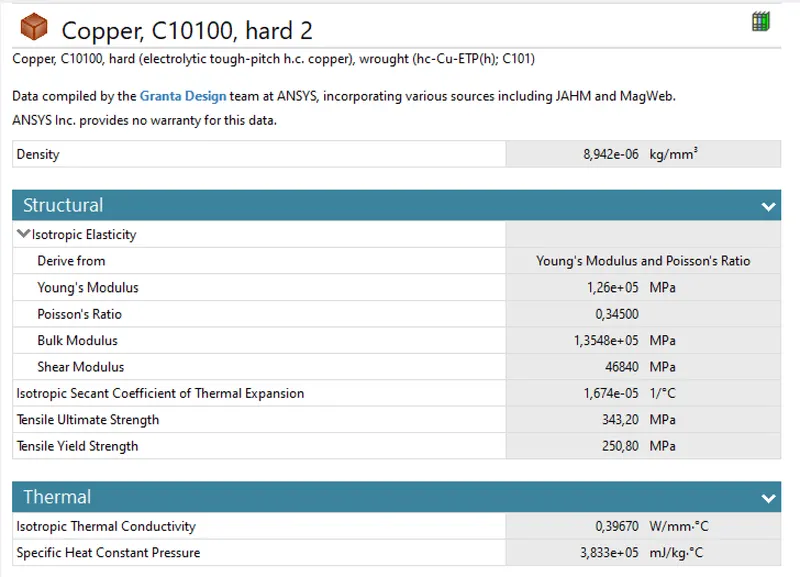
ii. Materials
iii. Connections
Connection set up,
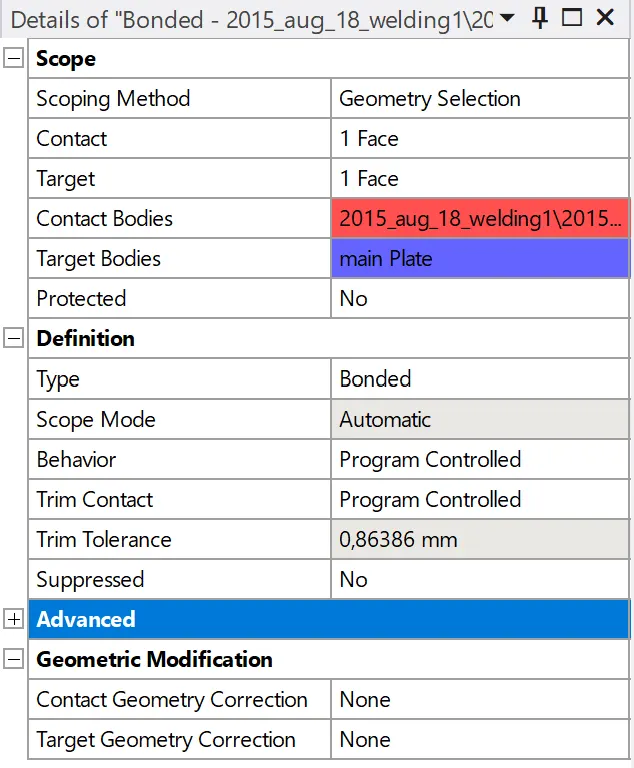
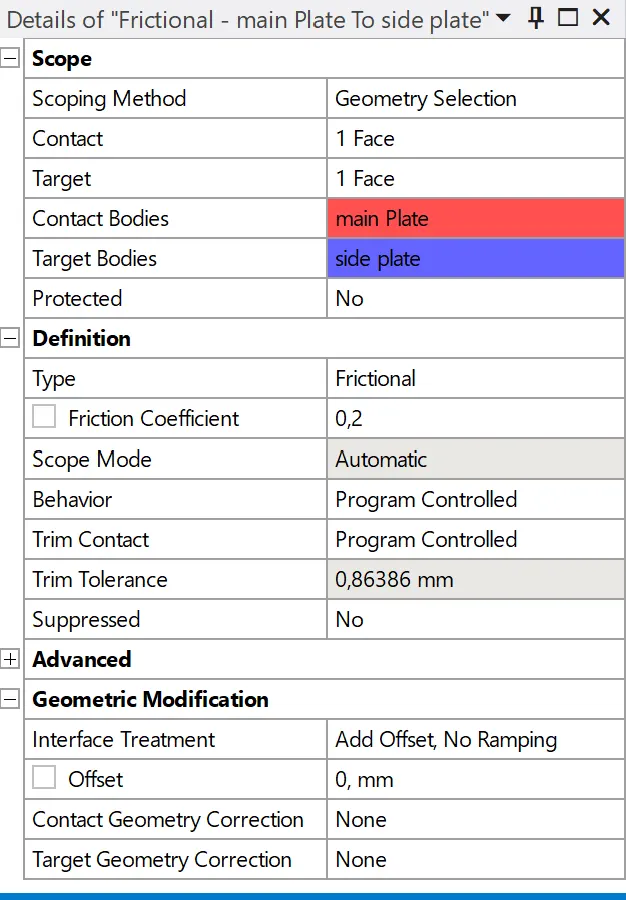
Details of bonded contact joints. Details of frictional contact joints.
Plate to rib : frictional (0.2)
Plate to plate : Frictional (0.2)
Weld to rib and plate: Bonded.
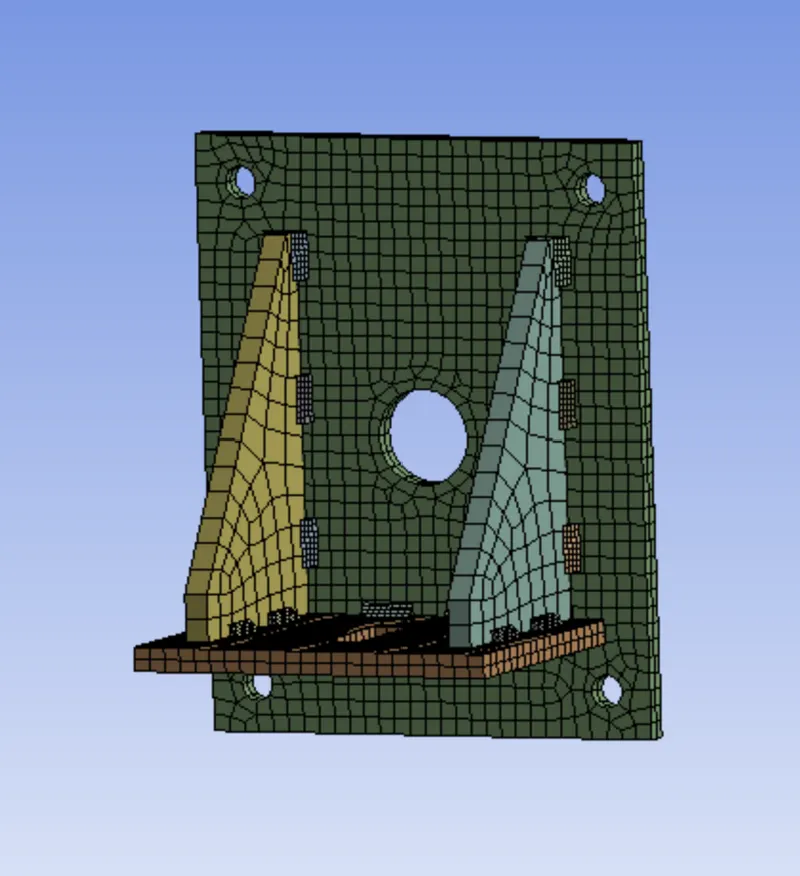
iv. Mesh
Body sizing is given for plates with an element size of 7 mm. Element quality and Element ranges were checked for smooth simulation.

v. Analysis setting, support and load.
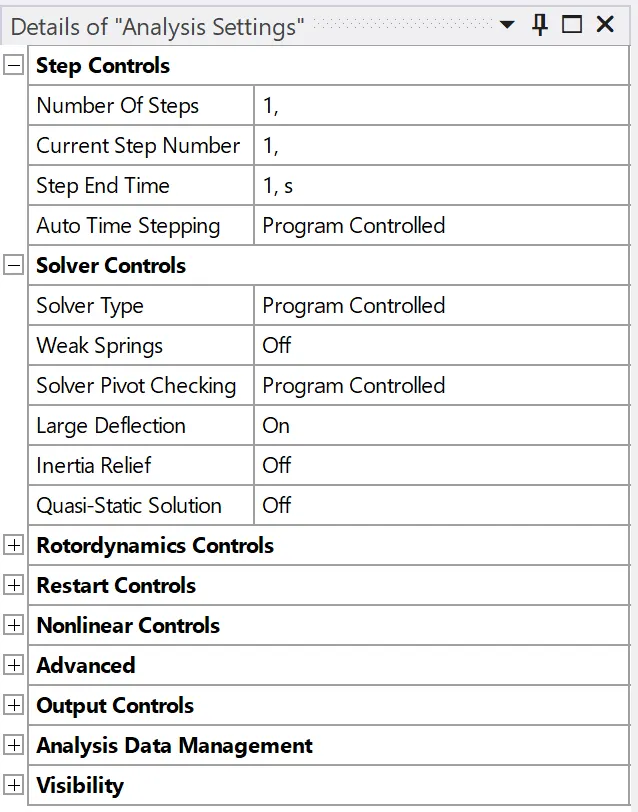
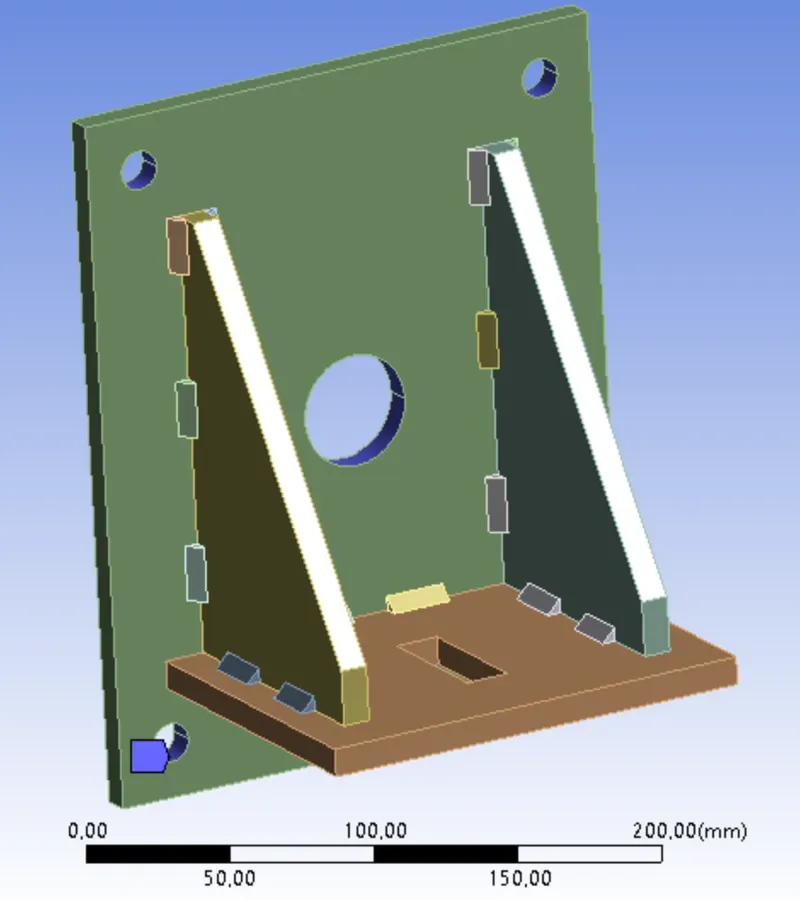
Fixed supports and loads are given as follows:
Fixed supportis is made at the four corner holes.
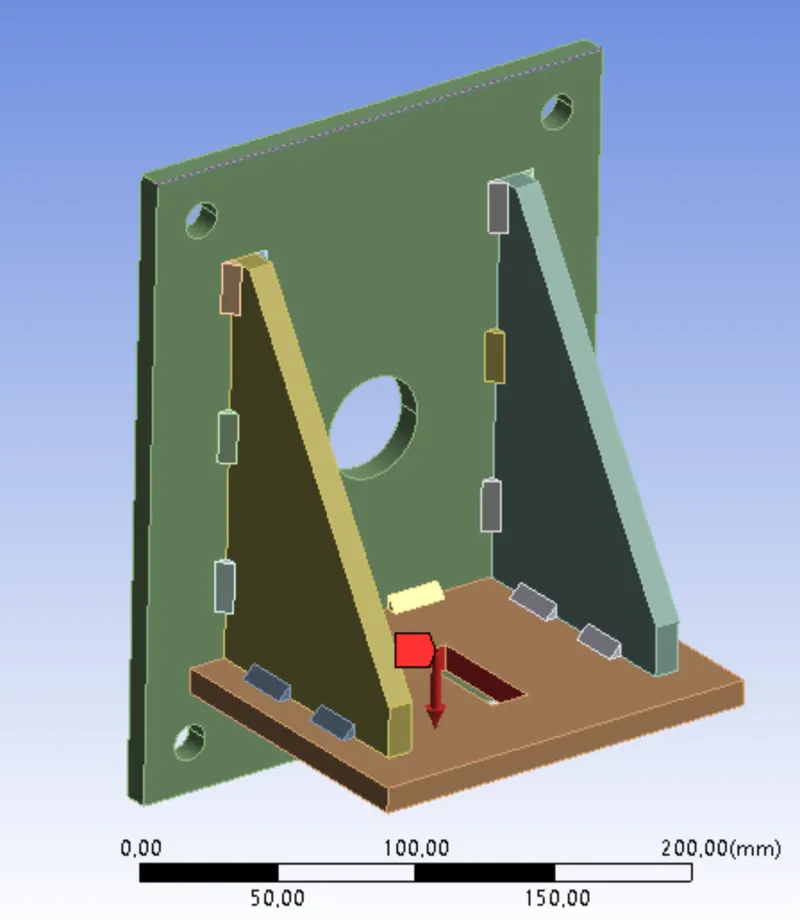
Load of, 15000 N is applied in y direction,
Solution:
(Demonstration of steel material)
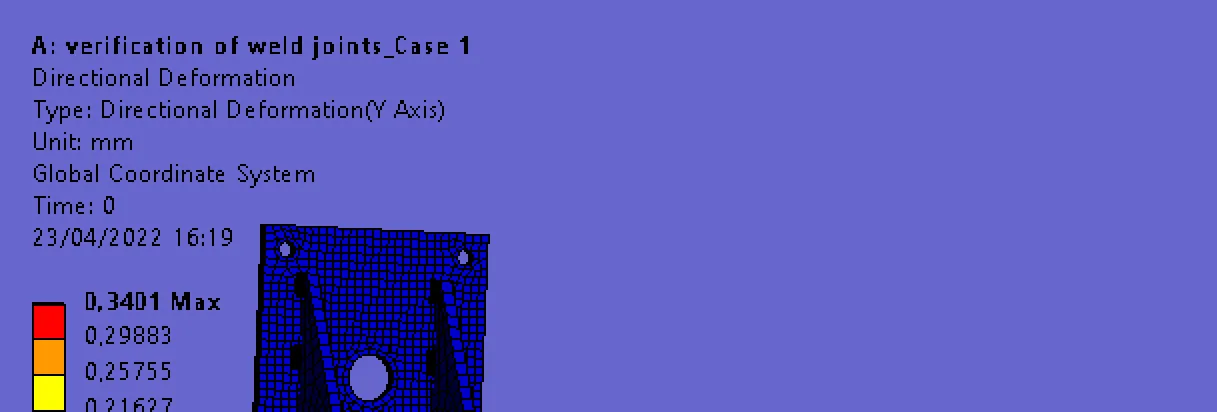
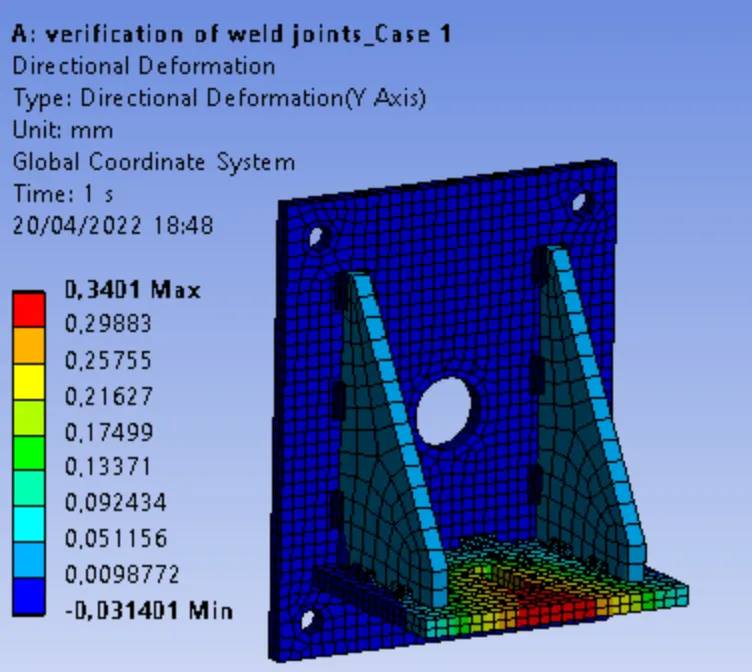
Directional deformation:
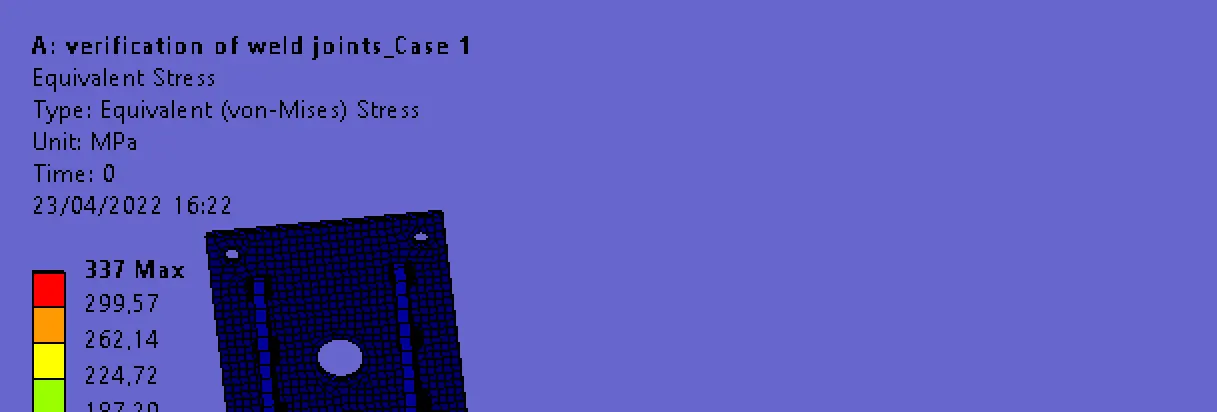
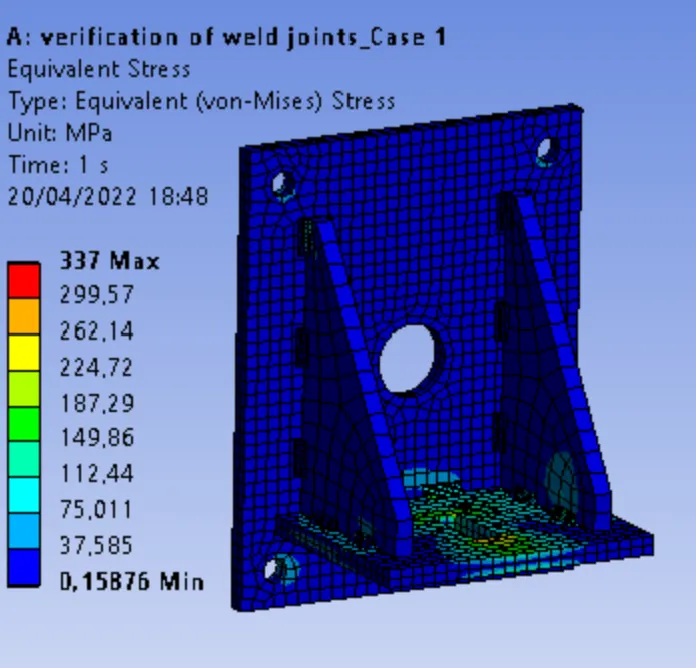
Equivalent Stress:
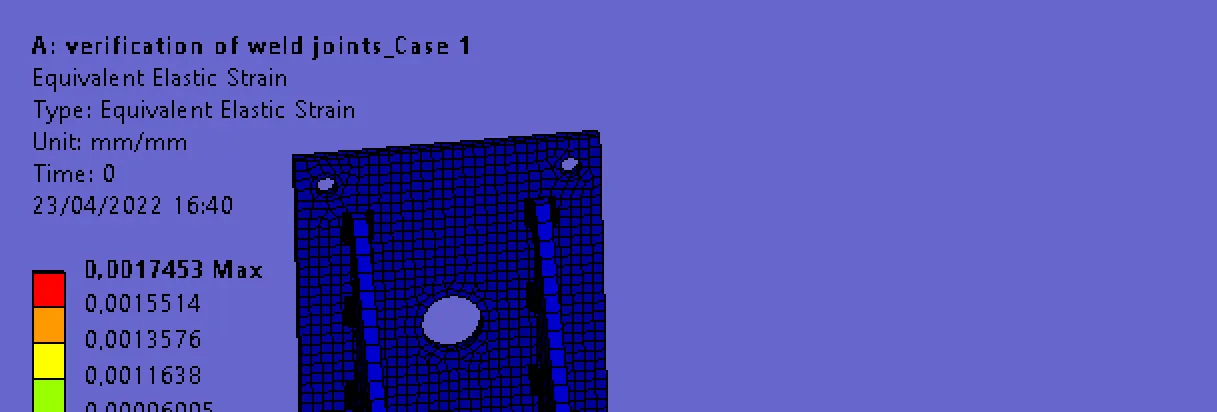
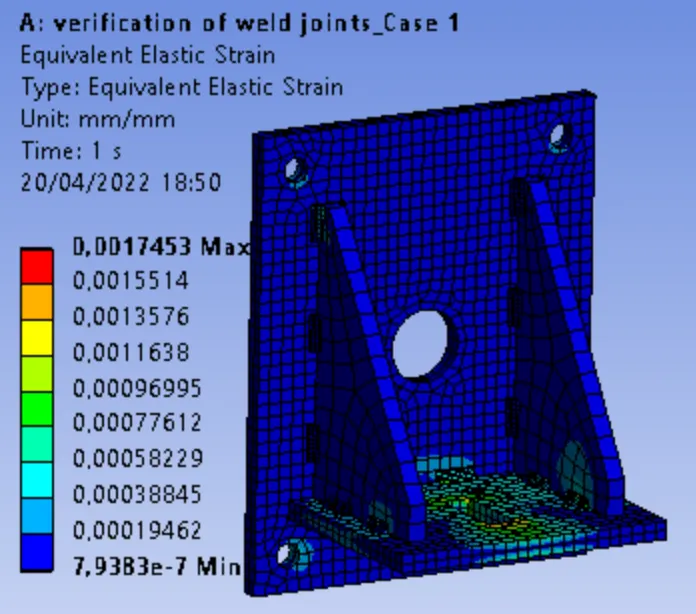
Equivalent strain:
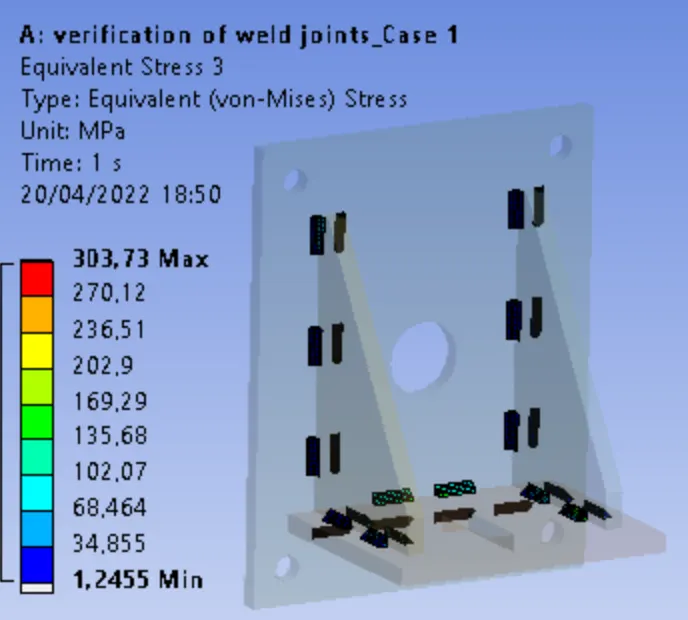
Stress in weld:
Result:
| (Max values are considered) | Steel (Case 1) | Aluminium (Case 2) | Bronze (Case 3) |
|
Directional Deformation (y Axis)- mm |
0.3401 | 0.3543 |
0.3859 |
| Equivalent Stress - MPa | 337 | 341.7 | 346.99 |
| Equivalent Strain - MPa | 1.7e-3 | 3.4e-3 | 3.2e-3 |
| Stress in weld - MPa | 303.73 | 250.96 | 262 |
Conclusion:
The verification of weld is analysed with regard to the stress, strain and deformation obtained after simulation. The strength of a weld is mainly depending on the material properties, namely the ultimate tensile strength and density. The Ultimate tensile strength of the mentioned materials are as follows, Steel- 460 MPa, Aluminium - 449 MPa, Bronze - 267 MPa respectively. Denser material tend to have less f=deformation. From the data provided, steel has a high ultimate tensile strength, followed by aluminium and bronze. Therefore, the stress values are higher for bronze and less for steel. However, the results obtained are not as accurate owing to the absence of grid dependency test and mesh refinement. And there involves a mixing of materials for the ribs and associated parts.