Week 3 Sheet metal Bending challenge
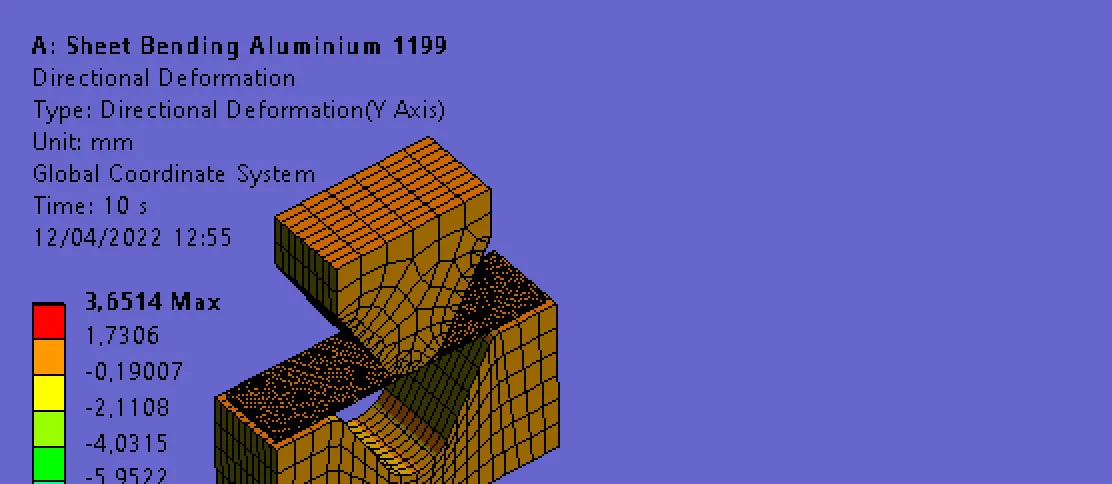
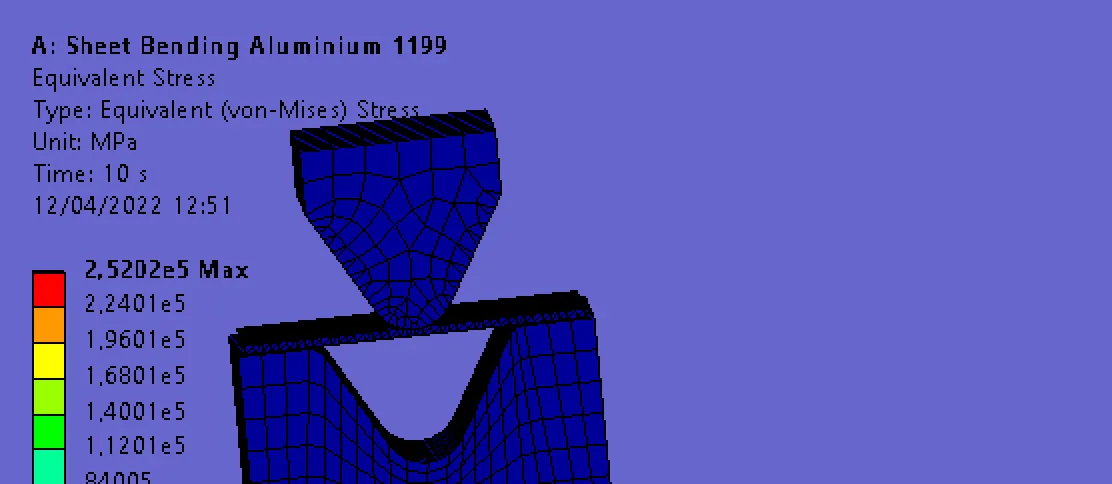
Objective:Sheet metal bending is simulated with different materials.(Aluminium Alloy 1199,Copper Alloy NL and Magnesium Alloy NL). Equivalent stress, Equivalent elastic strain and Total Deformation in Y direction are evaluated and compared for different materials. And related cases are evaluated.
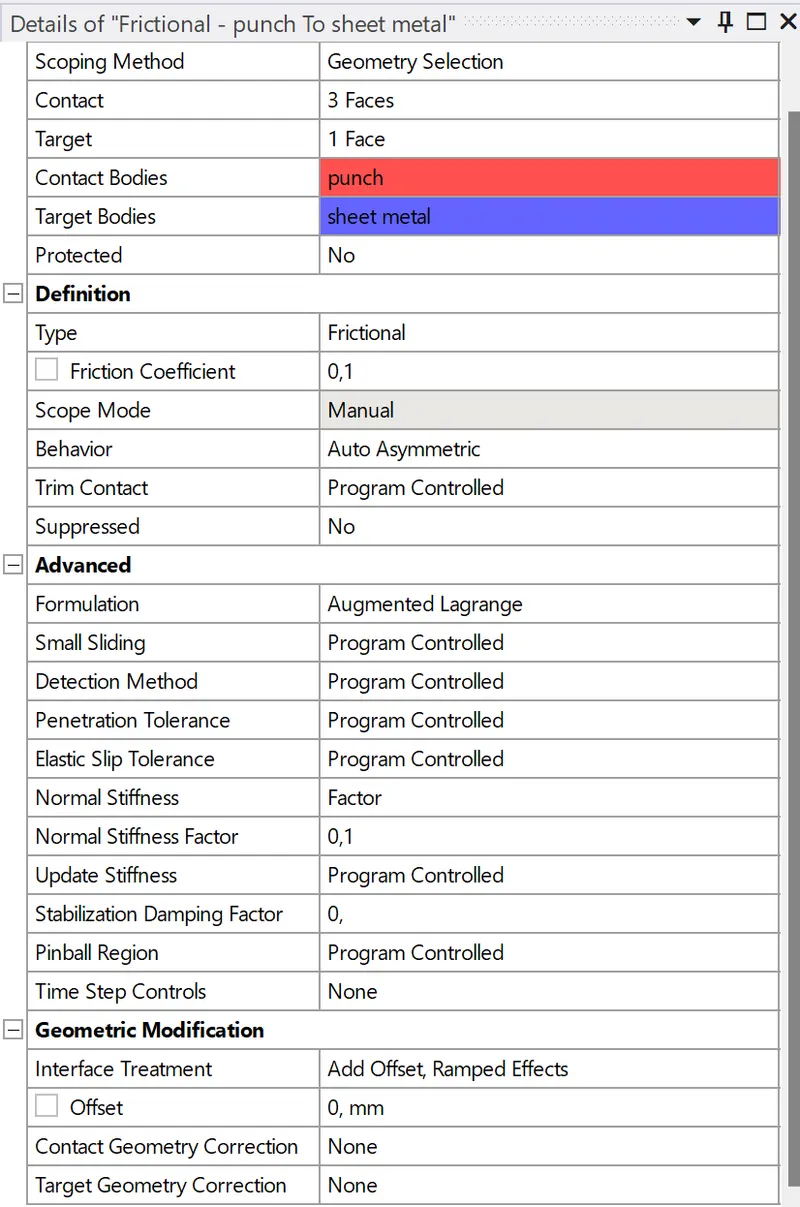
- Friction coefficient is changed to 0.19 for the same material and is compared with the results of previous simulation problems.
- Modified mesh size of case 1 and comparison is made .
Simulation Set up:
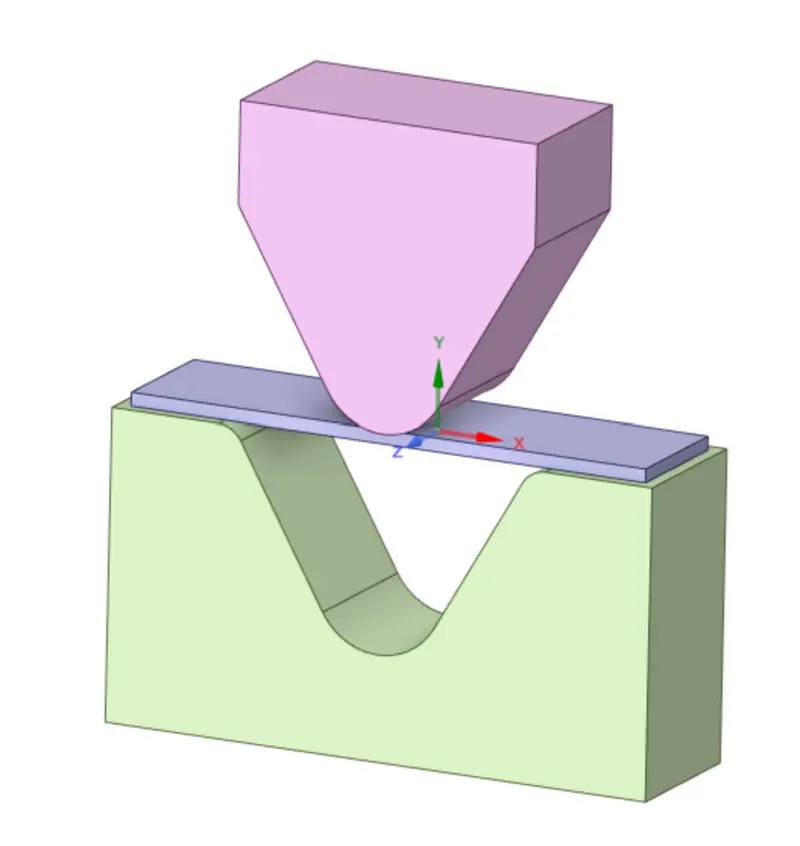
i) Geometry : Geometry is imported from the directory and is checked for imperfections in space claim interface.
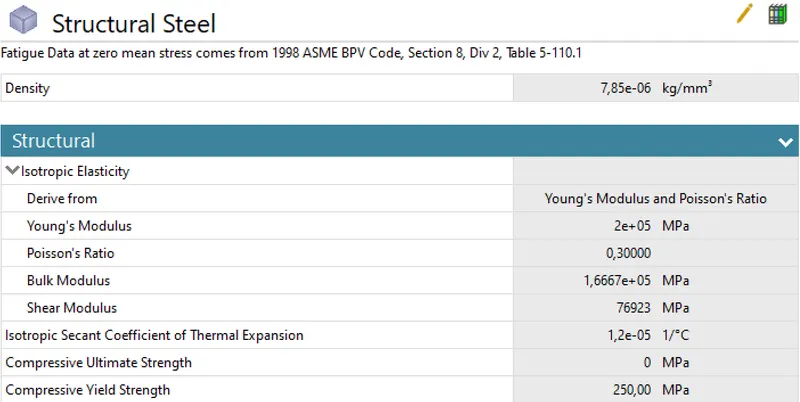
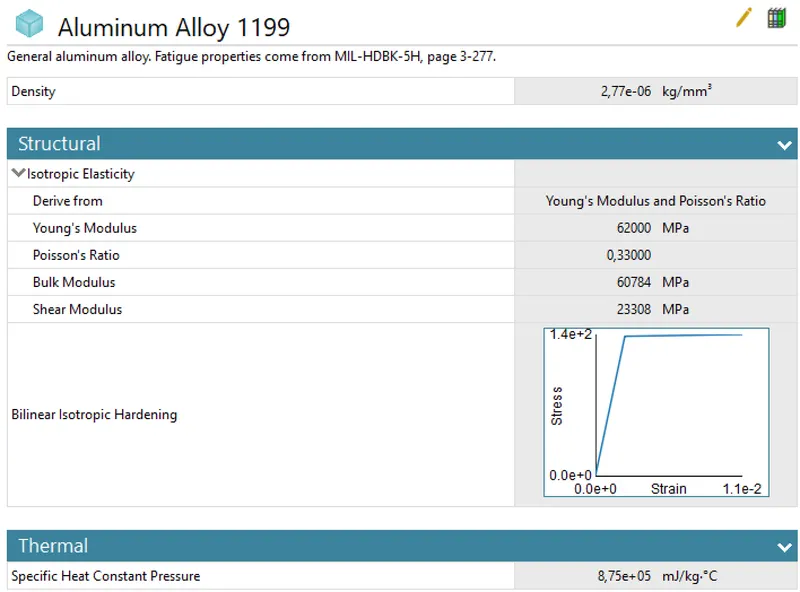
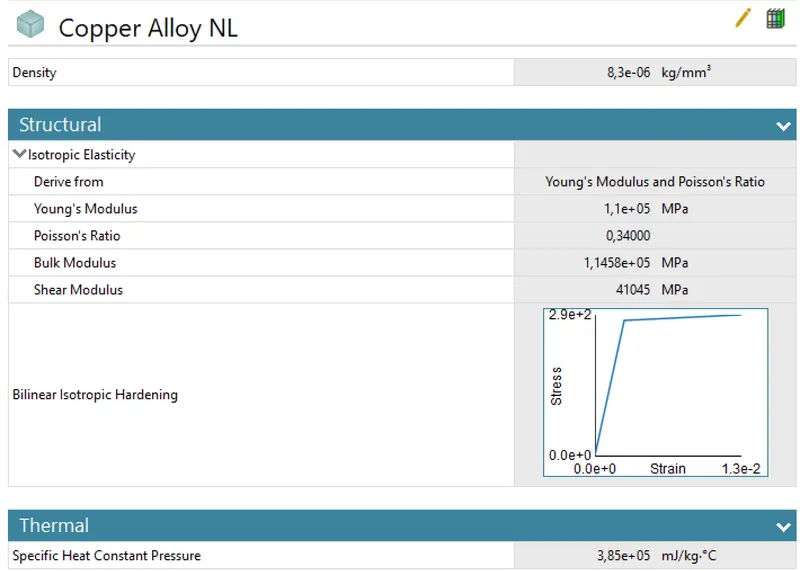
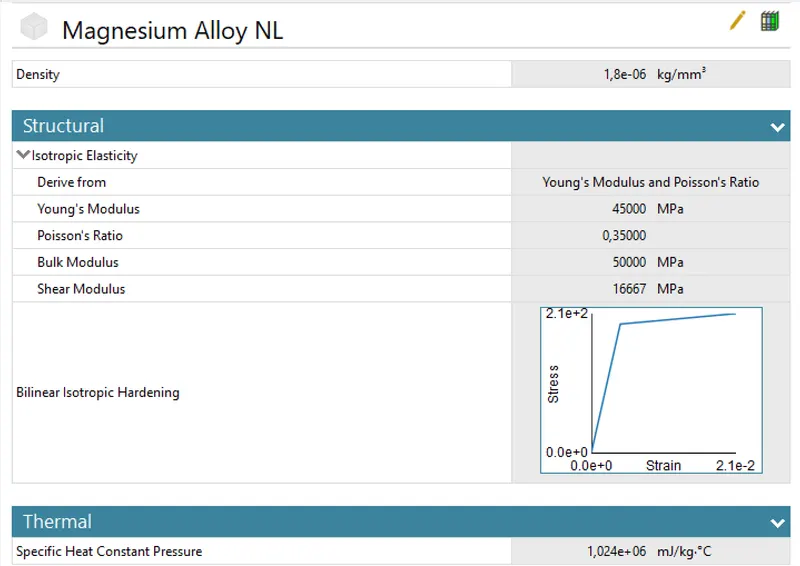
ii) Material : Different materials are added to the engineering library to perform simulation.
iii) Connections:
Manual connections are added to the simulation set up, The connections and its details are as follows:
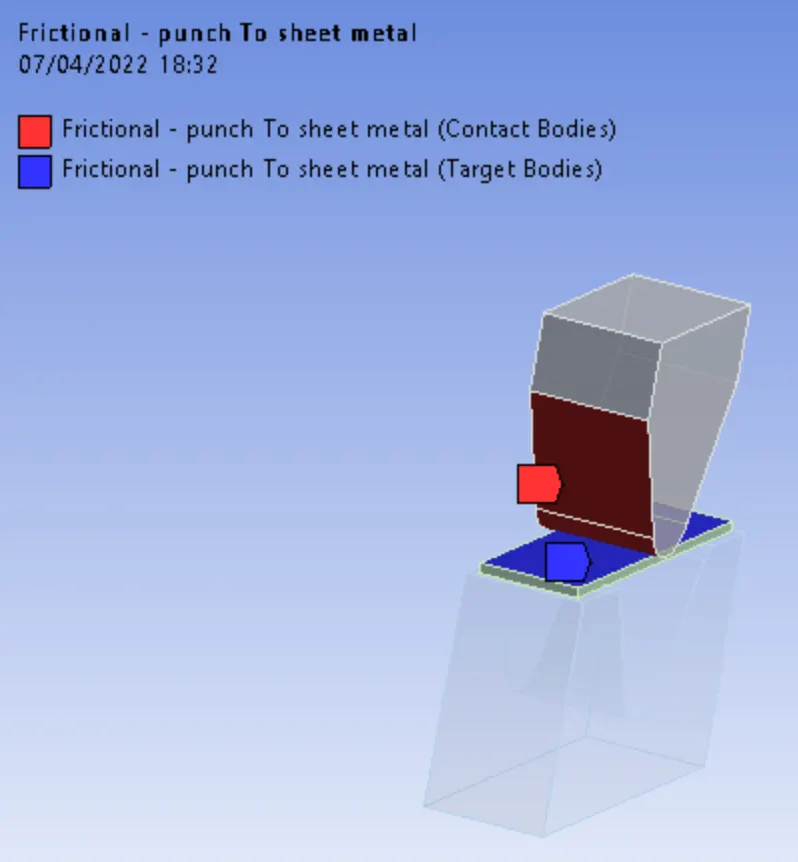
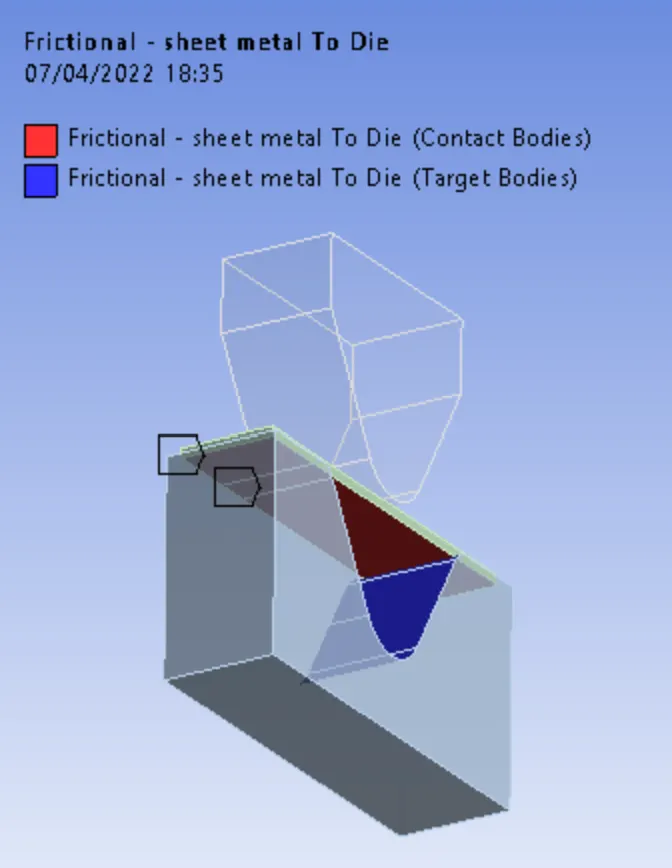
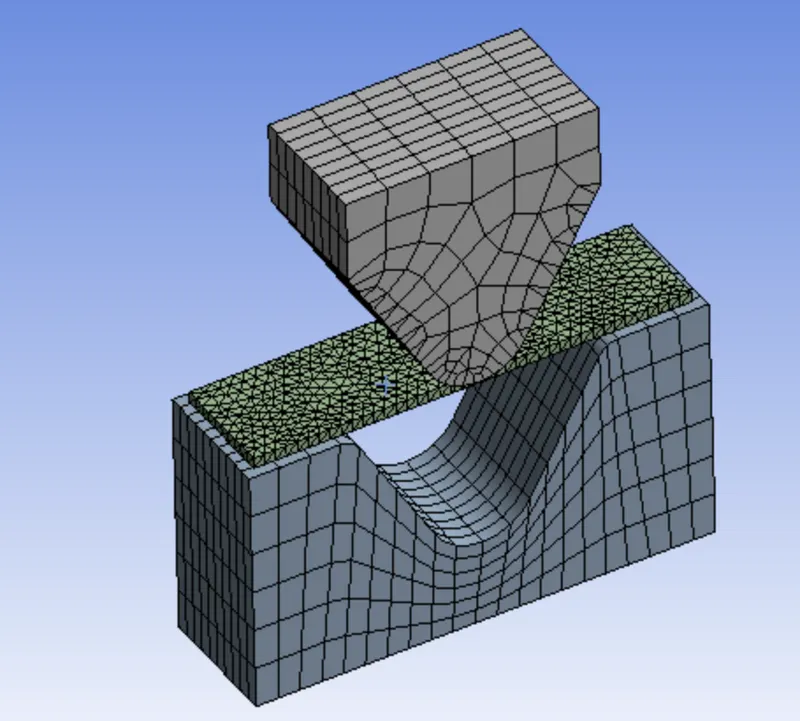
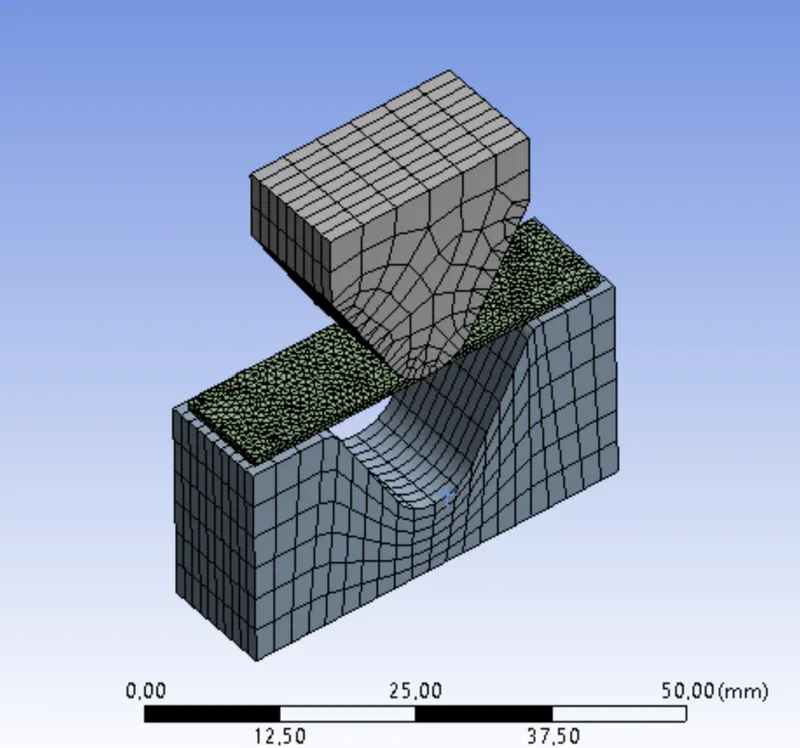
iv) Mesh : For much precise accuracy and faster simulation, process sizing is applied at press, die, and sheet metal. Sheet metal part are meshed with tetrahedron elements. The Press and die is given body sizing with an element size of 4 mm. The metal sheet is given a body sizing with an element size of 1 mm. face sizing is provided at the face of the die with an element size of 1 mm.
v) Analysis settings and loads.
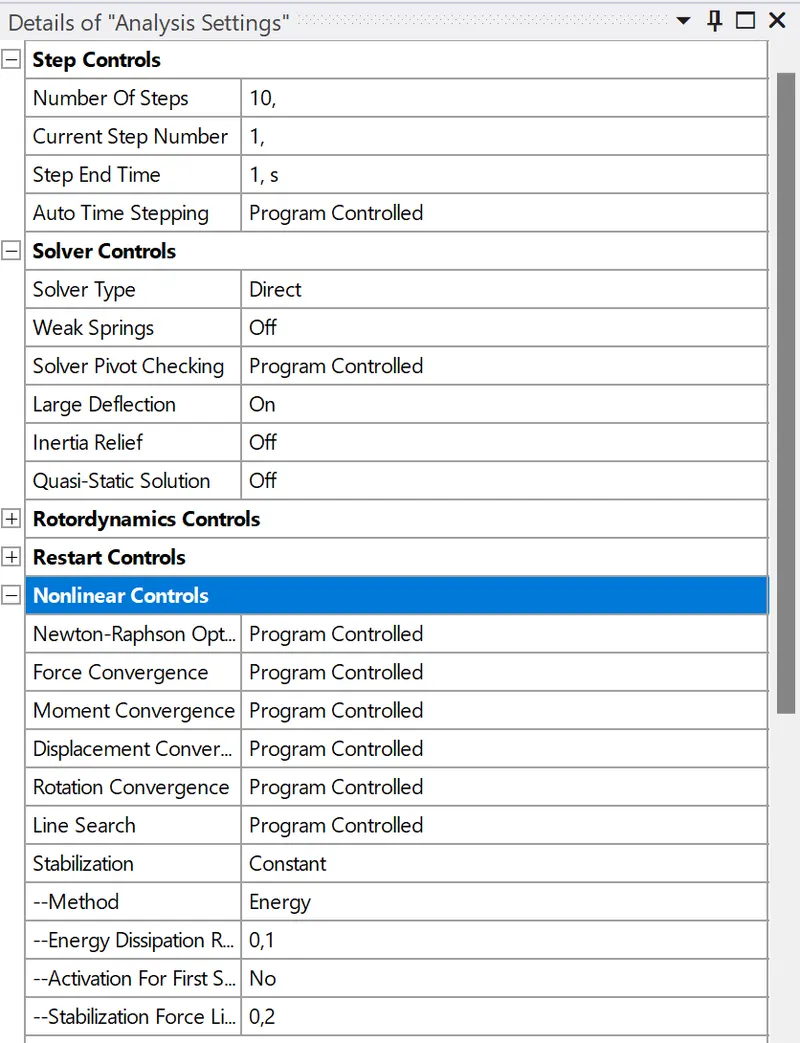
Loads applied: Displacement loads are applied for rammed effect and fixtures.
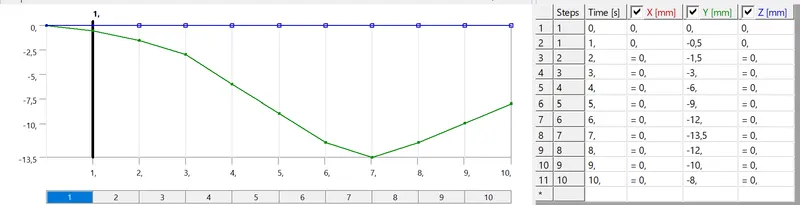
- Load for Ramming of press given at y direction in 10 steps
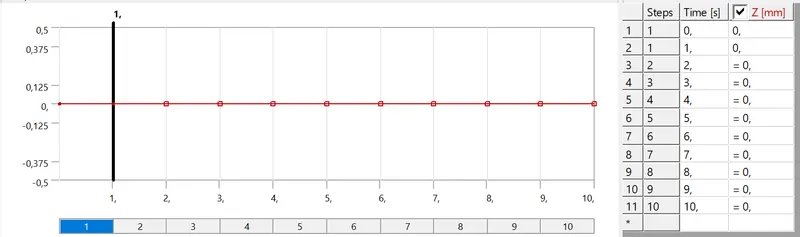
- Fixed metal plates in the Z direction so that it cannot move while applying force
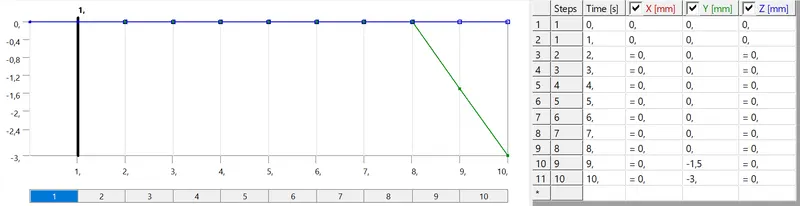
- Displacement of die for about 3 mm after ramming is given in the last 2 steps.
CASE 1: Simulation with 3 different materials.
| Aluminium Alloy 1199 | Copper Alloy NL and | Magnesium Alloy NL | |
| Equivalent stress (MPa) | 2.457e5 | 2.060e5 | 1.7094 e5 |
| Equivalent elastic strain (mm) | 1.203 | 1.031 | 0.855 |
| Total Deformation in Y direction (mm) - MAX | 2.3235 | 5.3426 | 1.5121 |
| Total Deformation in Y direction (mm) - MIN | -12.492 | -9.9092 | -12.383 |
Based on, the yields strength of materials can be arranged AL1199(140MPa) < mg (193 MPa) < Cu (280 MPa) in ascending order. i.e., Copper has a higher resistance strength to the force applied.
Case 2: simulation of sheet metal part of material aluminium 1199, having a friction coefficient of 0.19.
| Equivalent stress (MPa) | Equivalent elastic strain (mm) | Total Deformation in Y direction (mm) - MAX | |
| Aluminium Alloy 1199 with friction coefficient of 0.1 | 2.457e5 | 1.203 | 2.3235 |
| Aluminium Alloy 1199 with friction coefficient of 0.19 | 1.83561e5 | 0.919 | 2.228 |
As the Coefficient of friction increases, the stress and strain values tend to increase. However, the kinetic friction is much lower than the static friction.
Case 3: With a redefined mesh of element size 0.8 mm.
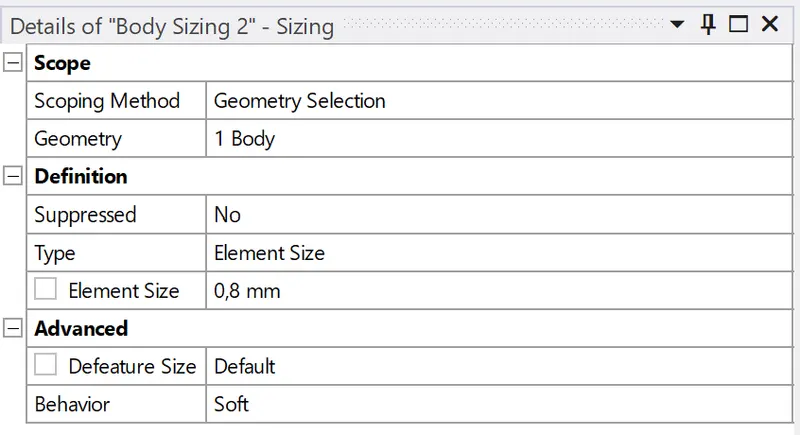
Mesh:
| Equivalent stress (MPa) | Equivalent elastic strain (mm) | Total Deformation in Y direction (mm) - MAX | |
| Aluminium Alloy 1199 with mesh size 1 mm | 2.457e5 | 1.203 | 2.3235 |
| Aluminium Alloy 1199 with mesh size 0.8 mm | 2.349e5 | 1.175 | 2.2687 |
Results:
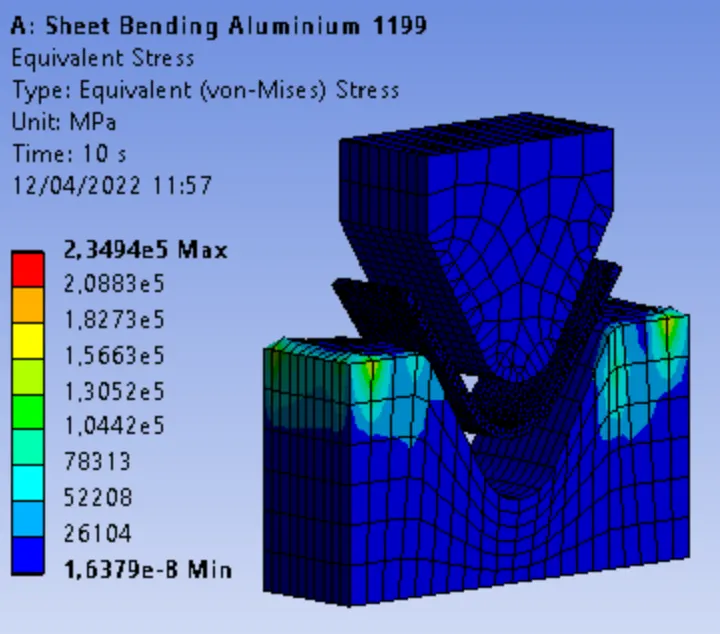
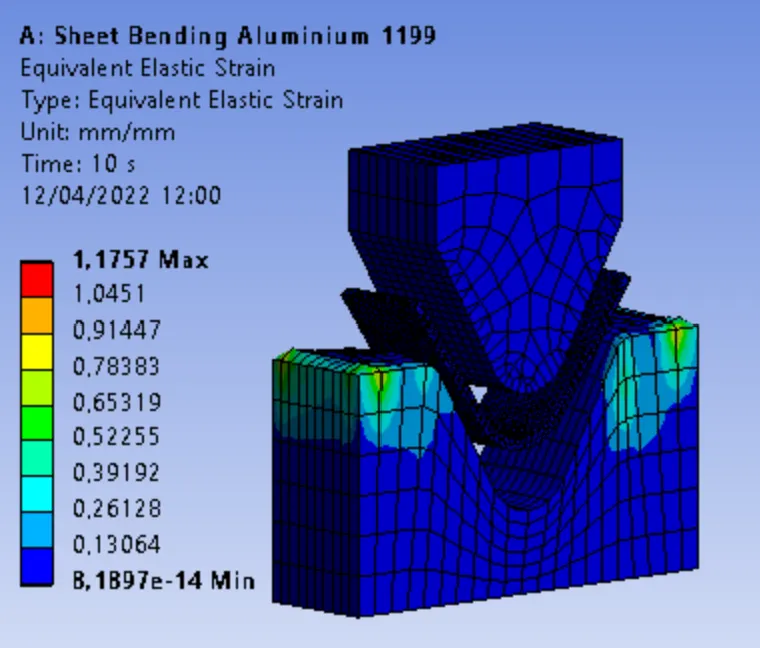
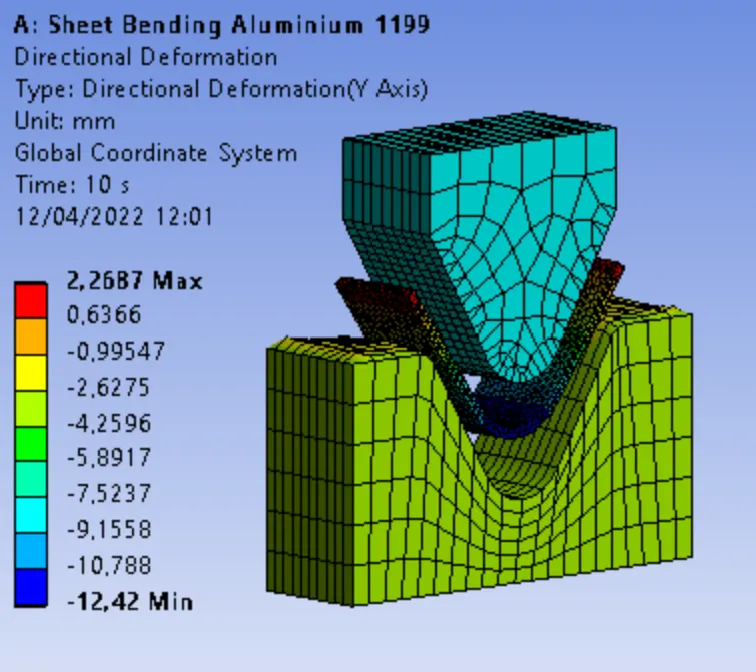
As the mesh size reduces, the accuracy of the simulation increases. Here the total nodes is about 24089. And in the previous simulation with element size 1 mm, the total nodes are about 17859.
Conclusion:
1. Case 1: All three material surpasses its yield stress limit and therefore breakage occurs. It is suggested to have a different material which does not exceed its yield strength. Here, the equivalent plastic strain of each material should also be considered. Stress values are having some disparity due to the contract surface, kinetic friction, failure of material etc...
2. Case 2: As the coefficient of friction increases the stress values tend to increase, but here owing to the failure and the change of static friction to kinetic friction(which has a lesser effect of the process) gives a lesser value than the expected one.
3. Case 3: As the mesh size reduces, the accuracy of the simulation increases. As mentioned, the number of nodes of the 3rd case is much higher than the case 1, thus higher accuracy is obtained. In this current problem, a new material with higher yield strength with a less frictional coefficient and higher node rate (optimized with a grid dependency test) is advisable.
The simulation files and animations are attached for reference.