Week 3 Sheet metal Bending challenge
Week 3 Sheet metal Bending
Aim : To perform bending test on sheet metal for three different materials
Software: Ansys 2021 R1
Summary
Objective
Procedure for setup
Results
Comparison
Conclusion
Objective:
To performed sheet metal bending for 3 different materials
To find out the Equivalent stress, Equivalent elastic strain and Total Deformation in Y direction and compare the results for the three materials.
To run the simulation setting the friction coefficient to 0.19 and using Aluminium alloy as material
To refine the mesh such that it doesn't cross the academic limit using Aluminium alloy as material
Introduction:
Bending test is a method of testing materials for knowing about their bending strength and other important properties. This is basically conducted by placing a length of material (plate in our case) across a span and pushing down along the span to bend the material.
Procedure for setup:
Open ANSYS>>Drag and drop static structural model in the project schematic window.
Go to the engineering data to choose the materials (Aluminium Alloy 1199, Copper Alloy NL and Magnesium Alloy NL
Go to the model tab
Rename the different parts as required
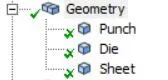
Go to connection >> contacts
Delete the default contact
Create two manual contacts and set them as follows
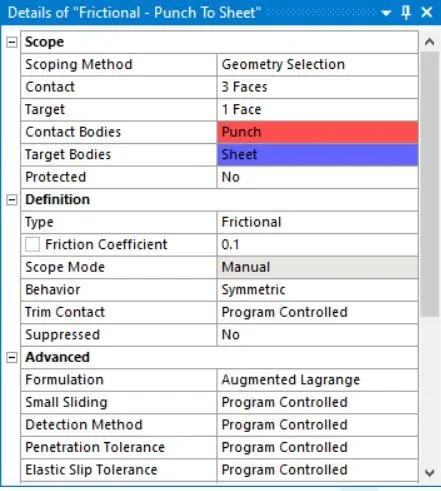
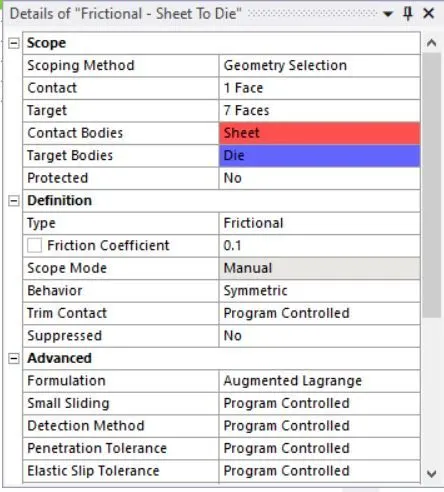
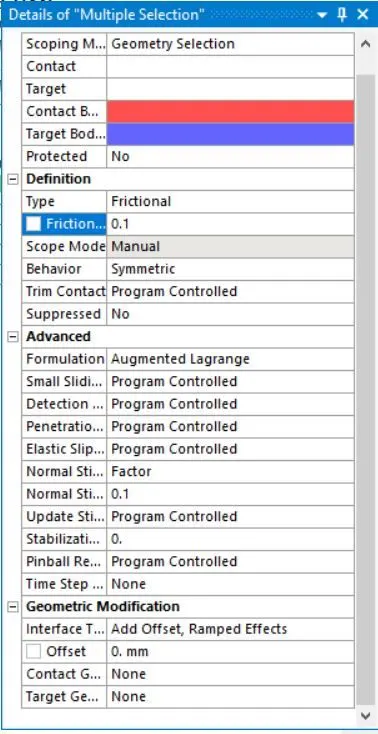
Go to tab for the meshing:
For the meshing choose the values as follows:
For the punch and the die set
Element size= 4mm as follows
For the plate and die face set the element size to 1mm
The following analysis settings are defined for the simulation.
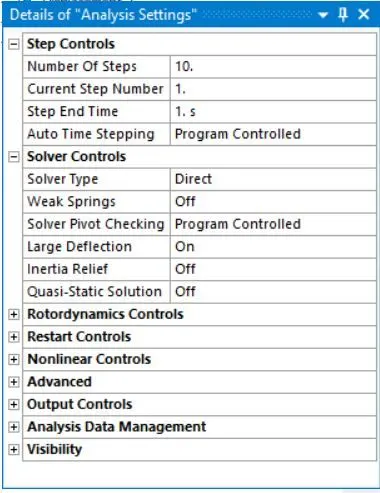
Go to solution tab and insert equivalent stress, directional deformation, equivalent elastic strain.
Case 1:
Using Aluminium Alloy 1199:
Equivalent Stress
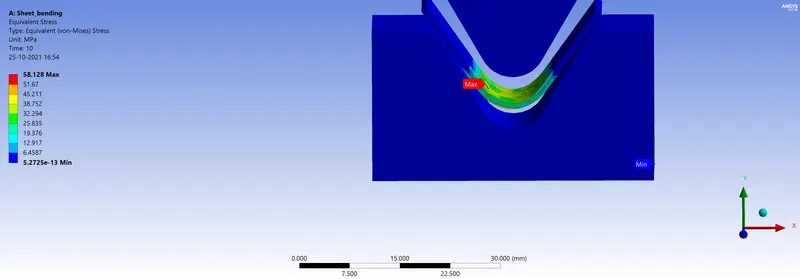
Equivalent Strain
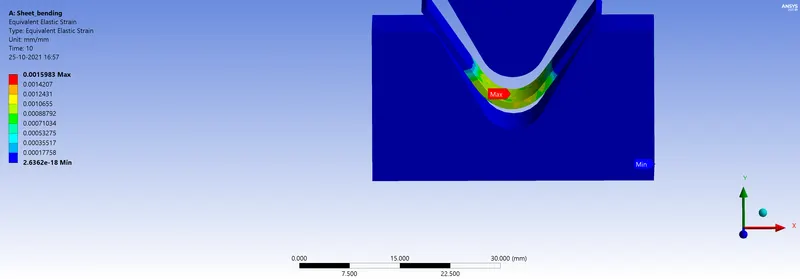
Directional deformation(y-direction)
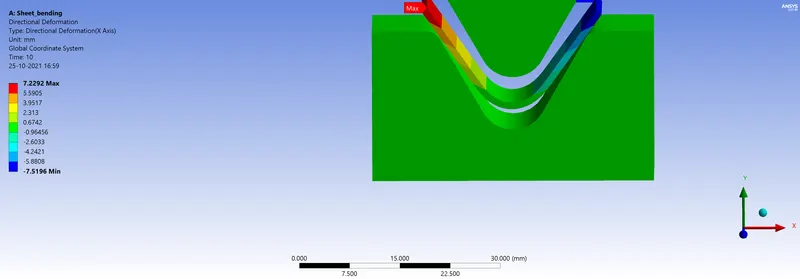
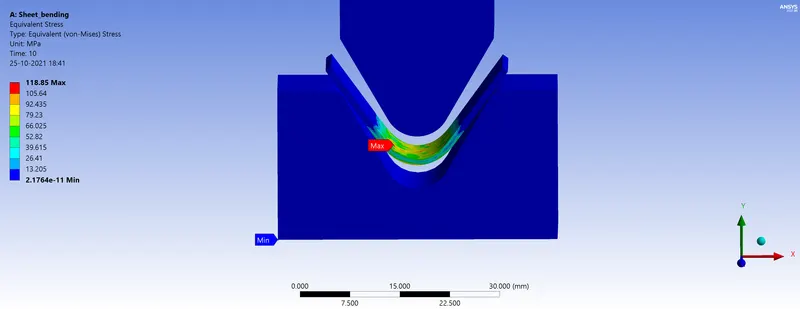
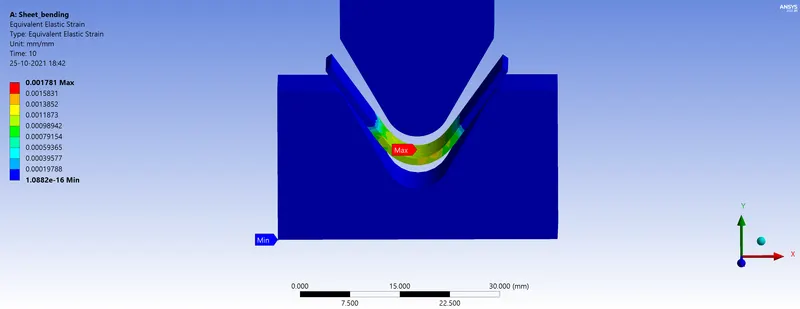
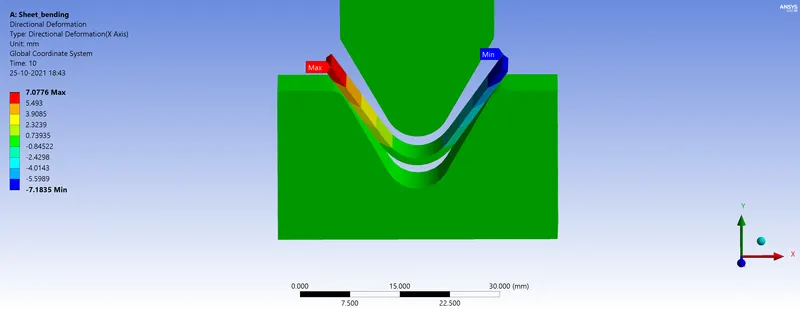
Using Copper Alloy NL
Equivalent Stress
Equivalent Strain
Directional deformation(y-direction)
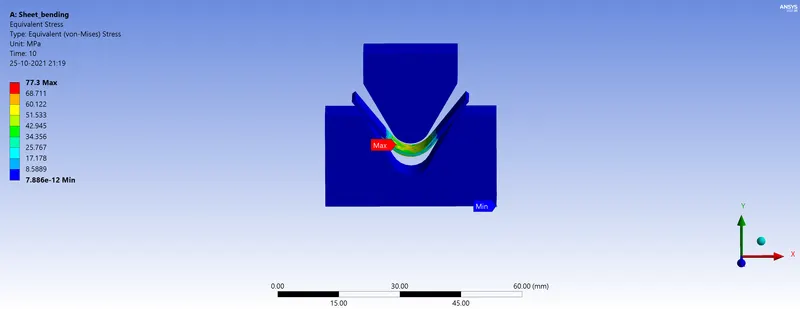
Using Magnesium Alloy NL:
Equivalent Stress
Equivalent Strain
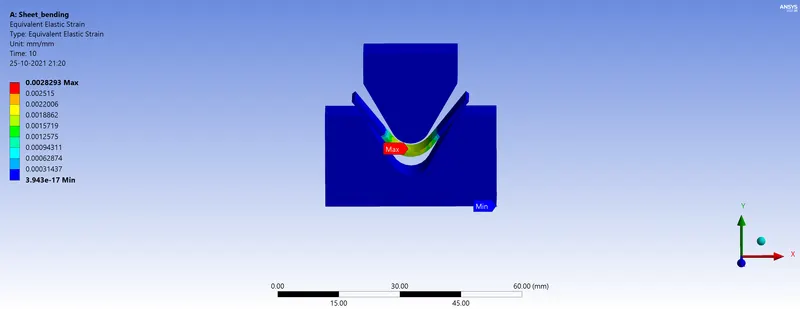
Directional deformation(y-direction)
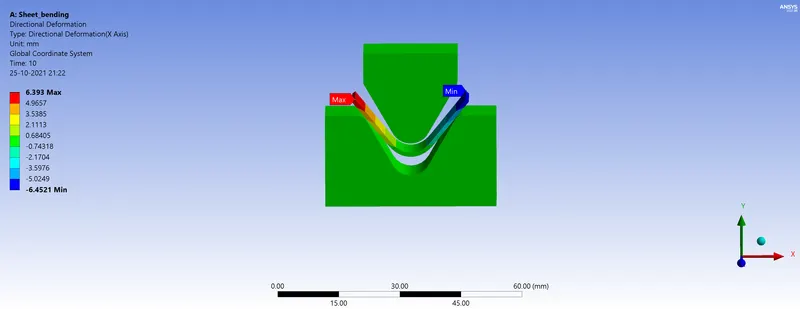
comparison:
|
Materials |
Maximum Equivalent Stress (MPa) |
Maximum Equivalent elastic strain (mm/mm) |
Directional Deformation (mm) |
|
Aluminium Alloy 1199 |
58.128 |
0.0015983 |
7.2292 |
|
Copper Alloy NL |
118.85 |
0.001781 |
7.0776 |
|
Magnesium Alloy NL |
77.3 |
0.0028293 |
6.393 |
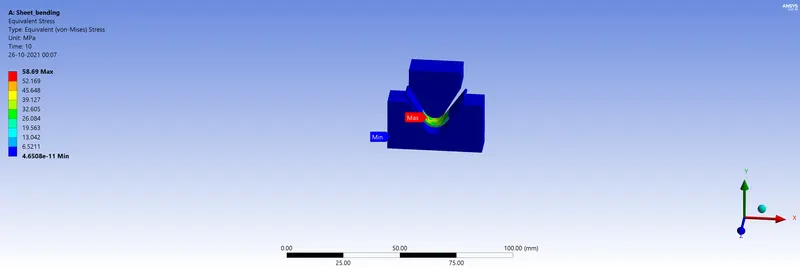
Case 2:
Equivalent Stress
Equivalent Strain
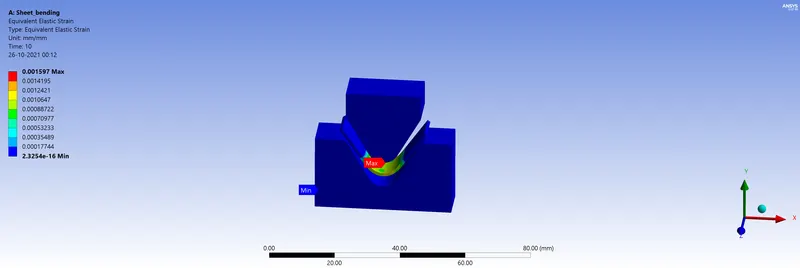
Directional deformation(y-direction)
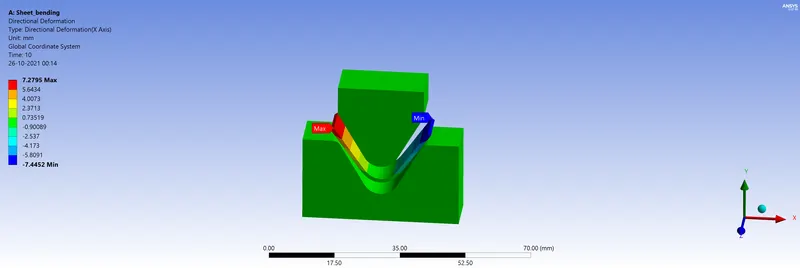
Comparison2: case 1 VS Case 2
|
case |
Maximum Equivalent Stress (MPa) |
Maximum Equivalent elastic strain (mm/mm) |
Directional Deformation (mm) |
|
1 |
58.128 |
0.0015983 |
7.2292 |
|
2 |
58.69 |
0.001597 |
7.2795 |
Case 3:
Setting the size to 0.7 for the plate
Equivalent Stress
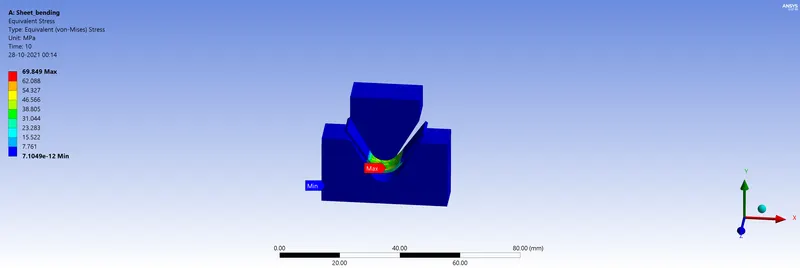
Equivalent Strain
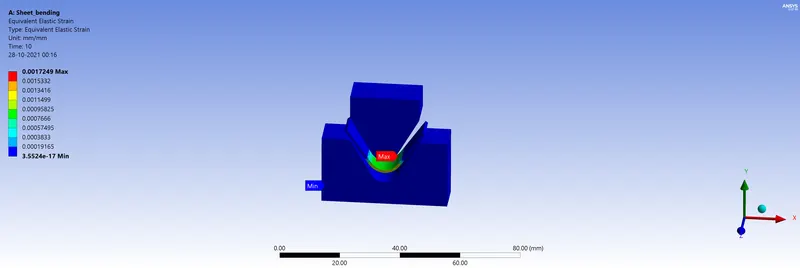
Directional deformation(y-direction)
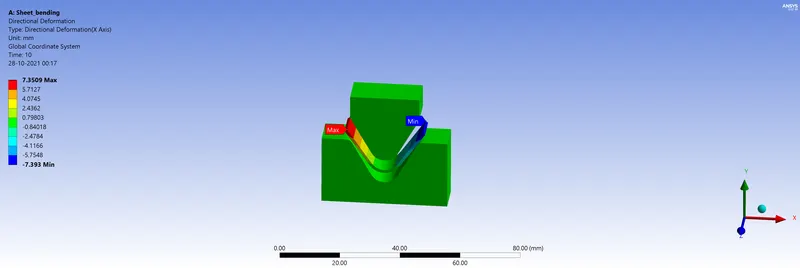
Comparison3: case 1 VS Case 3
|
case |
Maximum Equivalent Stress (MPa) |
Maximum Equivalent elastic strain (mm/mm) |
Directional Deformation (mm) |
|
1 |
58.128 |
0.0015983 |
7.2292 |
|
3 |
69.849 |
0.0017249 |
7.3509 |
Conclusion:
Through this project we notice that by using copper alloy NL plate, the stress is maximum as compared to others but largest deformation is noticed when using Aluminium Alloy 1199 showing that Aluminium Alloy 1199 is softer than copper alloy which is obviously softer than magnesium alloy. By changing the friction coefficient to 0.19 (in case 2) stress and directional deformation increase slightly. And finally by refining the mesh stress, strain and directional deformation have raised a lot.