Week 3 Sheet metal Bending challenge
SHEET METAL BENDING ANALYSIS
AIM:
To perform the sheet metal bending in the ANSYS for the various conditions provided and to compare the results with the condition provided.
MODEL:
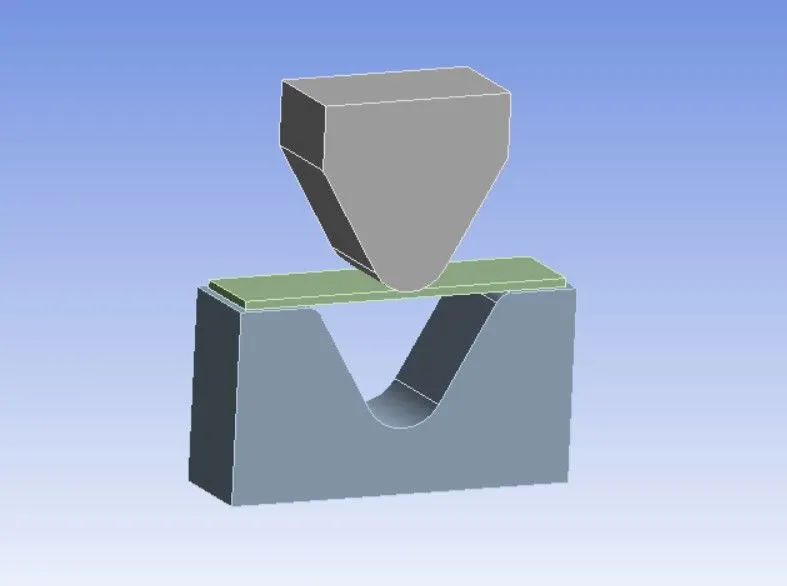
The provided model has three parts , the punch , the die and the sheet
MATERIALS:
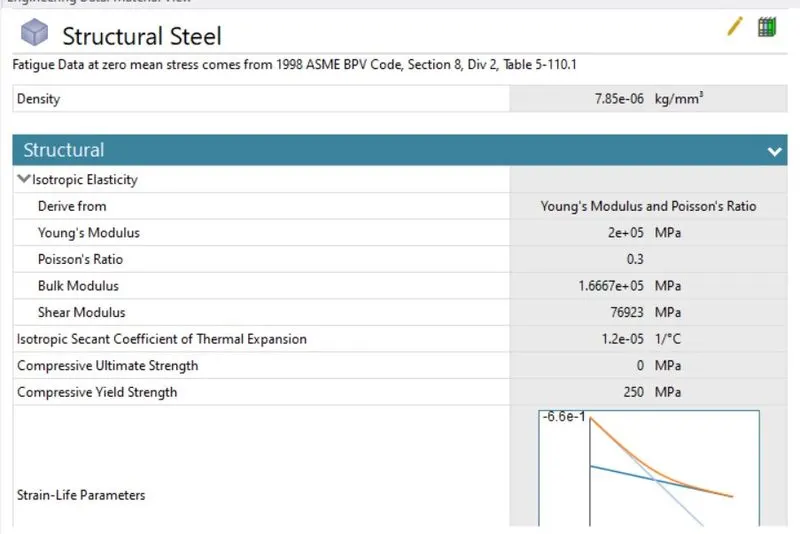
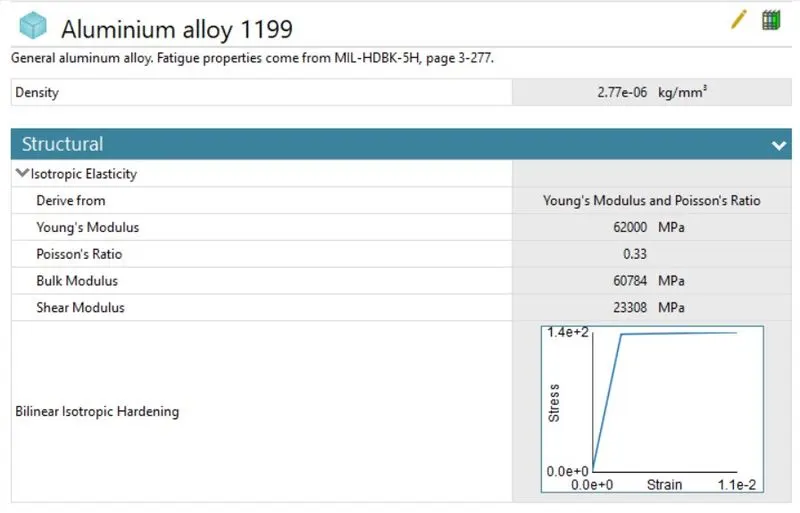
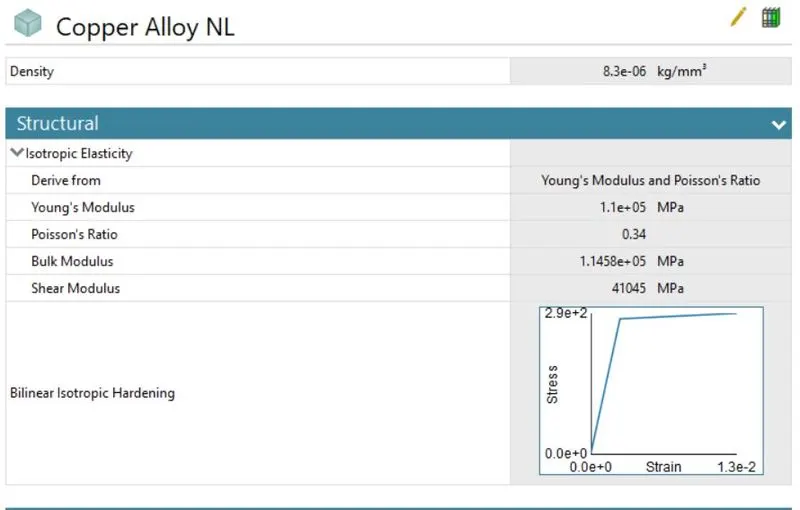
The given model has three different materials , the punch and the die is composed of the same material which is structural steel , whereas the sheet differs from these three materials provided
aluminium alloy 1199 :
copper alloy nl:
magnessium alloy nl :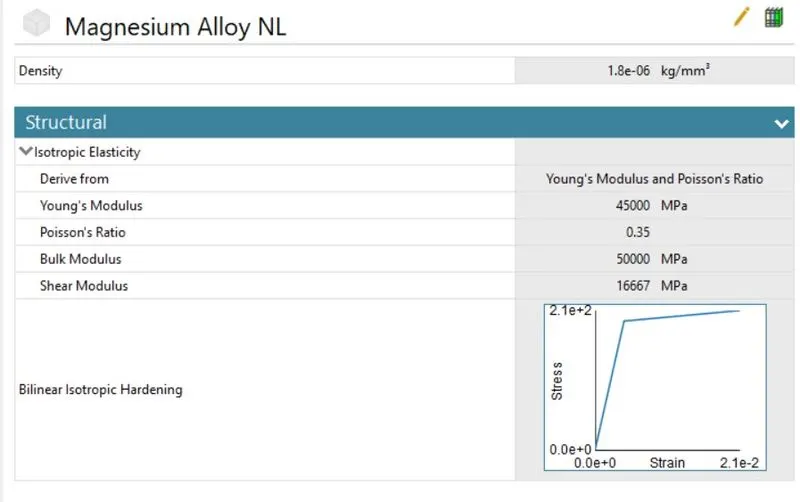
CONTACTS:
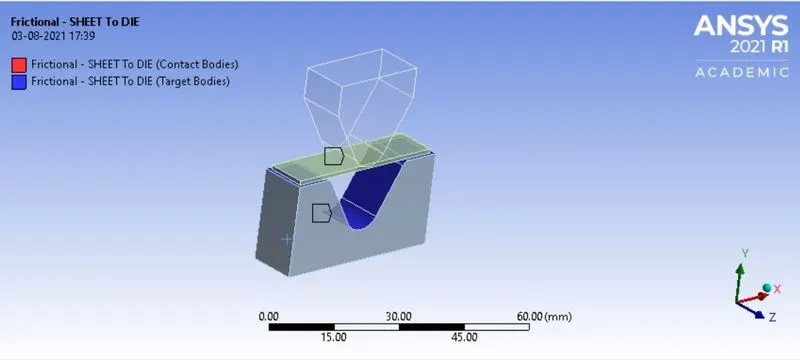
In this case, the old contacts have been deleted and we have inserted a manual contact region and made our desired contacts between the sheet and the die and the sheet and the punch for a frictional contact.
contact 1 : frictional contact between punch to sheet :
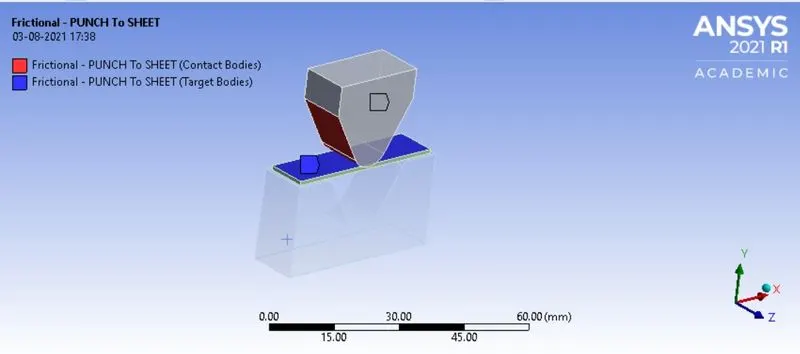
contact 2 : fricitonal contact between sheet and the die
MESH :
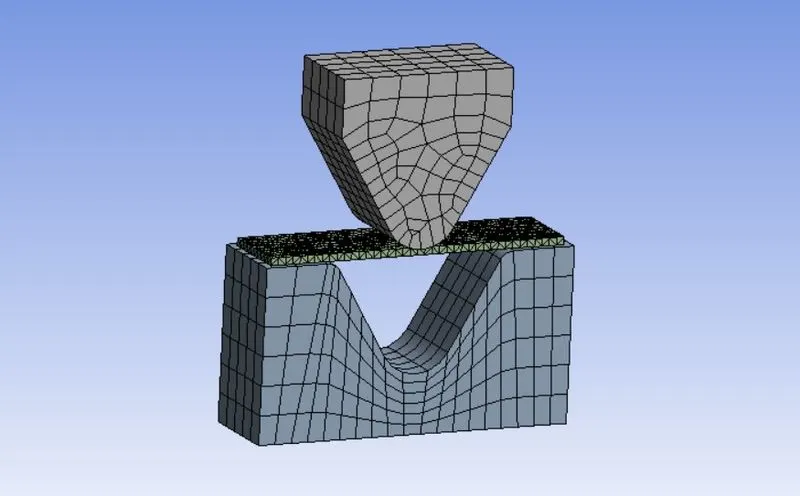
The mesh for the sheet is 1 mm and the mesh size for the die and punch is 4 mm and the method of meshing in the sheet is tetrahedron elements and the patch conforming algorithm has been implemented.
ANALYSIS SETTINGS :
The analysis is carried out in 10 steps, where the punch has been provided with a value of displacement for every step which is to be imposed on the sheet in Y-axis, where the sheet has been fixed in the Z-axis. In this case the total analysis is concentrated on the y-direction.
condition -1 :
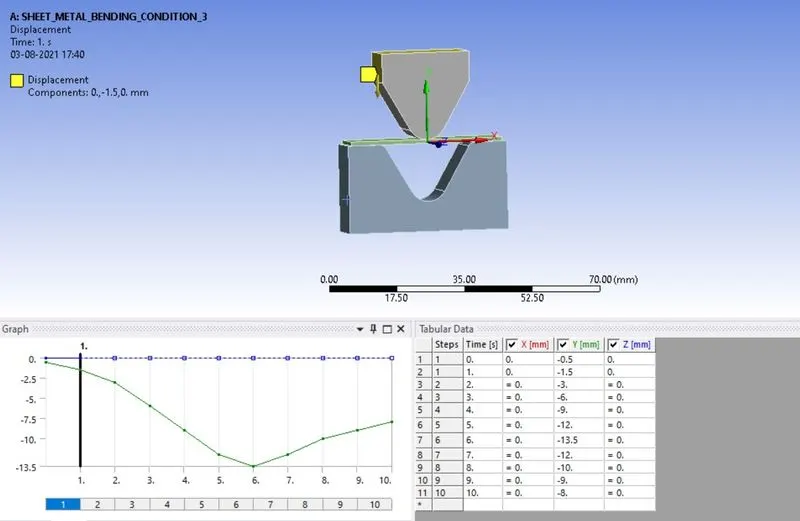
condition-2 :
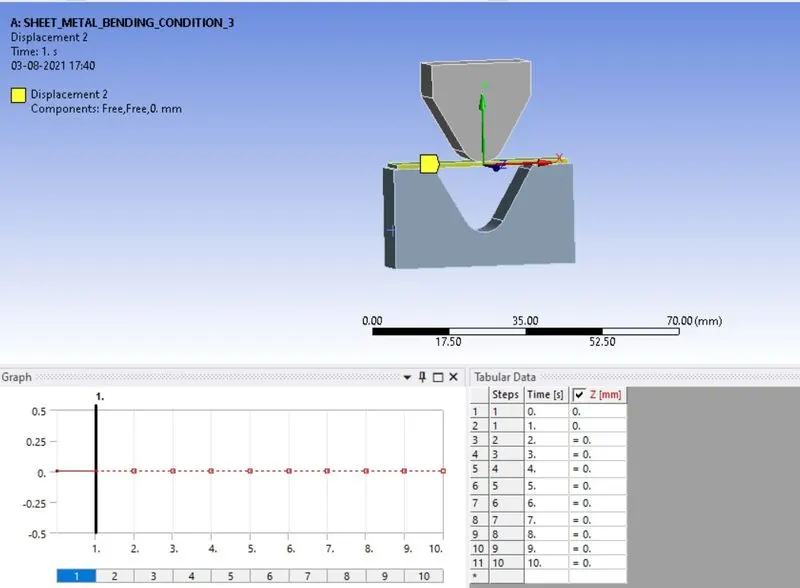
condition -3 :
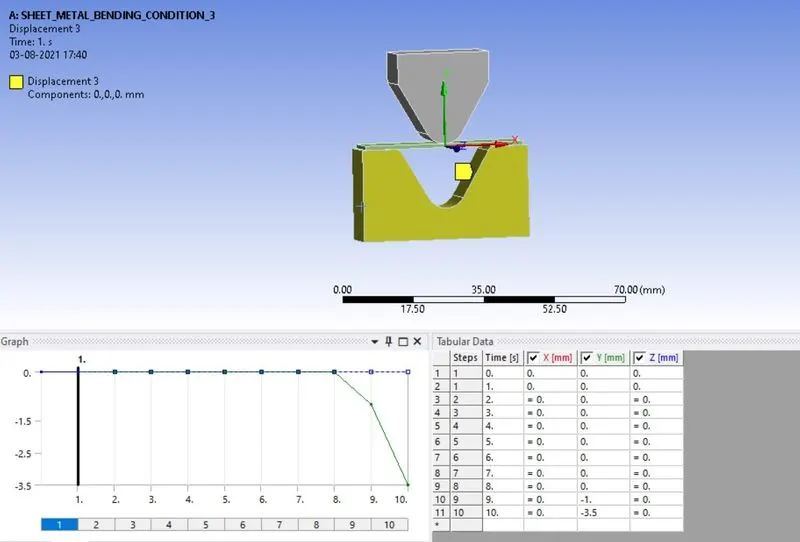
CASE (I):
- ALUMINIUM ALLOY 1199:
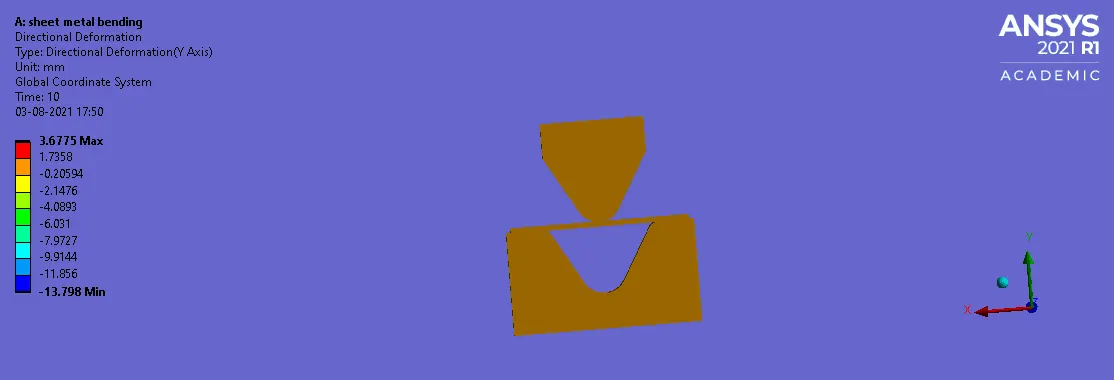
DIRECTIONAL DEFORMATION:
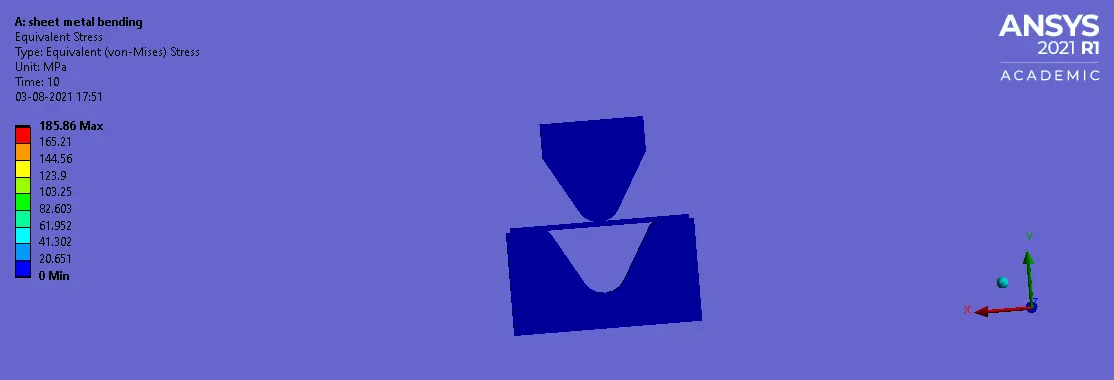
EQUIVALENT STRESS (VON-MISSES):
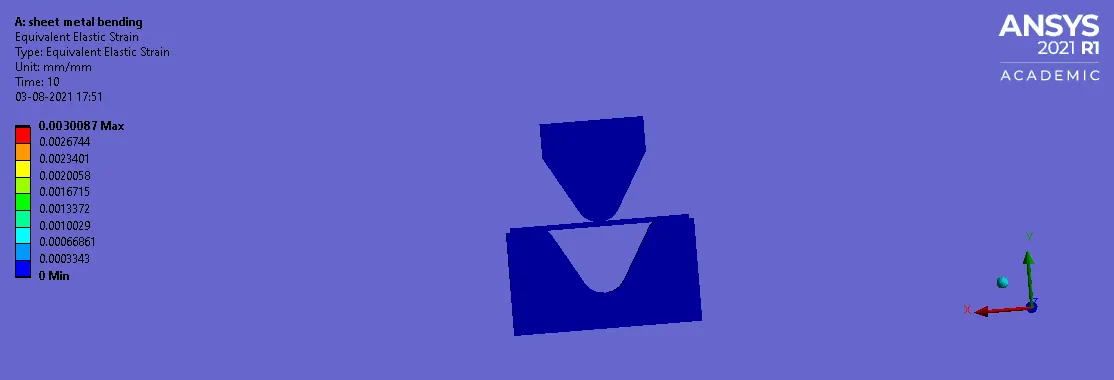
EQUIVALENT STRAIN(VON-MISSES):
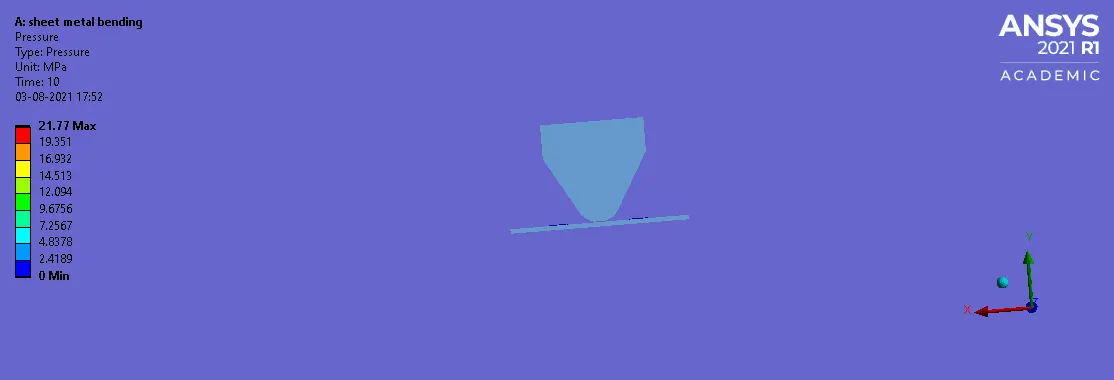
CONTACT PRESSURE:
(i) punch to sheet
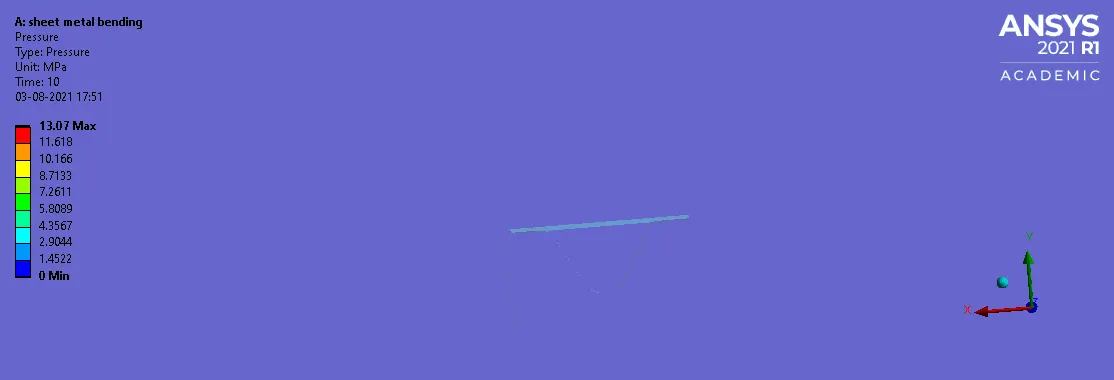
(ii) sheet to die
FORCE REACTION :

- CASE (2):
COPPER ALLOY NL:
DIRECTIONAL DEFORMATION:
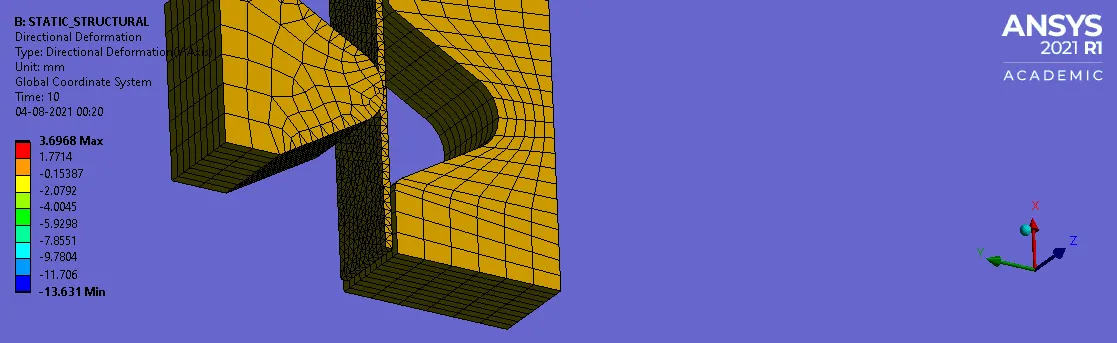
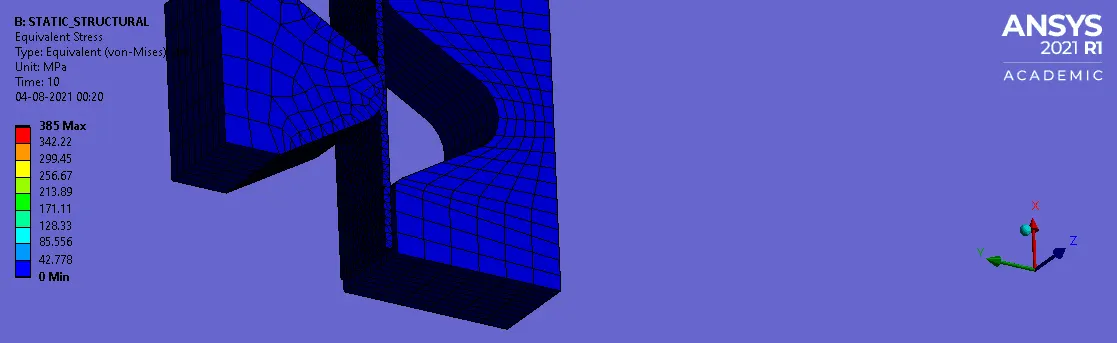
EQUIVALENT STRESS(VON-MISSES):
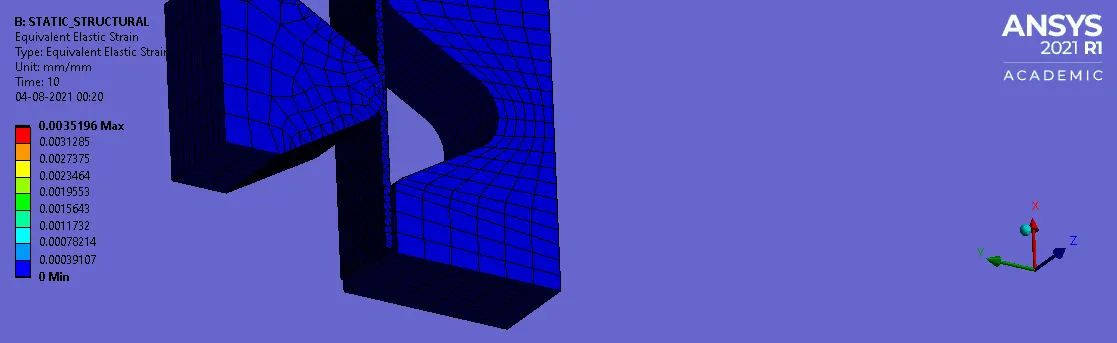
EQUIVALENT STRAIN (VON-MISSES):
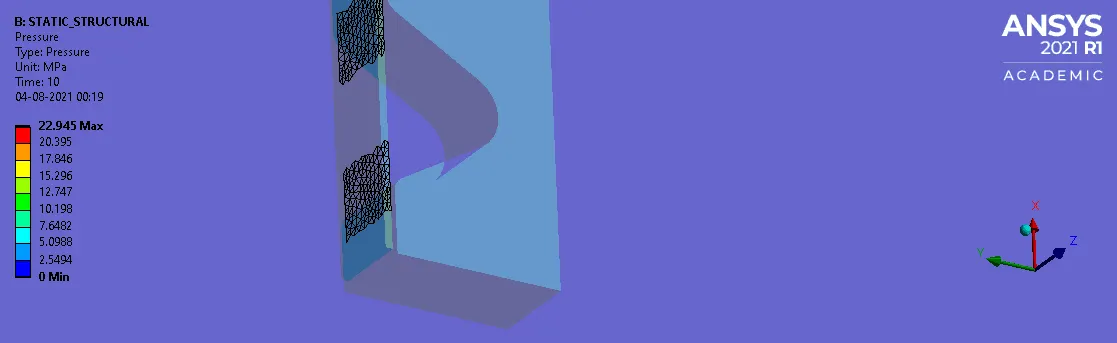
CONTACT PRESSURE :
(1) PUNCH TO SHEET :
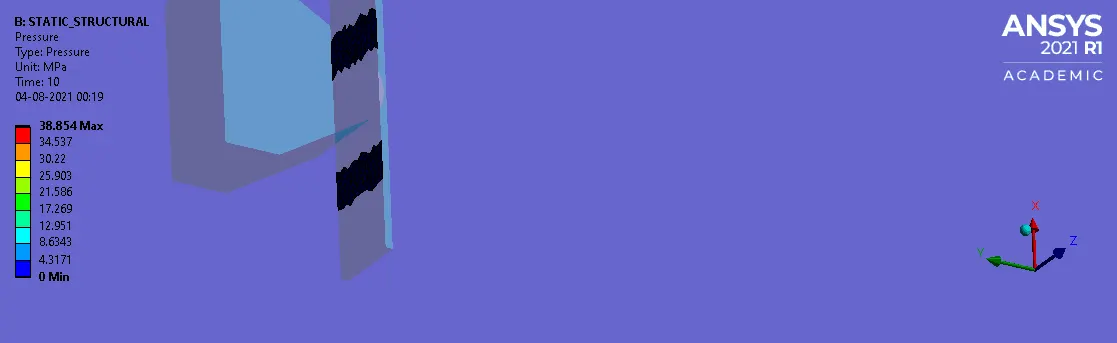
(2) SHEET TO DIE :
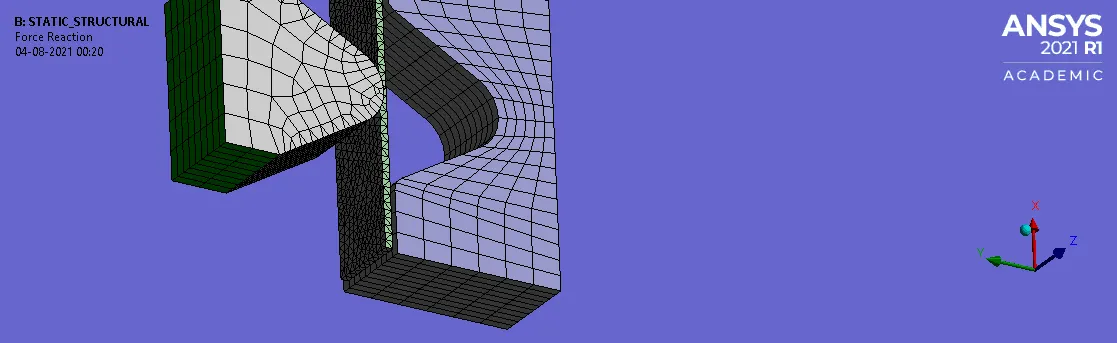
FORCE REACTION:
- CASE (3):
MAGNESSIUM ALLOY NL
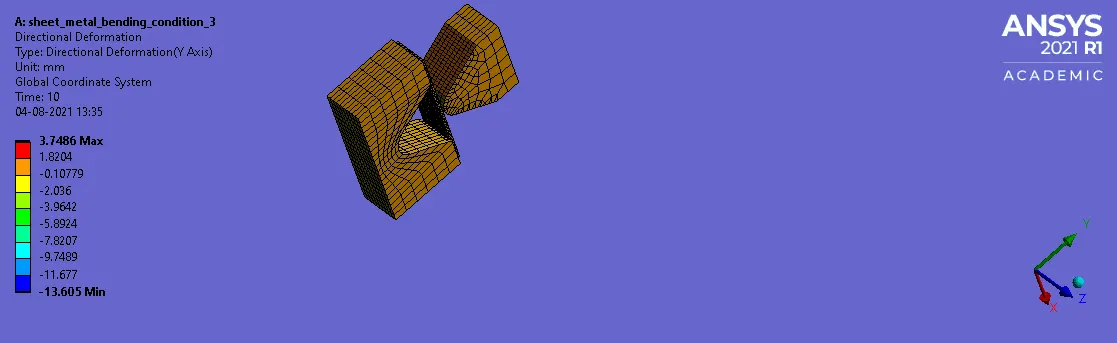
DIRECTIONAL DEFORMATION:
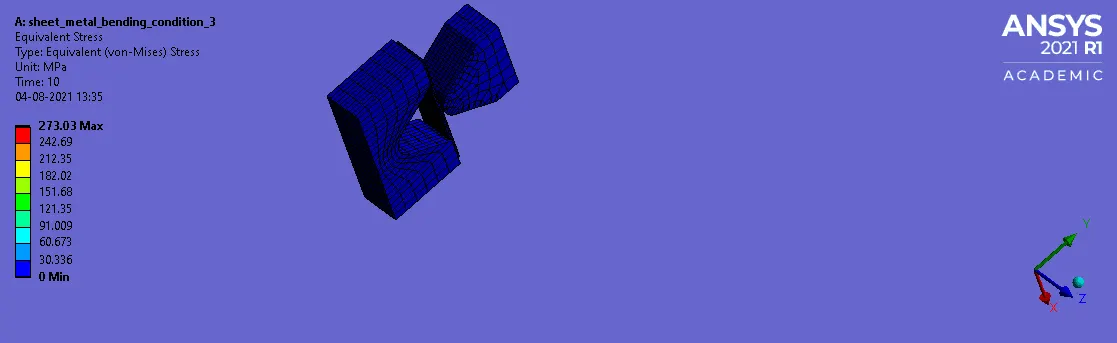
EQUIVALENT STRESS (VON-MISSES):
EQUIVALENT STRAIN(VON-MISSES):
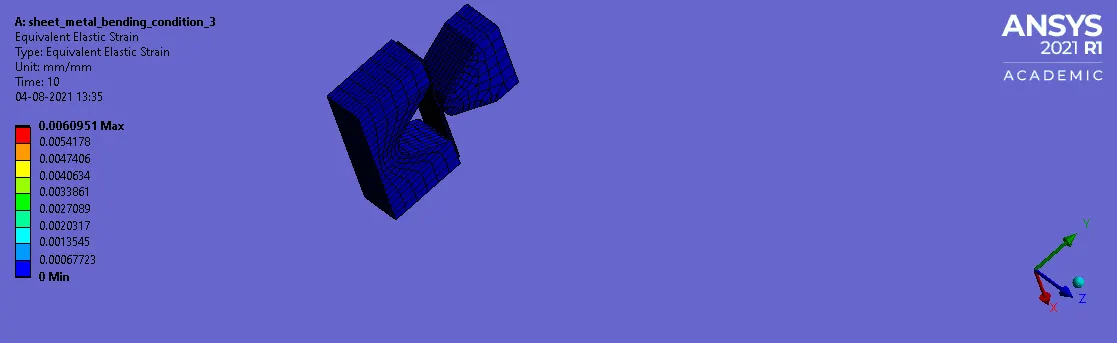
FORCE REACTION:
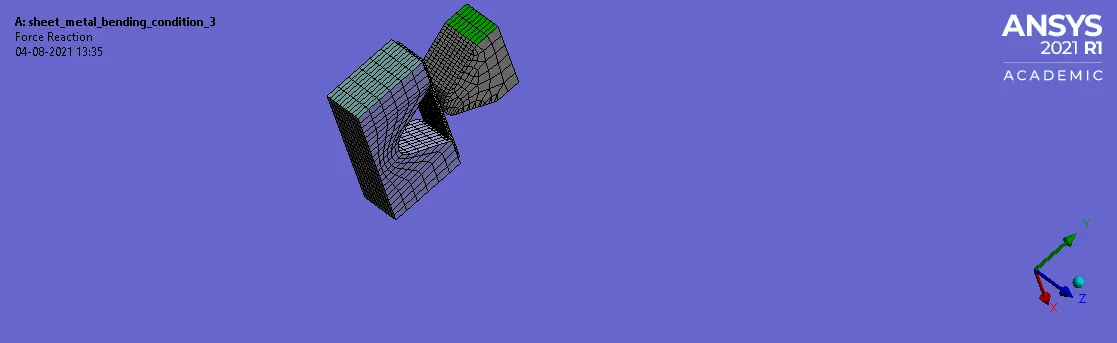
from the above analysis , the comparision has been made and the results were executed properly , the stress value in the aluminium alloy 1199 is 185.66 MPa , whereas the stress value in copper alloy is 385 Mpa , whereas in magnessium alloy is 273.03 MPa . so the stress value is lesser in aluminium alloy than compared with the other two materials , and the stress value is much more in copper alloy than any other materials in the comparision . it is recommended to use aluminium alloy 1199 , since it has lesser stress value than other materials , the life of the material will be higher and it also can withstand more no.of.loads than other materials .
CONDITION 2:
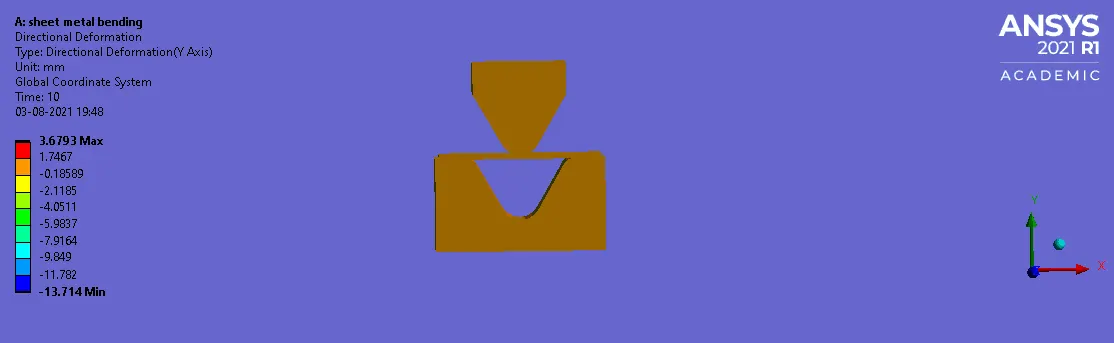
ALUMINIUM ALLOY 1199 WITH CO-EFFICIENT OF FRICTION AS 0.19 AND COMPARE THE RESULTS WITH THE ALUMINIUM ALLOY WITH CO-EFFICIENT OF FRICTION AS 0.1
DIRECTIONAL DEFORMATION:
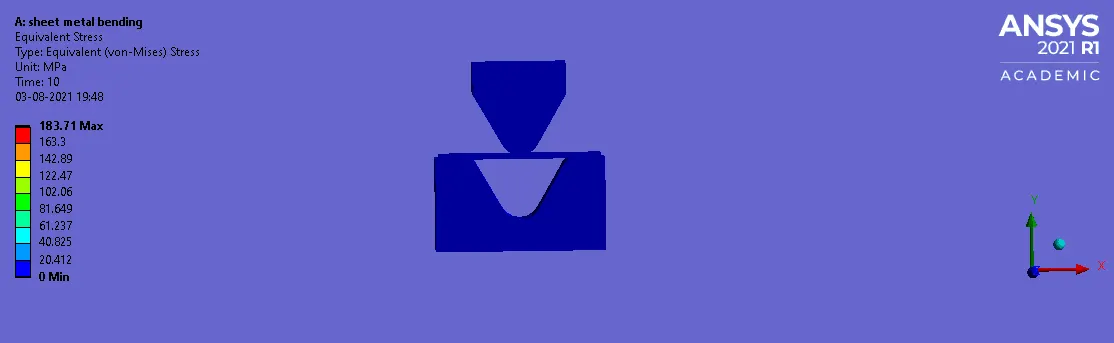
EQUIVALENT STRESS(VON-MISSES):
EQUIVALENT STRAIN (VON-MISSES):
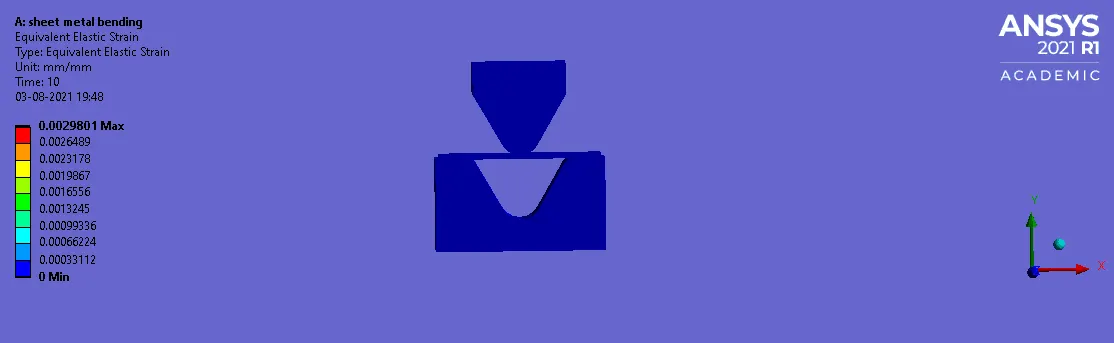
CONTACT PRESSURE :
(1)PUNCH TO SHEET :
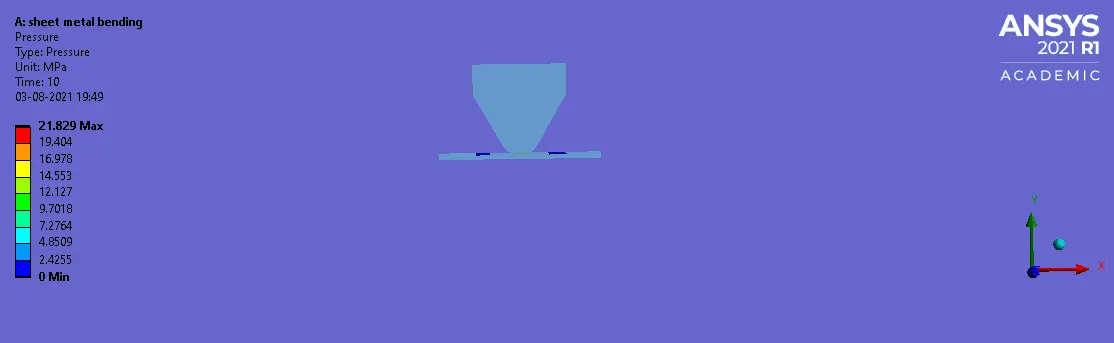
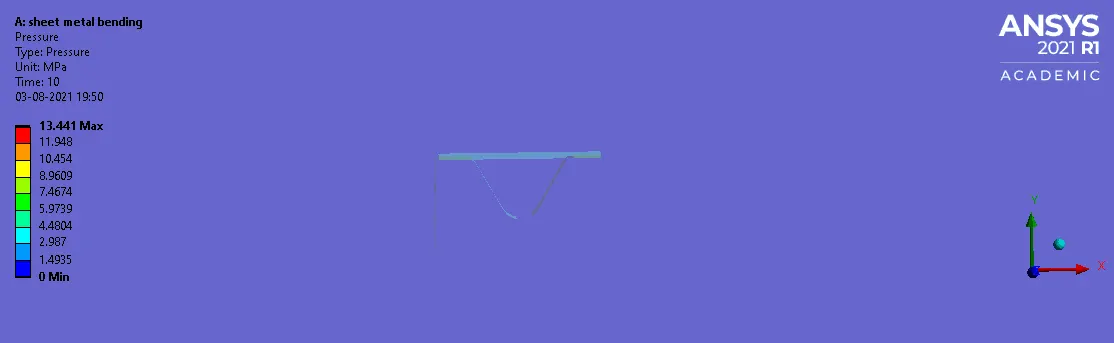
(2) SHEET TO DIE :
FORCE CONVERGENCE :
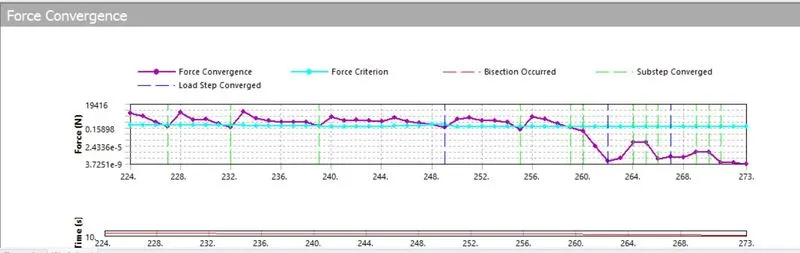
from the above analysis and the comparison made between the fricitonal co-efficient parameter of 0.19 with aluminium alloy 1199 and the fricitional co-efficient of 0.1 with the same material as aluminium alloy 1199 , the stress value is less with increased co-efficient of friction .
CONDITION 3:
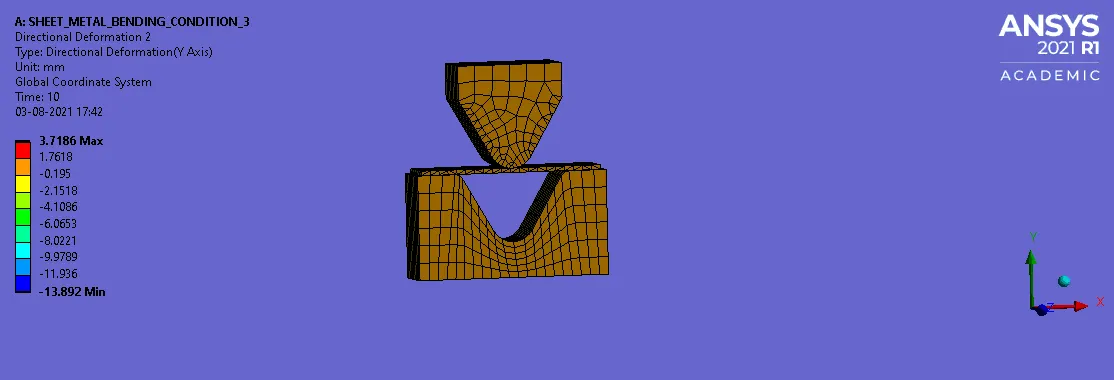
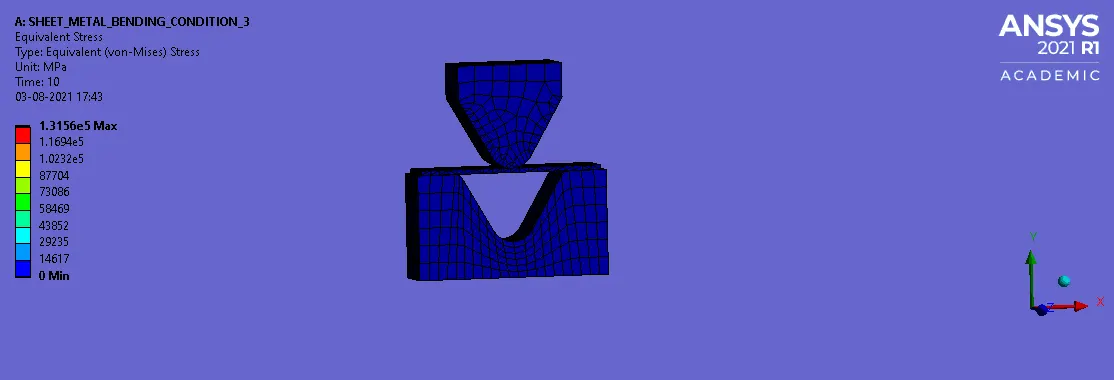
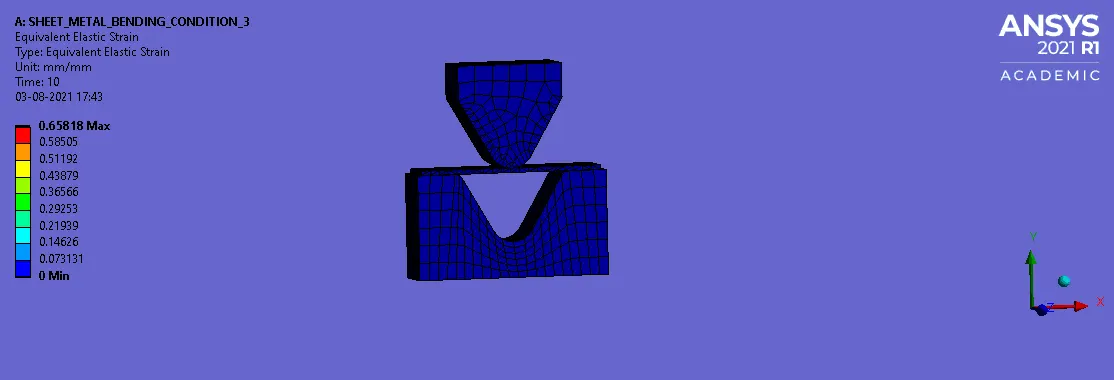
MESH REFINEMENT ON THE SHEET WITH ALUMINIUM ALLOY 1199 NL AS THE MATERIAL AND COMPARE THE RESULTS WITH THE MESH SIZE OF 1 mm WITH ALUMINIUM ALLOY 1199 AS MATERIAL. THE REFINEMENT ON THE APPARATUS MADE AS A MESH SIZE OF 2 mm . SO , NOW WE ARE COMPARING THE ANALYSIS OF MESH SIZE OF 1 mm vs 2 mm .
DIRECTIONAL DEFORMATION:
EQUIVALENT STRESS(VON-MISSES):
EQUIVALENT STRAIN (VON-MISSES):
FORCE CONVERGENCE :
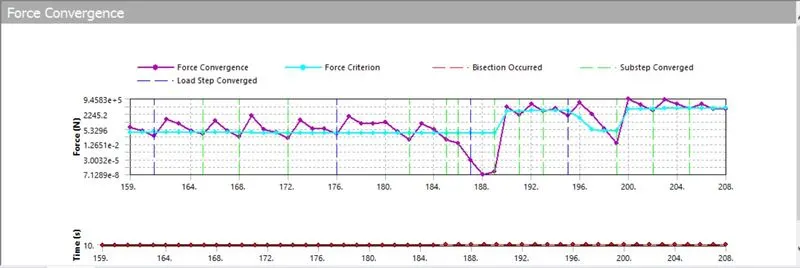
from the above analysis made ,we can conclude that , refining the mesh to the lower value , accurate is the result , it is observed that decreasing the size of the mesh provided better results than the 2 mm mesh .
CONCLUSION :
The analysis has been carried out and it is observed for the given conditions that , aluminium alloy 1199 has better strength properties than the other two materials ,
and also increasing the co-efficient of friction between contacts and target bodies can also provide a better solution
finally , the reducing the size of mesh by refinement process can provide a better solution than the adaptive mesh size ..