Week 3 Sheet metal Bending challenge
OBJECTIVE: To do static structural analysis using ansys workbench for the given sheet metal bending setup for the given cases.
PROCEDURE TO SET UP THE ANALYSIS :
MATERIALS USED:
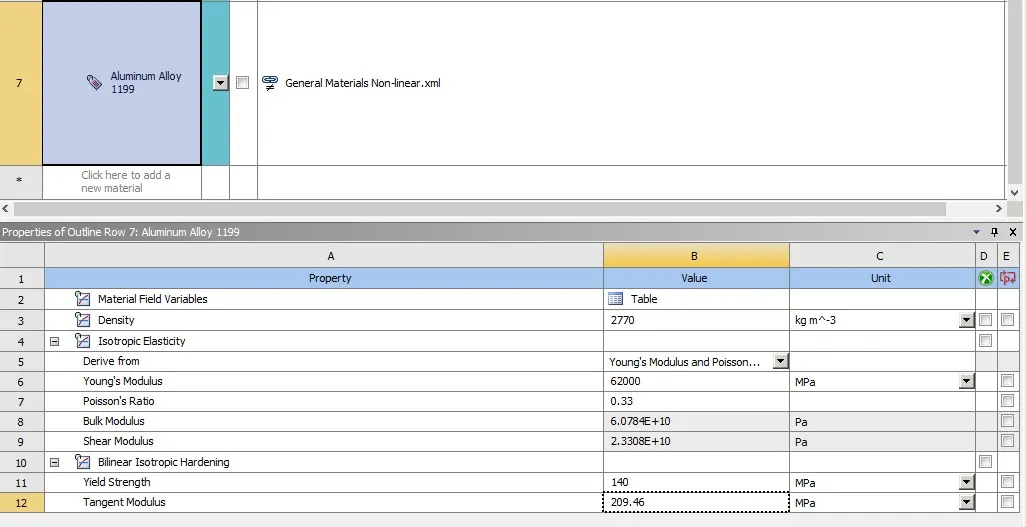
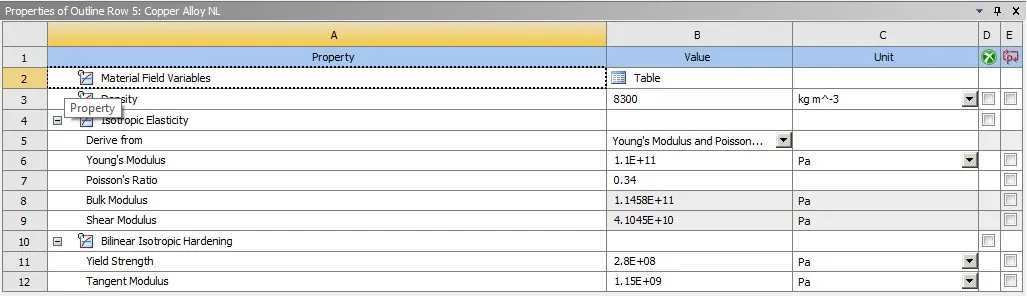
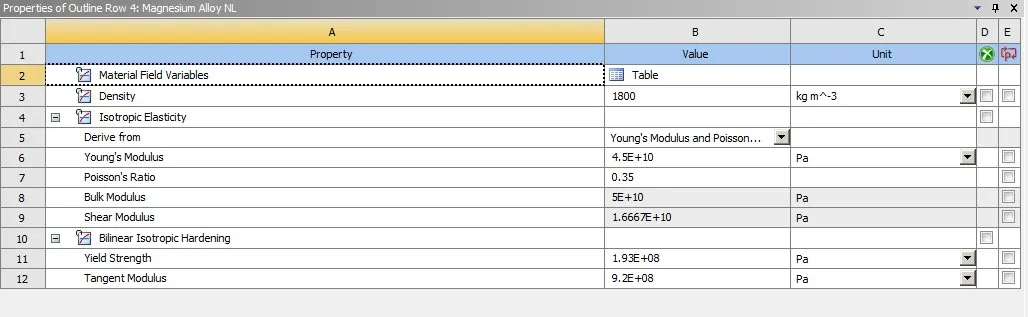
In the engineering data following materials are selected for using in the analysis.
ALUMINIUM ALLOY 1199
COPPER ALLOY NL
MAGNESIUM ALLOY NL
IMPORTING MODEL FOR THE ANALYSIS:
The CAD model which is to be used for the analysis of sheet metal bending is imported and viewed in spaceclaim.
CONTACTS CREATED:
The contact created in this analysis includes two different sets of contacts
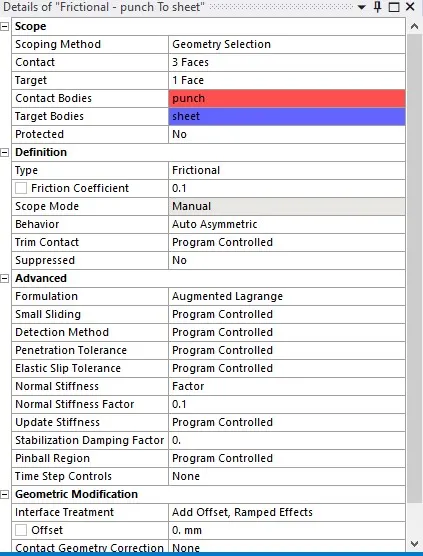
first contact is a frictional contact between the punch and sheet metal;
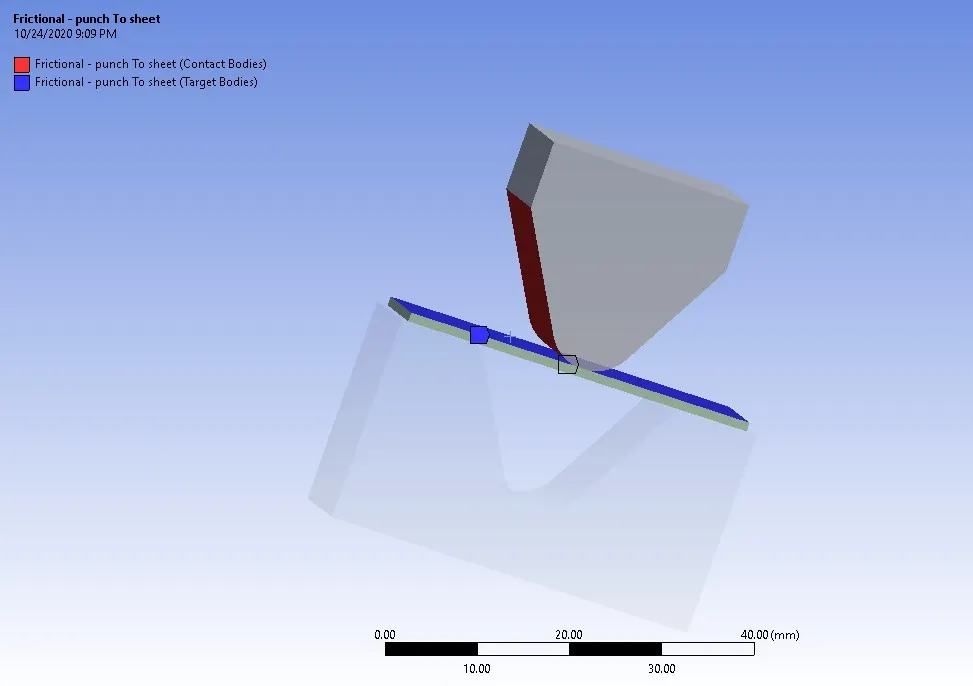
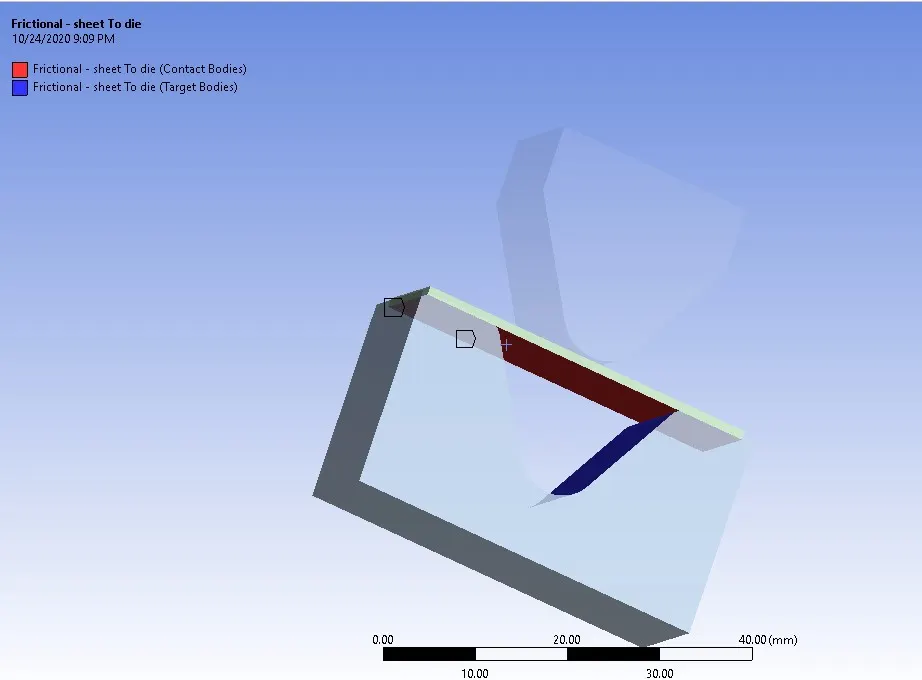
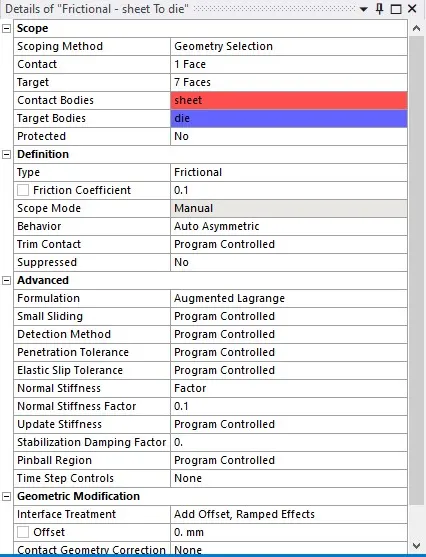
second contact is another frictional contact between the sheet metal's bottom surface and the die;
MESHING:
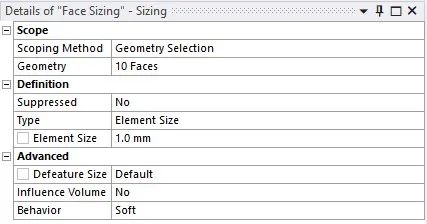
The meshing is done as follows;
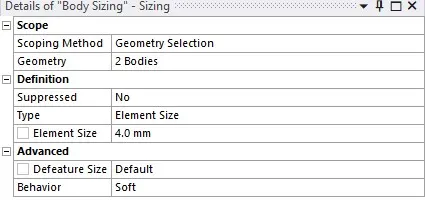
4 mm mesh for punch and die
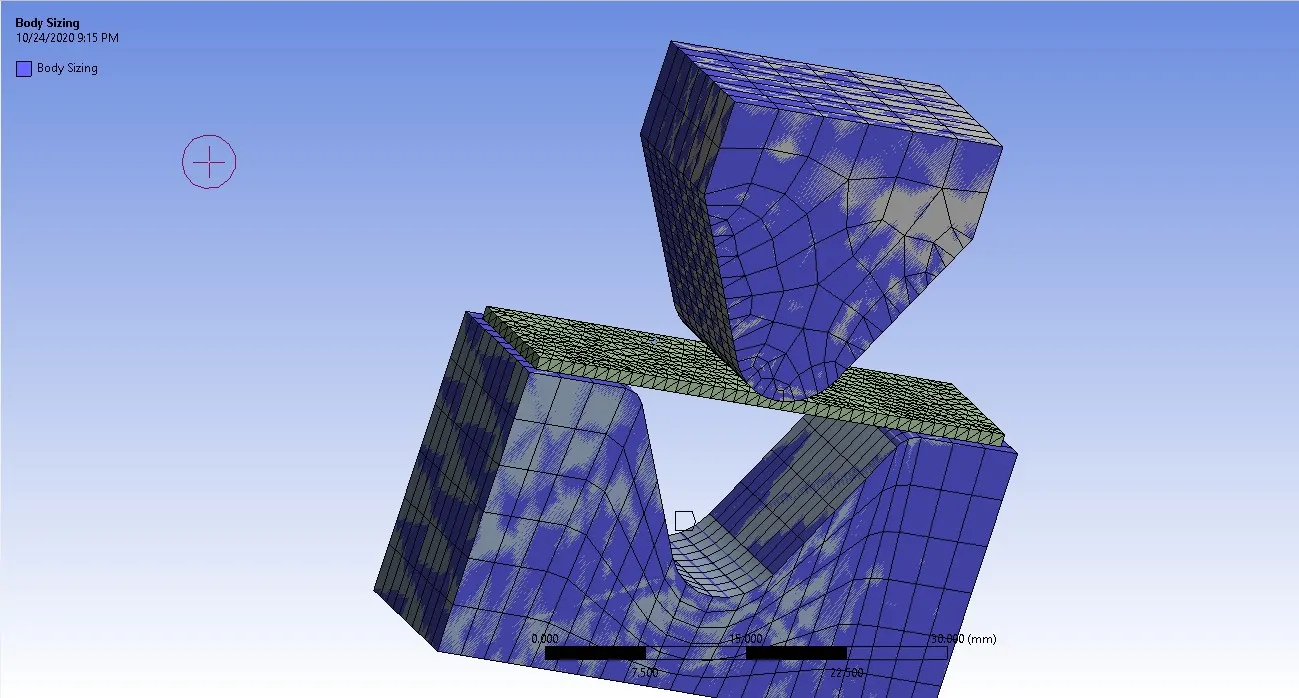
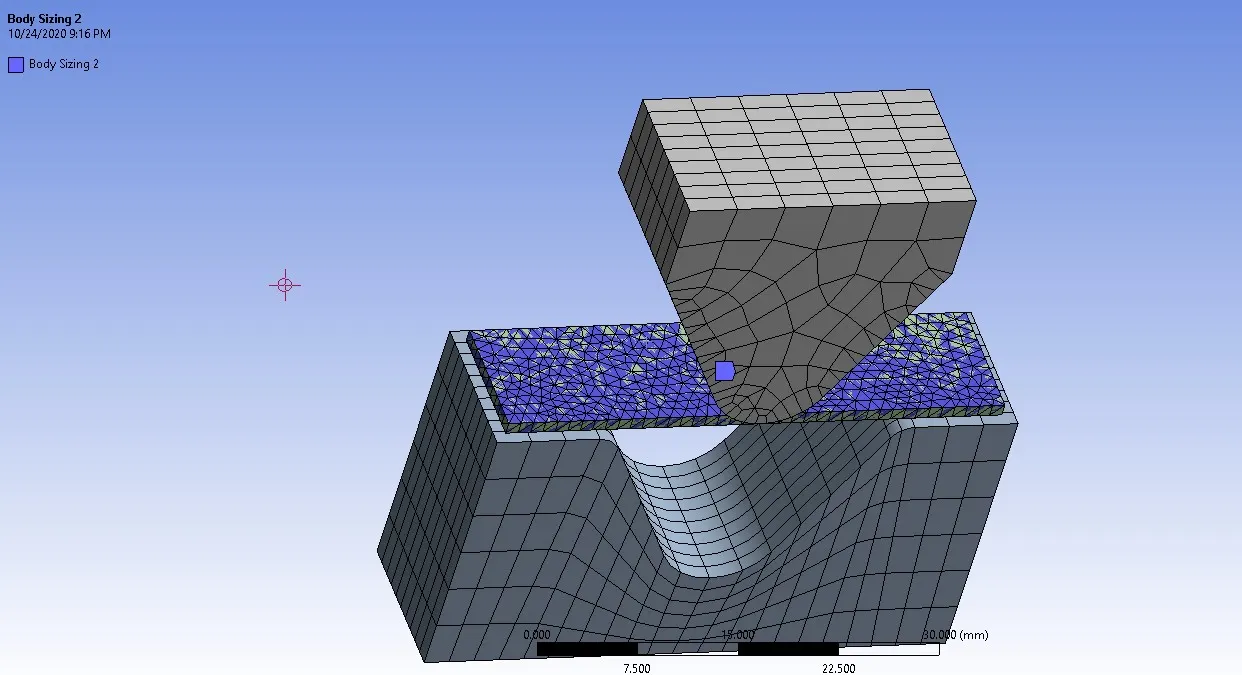
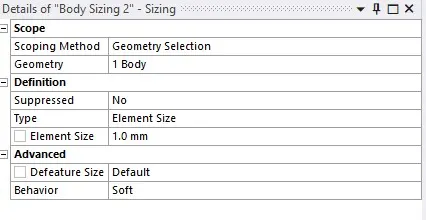
1 mm fine tetrahedron mesh for the sheet metal
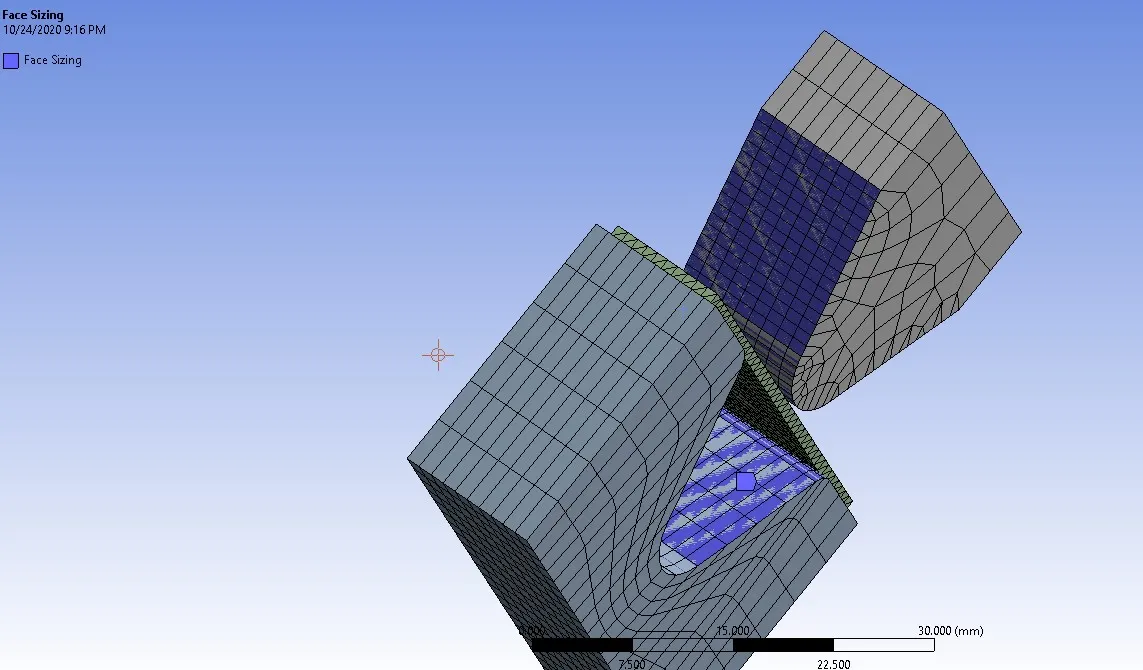
1mm fine mesh for the contact surfaces in the punch and die
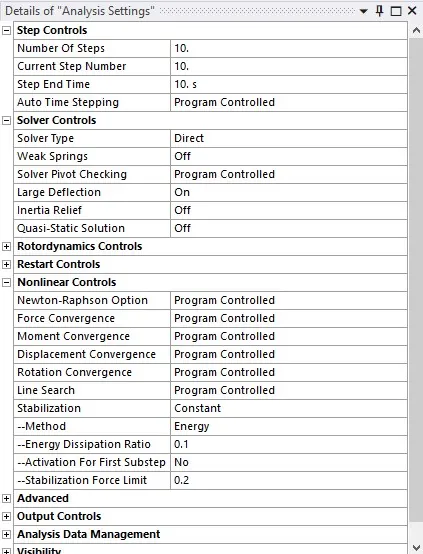
ANALYSIS SETTING:
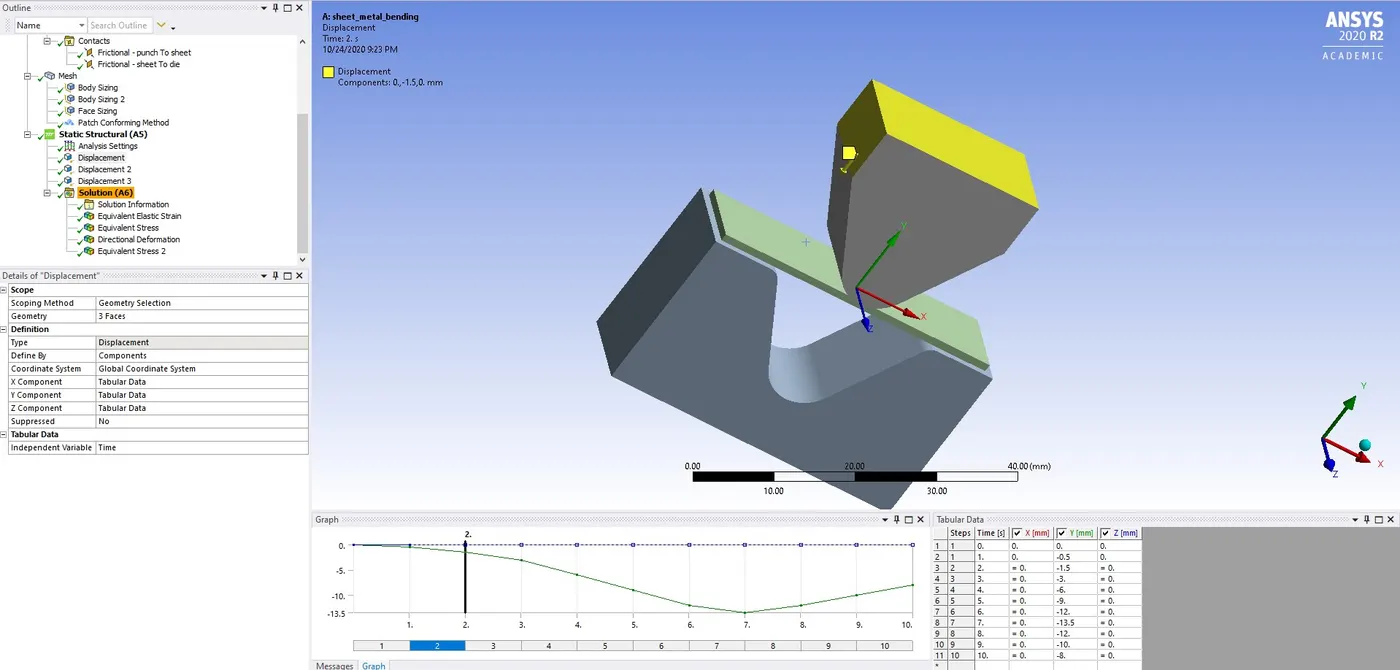
In the analysis , the punch is allowed to move only along the y axis and restricted for motion along the x and z axes. Thus giving input of zero to displacement along x and z and giving input values only along y axis in tabular data will bring out this constrain successfully.
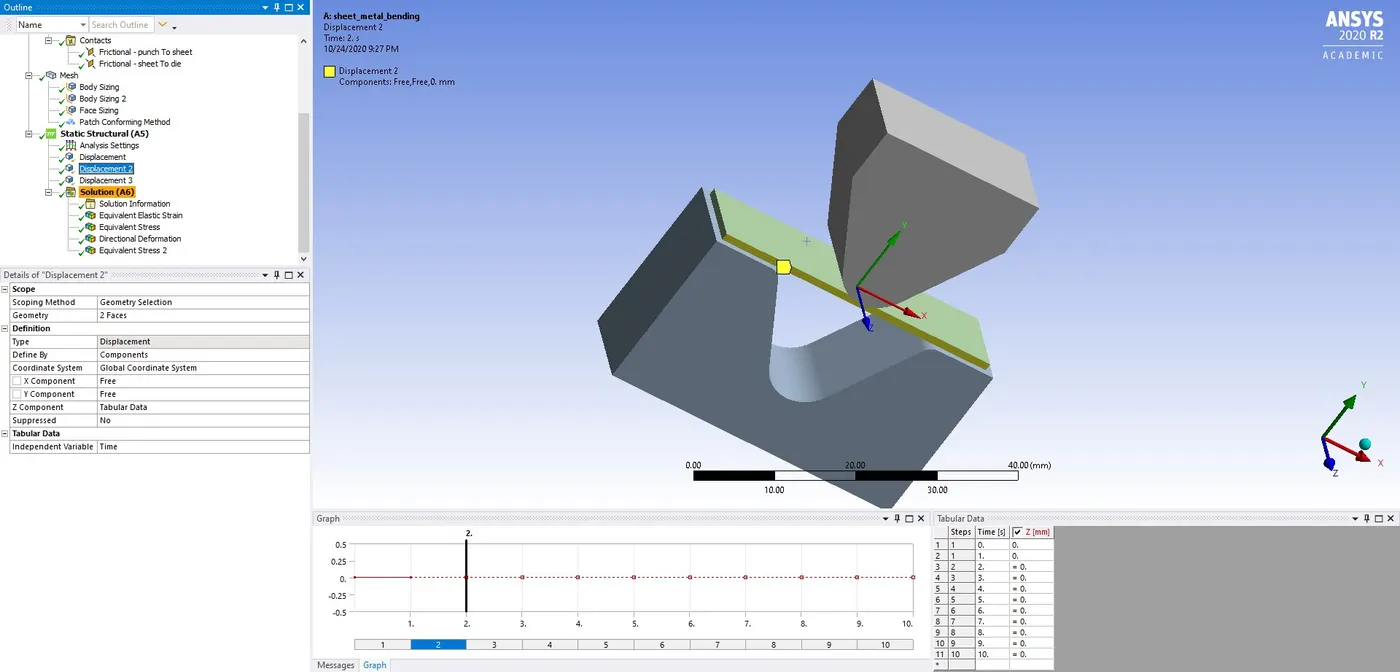
In the next step , the sheet metal while undergoing bending must not displace along z direction. Therefore fixing the displacement value along z axis as zero and leaing the x and y axis displacements as free will provide this contrain successfully.
In the next step , we require the die to be still while bending happens and after when the punch and sheet complete the required displacements , at the final few steps the die and punch must move away from the sheet metal.
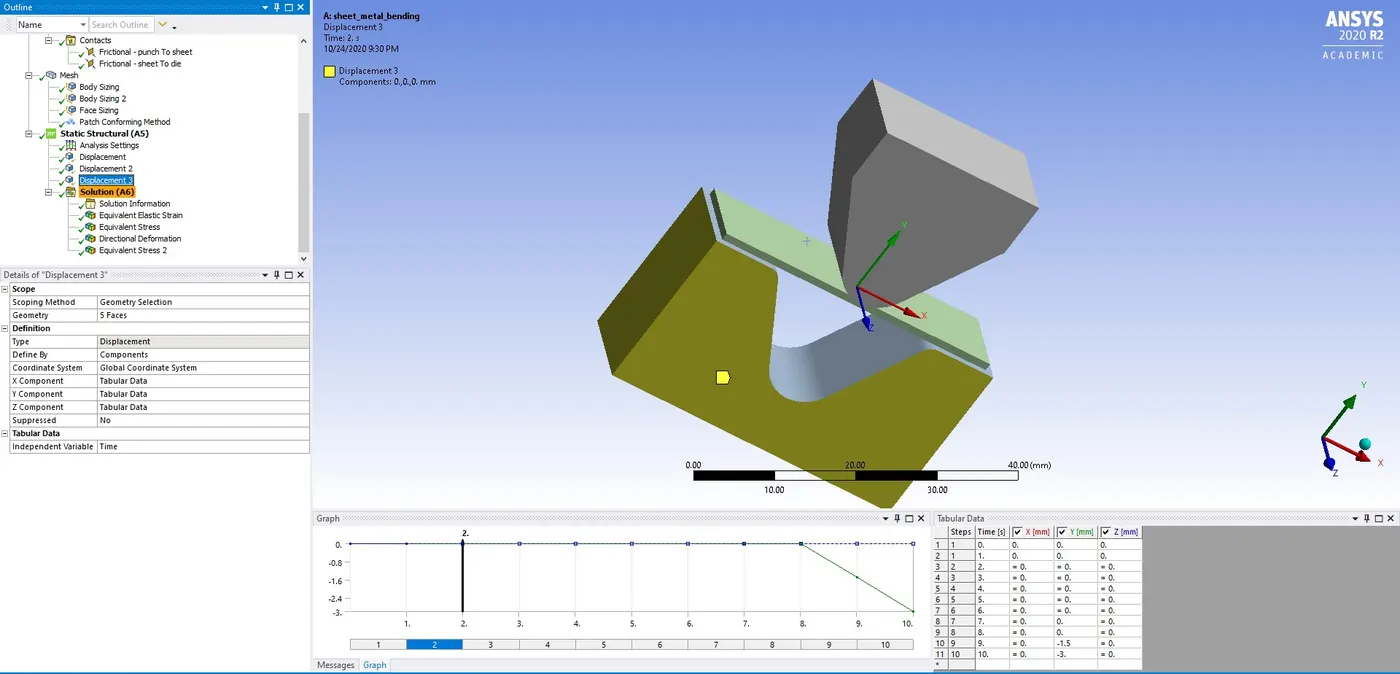
Now the ansys setting is complete to execute various cases.
CASE 1:
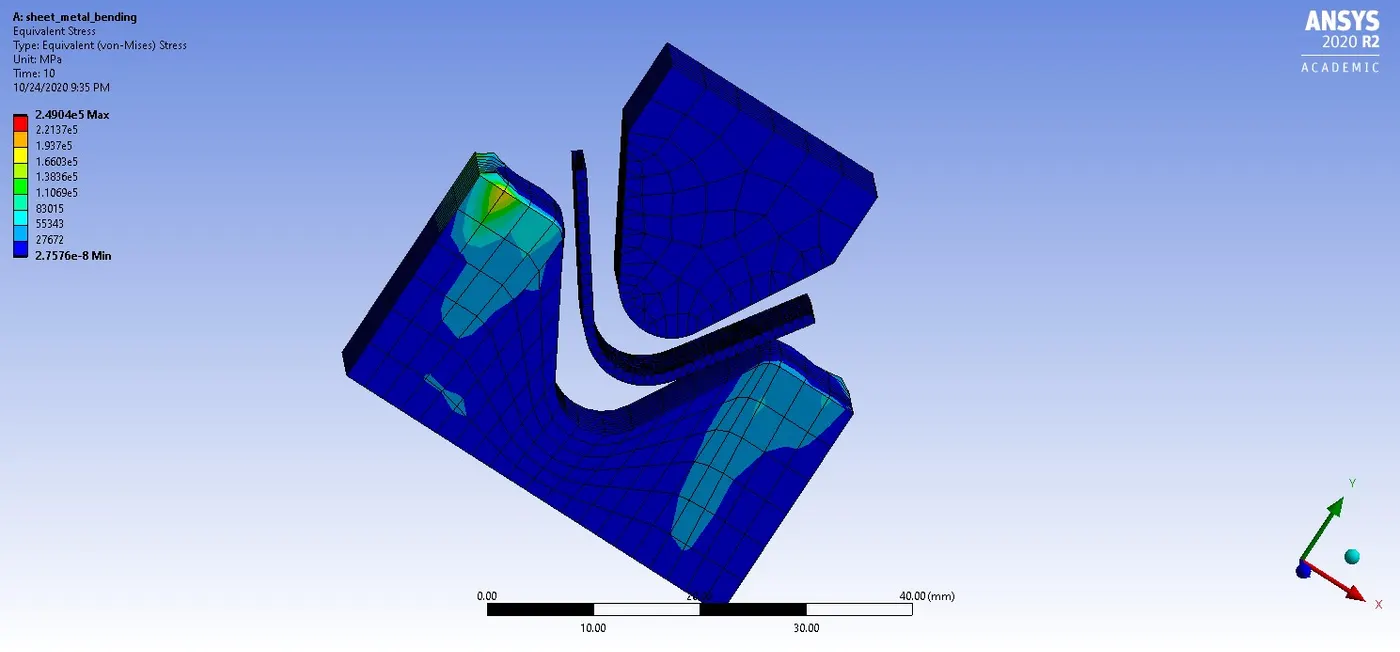
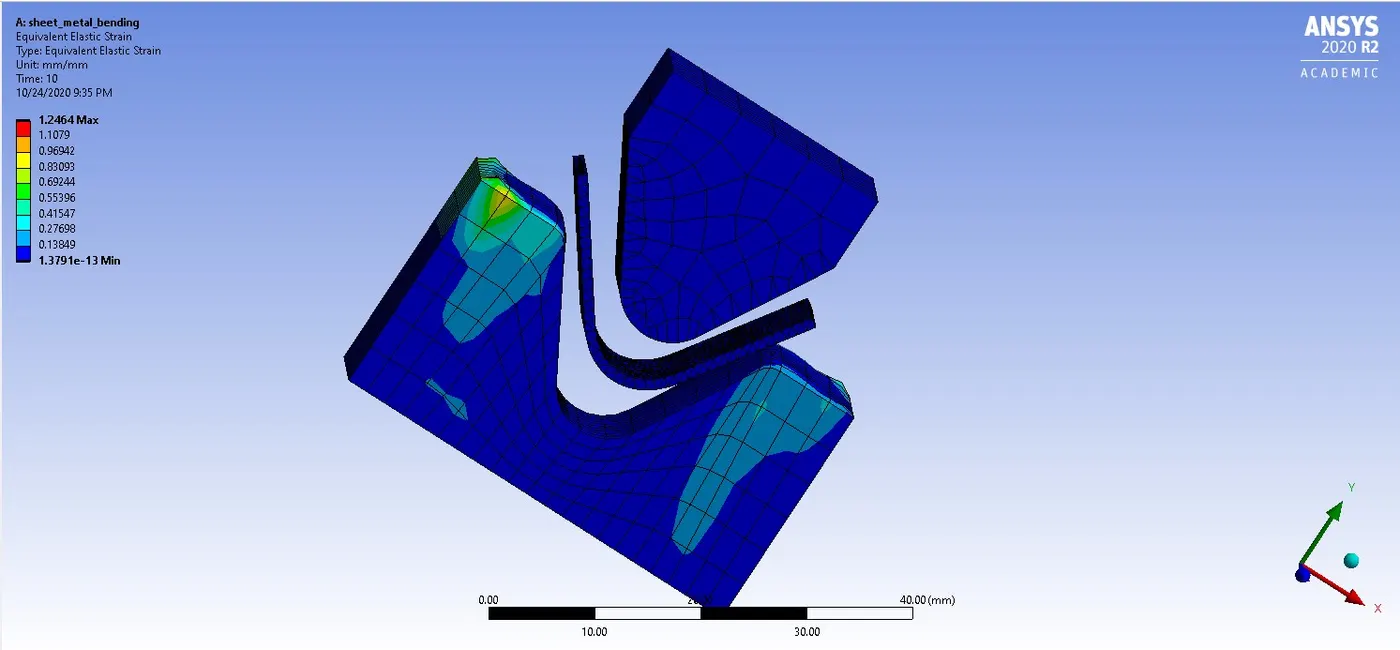
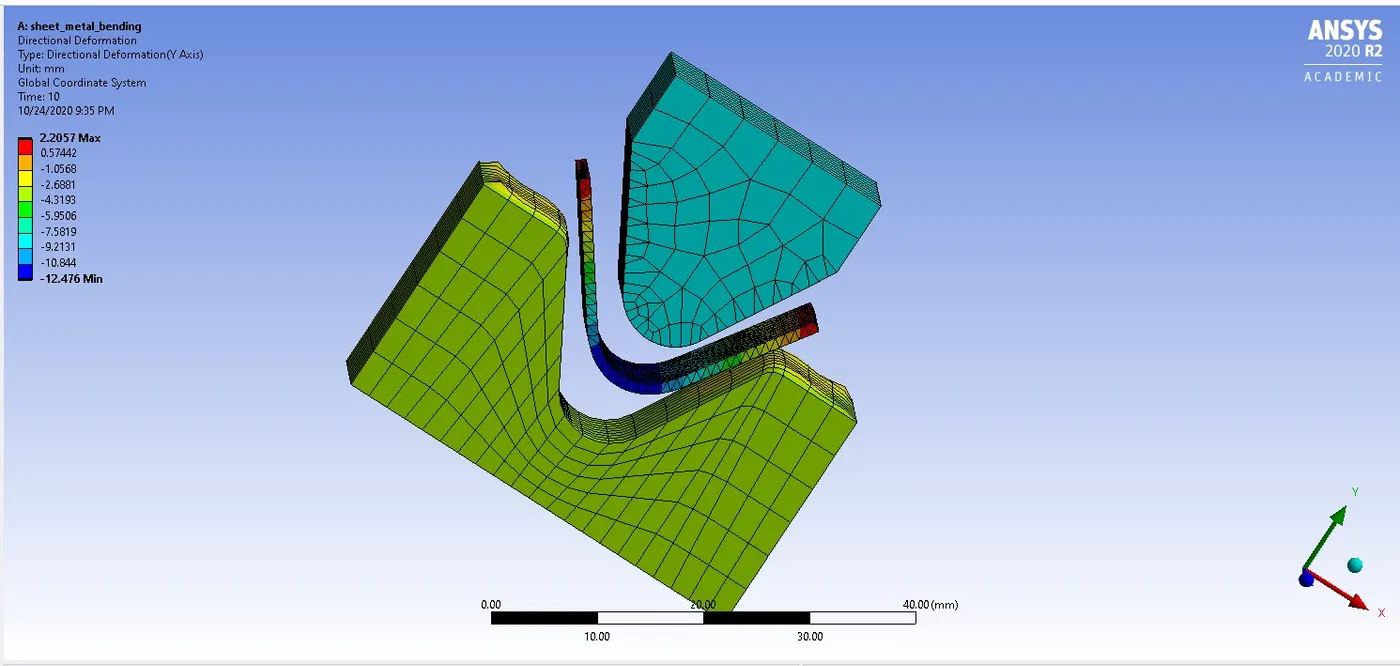
In this case we are required to proceed with the simulation using the above settings but use different materials for the sheet metal and conclude the results of directional displacement along y axis, total equivalent strain, total equivalent stress for each material used.
when ALUMINIUM ALLOY 1199 is used as material for sheet metal;
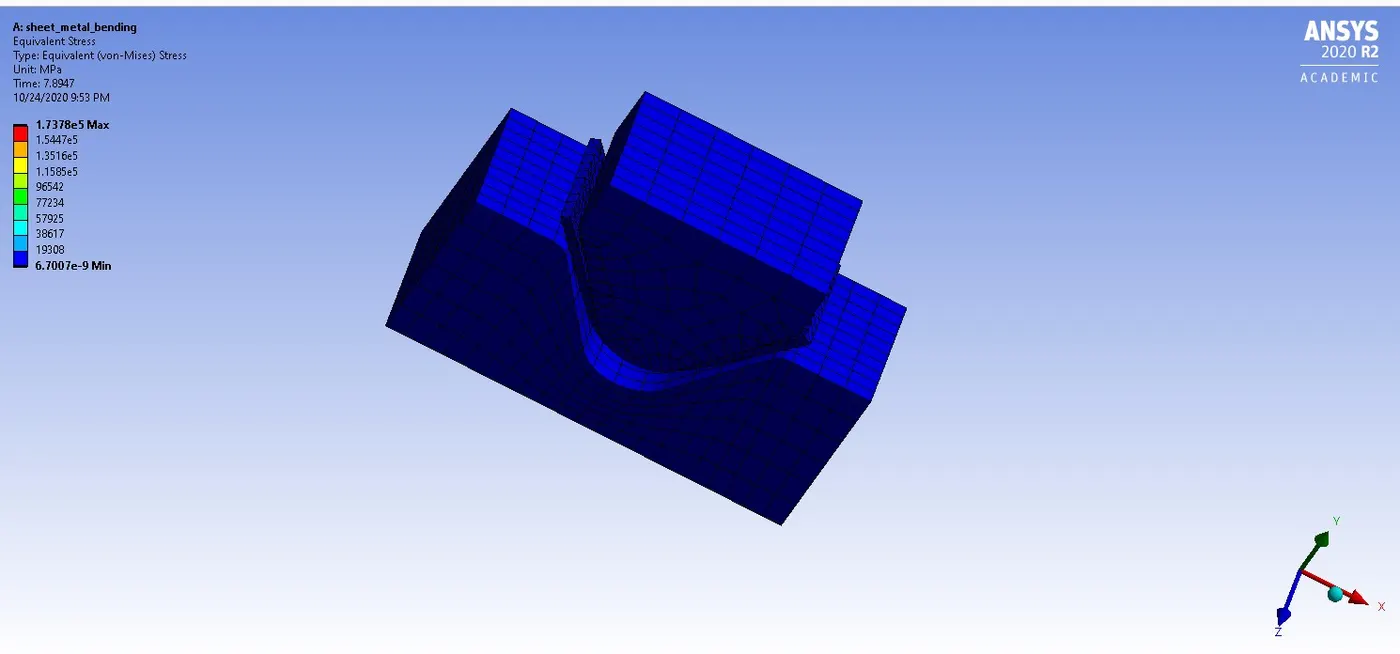
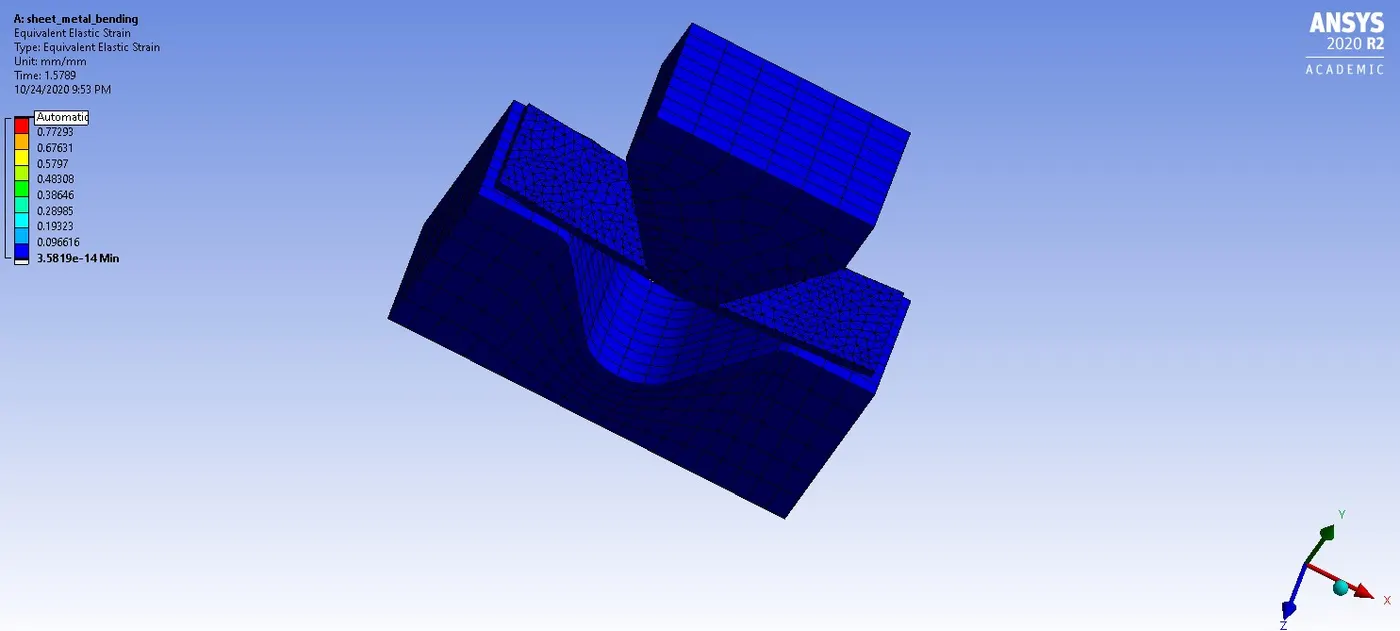
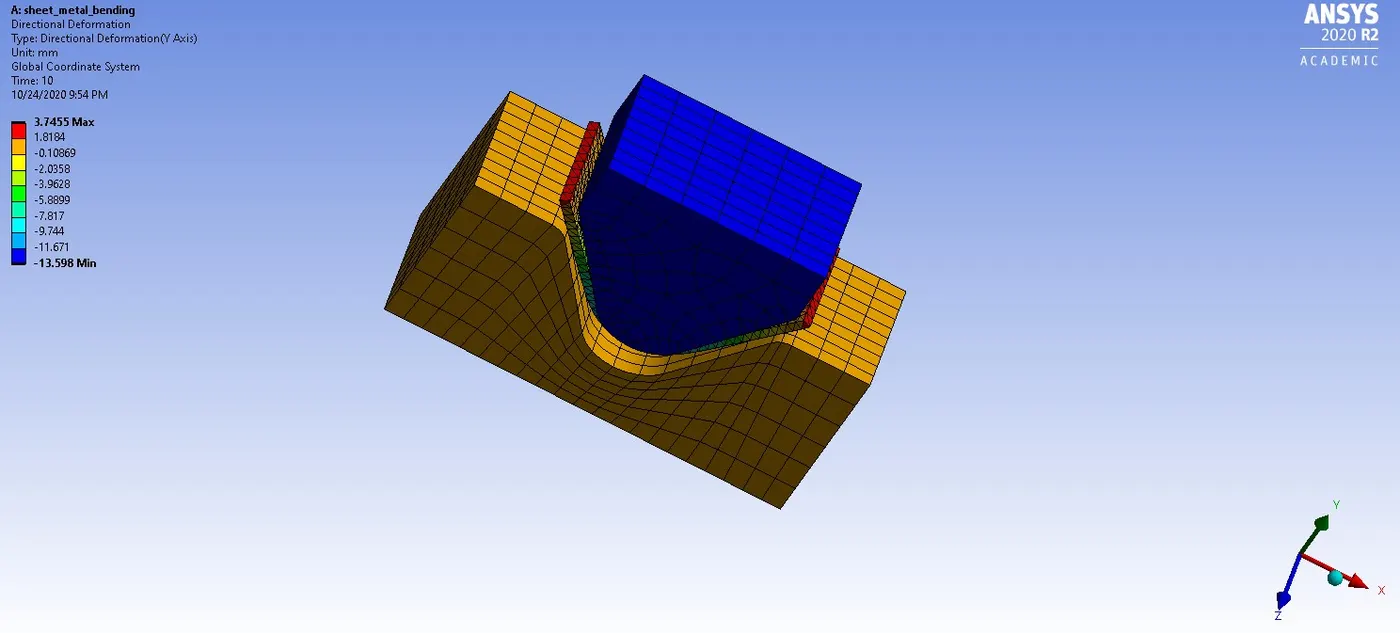
When MAGNESIUM ALLOY NL is used as material for sheet metal;
When COPPER ALLOY NL is used as the material for the sheet metal;
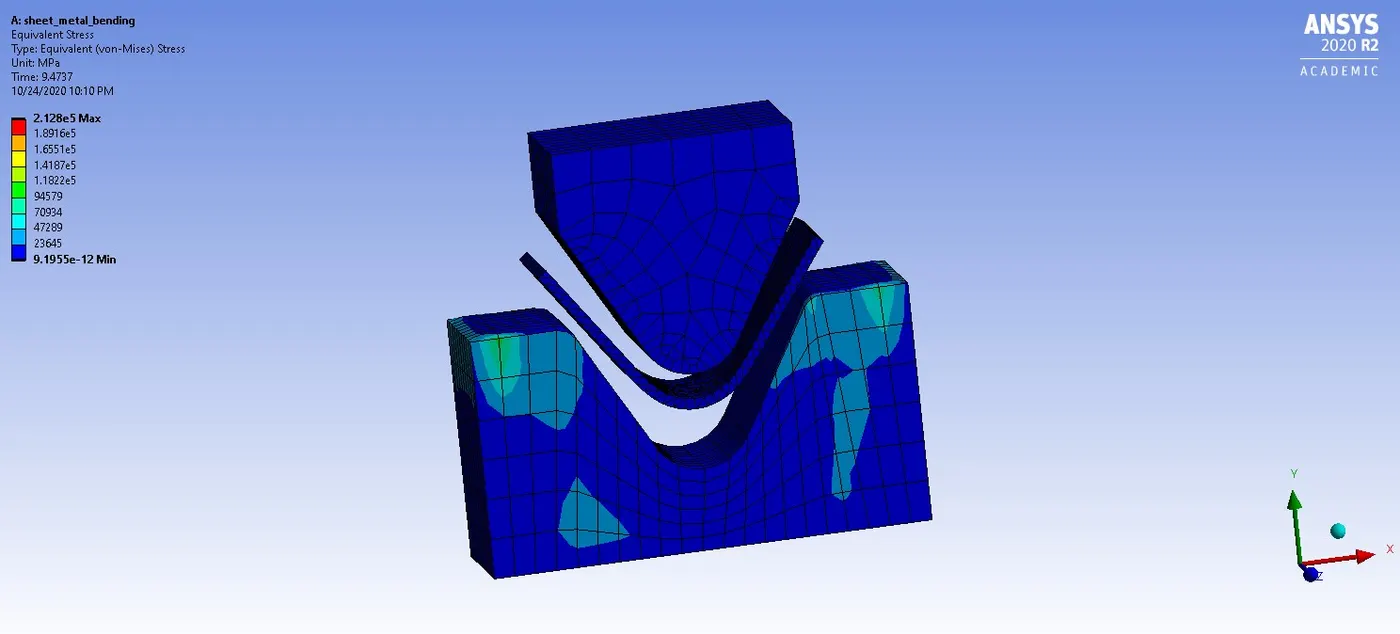
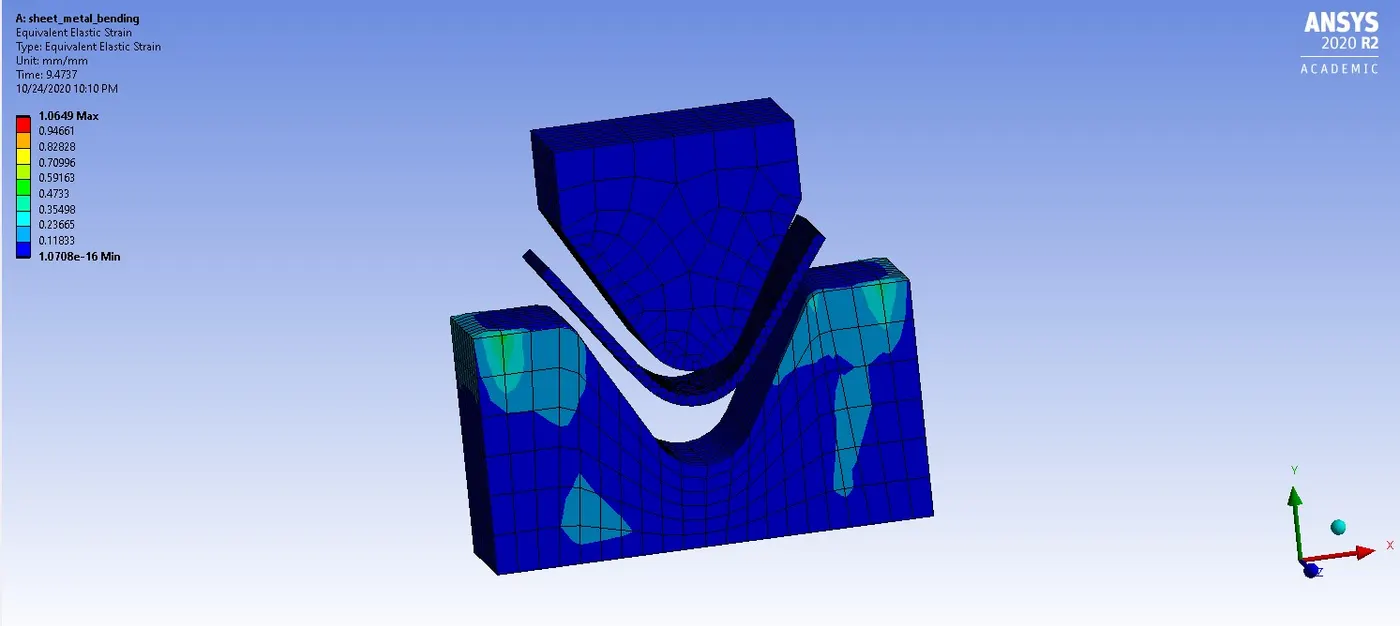
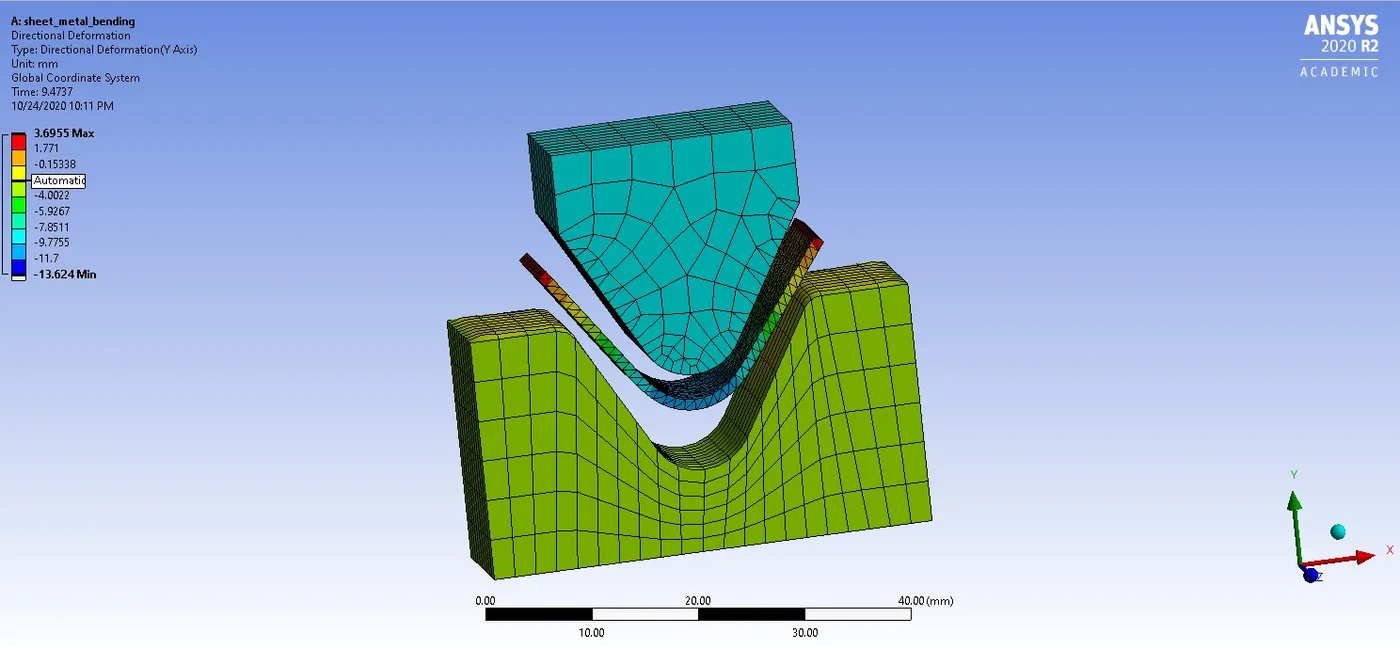
TABLE OF RESULTS
| MATERIAL | EQUIVALENT STRESS(Mpa) | EQUIVALENT STRAIN | TOTAL DEFORMATION(Y AXIS)(mm) |
| ALUMINIUM ALLOY 1199 |
2.4904e5 (MAX) 2.7576e-8 (MIN) |
1.2434(max) 1.3791e-13(min) |
2.2057(min) -12.67(max) |
| MAGNESIUM ALLOY NL |
1.7378e5(max) 6.7007e-9(min) |
0.86954(max) 3.5819e-14(min) |
3.7455(min) -13.598(max) |
| COPPER ALLOY NL |
2.128e5(max) 9.1955e-12(min) |
1.0649(max) 1.0708e-16(min) |
3.6955(min) -13.624(max) |
From the table we can observe that max induced stress in aluminium alloy 1199 is the maximum and also strain is maximum for this material but still it has minimum max deformation. Magnesium alloy nl and copper alloy nl have similar max stress induced and similar equivalent strain and almost same value of total deformation along y axis.
CASE 2:
In this case we are required to use aluminium alloy 1199 as material of the sheet metal but are going to change the friction coefficient in both the contacts to 0.19.
the results are as follows;
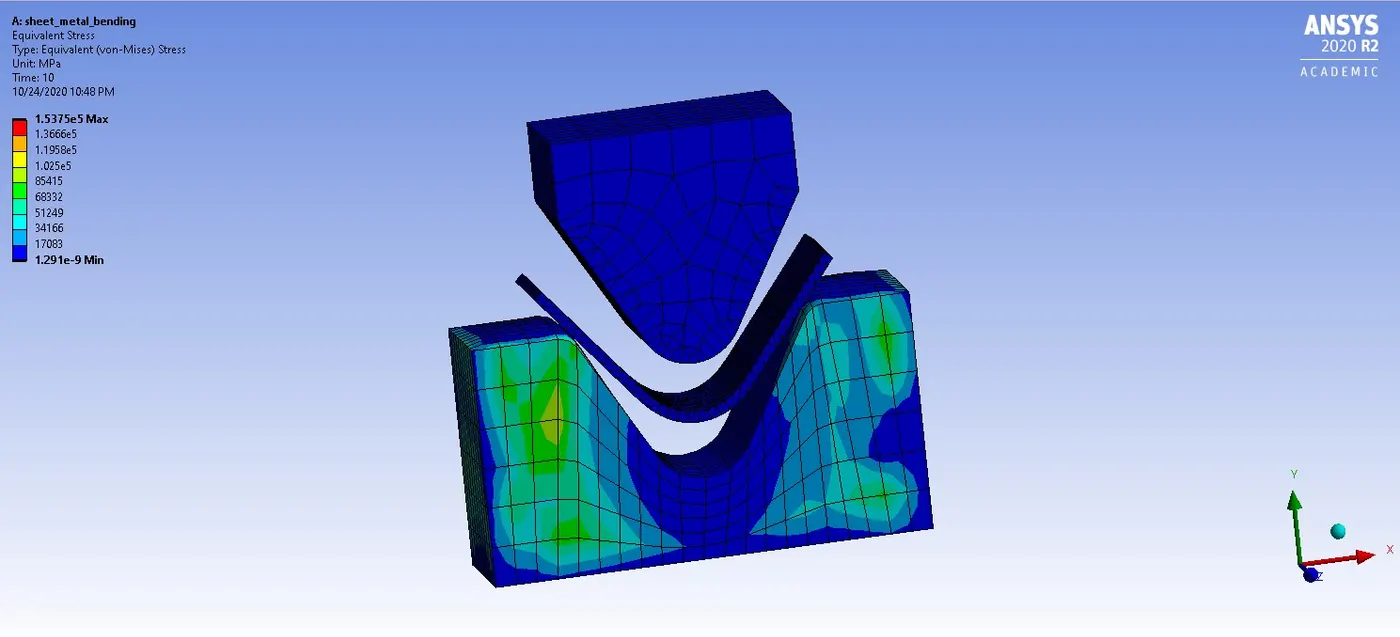
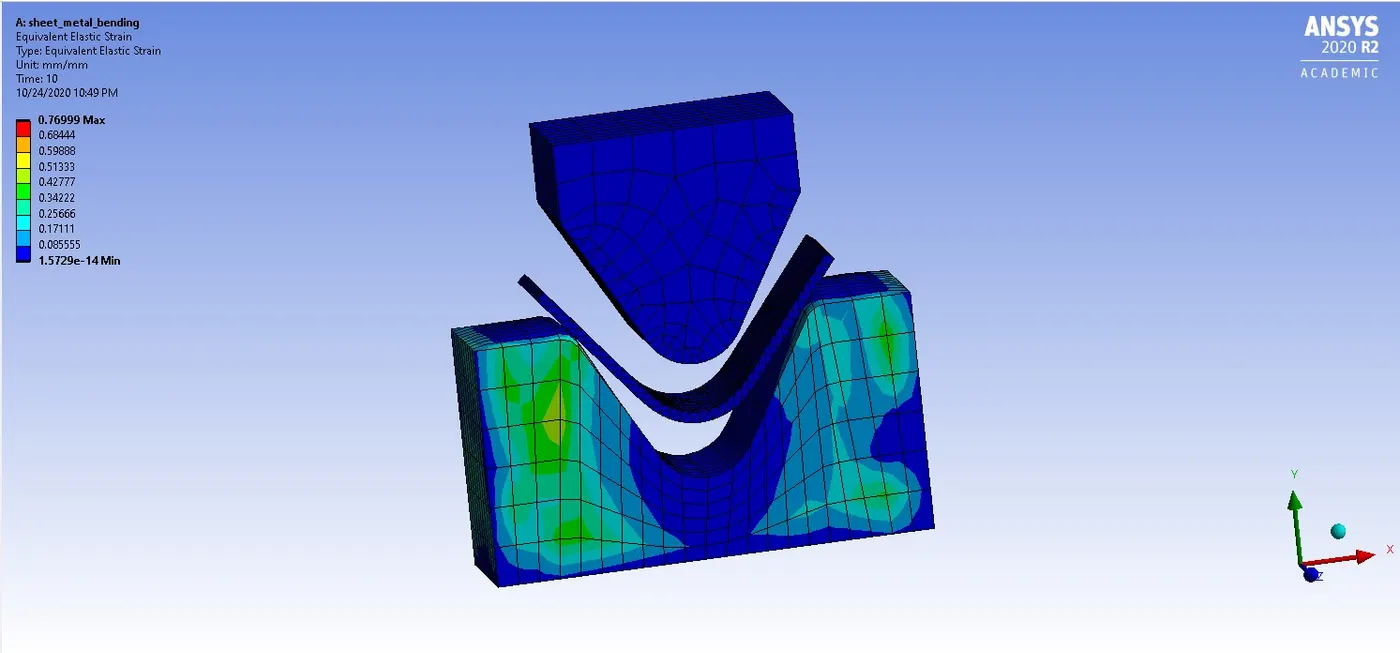
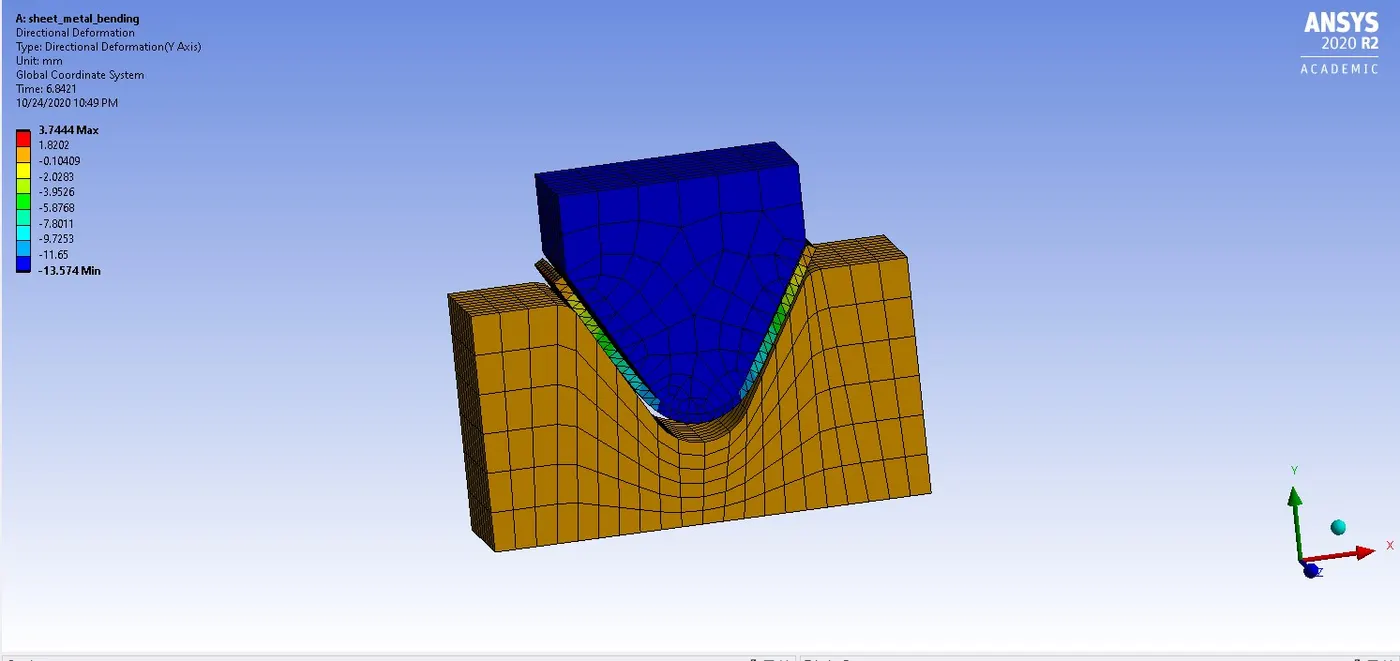
Thus it is evident from the observation that for the material aluminium alloy 1199 , when the coefficient of friction at contacts is increased to 0,19, the total max stress decreases and total deformation along y axis increases and total strain decreases.
CASE 3:
In this case the mesh is further refined and simulation is proceeded. Here the mesh size of the punch and die body is refined to 3 mm and the mesh size at the contact surfaces of the punch and die is refined to 0.8 mm and because of which the statistics of the mesh reaches almost the academic version limits and thus cannot be further refined.
The results are as follows;
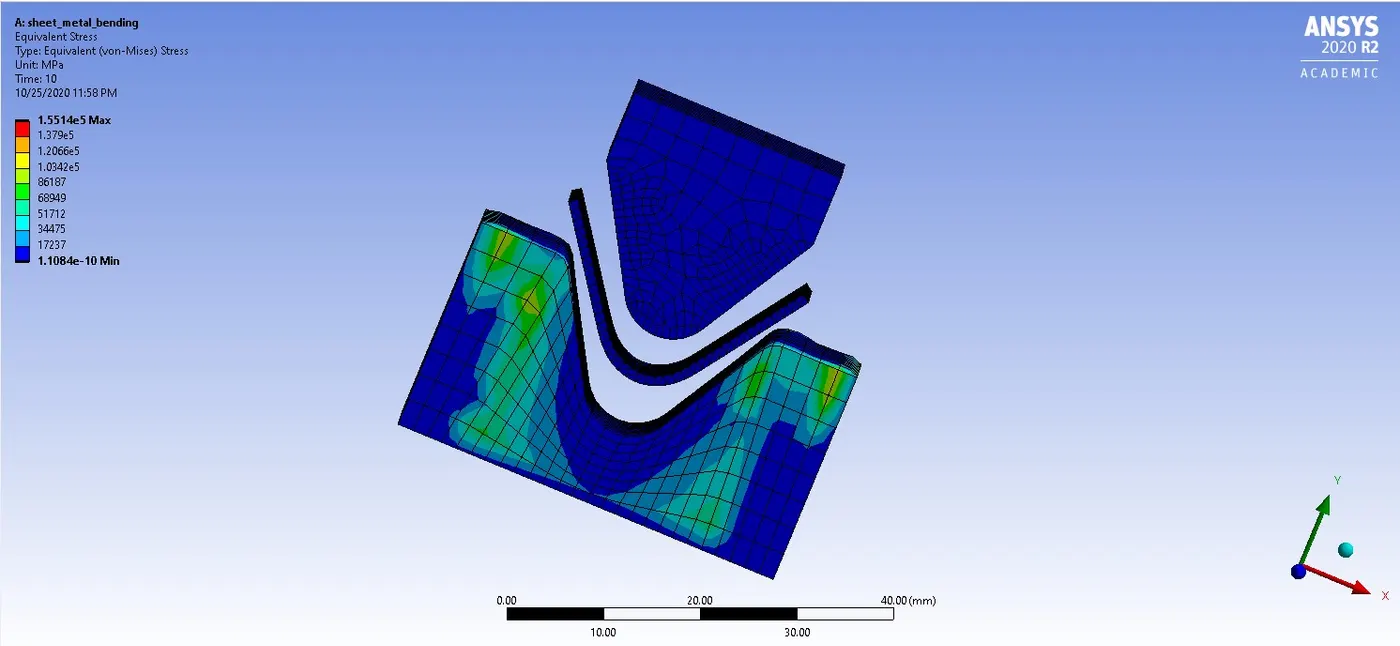
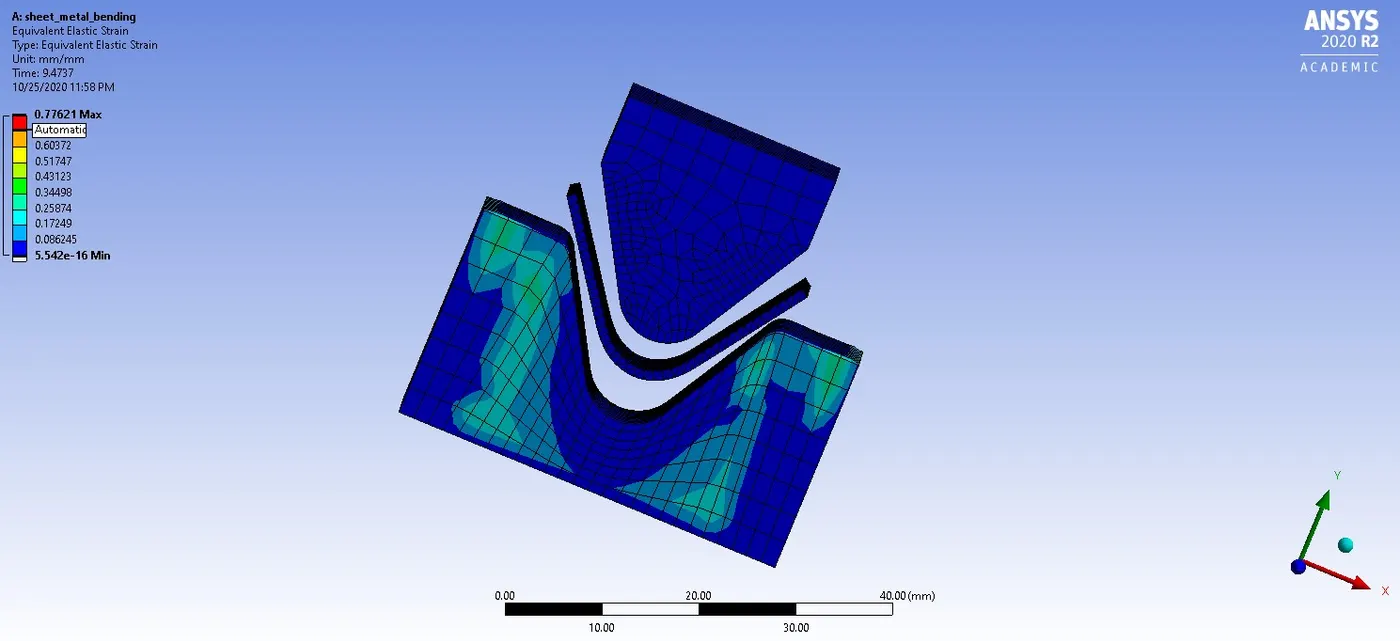
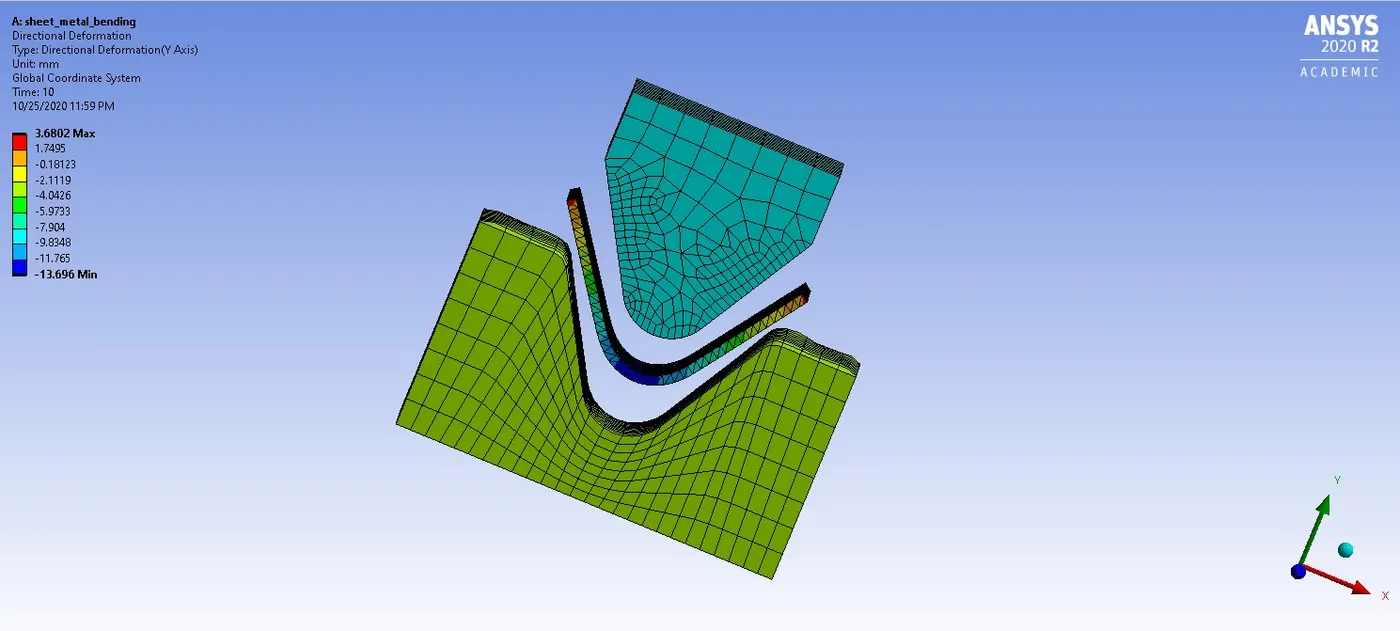
Thus much more accurate results are obtained for the analysis after refining the mesh to the maximum extent.