Week 3 Sheet metal Bending challenge
Objective : Perform analysis on three different materials and compare the results with three different cases
Analysis:
Structural analysis of sheet metal bending process will be categorized in 3 different cases with some changes of Material or Parameters are as given below:
Case_1: Aluminium Alloy 1199, Copper Alloy NL, Magnesium Alloy NL
Case_2: Aluminium Alloy with Friction Coefficient 0.19
Case_3: Aluminium Alloy with Mesh Refinement
Result :
Case 1_Aluminium Plate
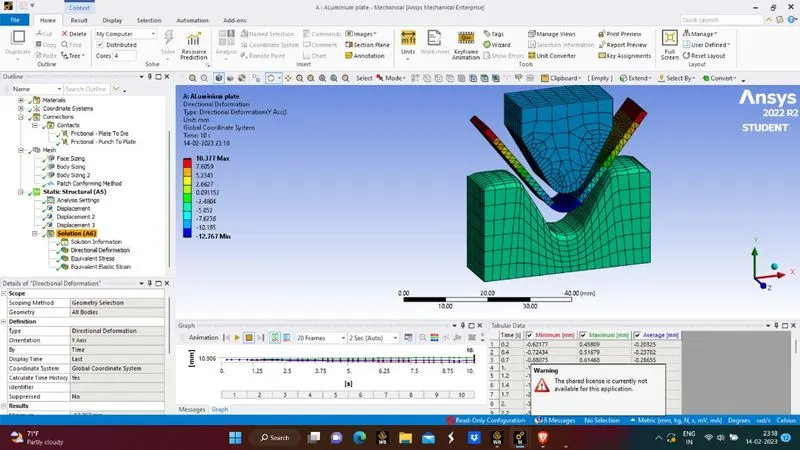
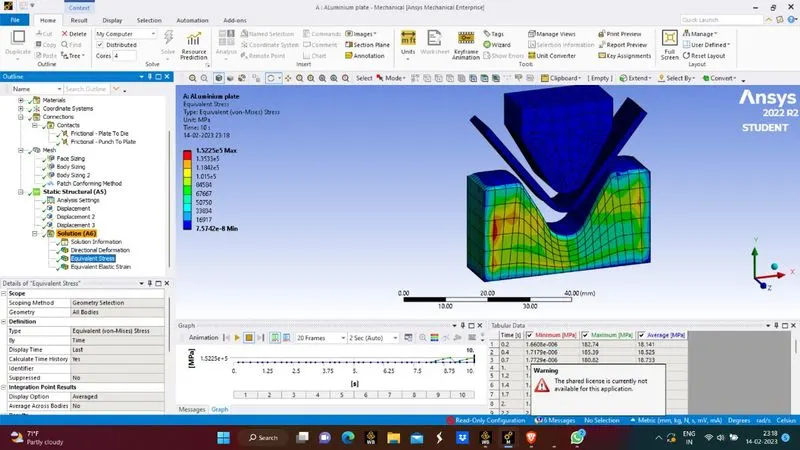
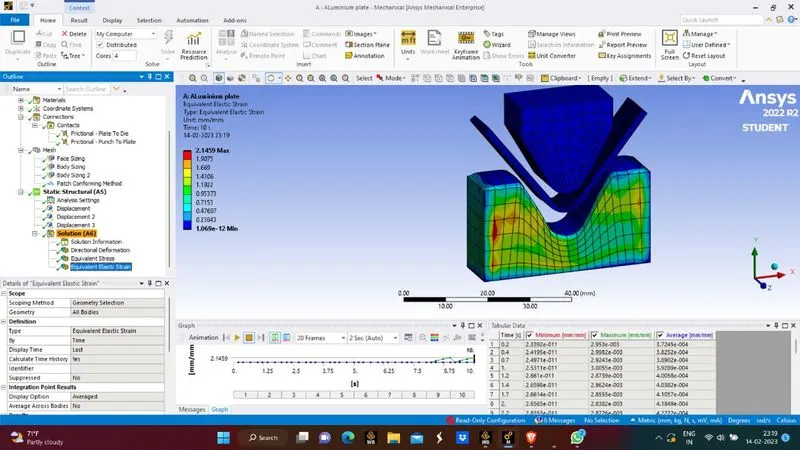
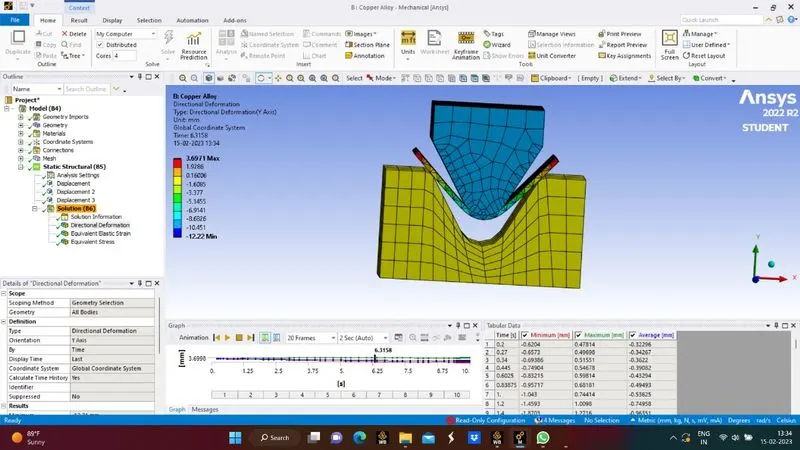
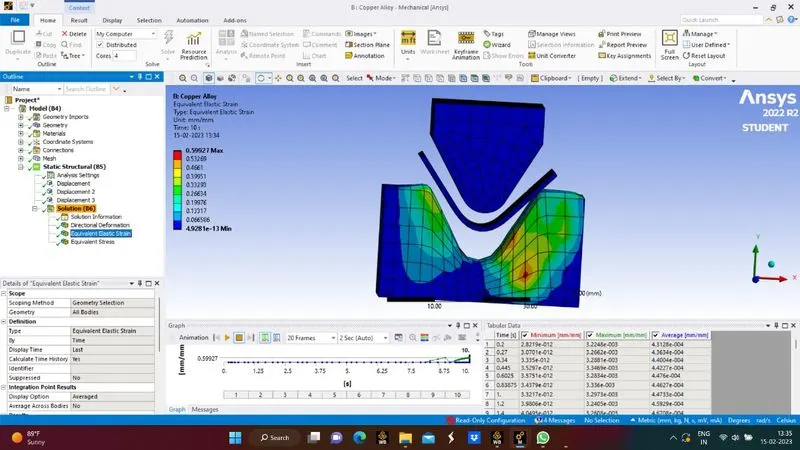
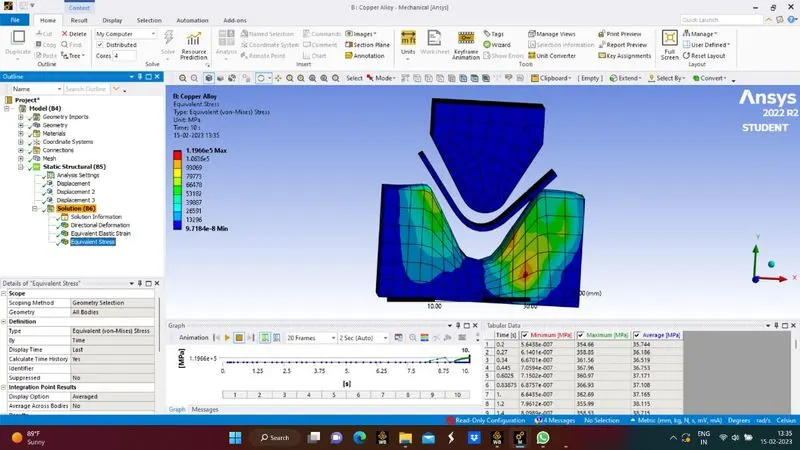
Copper Alloy
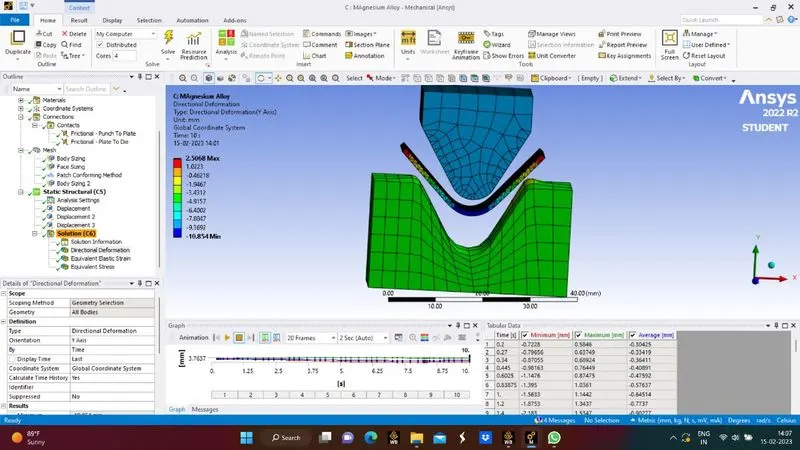
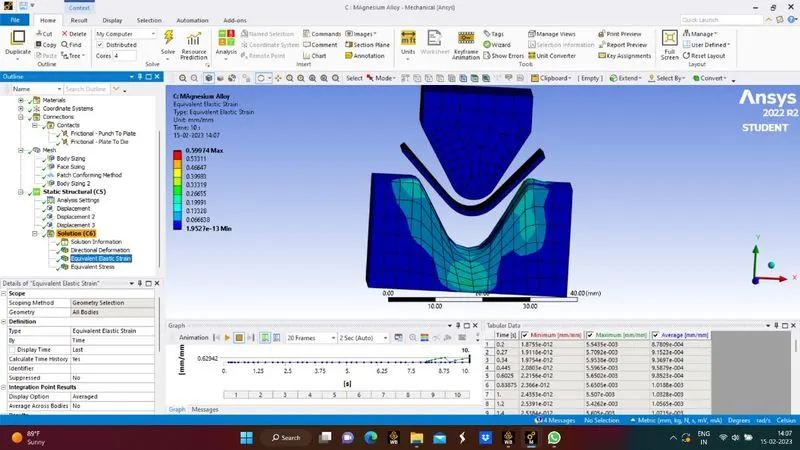
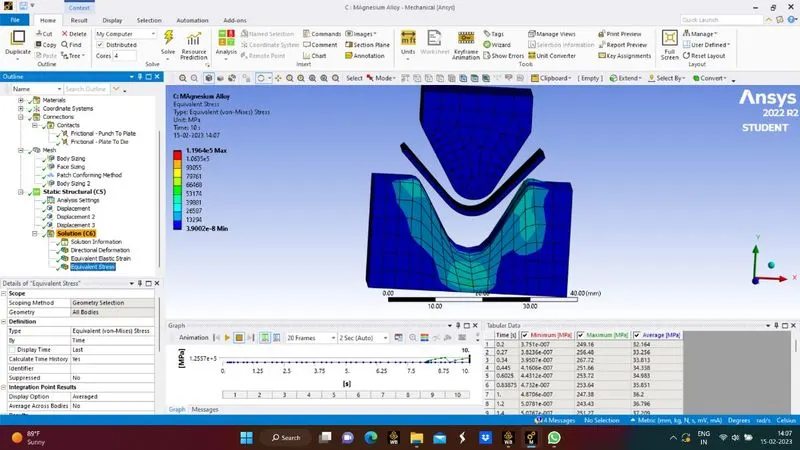
Magnesium Alloy
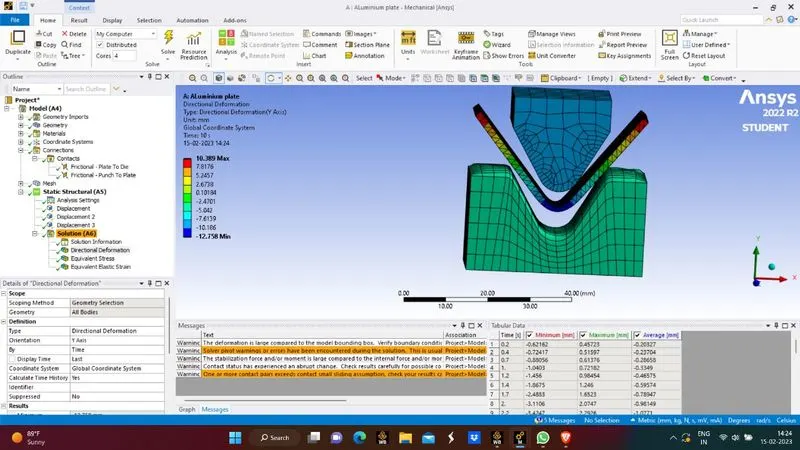
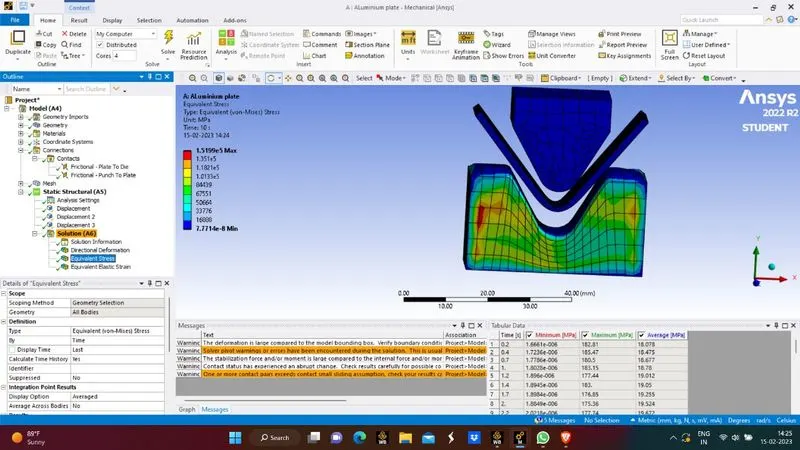
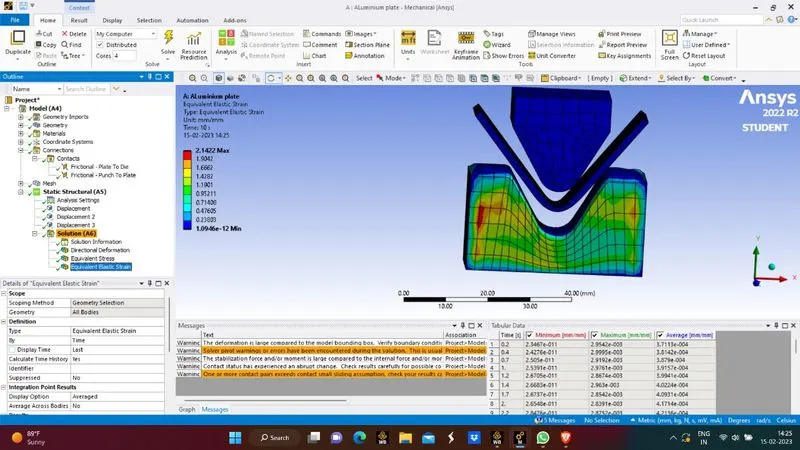
Case2_Friction Coefficient 0.19
Case3_Mesh Refinement(0.5mm)
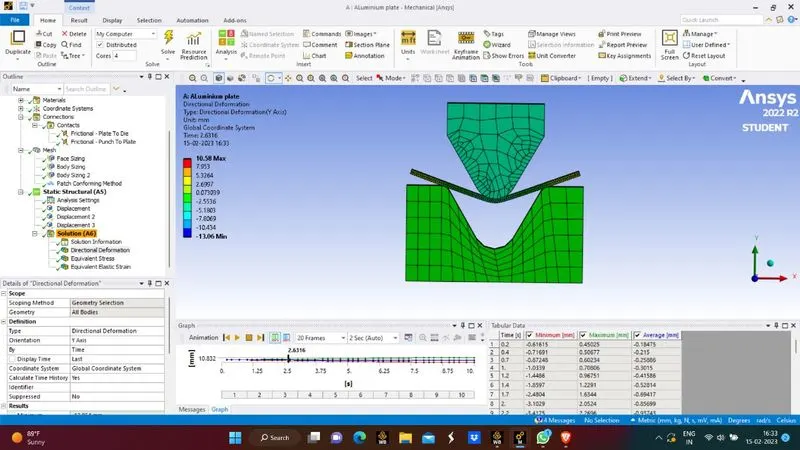
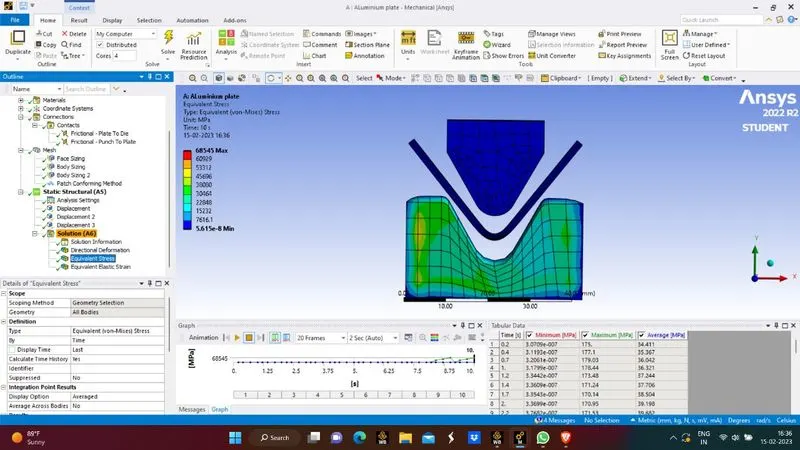
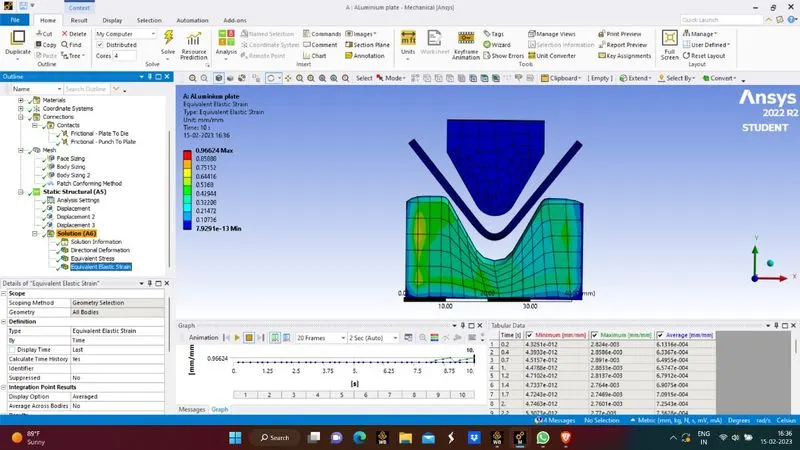
Tabular Data
| Case | Directional Deformation(mm) | Equivalent Stress(MPa) | Equivalent Strain |
| Aluminium Alloy | 10.377 | 1.5225e5 | 2.1459 |
| Copper Alloy | 3.6971 | 1.1966e5 | 0.59927 |
| Magnesium Alloy | 2.5068 | 1.1964e5 | 0.59974 |
| Case | Directional Deformation(mm) | Equivalent Stress(MPa) | Equivalent Strain |
| Aluminium Alloy(0.1 Co-eff) | 10.377 | 1.5225e5 | 2.1459 |
| Aluminium Alloy(0.19 Co-eff) | 10.389 | 1.5199e5 | 2.1422 |
| Aluminium Alloy(0.55 mm mesh) | 10.58 | 68545 | 0.96624 |
Conclusion:
- Sheet metal bending process is most effective in ductile material such as Aluminium, copper etc.
- This process also considers the plastic deformation. So the stress would be higher.
- Depending on the stress concentration and properties of material, bending accuracy can be different.
- From the comparison of CASE_1 & CASE_2, we can conclude that Aluminium Alloy with Coefficient of friction 0.19 give better results than Aluminium Alloy 1199. Because it has higher Young’s Modulus and it can give Elastic-Plastic behavior.
- Also from the comparison of CASE_1 and CASE_3, we can observe that Aluminium Alloy gives better results as there is a higher stress. We can see perfect stress distribution and good bending behavior due to refined mesh.