Week 3 Sheet metal Bending challenge
| Case 1:Aluminium Alloy 1199( mentioned in the course video), Copper Alloy NL, and Magnesium Alloy NL. Find out the Equivalent stress, Equivalent elastic strain, and Total Deformation in the Y direction and compare the results for the three materials. | |||
| STRESS | 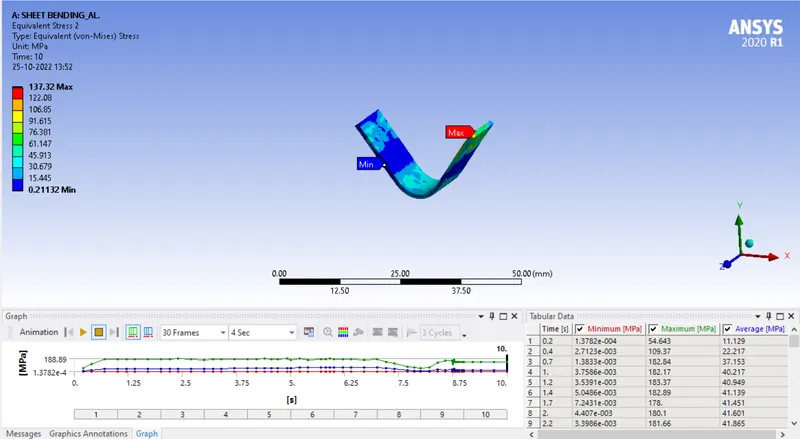 |
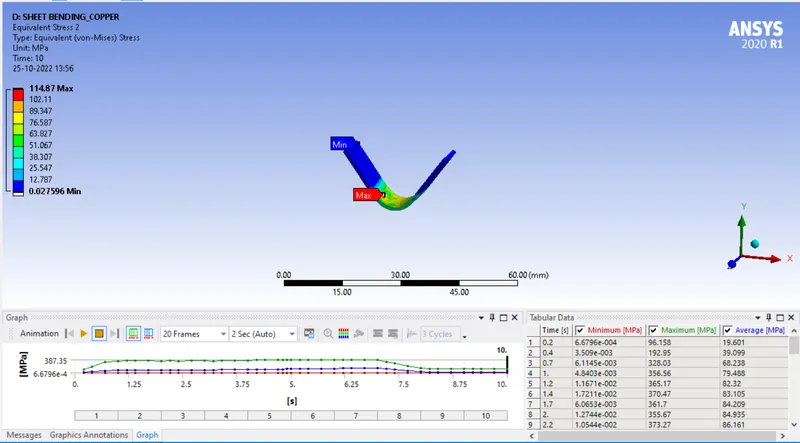 |
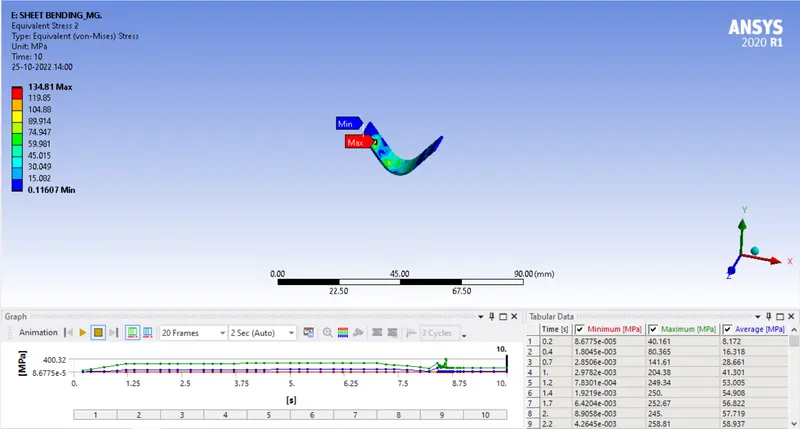 |
| STRAIN | 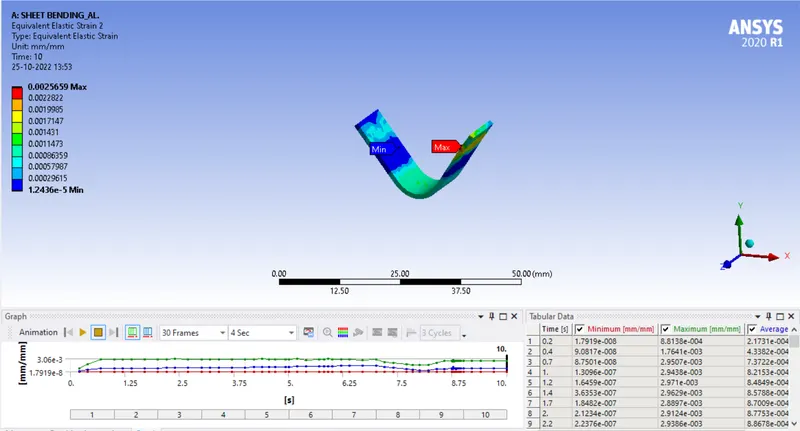 |
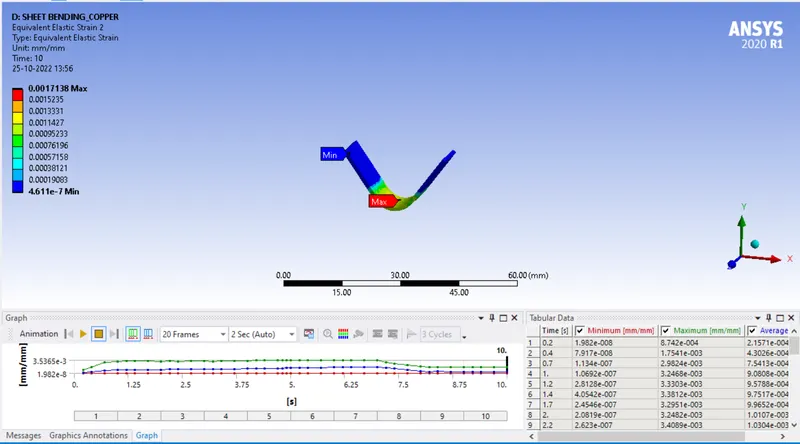 |
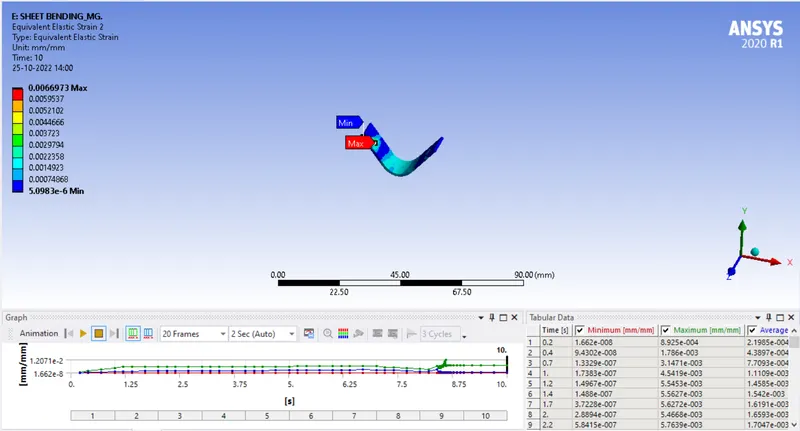 |
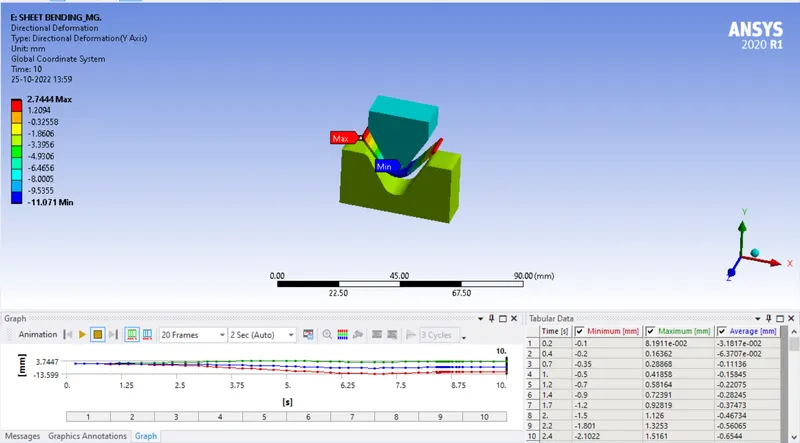
| DIR. DEFORMATION | 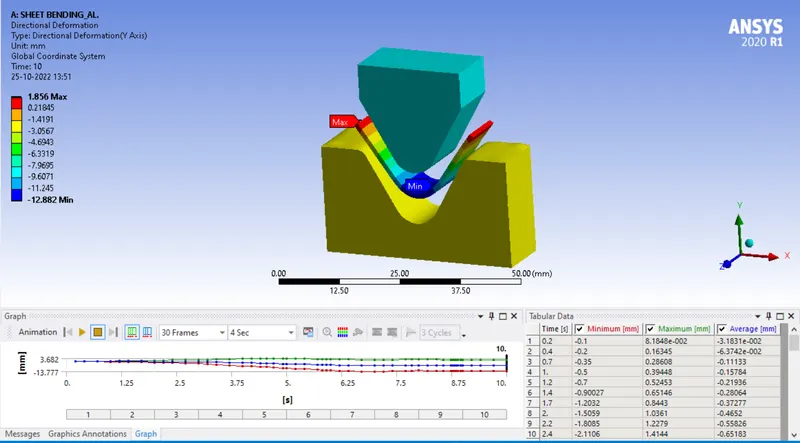 |
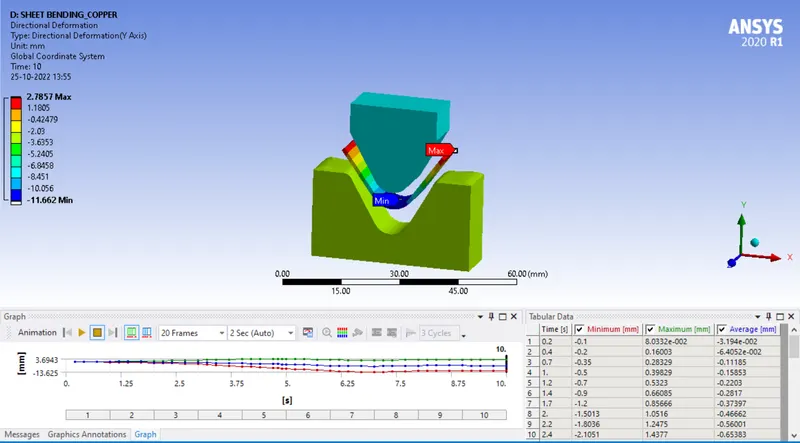 |
 |
|
Conclusion:
|
|||
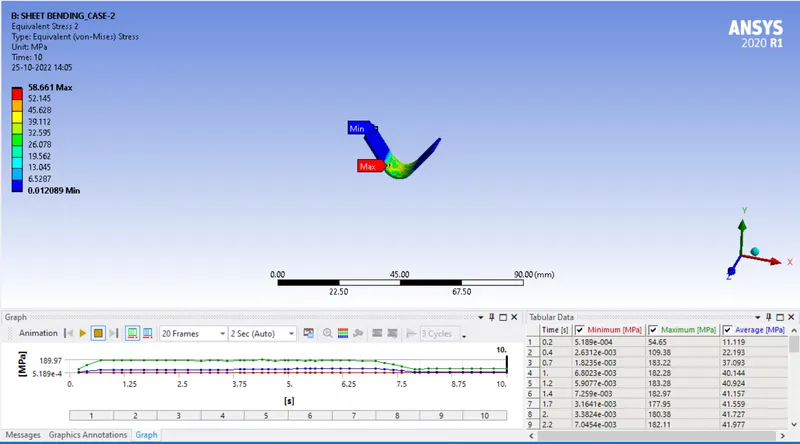
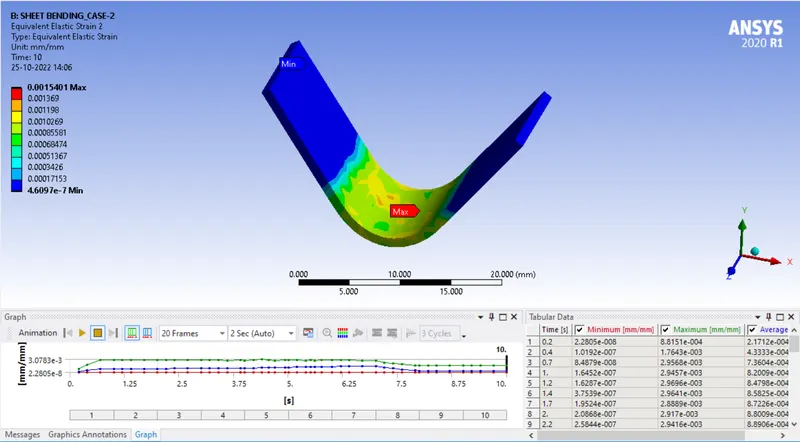
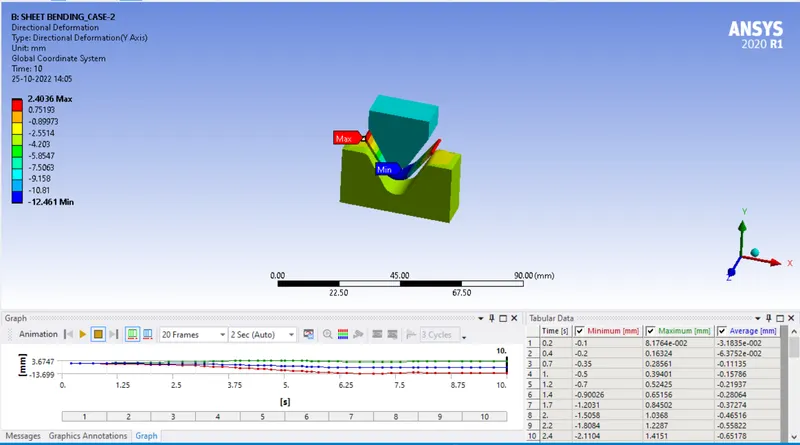
| Case 2: With the material as Aluminium Alloy, change the friction coefficient to 0.19 and run the analysis as mentioned in Case 1. Compare the results with that in case 1. | |||
 |
 |
 |
|
| Conclution: As the frictional coefficient is reduced the Stress in the AL. sheet is decreased drastically as compaired to Case 1. | |||
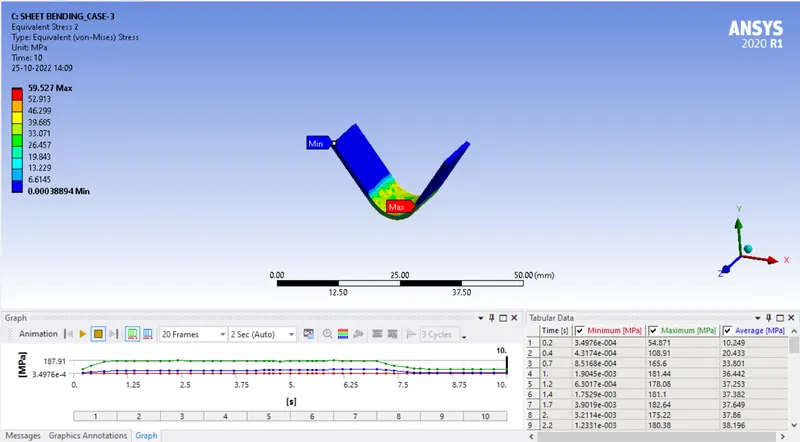
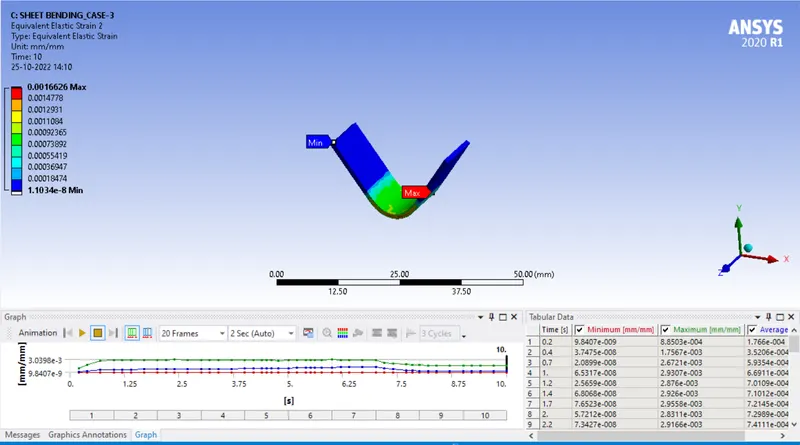
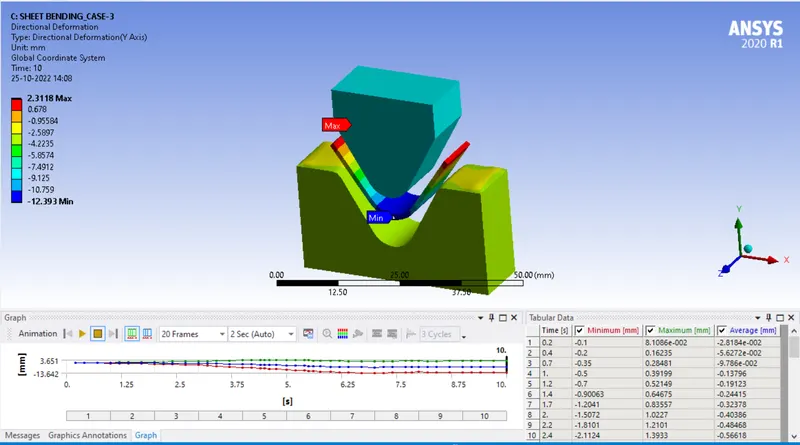
| Case 3: Refine the mesh on the plate such that it doesn't cross the academic limit. With Aluminium alloy as material, run the analysis as in Case 1 and compare the results. | |||
 |
 |
 |
|
| Conclution: In case 1 the mesh element size is considered to be 1mm and in case 3 the mesh element size is taken 0.75 mm and it is cleared that if the element size is reducer by 25% of case one more refine and accurate results are generated which are similar to case 2. | |||