Week 3 Sheet metal Bending challenge
Sheet metal Bending challenge
AIM :
Case 1:Aluminium Alloy 1199( mentioned in the course video), Copper Alloy NL, and Magnesium Alloy NL. Find out the Equivalent stress, Equivalent elastic strain, and Total Deformation in the Y direction and compare the results for the three materials.
PROCESS:
- DOWNLOAD THE MODEL AND inport into ansys geometry in static structural
- Click on engineering data and add the given materials
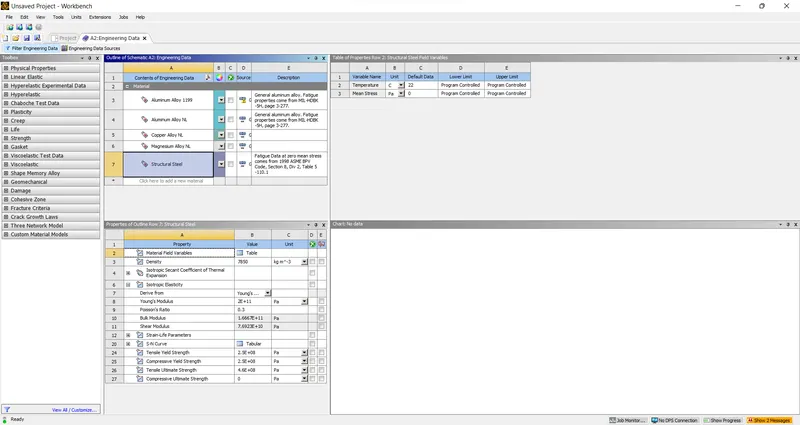
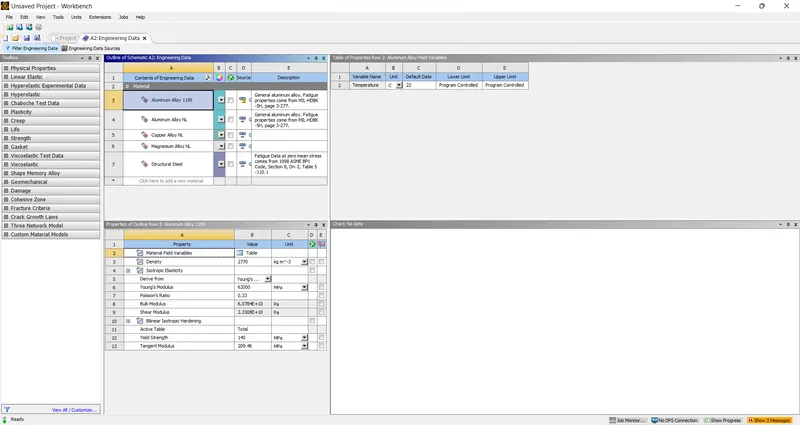
- Modify the available material aluminium to 1199 as per given data
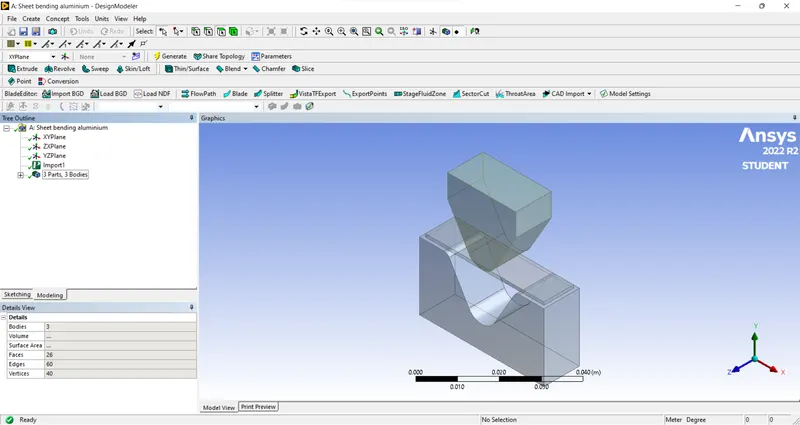
- Open the geometry to check it onces
- Update & open the model
- Click on geometry and on sheet change material it to aluminium 1199
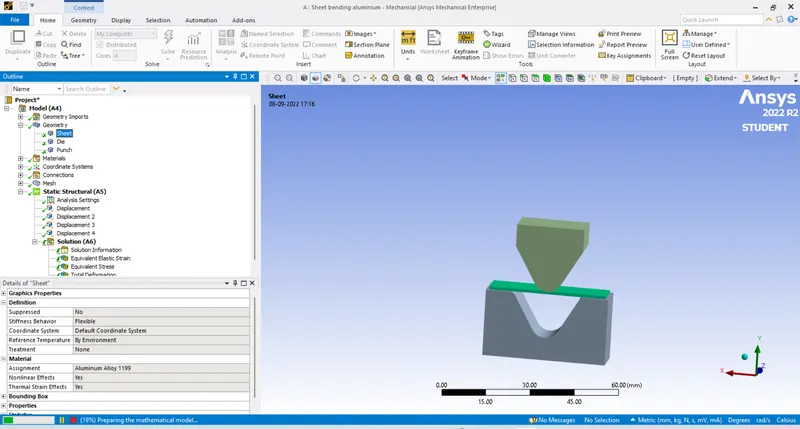
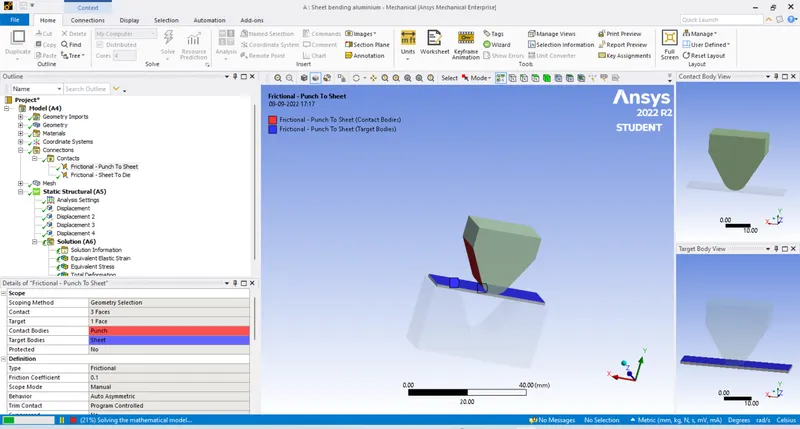
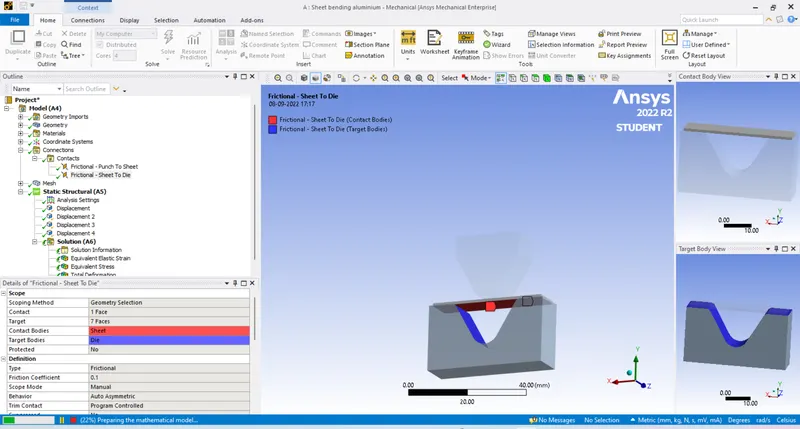
- Make the contacts between
- Punch & sheet
- Sheet & Die
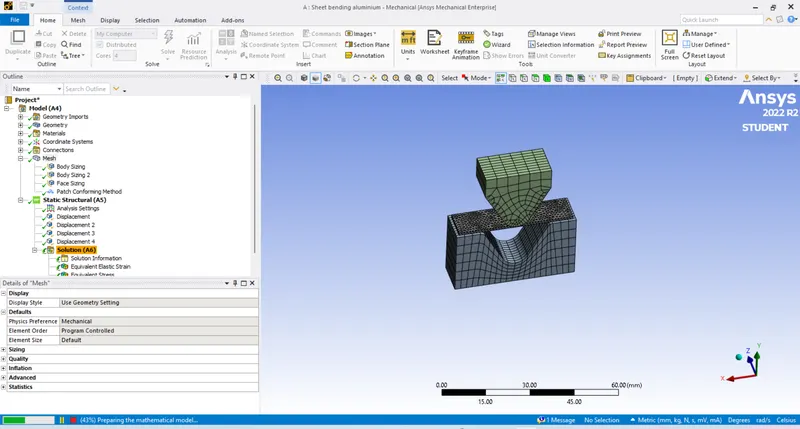
- Check the mesh & provide body facing where ever required
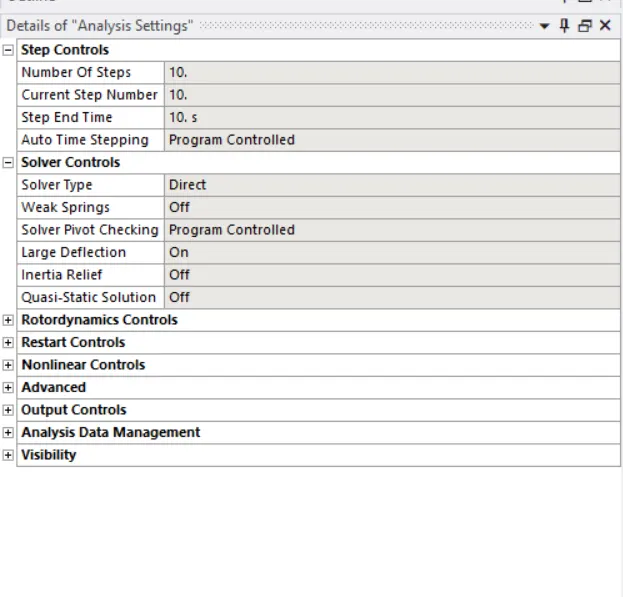
- create time steps
- Add the Equivalent stress, Equivalent elastic strain, and Total Deformation analysis into solution
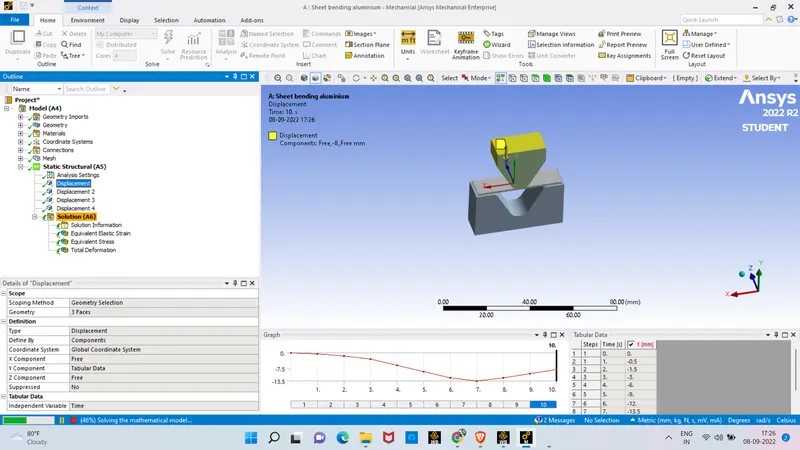
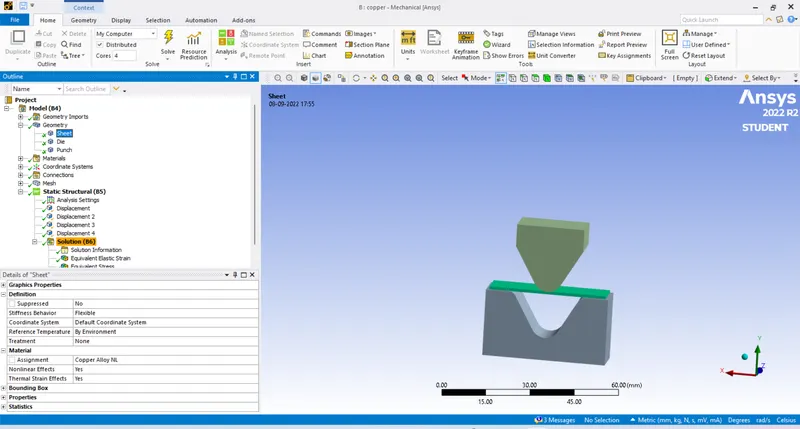
- For the other two change materials by duplicating into workbench
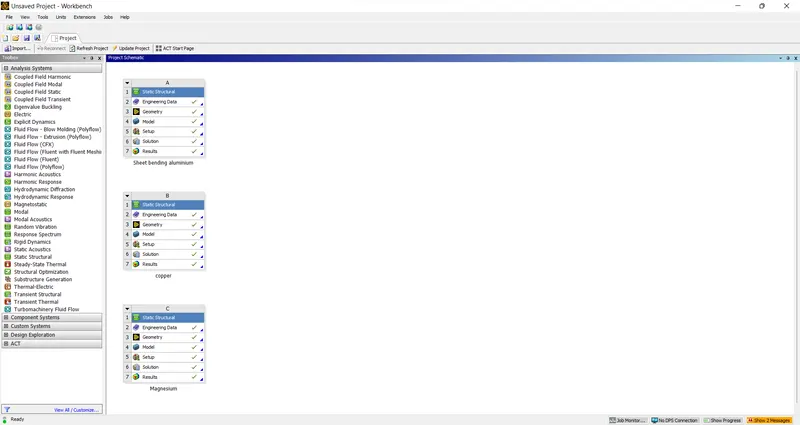
- Clear data and solve
Solutions:
Aluminium Alloy 1199
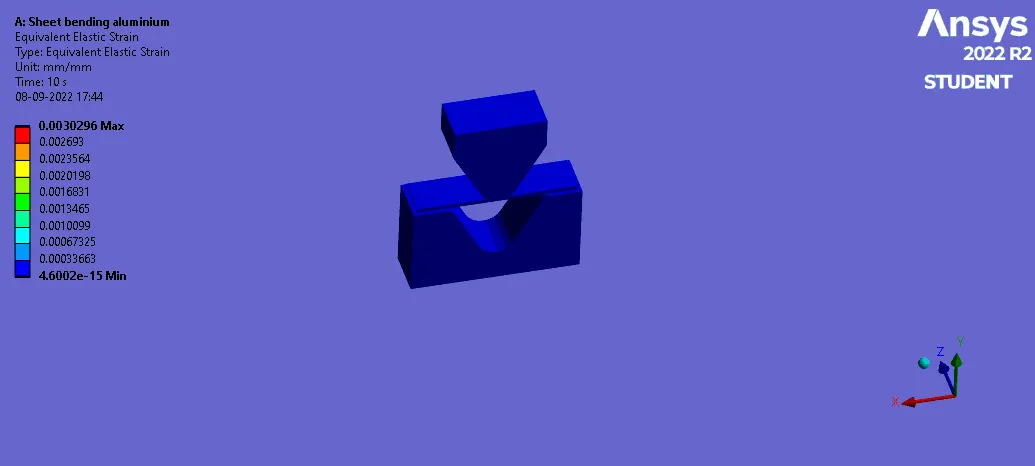
Equivalent elastic strain
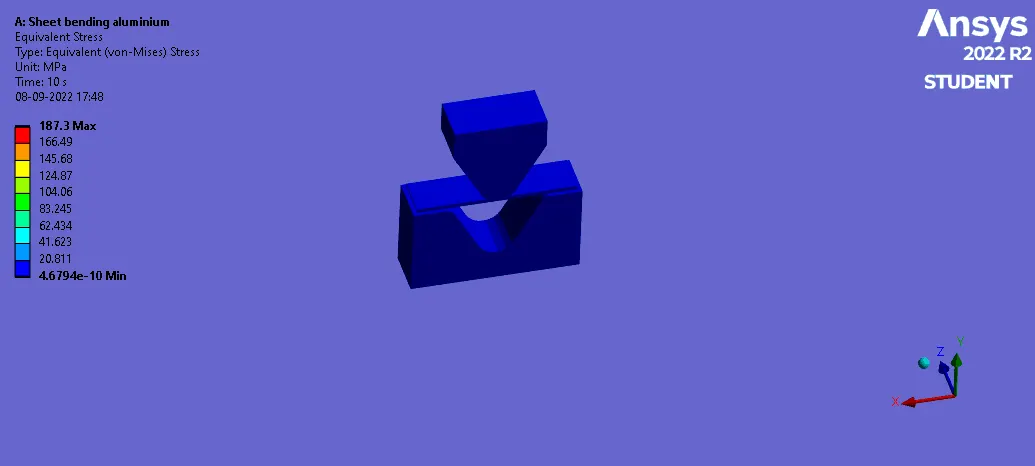
Equivalent stress
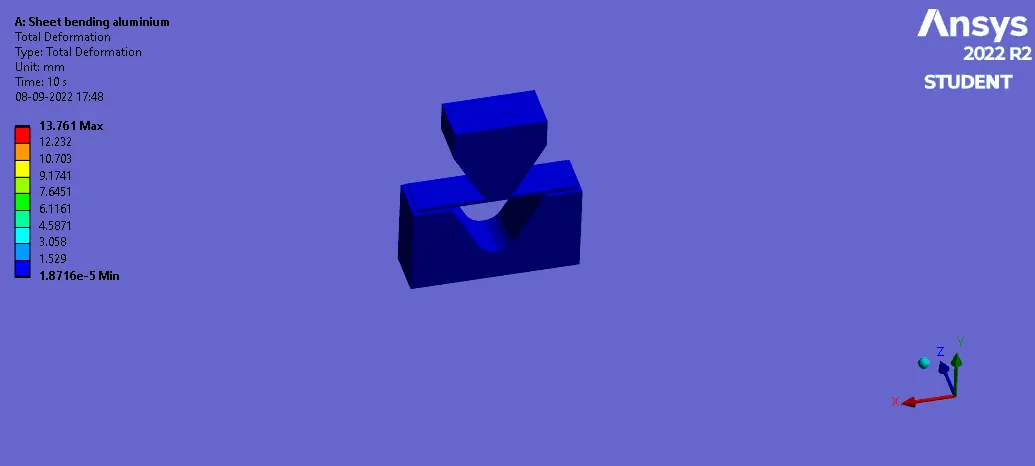
Total Deformation
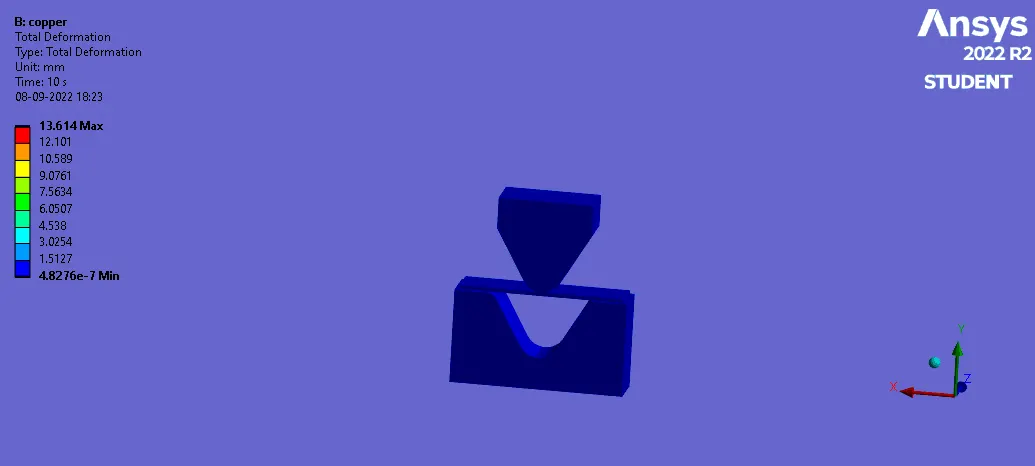
Copper Alloy NL
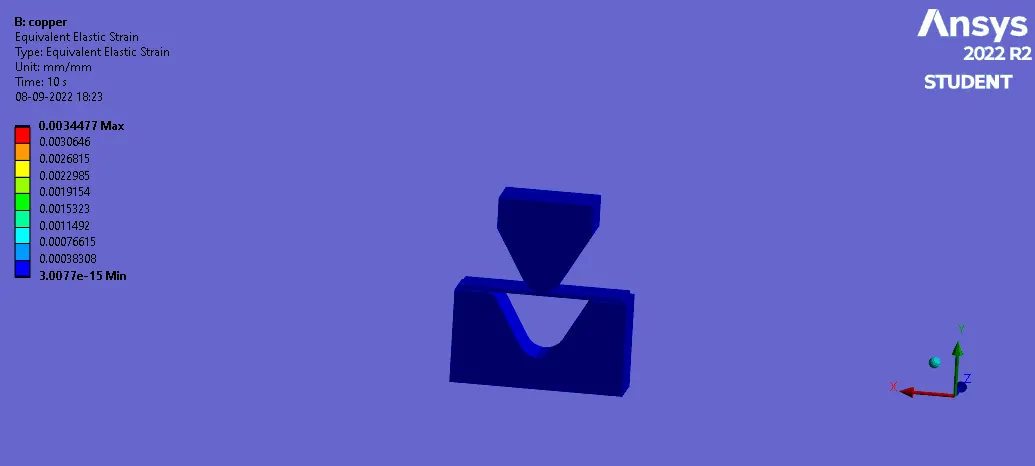
Equivalent elastic strain
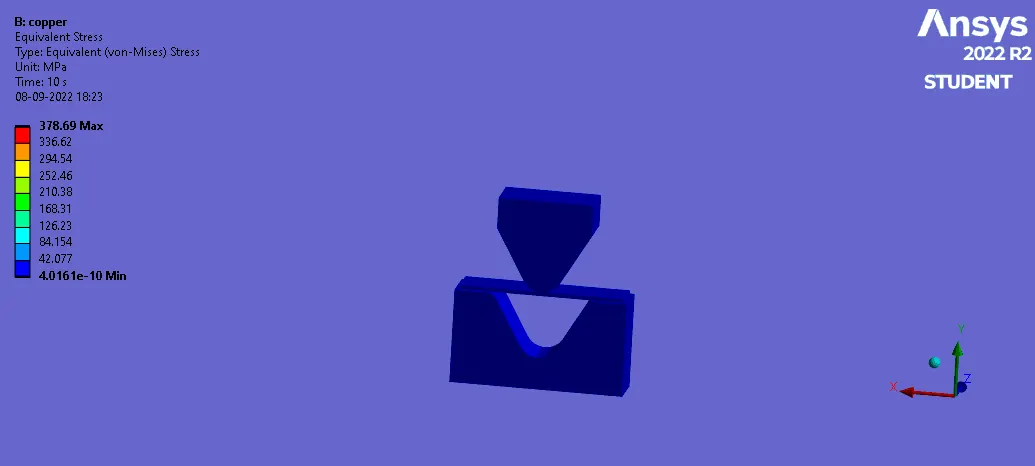
Equivalent stress
Total Deformation
Magnesium Alloy NL
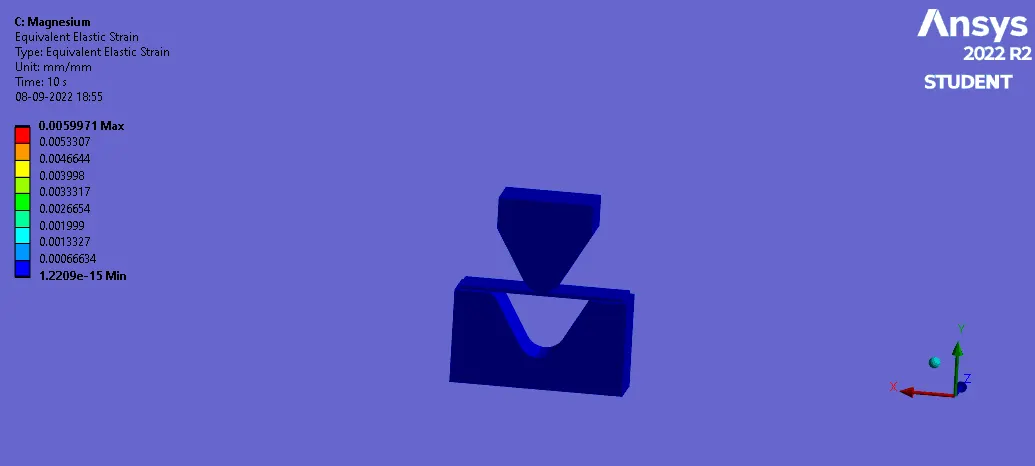
Equivalent elastic strain
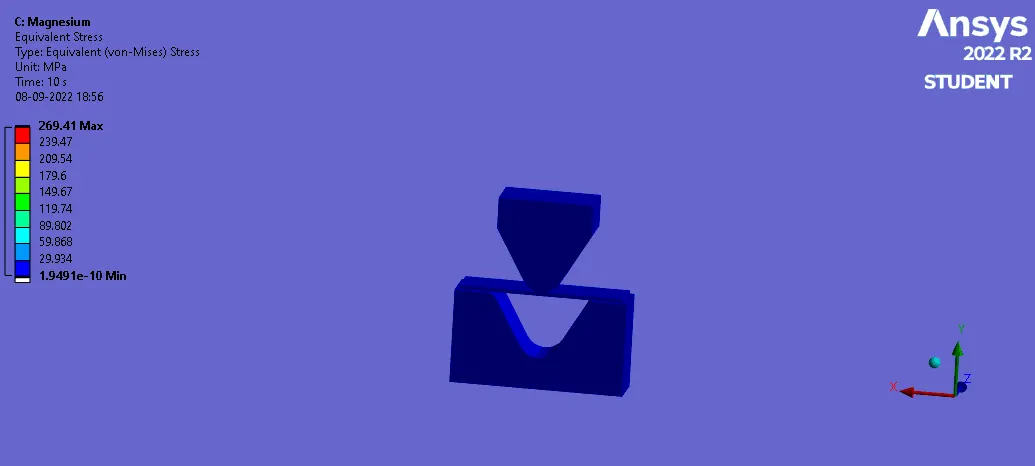
Equivalent stress
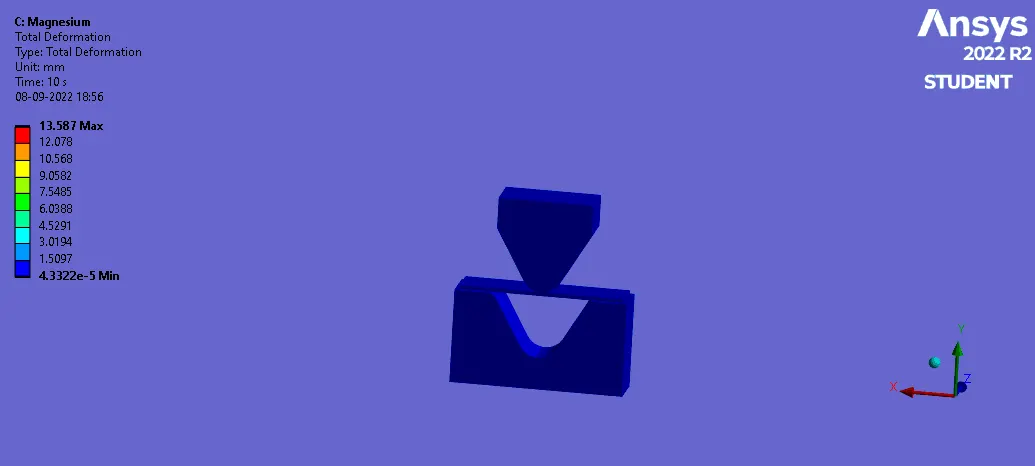
Total Deformation
When the load is applied in Y-Direction We observed
| Aluminium Alloy 1199 | Copper Alloy NL | Magnesium Alloy NL | |
| Equivalent elastic strain | 0.0030296 | 0.0034477 | 0.0059971 |
| Equivalent stress | 187.3MPa | 378.69MPa | 269.41MPa |
| Total Deformation | 13.761mm | 13.614mm | 13.587mm |
By observing the above results:
- The Equivalent elastic strain of Aluminium Alloy 1199 is lower than copper & Magnesium
- The Equivalent stress of Aluminium Alloy 1199 is lower than Magnesium & copper
- Total Deformation of Magnesium is lower than copper & Aluminium Alloy 1199
We can conclude by results that stress difference is more while comparing so it is best to go for Aluminium Alloy 1199 than Magnesium & copper as it will be more safer in bending
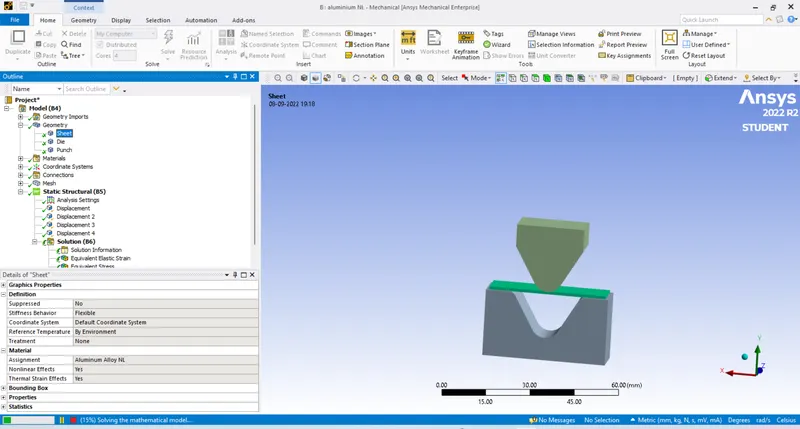
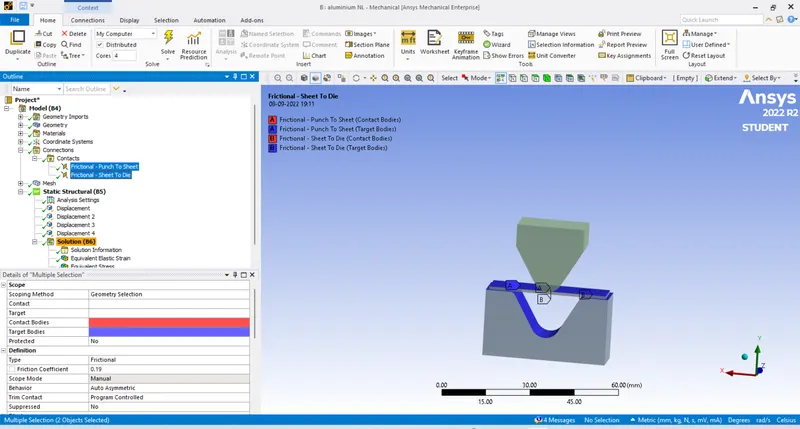
Case 2:With the material as Aluminium Alloy, change the friction coefficient to 0.19 and run the analysis as mentioned in Case 1. Compare the results with that in case 1.
- For this case duplicate the aluminium as the data is same and delete aluminium 1199 if you want
- In geometry change material for sheet as copper NL
- In contacts frictional Change coefficient as 0.19
- Clear the solution & go for solve
- Results
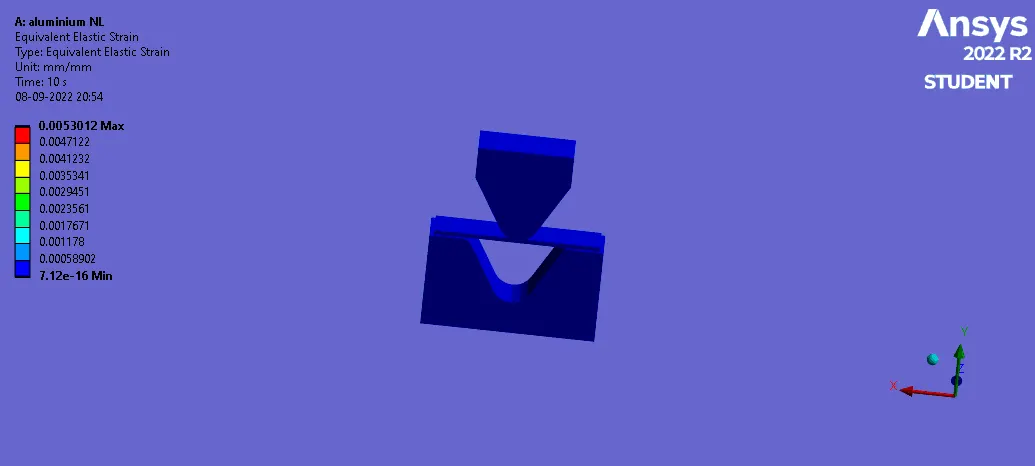
- Equivalent elastic strain
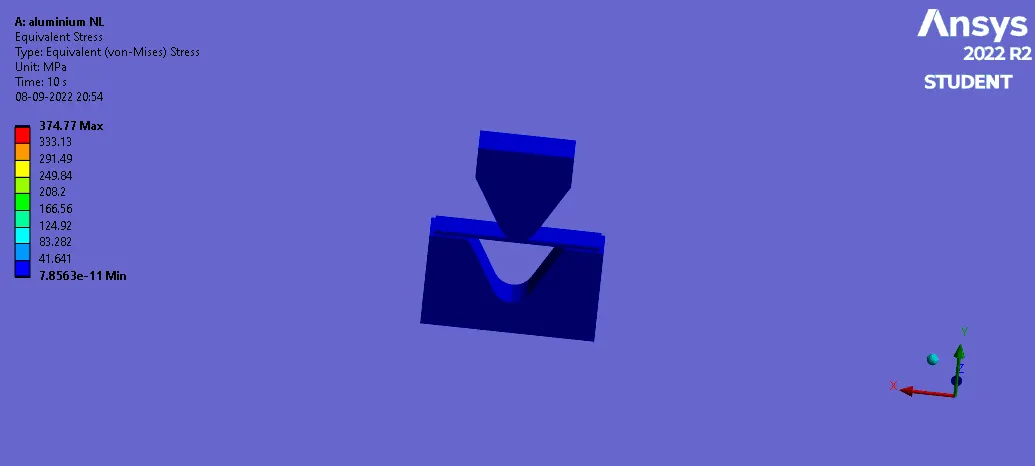
- Equivalent stress
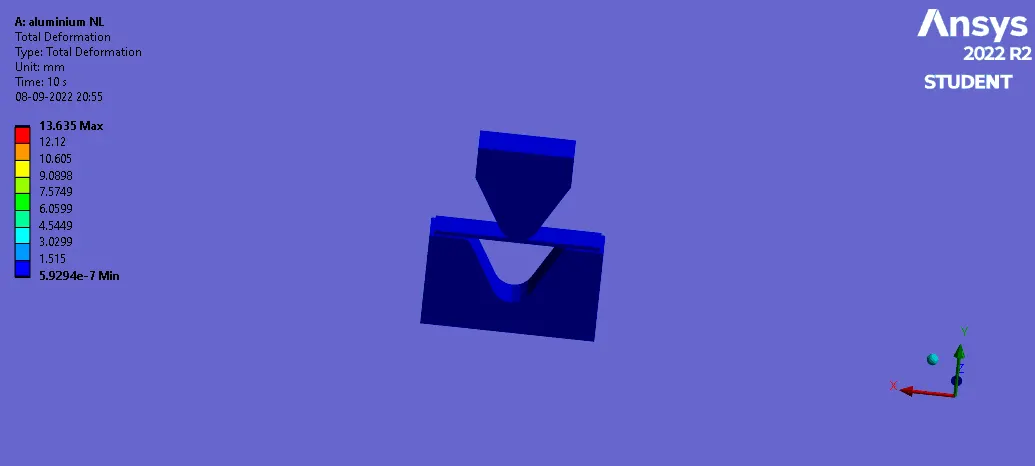
- Total Deformation
COMPARE
| Aluminium Alloy 1199 | Aluminium Alloy, friction coefficient to 0.19 | |
|
0.0030296 | 0.0053012 |
|
187.3MPa | 374.77MPa |
|
13.761mm | 13.653mm |
By observing the above results:
- The Equivalent elastic strain of Aluminium Alloy 1199 is lower than Aluminium Alloy, friction coefficient to 0.19
- The Equivalent stress of Aluminium Alloy 1199 is lower than Aluminium Alloy, friction coefficient to 0.19
- The Total Deformation of Aluminium Alloy, friction coefficient to 0.19 is lower than Aluminium Alloy 1199
We can conclude that For more safer we prefer lower Equivalent stress so, Aluminium Alloy 1199 is better at bending
Case 3: Refine the mesh on the plate such that it doesn't cross the academic limit. With Aluminium alloy as material, run the analysis as in Case 1 and compare the results.
- For this case duplicate the aluminium as the data is same and delete aluminium 1199 if you want
- add refinement in the mesh by selecting the sheet faces
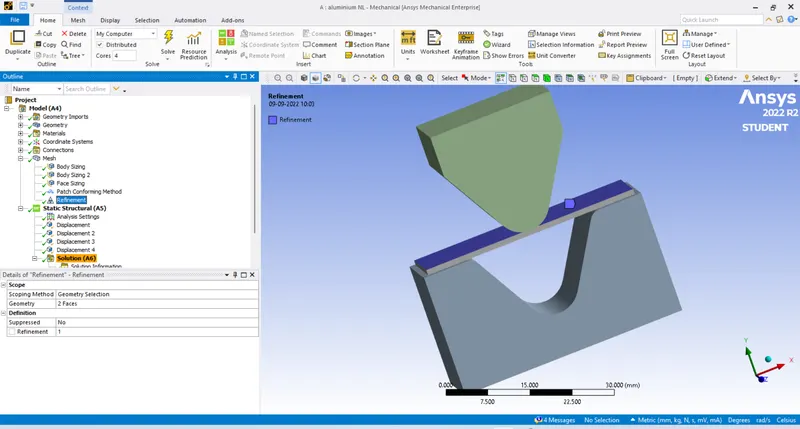
- CLEAR the solution and go for solve
- Solution:
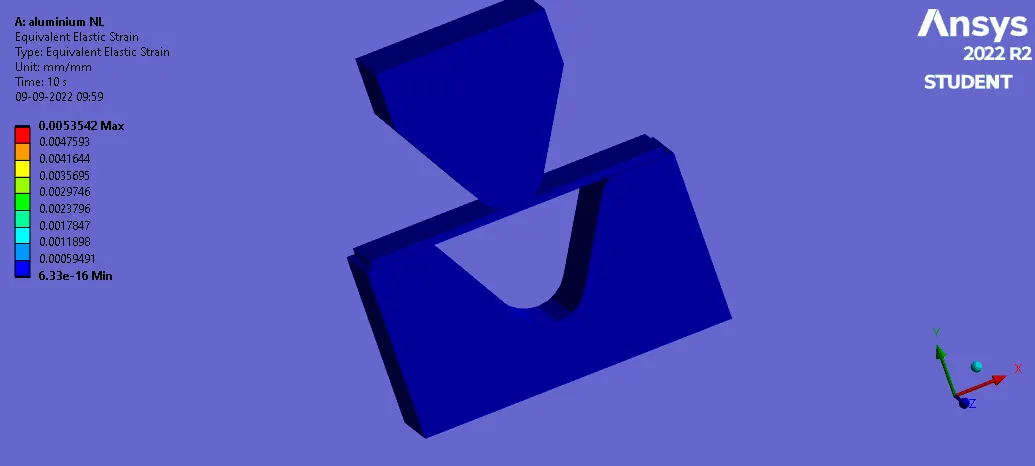
- Equivalent elastic strain
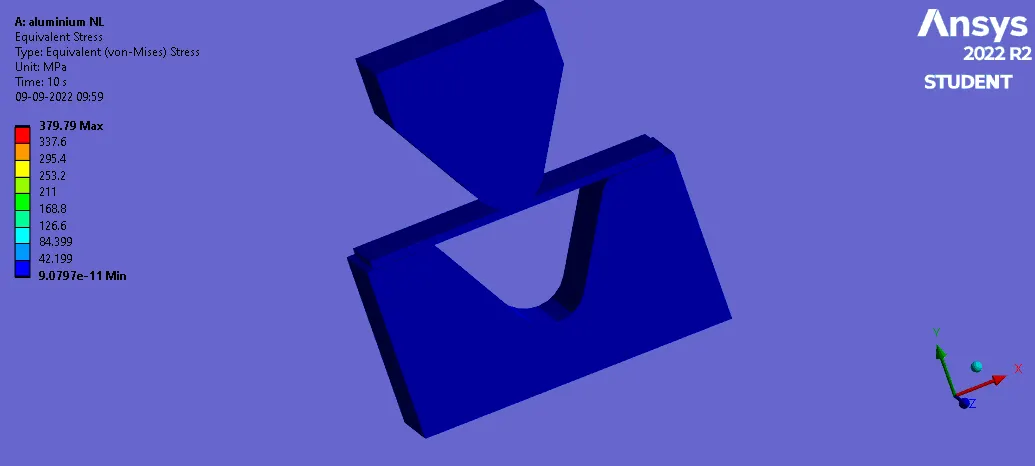
- Equivalent stress
- Total Deformation
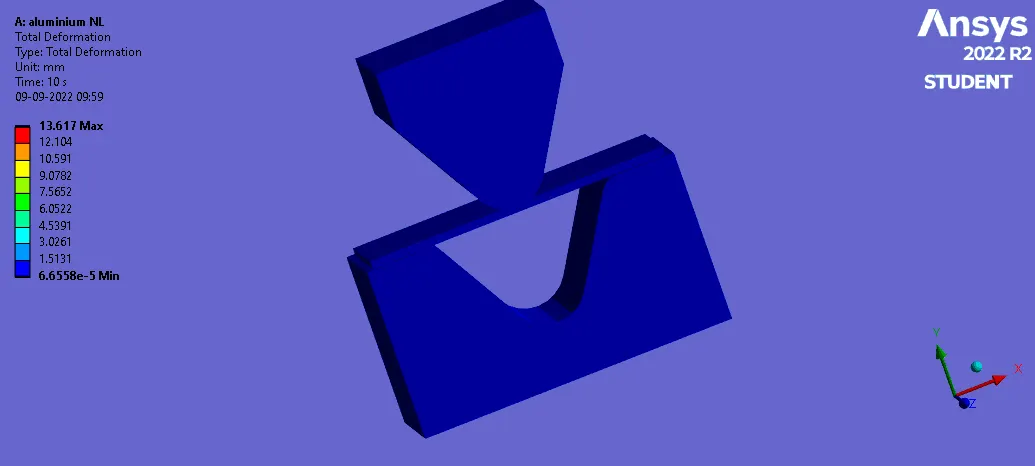
- Results
-
Aluminium Alloy Aluminium alloy with refined Equivalent elastic strain 0.0053012 0.0053542 Equivalent stress 374.77MPa 379.79MPa Total Deformation 13.653mm 13.617mm
By observing the above results:
- The Equivalent elastic strain of Aluminium Alloy is lower than Aluminium alloy with refined
- The Equivalent stress of Aluminium Alloy is lower than Aluminium Alloy with refined
- The Total Deformation of Aluminium Alloy is lower than Aluminium Alloy with refined
We can conclude that For more safer we prefer lower Equivalent stress so, Aluminium Alloy is better at bending