Week 3 Sheet metal Bending challenge
Aim: Performing sheet metal bending operation using structural analysis.
Objective:
- Carry out a static structural analysis to find Equivalent Stress, Directional Deformation and Equivalent Elastic Strain.
- We are using three different materials to perform sheet metal bending.
- Comparing the three results on the basis of the solution.
Procedure:
1) For sheet metal bending analysis, we use the static structural tools in the analysis system toolbox to define the geometry and other input parameters for the same.
2) In the engineering data we input the material and its properties. In this case, we are using three types of non-linear material and their properties are shown below.
Case 1: Aluminium Alloy 1199, Copper Alloy NL, and Magnesium Alloy NL. Find out the Equivalent stress, Equivalent elastic strain, and Total Deformation in the Y direction and compare the results for the three materials.
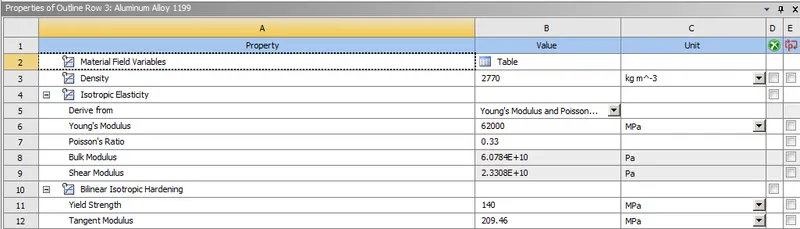
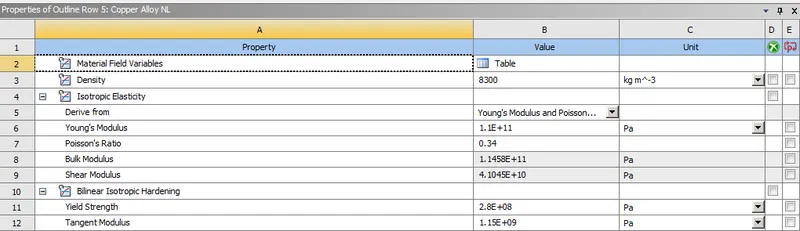
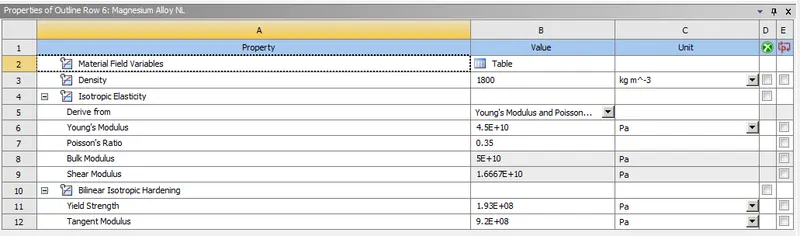
Case 2: With the material as Aluminium Alloy, change the friction coefficient to 0.19 and run the analysis as mentioned in Case 1. Compare the results with that in case 1.
Case 3: Refine the mesh on the plate such that it doesn't cross the academic limit. With Aluminium alloy as material, run the analysis as in Case 1 and compare the results.
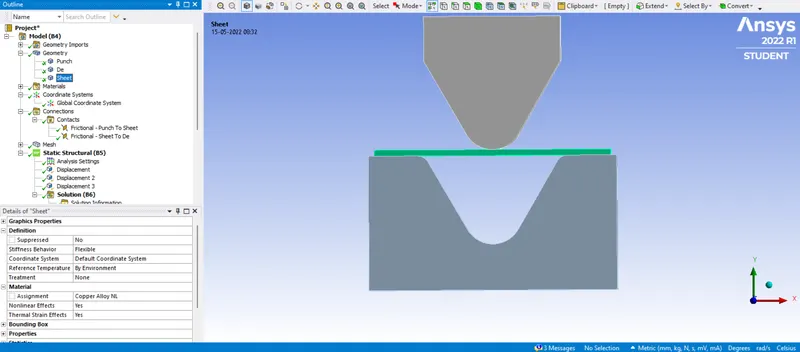
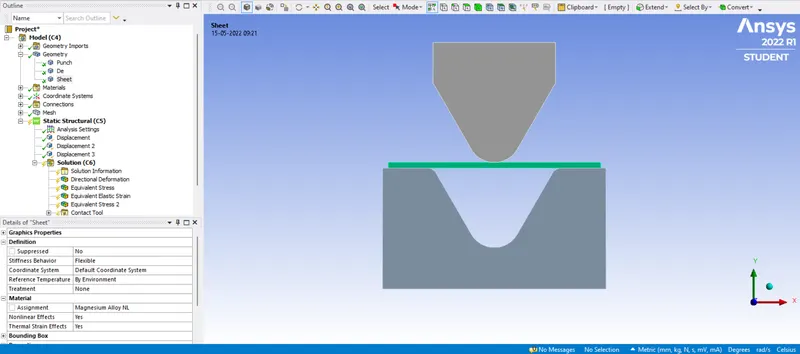
3) Verifying the geometry of the figure.
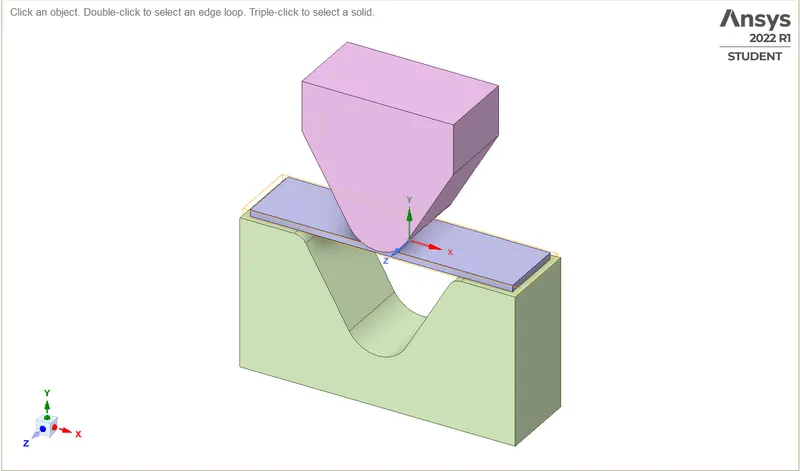
4) In the geometry of the model, the Punch and De are made up of Structural Steel metal. 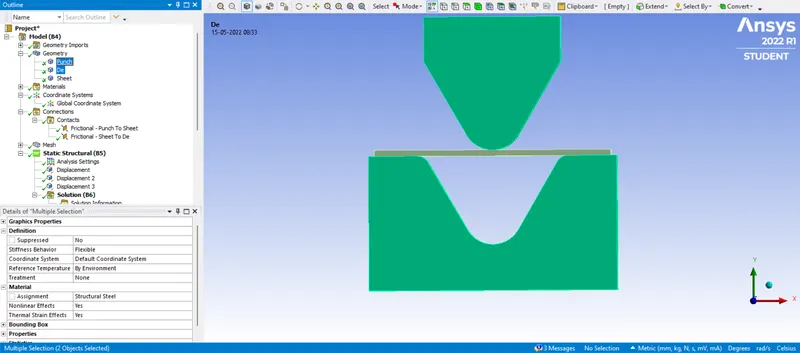
5) In connection, we have to define the contact faces of the geometry by selecting and deselecting contact or target bodies. In contacts under the connection tab, we define the type of contact as frictional contact.
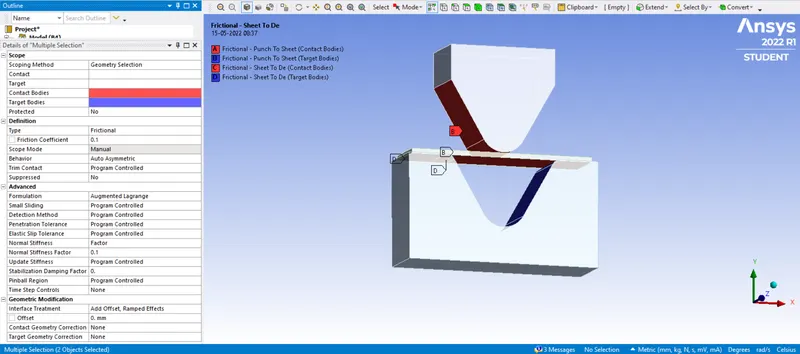
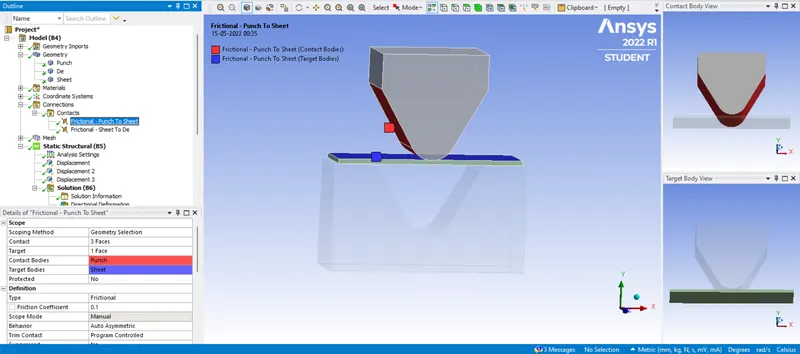
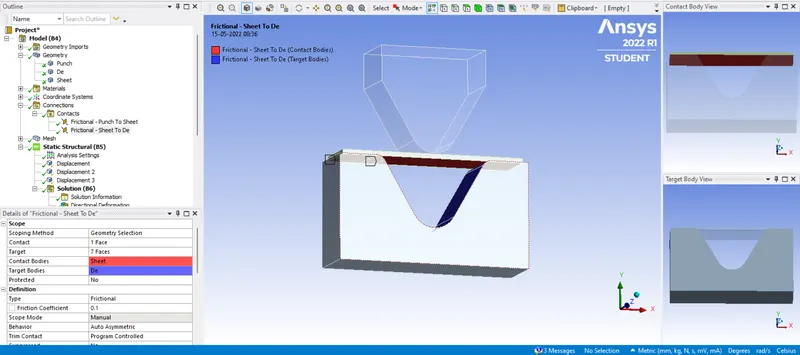
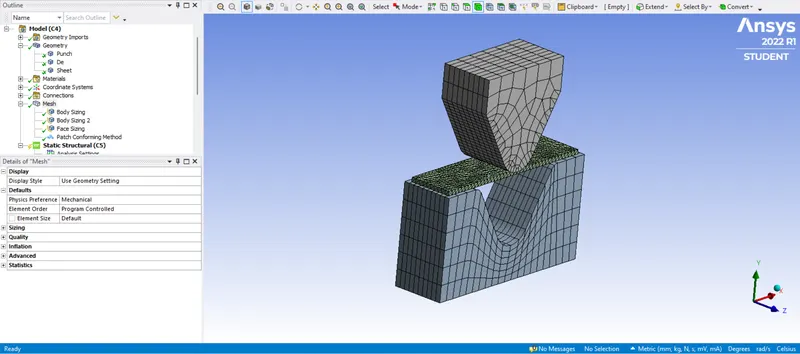
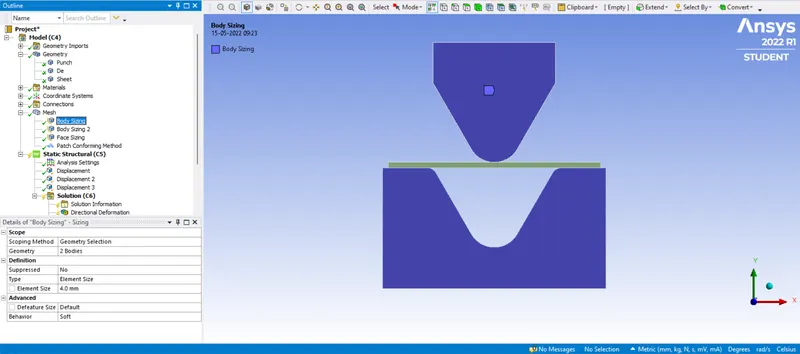
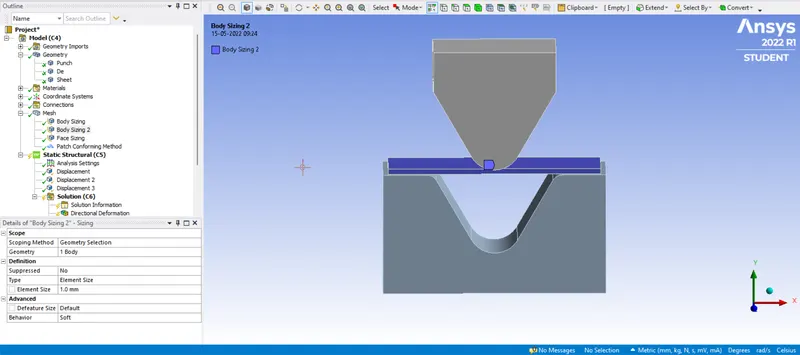
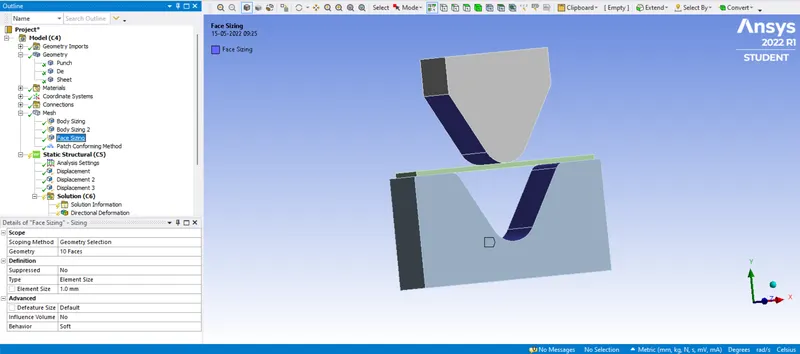
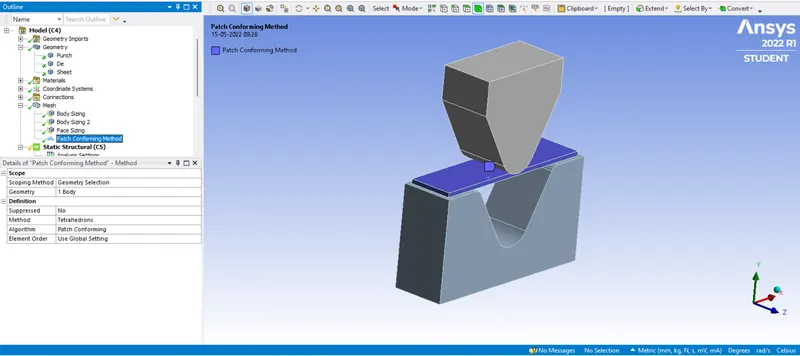
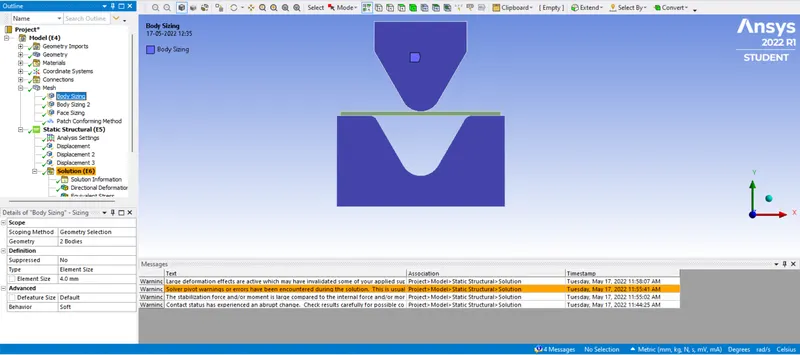
6) By opening the modelling tab, we mesh the geometry with element size as default and finer mesh size where contacts are present. Generating the mesh thereafter by right-clicking on the Mesh icon. Finer mesh is used for the sheet which is going to get deformed and wherever the sheet comes in contact.
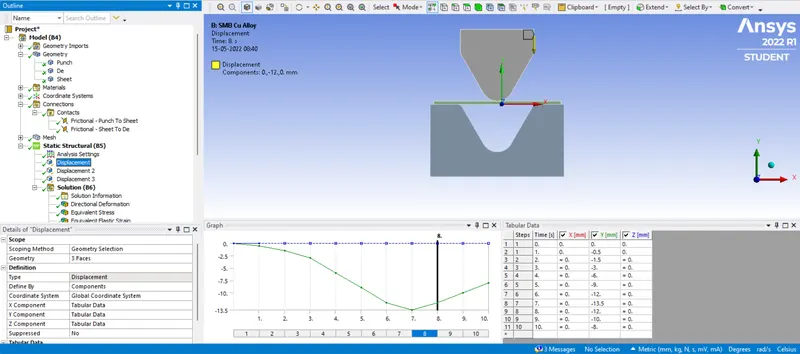
7) We open the analysis setting where we define the displacements
Displacement 1: We select the top portion of the punch in the negative Y-axis and input the values in mm
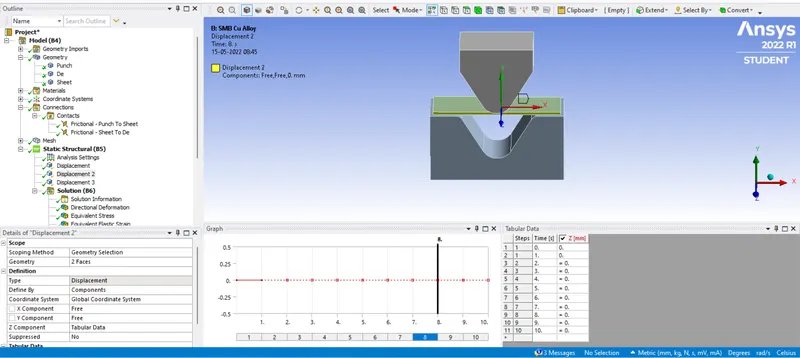
Displacement 2: Here we select the face of the plate and define displacement 0 on Z-axis and keep free in the X and Y direction.
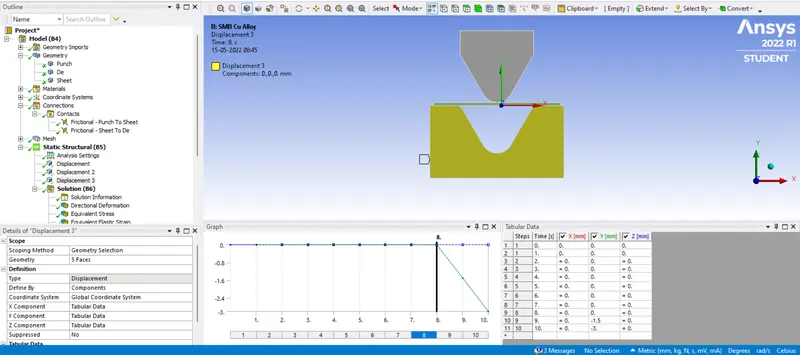
Displacement 3: After punching the sheet into the die, the die is pulled down a bit.
Case 1: Three different materials
Aluminium Alloy 1199:
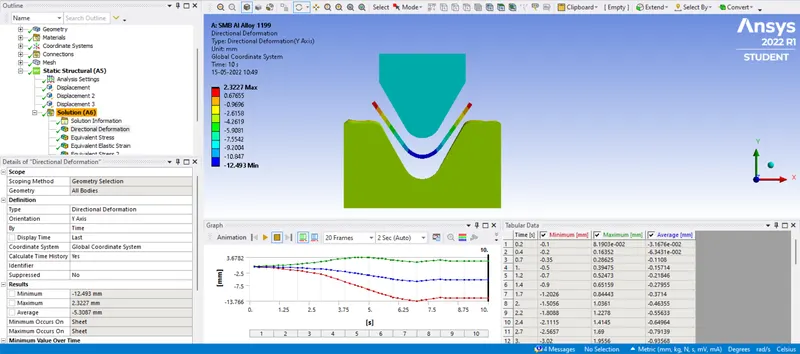
The sheet is selected as Al Alloy 1199
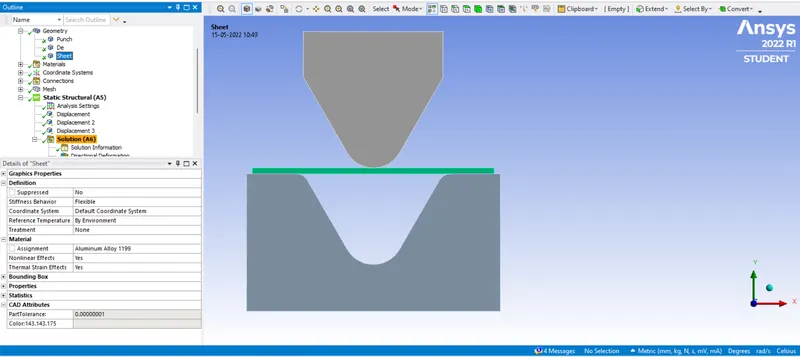
a) Directional Deformation in Y-axis:
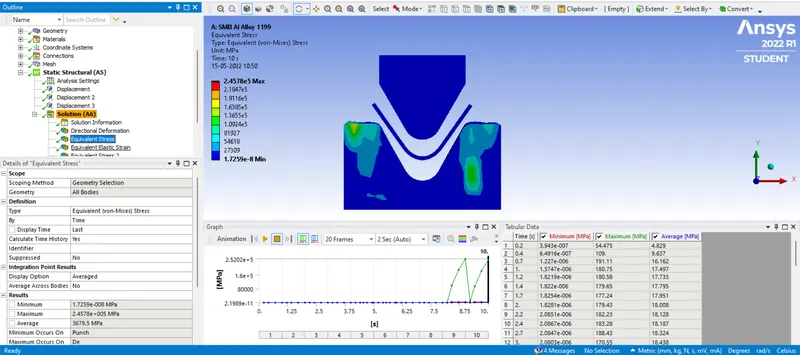
b) Equivalent Stress:
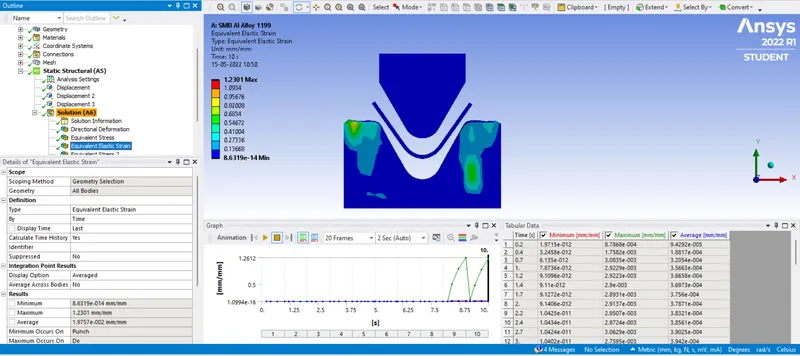
c) Equivalent Elastic Strain:
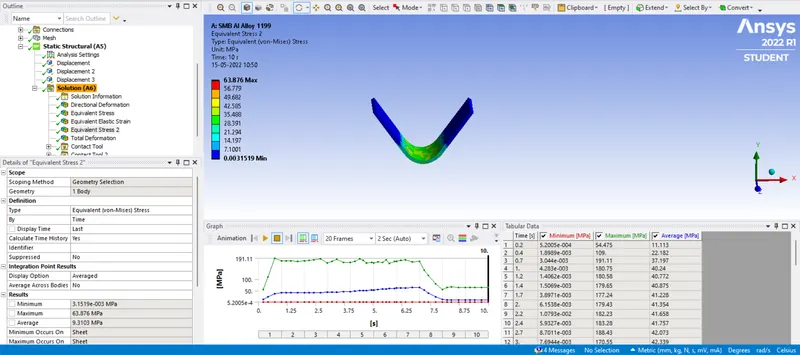
d) Equivalent Stress of the sheet:
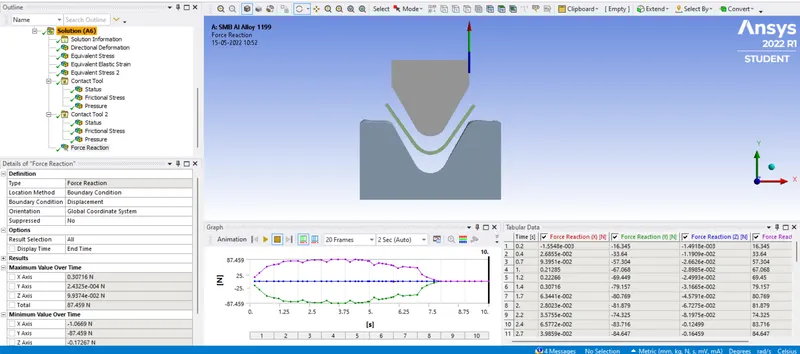
e) Force Reaction:
Copper Alloy:
The sheet is selected as Cu Alloy
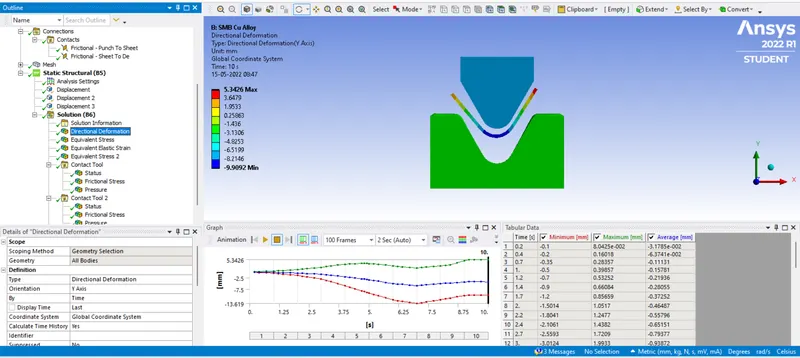
a) Directional Deformation in Y-axis:
b) Equivalent Stress: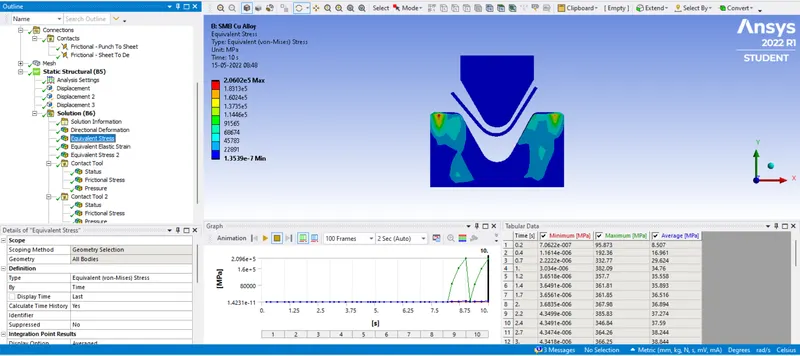
c) Equivalent Elastic Strain:
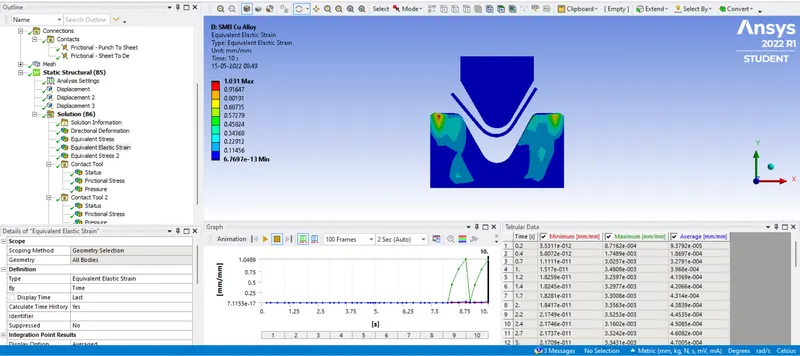
d) Equivalent Stress of the sheet:
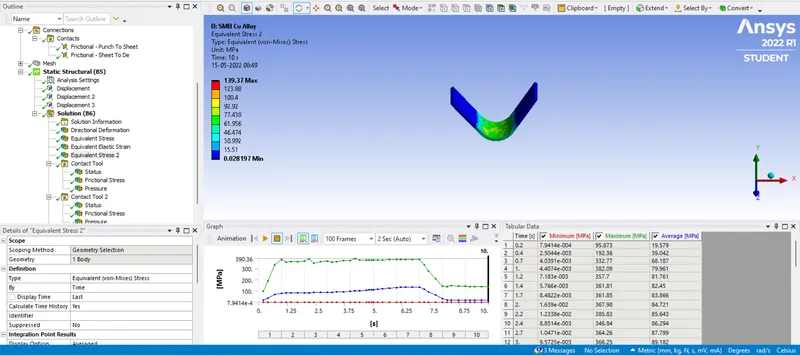
e) Force Reaction:
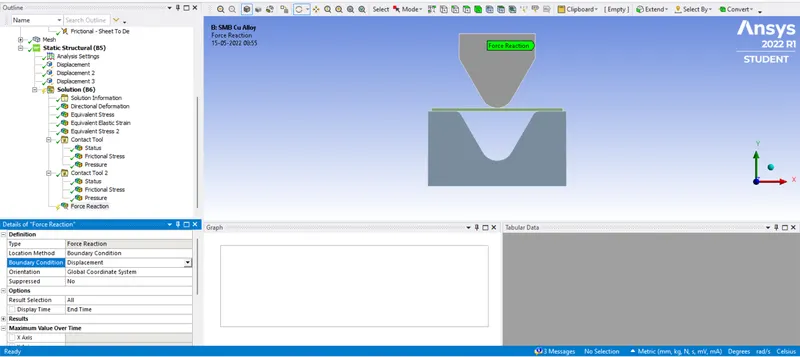
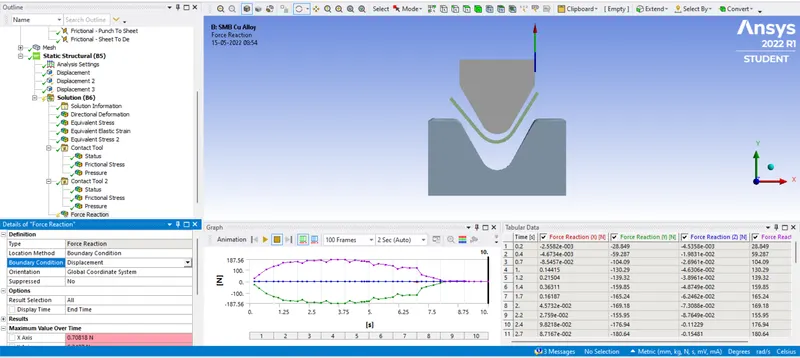
Magnesium Alloy:
The sheet is selected as Mg Alloy
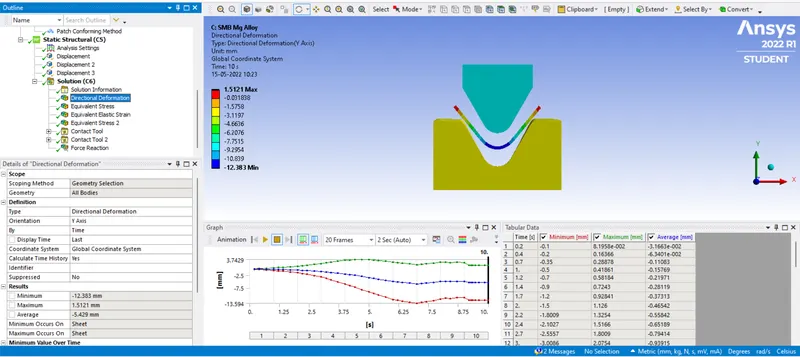
a) Directional Deformation in Y-axis:
b) Equivalent Stress: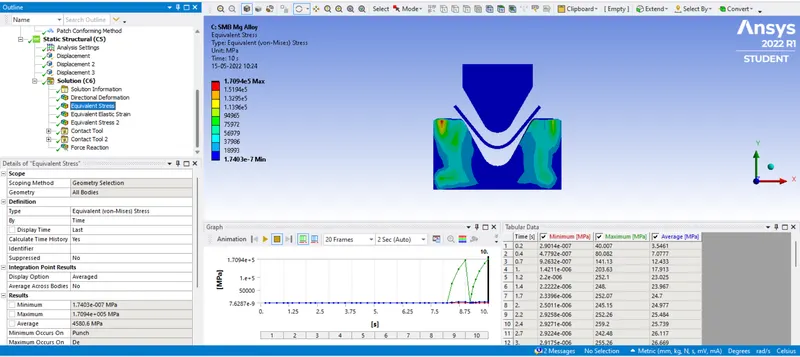
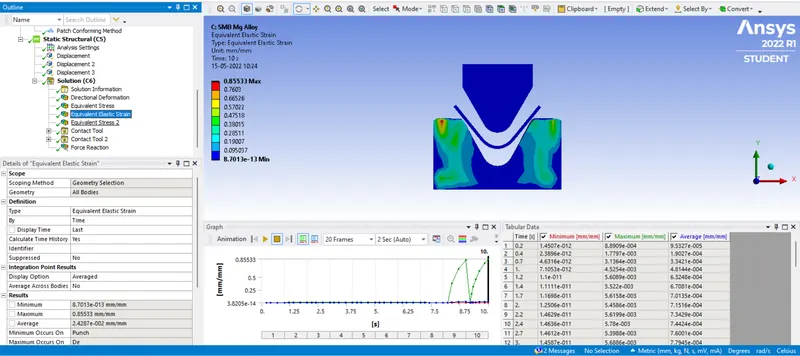
c) Equivalent Elastic Strain:
d) Equivalent Stress of the Sheet: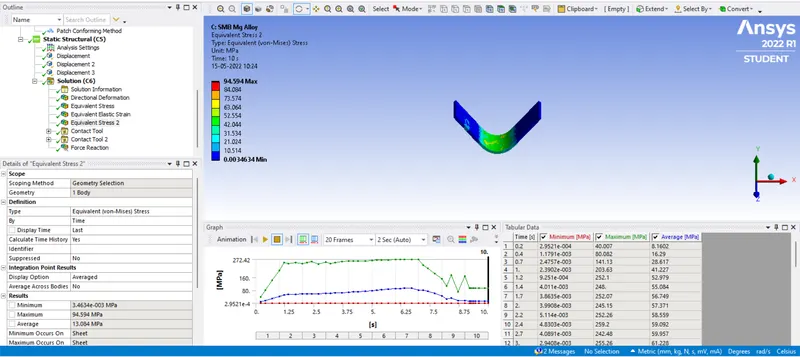
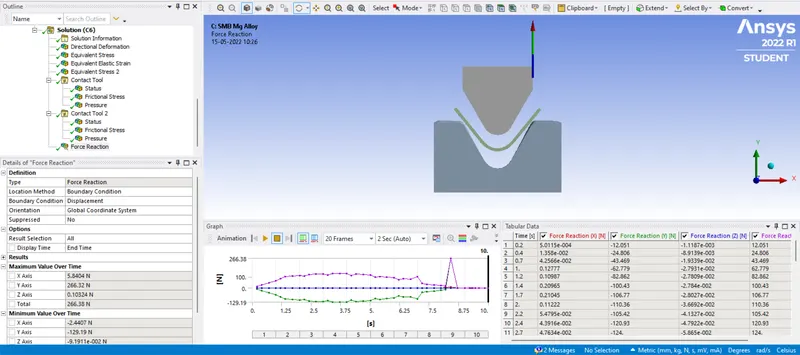
e) Force Reaction:
Case 2:
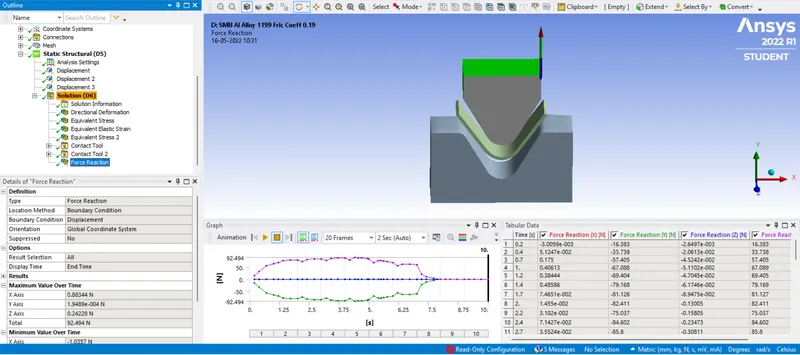
Al Alloy with Frictional Coefficient 0.19
The sheet is selected as Al alloy 1199
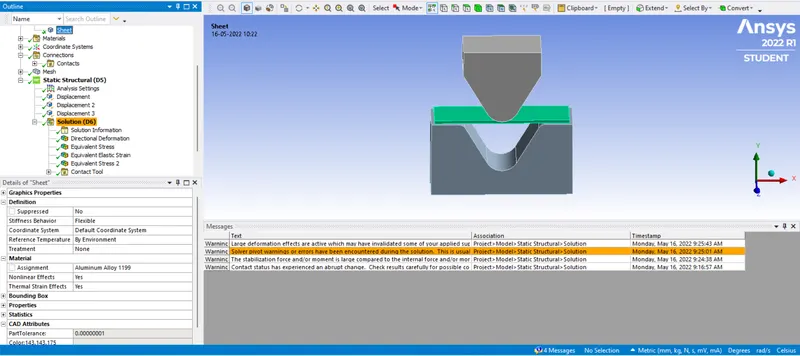
Frictional Coefficient of 0.19
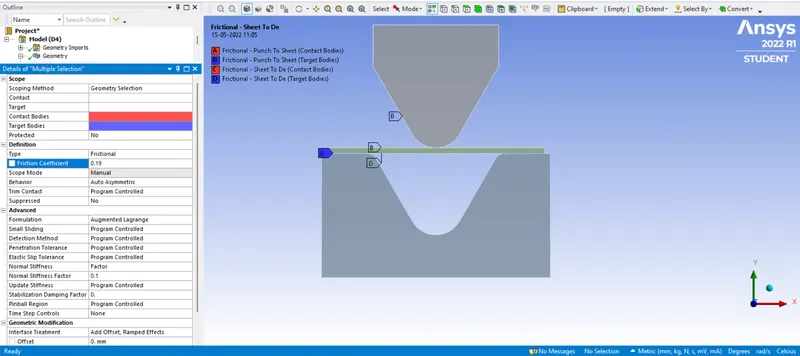
a) Directional Deformation in Y-axis:
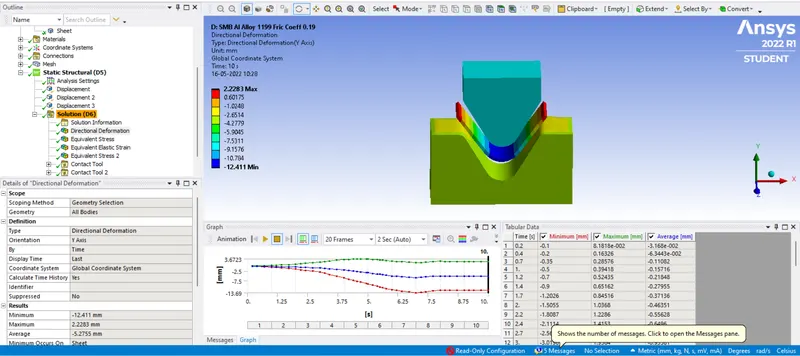
b) Equivalent Stress:
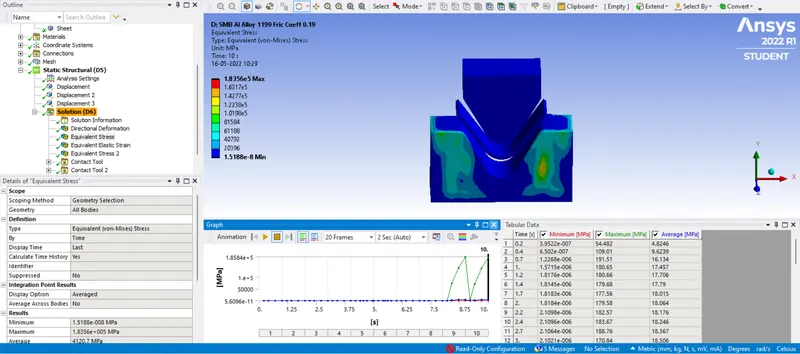
c) Equivalent Elastic Strain:
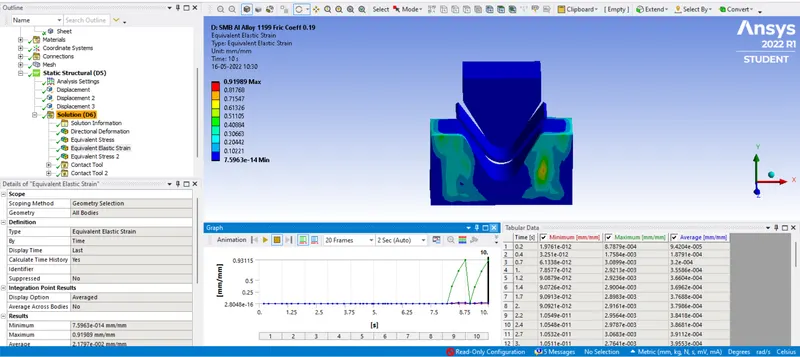
d) Equivalent Stress of the Sheet:
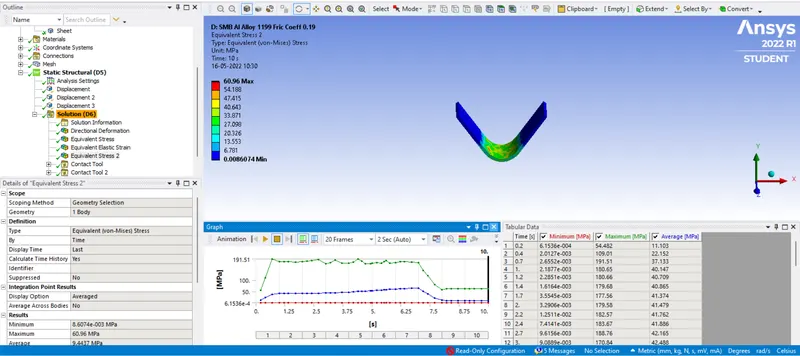
e) Force Reaction:
Case 3: Refined Mesh with Al Alloy 1199
The sheet is selected as an Al alloy 1199.
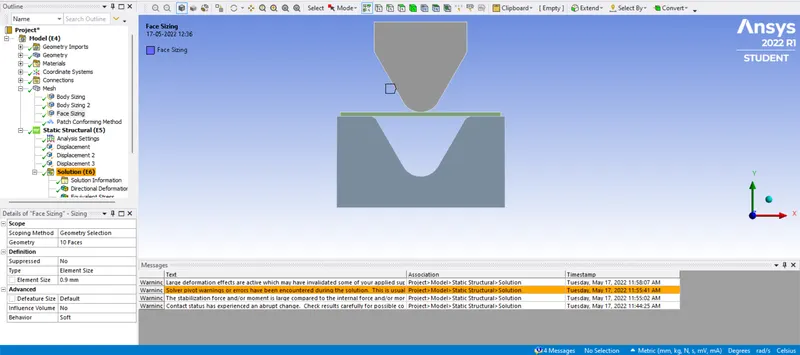
Mesh size of the elements are taken as below:
Element size 4 mm
Element size 0.9 mm
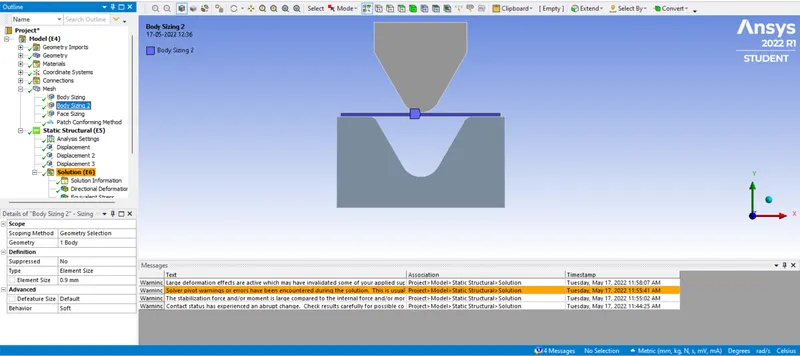
Element size 0.9 mm
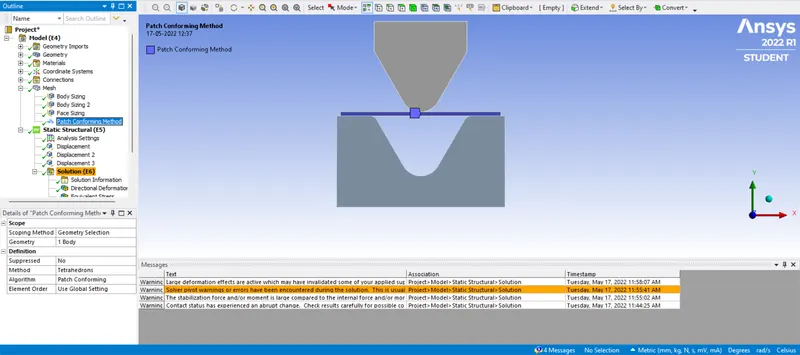
Method: Tetrahedrons
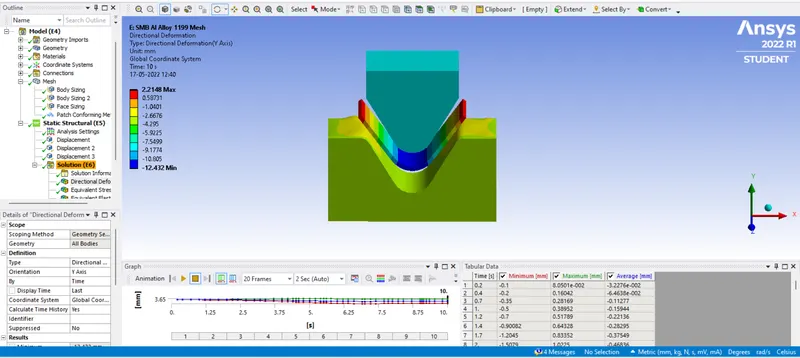
a) Directional Deformation:
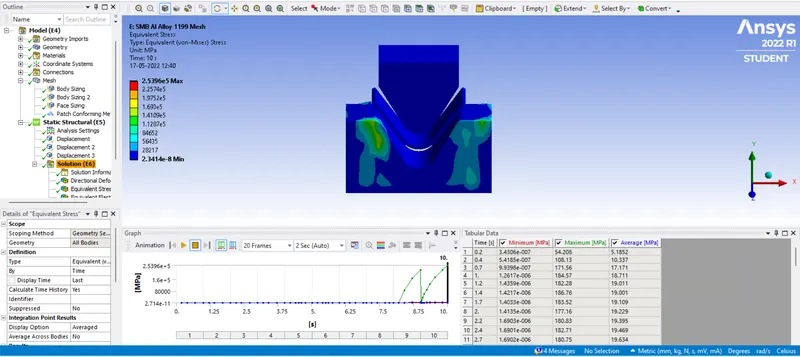
b) Equivalent Stress:
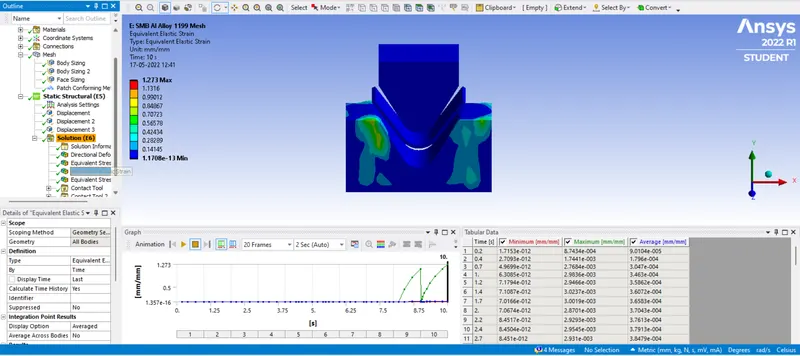
c) Equivalent Elastic Strain:
d) Equivalent Stress of the Sheet: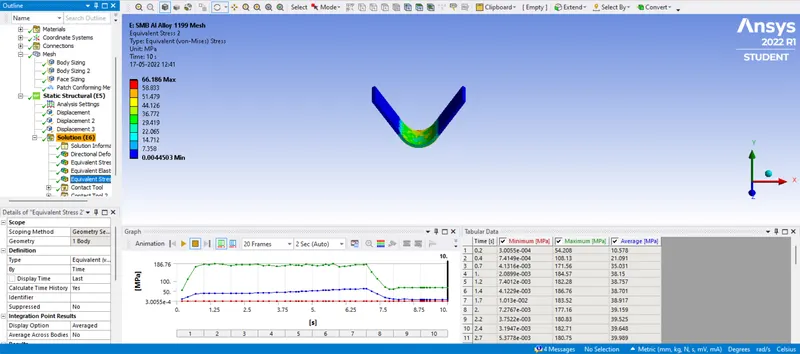
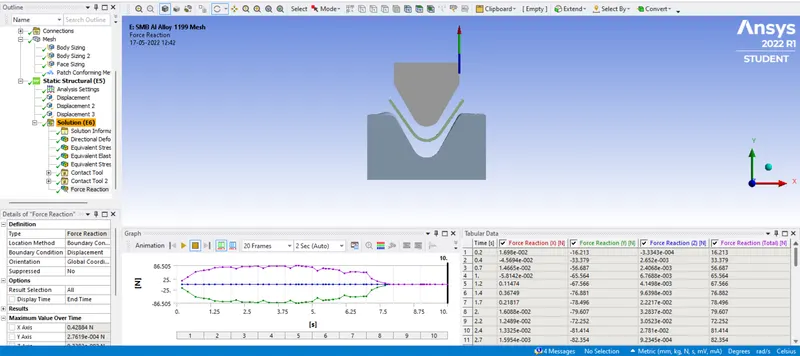
e) Force Direction:
Results:
Case 1:
| Materials | Al Alloy 1199 | Cu Alloy | Mg Alloy |
| Directional Deformation (Maximum) in mm | 2.3227 | 5.3426 | 1.512 |
| Directional Deformation (Minimum) in mm | -12.493 | -9.9092 | -12.383 |
| Equivalent Stress (Maximum) in MPa | 2.4578e+005 | 2.0602e+005 | 1.7094e+005 |
| Equivalent Stress (Minimum) in MPa | 1.7259e-008 | 1.3539e-007 | 1.7403e-007 |
| Equivalent Elastic Strain (Maximum) in mm/mm | 1.2301 | 1.031 | 0.85533 |
| Equivalent Elastic Strain (Maximum) in mm/mm | 8.6319e-014 | 6.76973-013 | 8.7013e-013 |
| Equivalent Stress of the Sheet (Maximum) in MPa | 63.876 | 139.37 | 94.594 |
| Equivalent Stress of the Sheet (Minimum) in MPa | 3.1519e-003 | 2.8197e-002 | 3.4634e-003 |
Case 2:
| Materials | Al Alloy 1199 with CF of 0.1 | Al Alloy 1199 with CF of 0.19 |
| Directional Deformation (Maximum) in mm | 2.3227 | 2.2283 |
| Directional Deformation (Minimum) in mm | -12.493 | -12.411 |
| Equivalent Stress (Maximum) in MPa | 2.4578e+005 | 1.8356e+005 |
| Equivalent Stress (Minimum) in MPa | 1.7259e-008 | 1.5188e-014 |
| Equivalent Elastic Strain (Maximum) in mm/mm | 1.2301 | 0.91989 |
| Equivalent Elastic Strain (Maximum) in mm/mm | 8.6319e-014 | 7.5963e-014 |
| Equivalent Stress of the Sheet (Maximum) in MPa | 63.876 | 60.96 |
| Equivalent Stress of the Sheet (Minimum) in MPa | 3.1519e-003 | 8.6074e-003 |
Case 3:
| Materials | Al Alloy 1199 with Normal Mesh | Al Alloy 1199 with Refined Mesh |
| Directional Deformation (Maximum) in mm | 2.3227 | 2.2148 |
| Directional Deformation (Minimum) in mm | -12.493 | -12.432 |
| Equivalent Stress (Maximum) in MPa | 2.4578e+005 | 2.5396e+005 |
| Equivalent Stress (Minimum) in MPa | 1.7259e-008 | 2.3414e-008 |
| Equivalent Elastic Strain (Maximum) in mm/mm | 1.2301 | 1.273 |
| Equivalent Elastic Strain (Maximum) in mm/mm | 8.6319e-014 | 1.1708e-013 |
| Equivalent Stress of the Sheet (Maximum) in MPa | 63.876 | 66.186 |
| Equivalent Stress of the Sheet (Minimum) in MPa | 3.1519e-003 | 4.4503e003 |
Conclusion:
- In case 1, we can see that there is a high-stress value in copper alloy among the three materials given.
- In case 2, Al alloy with a 0.19 coefficient of friction has higher stress than with the 0.1, which is obvious. Because when the punch forces the sheet into the die there is an impact on it which is affected mostly by the value of the coefficient of friction.
- In case 3, the finer the mesh greater the chance of getting more accurate results of it but at the cost of computational time.
Note: google drive link is provided below in a text file. Please check the link for the model.
Link for Animations: https://youtube.com/playlist?list=PLh9RPDMRvgtXM6omdSoSgyFueUwSjf3HD
Thank You...