Week 3 - Pitot tube
Pitot Tube Analysis
To get the current speed at which an aircraft is moving, it is commonly used a practical instrument known as the pitot tube; This device transduces the flow speed by taking the stagnation pressure and the static pressure. Likewise, these pressures are taken from holes' positions depending on how the pitot tube structure has been configured.
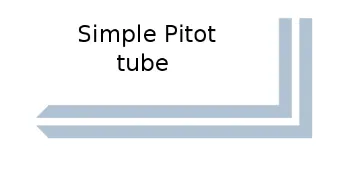
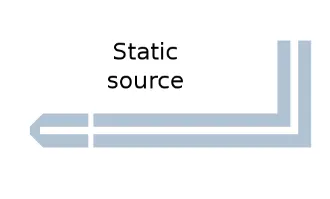
There are three types of pitot tubes, which are:
- Simple pitot tube
- Static source
- Pitot-static tube
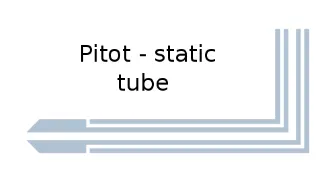
Images taken from: https://clubtechnical.com/pitot-tube
In this project, the flow behavior of a pitot-static tube will be analyzed, using a pitot-static tube model provided by the challenge statements. This analysis will be performed in ANSYS software and, the velocity obtained from the software will be compared with the velocity parameter that will be entered, according to the initial conditions stated by the challenge.
To get the velocity, the following equation is used:
`V=sqrt((2(P_T-P_s))/rho)`
Where:
`P_T=` Total pressure
`P_s=` Static pressure
`rho=` flow density
This equation is derived from the stagnation pressure equation.
ENGINEERING DEVELOPMENT
The pitot-static tube shape provided by the challenge looks like the two pictures below.
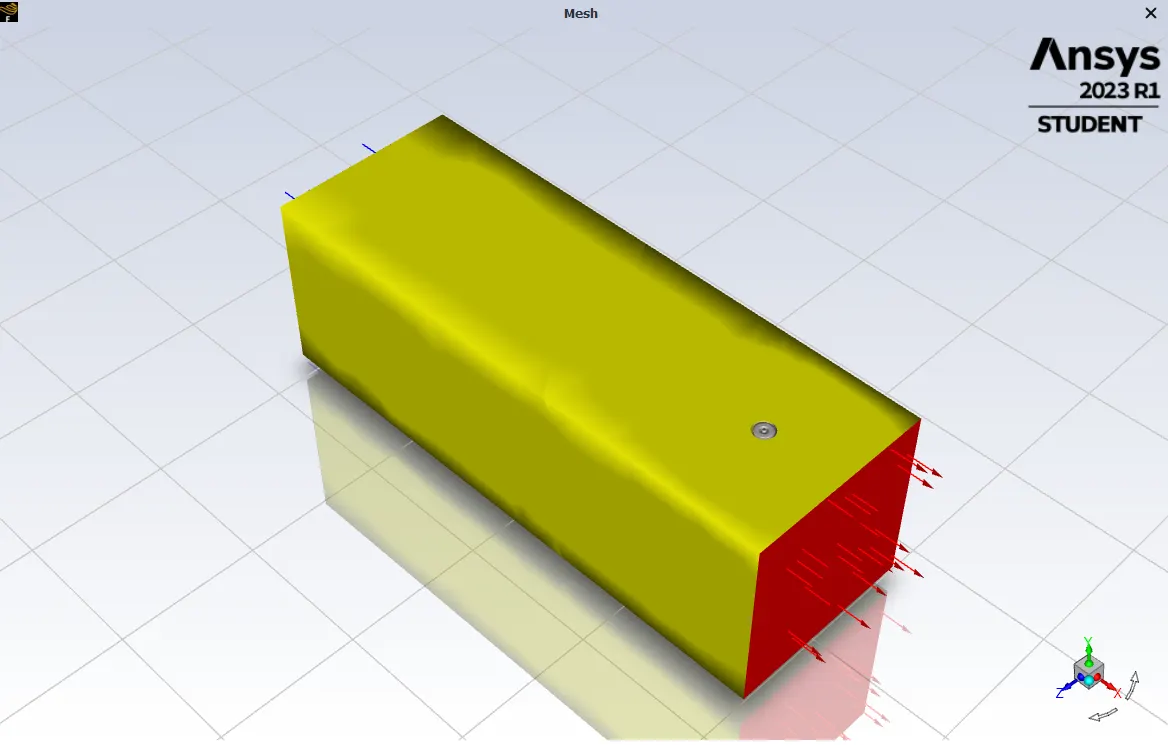
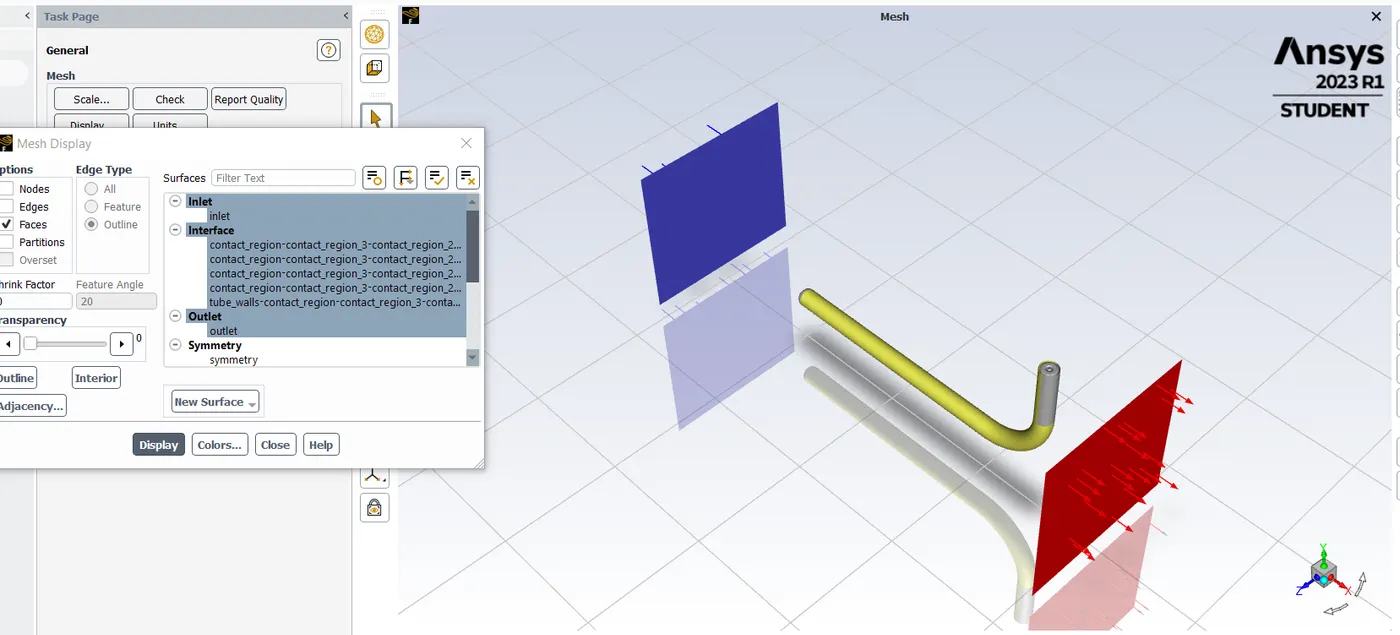
Furthermore, the initial conditions under which each simulation will be performed are shown in the following table; take into account that the gauge pressure must be entered as in the inlet parameters as in the outlet parameters.
| Cases | Velocity (m/s) | Gauge Pressure (Pa) |
| Case I | 240 | 2817 |
| Case II | 100 | 33287 |
| Case III | 62 | 65780 |
Now, the solver parameters are settled as is shown in the following picture.
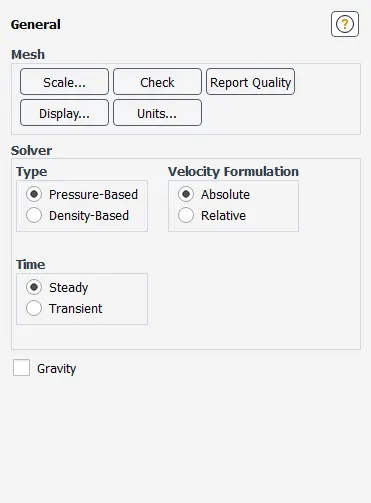
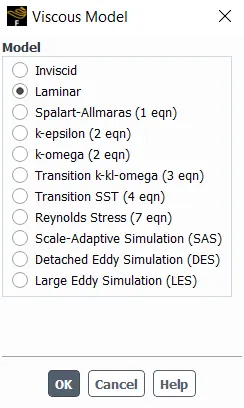
The viscous model must be laminar, due to the flow through the pitot-static holes gets a low Reynolds number.
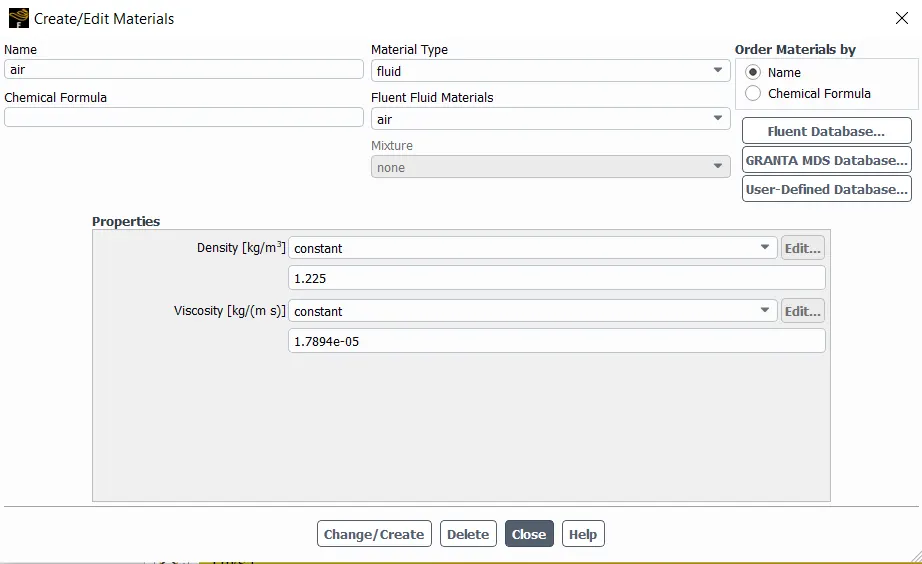
The fluid used must have a constant density, to get more accurate results. The air parameters are taken such as the pitot-static tube is tested at standard atmosphere conditions.
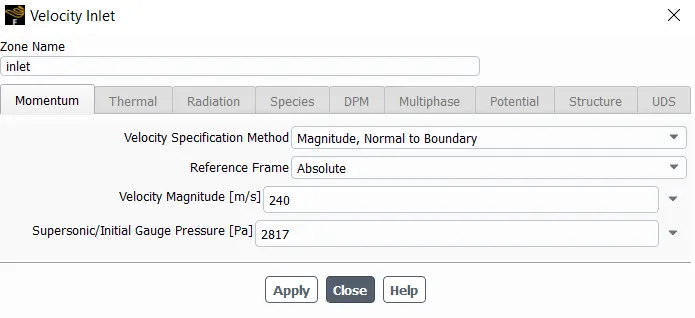
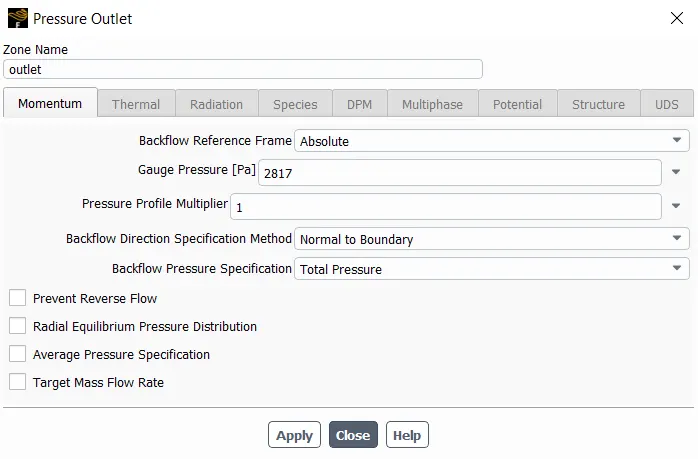
Once the physical parameters are entered, the next step is to configure the inlet and outlet conditions by taking the initial conditions shown in the table above, in the inlet and outlet sections. The following pictures show the inlet and outlet inputs for the first case, but this step must be repeated with the other two cases.
Inlet section:
Outlet section:
Finally, the initialization can be run out and the calculation is carried out, using two hundred fifty iterations.

RESULTS
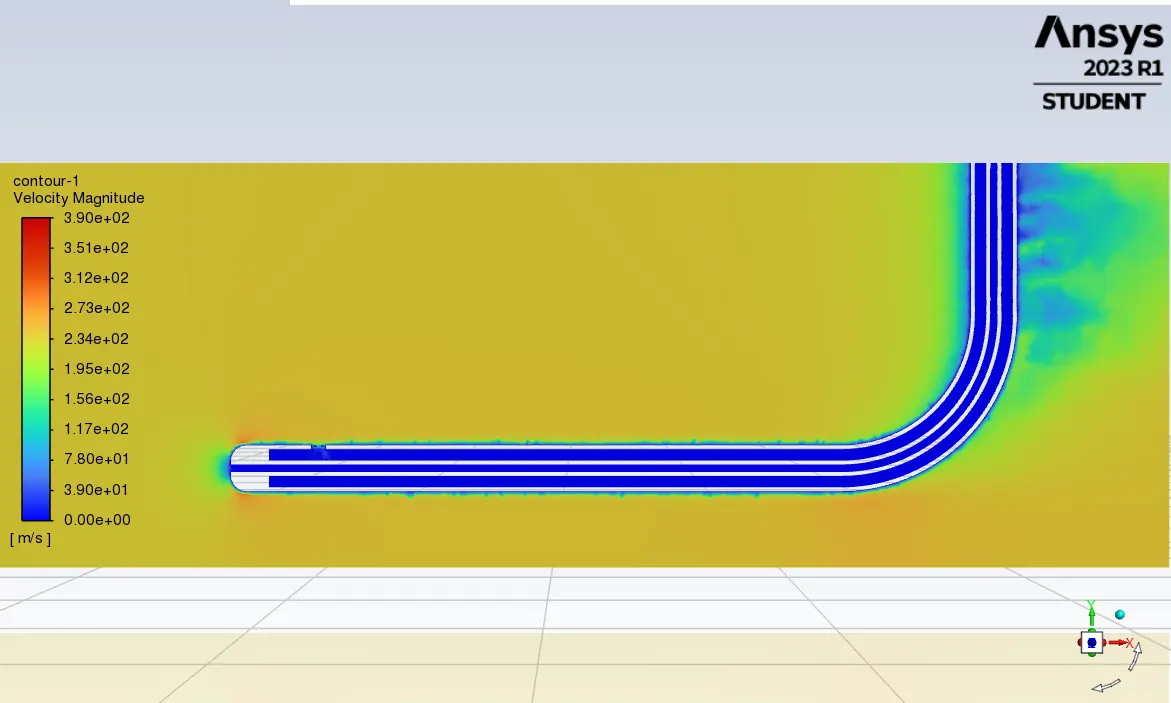
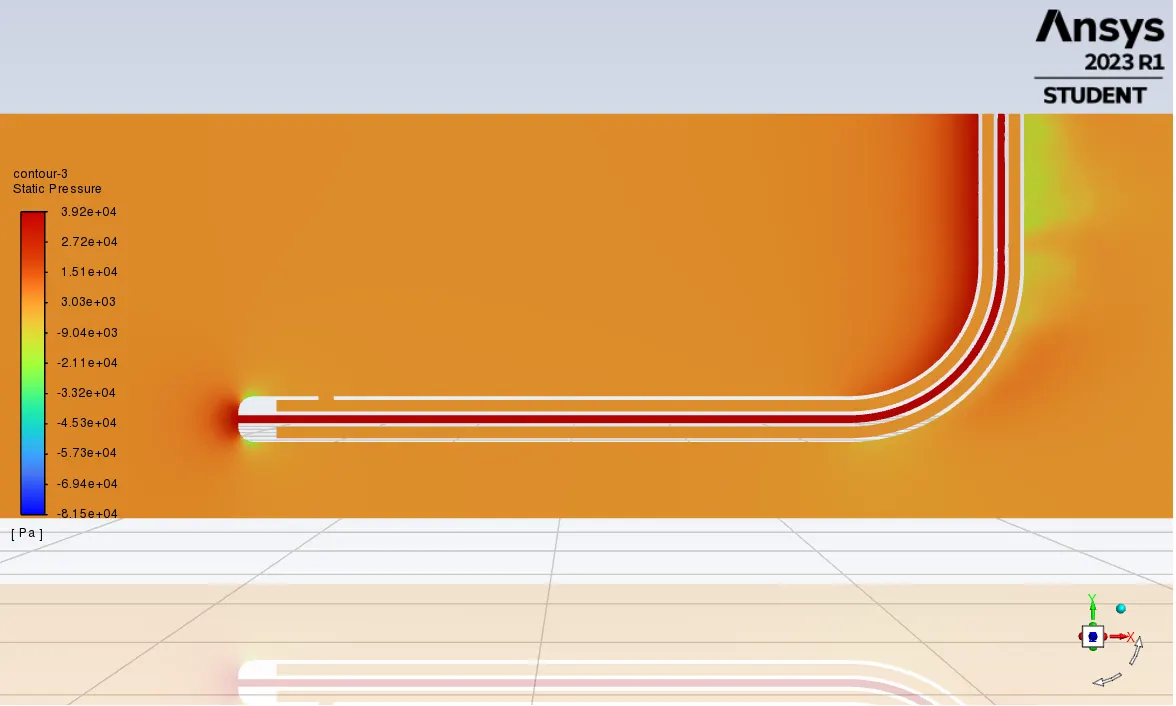
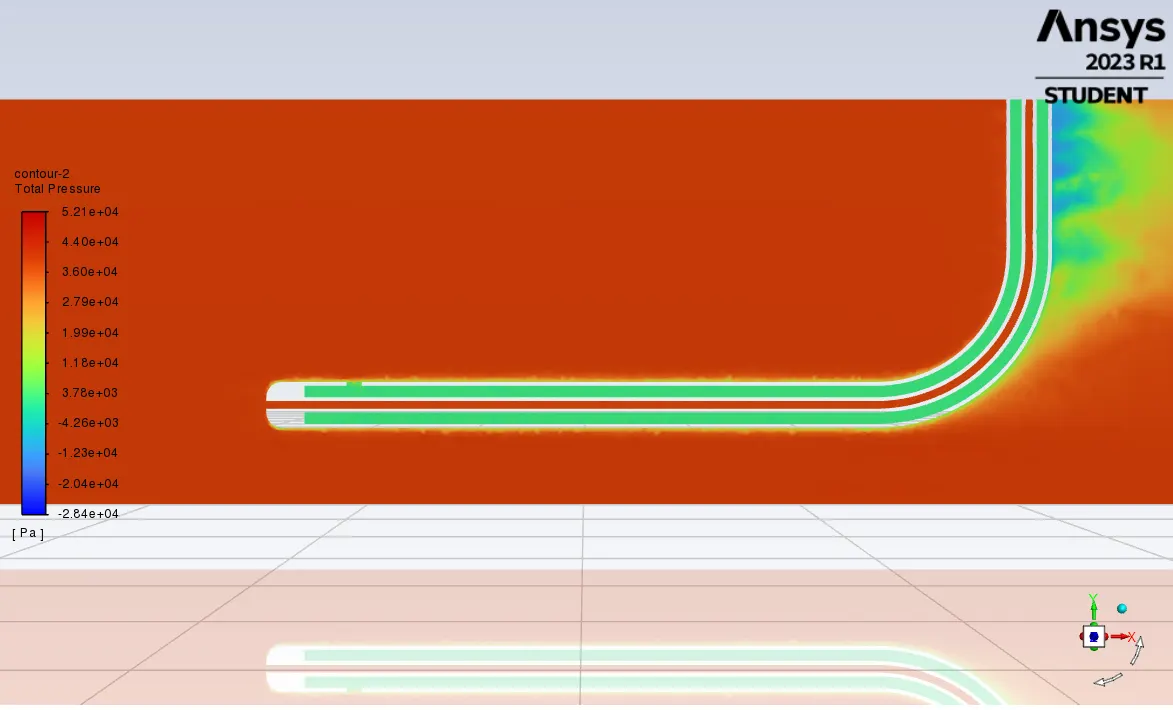
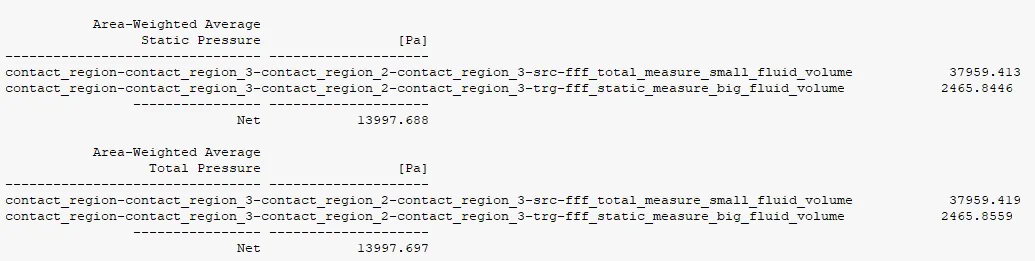
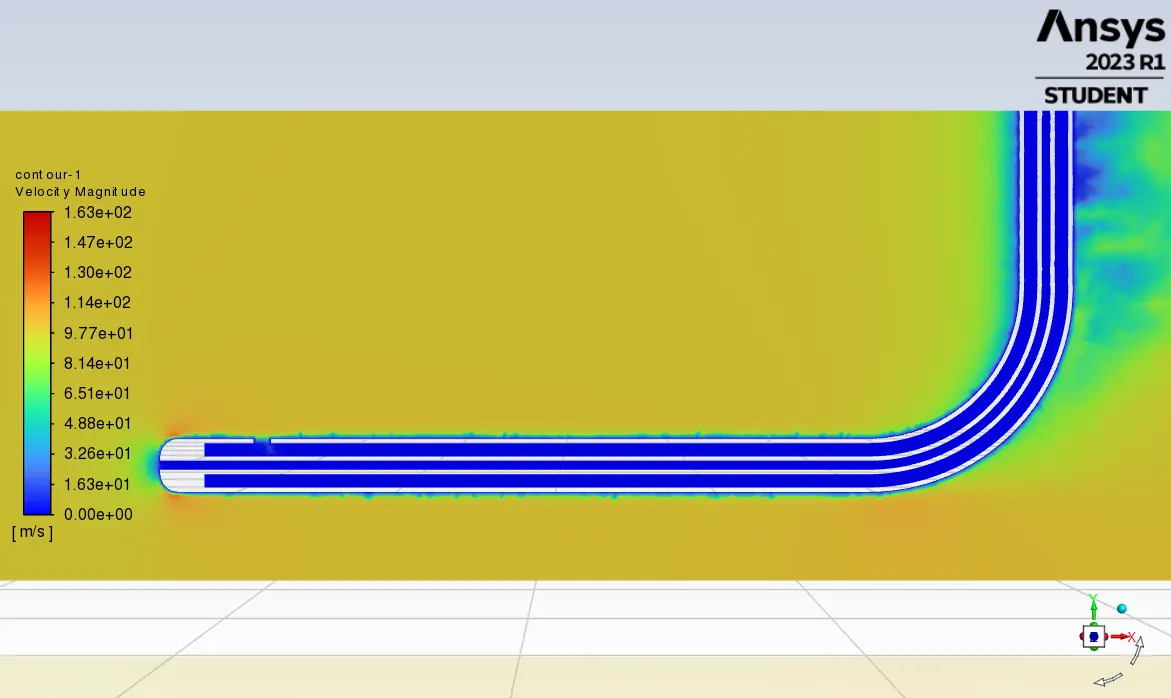
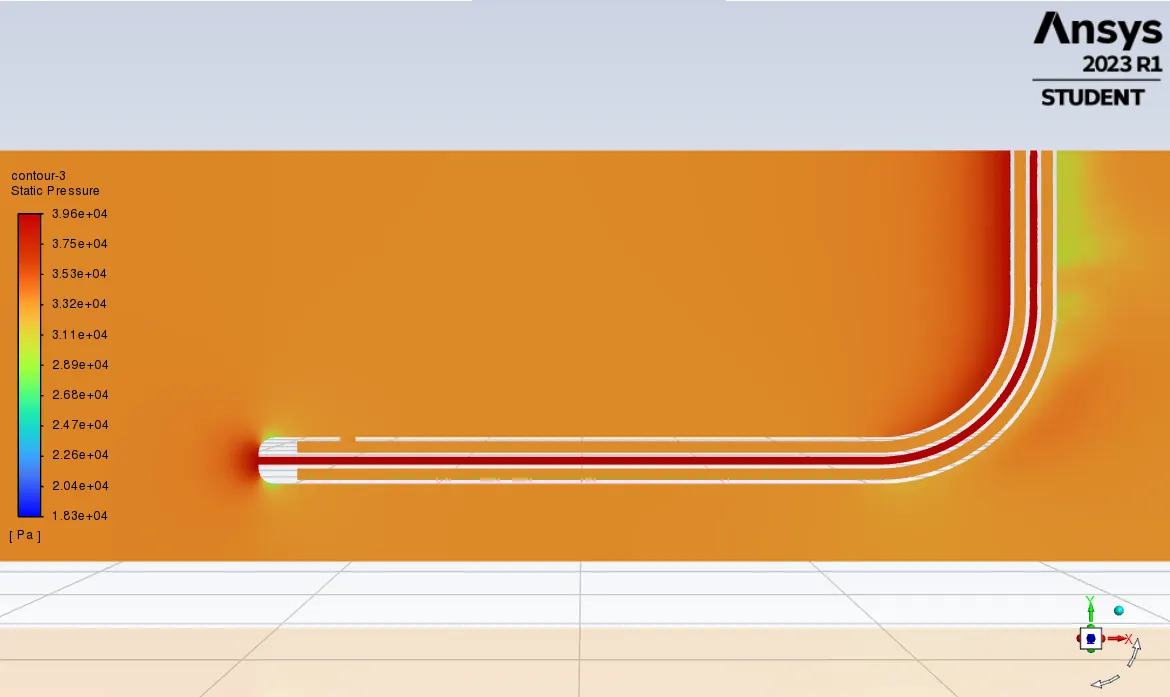
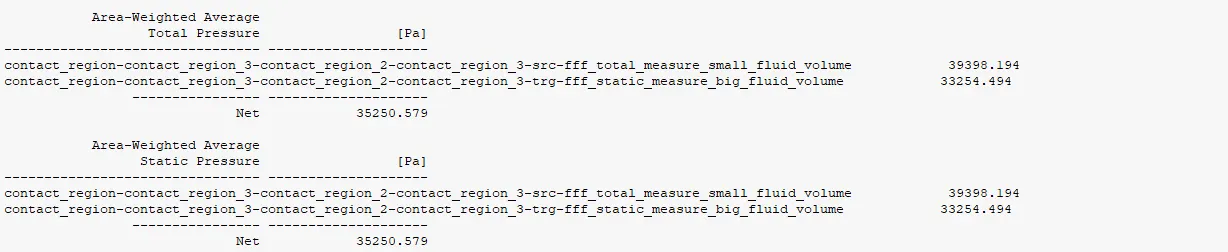
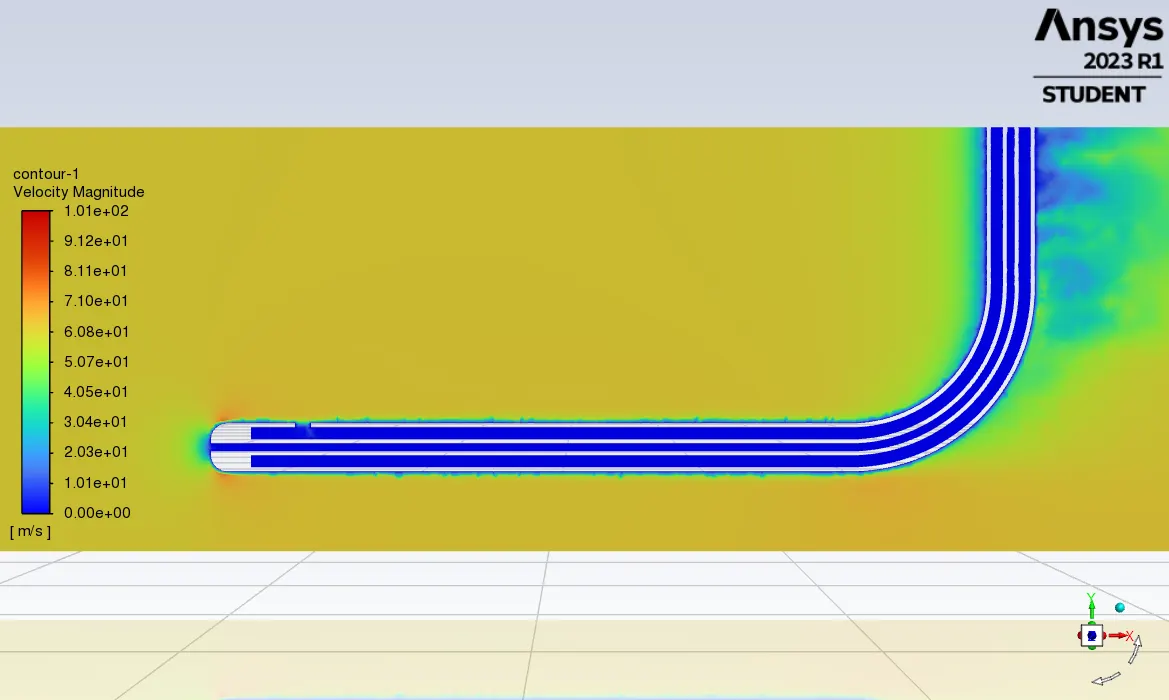
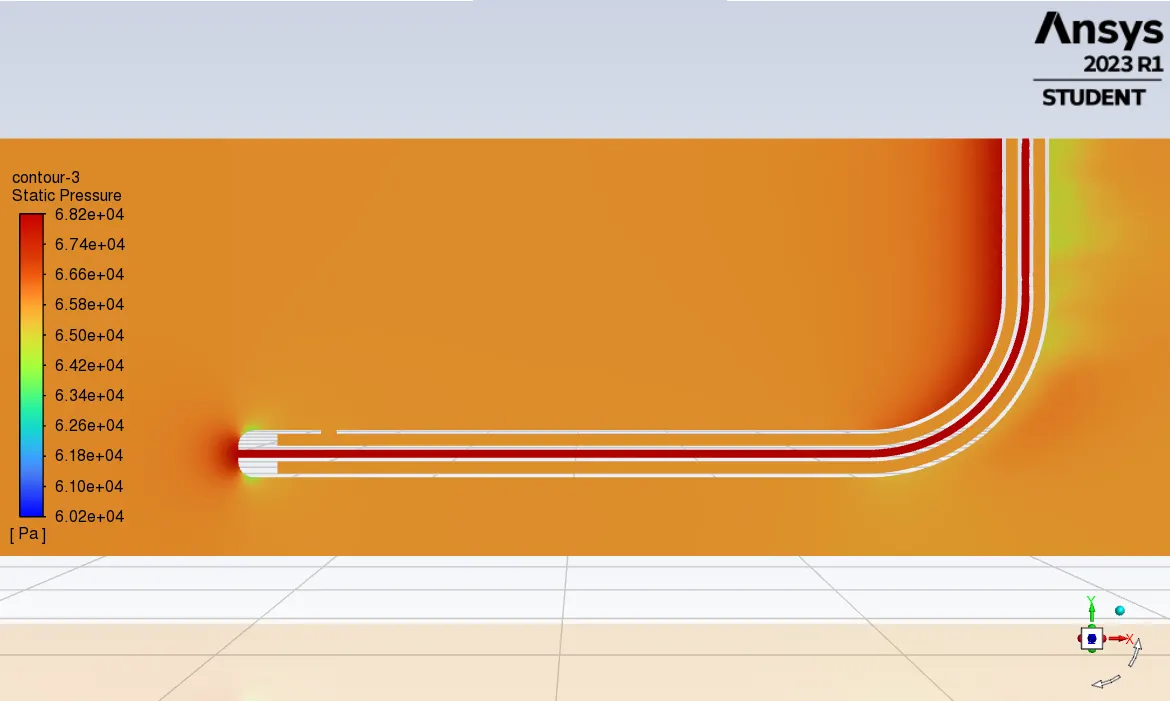
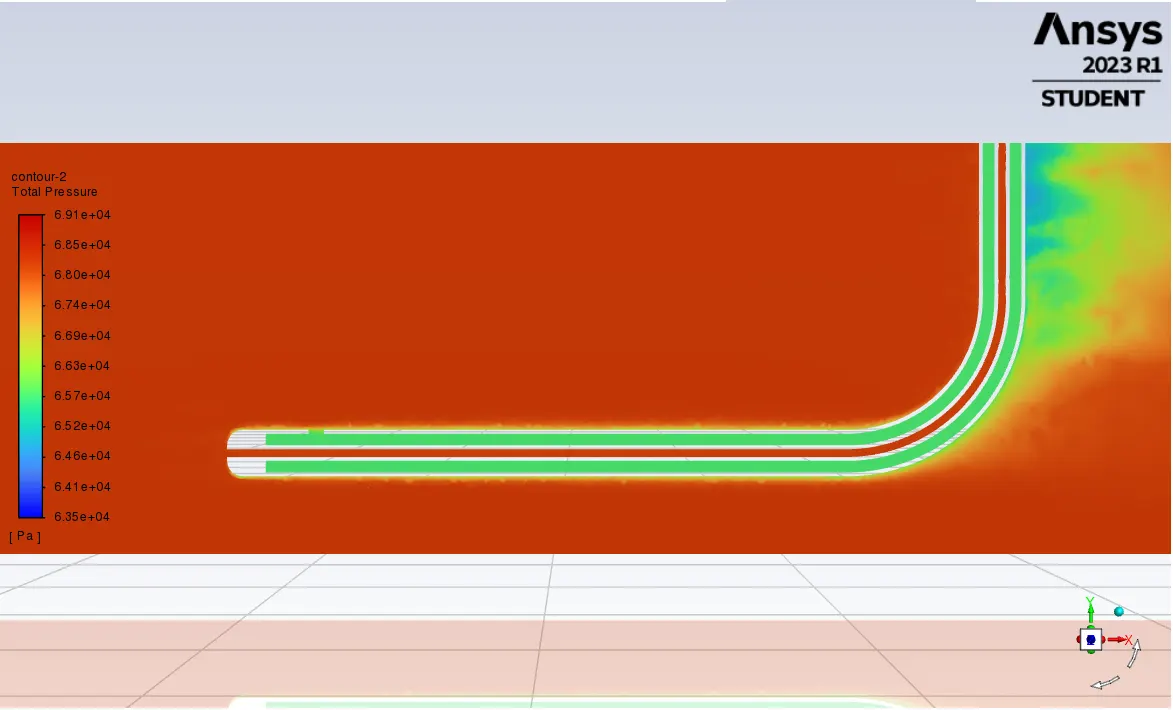
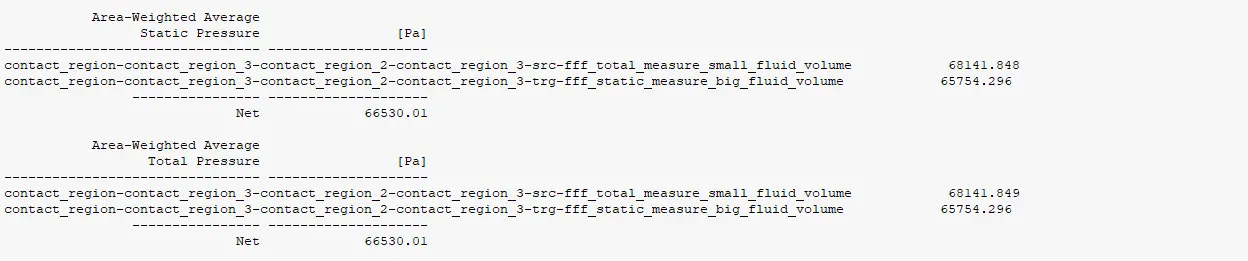
The results obtained in each case are shown in the following images:
Case I
- Velocity contour
- Static pressure contour
- Total pressure contour
- Average static & total pressure at the pitot-tube entrances
Case II
- Velocity contour
- Static pressure contour
- Total pressure contour
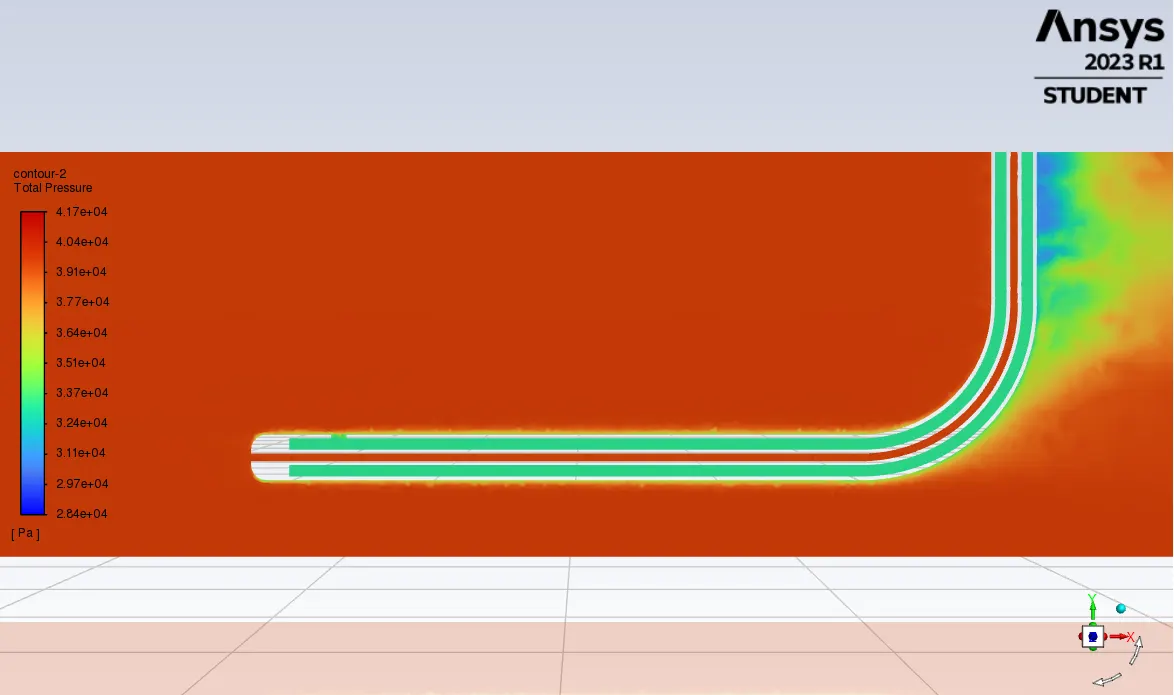
- Average static & total pressure at the pitot-tube entrances
Case III
- Velocity contour
- Static pressure contour
- Total pressure contour
- Average static & total pressure at the pitot-tube entrances
Now, to get the percentual error between the initial velocity and the velocity taken from the static and total pressures, the next equation is used:
`E_p=abs((V_r-V_a)/(V_a))*100`
Where:
`V_r=`real value
`V_a=`approximated value
Thus, the following table is obtained,
| Cases | Static pressure (Pa) | Total pressure (Pa) | Velocity (m/s) | % Error of velocity |
| I | 2465.8559 | 37959.419 | 240.725 | 0.302 |
| II | 33254.494 | 39398.194 | 100.153 | 0.153 |
| III | 65754.296 | 68141.849 | 62.4343 | 0.701 |
The error is lower than 5%, so it can be said the results obtained are accurate enough.
CONCLUSIONS
The velocity measurement over the pitot-static tube holes can be certainly performed by using ANSYS Fluent and the results obtained will be too approximated to the real values that could be obtained in real testings. However, the user has to be careful with the way that they carry out the simulation process, because the viscous model and the solver method used in the simulation, might get inaccurate results or the simulation calculation may not converge in a certain iteration point if these are taken badly, for instance.
REFERENCES