Week 3 - Pitot tube
AIM:
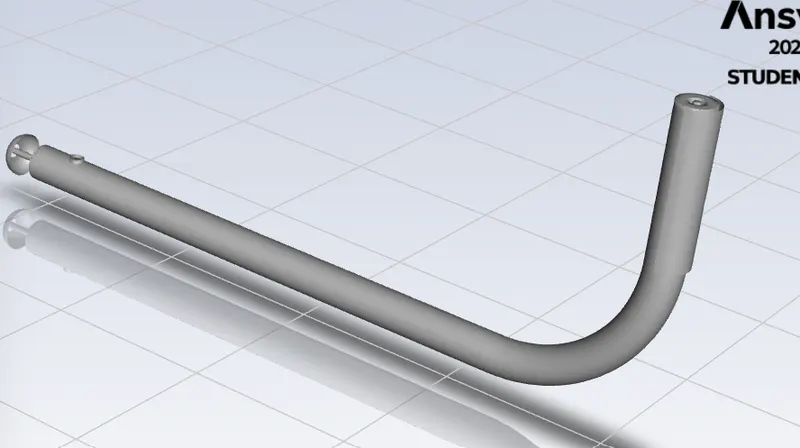
1. A pitot static tube geometry is attached below.
a.You are required to do a literature review of pitot-static tube. Also establish a relationship between Total (stagnation) pressure and static pressure
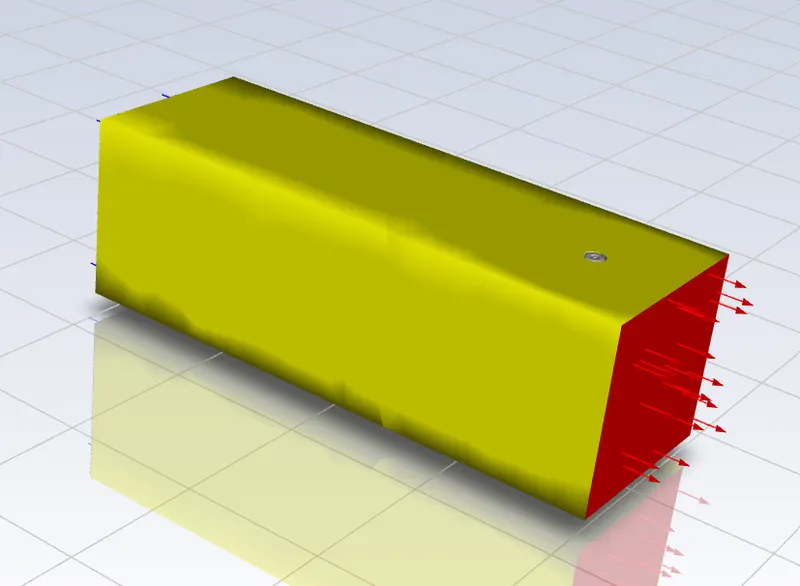
b.You are required to create surfaces and fill it separately for Total pressure port and static pressure port as shown below.
2. For the values of velocity given below calculate the total and static pressures and find the error in percentage for velocity.
|
Velocity(m/s) |
Gauge Pressure (Pa) |
|
240 |
-2817 |
|
100 |
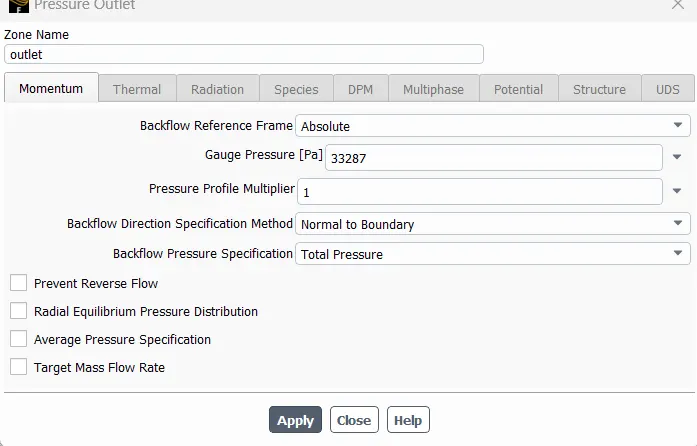
33287 |
|
62 |
65780 |
THEORY:
Pitot tube:
A pitot tube, also known as a pitot probe, is a flow measurement device used to measure fluid flow velocity. The pitot tube was invented by the French engineer Henri Pitot in the early 18th century and was modified to its modern form in the mid-19th century by French scientist Henry Darcy. Pressure measurement is used for other readings for the pilot namely in altimeter and airspeed Measurement.
Pitot tubes are used for fluid flow measurement to find the velocity of the boat in water, the velocity of aircraft, and the velocity of gases in industries. Pitot tubes actually measure the pressure that is used in calculating the velocity of the fluid or body. Pitot tubes will not calculate the velocity directly. There are commonly three types of pitot tubes.
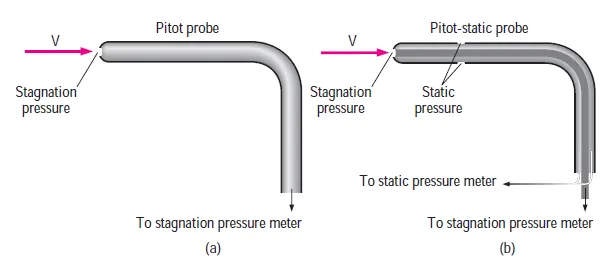
The Pitot static probe measures local velocity by measuring the pressure difference in conjunction with Bernoulli's equation. it consists of a slender double tube aligned with the flow and connected to a differential pressure meter. the inner tube is fully open to flow at the nose and thus it measures the stagnation pressure at that location (point 1). the outer tube is sealed at the nose, but it has holes on the side of the outer wall (point 2) and thus it measures the static pressure.
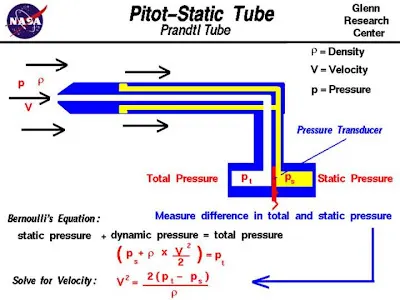
The relation between the static pressure total pressure and the velocity of the fluid:
With the difference in pressures measured and knowing the local value of air density (r) from pressure and temperature measurements, we can use Bernoulli's equation to give us the velocity.
Bernoulli's equation states that the static pressure plus one-half the density times the velocity (V) squared is equal to the total pressure.
Ps + [ (1/2) ⋅ r ⋅ (V^2) ] = Pt
Solving for V:
V^2= [2 ⋅(Pt-Ps) ] / r
NOTE: The above equation applies only to fluids that can be treated as incompressible. Liquids are treated as incompressible under almost all conditions. Gases under certain conditions can be approximated as incompressible.
GEOMETRY:
Import the Geometry
SETUP:
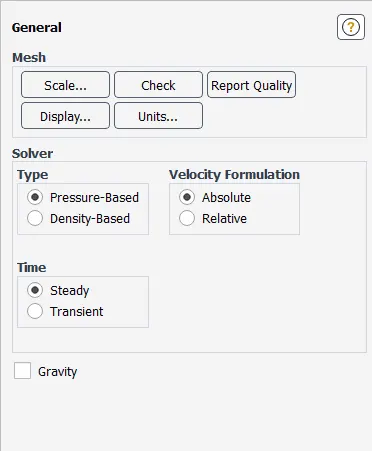

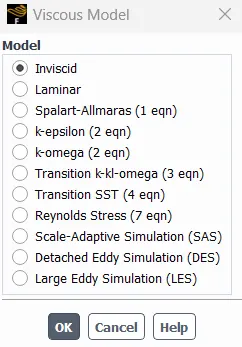
Boundary condition:
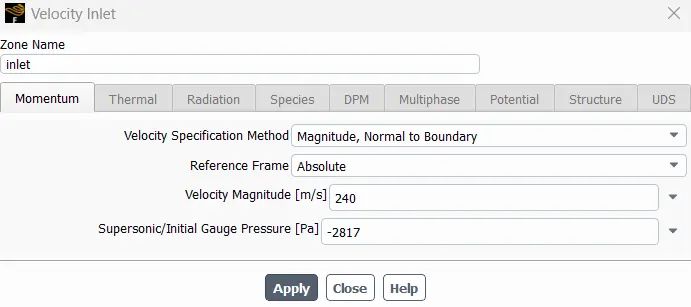
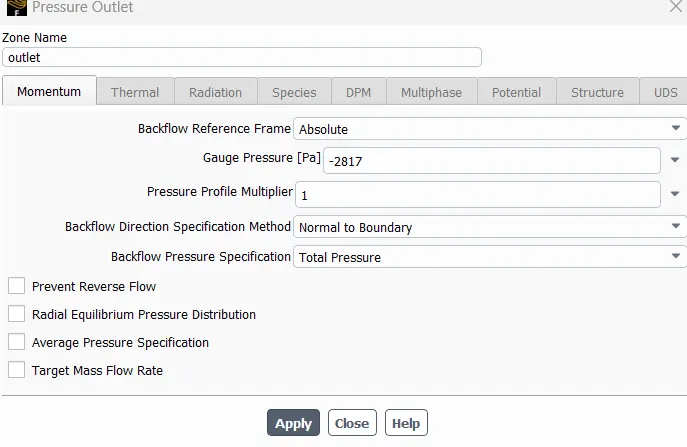

Case1:
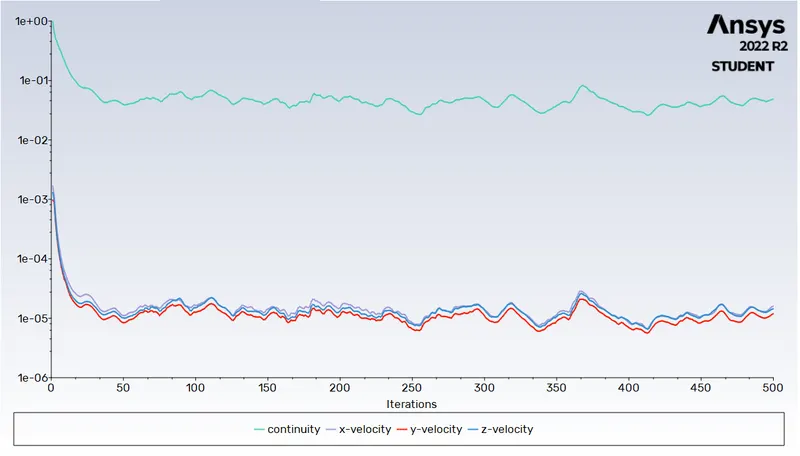
velocity = 240 m/s, pressure = -2817 pa.
Residuals:
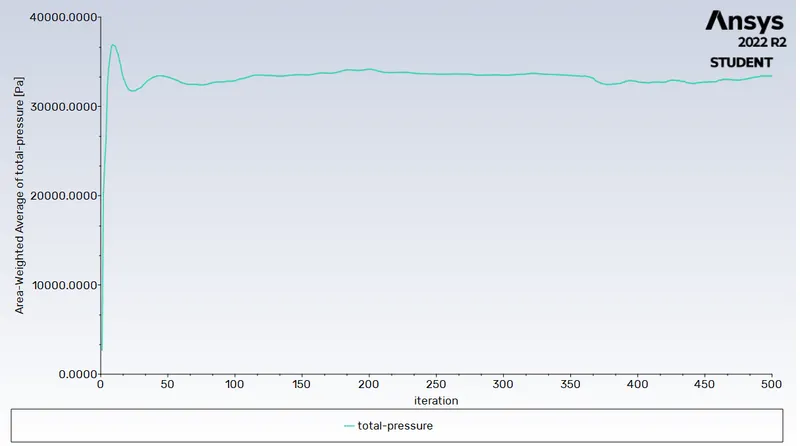
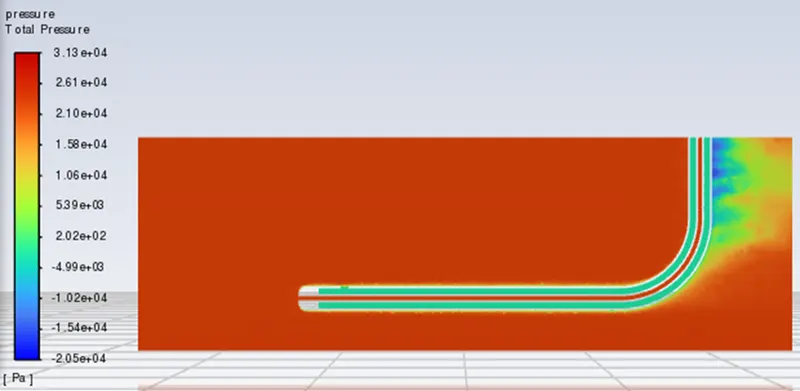
Total pressure:
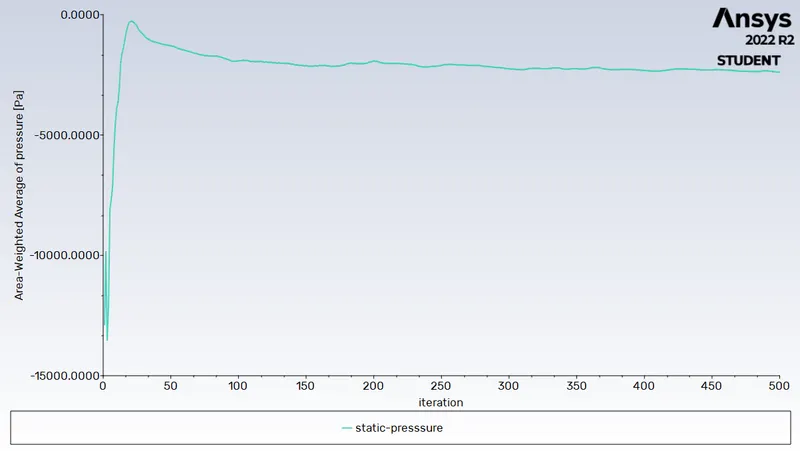
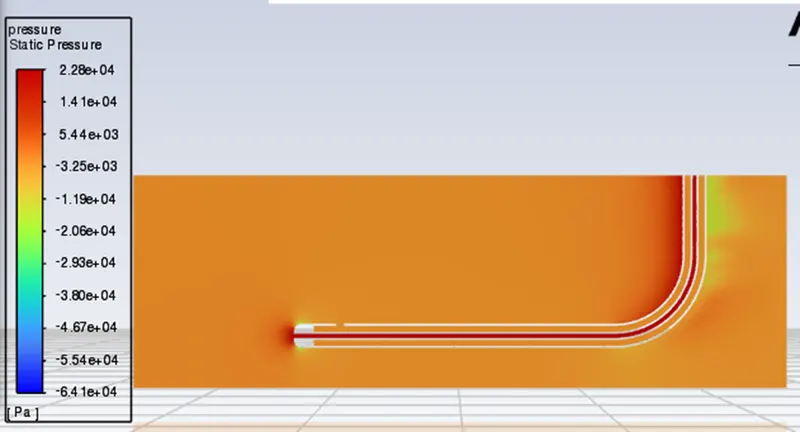
Static pressure:
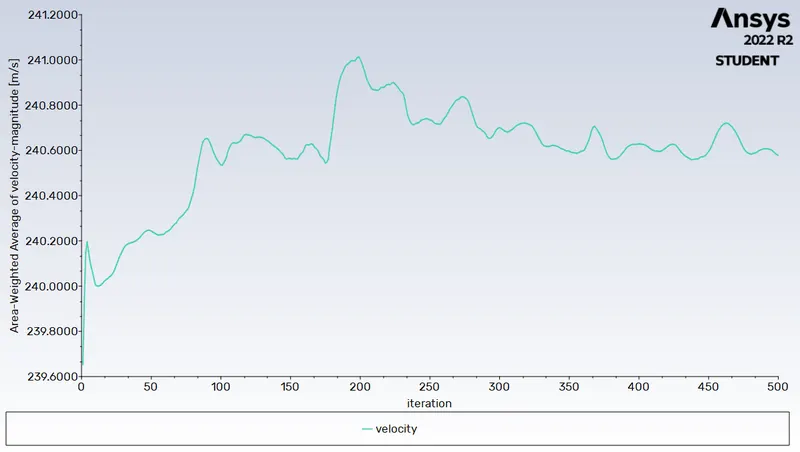
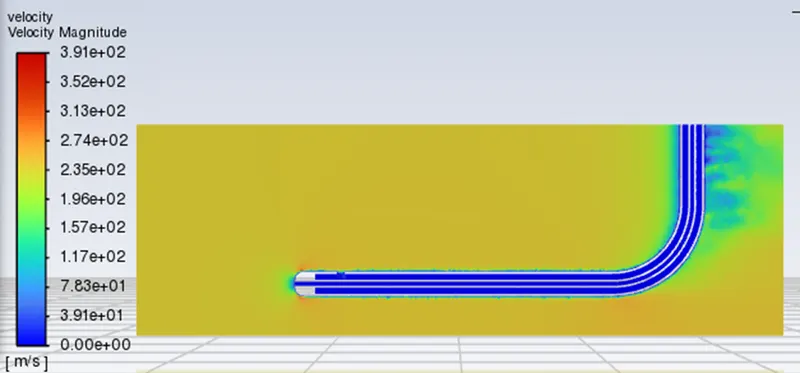
Velocity:
Total Pressure Contour:
Static Pressure Contour:
Velocity Contour:



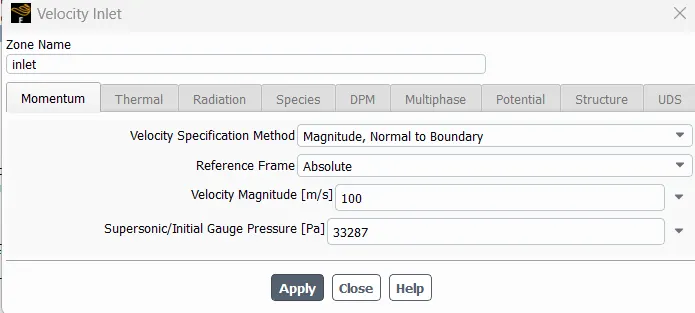
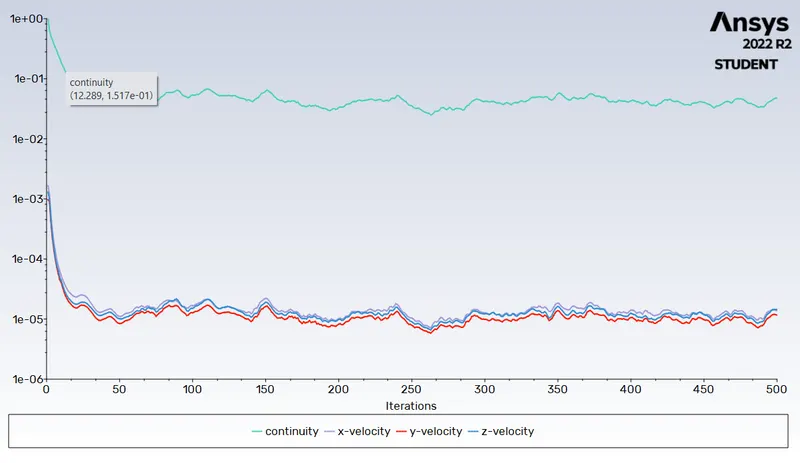
Case 2:
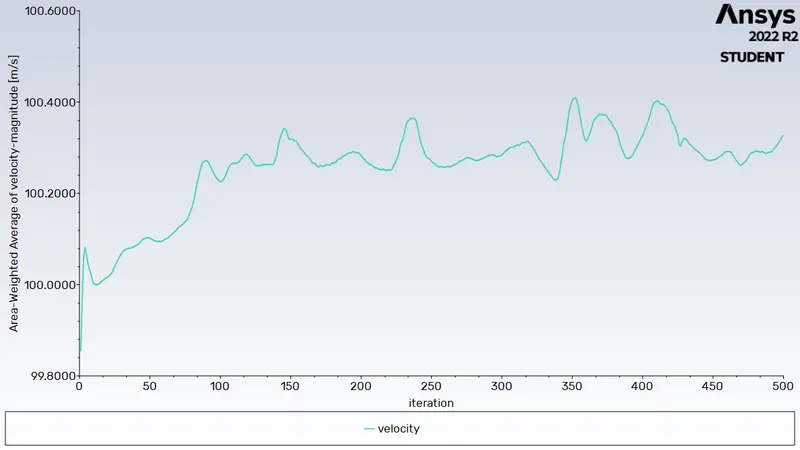
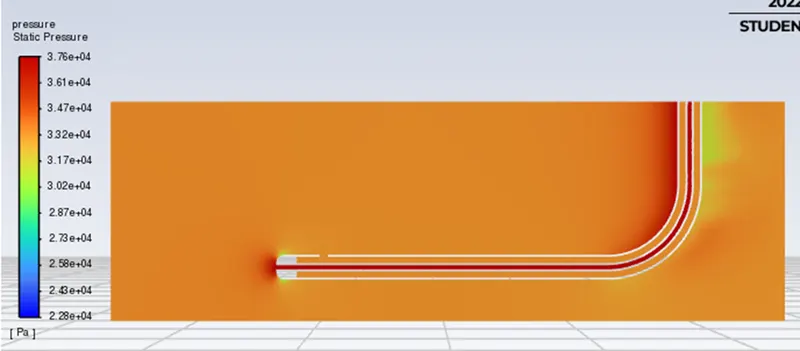
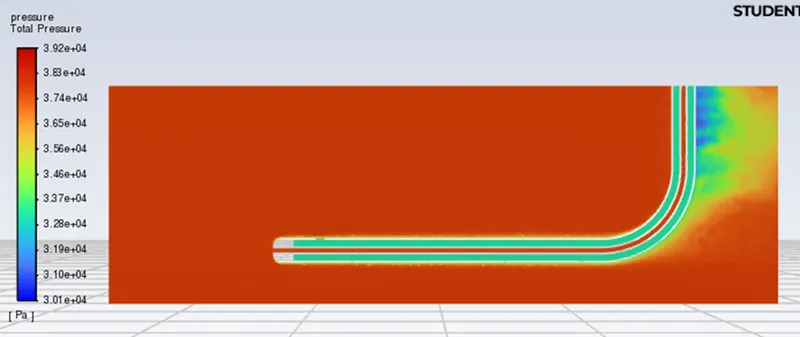
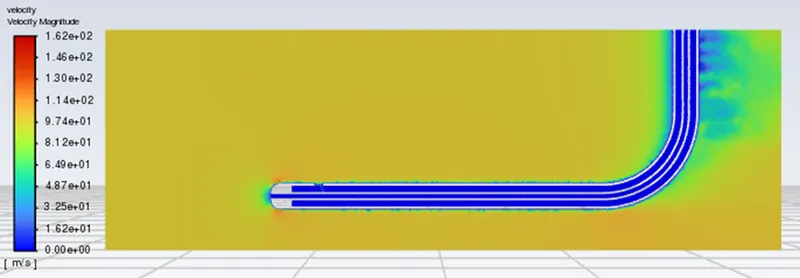
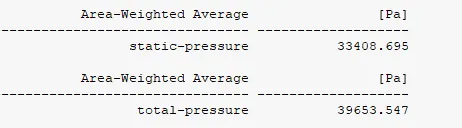
velocity = 100 m/s, pressure = 33287 pa
Residuals:
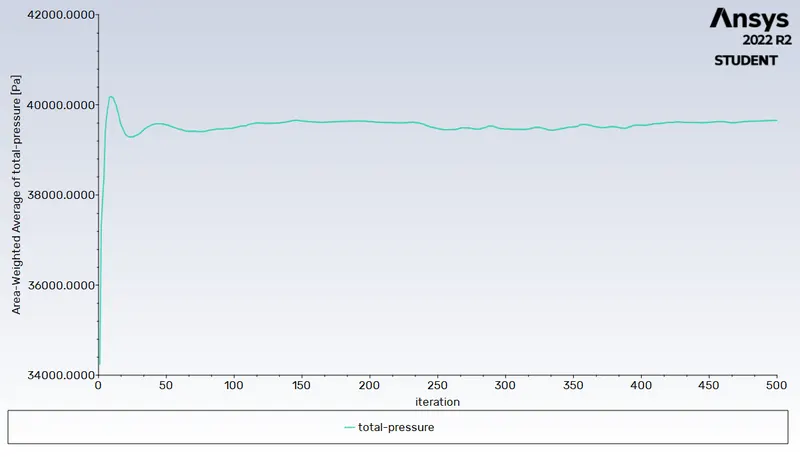
Total pressure:
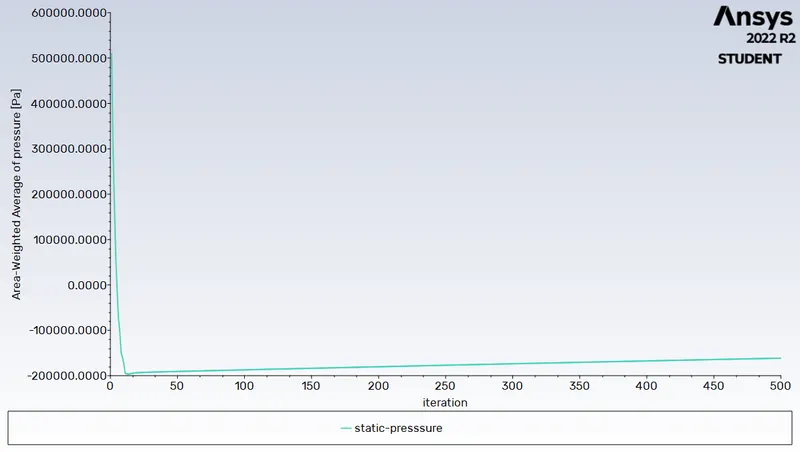
Static pressure:
Velocity:
Static Pressure Contour:
Total Pressure Contour:
Velocity Contour:

Case 3:
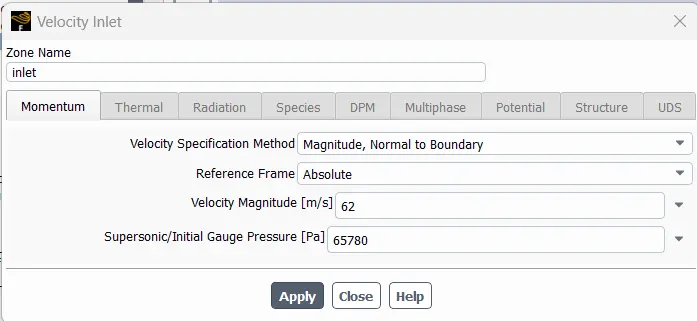
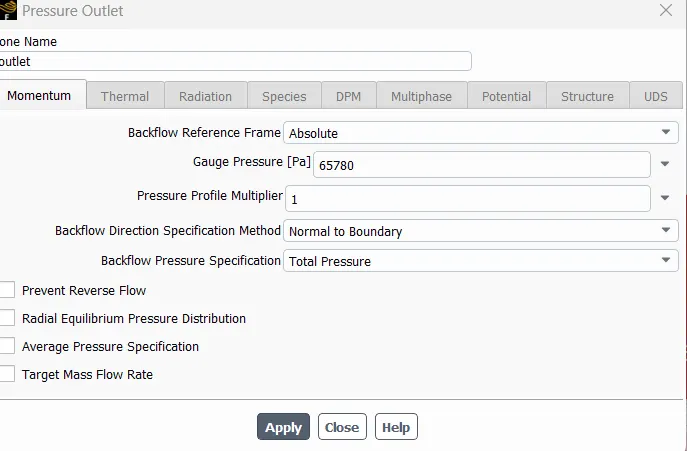
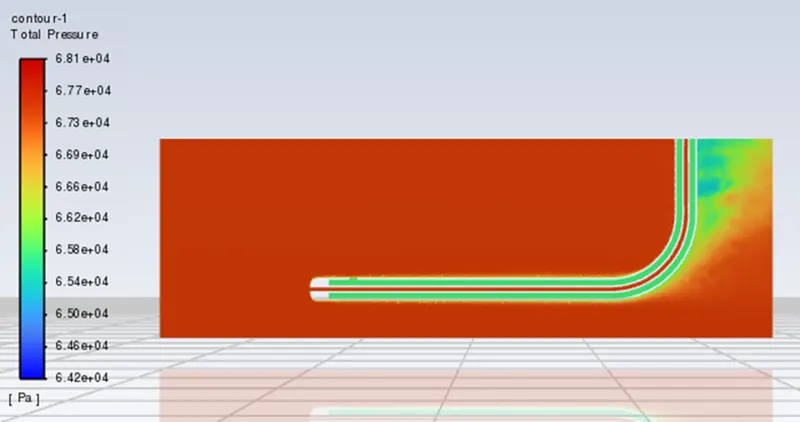
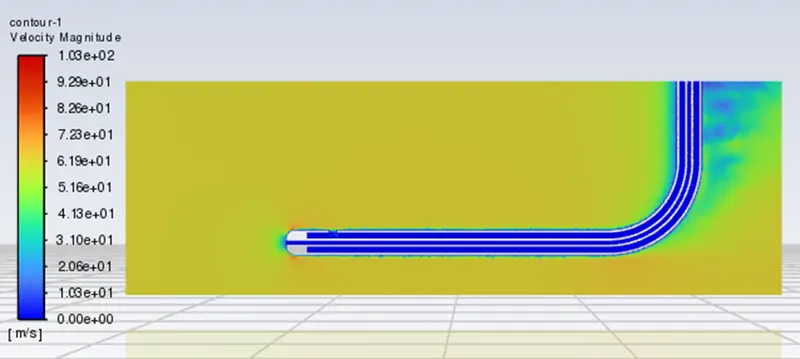
velocity = 62 m/s, pressure = 65780 pa
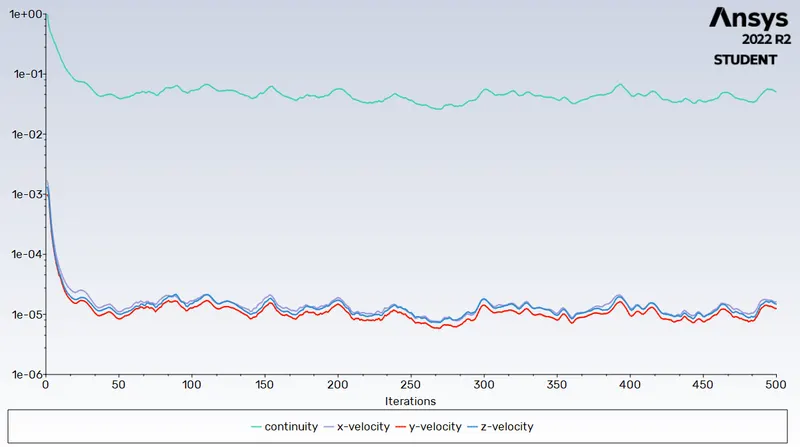
Residuals:
Total pressure:
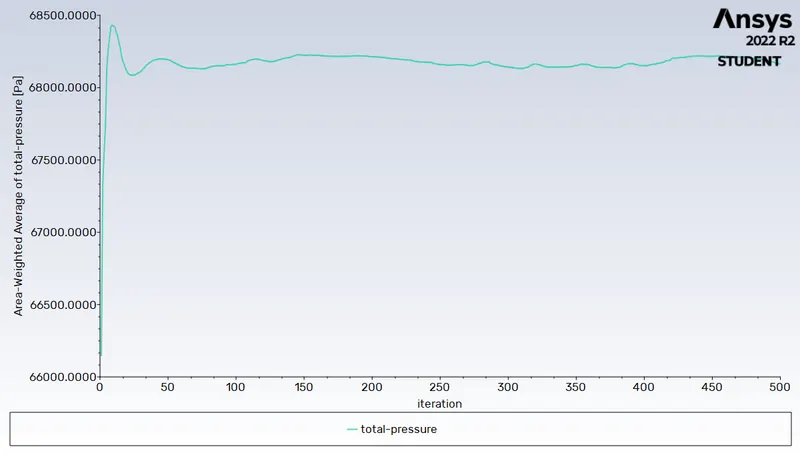
Static pressure:
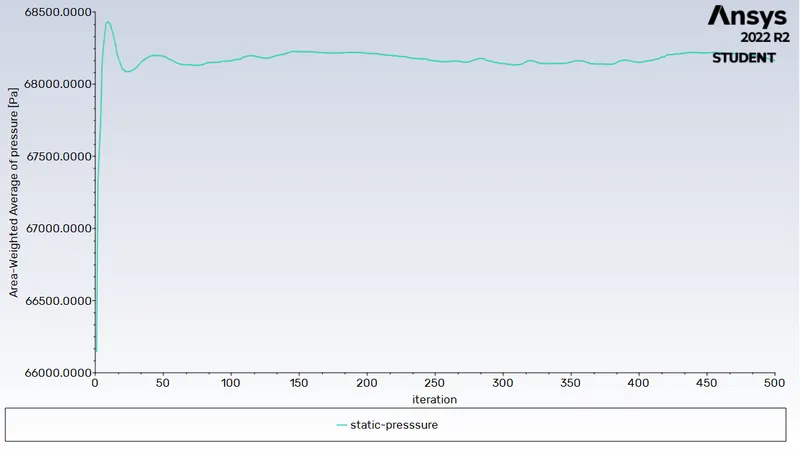
Velocity:
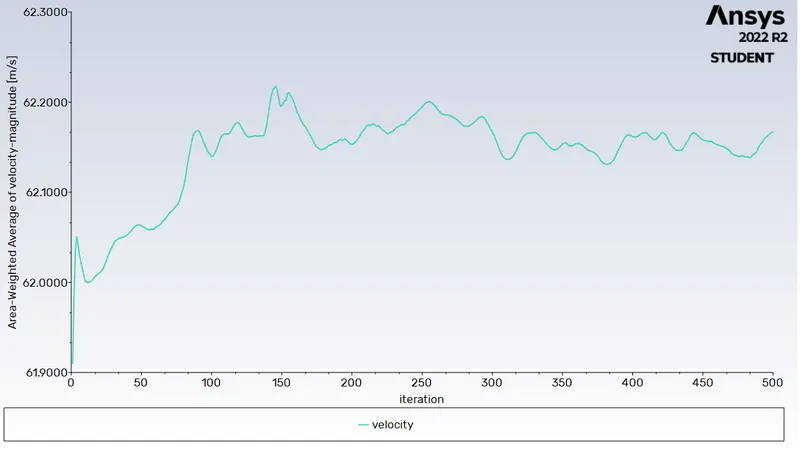
Static Pressure Contour:
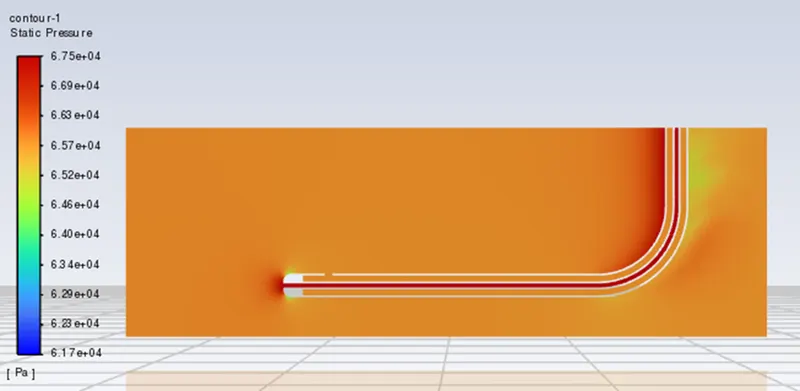
Total Pressure Contour:
Velocity Contour:
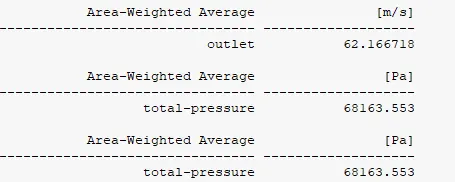

Calculating the error using formulas
Velocity (Vth) = [2 ⋅(Pt-Ps) ] / r}^(1/2).
Error = 100% - [Vth / Ve *100]
| Case | Actual Velocity (m/s) | Static Pressure (Pa) | Total Pressure (Pa) | Simulation Velocity (m/s) | % Error |
| 1 | 240 | -2387.2965 | 33403.333 | 240.578 | 1.13 |
| 2 | 100 | 33408.695 | 39653.547 | 100.328 | 0.87 |
| 3 | 62 | 65812.487 | 68163.533 | 62.1667 | 1.06 |
CONCLUSION:
- The pitot tube is explained with relationship between Total (stagnation) pressure and static pressure
- The pitot tube simulation is carried out with different velocities to predict the static and total pressure at outlet.
- The variation of error is marginal and lies within the acceptable region.