Week 3 - Pitot tube
AIM:- To Perform Simulation on pitot static tube By using ANSYS Fluent.
OBJECTIVE:-
- To do a literature review of pitot-static tube. Also establish a relationship between Total (stagnation) pressure and static pressure.
- To perform the Simulation on Pitot tube for Find the Total Pressure and Static Pressure.
Literature review of pitot-static tube:-
Introduction:-
Pitot-static tube:-
1. The pitot Static tube consist of tube having two opening. One opening at Centre and another at outside of the tube with right angle, as shown as below fig. central opening measures the Total Pressure also called as Stagnation pressure and Outside opening Measures the Static pressure only.
2. A manometer or other differential pressure measuring device measures the pressure difference between the tubes which is equal to the velocity pressure.
3. A manometer or other differential pressure measuring device measures the pressure difference between the tubes which is equal to the velocity pressure.
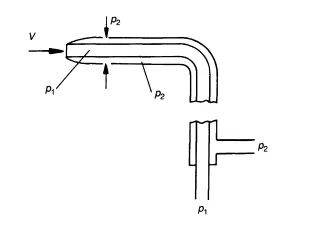
Where,
V= Velocity of Fluid.
p1= Total Pressure.
p2= Static Pressure.
the Formulae for calculating the Flow Velocity are calculated as below formula.
`V= sqrt(2((P_(Total)-P_(Static))/(rho_f))`
SOURCE:- Carvill, J. (1993). Mechanical Engineer's Data Handbook || ''Engineering measurements''. 283.
SIMULATION SET-UP AND METHODOLOGY :-
Import Mesh File In Ansys Fluent:-
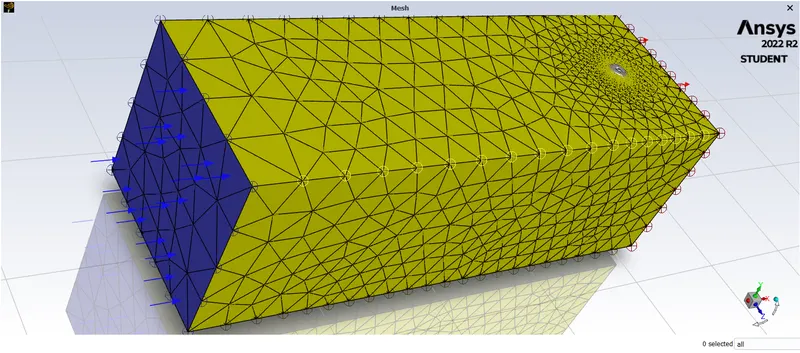
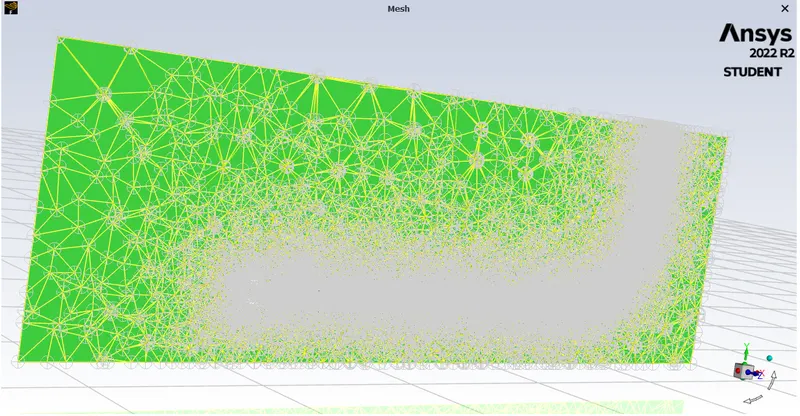
Set-up:-
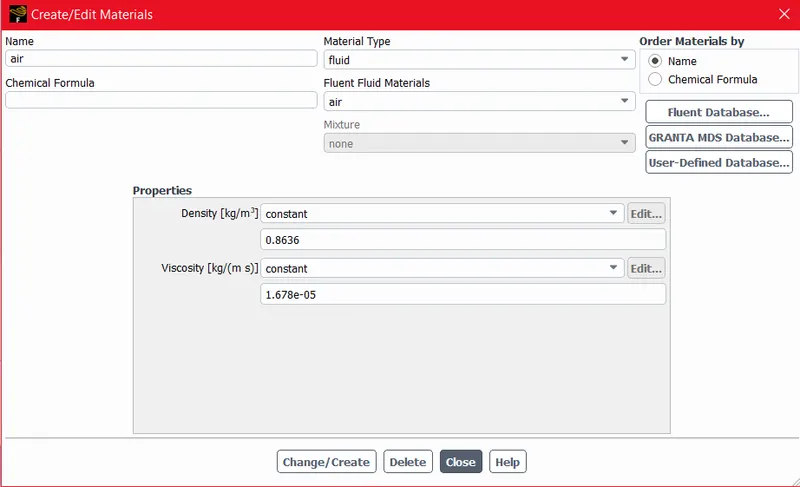
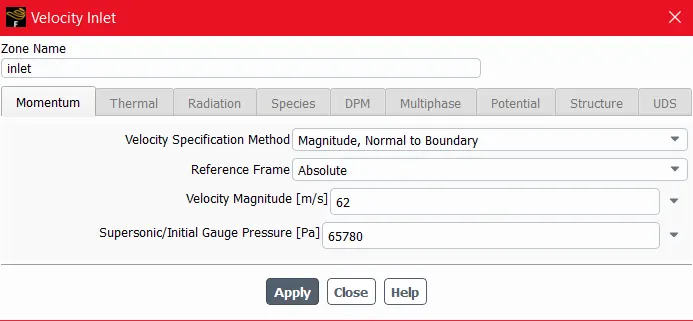
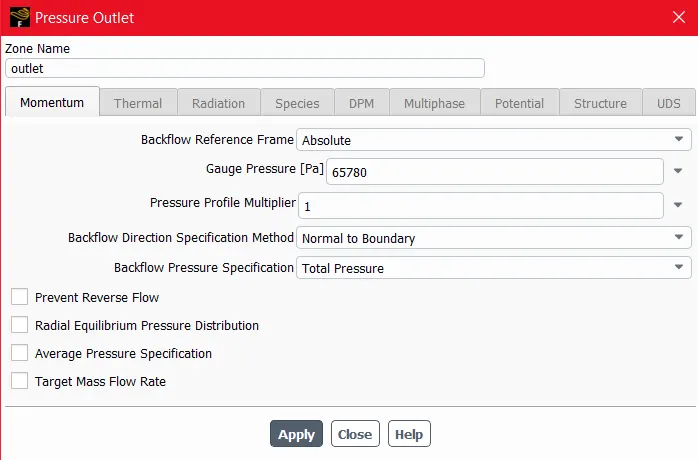
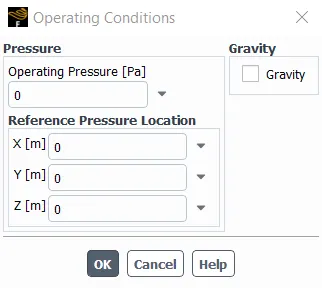
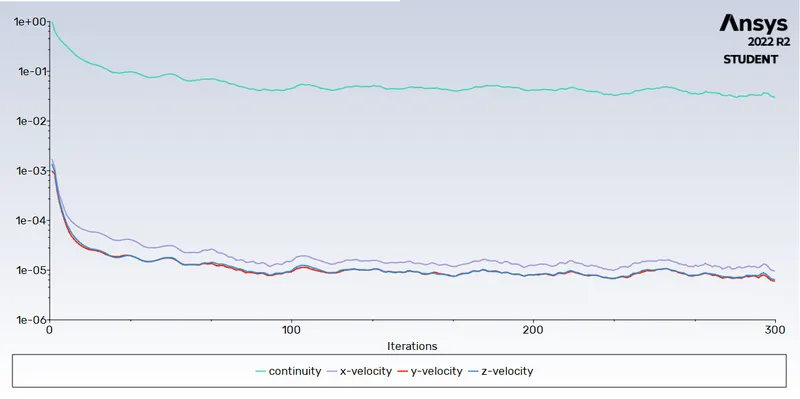
We are using Laminar Viscous Turbulance Model, Air Velocity as 62 m/s, gauge pressure as 65780 pa, Operating condition as 0 pa, Inlet Velocity Boundary condition and Outlet pressure Boundary condition. Then we have to run the Solution for 300 Iterations after that we are getting The Results.

Results:-
Residual Plot:-
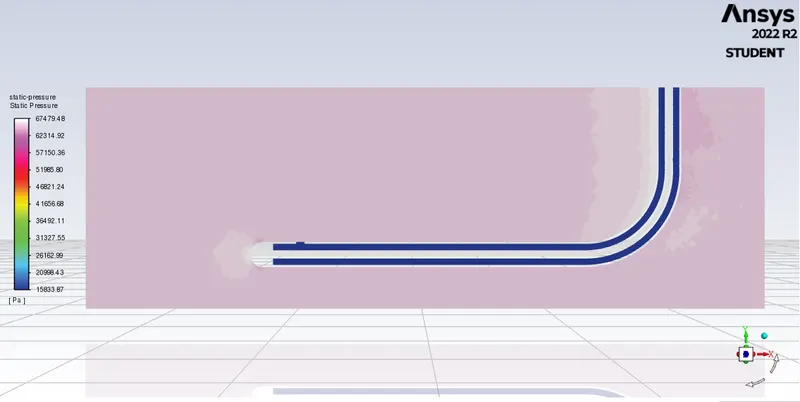
Static Pressure Contour:-
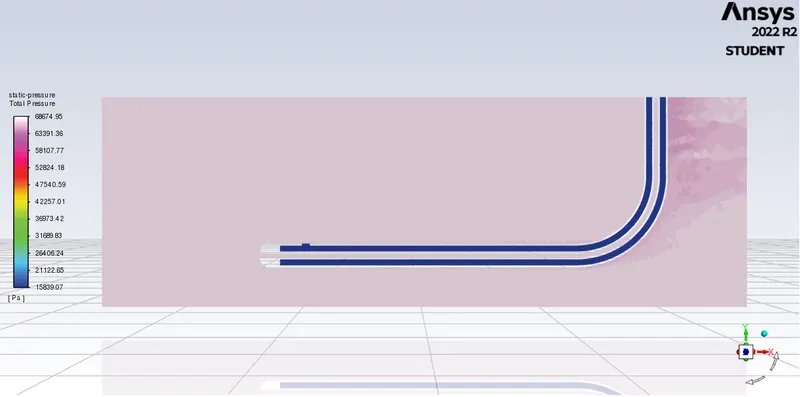
Total Pressure Contour:-
Velocity Magnitude Contour:-
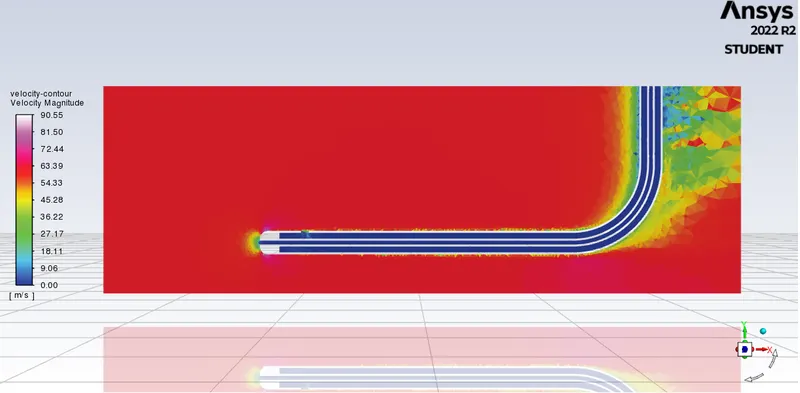
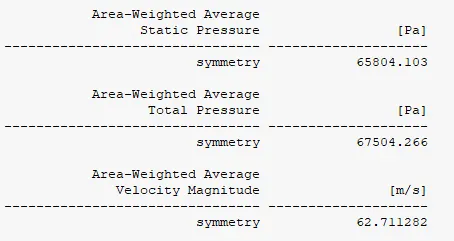
From Above fig we can find the Flow Velocity By using formula, we gets the values of Total pressure and Static pressure from Surface integrals.
`V= sqrt(2((P_(Total)-P_(Static))/(rho_f))`
`V= sqrt(2((67504-65804)/(0.8636))`
V= 62.74 m/s
Case -2 :- Velocity of Air 100 m/s and gauge pressure 33287 pa.
Results :-
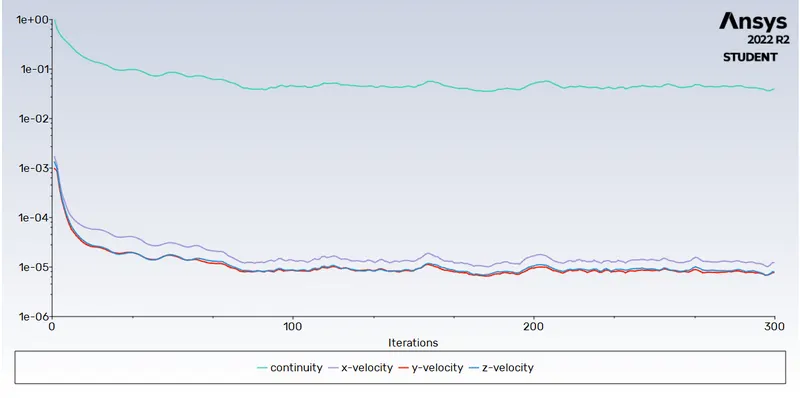
Residual Plot:-
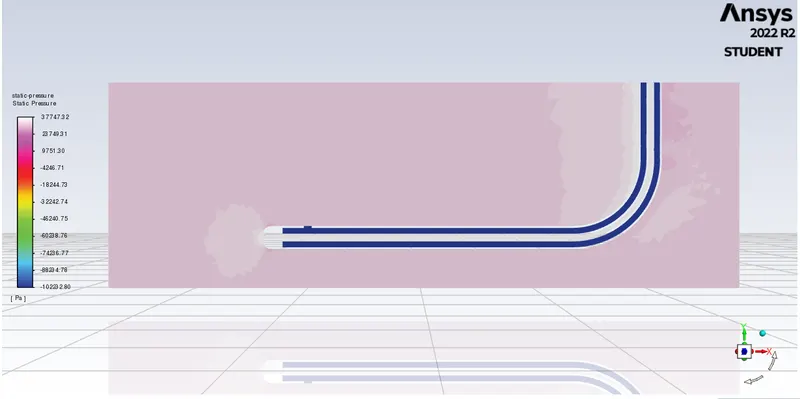
Static Pressure Contour:-
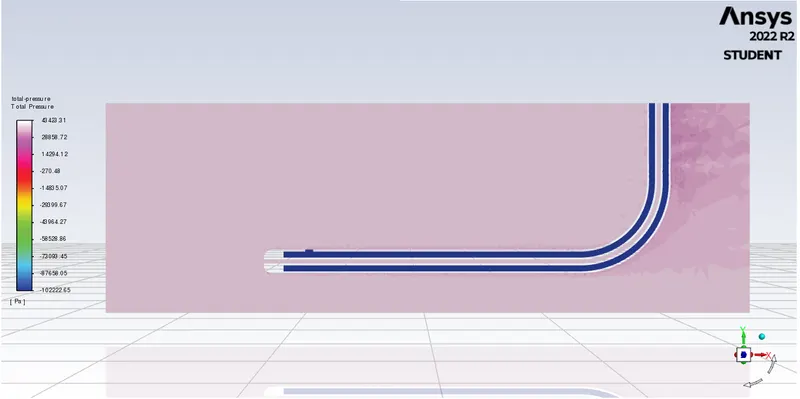
Total Pressure Contour:-
Velocity Magnitude Contour:-
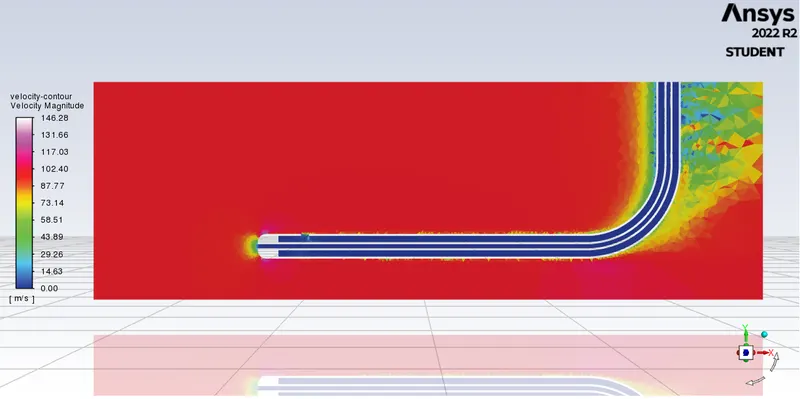
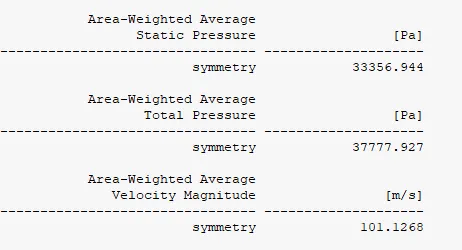
From Above fig we can find the Flow Velocity By using formula, we gets the values of Total pressure and Static pressure from Surface integrals.
`V= sqrt(2((P_(Total)-P_(Static))/(rho_f))`
`V= sqrt(2((37777-33356)/(0.8636))`
V= 101.18 m/s
Case -3 :- Velocity of Air 240 m/s and gauge pressure -2817 pa.
Results :-
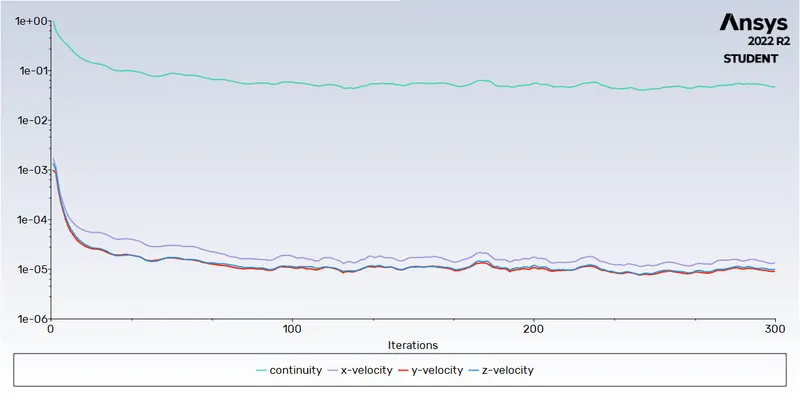
Residual Plot:-
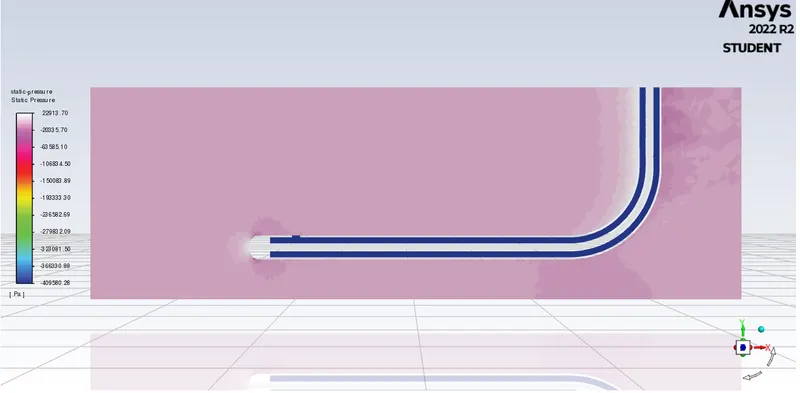
Static Pressure Contour:-
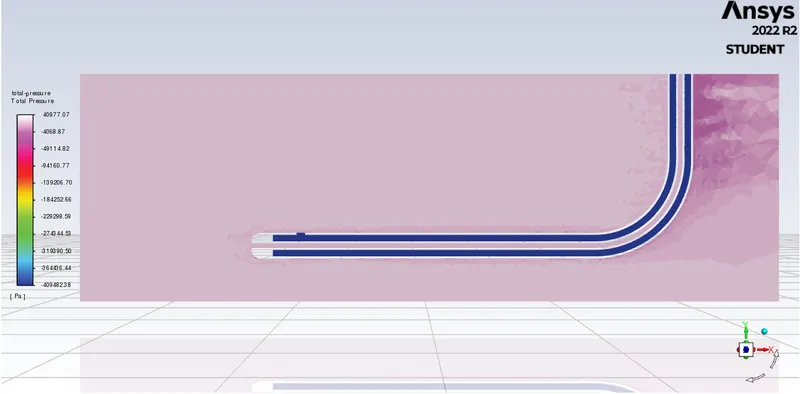
Total Pressure Contour:-
Velocity Magnitude Contour:-
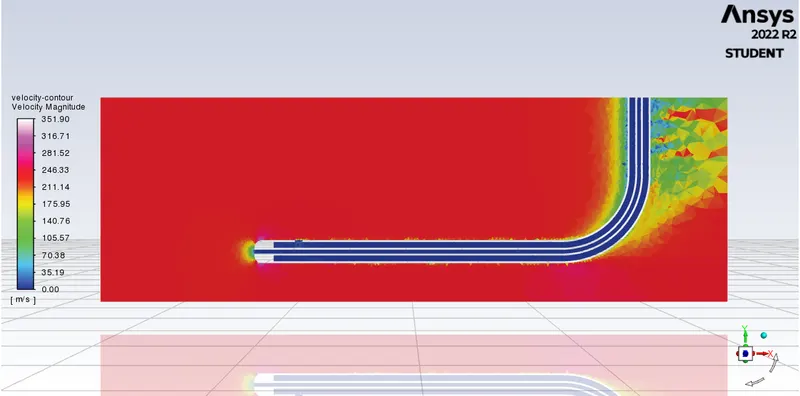
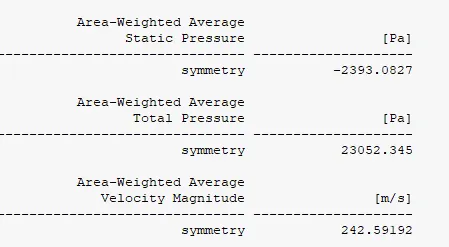
From Above fig we can find the Flow Velocity By using formula, we gets the values of Total pressure and Static pressure from Surface integrals.
`V= sqrt(2((P_(Total)-P_(Static))/(rho_f))`
`V= sqrt(2((23052-(-2393))/(0.8636))`
V= 242.75 m/s
Percentage Error:-
| Sr No. | Cases | Given Velocity (m/s) | Velocity Obtained from Simulation (m/s) | % Error |
| 1 | Case-1 | 62 | 62.74 | 1.14 |
| 2 | Case-2 | 100 | 101.18 | 1.18 |
| 3 | Case-3 | 240 | 242.75 | 1.14 |
CONCLUSION:-
- The Simulation of Pitot-Static Tube is Done, The Static Pressure and Total Pressure contour has been Created.
- The Velocites are calculated from Formula and Given Velocities are quite Similar which is in Acceptable Range(Less than 5%).