Week 3: Flow over a backward facing step
Objective:
- To study the flow over a backward facing step using three different grid sizes.
Geometry:
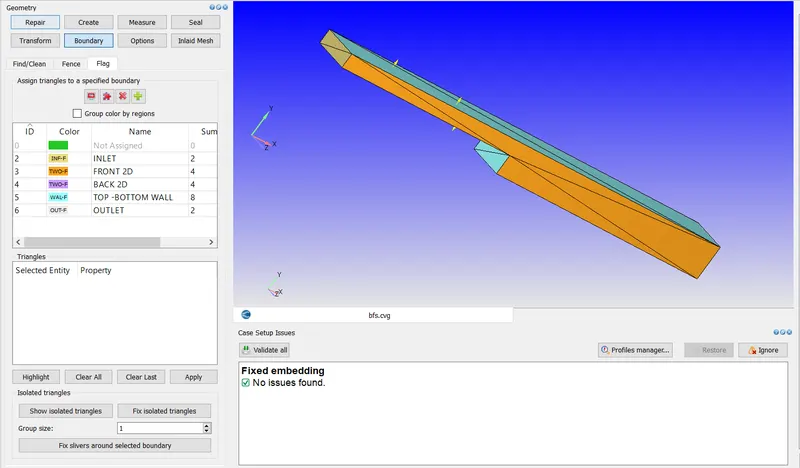
The stl file is imported into the converge studio. The geometry clean up and boundary flagging is performed. The normals orientation is checked such that they are direcyed toward the direction of the flow.
Case set-up:
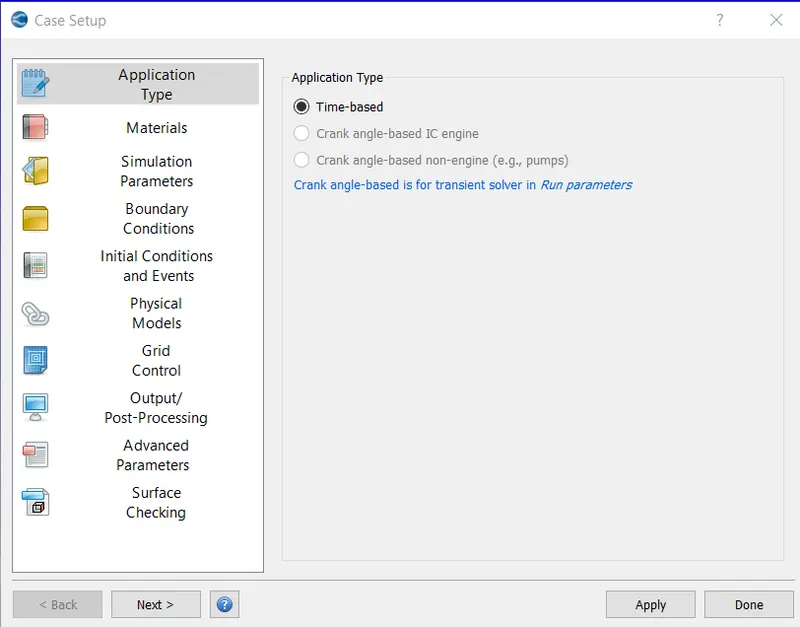
- Application type :
This particular case is a time based to measure time in seconds .
- Materials:
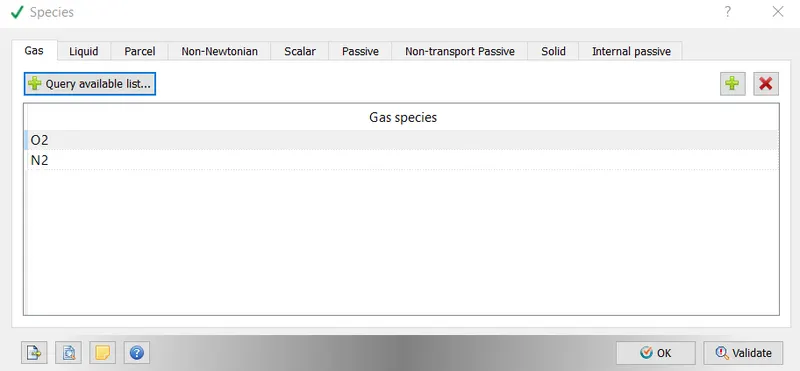
In the materials tab , the predifined mixture is selected as air. Gas simulation is opted for. The species option is selected from the table.
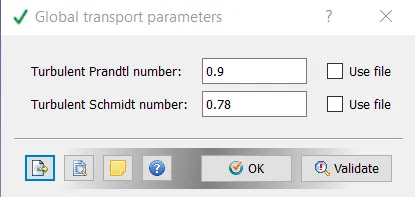
The global transport parameters is kept as the default value converge studio sets.
The species are Oxygen and Nitrogen.
- Simulation parameters:
Steady state solver is selected for a full hydrodynamic and compressible flow.
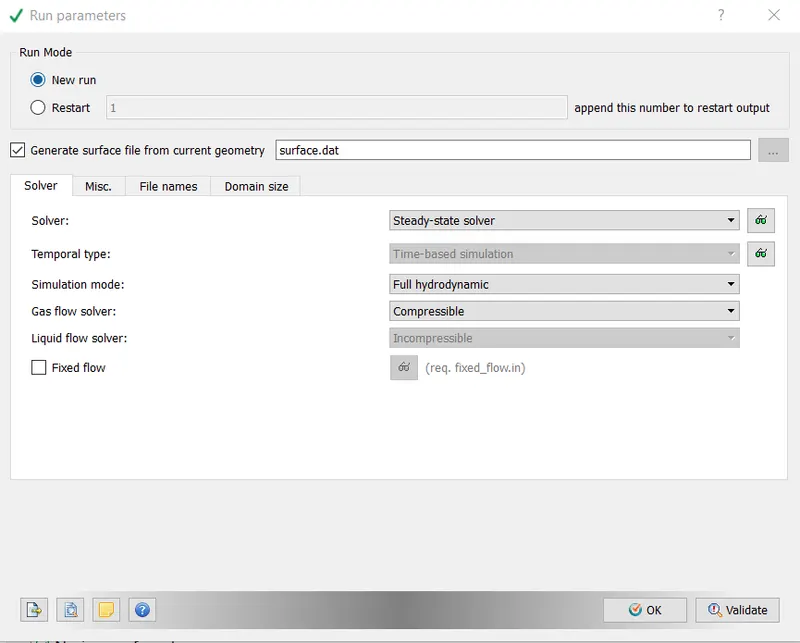
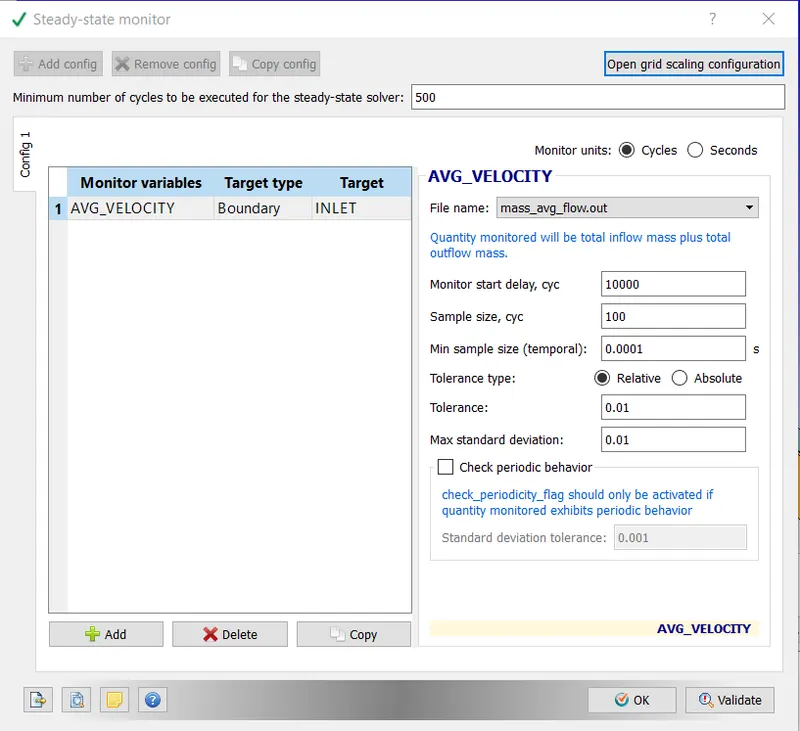
The monitor variable is average velocity, the target tyope is boundary. The monito start delay is 10000 cycles.
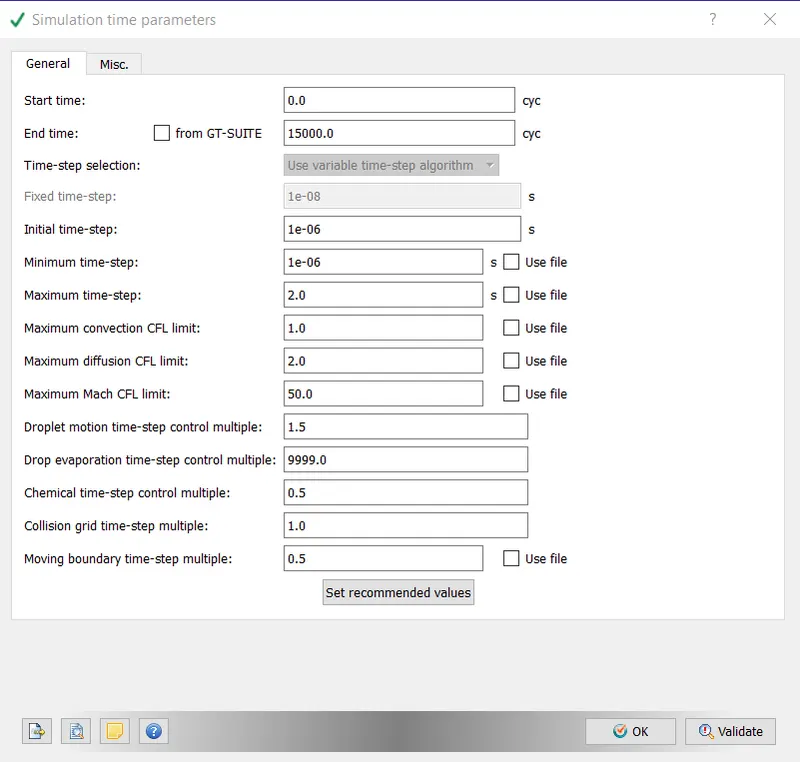
Simulation time parameters :
The number of cycles for the simuation is 15000. The minimum time step and the initial time step is 1e-6. the maximum convection diffusion CFL limit is 1.
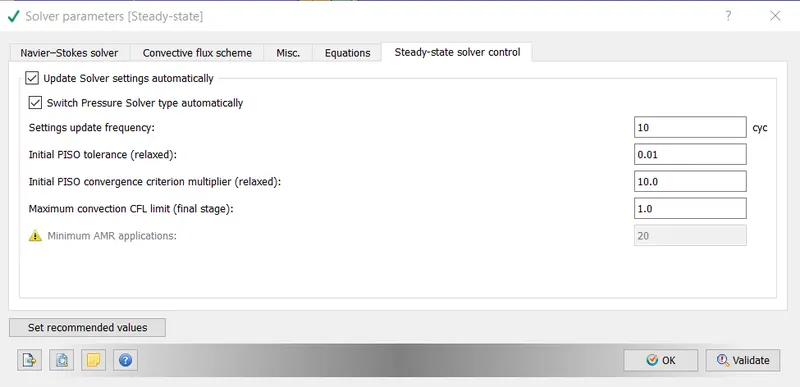
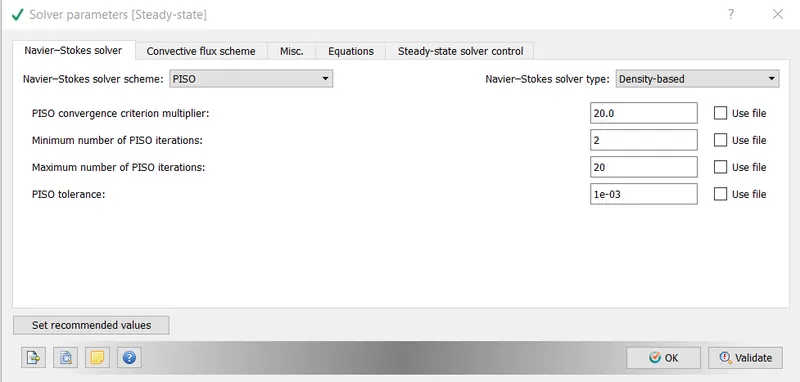
The navier-stokes solver scheme is PISO
Boundary conditions:
| Inlet , boundary id =2 | 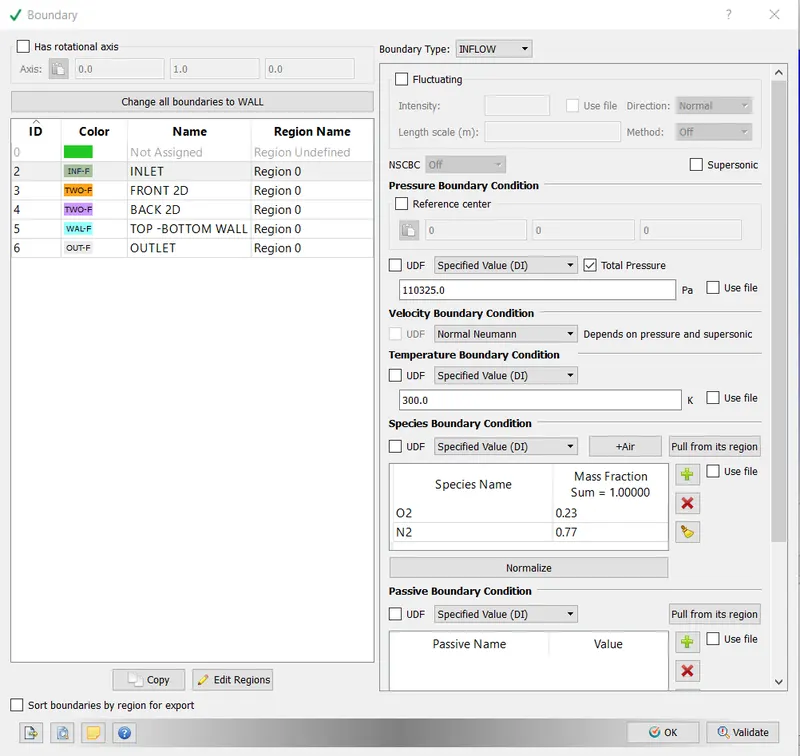 |
| Front 2D , boundary id =3 | 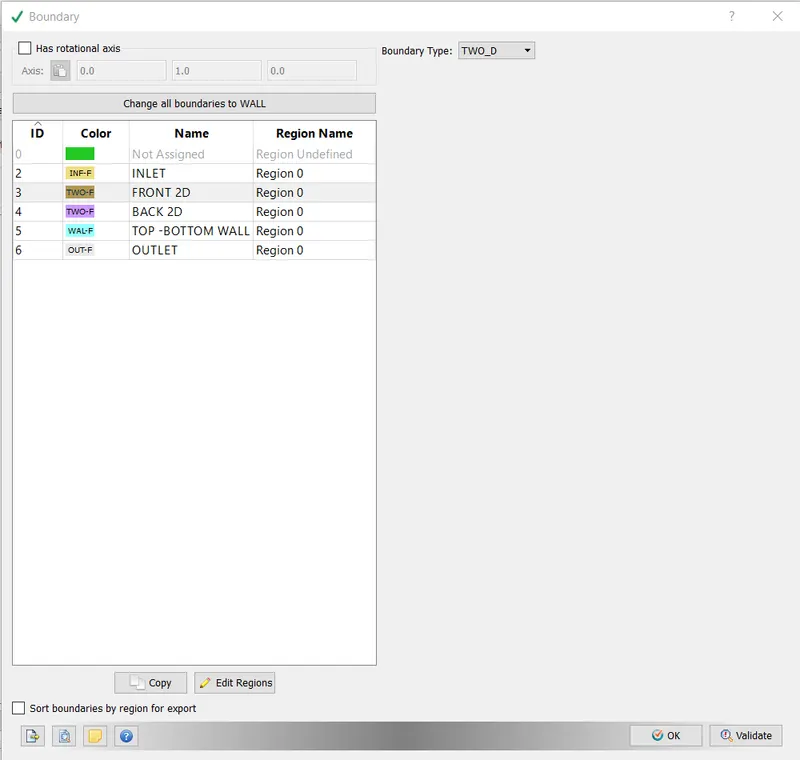 |
| back 2D , boundary id =4 | 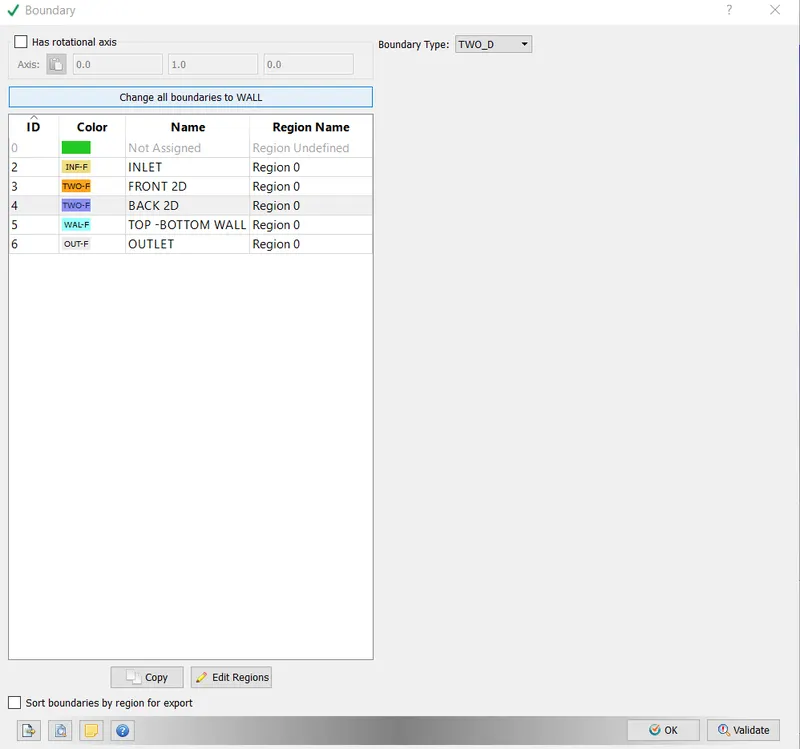 |
| Top and bottom walls , boundary id =5 | 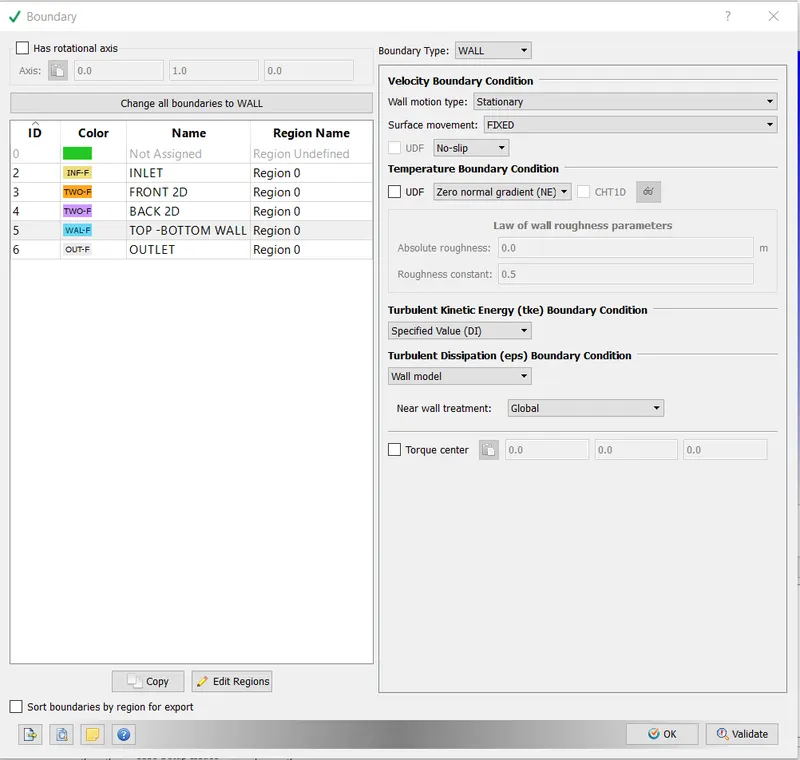 |
| Outlet , boundary id =6 | 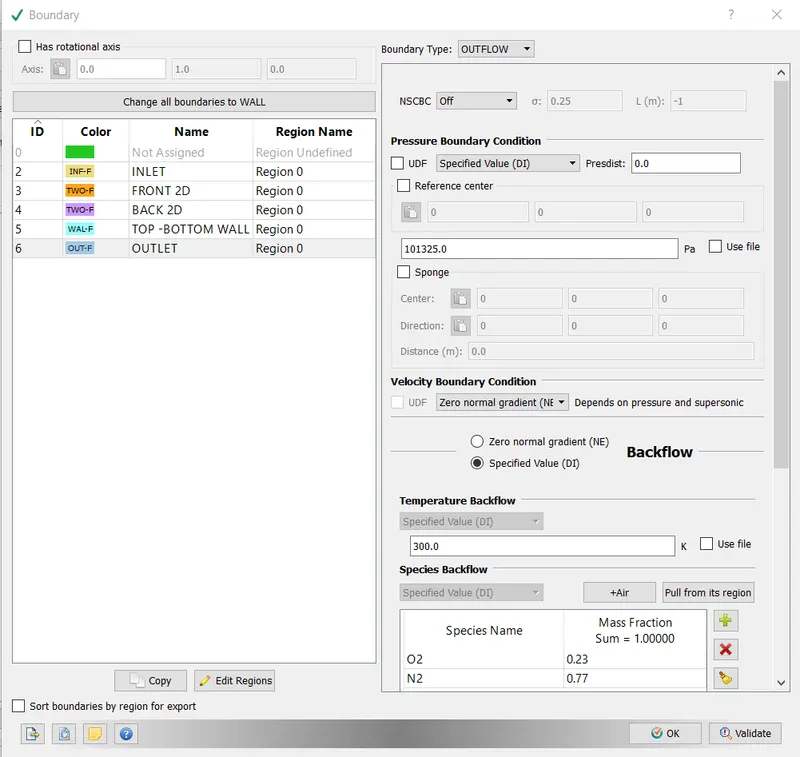 |
- Turbulence model:
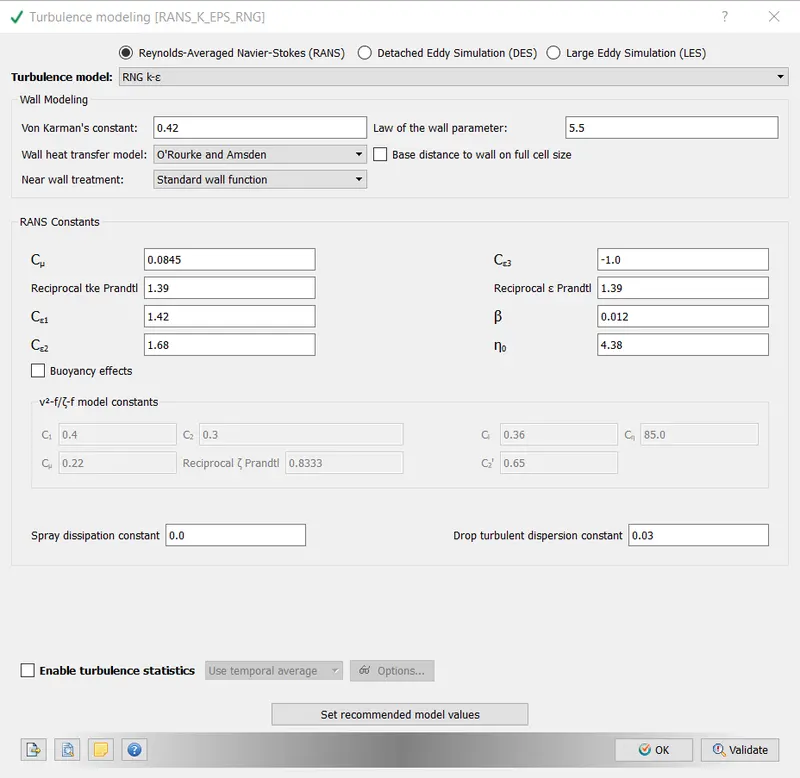
The turbulence model selected is RNG K-epsilon. The values of different parameters are left as selected by default Converge studio.
Grid size:
Three different simulations are done using three grid sizes:
1) dx=2e-3 meters dy=2e-3 meters dz=2e-3 meters
2) dx= 1.5e-3 meters dy =1.5e-3 meters dz=1.5e-3 meters
3) dx=1e-3 meters dy =1e-3 meters dz= 1e-3 meters
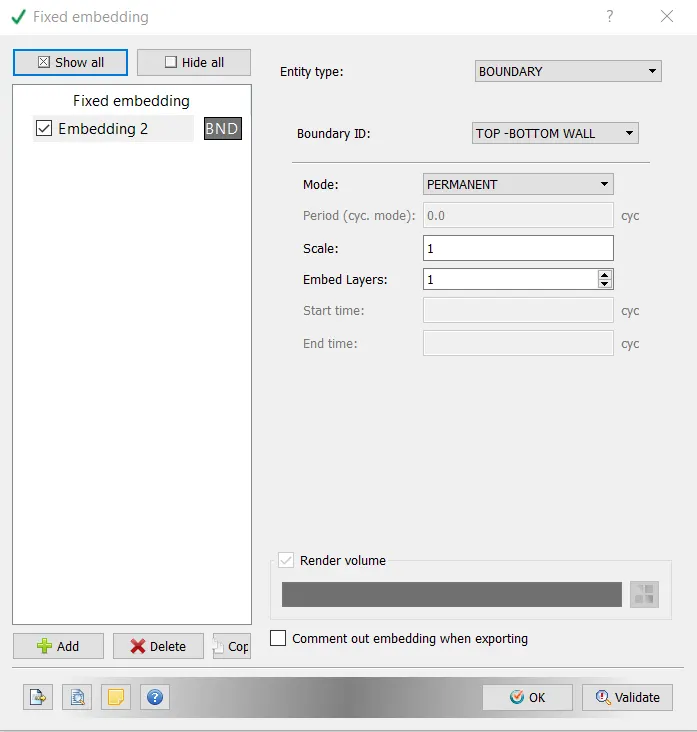
Fixed embedding is done to the top and bottom walls of permanent nature with scale 1 and embedded layers 1
Mesh size : 1.5e-3 meters
- Mesh display:
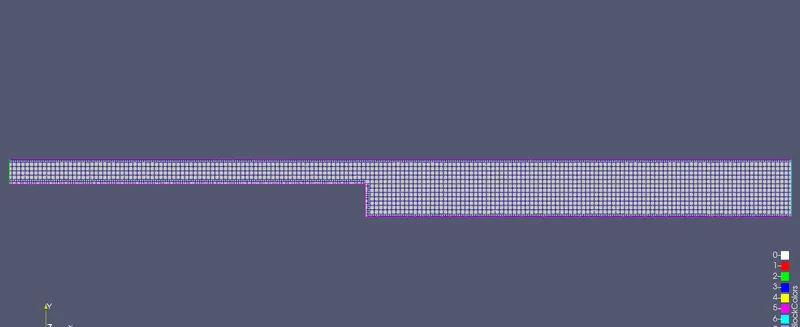
- Velocity contours :
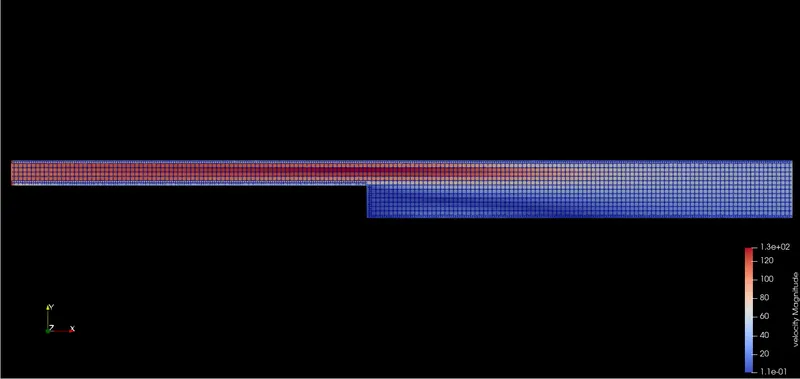
- Pressure contours :
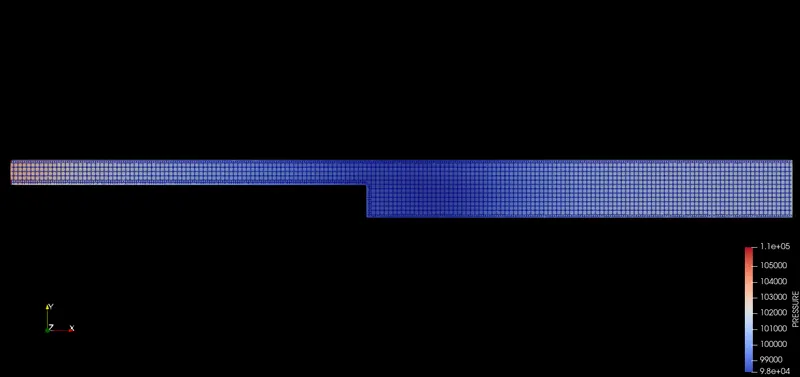
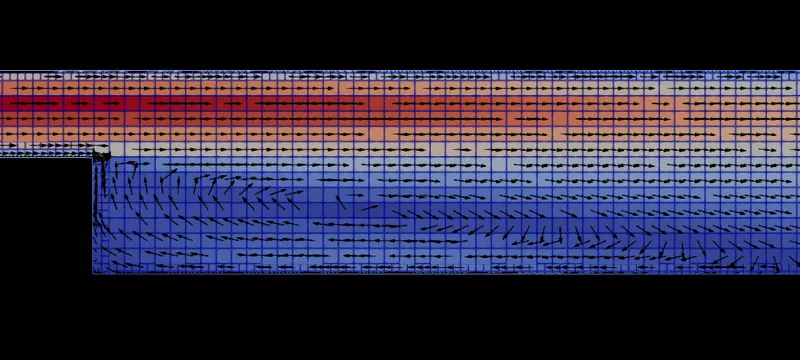
- Velocity vectors:
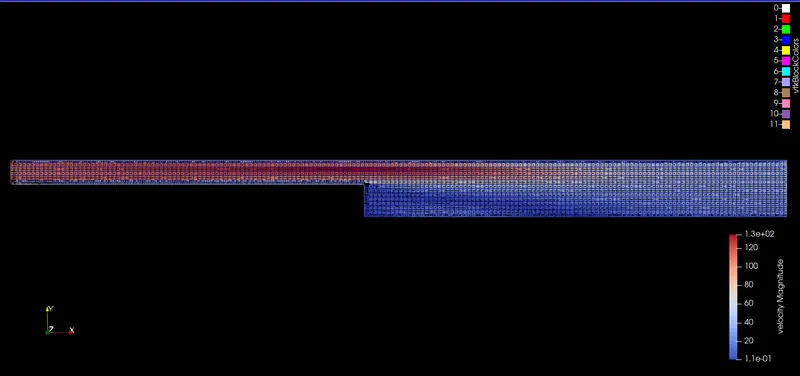
zoomed in section of flow separation:
Plots :
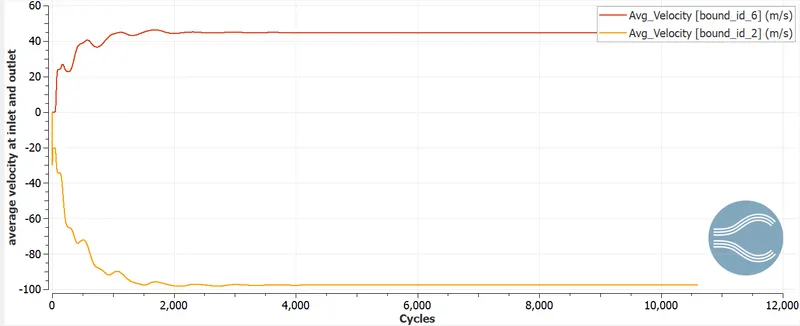
- Average velocity at inlet and outlet :
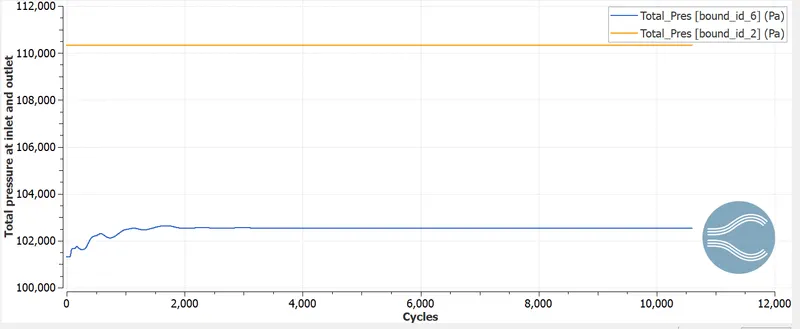
- Total pressure at inlet and outlet :
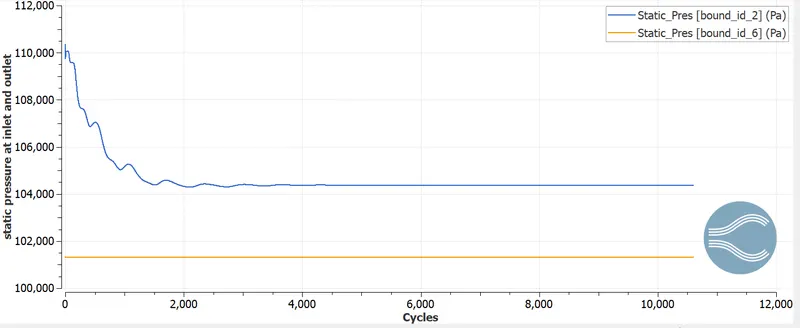
- Static pressure at inlet and outlet:
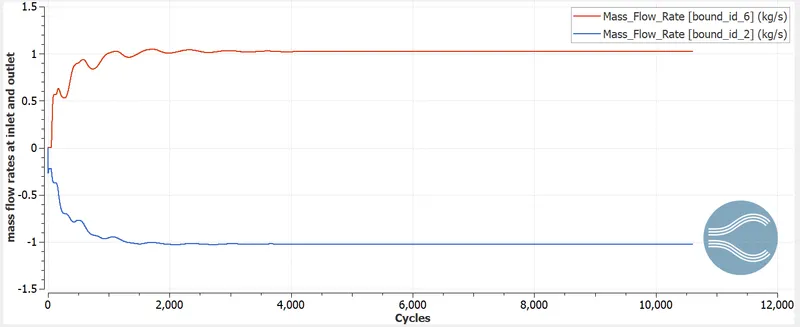
- Mass flow rates at inlet and outlet:
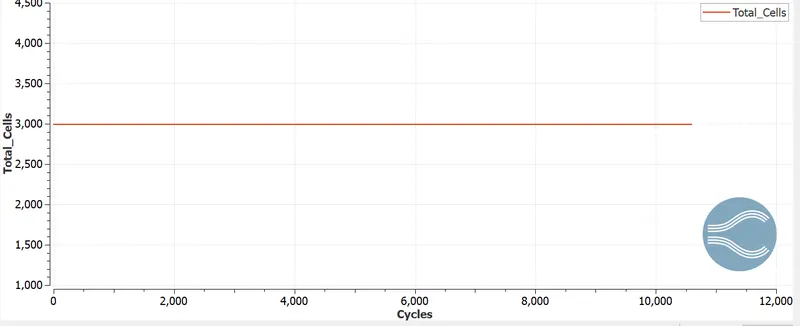
- Total cell counts:
Mesh size : 1e-3 meters
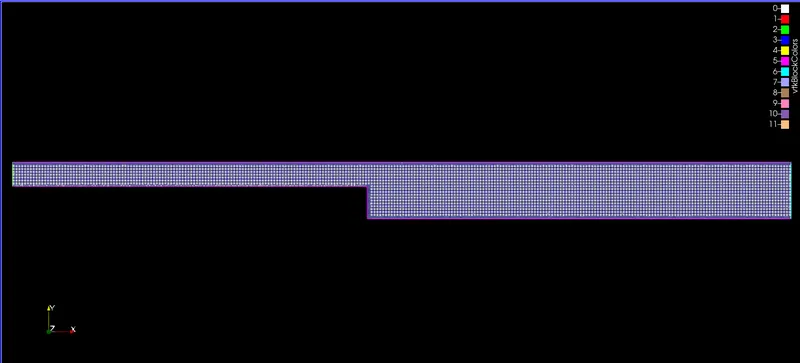
- Mesh display:
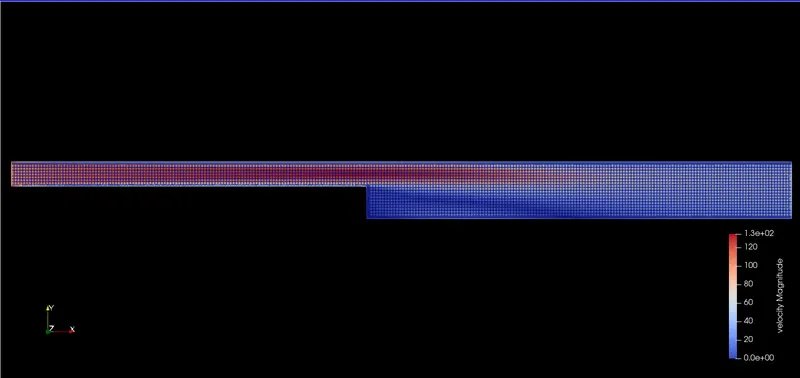
- Velocity contour:
- Pressure contour:
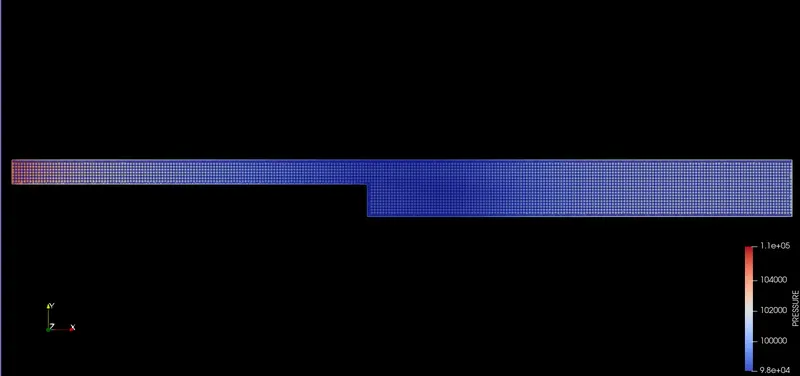
- Velocity vectors:
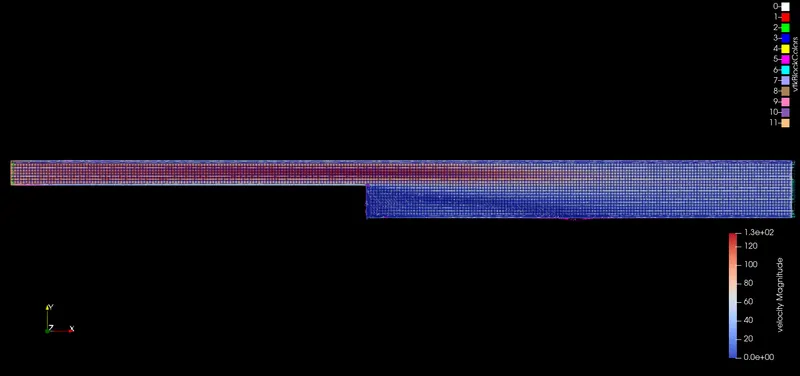
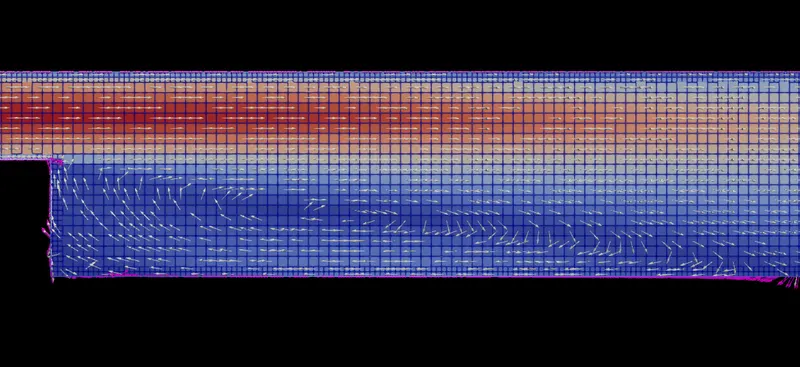
- Zoomed in at flow separation:
Plots:
- Average velocity at inlet and outlet:
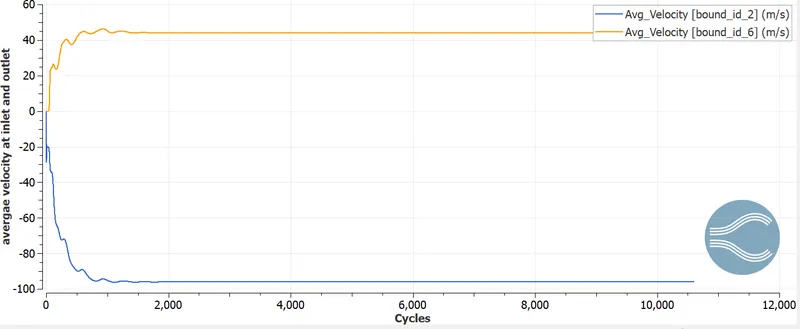
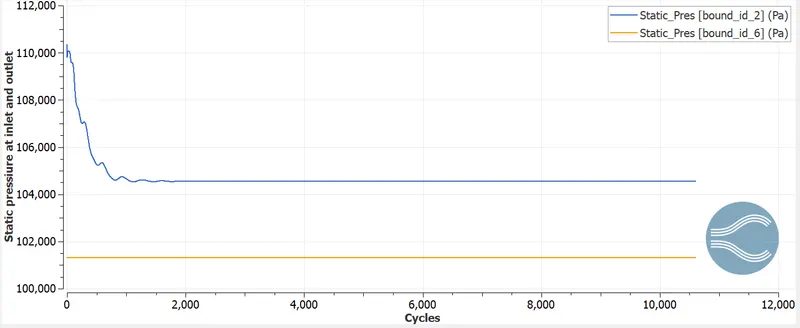
- Static pressure at inlet and outlet:
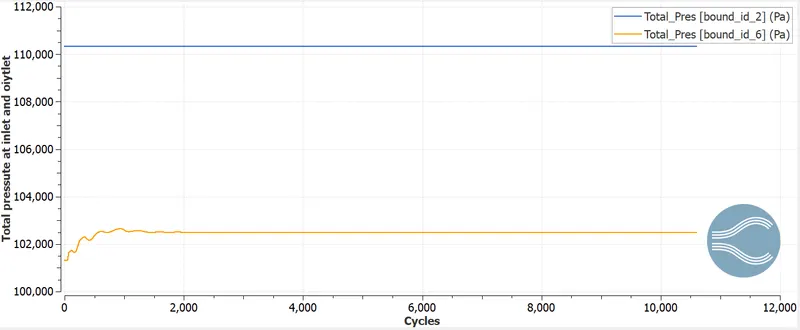
- Total pressire at inlet and outlet:
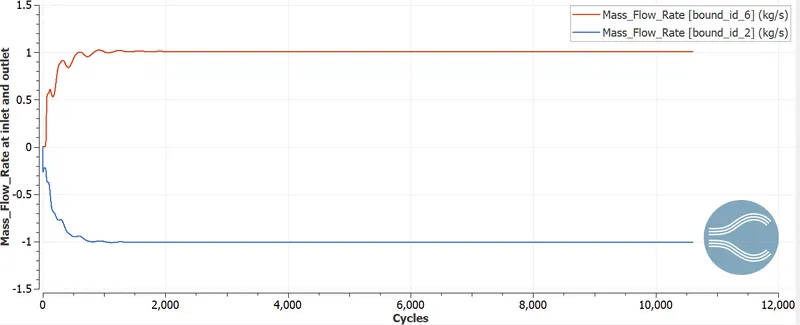
- mass flow rate at inlet and outlet:
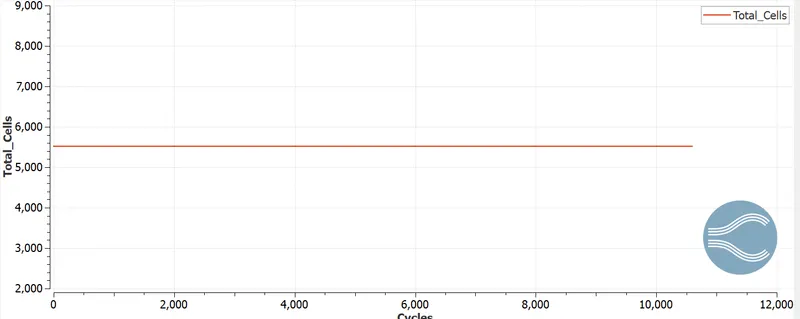
- Total number of cells:
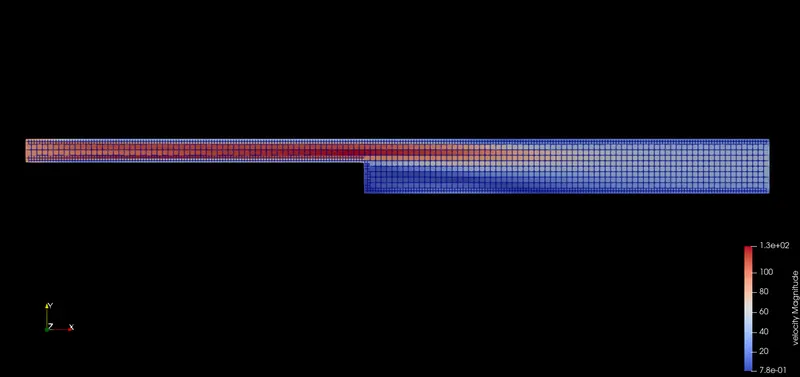
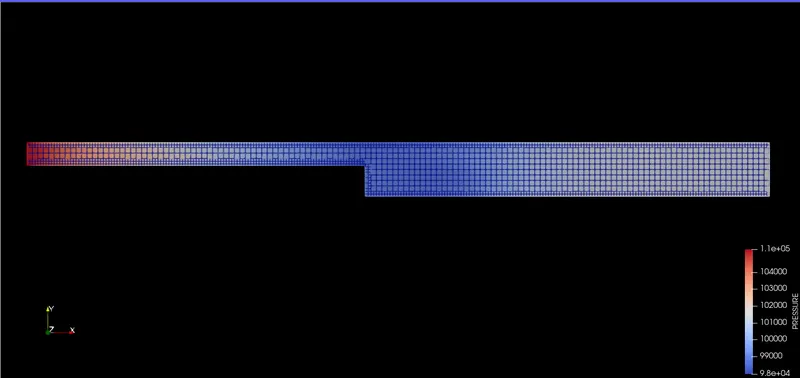
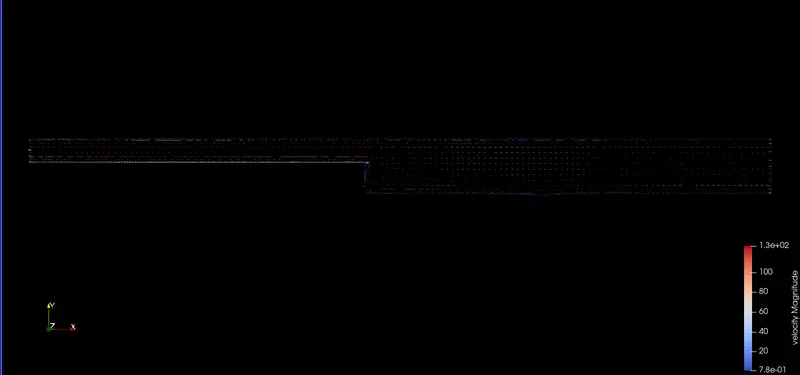
Mesh aize = 2e-3 meters
- mesh display:
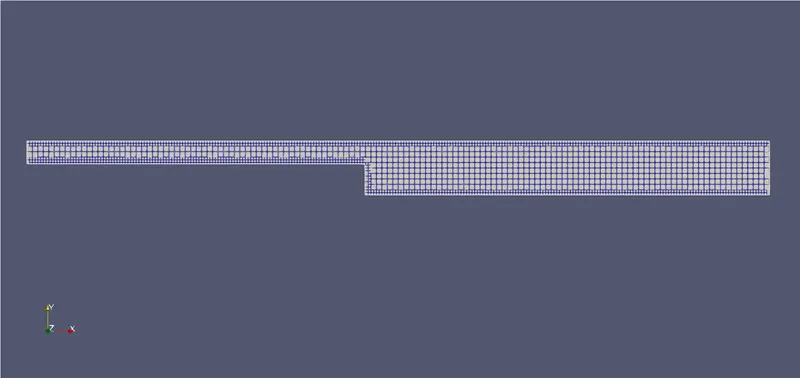
- Velocity contour:
- Pressure contour:
- Velocity vector:
- Zoomed in part of flow separation:
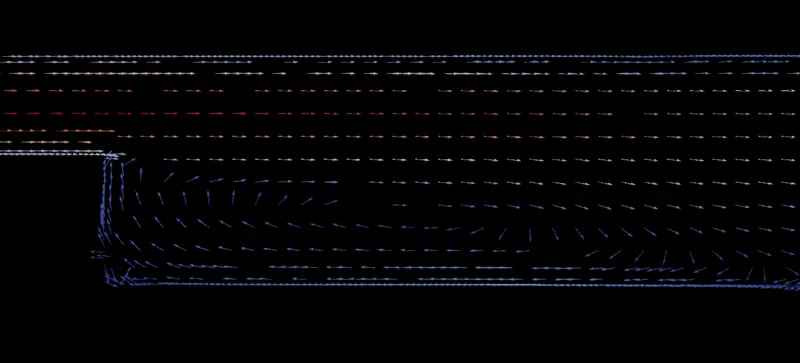
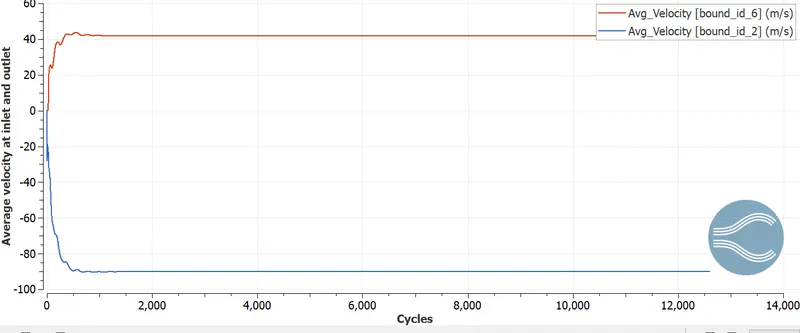
Plots:
- Average velocity at inlet and outlet:
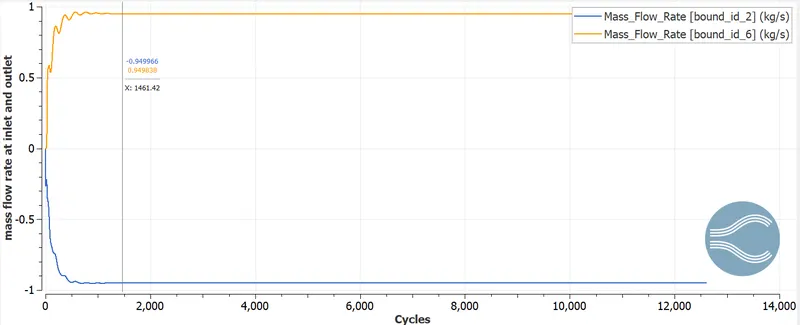
- Mass flow rate at inlet and outlet:
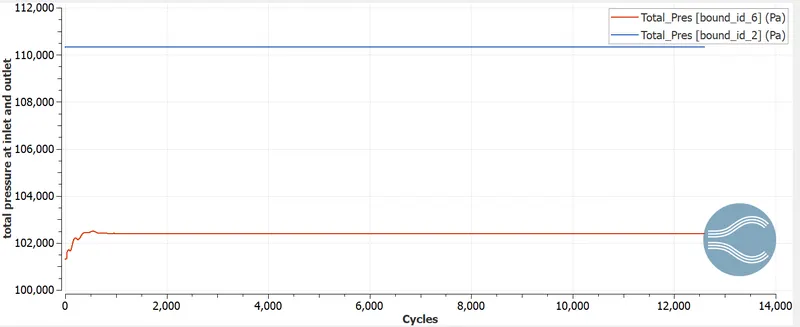
- Total pressure at inlet and outlet:
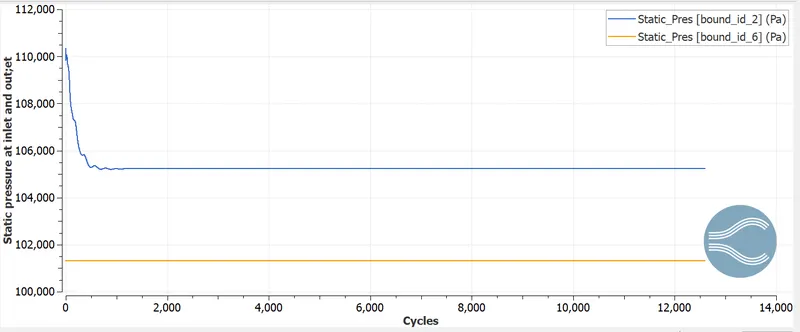
- Static pressure at inlet and outlet:
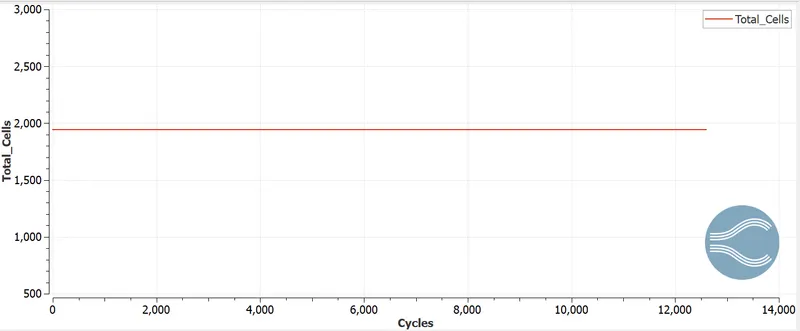
- Total number of cells:
- Animation files:
The animation file for the simulation with grid size 1e-3 meters is https://youtu.be/WDAB2KxVTSg
The animation file for the simulation with grid size 1.5e-3 meters is https://youtu.be/wwKXbZiVsUg
The animation file for the simulation with grid size 2e-3 meters is https://youtu.be/2TsxfAP2GyI
- Discussion:
Reason of flow separation:
The Bernoulis equation can be wriiten as `(p)/(rho*g)+(v^2)/(2*g)+z=c`where, `p/(rho*g)= pressure head`, `v^2/(2*g)`= kinetic head and `z`is potential head
Here in this case , z is constant. As the flow occurs , the area increases , from the continiuty equation, `A*v=c` so, velocity decreases. When applied this to the bernoulis equation, the the pressure increases, accurately it can be wriiten as `(dp)/(dx)`increases. The change in pressure along the x direction increases. This condition is called adverse pressure gradient. At a certain point, there comes a point, where `(du)/(dy)`is 0 . after this flow separation occurs. The flow separation occurs due the adverse pressure gradient.
- Conclusion:
The flow simulation over a backward facing step is studied. In paraview the results are visualized.