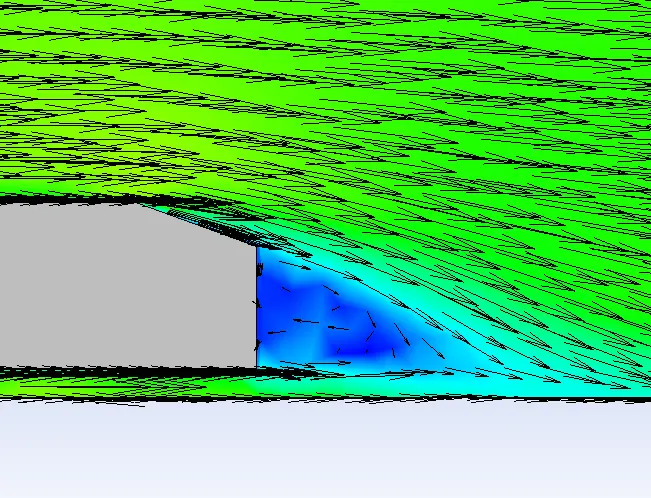
Week 3 - External flow simulation over an Ahmed body.
AIM: To perform external flow simulation over an ahmed body. Define Ahmed body and it's uses in CFD. Study the flow and explain negative pressure in the wake region and the significance of point of seperation
Two cases are studied :
CASE-1 : Baseline Mesh
CASE-2 : Refined Mesh
Describe Ahmed's body and its importance.
In the automotive industry, the Ahmed body is a simplified car body used to examine how the flow pattern affects drag. Many important characteristics of an automobile, such as stability, comfort, and fuel efficiency at high speeds, are defined by the external aerodynamics of the vehicle. High turbulence and three-dimensional flow separations are present in the flow around the vehicle, and it is becoming more and more important to understand the physical characteristics of these dynamical flows. Various experiments have been conducted to study the flow over ahmed body and there is rich data available for the same. This allows CFD engineers to test there CFD code and validate it by running the code for the ahmed body and comparing the experimental results
Explain the reason for the negative pressure in the wake region.
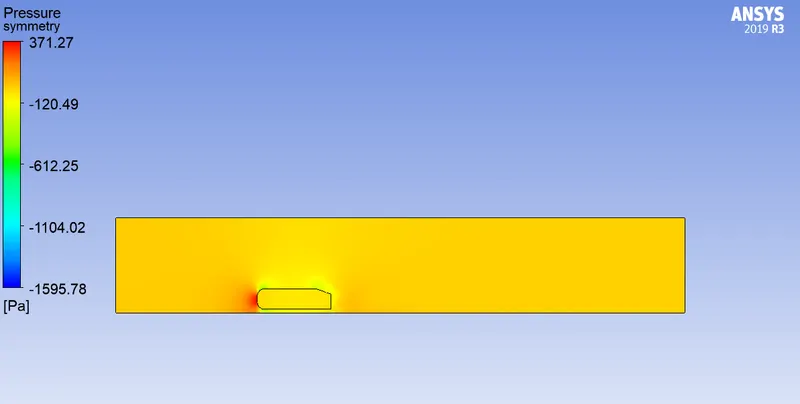
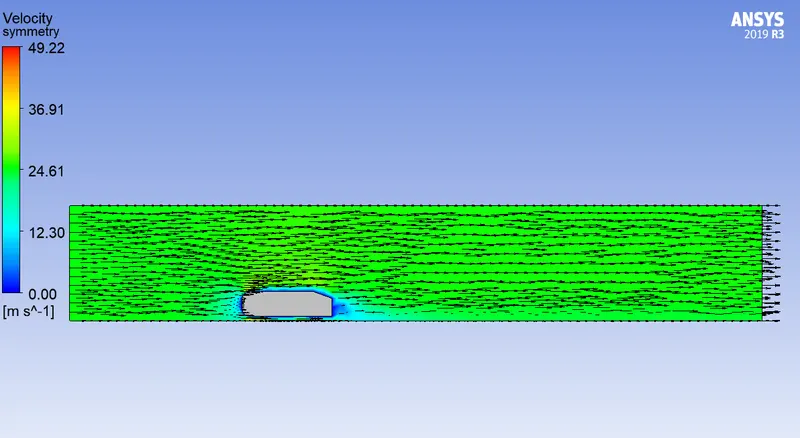
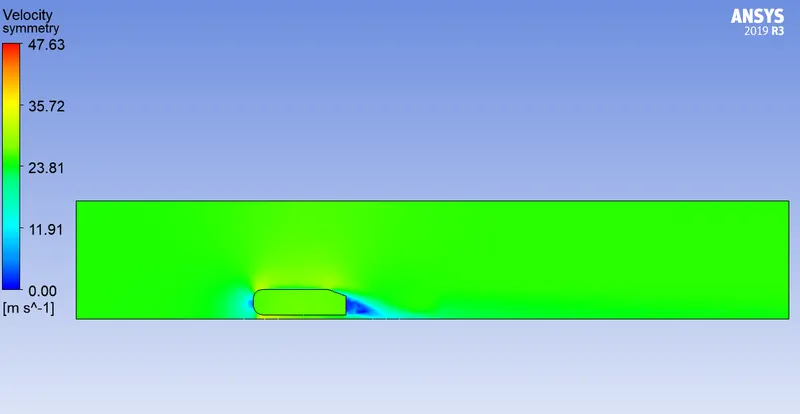
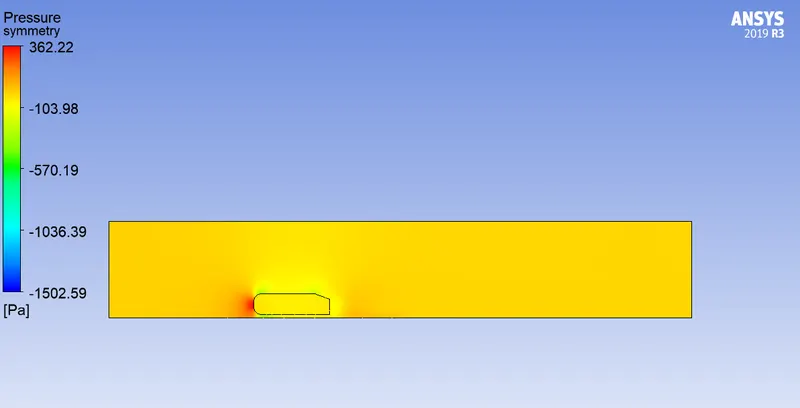
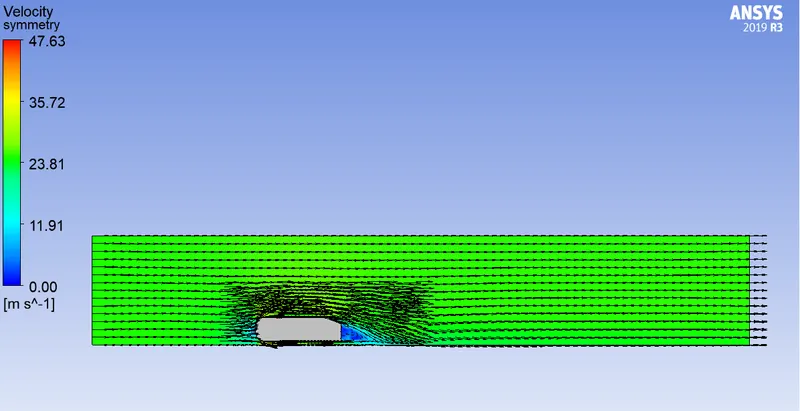
The path lines demonstrate the precise creation of a circular motion or vortex just at the vehicle's rear. Two distribution zones are divided by the separation. One is located in the lower section of the rear end, the other at the upper part. The path lines reveal the nature of the fluid interaction with the Ahmed body's rear end. This interaction demonstrates that the fluid retains momentum even after breaking contact with the slope, and the fluid particles close to the surface almost exhibit a no-slip region, indicating that the fluid particles are in contact with the slope and base of the rear part at the lowest possible velocity. The vaccuum crearted at the rear tries to get filled up by atmospheric pressure, causing formation of vortices in the wake region and creative negative pressure. This pressure difference makes the body experience drag force as fluid pushes from higher pressure to lower pressure
Explain the significance of the point of separation.
A point when the dv/dy, or gradient of velocity, goes to zero together with the dp/dx reaching zero is known as the fluid separation point. A single contour alone cannot accurately pinpoint the point of separation. The separation point is where an object travelling through the air ceases "sticking" to the air. The air molecules push back on an object as it moves through the air and impede its motion; this resistance is known as pressure drag.
GEOMETRY SETUP
CASE-1
- The geometry of the ahmed body is imported in spaceclaim
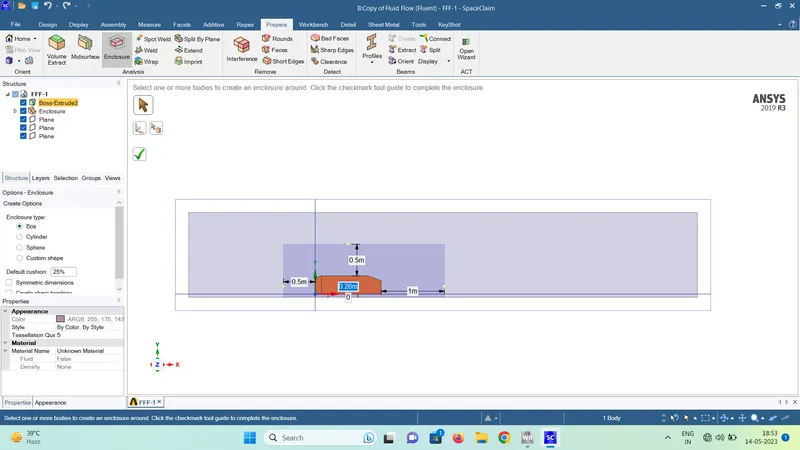
- An enclosure of dimension 5M at the rear and 2M in the front is created as shown
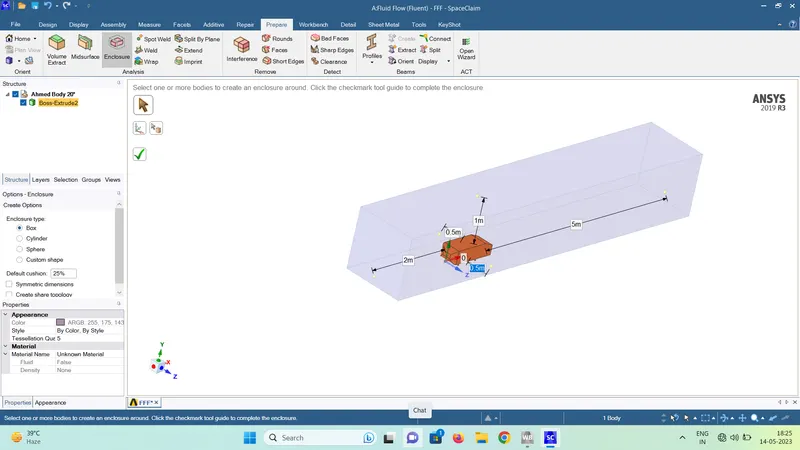
- This is used as the baseline mesh for the simulation. The enclosure acts as the fluid volume. The size of the enclosure depends upon the size of the wake region. The size is fixed by studying of efficiently the enclosure is able to capture the flow around the body and certainly at what distance the flow becomes steady
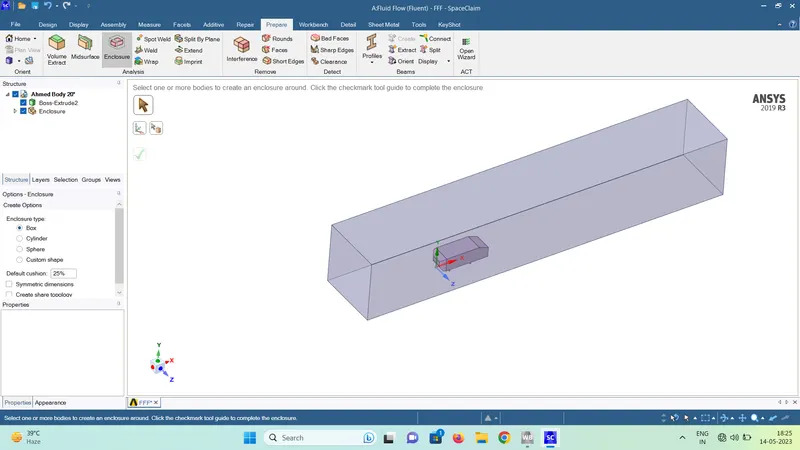
- The ahmed body being symmertic, it can be easier to study the flow by splitting the body. This saves time and resources without compromising with the results. This is achieved in spaceclaim by using splitbody command
- The ahmed body is suppressed for physics, as we do not need mesh inside the body in studying the characteristic flow
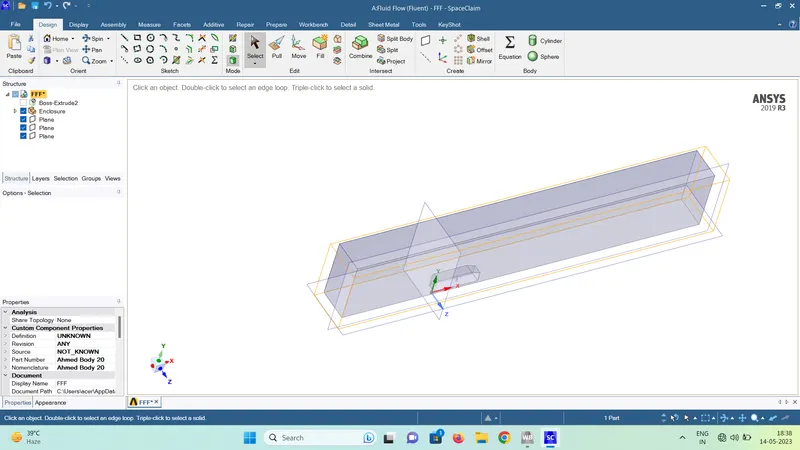
CASE-2
- In studying the flow over a body, it is important to get the boundry layer formation right. In the analysis of boundry layer, the mesh needs to be finer in the region near the body. To achieve this the baseline mesh in further improved by introducing another enclosure inside the fluid volume which is smaller. This enclosure can be used to create finer mesh around the body
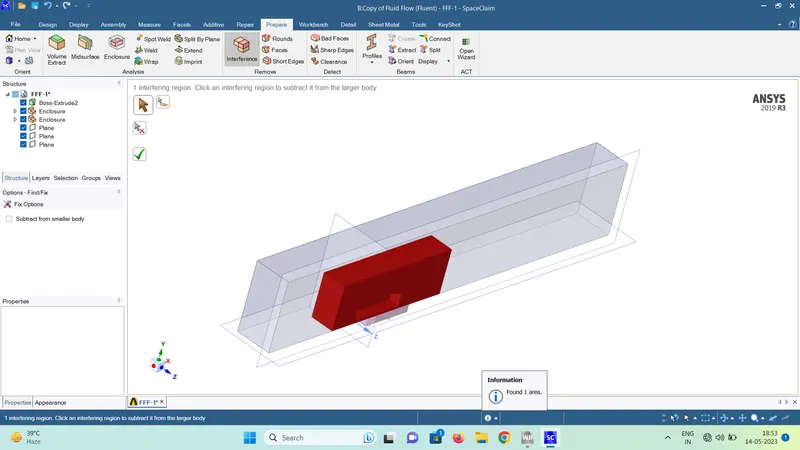
- Creation of another enclosure causes interfearence in the body. This can be fixed by using interference command in the repair window
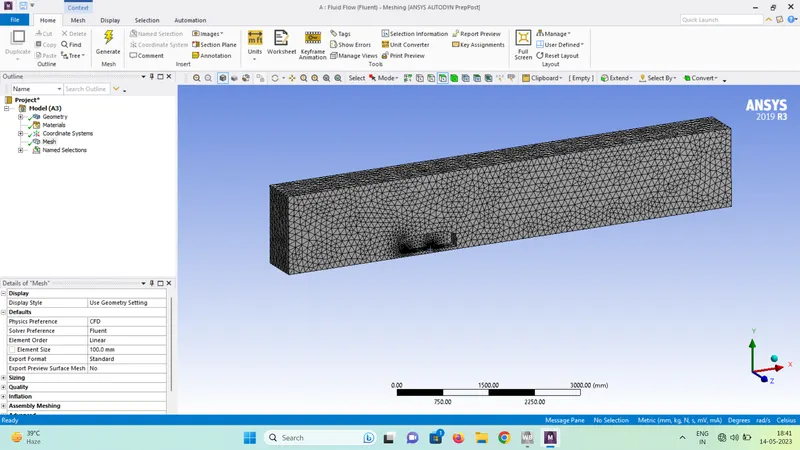
- Share topology is turned on in this to get a conformal mesh to eliminate interpolation issues
MESH
CASE-1
- For baseline mesh, a course mesh of Element size = 100 mm is used
Element Quality
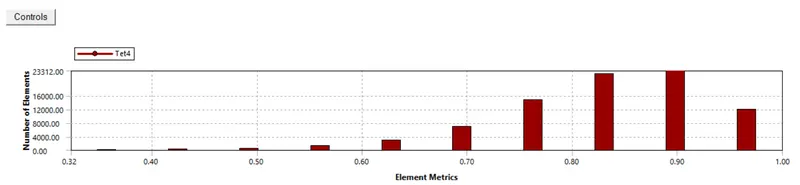
- This baseline mesh gives idea of how the flow turns out so that we can adjust the size of inner enclosure to fit the wake region in it
- Named selections as inlet,outlet,symmetry and carwall are given
CASE-2
- The fluid volume is meshed by introducing Multizone method, which meshes the outer enclosure in tetrahedron elements at Element szie=100 mm
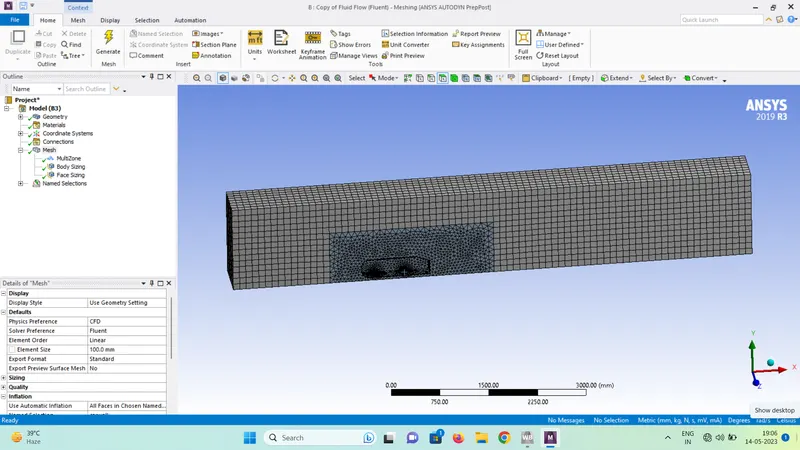
- The inner enclosure is meshed by sizing and it to Element Size = 50 mm
- For capturing the boundry layer effectively, inflation layers are introduced in the carwall with Total Thickness = 12 mm
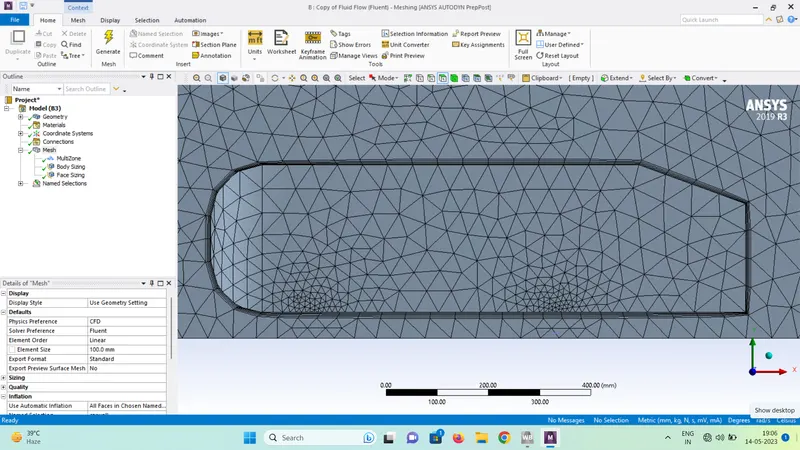
- For capturing the curvature of the ahmed body legs, face sizing is used at Element Size = 5 mm
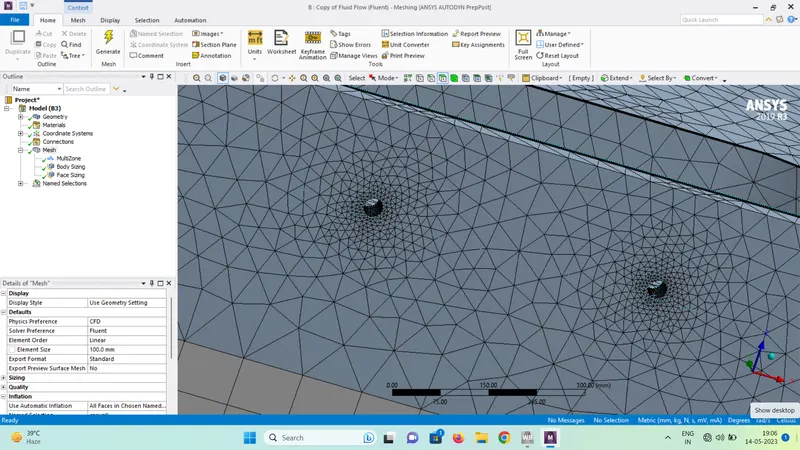
- Appropriate named selections are given
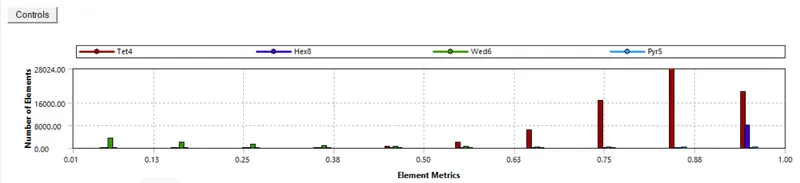
Element Quality
SET-UP
For both the cases the setup is the same as follows:
Solver : Pressure-Based
Model : k-epsilon (standard wall function)
As k-epsilon model with a wall treatment is being used in solving this. The y+ can be greater than 30. The mesh is created keeping this in mind
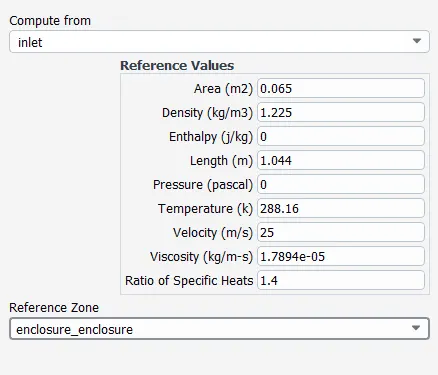
Inlet Velocity : 25 m/s
Fluid : Air
Frontal Area : 0.065 m^2
Length = 1.044 m
For calculating drag and lift coefficient, it is important to provide the correct refrence values to the fluent solver
RESULTS
CASE-1 ( Baseline Mesh)
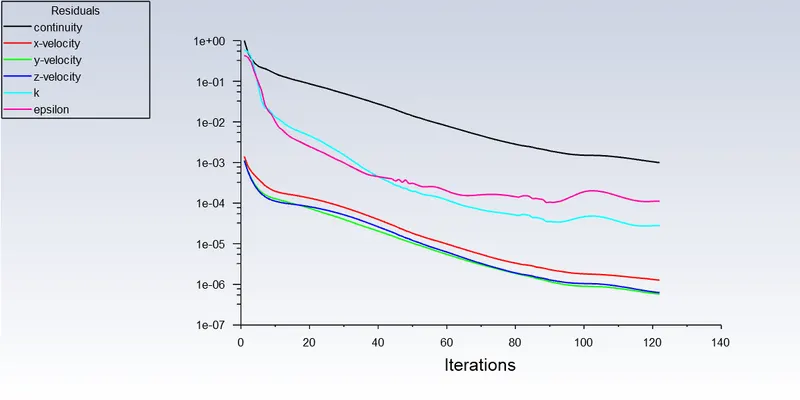
Residuals
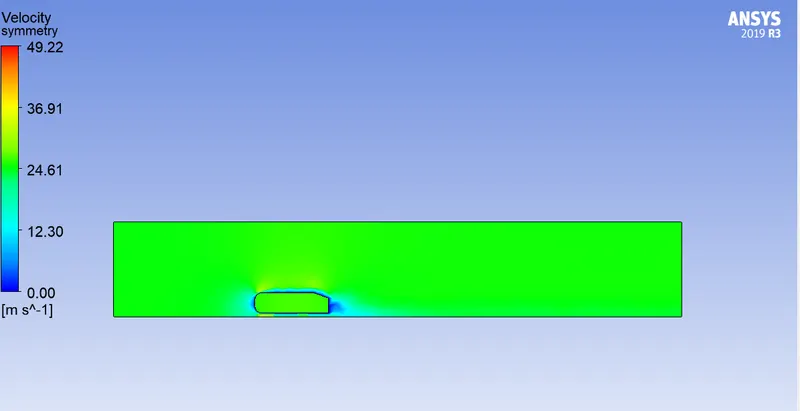
Velocity Contour
Pressure Contour
Vector Plot
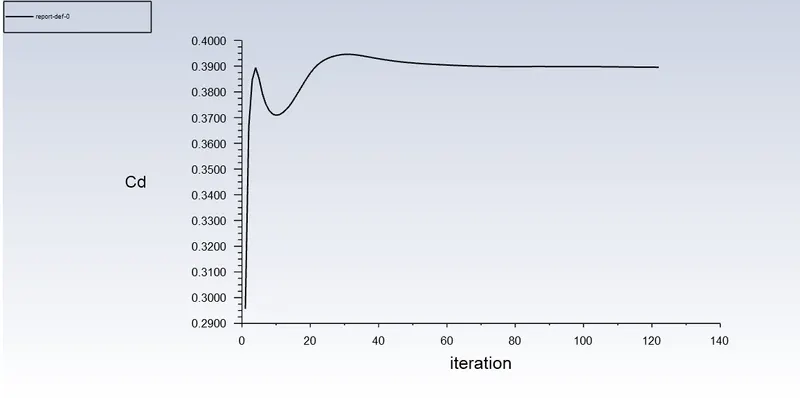
Drag Coefficient
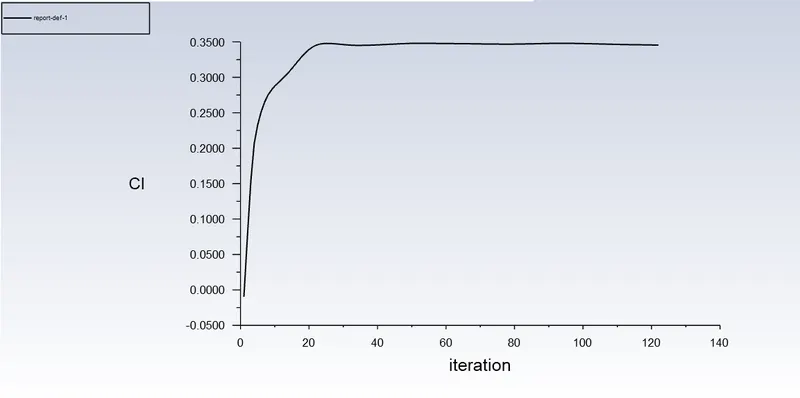
Lift Coefficient
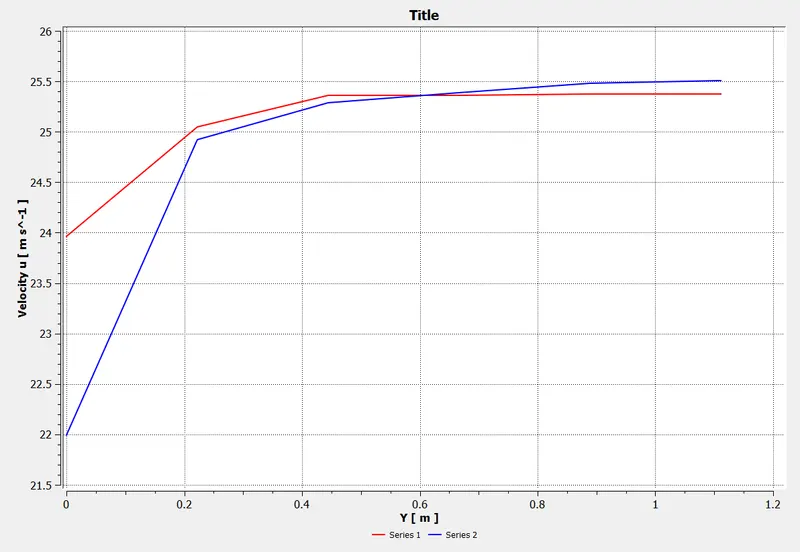
Velocity Chart ( Line 1 @ x =2 and Line 2 @ x =3)
CASE-2 (Refined Mesh)
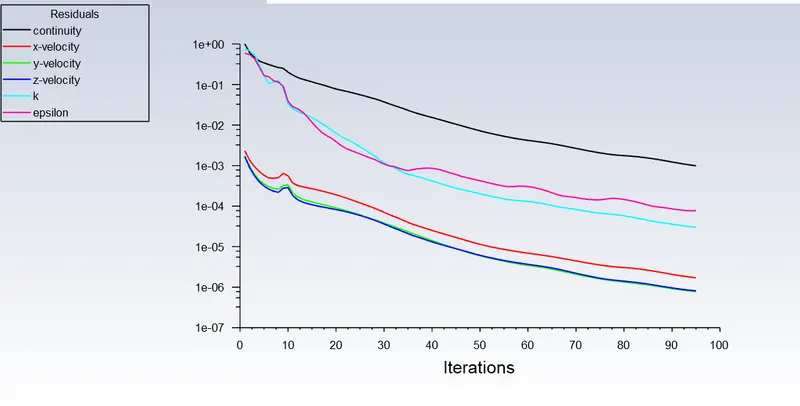
Residuals
Velocity Contour
Pressure Contour
Vector Plot
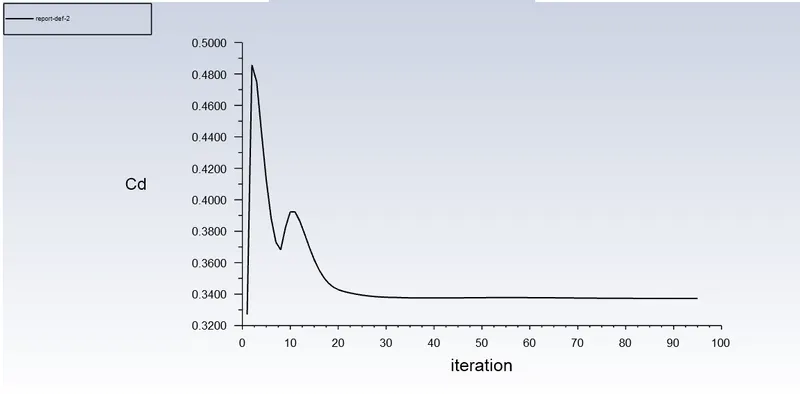
Drag Coefficient
Lift Coefficient
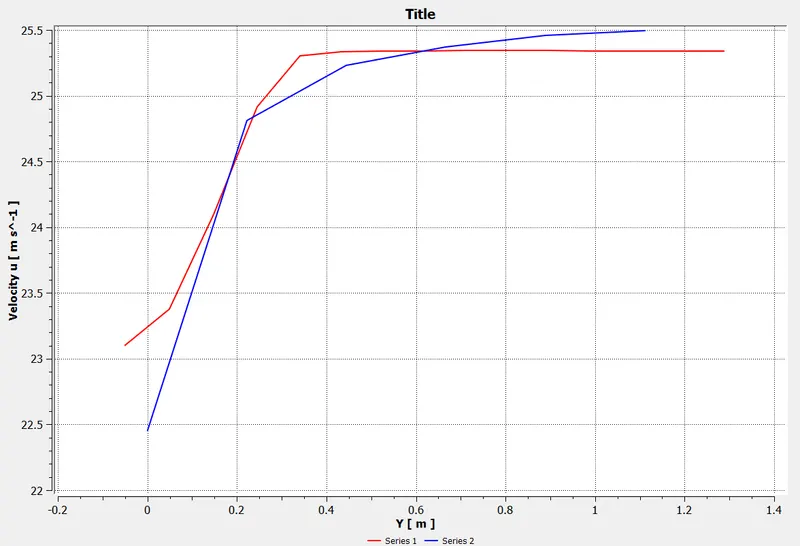
Velocity Chart ( Line 1 @ x =2 and Line 2 @ x =3)
CONCLUSION
It can be concluded by studying the flow on different meshes, that as we refine the mesh the solution becomes more accurate. The drag coefficient turns out to be 0.337 which is close to the experimental value
| Mesh | No. of Elements | No. of Nodes | Drag Coefficient | Lift Coeffcient |
| Baseline | 83450 | 16983 | 0.384 | 0.35 |
| Refined | 90458 | 28352 | 0.337 | 0.345 |
The negative pressure and formation of vortices in the wake region confirms the drag force being experienced by the body due to seperation of flow at the rear