Week 3 - External flow simulation over an Ahmed body.
Aim :
To perform the external flow simulation over a Ahmed body.
To find :
Grid independent study
case 1 : External enclosure as 250 mm and internal enclosure as 100 mm.
case 2 : External enclosure as 100 mm and internal enclosure as 50 mm.
Theory :
Ahmed body and its importance:
Ahmed body is the simple structure of the automobile, which is fully enclosed.
This enclosed section is used as a volume or region in order to perform the necessary simulation around the automobile. Most of the aerodynamic analysis are done with this ahmed body in order to capture the flow very closely.
All the physical parameters which are necessary in creating a simulation can be easily fixed due to effort less model generated.
parameters like drag coeffcient , lift co efficient, velocity , viscosity are can be determined.
Just by giving the outline data it is easy to calculate all the numerical data which is essential in computing the real time simulation.
In this way Ahmed body really plays a vital role in the field of CFD.
Procedure :
1) Import the geometry model in the space claim .
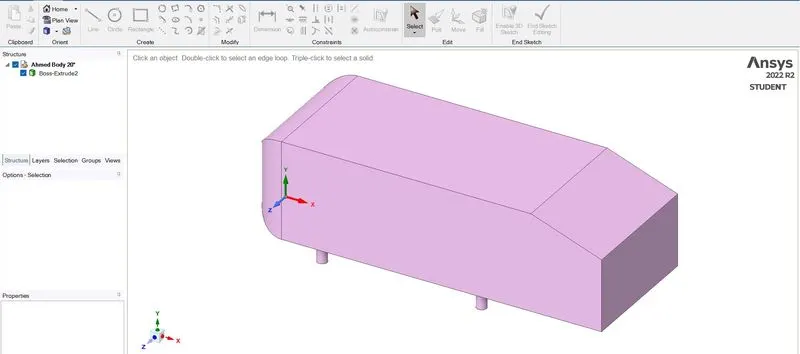
Determine the Yplus boundary layer with Y plus calculator. For determining calculate the hydraulic diameter of the duct.
By measuring the sides of the duct its found that ( 0.288m and 0.389m).
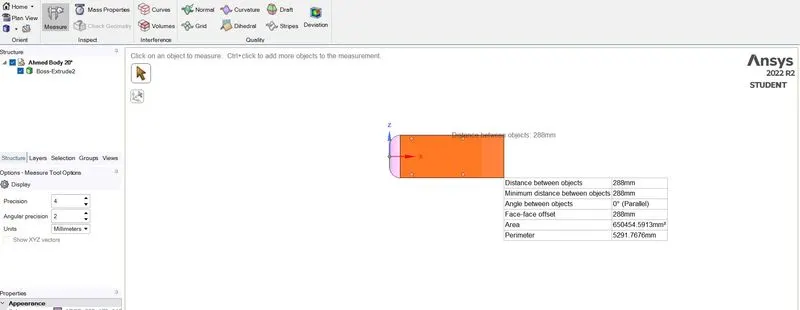 and
and 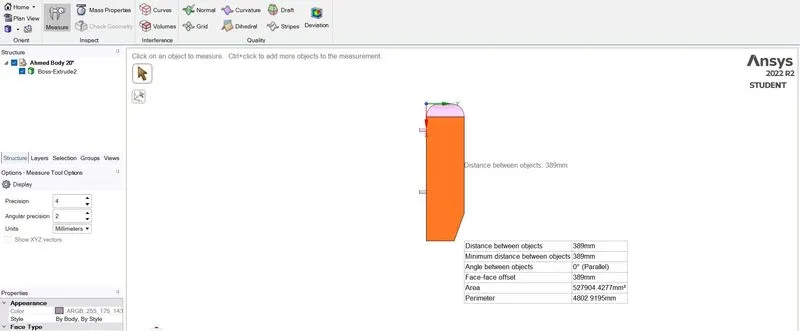
For calculating the Y plus boundary layer:
Free stream velocity : 25 m/s
Hydraulic diameter Dh = [2(a+b)]/ab
Dh=0.331m
Air has medium =1.205 Kg/m^3
The first layer thickness is 4( apporox) .
create the wind tunnel enclosure for the given ahmed body structure .
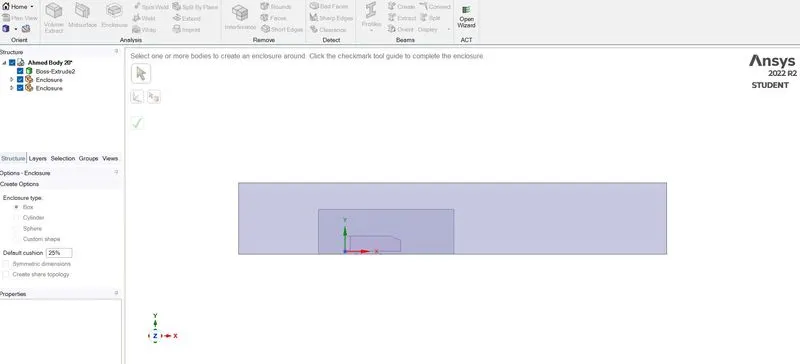
Enclosure is prepared by Prepare ---> Enclosure ---> Box ---> off the symmetry ---> big enclosure [Back (5m) , Front (2m), Bottom (0) , side ( 0.5m)] ---> small enclosure [Back (1m), Front (0.5) , top ( 0.5) , bottom (0) , (side 0.25).]
Suppress the solid for physics.
Create planes Designs ---> PLANES ---> Origin
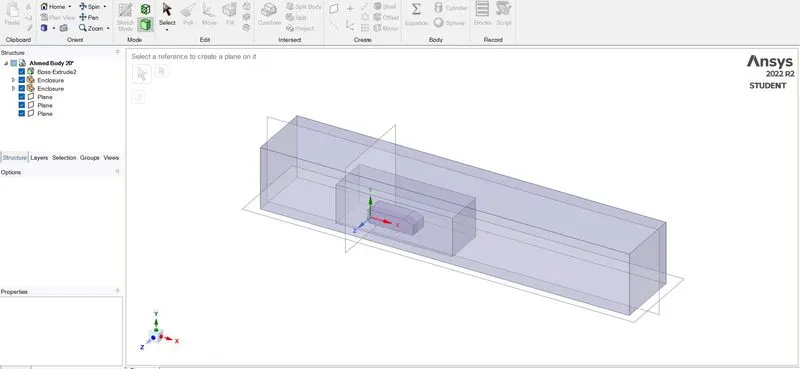
In a cut section view,
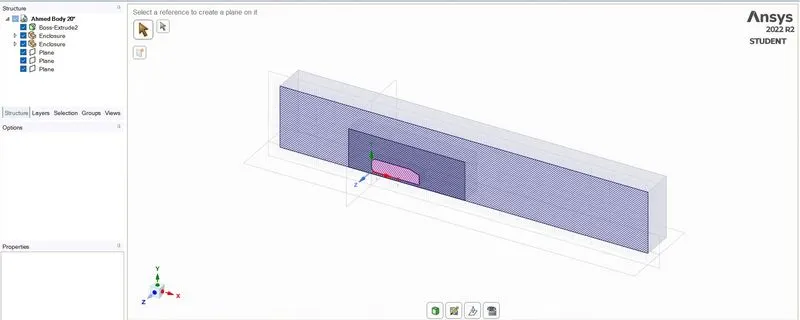
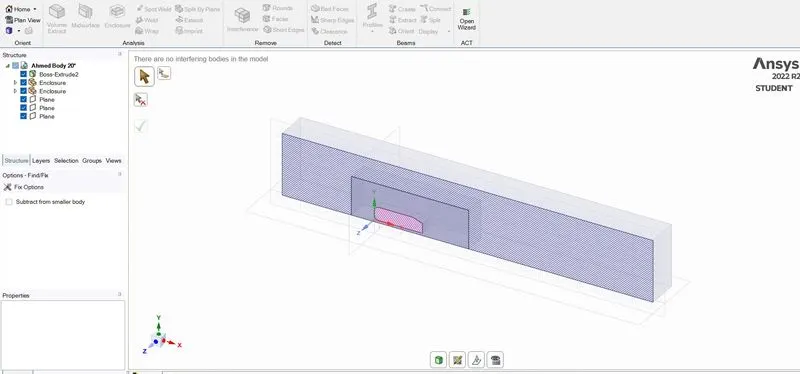
Clear the interference in the region.
Prepare ---> interference ---> It will automatically detect the region and rectify.
Share the topology between the edges so that the mesh and generation will be fine and transition of the mesh elements are legible.
Workbench ---> share topology
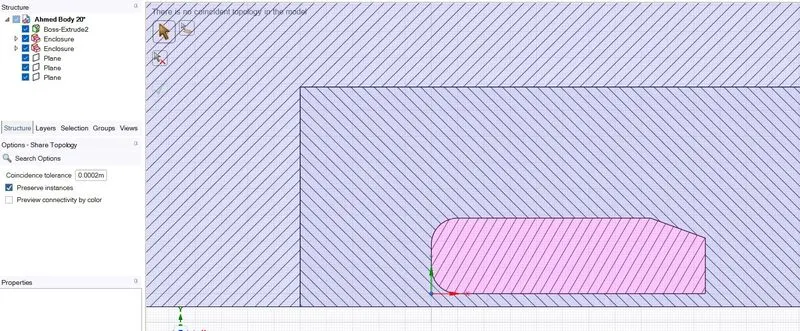
Two enclosure should be made one is larger and anothr is smaller. Larger tunnels has coarse mesh where as smaller enclosure has fine mesh which easily track or capture the flow properties.
generate the mesh Initially then to perform the grid independance study consider the cases.
Case 1 : outer enclosure at 250 mm mesh element size.
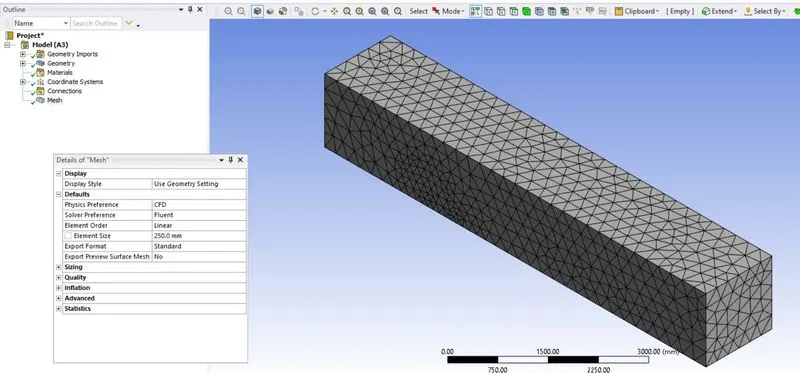
Inner closure at 100 mm mesh element size.This is done by hiding the outer enclosure (F9) and Mesh ---> insert ---> sizing.
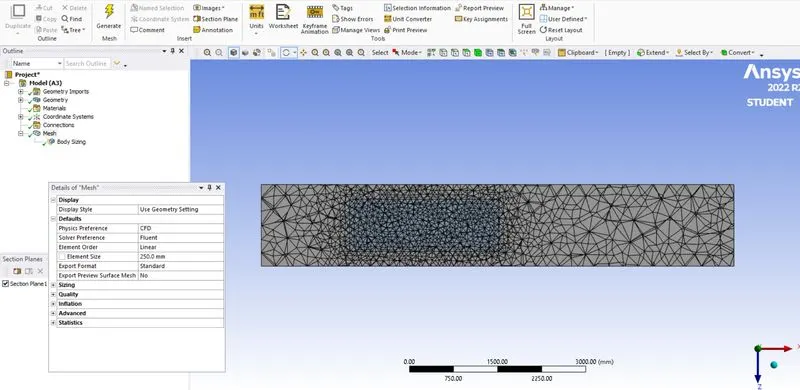
Which creates the fine mesh at the inner closure.
then Set up inflation layer around the ahmed body only.
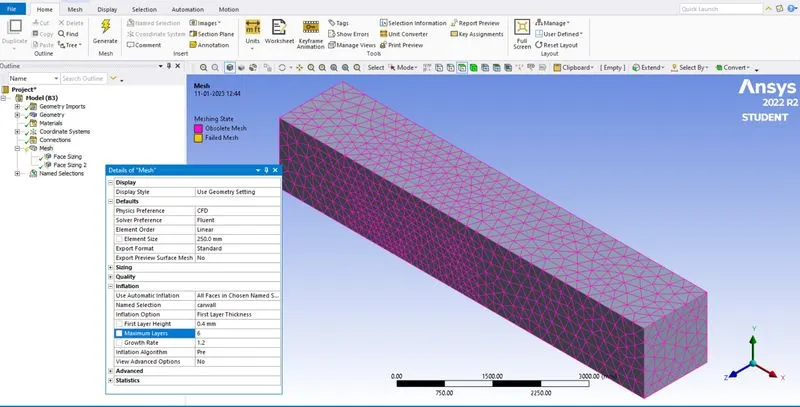
Setup for inflation layer
First layer thickness as 0.4 with 6 layers and of growth ratio of 1.2 is maintained.
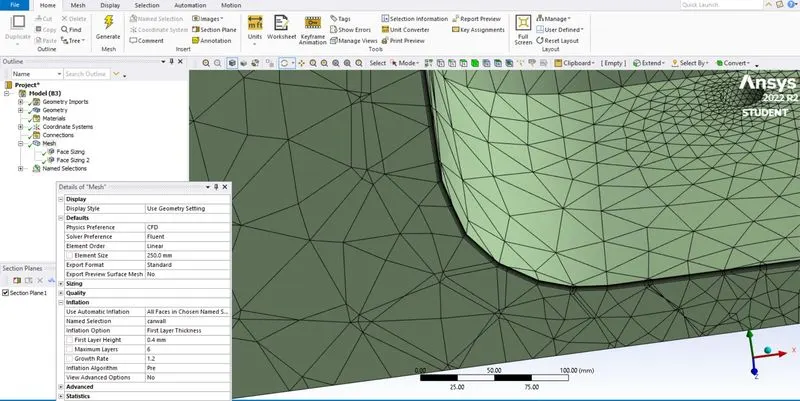
Inflation layer is created.
Setup the physics.
PRESSURE BASED SOLVER ---> STEADY STATE ---> VISCOUS AS K- EPSILON ---> WALL ENHANCEMENT TREATMENT
Check for cell zones ---> check for boundaries ---> where inlet boundary is 25 m/s is applied.
Reference value ---> Area of the car wall is calculated.
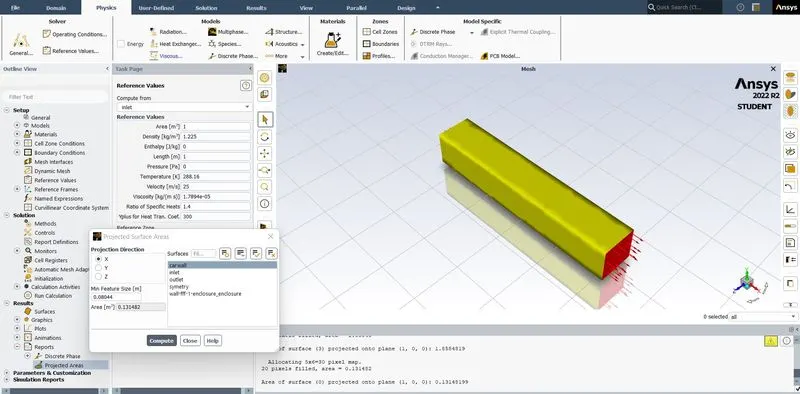
MATERIAL --> Fluid is choosenas air.
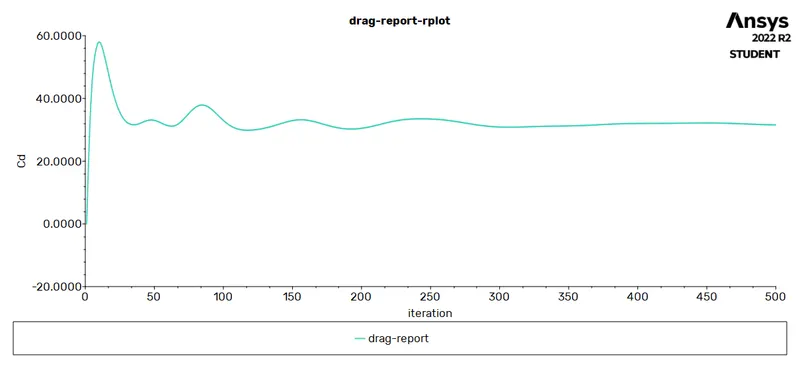
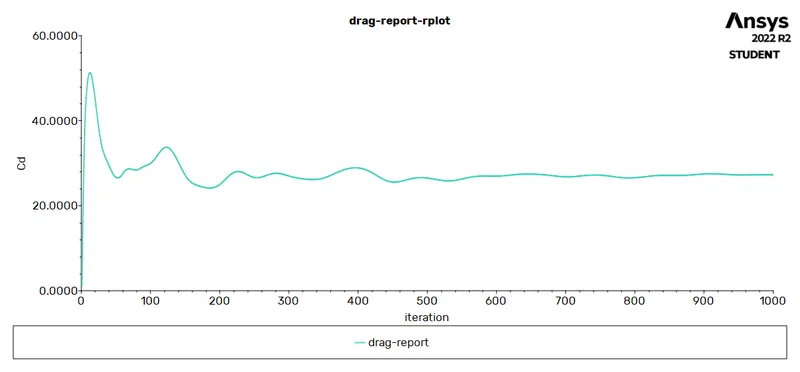
DRAG and LIFT is calculated by (DEFINITION ---> NEW ---> FORCE REPORT ---> DRAG AND LIFT REPORT)
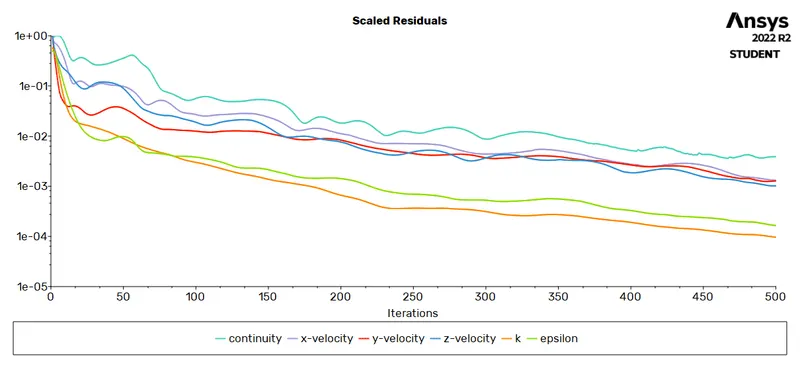
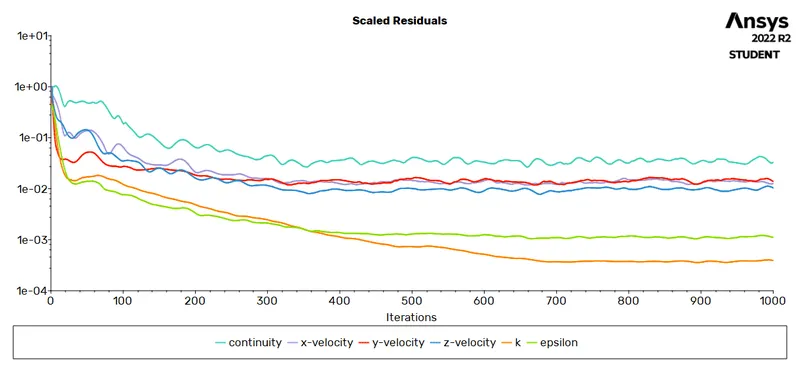
RESIDUALS is calculated then initialize the problem.
Create animation for the drag performance.
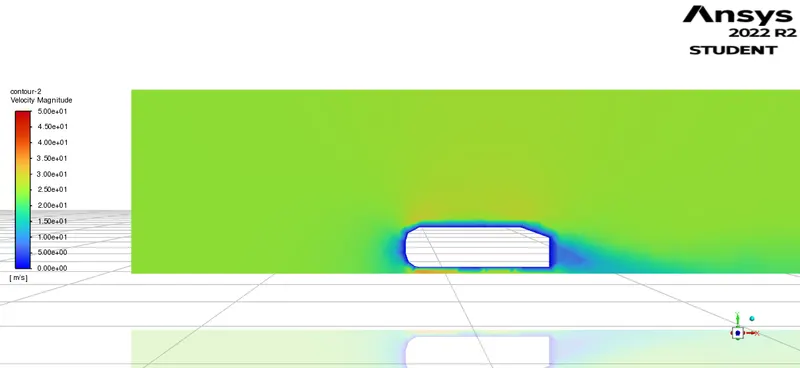
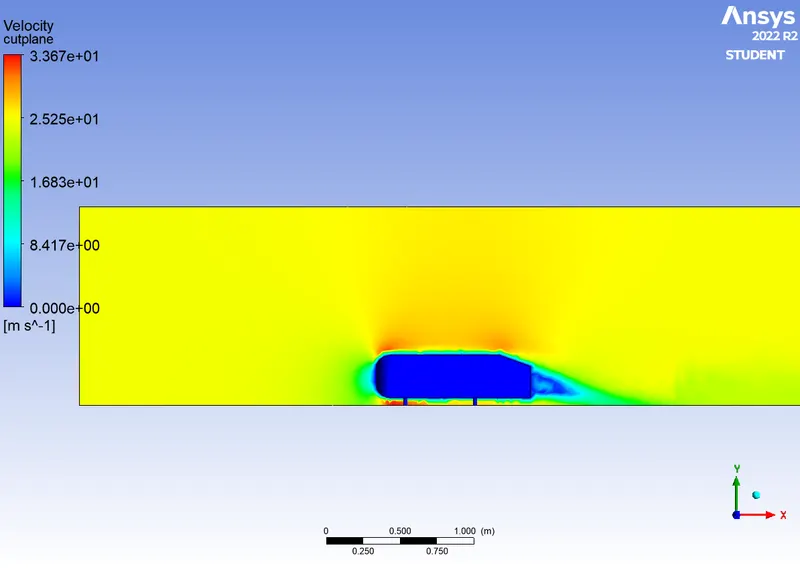
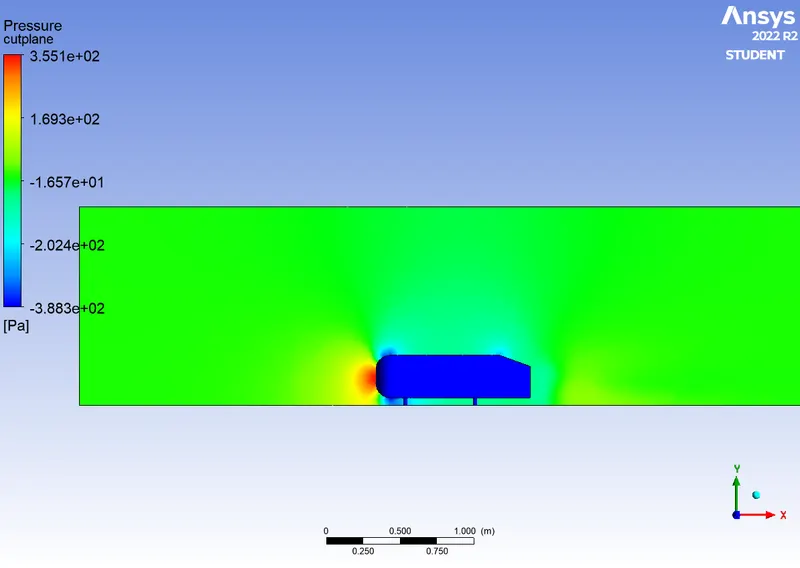
Results --> contour plot of the velocity and pressure is made
caluculate the solution for 500 iteration.
POST PROCESSING:
For 250, 100 target length
Residual :
Drag coefficient :
Velocity contour :
Pressure contour:
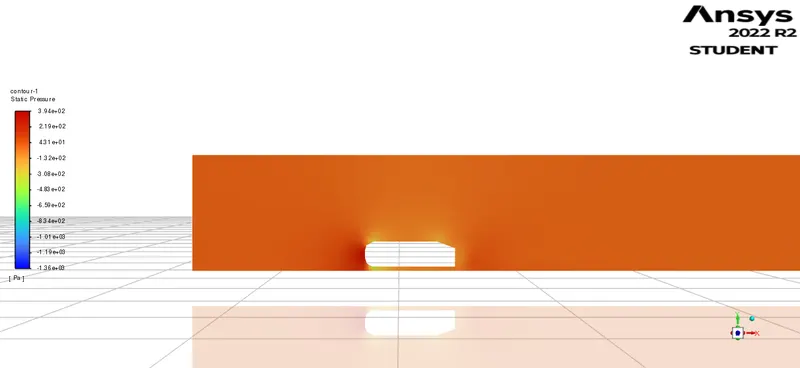
For 100,50 target length :
Residuals:
Velocity contour:
Drag coefficient:
Presssure Contour:
CONCLUSION:
Both the measurement of target length is performed and analysed.
Drag co efficient is measured for both the target length.
Drag co efficient of 100, 50 is takes little time to get convergetd then the 250 ,100 mm target length.
Images have been pasted.
Link is shared for reference.
https://drive.google.com/file/d/1TEjATGRcMkzLz0ATQyAeOTnvie1aogQ9/view?usp=share_link