Week 3 - External flow simulation over an Ahmed body.
Aim:
The aim of the challenge is to run the simulation by considering the given ahmed body.
Objective:
The main objective of the challenge is to describe the Ahmed's body and its importance, explaining the reason for the negative pressure in the wake region and explaining the significance of the point of seperation in the Ahmed's body. The expected results of this challenge is,
- Velocity contour and pressure contour.
- The drag coefficient plot
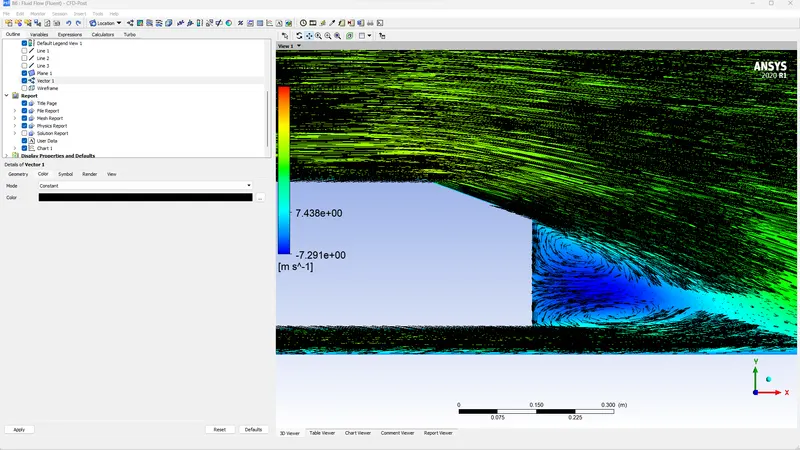
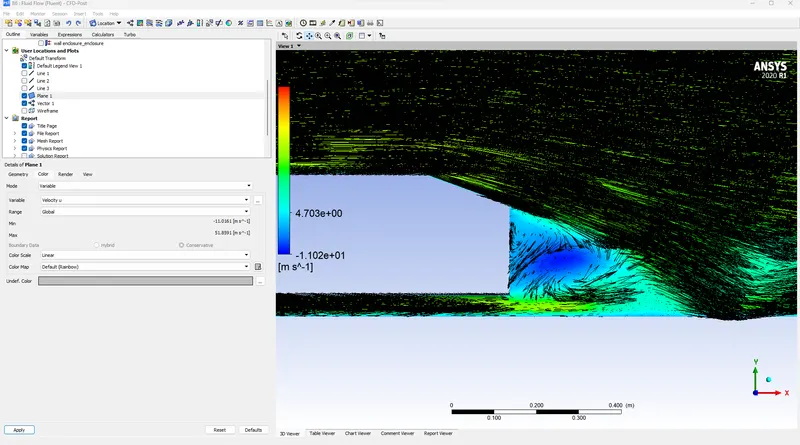
- The vector plot clearly showing the wake region.
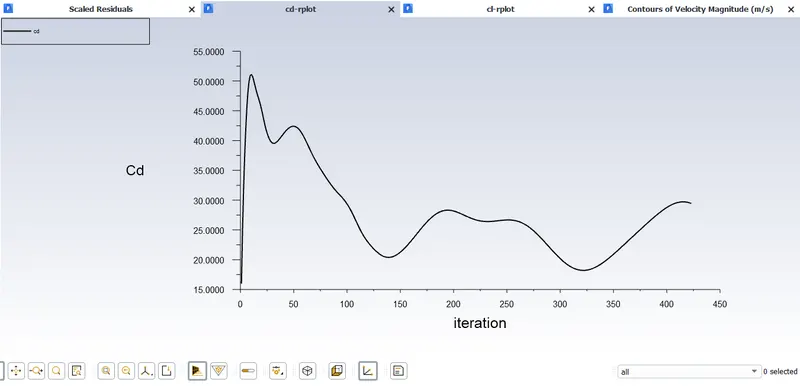
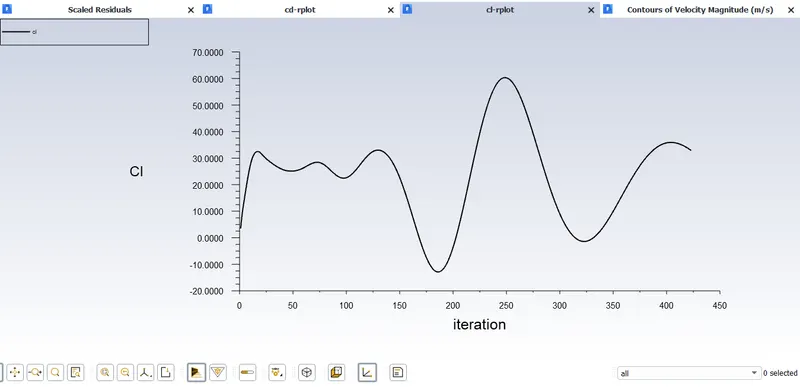
- Performing the grid independency test and providing the values of drag and lit with each case.
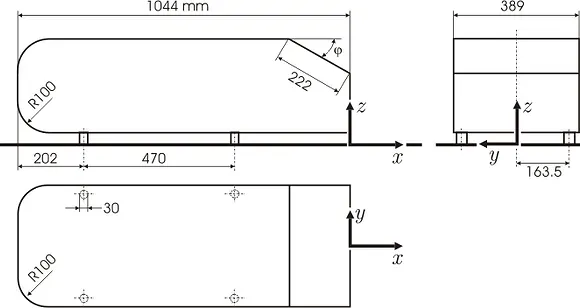
Ahmed's body and its importance:
External flows, in general, can be categorised as flows over immersed bodies where flow characteristics (such as boundary layers) around the body can develop freely without restrictions of adjacent surfaces. Examples include airflow over aircraft and ground vehicles, water flow over a submersible vessel, and flying baseballs, footballs, and golf balls. Fluid forces acting on the body are one of the key areas of interest in researching external flows since they help to characterise an object's dynamics as it moves through a fluid. Analytical solutions to flows over even simple structures are only attainable for very low Reynolds numbers Re1 that are of little relevance in practical applications, in contrast to internal flows which might be solved throughout the whole range of laminar Re analytically.
To create efficient cars with low fuel consumption, CO2 emissions, and noise levels while maintaining high driving stability, exterior automobile aerodynamics must be optimised. The significance of modelling vehicle exterior aerodynamics and calculating the appropriate aerodynamic characteristic numbers has increased with steadily rising computer capacity. Nowadays, effective resource management is becoming more and more important worldwide. Thus, optimization takes up a significant amount of automotive development time. Clearly, accurate simulations of the wake flow and separation are necessary to ensure that drag estimates are accurate. The Ahmed body is an experimental bluff model body with a simple shape and fundamental aerodynamic qualities of a vehicle that has been used for numerous reference investigations. However, a real-life automobile is a very difficult shape to model or research. A 3D model of Ahmed's physique serves as a good representation of a typical passenger automobile model. The goal of this project is to create, improve, and evaluate the most recent turbulence models for a few specific vehicle aerodynamics examples.
Study of Drag Coefficients:
The drag coefficient quantifies the resistance of an object in a fluid environment. It is not an absolute constant for a body’s shape because it varies with the speed and direction of flow, object shape and size, and the density and viscosity of the fluid. The lower the drag coefficient of an object, the less aerodynamic or hydrodynamic drag occurs. In terms of a car, the lower the drag coefficient, the more efficient the car is. As well as affecting the top speed of a vehicle, the drag coefficient also affects the handling. Cars with a low drag coefficient are sought after, but decreasing the drag drastically can reduce the downforce and lead to loss in road traction and a higher chance of car accidents.
Procedure:
We will simulate the flow over Ahmed's body with the steady state case.Then for solving we follow the below procedure :
1)Creation of geometry
2)Meshing
3) Problem setup
4)Solving
5)Post processing
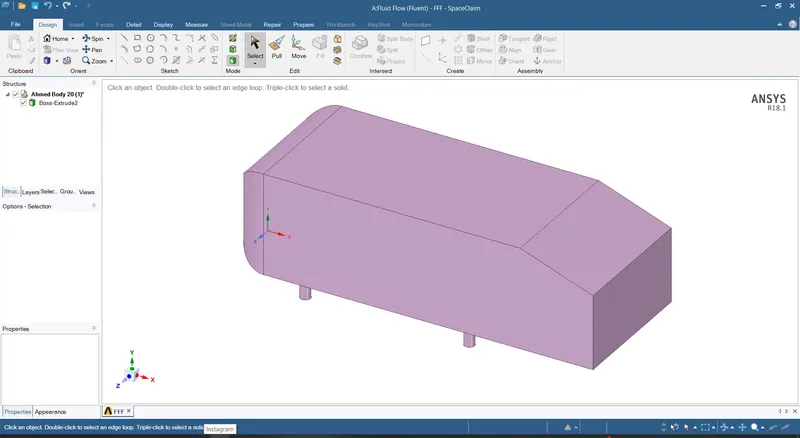
1. Importing the geometry.
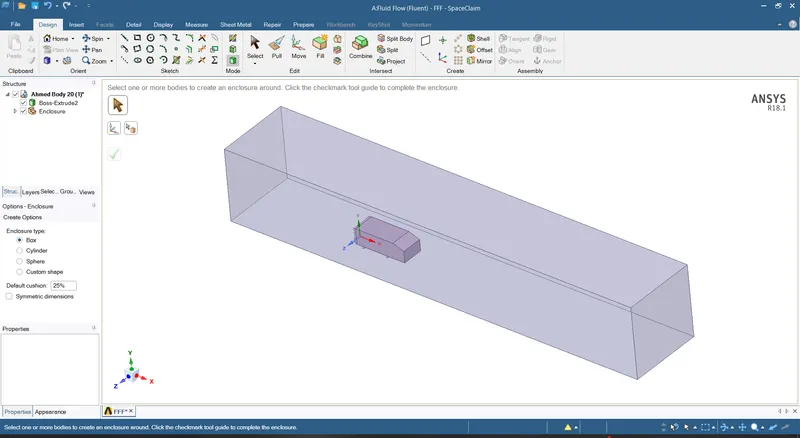
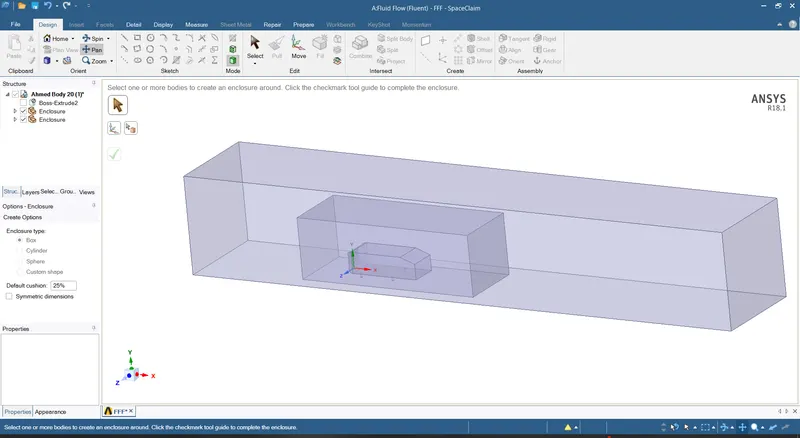
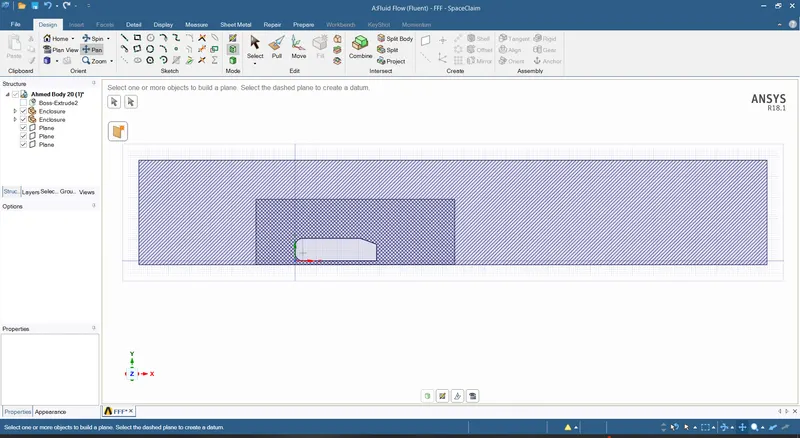
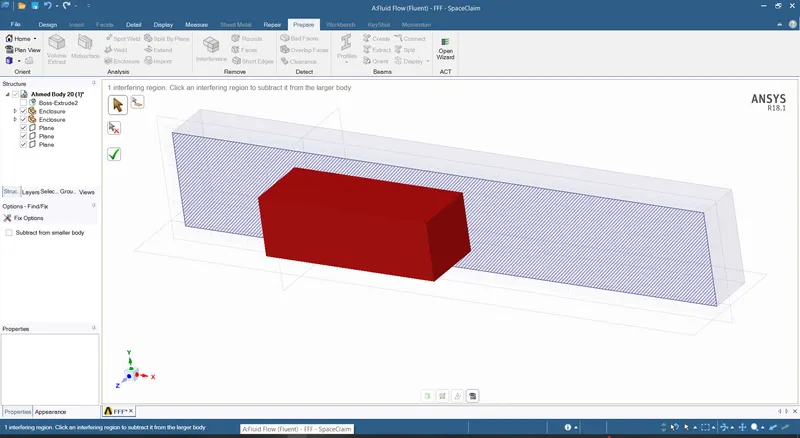
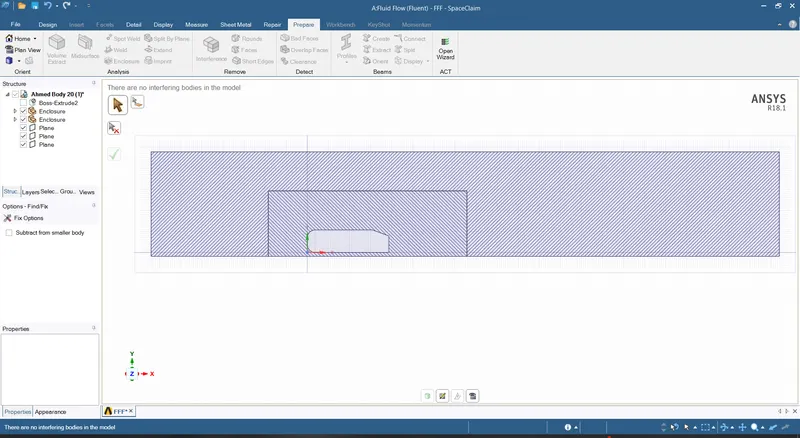
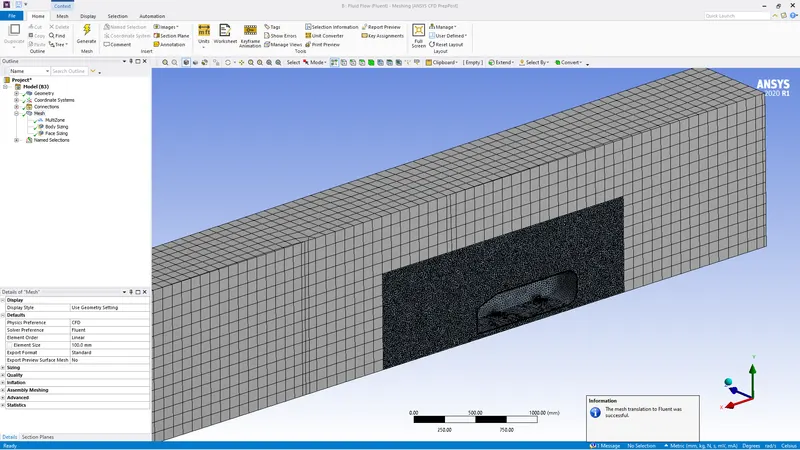
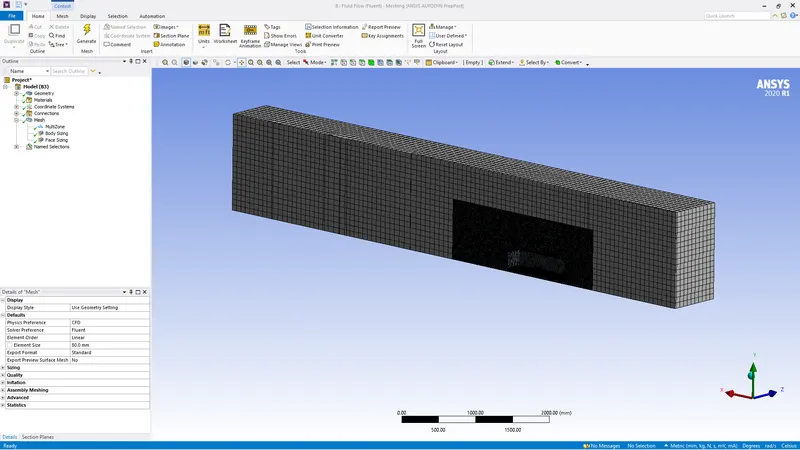
Meshing the domain:
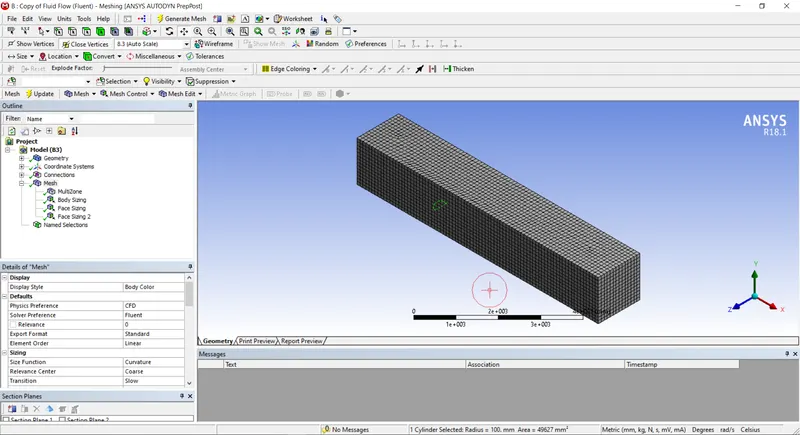
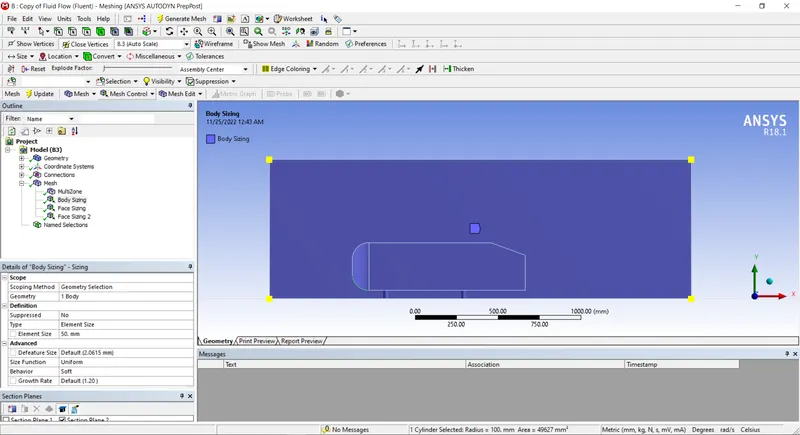
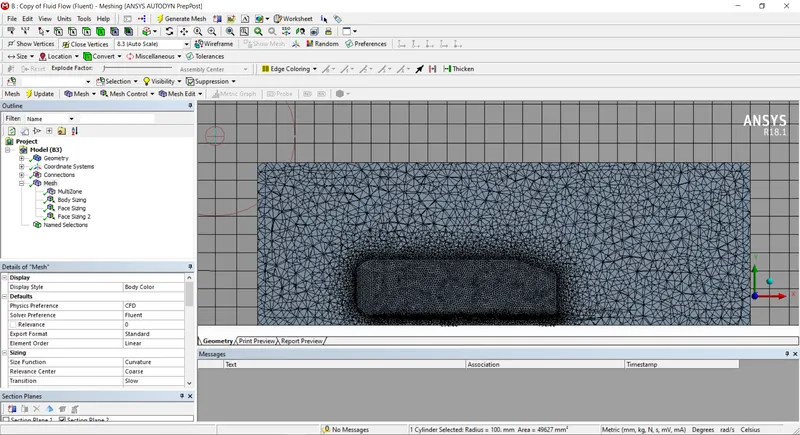
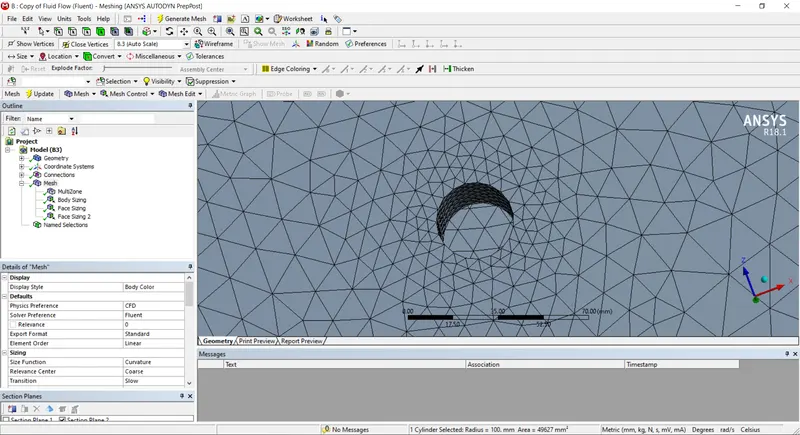
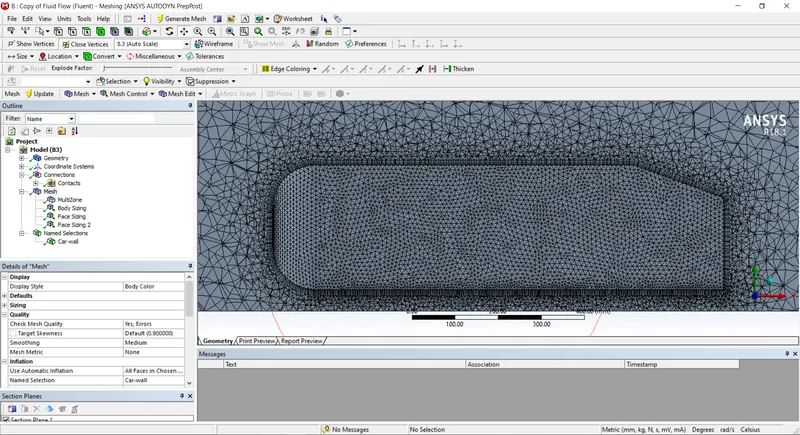
Case 1:

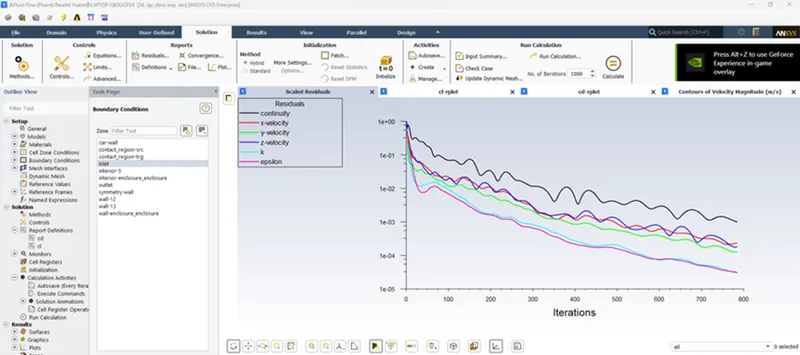
Residual plot:
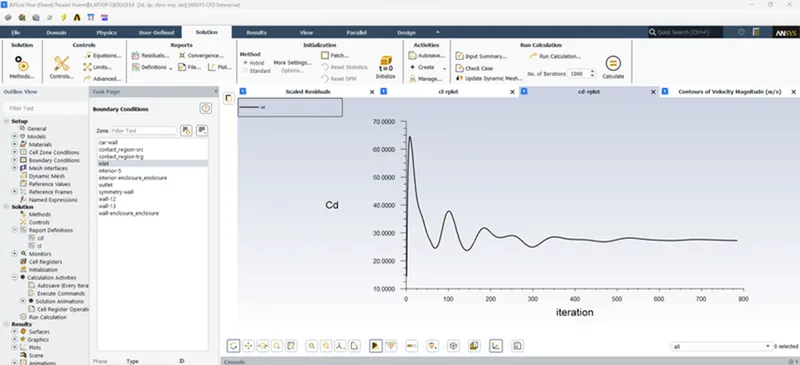
Coefficient of drag:
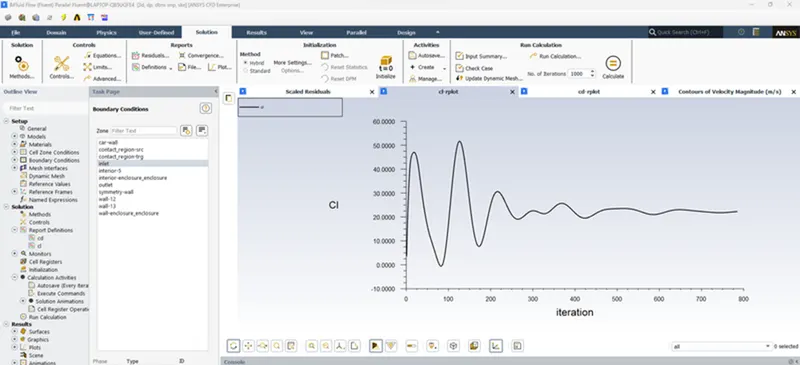
Coefficient of lift:
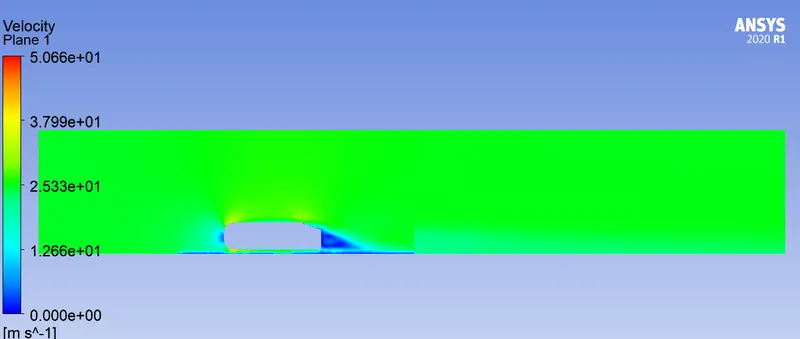
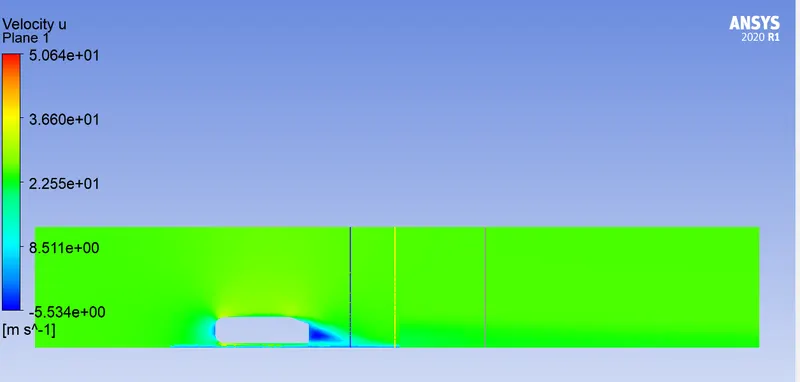
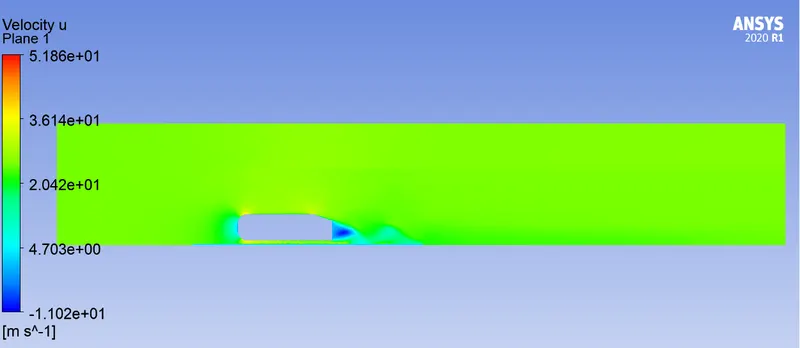
Velocity contour:
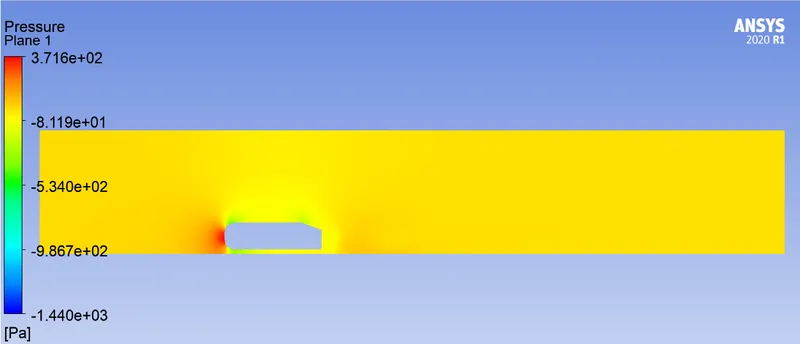
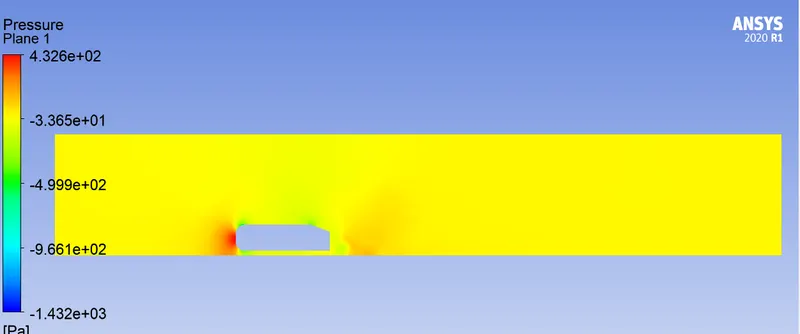
Pressure contour:
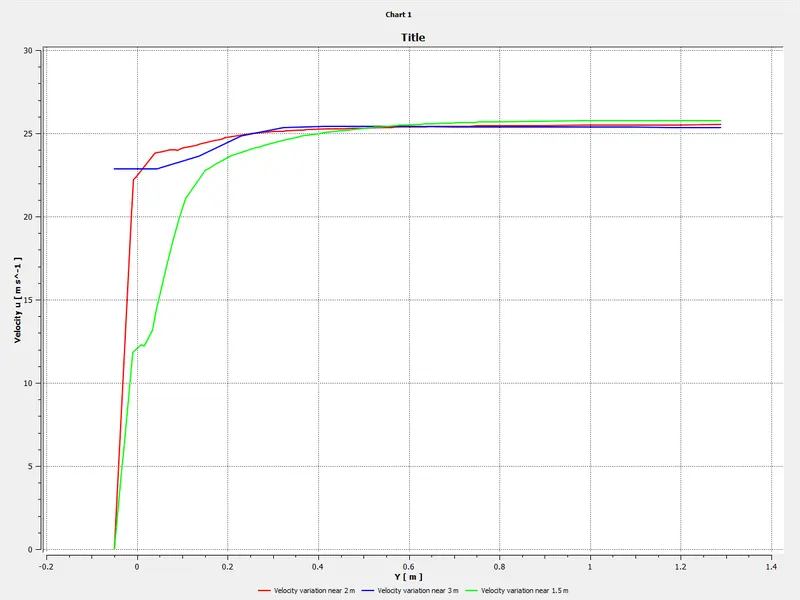
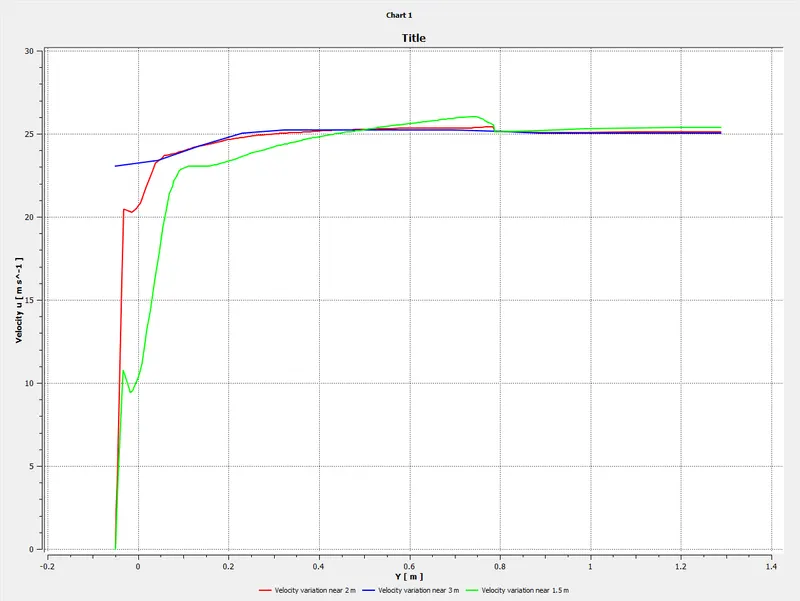
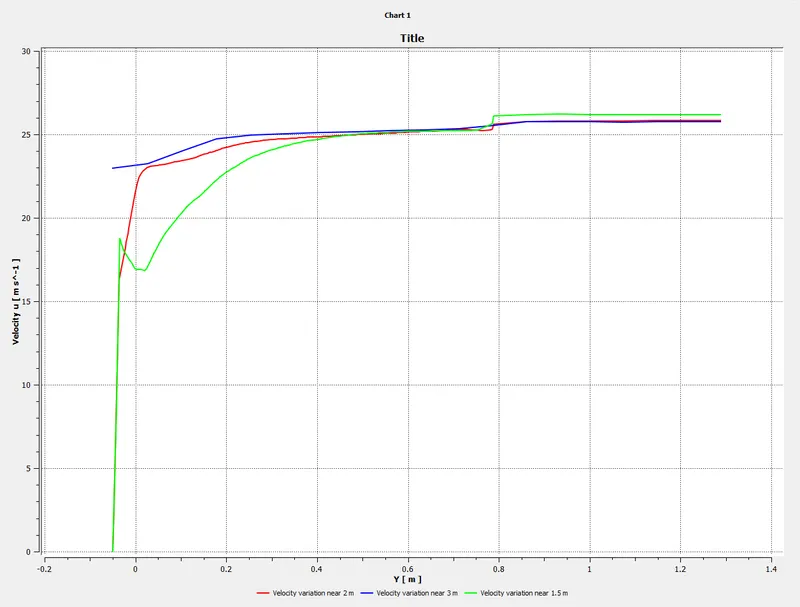
Plotting the velocity variation at different lines:
Case 2:

Refined mesh:
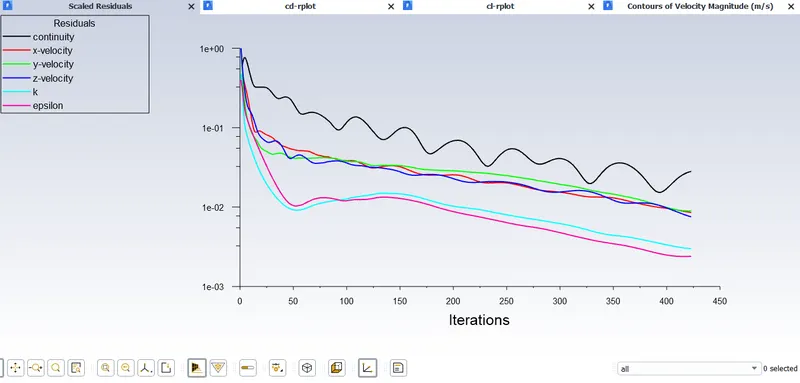
Residual plot:
Coefficinet of drag:
Coefficient of lift:
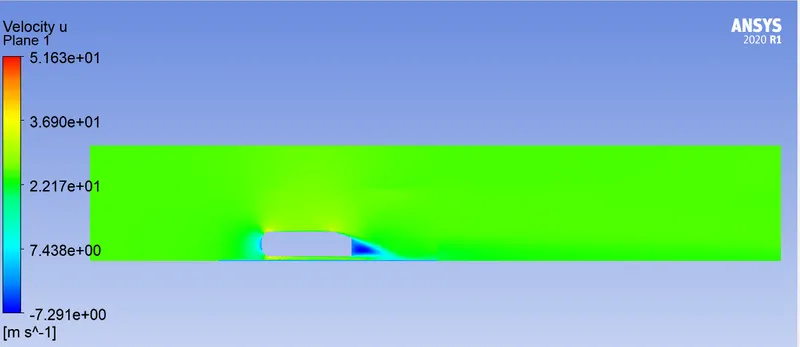
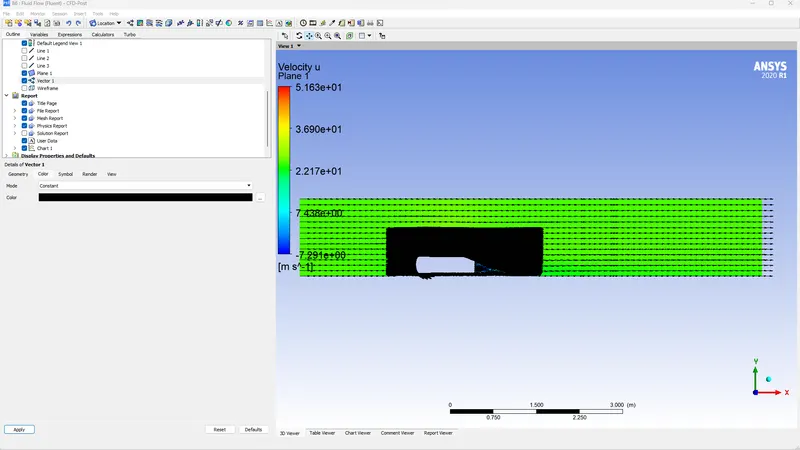
Velocity contour:
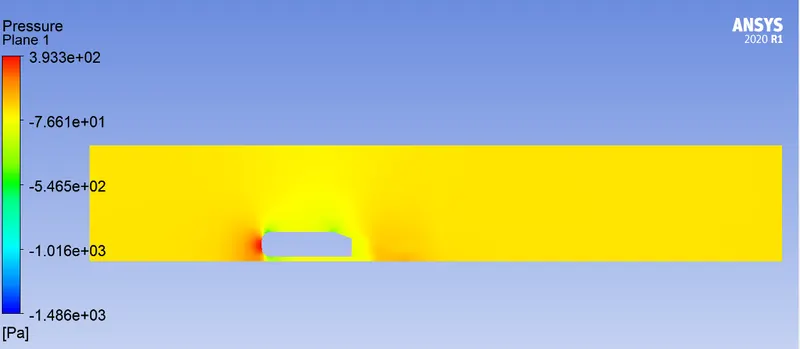
Pressure contour:
Vector:
Velocity variation:
Case 3:

Residual plot:
Coefficient of drag:
Coefficient of lift:
Velocity contour:
Pressure contour:
Vector:
Velocity variation:
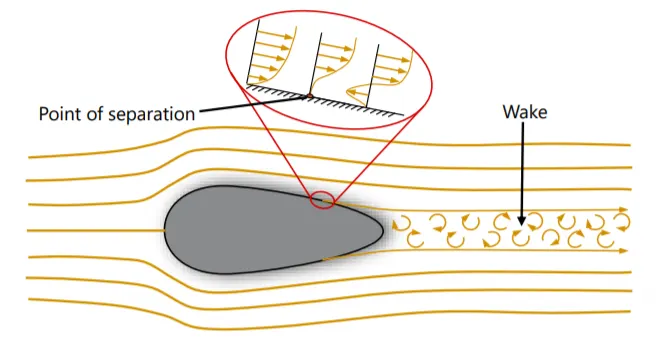
Boundary Layer Separation :
- In general, wall-bounded flows are subject to pressure variations due to surface curvature or an external forcing.
- When the freestream pressure increases in the direction of flow, it is known as an adverse pressure gradient.
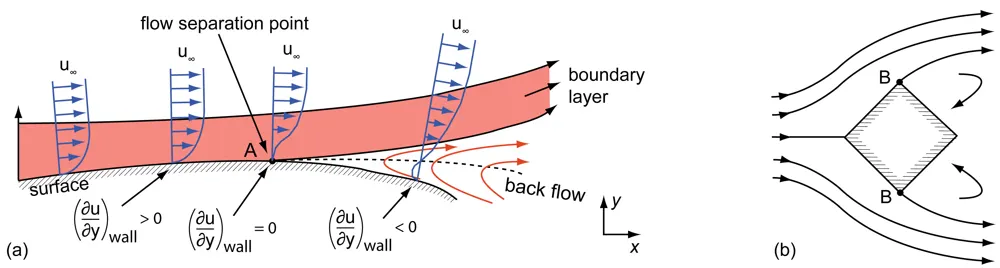
- Adverse pressure gradients cause the flow to slow down. When the velocity gradient at the wall approaches zero, the flow will lift off the surface, diverting the streamlines away from the wall. This process is known as separation.
- When a boundary layer becomes separated, the boundary layer equations are no longer valid. However, we can predict the point of separation by monitoring the velocity gradient (or shear stress) at the wall in our solution and noting where it becomes close to zero.
- The pressure field in the fluid flow past an object is nonuniform. When the pressure gradient is nonzero, the velocity profile is affected.
Significance of the point of separation :
- Because of the conservation of momentum, it is clear from our situation that the flow naturally divides at sharp bends and curves. This effect is equivalent to flow in a problem with backward steps.
- Without an external pressure gradient compelling it to turn around the corner, the boundary layer simply cannot remain connected at the corner since it retains its momentum in the direction of the flow.
- A low pressure area is created at that location and at the rear of Ahmed's body as a result of the flow's tendency to move straight. The straight-stream flow is therefore sucking due to the low pressure, creating a recirculation zone.
Reason for the negative pressure in the wake region :
The flow naturally divides at sharp curves and twists, as is well known, and the conservation of momentum makes this clear. The boundary layer simply cannot remain connected at the corner in the absence of an external pressure differential that compels it to turn around the corner because it retains its momentum in the direction of the flow. As a result, the rear of Ahmed's body and that place where the flow prefers to run straight create low pressure areas. This low pressure then suctions the straight-stream flow, creating a recirculation zone and a significant wake on the Ahmed body's backside. Additionally, it causes a big wake to generate.
Grid Independency test:
Let us perform grid independency test and tabulate all the values of drag and lift with each case i.e., with each grid size and compare with the coefficent of drag value of experimental value i.e., 0.33.

Conclusion:
The simulation of the Ahmed Body runs well and is in some agreement with experimental and empirical data on the body. There are regions behind the body where wakes are formed, circling regions of low velocity which induce a considerable amount of velocity drag on the body. Grid Depedence Test was conducted and the test was succesful, an additional observation was also made - the drag coefficient decreases as number of elements increases. This decrease is very small and may be considered insignificant.