Week 3 - External flow simulation over an Ahmed body.
PROJECT REPORT
Aim: To simulate an air flow over an Ahmed’s body (Car Body) analyse the data, and validate it with documented data
Introduction:
- In this simulation we are going to analyse the movement of air around the Ahmed body also how the vectors react in the wake region
- Also, we are going to perform the same simulation in different grid size to check the details, with every case the grid will get finer
- Will check for the pressure change in Ahmed body area and validate the data from documented papers
Modelling:
The Dimensions of Ahmed body is Standardised for the validation of Data, as shown below
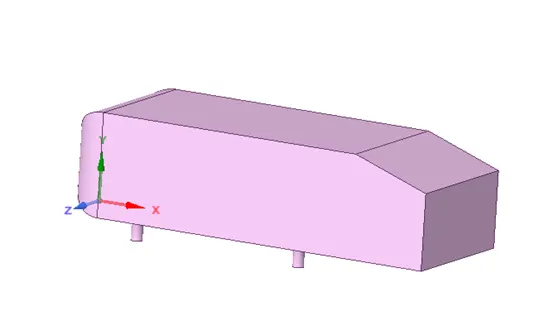
GEOMETRY OF AHMED BODY
As, we have to simulate for data of flow of air over this body we have to create a domain around the box and create meshing for that area. We don’t need any result within the body so no need to crate mesh inside the body, also to create a fine mesh around the Ahmed body we need to crate two enclosers and provide different grid sizes to visualise more details around the body, as shown below
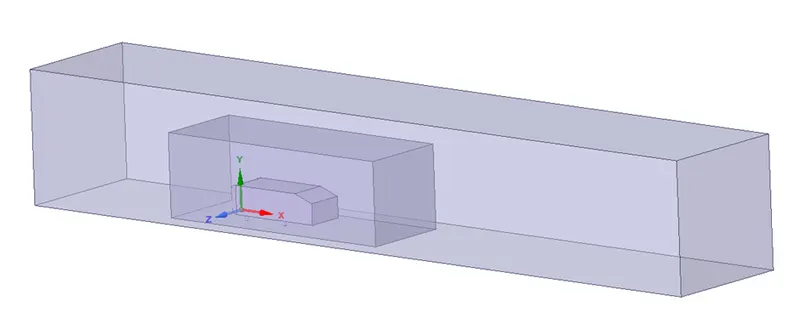
As, the shape is completely symmetric we can split the body in half and perform the simulation, as it will reduce the number of cell and eventually the result will be same and it will take less time to simulate
Mesh:
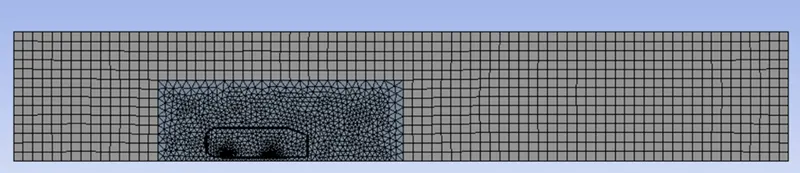
In this project we are going to perform the same simulating for different grid size or different no. of cell count to check for the different details we can get with finer grid along the body
|
No. of cell |
|
|
CASE 1 |
89980 |
|
CASE 2 |
291968 |
|
CASE 3 |
462430 |
For Meshing we have made two encloser domain one is closer to the body and other is in bigger box inclosing the smaller one which represents the surrounding, considering the state the major physics is in the smaller box so the mesh in smaller box is finer to catch all the details properly
CASE 1
CASE 2

CASE 3

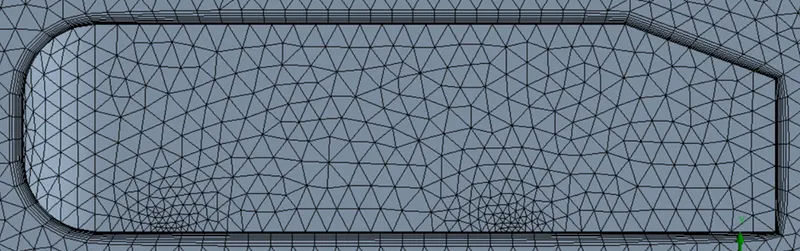
Also, we have added inflation layers on the boundary on Ahmed body for precise detailing of vectors passing the body
SOLVING CASE 1:
Input: Velocity = 25m/s
Temperature = 300F
Velocity inlet and Pressure Outlet
Cell count = 89980
Output:
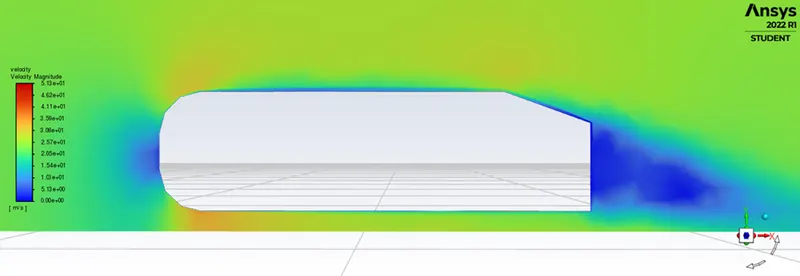
VELOCITY
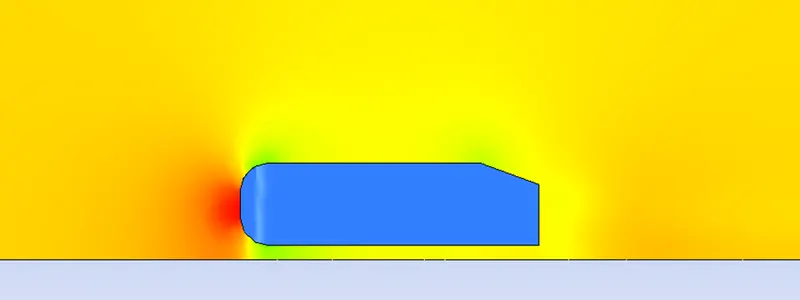
PRESSURE
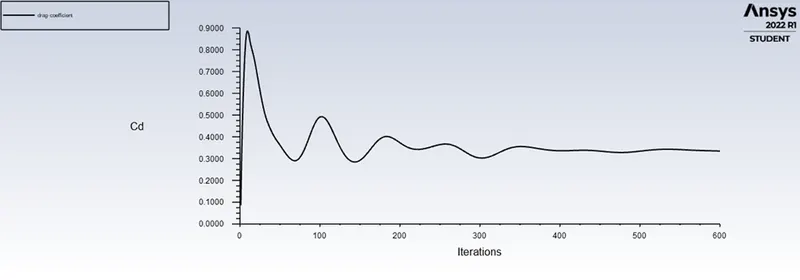
COE. OF DRAG
LIFT COEFFICIENT PLOT
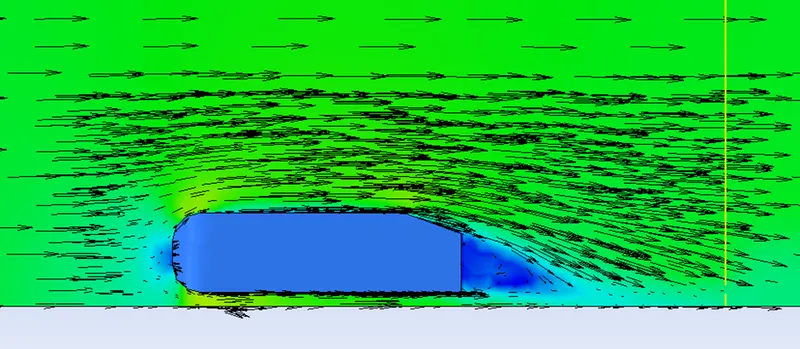
VECTOR PLOT
As the grid is not that fine we can see the velocity contour is not that clean even though it shows good velocity distribution and also in pressure contour we can see the negative pressure in wake region
Even though the grid is not that fine it doesn’t affect the value of coef. Of drag the value for coefficient of drag is 0.34
In this case which is correct
In vector plot we can see there are no vector in wake region as we can predict the velocity is flowing through that region after reaching the ideal state
SOLVING CASE 2:
Input: Velocity = 25m/s
Temperature = 300F
Velocity inlet and Pressure Outlet
Cell count = 291968
OUTPUT:
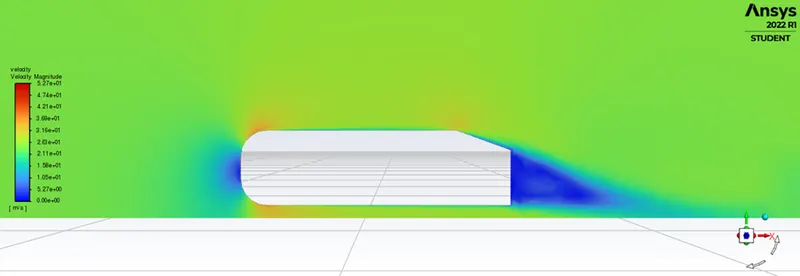
VELOCITY
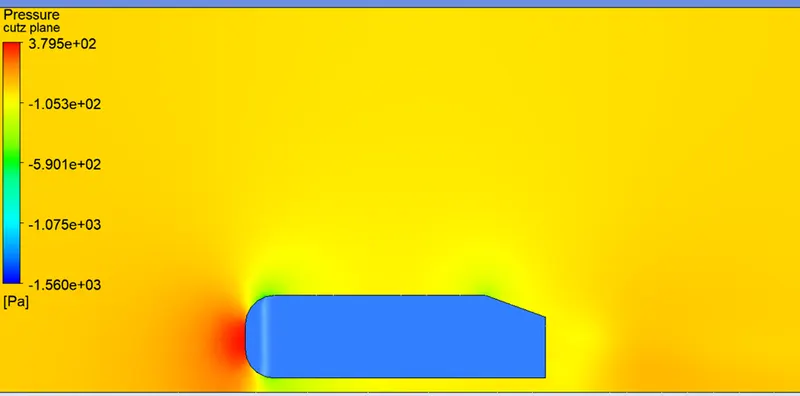
PRESSURE
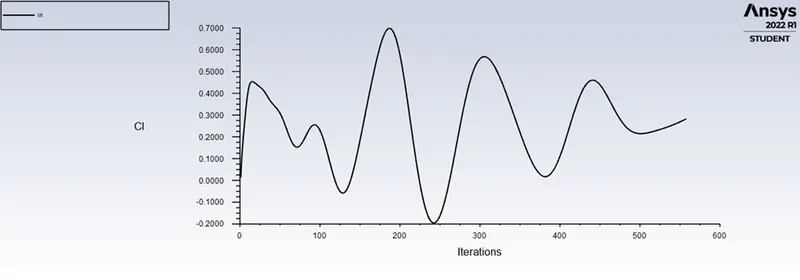
LIFT COEF.
DRAG COEF.
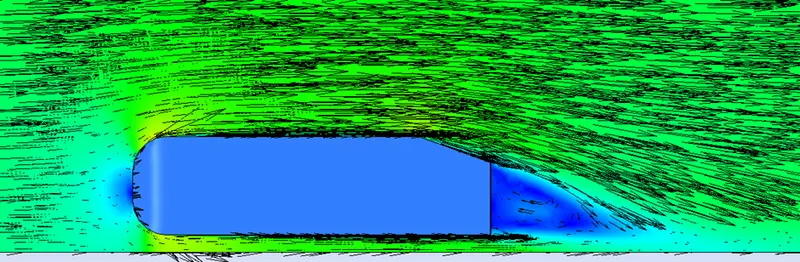

VECTOR
In case 2 the details are sharper and neater than compare to case one but on other hand we can see no changes in graph for lift and drag coefficient, value for drag coefficient in this case is 0.33 other than that we can see the same contours and plots
CASE 3
INPUT:
Velocity = 25m/s
Temperature = 300F
Velocity inlet and Pressure Outlet
Cell count = 462430
OUTPUT:
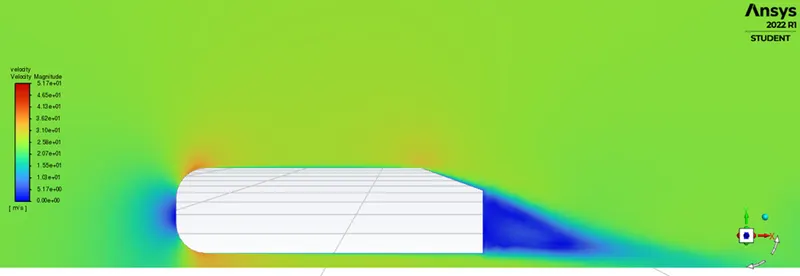
VELOCITY
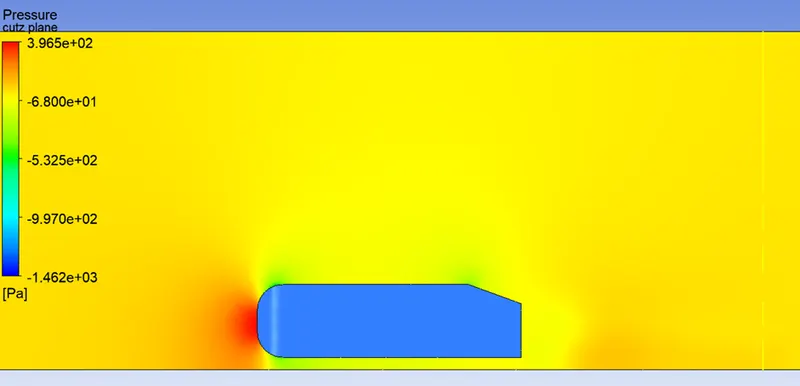
PRESSURE
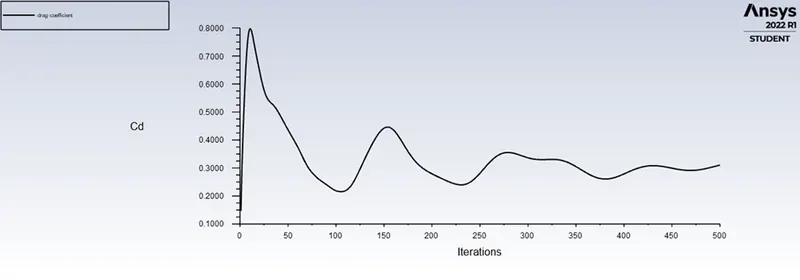
DRAG COEFFICIENT
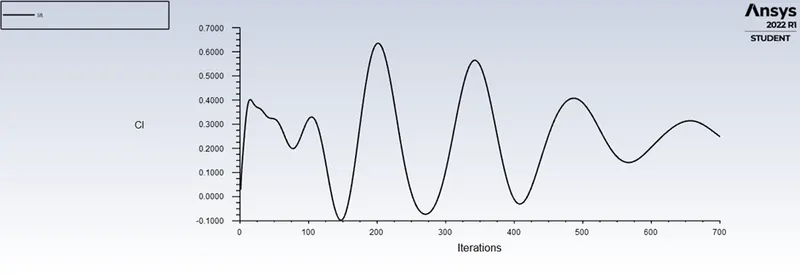
LIFT COEFFICIENT
Similarly, the graph looks alike the past cases and the contours get sharper. The value for coefficient of drag is 0.33
1) IMPORTANCE OF AHMED BODY
Ahmed body is a simplified car body, and the shape provides a model to study geometrical effect on the wake of ground vehicles. This a basic model for any ground automobile shape by which flow around Ahmed body can show an overall distribution of air flow over a car and it can define how to calculate turbulent flow field around a simple car geometry using the turbulent flow model, K-epsilon interface. In applications Ahmed body can be used to validate the data engineers examine for any car design once the numerical model is validated then an actual car model can be made and for validation Ahmed body resurge data is widely accepted
2) Grid independence test
- There are considerable changes in the contours from case 1 to case 3, mesh is more refined from 1 to 3 to check grid dependency
- As finer mesh provides more sharp and accurate results, so we can conclude that flow can be more defined in finer mesh
- The finer the mesh the visuals in contours get gets more defined
3) Why the pressure goes negative?
- As the flow separation takes place in this case the curved body cause the flow to separate and so we can see a negative pressure in wake region which is necessary to maintain the flow in increasing velocity
- Separation bubbles are created while flow separation and which results in negative pressure
- Negative pressure is needed as the flow in that region is very low due to wake region
4) Point of separation point
- Separation point is the point at which the air molecule lives the body surface which is moving through the air, i.e., it leaves the boundary layer of the body and separates
- Separation point is important as it defines the movement of the air molecules after separating from the body
- Thus, it defines hoe the wick and movement of air may look after passing the body
CONCLUSION
- As the grid gets smaller the contours become sharper and more accurate
- With change in grid size there is no change in value of drag and lift coefficient
- Ahmed body is very important aspect in automobile industries CFD problems to validate the numerical data obtained