Week 3 Challenge : CFD meshing on Turbocharger
AIM:
to created mesh of different target lengths on a given turbocharger model.
the meshing has to be done in such way for different components of the turbocharger.
PROCEDURE:
1.take in the model turbocharger file into the ansa software. first we need to check for any geometric imperfections, like single cons and intersection errors. we can find them like we previously done, using wire frame tool.
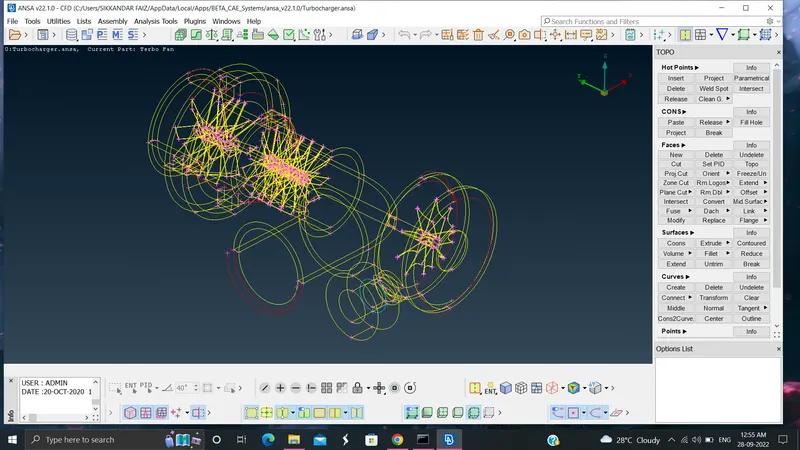
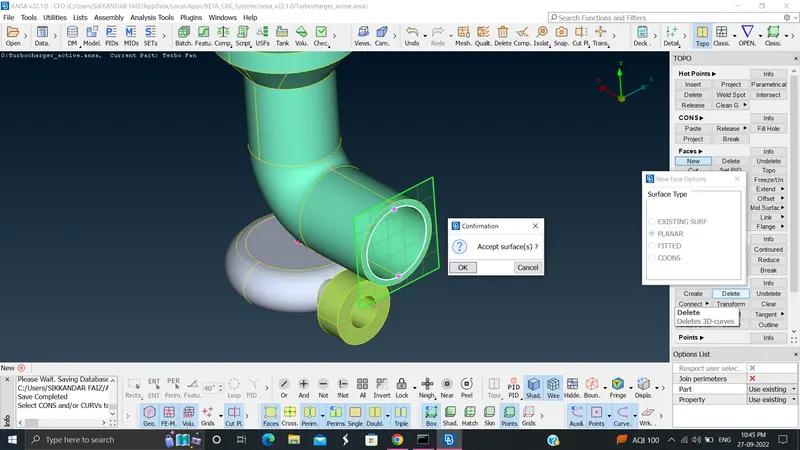
2.to rectify such errors we are using the new face tool from the topo deck.
3.rectifying of the geometrical errors are done majorly with the use of such tools. face tool plays major part in clearing up of geometrical imperfections.
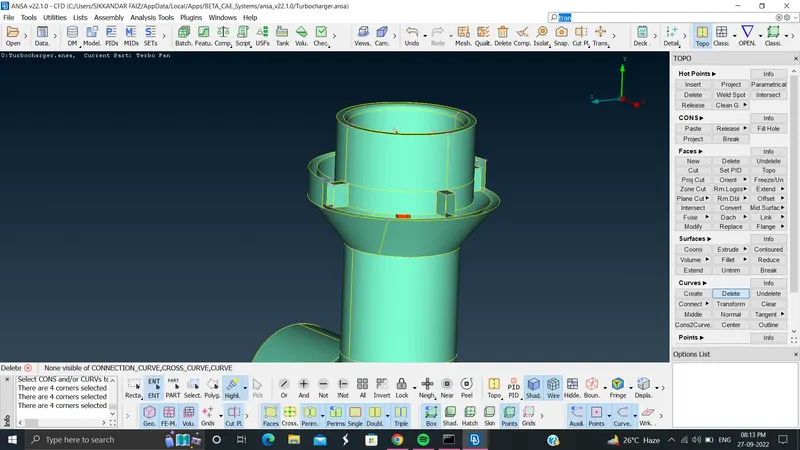
4.once done with the geometrical corrections we are to face the intersection errors. that is the overlaping of one surface over another.
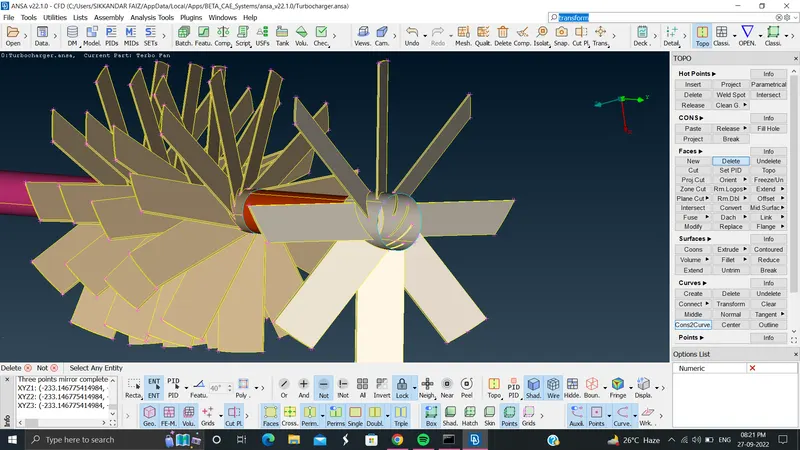
5.these errors do require faces tool, intersect tool, project tool and transform tool.
6.once then solving the intersection errors and triple cons in the chaft and two blade components, we then go to the turbo casing part. we can find there is some intersection errors in the connection of shaft to the turbo casing and the compressor casing. those can be solved by the project tool too.
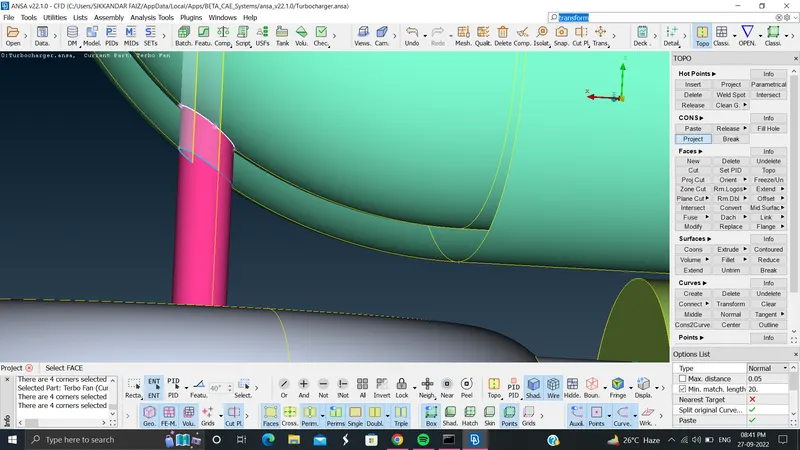
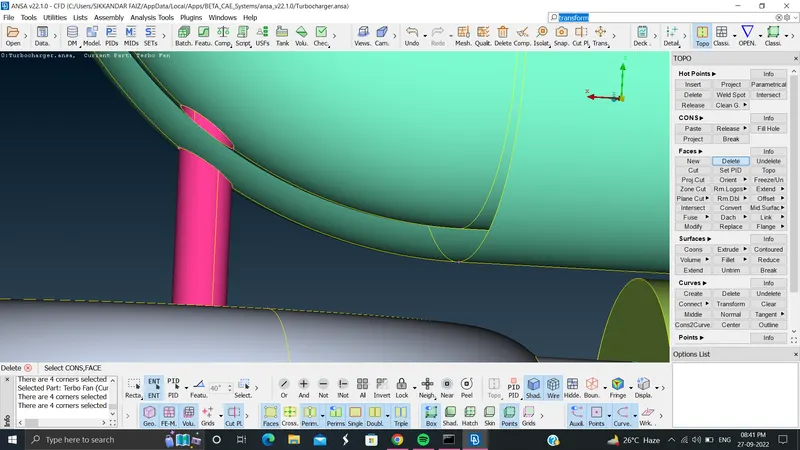
7.we get to the impeller then which has similar errors.
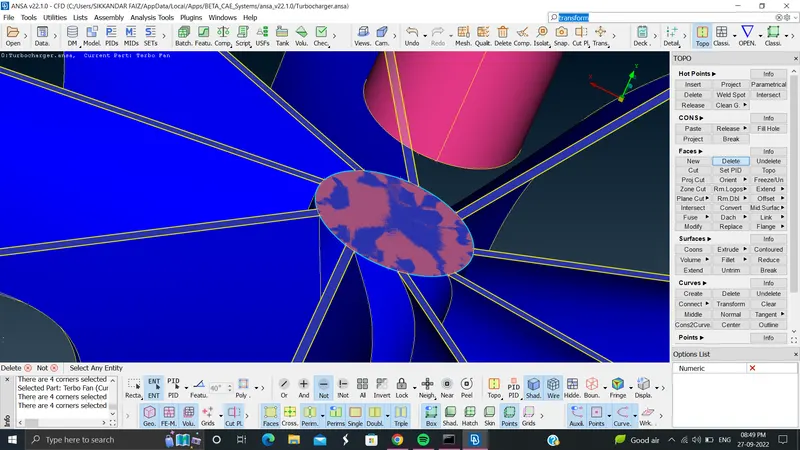
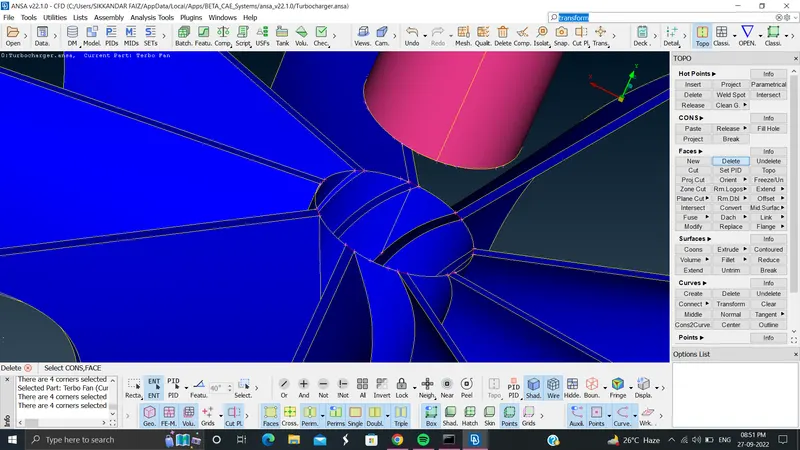
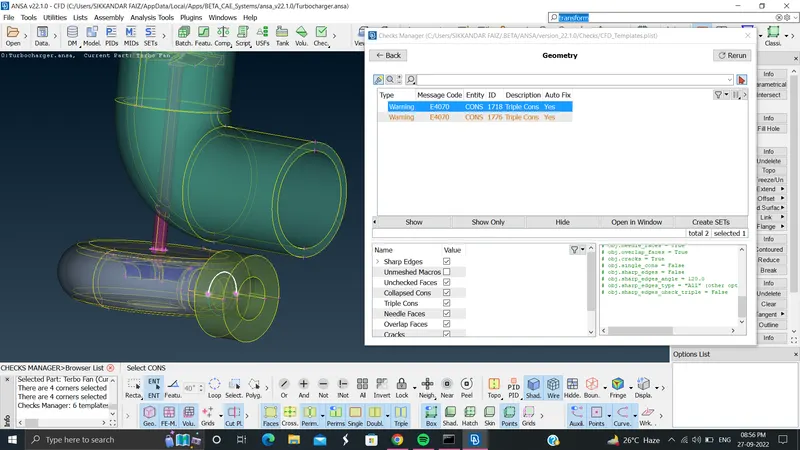
8.completing it, we then go for the checker manager, where we find two issues when executed, they both represent the necessary triple cons formed. so we are fine with it.
9.since we are to do a volumetric mesh we need to do a proper surface mesh, so we have to cover all the cavities in the model with the help of the face tool.
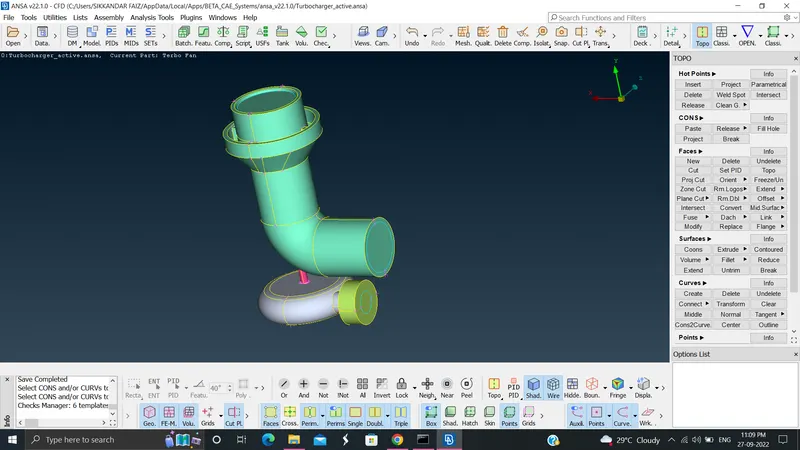
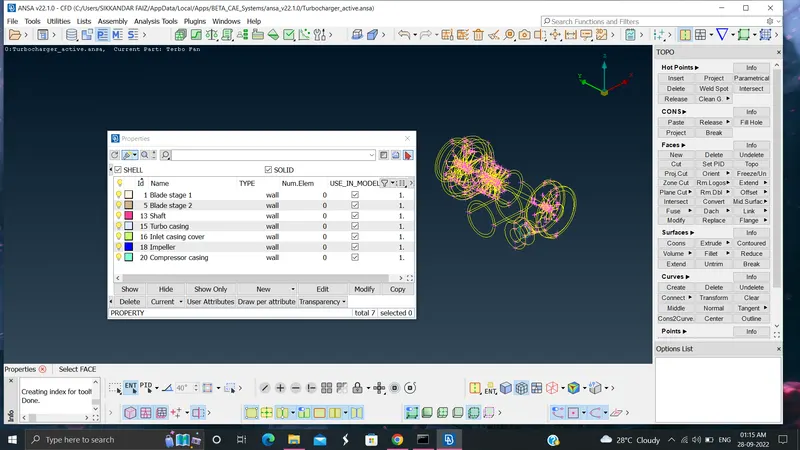
10.the PDIS have been assigned for better understandability, we are to verify if they are well assigned.
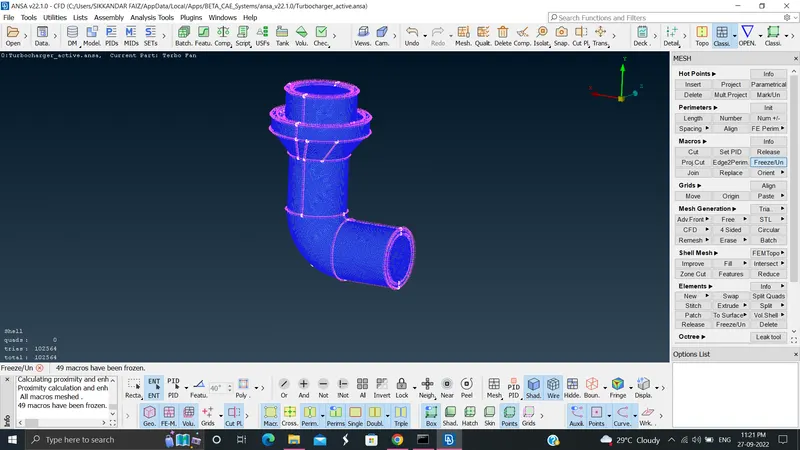
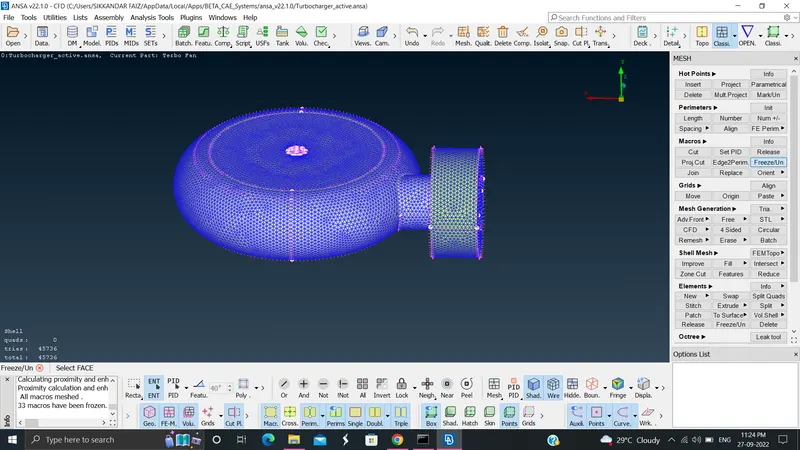
11.coming to the major part we are to mesh three components of the turbocharger in 5 mm, THE COMPRESSOR CASING, TURBO CASING AND INLET CASING COVER. so we are choosing cfd mesh in mesh parameters and cfd mesh. providing min and max target length to range between 4.3 and 5.4 since this is for a 5 mm mesh.
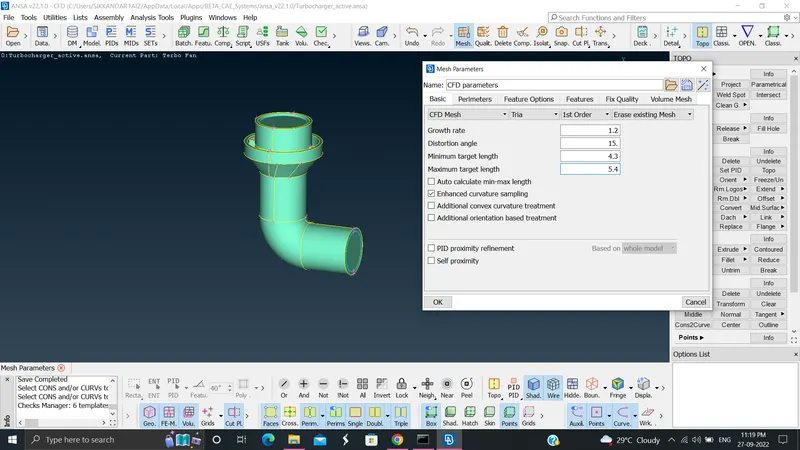
12.completing the auto cfd spacing and the cfd mesh generation we find the model as:
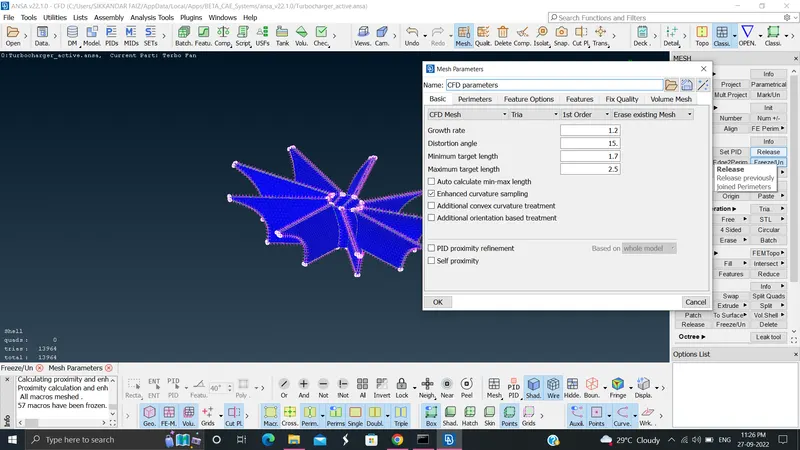
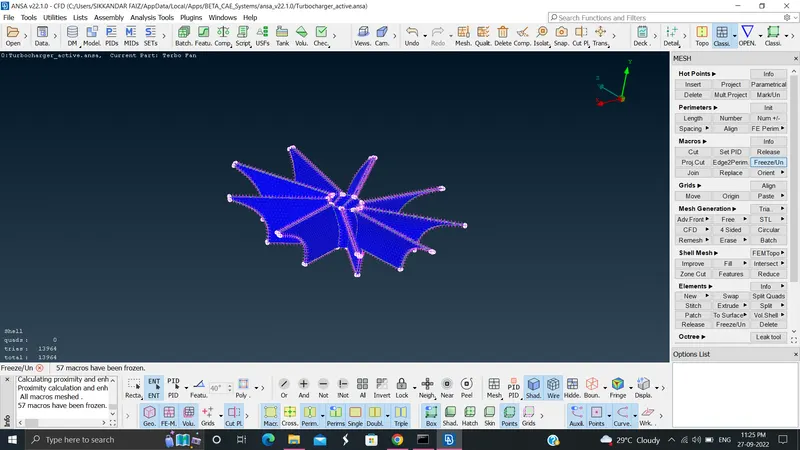
13.similarly we make a min and max target length of 1.7 and 2.5 for a 2 mm impeller mesh.
14.0.5 and 1.2 as min and max total length for 1 mm mesh needed for the shaft rotor and the blades 1 and 2.
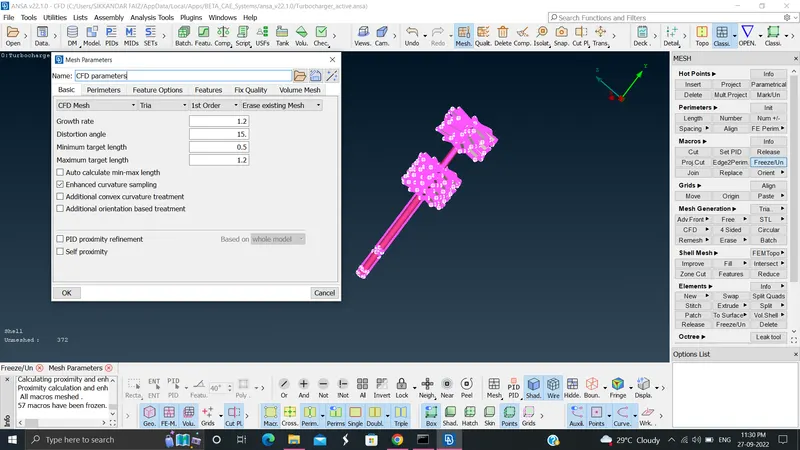
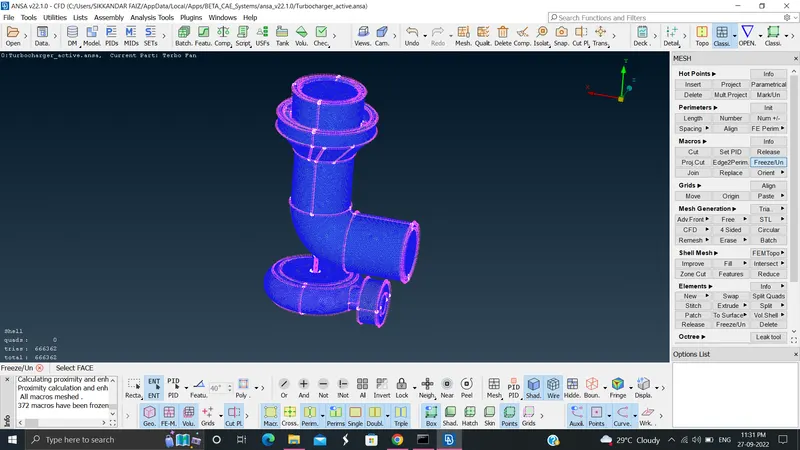
15.once after completing each mesh press freeze in the macros for not wasting your time redoing the mesh again, since there will be errors if not freeze is done. completing the whole meshing and freezing of the model we can find it as such:
16.volume meshing is done by clicking on the v.mesh in the right side of the classic mesh tool deck. once given we are shooted with few errors that has to be checked.
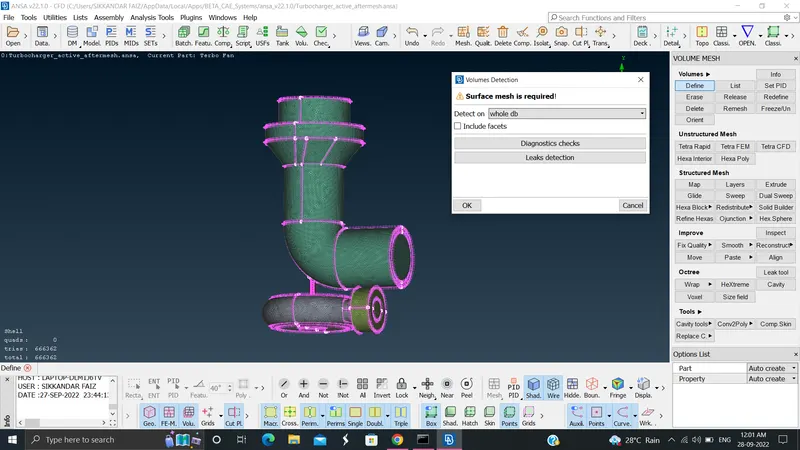
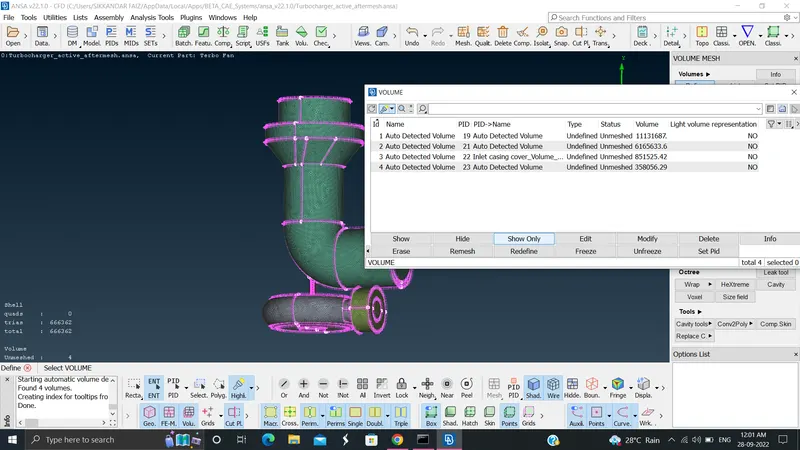
17.one of which represents a unclosed surface, so we have to close it.
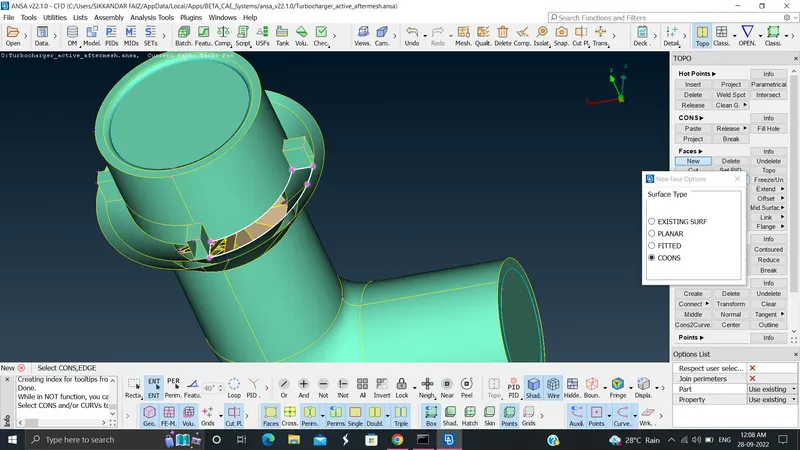
18. still we can find errors, but the thing is since we are going for a volumetric mesh we can avoid all the external surface errors in the list.
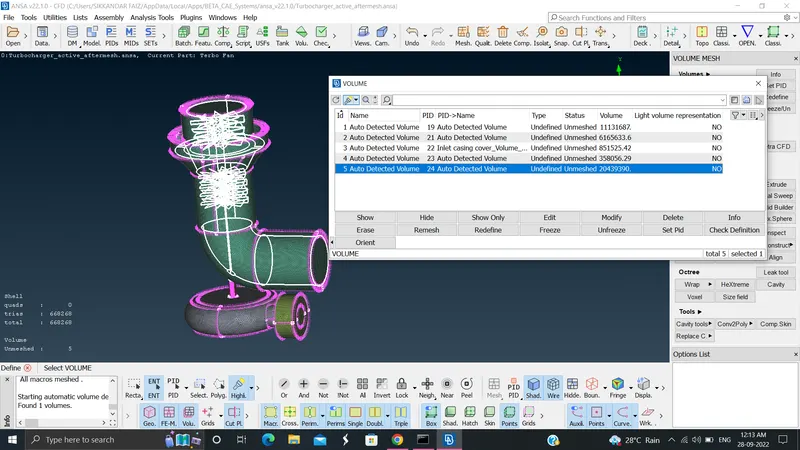
19. once then we will be left with three warning which are stated as undefined parts.
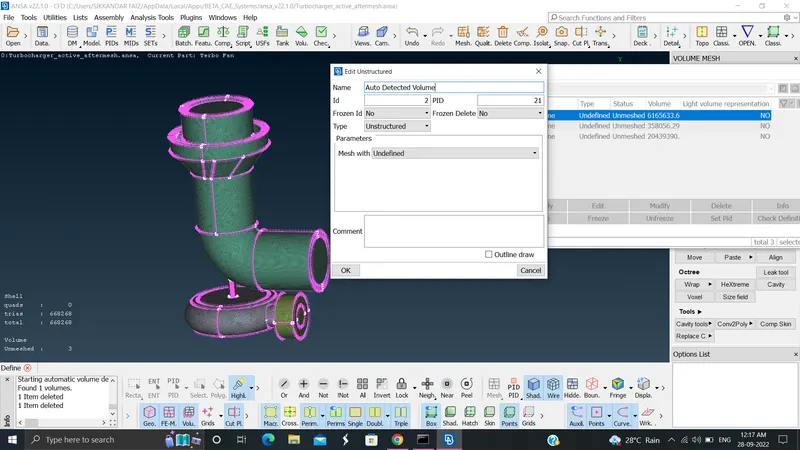
20.in type choose unstructure and in the mesh choose tetra cfd.
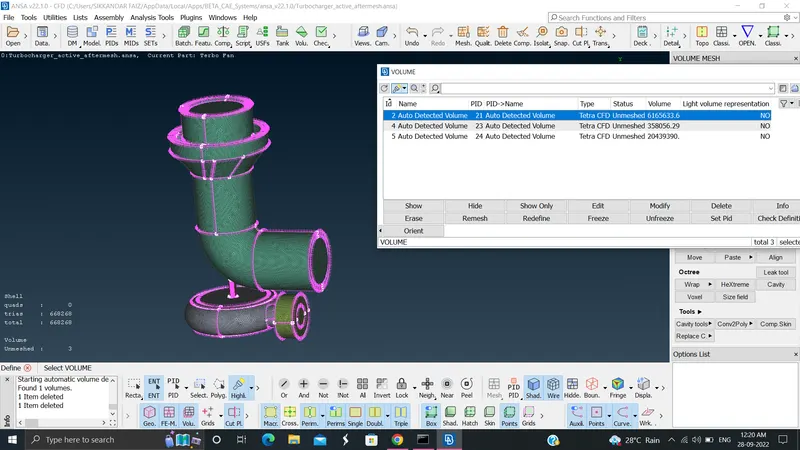
21.we find the status of each unmeshed so remesh then with the help of right click and remesh.
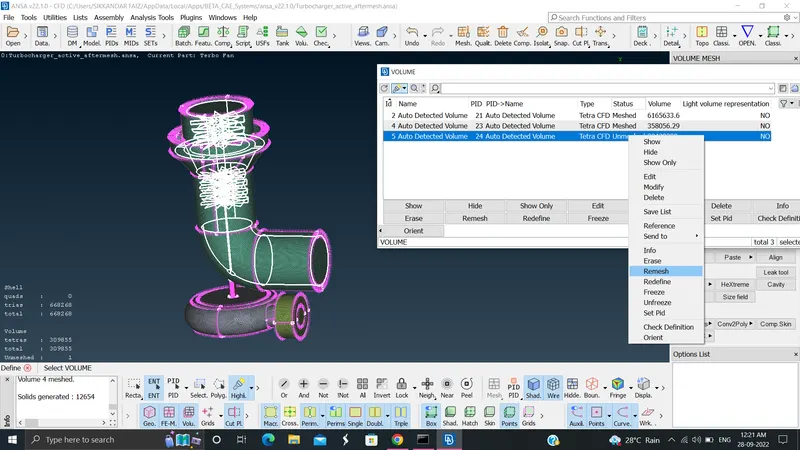
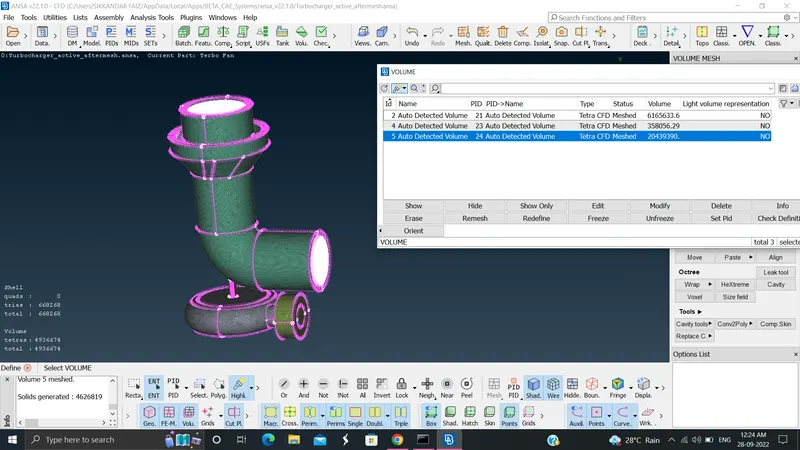
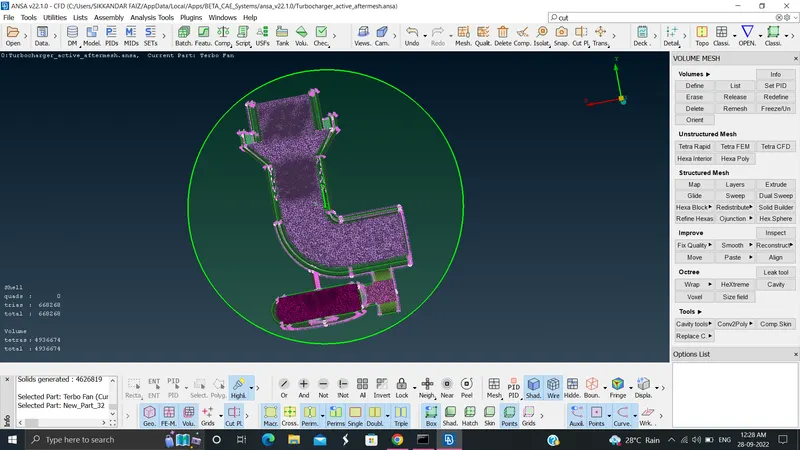
22.the ultimate goal of creating a volumetric mesh is done for the turbocharger of various components and of various total lengths. to check the cross section, click cut plane, new, along x and y axis and make a desired point on the model so it will show how the internal volume is meshed.
................................................................................................................................................................................................................................................................................................................................................................
RESULT:
hope the ultimate goal of the question is satisfied with all the corrections and meshing done.
ANSA FILE LINK:
https://drive.google.com/file/d/1_vzJWg-7c7rDTB_Ar-6YUJbzMsY6aoRQ/view?usp=sharing
................................................................................................................................................................................................................................................................................................................................................................