Week-3 Challenge: ADVISOR Tool
QUESTION 1:
For EV_defaults_in file, if cargo mass is 500 kg with all other default conditions, can the vehicle travel for 45 km with FTP drive cycle? Conclude your observations.
EV defaults in file, setting cargo mass to 500 kg with all other default conditions:
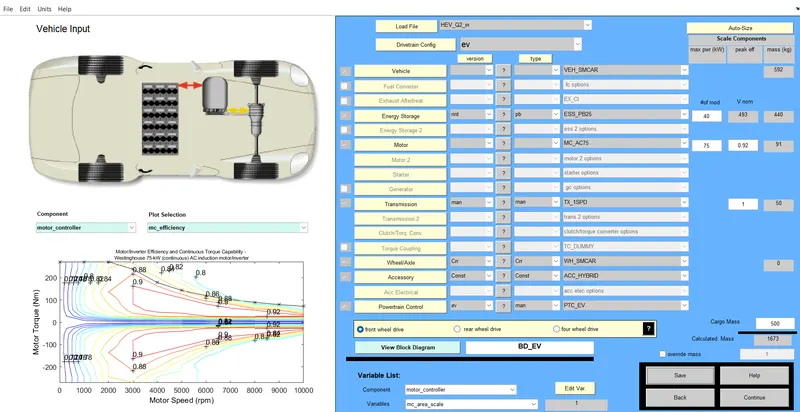
The above screenshot states that the cargo mass to set to 500kg as desired values, the cargo mass is the value to be changed to 500 as shown above. BUt there is a point to be noted that is the number of cycles are default to be set to "1" cycle.
The below screenshot states the change in drive cycle to "FTP drive cycle"
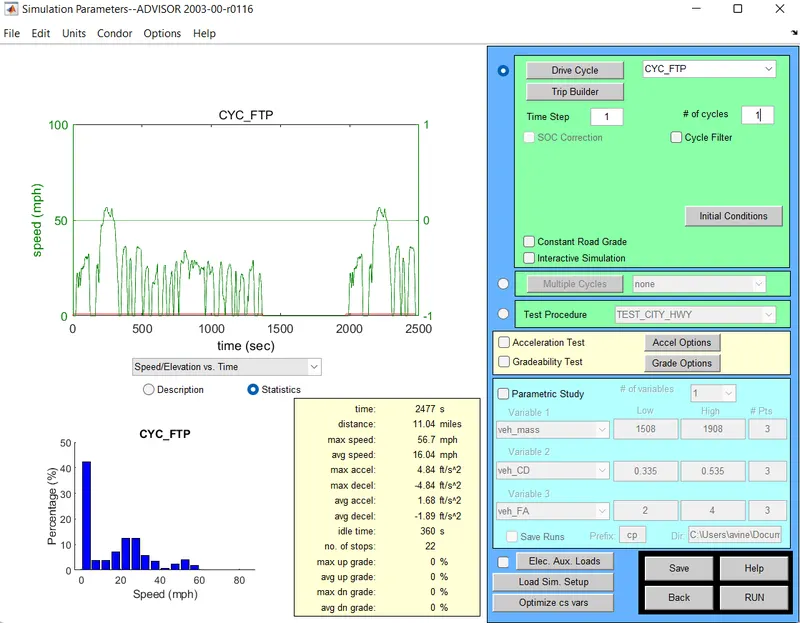
By keeping the default no. of cycles (i.e 1 cycle) we got just 11 miles as shown below, it is the number which is not required to check.
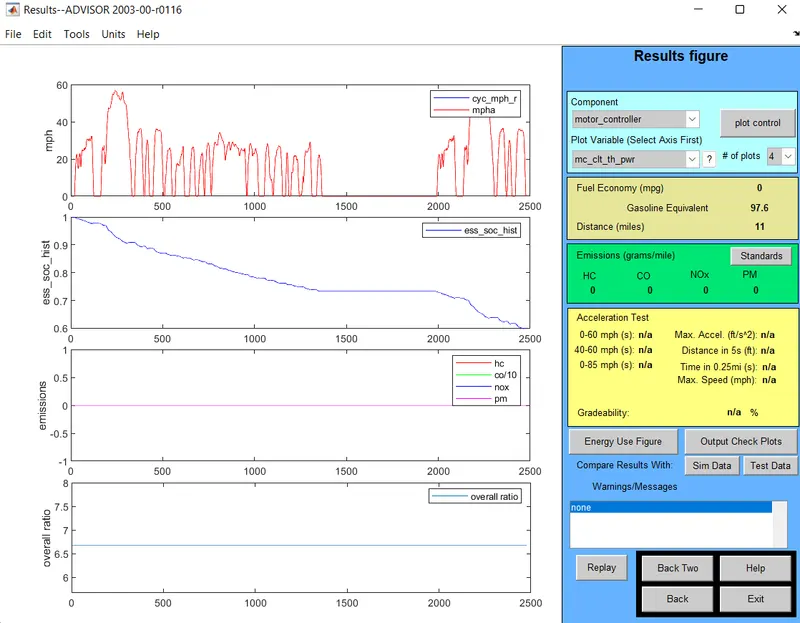
So to obtain the desired distance is "40km" we need to change the number of cycles first.
Here we have changed the number of cycles to "3" to obtain the required distance.
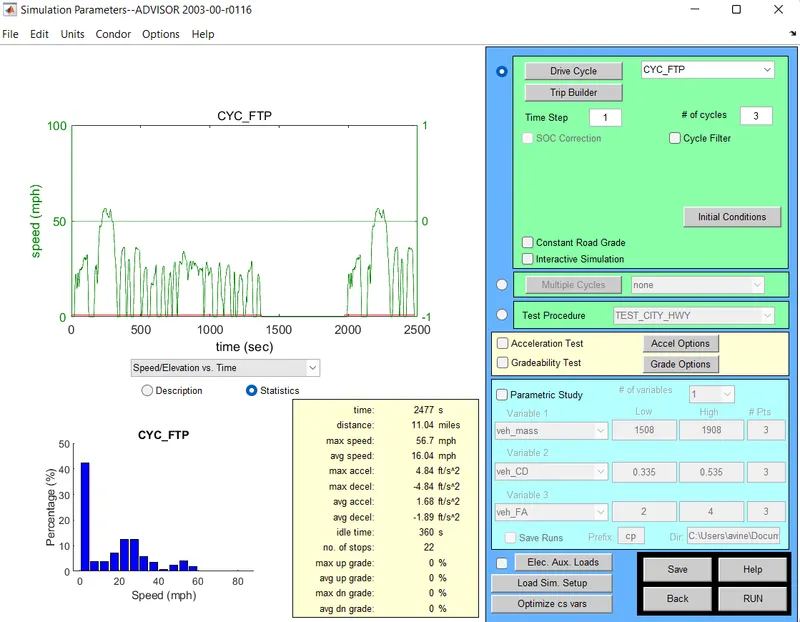
so, thus we got the desired distance i.e "40 km", after changing the no. of cycles to 3.
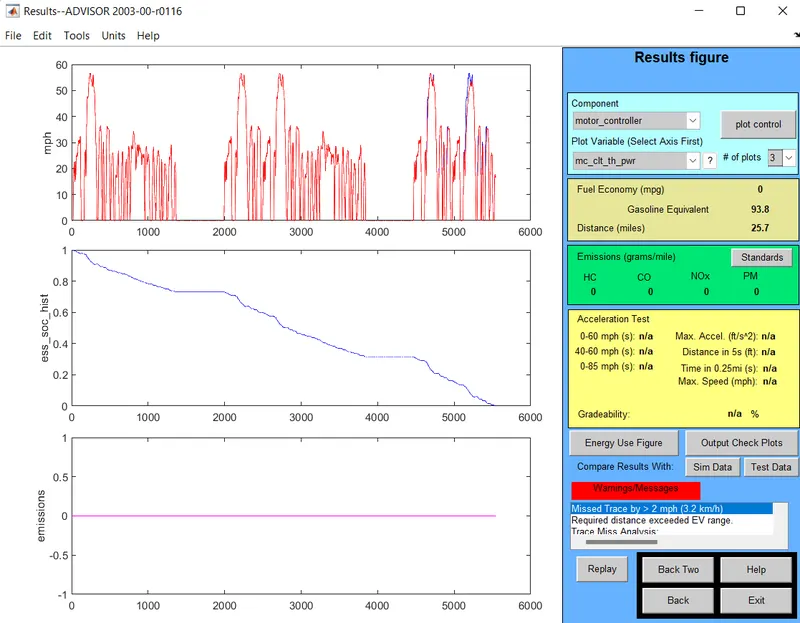
SOLUTION: The vehicle can travel for 45 km with FTP drive cycle
CONCLUSIONS: BY CHANGING THE NO. OF CYCLES WE CAN OBTAIN THE REQUIRED VALUE OF DISTANCE
QUESTION 2:
In the above case, try changing the battery capacity and repeat the simulation
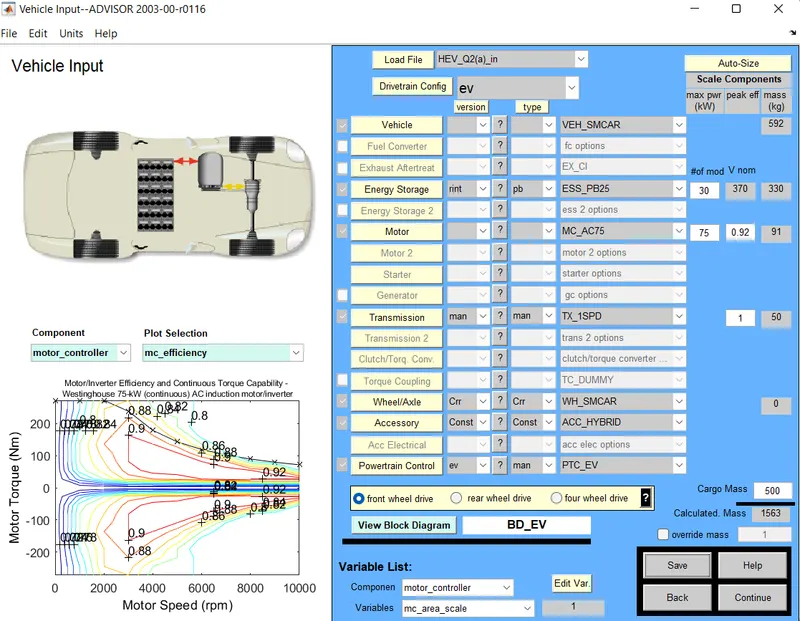
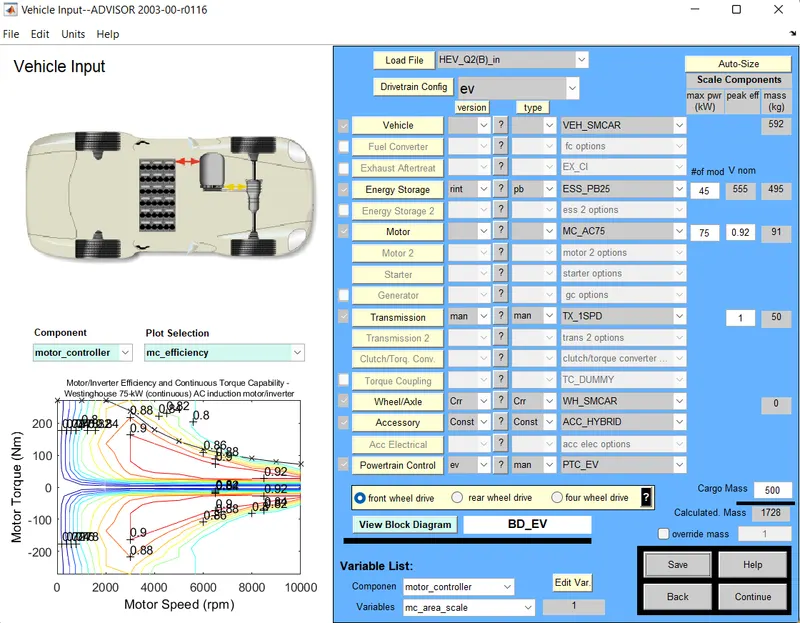
Here battery capacity is been changed into "30 modules", then the nominal voltage is been setup to "370V" and remaining parameters are been in default values.
Battery version is been in "rint" and battery type is in "pb(mercury)" type.
The battery modules are setup for 30 modules, which is shown below

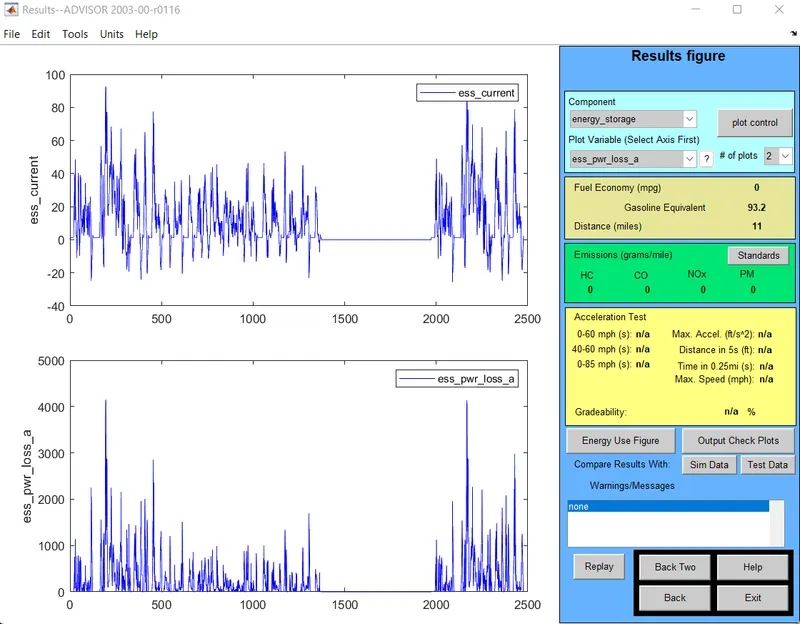
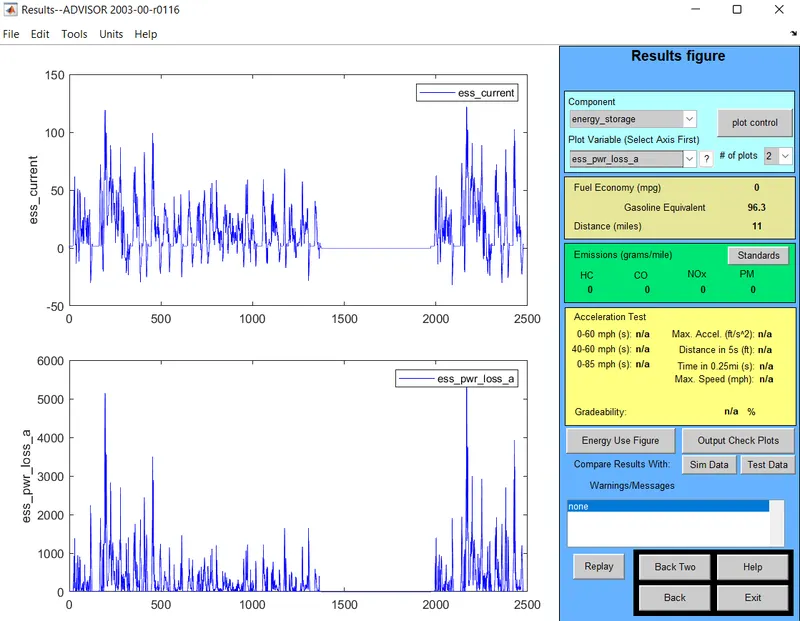
Here the output results are set to check the results of energy storage component. When it comes to variable plotting , we are plotting power loss and current of energy storage systems(ESS).
Results of energy storage system variables of current and power losses
The battery modules are setup for 45 modules where the nominal voltage is 555v, which are shown below

Results of energy storage system variables of current and power losses and their when compared to 30 modules battery pack
QUESTION 3:
Perform gradeability test with PRIUS_Jpn_defaults_in file. Compare your results in table and conclude.
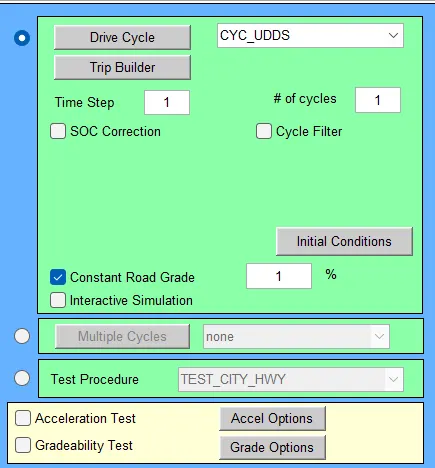
To perform the given test we need to change the gradability of the vehicle. Referring the lecture video the gradability value of the system has been varied from the "constant road grade" blank option. So now adapting the same blank called "constant road grade".
**** After some more number of iterations of gradability test using "gradability test" below in screenshot, the required/desired change in speed is not obtained so choosing the "constant road grade" blank ****
setting the road grade to 1%
We maximum got the speed rising upto 25kmph value
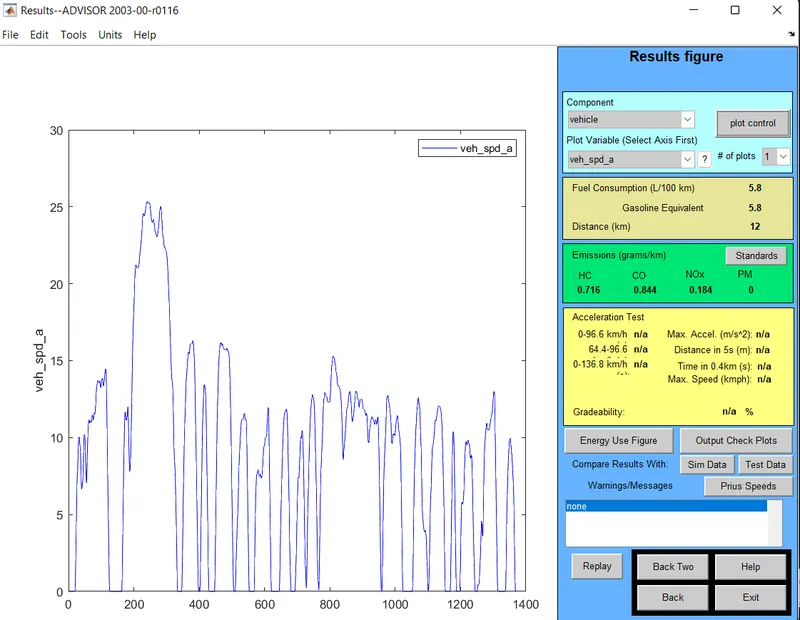
After checking 1% , we are now setting the road grade to 5%
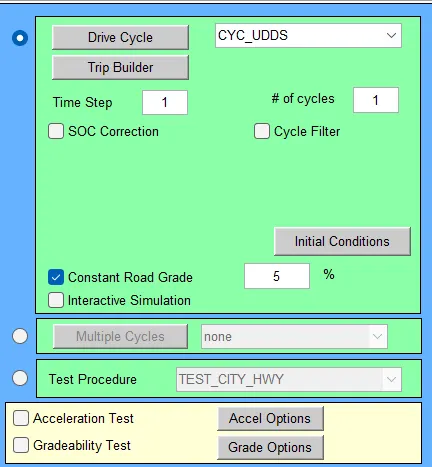
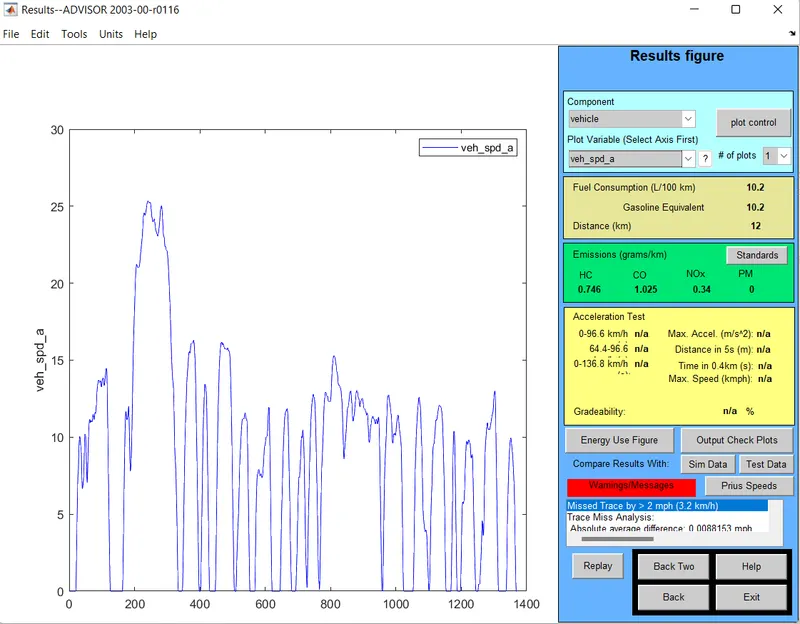
After setting the road grade value to 5% , we got maximum the same speed rising upto 25kmph value
After checking 5% , we are now setting the road grade to 20%
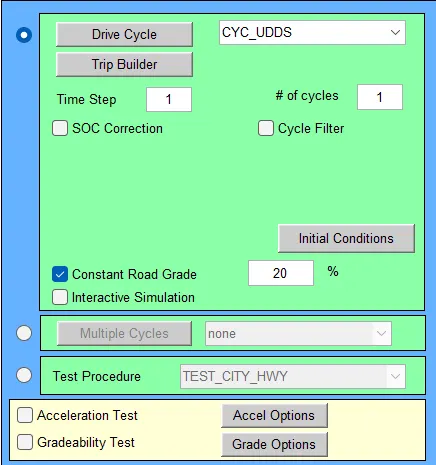
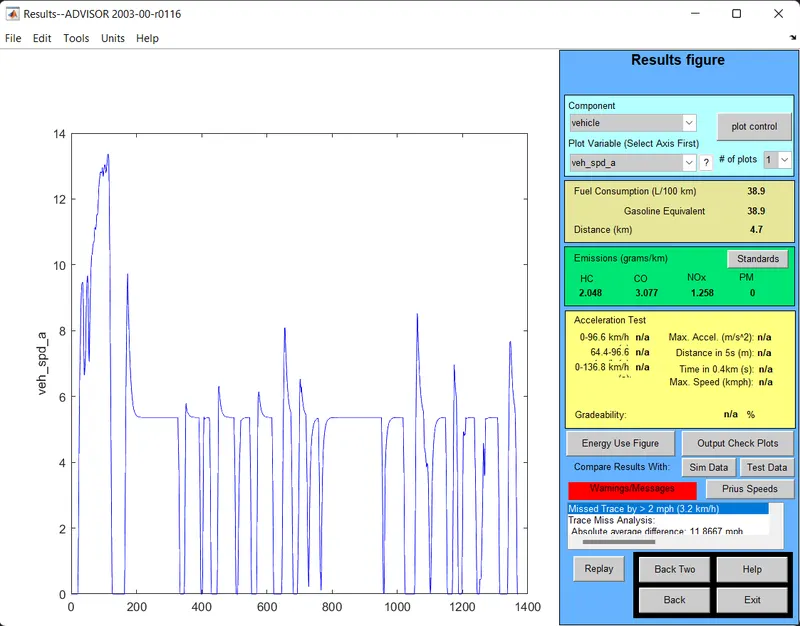
The maximum same speed rising upto 13.5(appox) kmph value
We are now setting the road grade to 30%
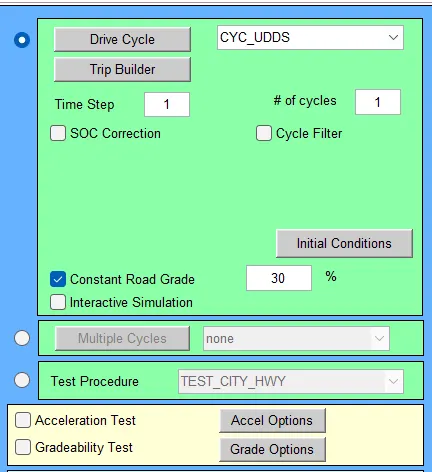
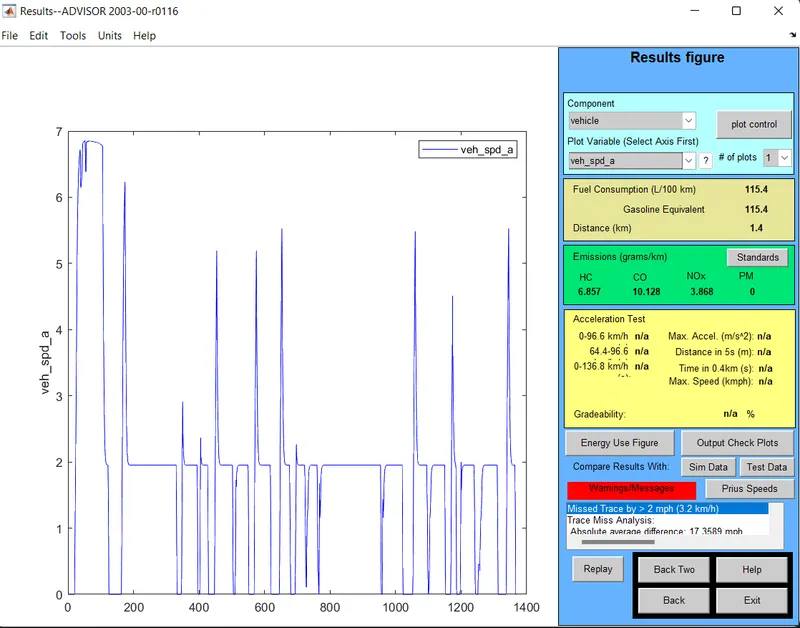
The maximum same speed rising upto 6.8(appox) kmph value
We are now setting the road grade to 40%
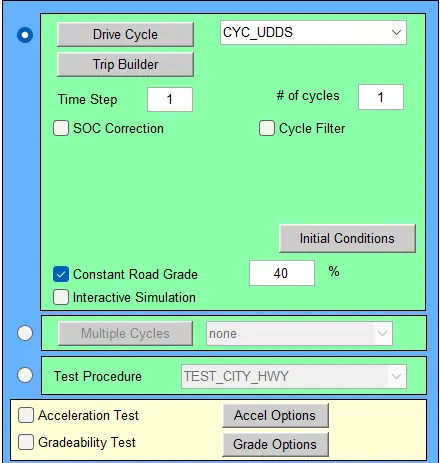
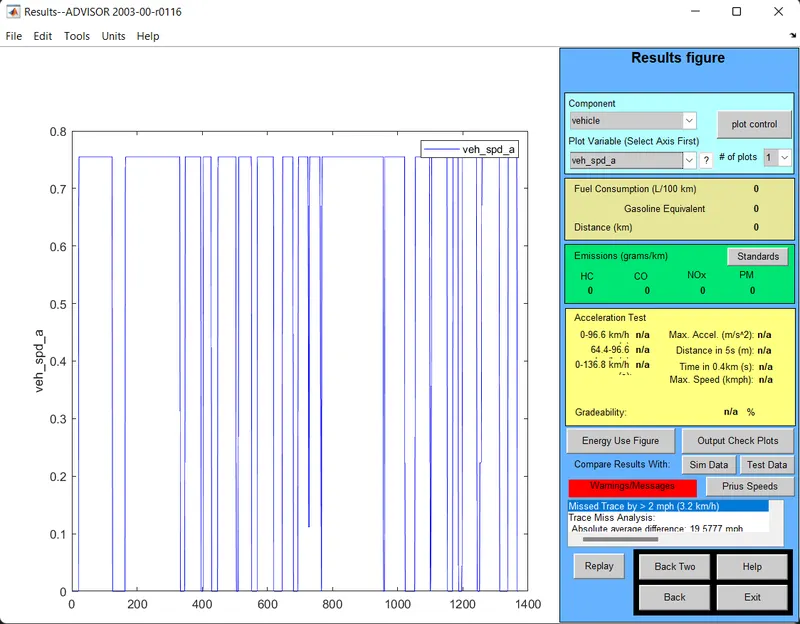
The maximum same speed rising upto 0.75(appox) kmph value
We are now setting the road grade to 45%
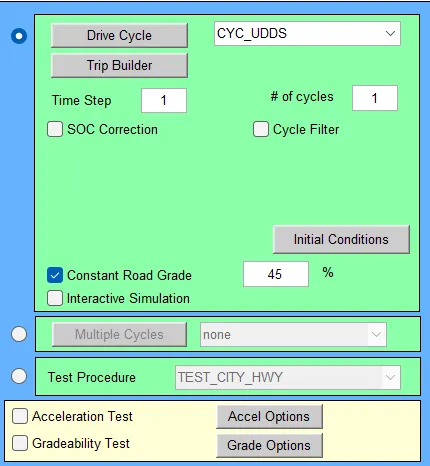
The maximum same speed rising upto 0.57(appox) kmph value
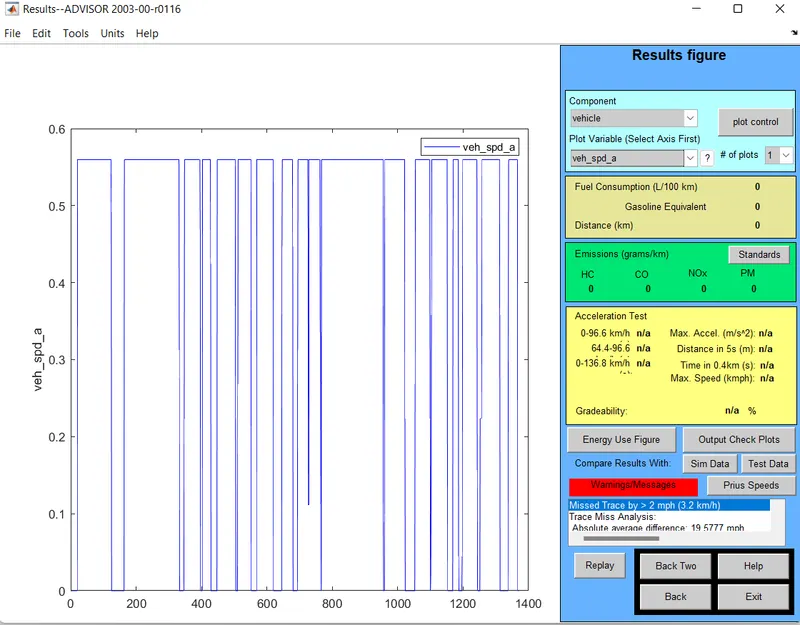
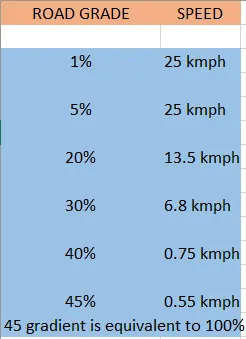
The results in table and concluded that the increase in road grade value is inversely propotional to speed. When the road grade value is increasing then the speed of the vehicle is keep on decreasing, because the slope of the plane on which the vehicle is travelling is increasing thus the speed of the vehicle is also increasing.
The road grade and speed values are tabulated