Week-3 Challenge: ADVISOR Tool
AIM:
Use ADVISOR tool and simulate the following
1. For EV_defaults_in file, if cargo mass is 500 kg with all other default conditions, can the vehicle travel for 45 km with FTP drive cycle? Conclude your observations.
2. In the above case, try changing the battery capacity and repeat the simulation.
3. Perform gradeability test with PRIUS_Jpn_defaults_in file
Compare your results in table and conclude.
ADVISOR :
ADVISOR was created in the MATLAB/Simulink envir-onment. MATLAB provides an easy-to-use matrix-basedprogramming environment for performing calculationswhile Simulink can be used to represent complex systemsgraphically using block diagrams. ADVISOR uses three primary graphical user interface(GUI) screens to guide the user through the simulationprocess. With the GUIs, the user can iteratively evaluate theimpacts of vehicle parameters and drive cycle requirements. The Model Advisor checks your model or subsystem for modeling conditions and configuration settings that cause inaccurate or inefficient simulation of the system that the model represents. The Model Advisor checks can help you verify compliance with industry standards and guidelines.
ADVISOR was originally developed as a simple analysis tool that could be used to quickly quantify the relative impacts of advanced technologies in a vehicle. It quickly evolved into a tool with a wide range of capabilities
Key attributes
The following is a short list of the key attributes that have lead to the adoption of ADVISOR as an analysis tool by a
broad audience:
Intuitive, easy-to-use graphical interface;
Fast solutions;
Distributed as open source code;
Customizable;
Scalable component models;
Good customer support, software maintenance, and documentation;
Free and publicly available;
Highly parameterized models;
Provides robust solutions;
Modular architecture;
ANSWERS
1. For EV_defaults_in file, if cargo mass is 500 kg with all other default conditions, can the vehicle travel for 45 km with FTP drive cycle? Conclude your observations.
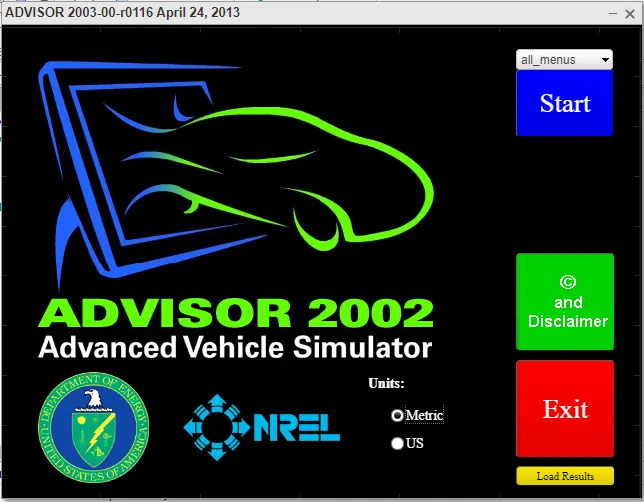
Open the ADVISOE tool, and set load file as 'EV_defaults_in.
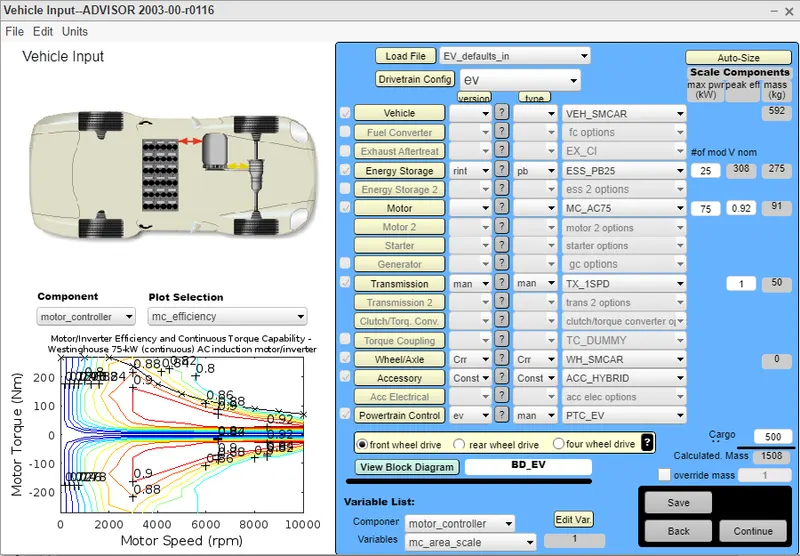
Now, set the cargo load to 500 as per given in question.
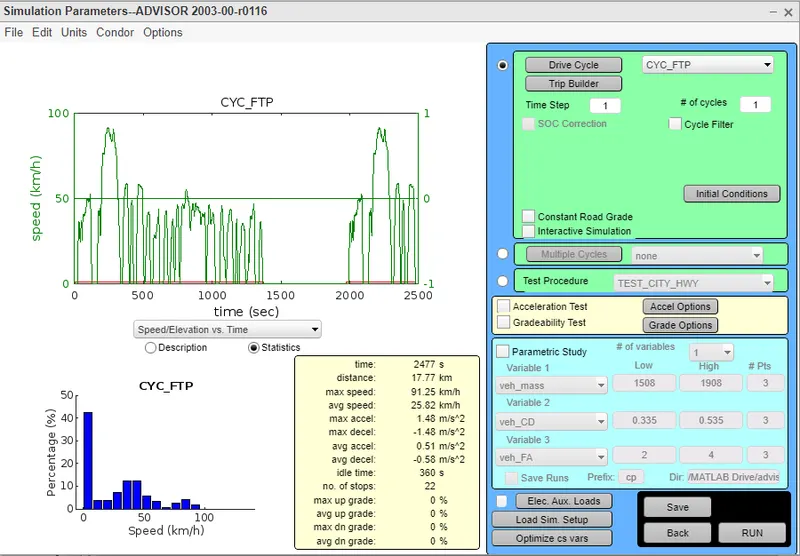
Change the drive cycle to CYC_FTP.
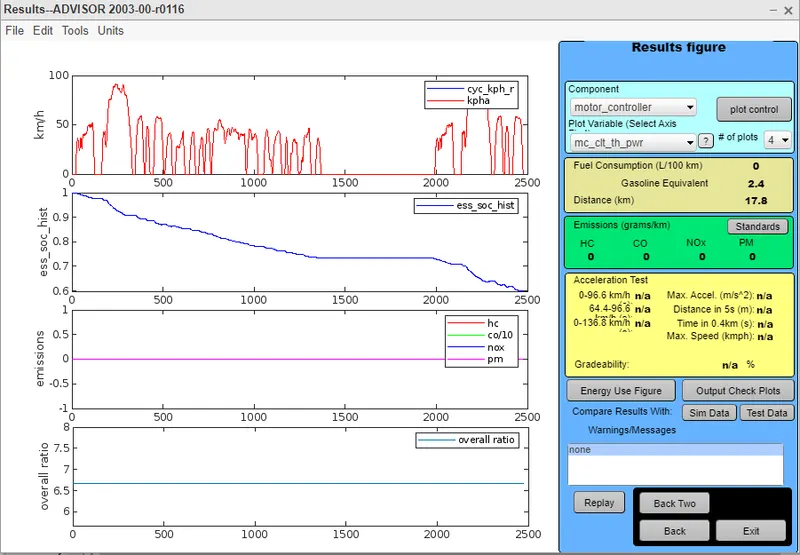
Run the simulation, you will get the distance travelleed per cycle and the battery remaining.
Distance: 17.8 km
Set the cylce to 2, which denotes the second cycle.
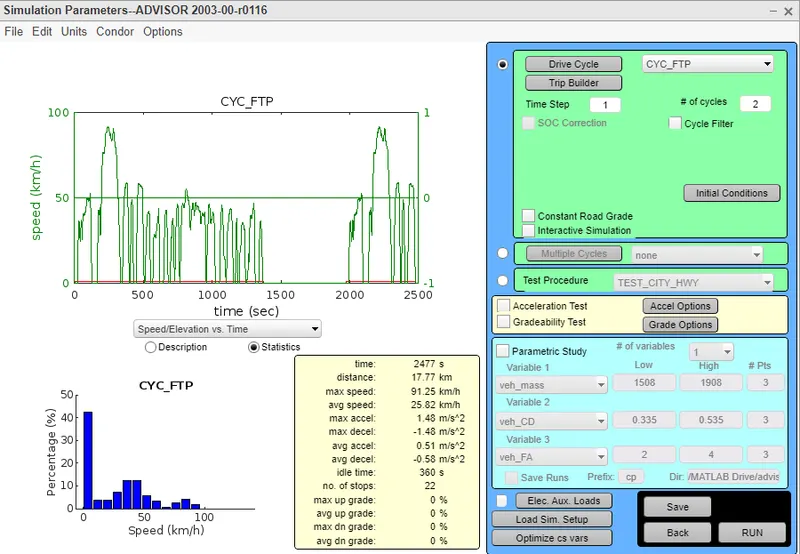
Distance: 35.5 km
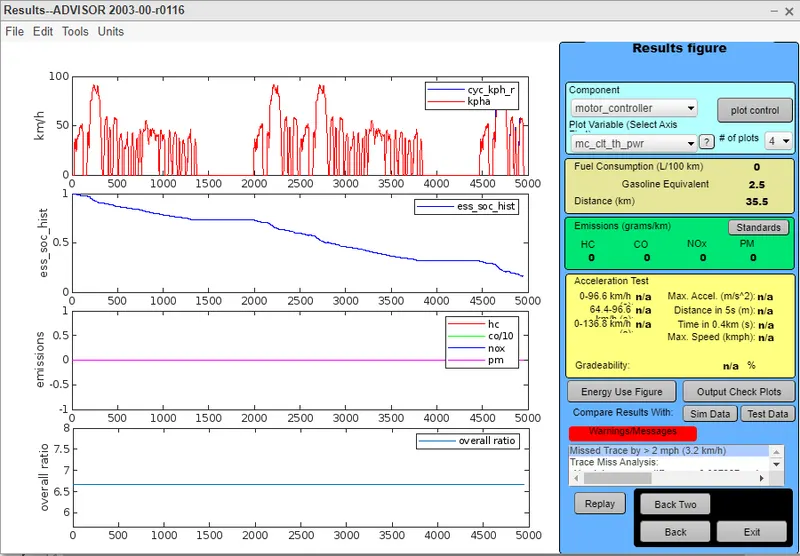
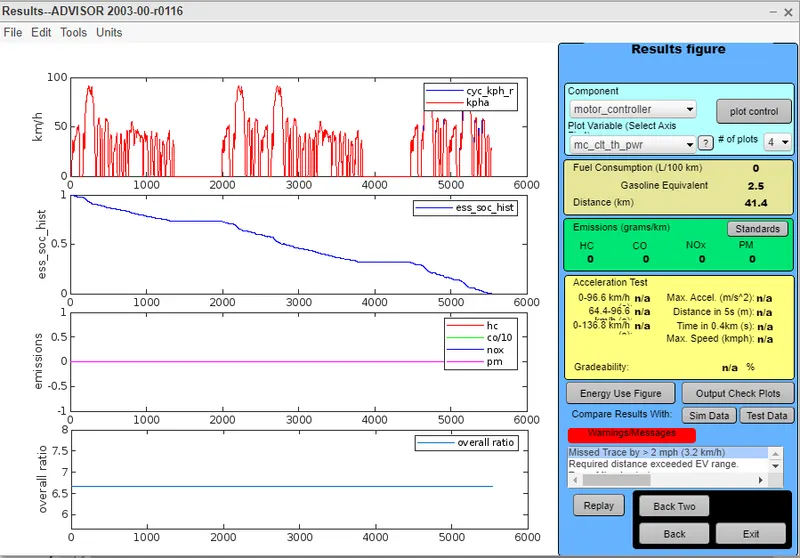
For the third cycle.
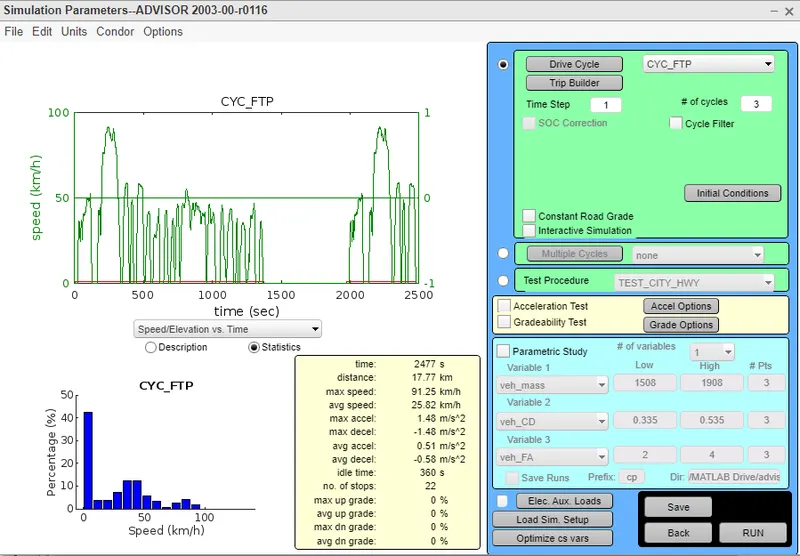
Here, Distance: 41.4 km and the warning message show Required distance exceeded the EV range which means the battery is exhausted.
SO, the distance travelled is 41.4 which means the vehicle failed to travel 45km.
2. In the above case, try changing the battery capacity and repeat the simulation.
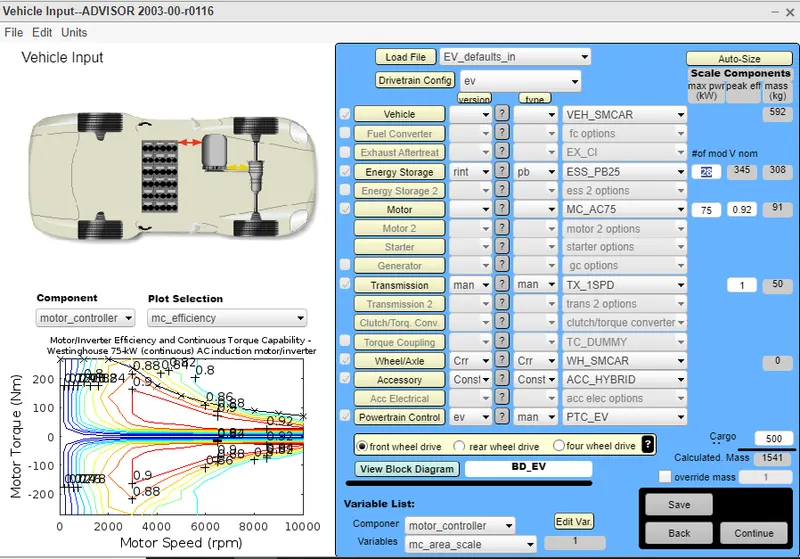
For the part 1 we have solved the battery condition for 25 of the mod value.
Here the mod value has been set to 28 to test the battery capacity.
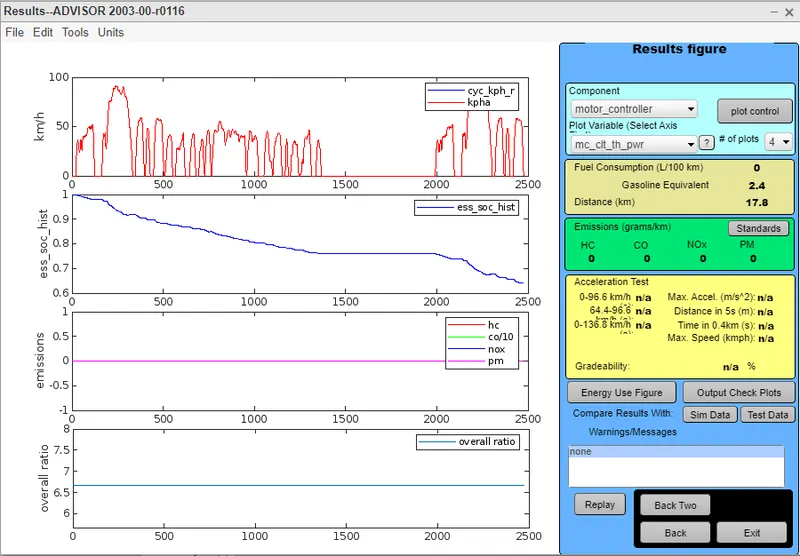
Distance: 17.8 km
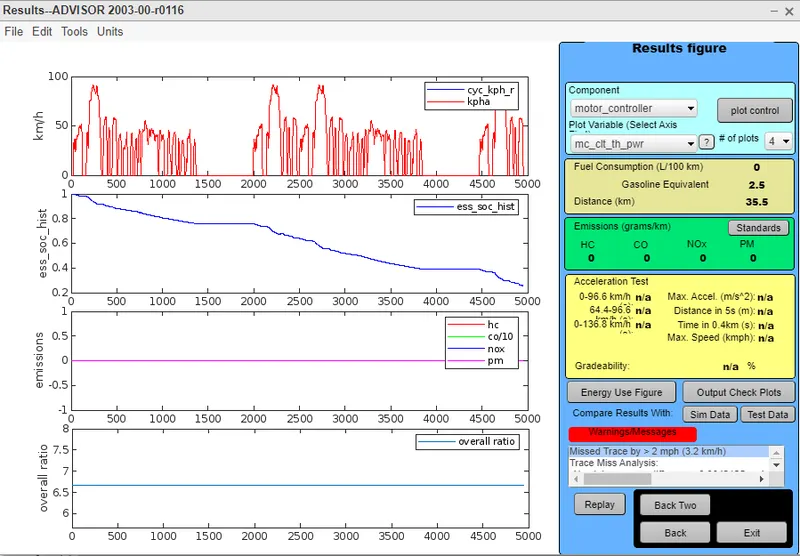
Distance: 35.5 km
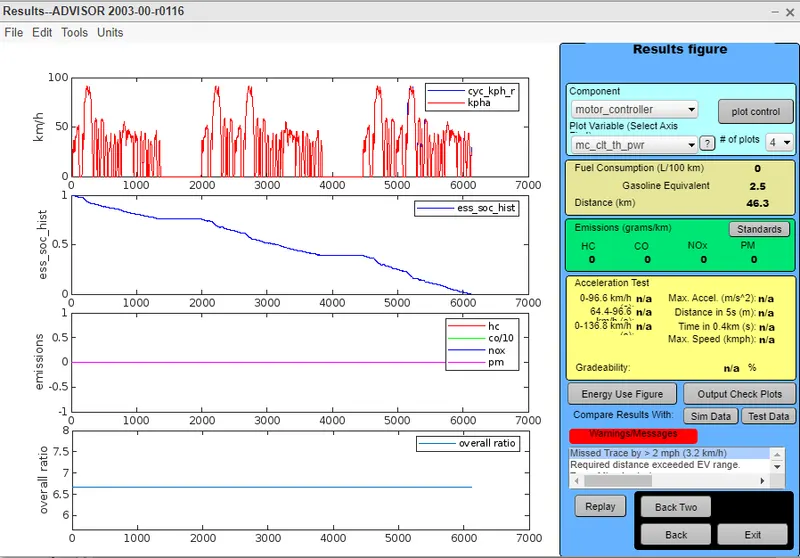
Distance: 46.3 km
we can conclude that the distance travelled by the vehicle has been increased with the increase in the battery capacity. And the vehicle has travelled more than 45km.
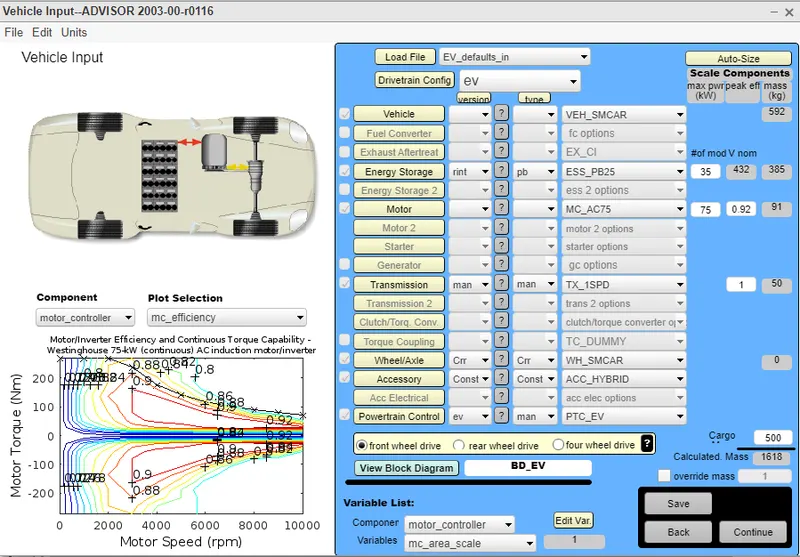
Set mod value is 35.
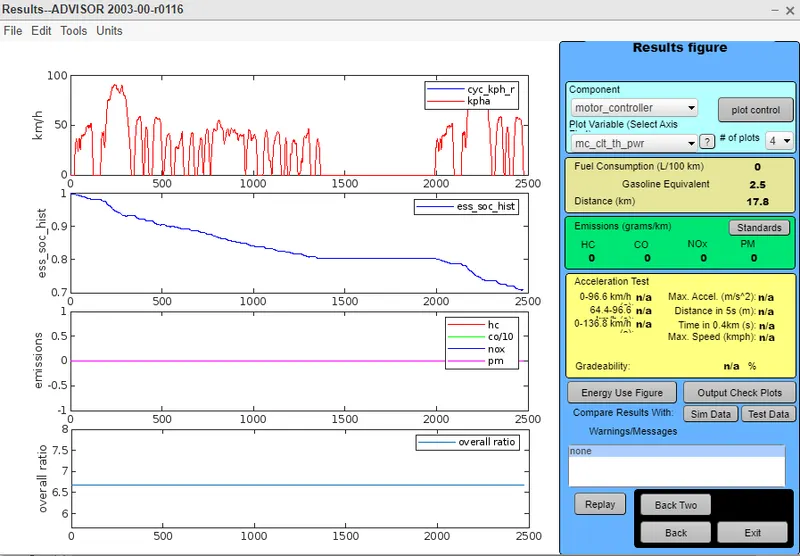
Intial Distance: 17.8 km.
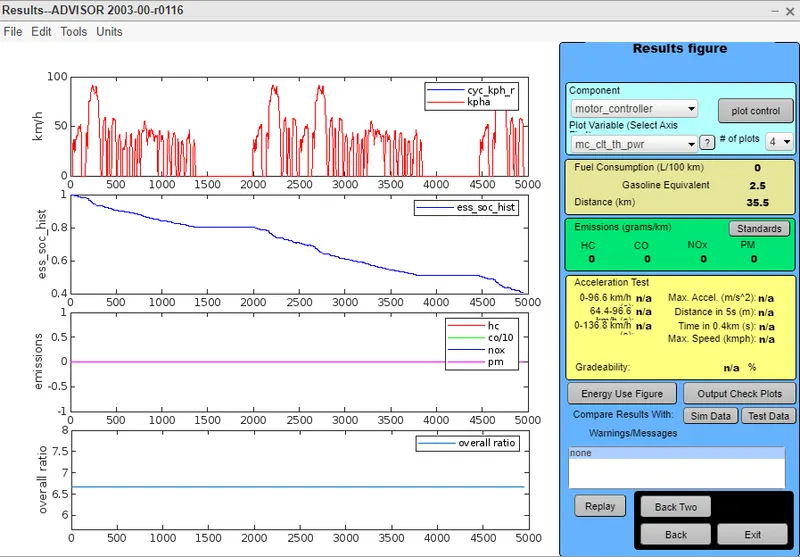
Distance: 35.5 km
Distance: 53.2 km intial stages we weren't able to find the major difference but the at the third cycle the vehicle with higher battery capacity have travelled distance more than that of the vehicle with less battery capacity one's.
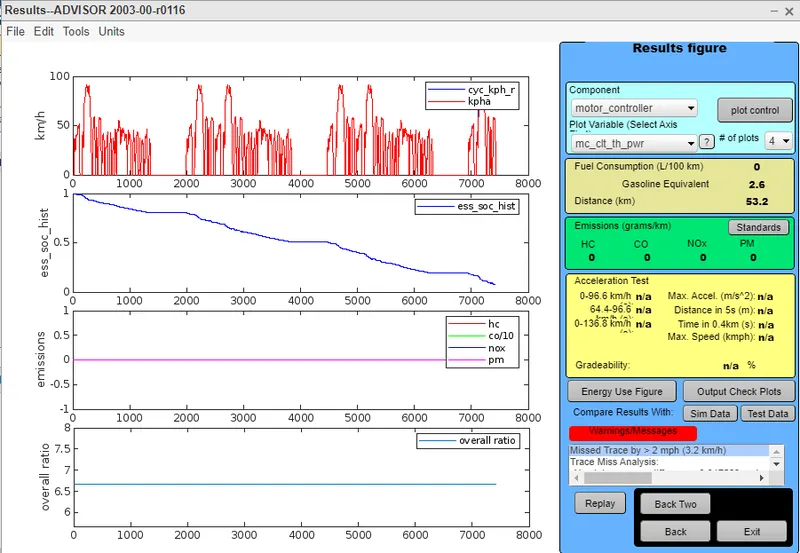
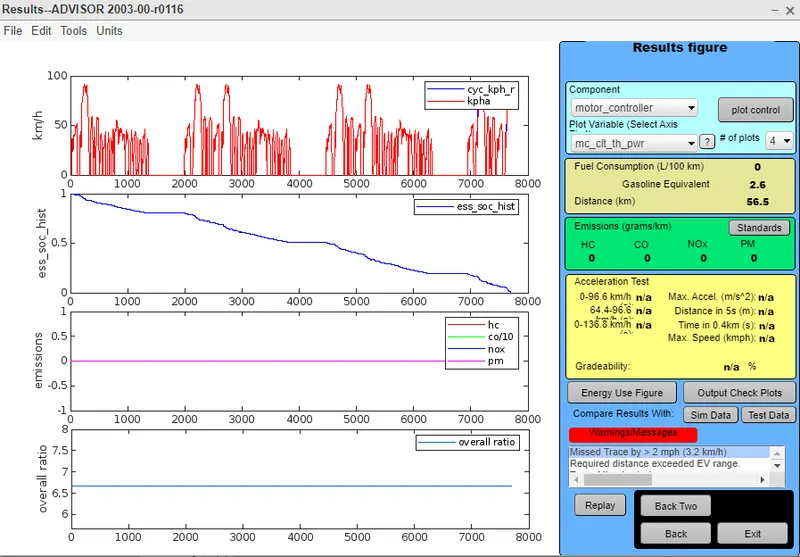
This mod battery capacity has travelled 4 cycle and then the battery have got exhausted so, its definte that increase in battery capacity leads to increase in the distance travelled.
3. Perform gradeability test with PRIUS_Jpn_defaults_in file
Compare your results in table and conclude.
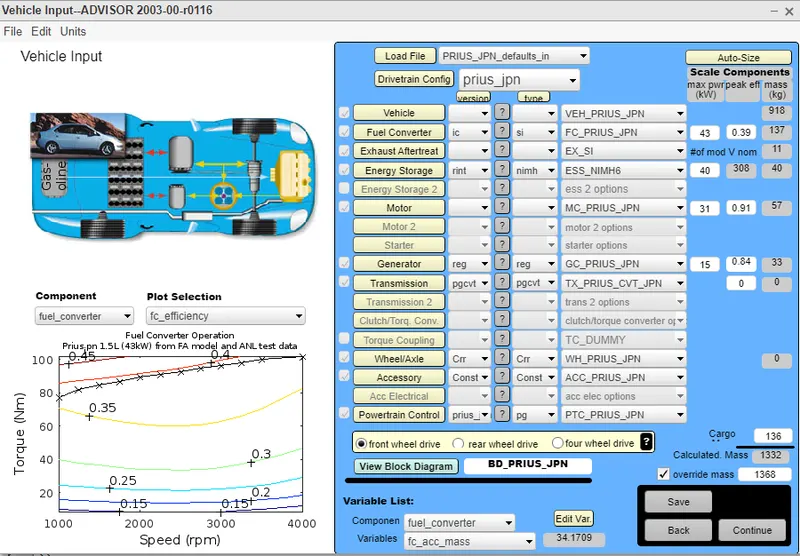
In the load file change to PRIUS_jpn_defaults_in and keep other parameters same.
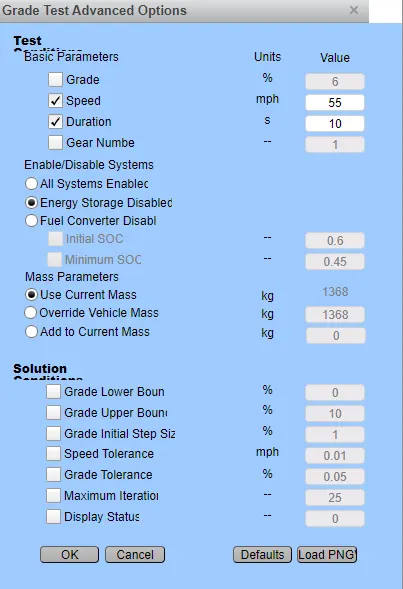
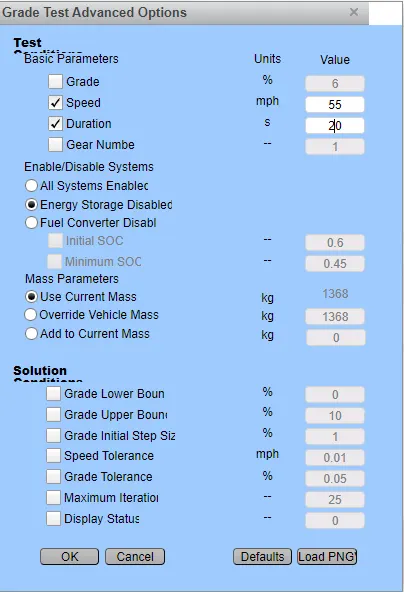
Tick mark the gradeability test and open advance option set speed 55 mph and time 10s.
Gradeability is 2.4
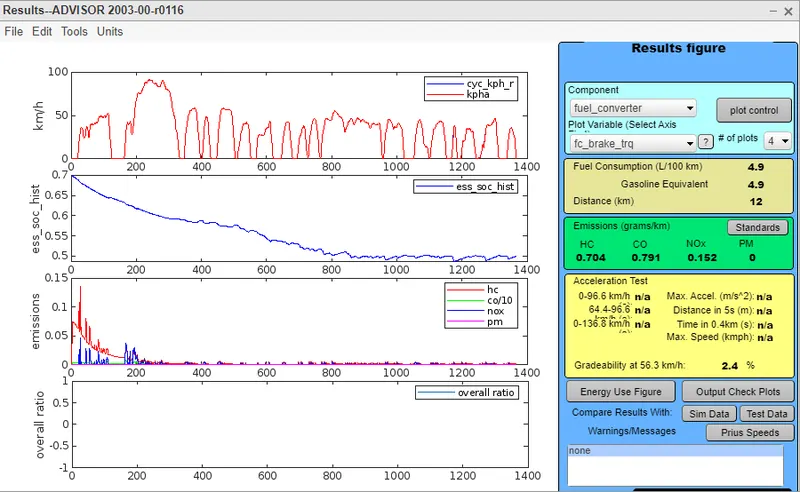
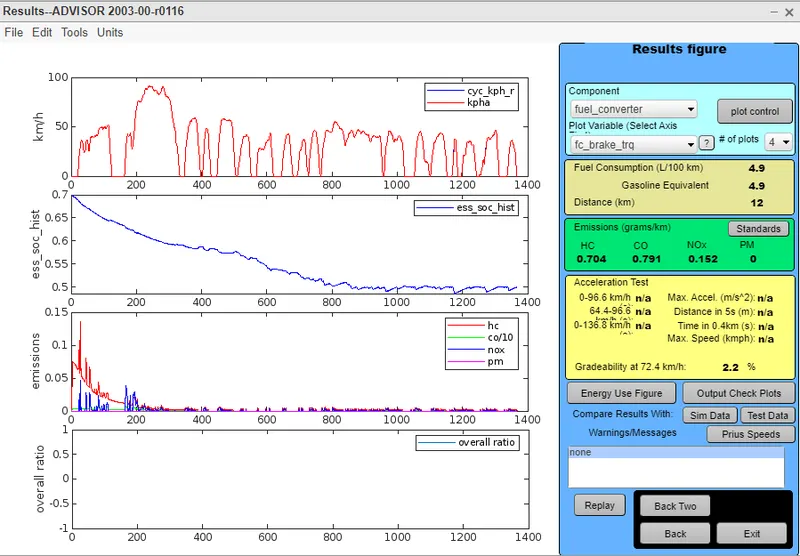
Gradeability is 2.2 speed is 45 mph
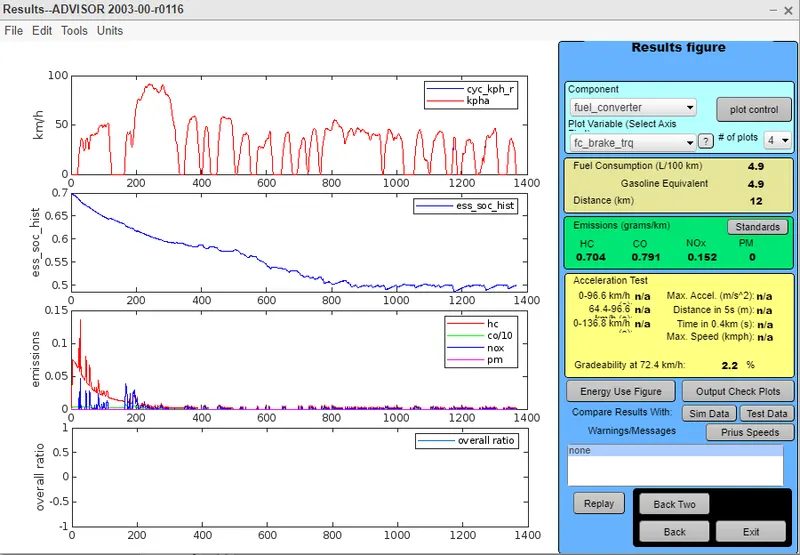
Gradeability is 1.7 speed is 35 mph
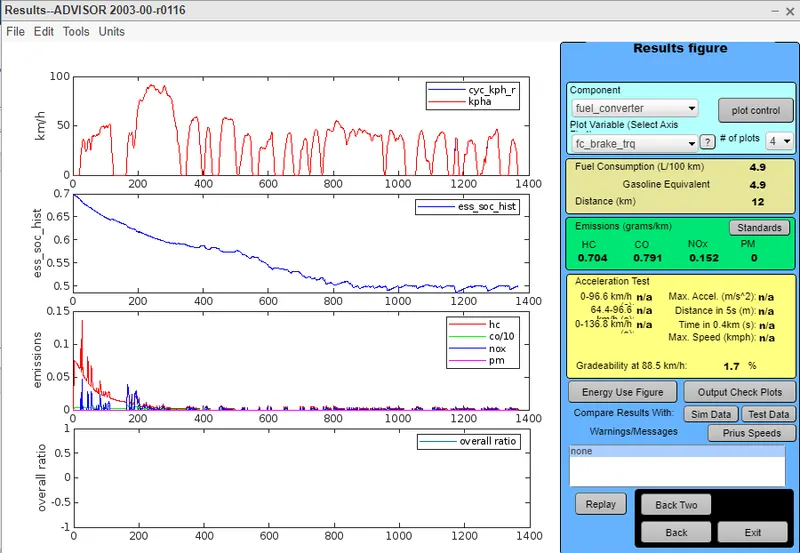
This time change the time to 20s
Gradeability is 2.5 for speed of 55 mph
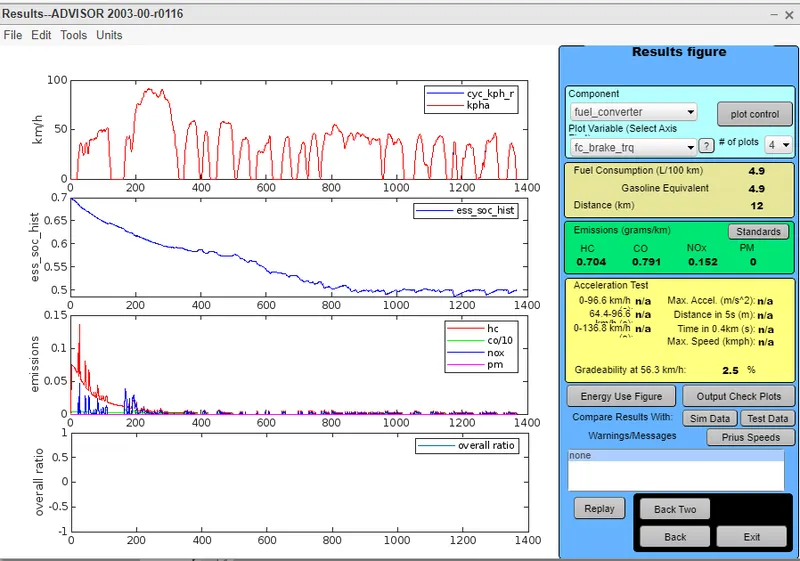
Gradeability is 2.2 for 45 mph
Gradeability is 1.7 for 35 mph
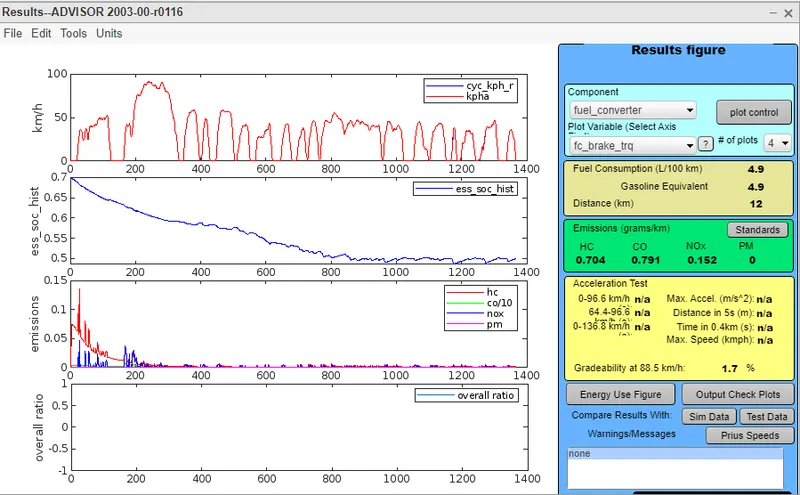
It is evidently concluded that gradeability increase with increasing in speed and not with time.