Week-3 Challenge: ADVISOR Tool
ADVISOR TOOL:
ADVISOR is a registered trademark of the Alliance for Sustainable Energy, LLC, the manager and operator of the National Renewable Energy Laboratory for the United States Department of Energy.
ADVISOR Software or "Advanced Vehicle Simulator" is a set of model, data scripts, and plots fiels for use with matlab and simulink.
ADVISOR is a MATLAB/Simulink based simulation program for rapid analysis of the performance and fuel economy of light and heavy-duty vehicles with conventional (gasoline/diesel), hybrid-electric, full-electric, and fuel cell powertrains. New features are developed under the title "Advanced Vehicle Simulator".
Periodically, stable versions of Advanced Vehicle Simulator will be submitted for consideration as the next canonical version of the ADVISOR software.
Benefits of ADVISOR tool:
1. Estimate the fuel economy of the vehicle that have not yet been built, vehicle performance of all kind of test information are taken from result files
2. Learn about different type of vehicle and knoeing about on performance of the vehicle without manual test by providing values and uising simulation. also energy throughout their drivertrains
3.Evaluate an energy management strategy for your hybrid vehicle's fuel converter
4.Compare relative tailpipe emissions produced on a number of cycles.
5.Optimize the gear ratios of the vehicle transmission to minimize fuel use or maximise performance, etc
Comman step to open ADVISOR tool
1. Create seperate folder for advisor in matlab window
2. Type '' advisor '' in command window in matlab and click enter. advisor window is popup
3. In that window select metric option and click start option.
4. It will launch in to a new window that is main or first page of advisor tool
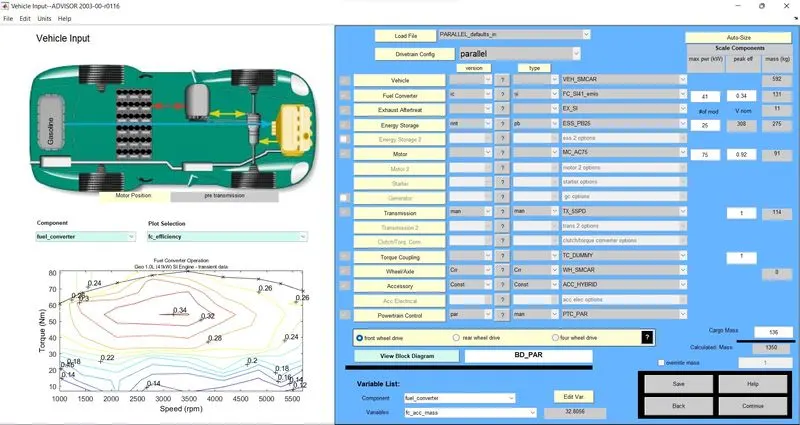
In ADVISOR tool first window we can see a vehicle input window on left side, simulation parameters window on right side and next page is simulation run window etc.
GIVEN TASK 1:
1. For EV_defaults_in file, if cargo mass is 500 kg with all other default conditions, can the vehicle travel for 45 km with FTP drive cycle? Conclude your observations.
Answer:
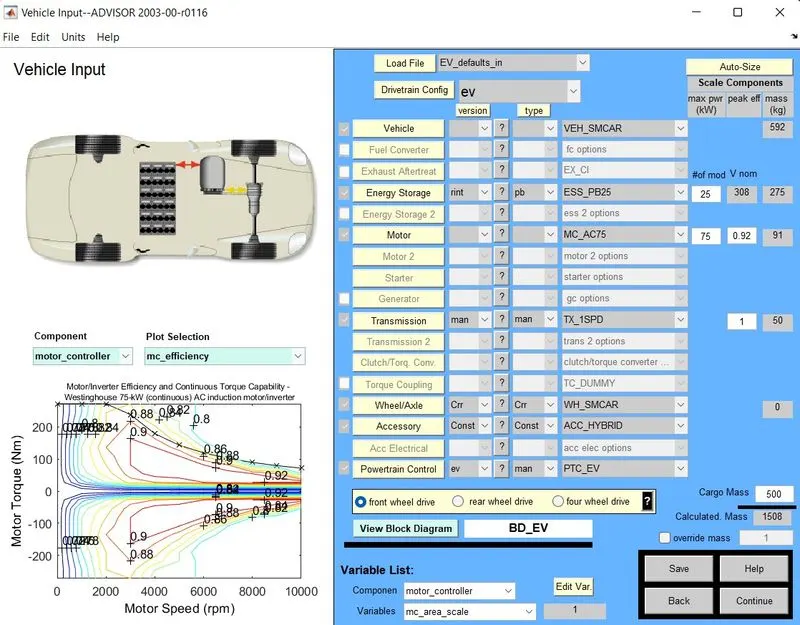
1. Change parallel_default_in model to given specified model of EV_default_in model
2. The cargo mass of the vehicle is also changed into 500kg, total calculted mass is 1508kg
3. Set all the parameters are in default condition just know about on it.
4. click continue to load next window.
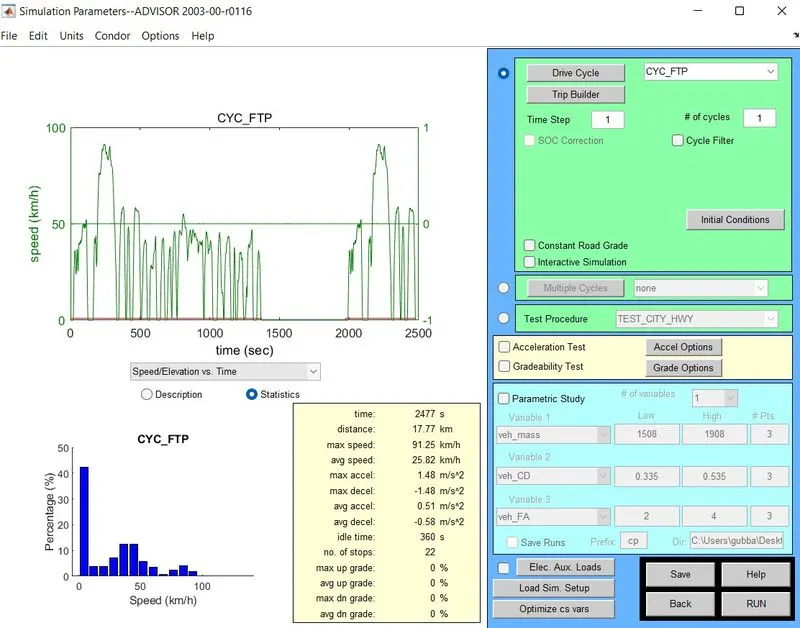
5. In this window we can change drive cycle defaut to CYC_FTP. In this window all the remaining parameters are set default.
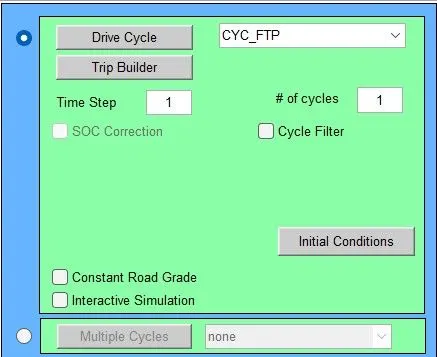
6. Below we will see # of cycle from here we can set 1 drive cycle.
7. click run button and observe power, distance travelled, battery capacity etc. In this secnario the battery type is pb lead acid 25 and motor is ac75
add 1 drive cycle:
The result of using 1 FTP drive cycle.
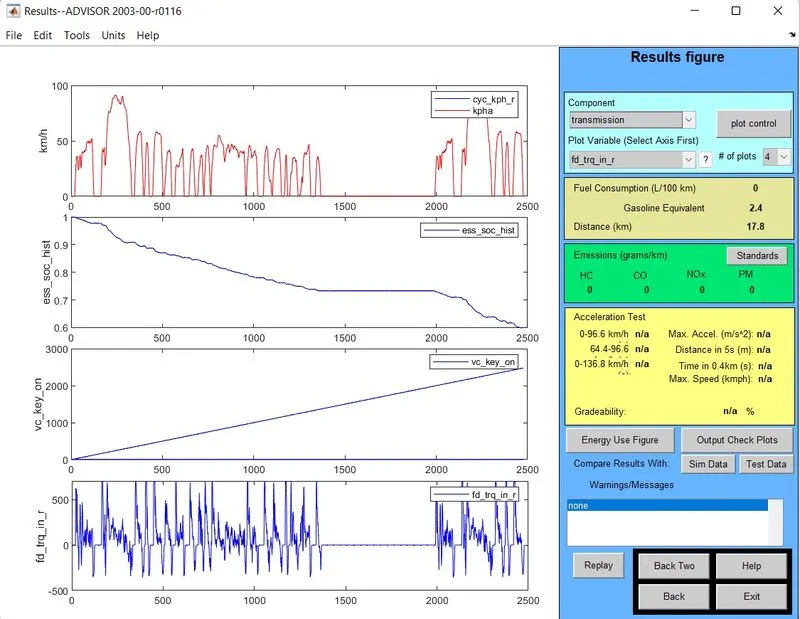
1. This vehicle travel certain distance of 17.8 km gasoline equivalent 2.4
2. Here i observe some graphs ploted kmph(1 drive cycle), soc history (0.6),powertrain(+2000),troque in rotor(-400 to +500) all are with respect to time.
add same drive cycle count 2:
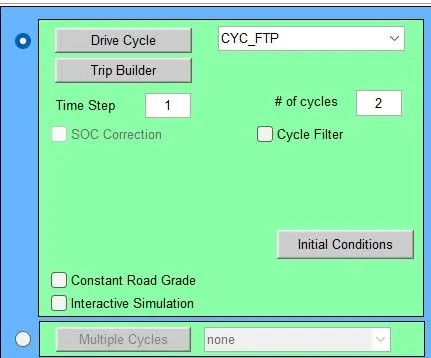
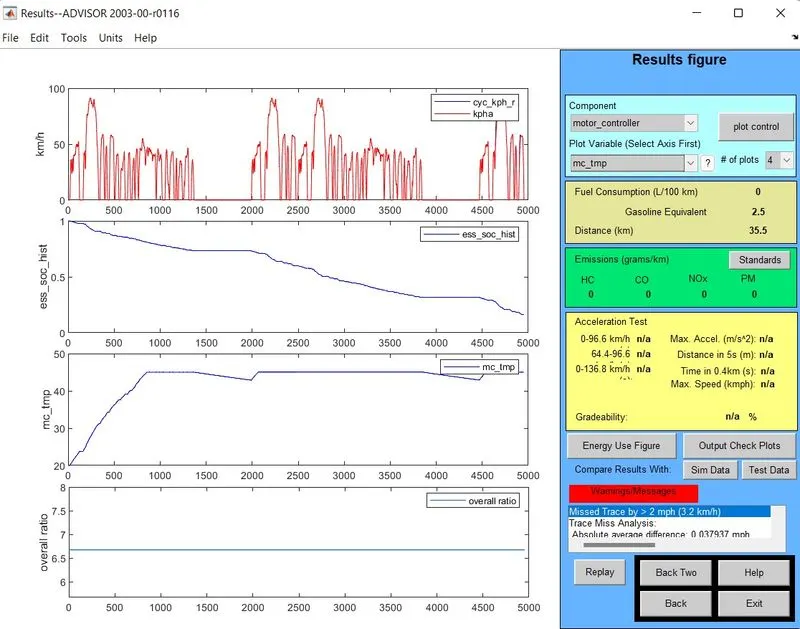
1. This vehicle travel certain distance of 35.5 km gasoline equivalent 2.5
2. Here i observe some graphs ploted kmph(1+1 drive cycle), soc history (0.3),mc temperature above 40 ,overall ratio(6.9) all are with respect to time.
add same drive cycle count 3:
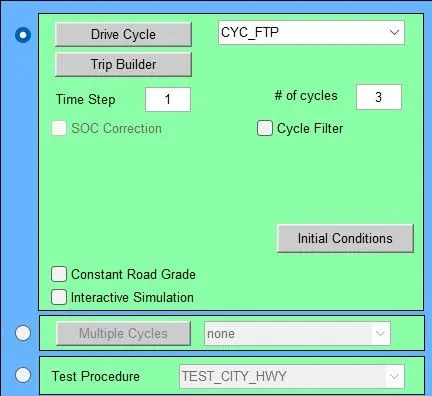
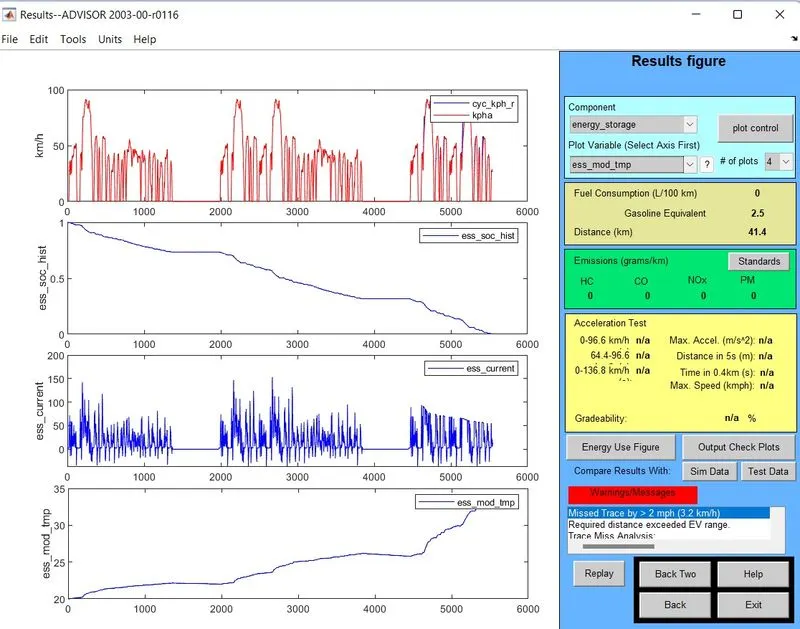
1. This vehicle travel certain distance of 41.4 km gasoline equivalent 2.5
2. Here i observe some graphs ploted kmph(2+1 drive cycle), storage of charge is zero, motor drive temperature is alomost 30 digree centigrade all are with respect to time.
Observation:
In this task i observe the distance is 41.4 km vehicle is covered by using the lead acid battery sorce around the battery mass is 275 kg. it never reach 45km distance based on FTP driving cycle. if we change may or maynot be reach 45km distance or change battery sorce, number of modules.
| s.no | no.of drive cycles | distance covered by vehicle |
| 1 | 1 | 17.8 |
| 2 | 2 | 35.5 |
| 3 | 3 | 41.4 |
GIVEN TASK 2:
2. In the above case, try changing the battery capacity and repeat the simulation.
Answer:
yes, above case is the vehicle travelled 41.4 km beacuse the battery capacity is zero so the vehicle is stoped.
now, i change the battery capacity of ess_pb25 to ess_pb85 again all parameters are maintained same, remamber one thing i.e ''#of mod V nom" describe the battery capacity, that is weight if we change battery capacity the weight of the battery also change so, that the total mass of vehicle is change.
Here we will change the drive cycle to 2,3,4 one at the time and run the simulation. after completing of simulation observe the simulation window distance traveling of vehicle. repeat the simulation steps up 45km range and above for perfomance test.
1. Energy storage system with 26 module and 2 drive cycles:

we choose 26 module battery weight is 286 kg
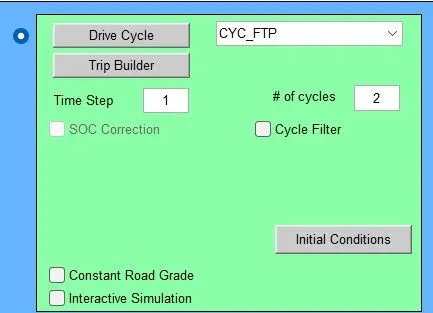
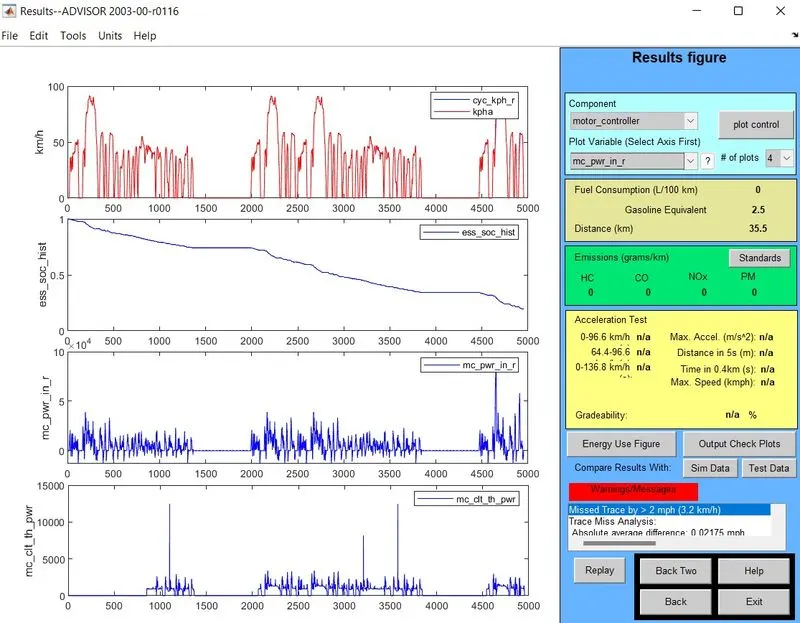
Distance travelled : 35.5 km
2. Energy storage system with 27 module and 2 drive cycles:

we choose 27 module battery weight is 297 kg
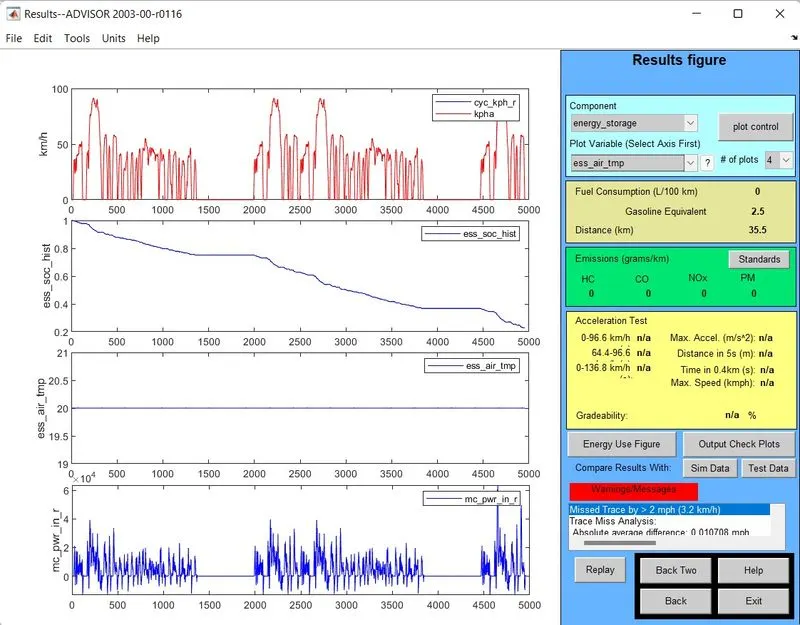
Distance travelled : 35.5 km
3. Energy storage system with 28 module and 2 drive cycles:

we choose 28 module battery weight is 308 kg
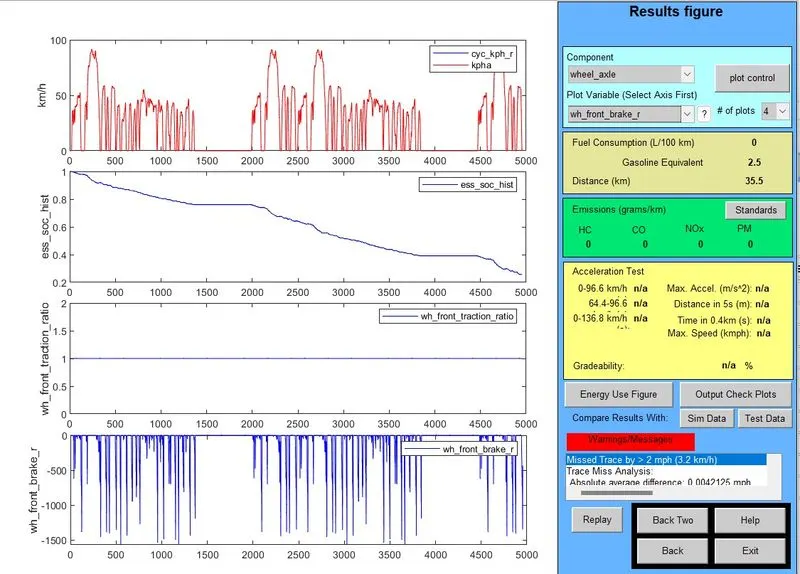
Distance travelled : 35.5 km
4. Energy storage system with 29 module and 2 drive cycles:

we choose 29 module battery weight is 319kg
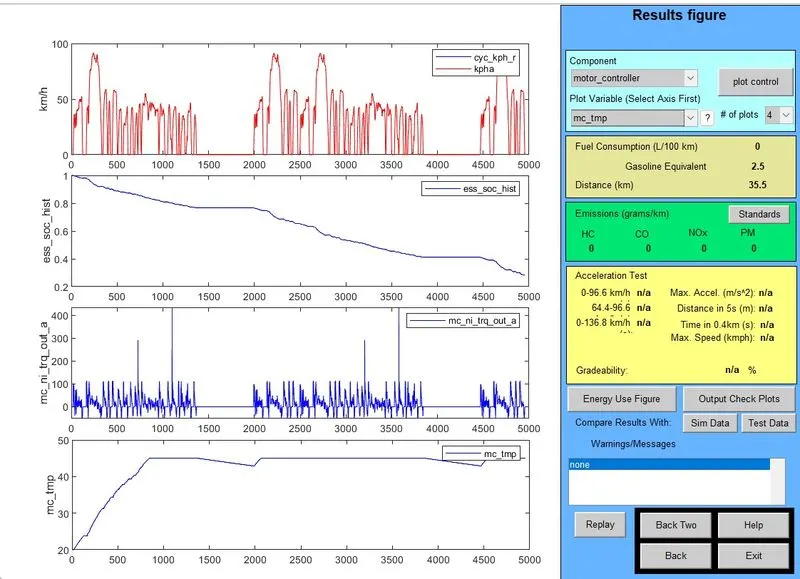
Distance travelled : 35.5 km
5. Energy storage system with 26 module and 3 drive cycles:
we choose 26 module battery weight is 286 kg
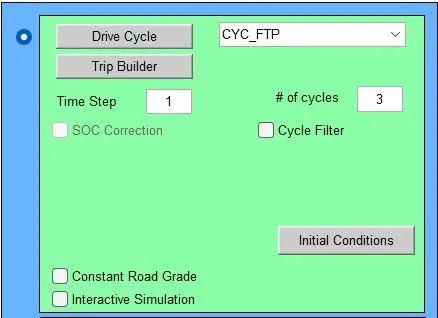
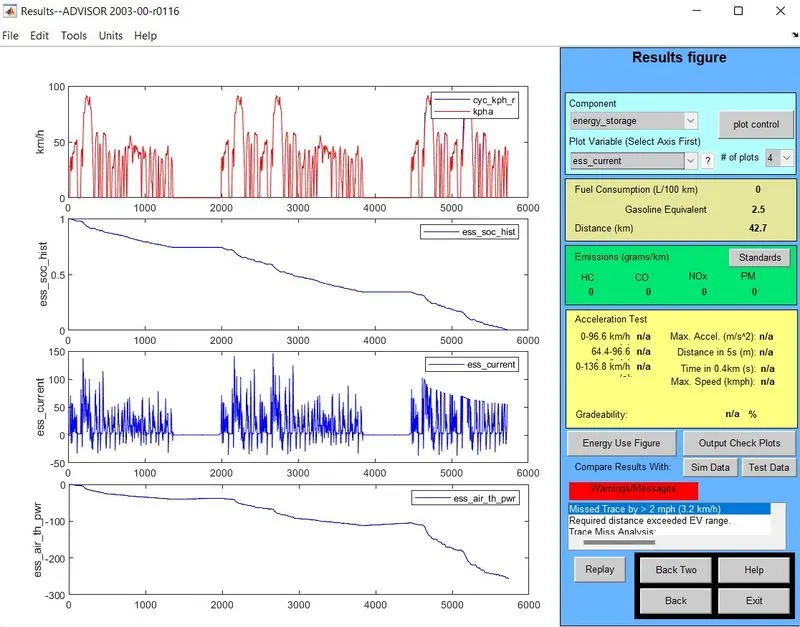
Distance travelled : 42.7 km
6. Energy storage system with 27 module and 3 drive cycles:
we choose 27 module battery weight is 297 kg
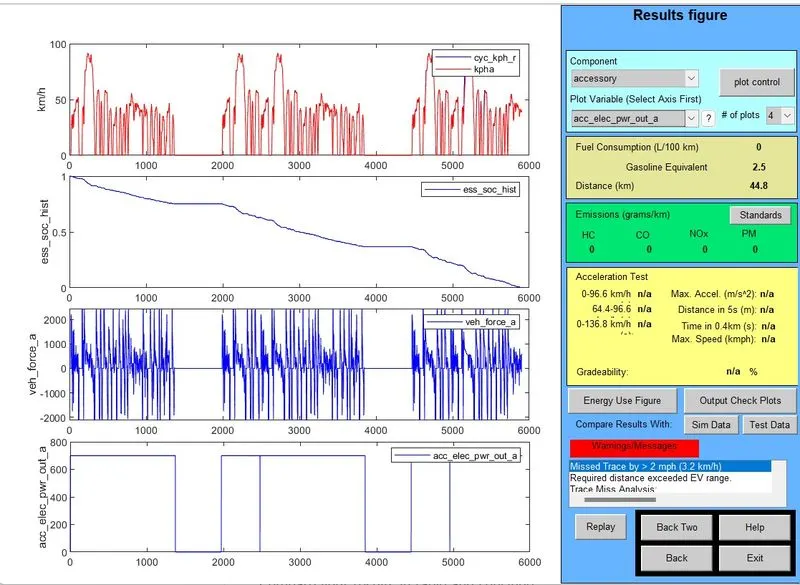
Distance travelled : 44.8 km
7. Energy storage system with 28 module and 3 drive cycles:
we choose 28 module battery weight is 308 kg
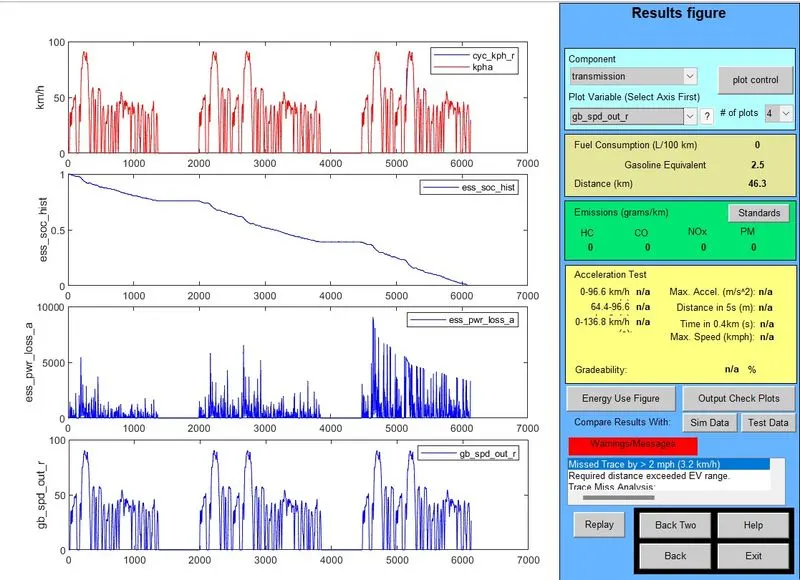
Distance travelled : 46.3 km
8. Energy storage system with 29 module and 3 drive cycles:
we choose 29 module battery weight is 319kg
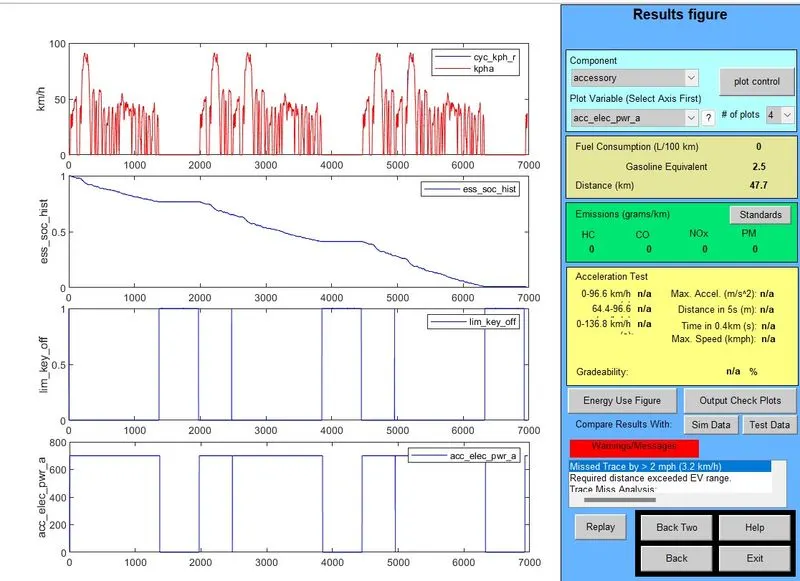
Distance travelled : 47.7 km
9. Energy storage system with 26 module and 4 drive cycles:
we choose 26 module battery weight is 286 kg
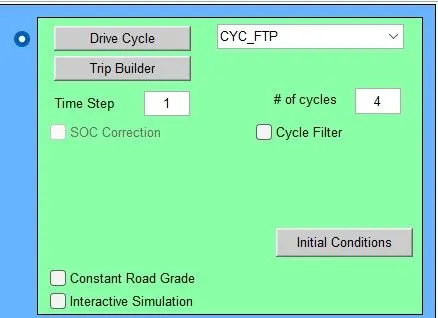
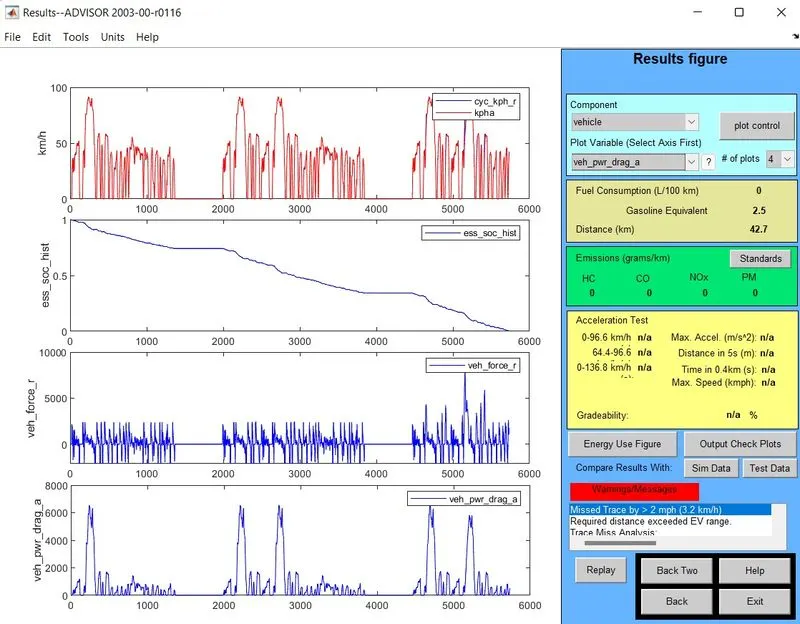
Distance travelled : 42.7 km
10. Energy storage system with 27 module and 4 drive cycles:
we choose 27 module battery weight is 297 kg
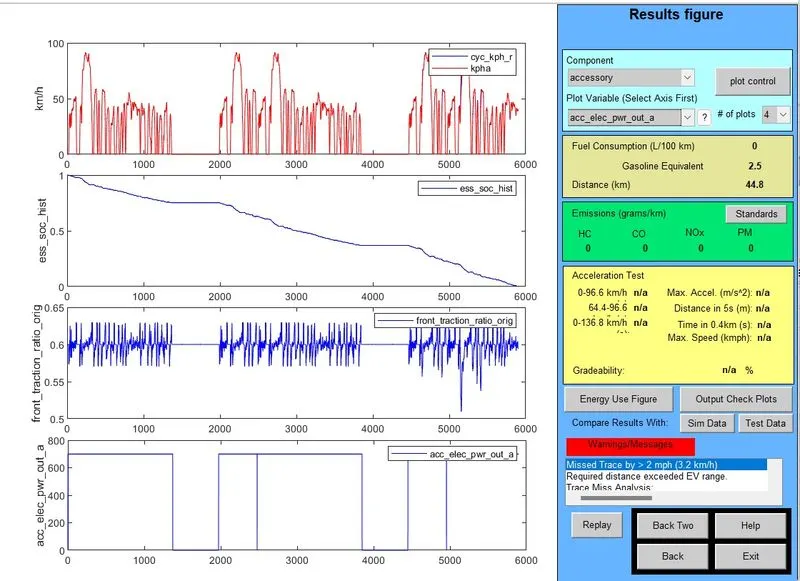
Distance travelled : 44.8 km
Content in table formate:
| s.no | no.of module | weight of battery | total weight | drive cycle | distance |
| 1 | 26 | 286 | 1519 | 2 | 35.5 |
| 2 | 27 | 297 | 1530 | 2 | 35.5 |
| 3 | 28 | 308 | 1541 | 2 | 35.5 |
| 4 | 29 | 319 | 1552 | 2 | 35.5 |
| 5 | 26 | 286 | 1519 | 3 | 42.7 |
| 6 | 27 | 297 | 1530 | 3 | 44.8 |
| 7 | 28 | 308 | 1541 | 3 | 46.3 |
| 8 | 29 | 319 | 1552 | 3 | 47.7 |
| 9 | 26 | 286 | 1519 | 4 | 42.7 |
| 10 | 27 | 297 | 1530 | 4 | 44.8 |
Finally my conclusion is 28 or 29 module battery is enough to reach 45 km under 3 drive cycles of FTP.
GIVEN TASK 3:
3. Perform gradeability test with PRIUS_Jpn_defaults_in file
Compare your results in table and conclude.
Answer:
1. Change parallel_default_in model to given specified model of PRIUS_Jpn_defaults_in model
2. Set all the parameters are in default condition just know about on it.
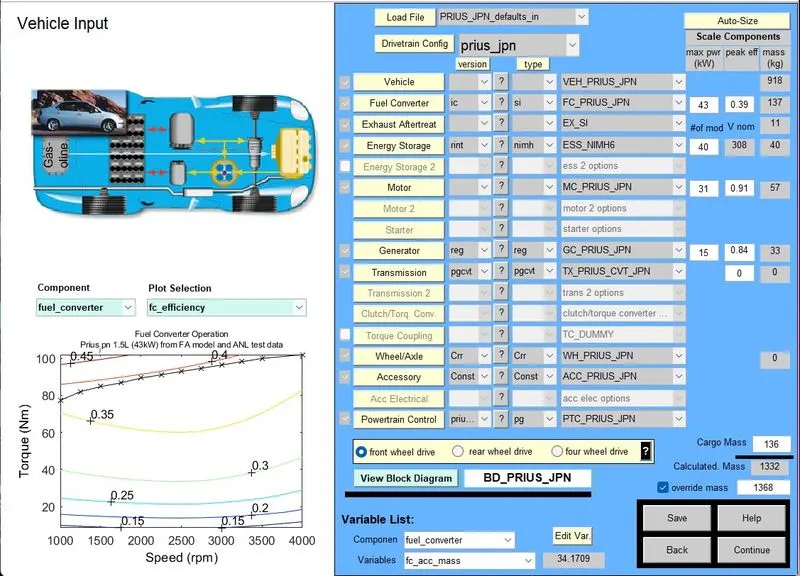
3. click continue to load next window.
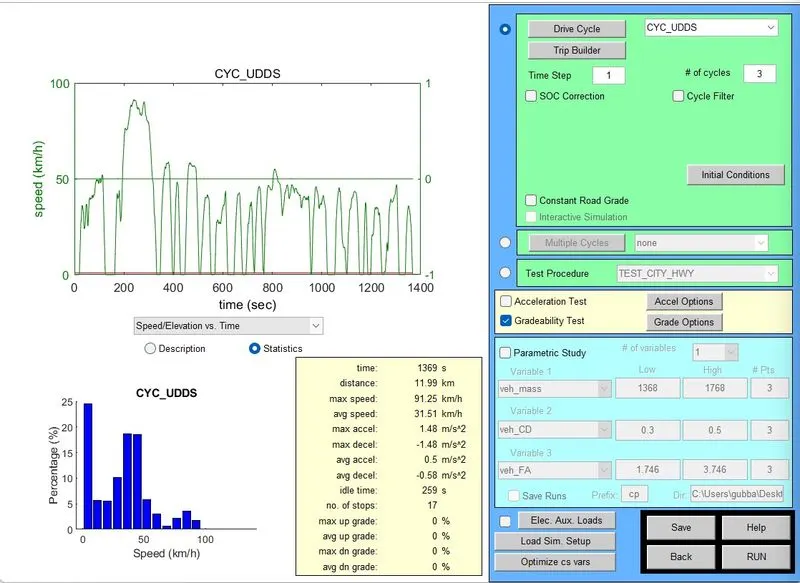
Take drive cycles parameter number is 3
Enable gradeability test click grade option
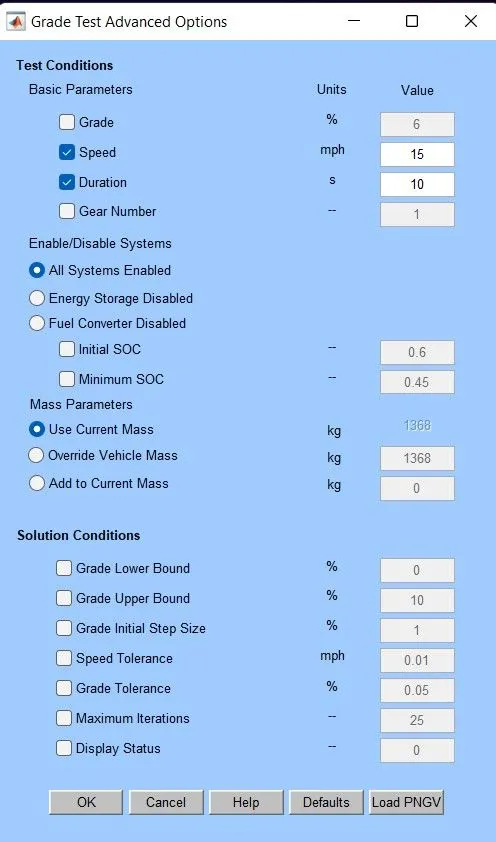
Select speed and duration also click all systems enable.
Click on run button.
Set duration- 10sec
Result of PRIUS_Jpn_defaults_in:
1: Speed=15 miles/h or 24.14 kmph
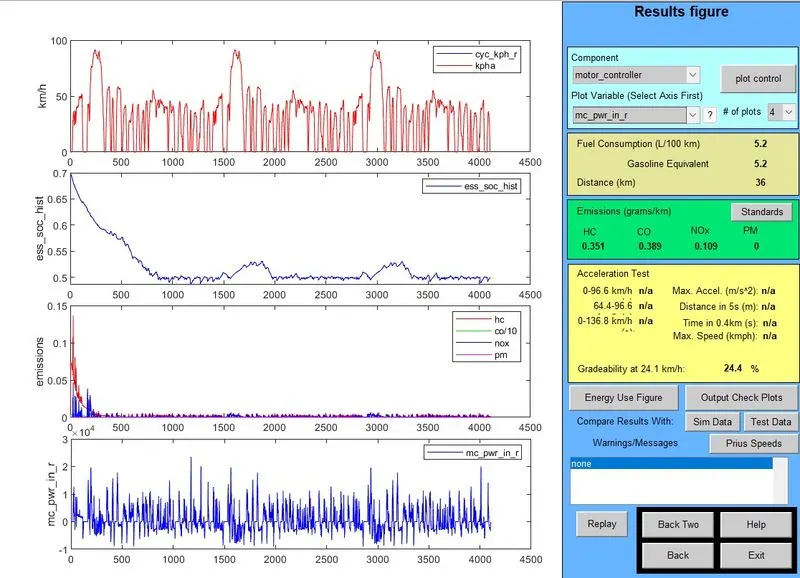
Here the percentage of Gradeability at 24.1kmph is 24.4%
2: Speed=20 miles/h or 32.2kmph
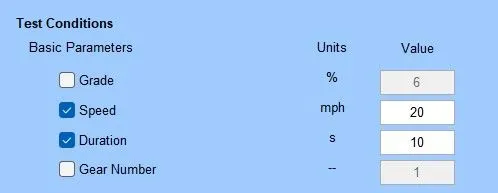
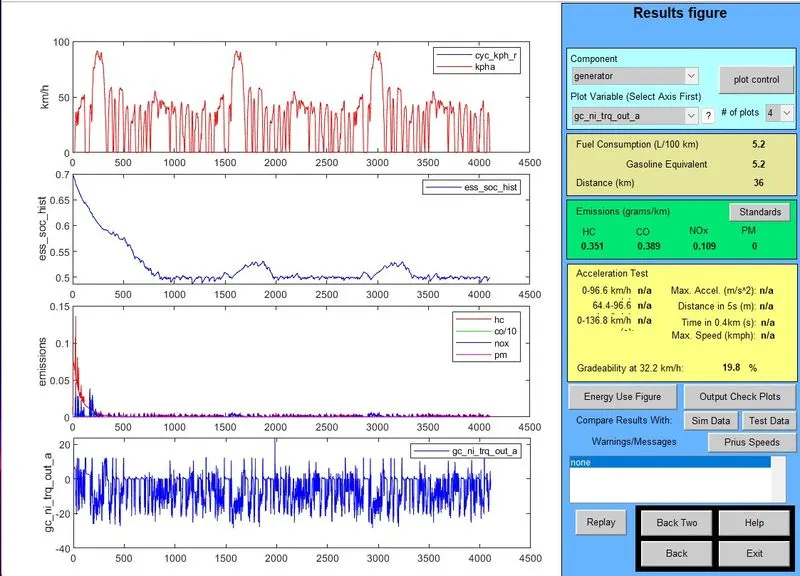
Here the percentage of Gradeability at 32.2kmph is 19.8%
3: Speed=25 miles/h or 40.2 kmph
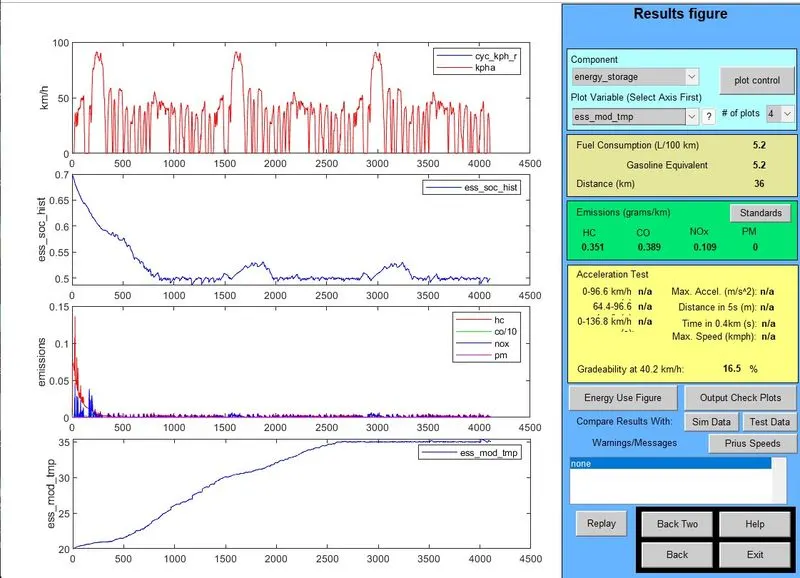
Here the percentage of Gradeability at 40.2kmph is 16.5%
4: Speed=30 miles/h or 48.3 kmph
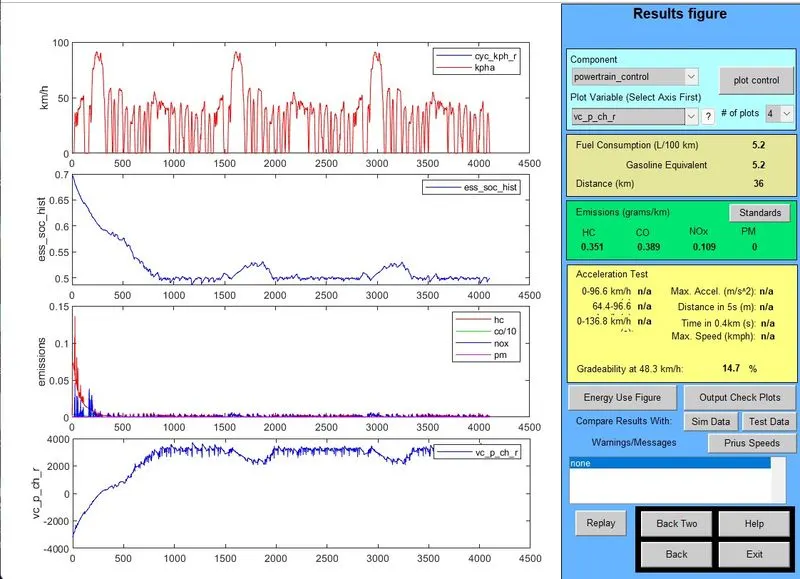
Here the percentage of Gradeability at 48.3kmph is 14.7%
5: Speed=40 miles/h or 64.4 kmph
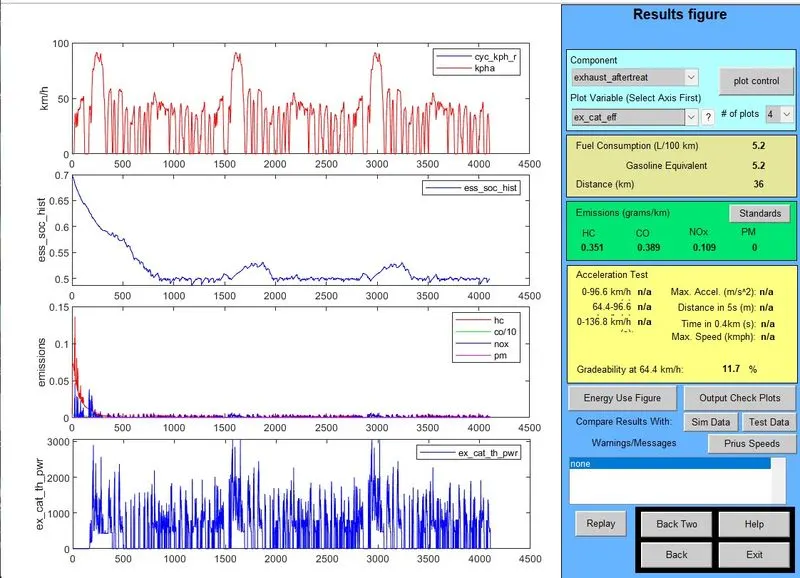
Here the percentage of Gradeability at 64.4kmph is 11.7%
6: Speed=50 miles/h or 80.5kmph
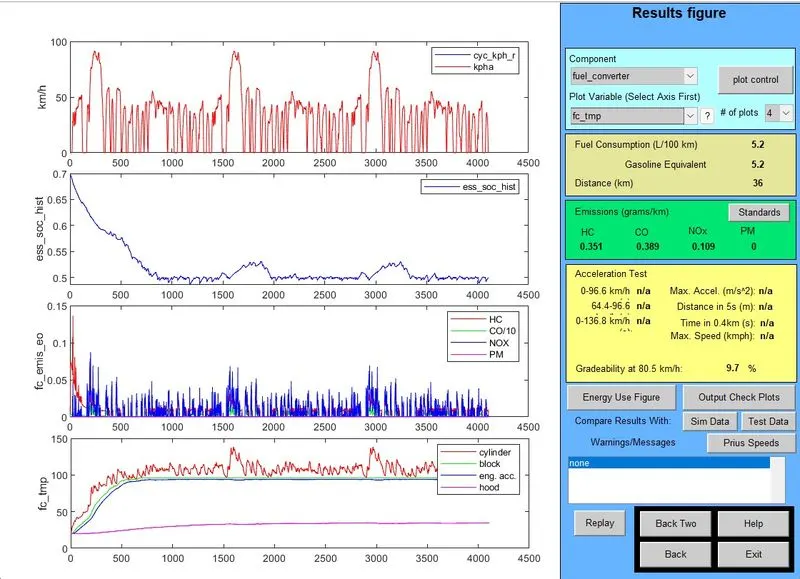
Here the percentage of Gradeability at 80.5kmph is 9.7%
Set duration- 20sec
Result of PRIUS_Jpn_defaults_in
1: Speed=15 miles/h or24.1 kmph
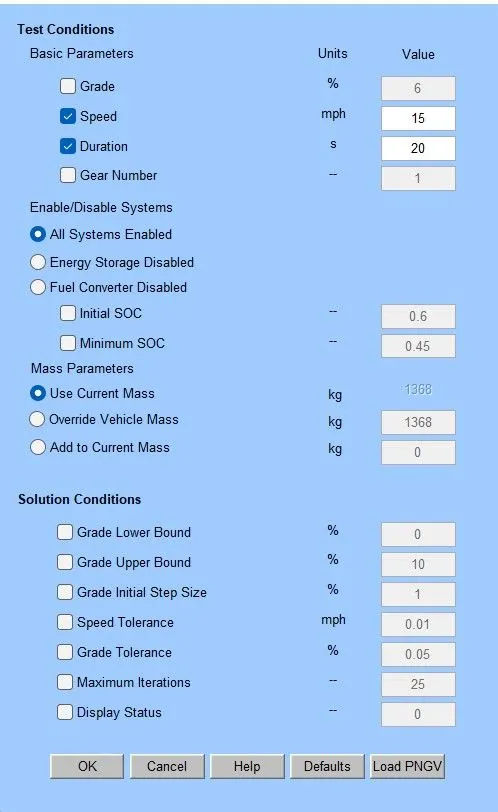
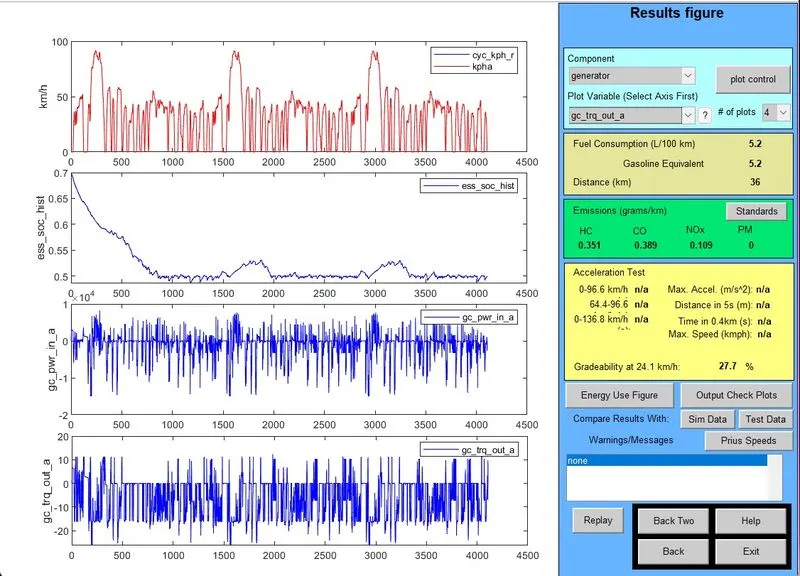
Here the percentage of Gradeability at 24.1kmph is 27.7%
2: Speed=20 miles/h or 32.2kmph
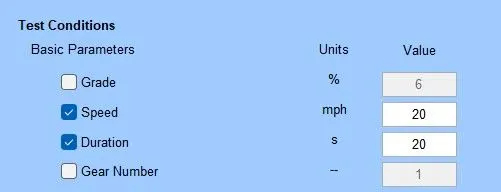
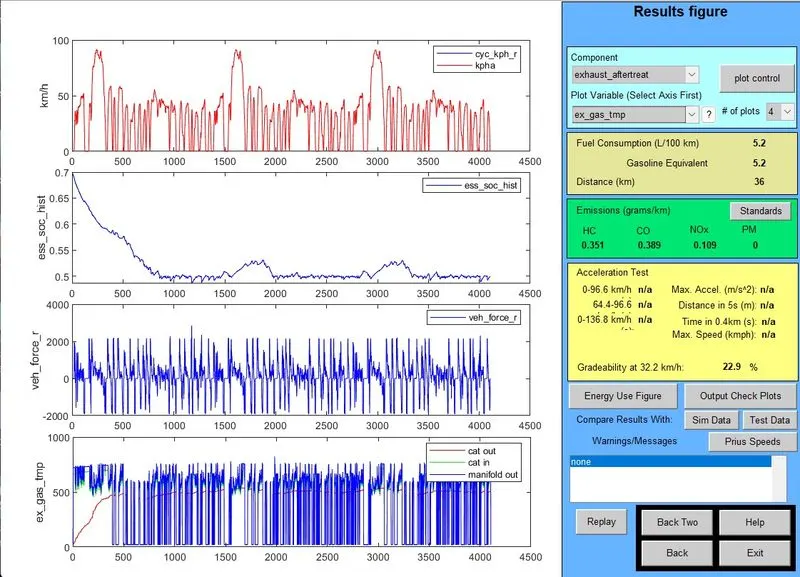
Here the percentage of Gradeability at 32.2kmph is 22.9%
3: Speed=25 miles/h or40.2 kmph
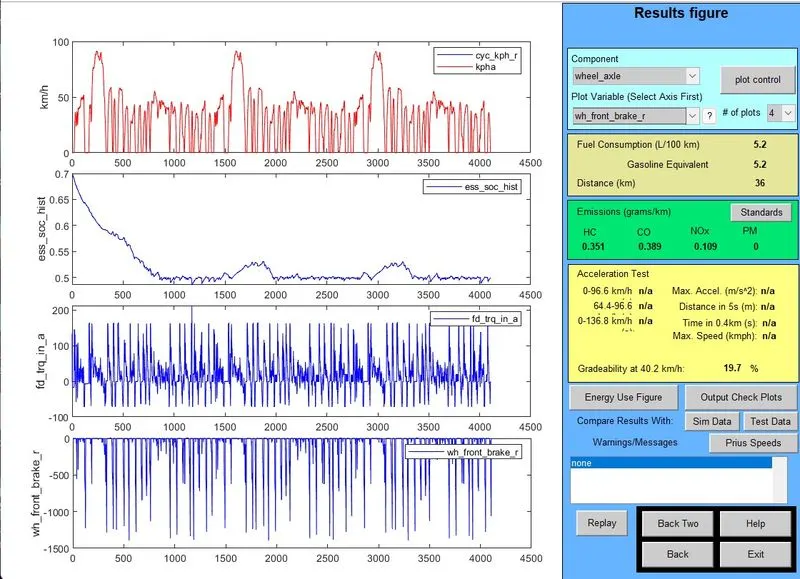
Here the percentage of Gradeability at 40.2kmph is 19.7%
4: Speed=30 miles/h or 48.3kmph
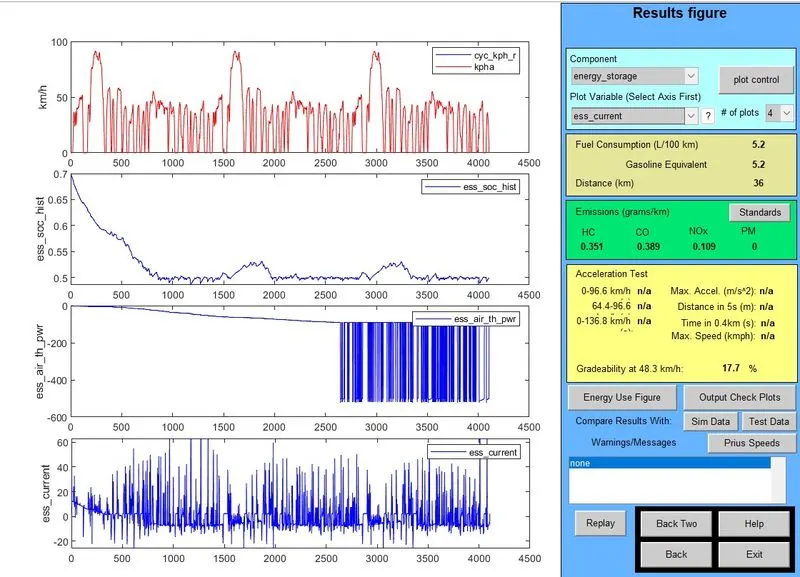
Here the percentage of Gradeability at 48.3kmph is 17.7%
5: Speed=40 miles/h or64.4kmph
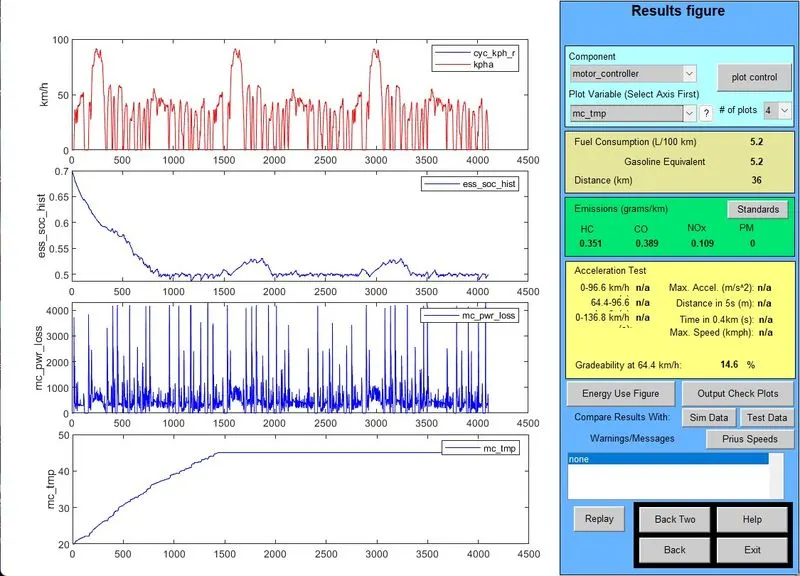
Here the percentage of Gradeability at 64.4kmph is 14.6%
6: Speed=50 miles/h or 80.5kmph
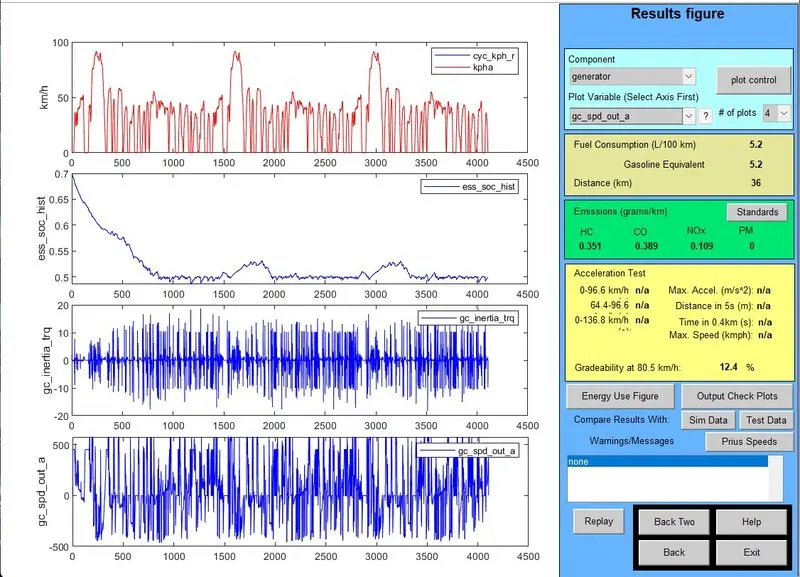
Here the percentage of Gradeability at 80.5kmph is 12.4%
Overall content in the table.
| s.no | drive cycle | duration | speed m/h | gradeability | distance | fuel | gasoilne |
| 1 | 3 | 10 | 15 | 24.4 | 36 | 5.2 | 5.2 |
| 2 | 3 | 10 | 20 | 19.8 | 36 | 5.2 | 5.2 |
| 3 | 3 | 10 | 25 | 16.5 | 36 | 5.2 | 5.2 |
| 4 | 3 | 10 | 30 | 14.7 | 36 | 5.2 | 5.2 |
| 5 | 3 | 10 | 40 | 11.7 | 36 | 5.2 | 5.2 |
| 6 | 3 | 10 | 50 | 9.7 | 36 | 5.2 | 5.2 |
| 1 | 3 | 20 | 15 | 27.7 | 36 | 5.2 | 5.2 |
| 2 | 3 | 20 | 20 | 22.9 | 36 | 5.2 | 5.2 |
| 3 | 3 | 20 | 25 | 19.7 | 36 | 5.2 | 5.2 |
| 4 | 3 | 20 | 30 | 17.7 | 36 | 5.2 | 5.2 |
| 5 | 3 | 20 | 40 | 14.6 | 36 | 5.2 | 5.2 |
| 6 | 3 | 20 | 50 | 12.4 | 36 | 5.2 | 5.2 |
The above tables shows different gradeability at different time and speed variavetion of japan model hybried car.