Week-3 Challenge: ADVISOR Tool
Aim: Use the advisor tool and simulate following condition
CONDITION: For EV_defaults_in file, if cargo mass is 500 kg with all other default conditions, can the vehicle travel for 45 km with FTP drive cycle? Conclude your observations.
Simulation process:
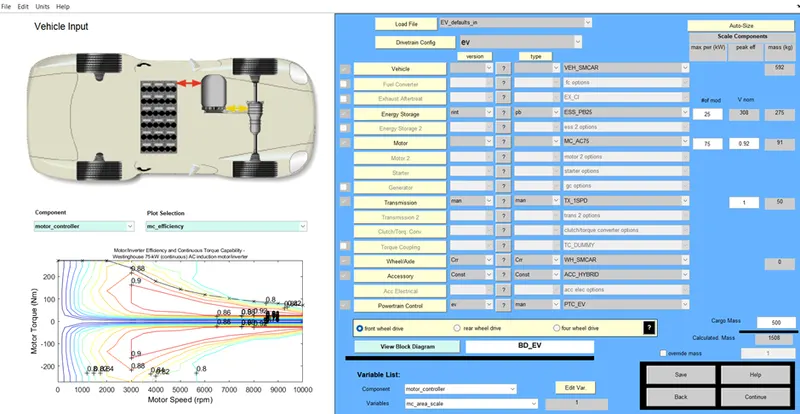
- After opening the advisor tool firstly loaded load file as EV_default_in then after automatically choose Drivetrain configuration is EV.
- Then after changed cargo mass given to the input 500kg in a component scale, after changing the cargo mass the total vehicle weight is 1508 kg. the advisor tool calculate all mass of vehicle according to changes.
- The remaining all the vehicle variable same.
- Click continue to vehicle input window
- After vehicle window continue next window will be open simulation parameter window, this window put drive cycle FTP in given to the question.
- Then press RUN for showing the result window.
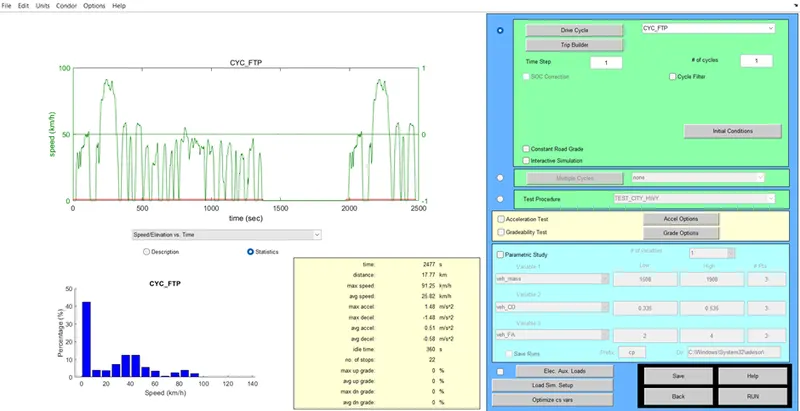
- Change the number of cycle and check the result.
Result:
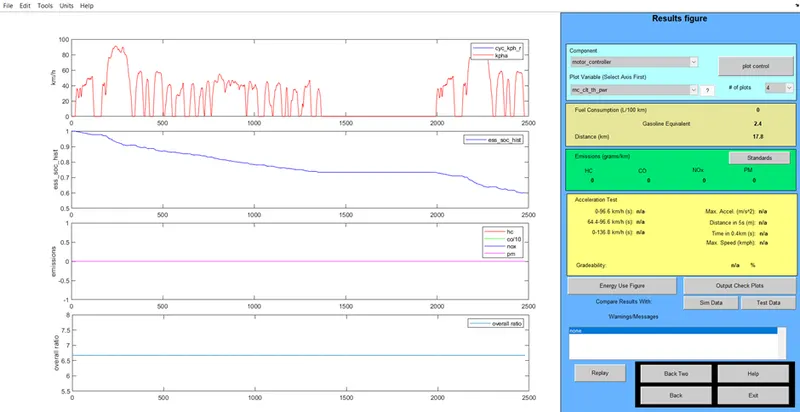
Above result shows the for using only 1 drive cycle the total distance covered 17.8 km. and the state of charges decreasing 1 to 0.6 so as per result used 40% state of charges.
The distance showing 17.8 km, increasing the drive cycle 2:
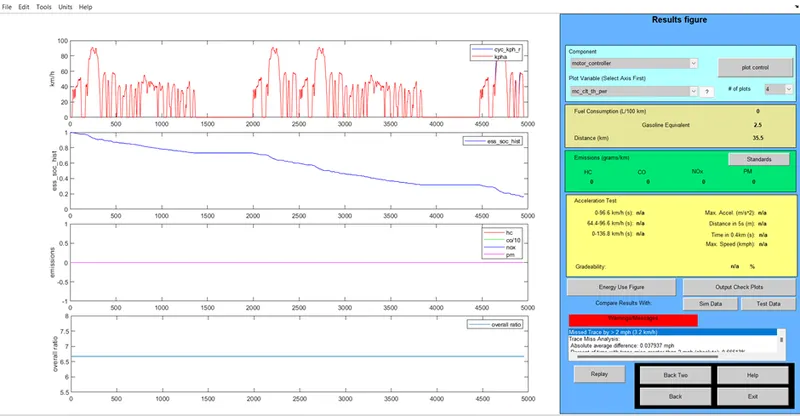
After using 2 drive cycle the distance covered is 35.5km. and state of charge of the vehicle is 1 to 0.2. vehicle used almost 80% SOC. so we used another drive cycle.
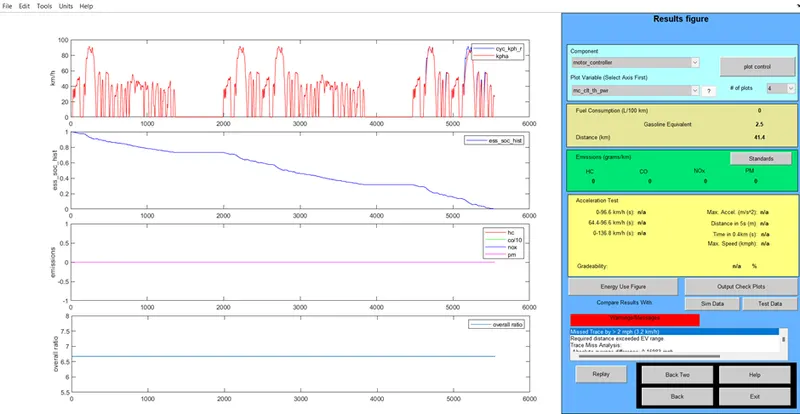
After using 3 drive cycle the total distance covered by the EV with total mass 41.4 km. but the total state of charge using EV vehicle.
Result:
After 3rd drive cycle distance is covered 41.4 km and EV vehicle state of charged is almost 0 , so EV drivetrain configuration is not travelled to using FTP drive cycle. Only distance covered EV vehicle with FTP drive cycle is 41.4Km.
2.In the above case, try changing the battery capacity and repeat the simulation.
In the above case vehicle battery capacity is 25 we need to increasing the battery pack capacity so vehicle run at more than 45 km
So we can run the vehicle in different drive cycle and different energy storage system.
- (1) 26 energy storage system and using 2 FTP drive cycle.
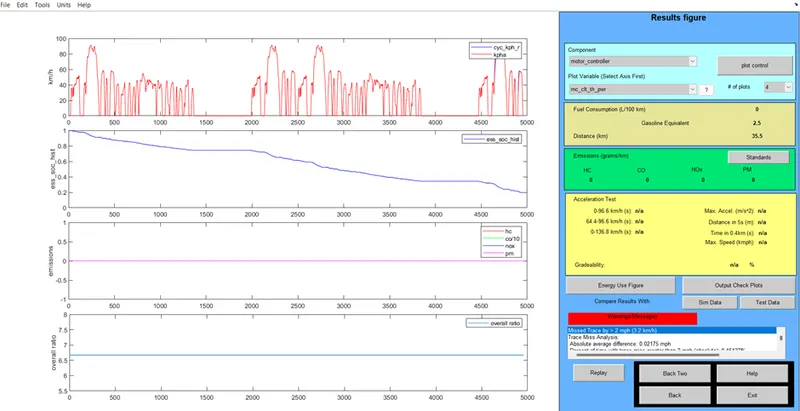
The total distance travelled is 35.5km using 26 energy storage and 2 FTP drive cycle
- (2)26 energy storage capacity and using 3 FTP drive cycle:
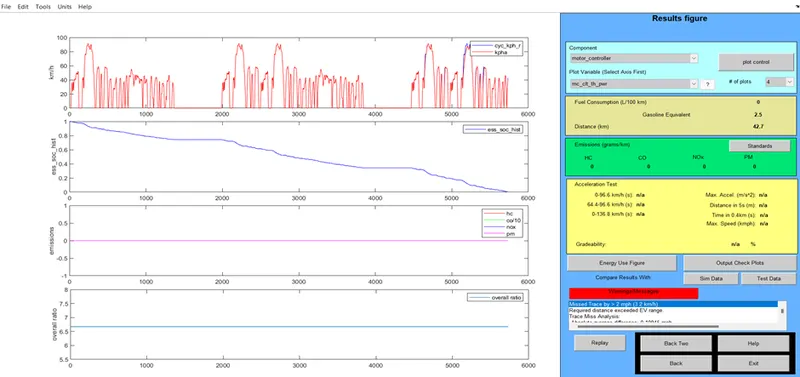
Using 3 FTP drive cycle for 26 energy storage capacity the total distance is 42.7 km
(3) 27 energy storage capacity and using 2 FTP drive cycle:
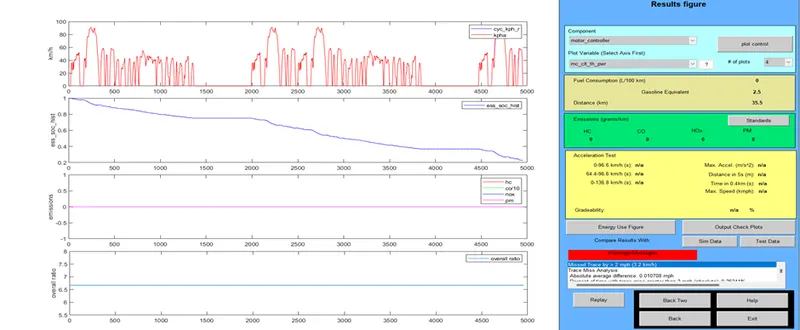
Using 2 FTP drive cycle for 27 energy storage capacity the total distance is 35.5 km
(4) 27 energy storage capacity and using 3 FTP drive cycle:
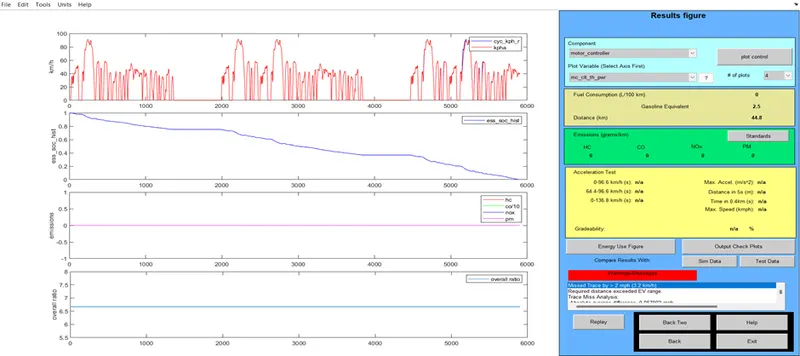
Using 3 FTP drive cycle for 27 energy storage capacity the total distance is 44.8km.
(5) 28 energy storage capacity and using 2 FTP drive cycle:
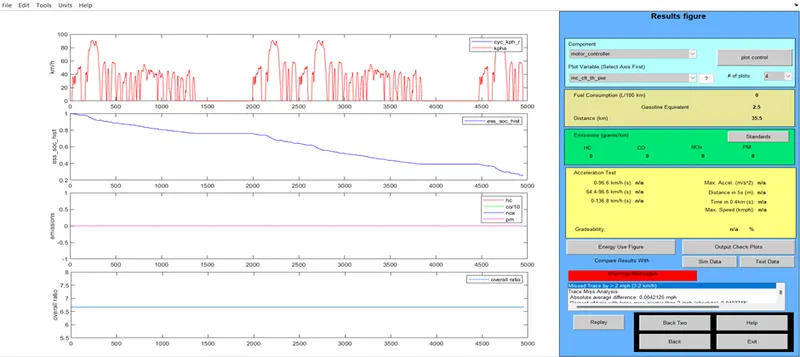
Using 2 FTP drive cycle for 28 energy storage capacity the total distance is 35.5km
(6) 28 energy storage capacity and using 3 FTP drive cycle:
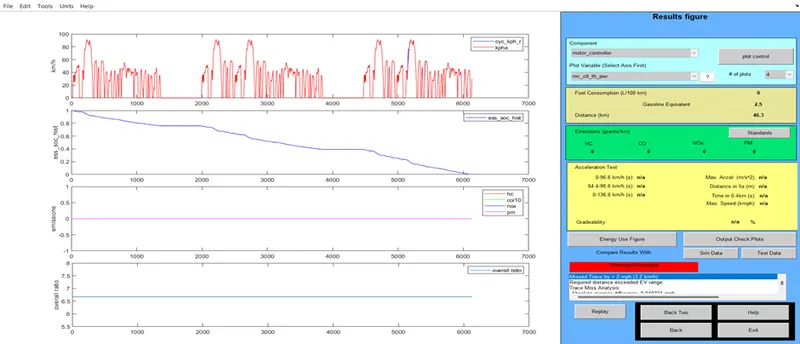
Using 3 FTP drive cycle for 28 energy storage capacity the total distance is 46.3km.
(7) 29 energy storage capacity and using 2 FTP drive cycle:
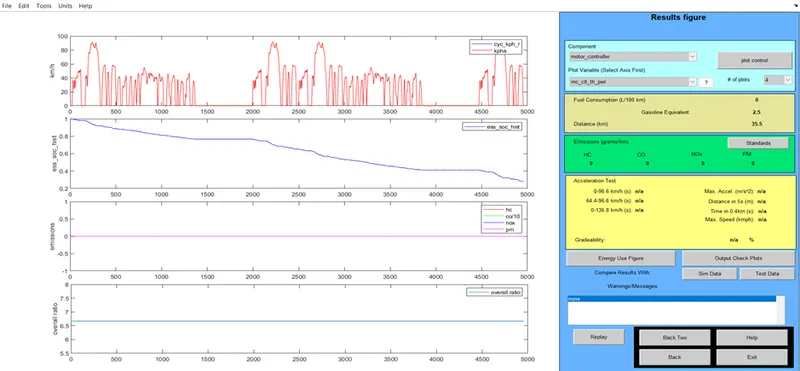
Using 2 FTP drive cycle for 29 energy storage capacity the total distance is 35.5km.
(8) 29 energy storage capacity and using 3 FTP drive cycle:
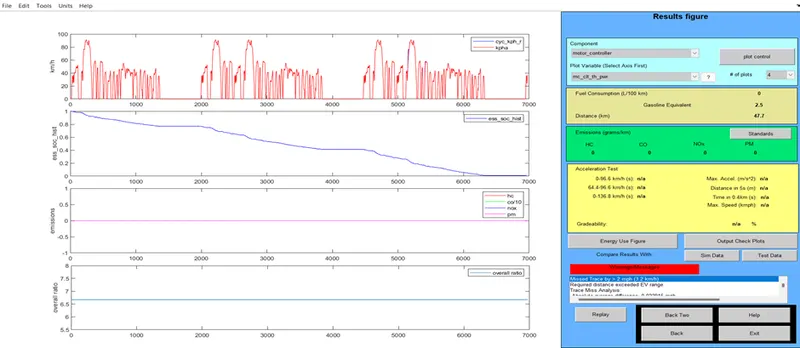
Using 3 FTP drive cycle for 29 energy storage capacity the total distance is 47.7km.
(9) 30 energy storage capacity and using 2 FTP drive cycle:
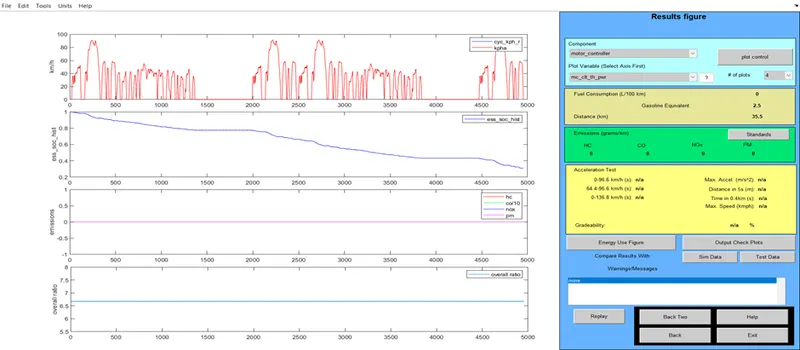
Using 2 FTP drive cycle for 30 energy storage capacity the total distance is 35.5km.
(10) 30 energy storage capacity and using 3 FTP drive cycle:
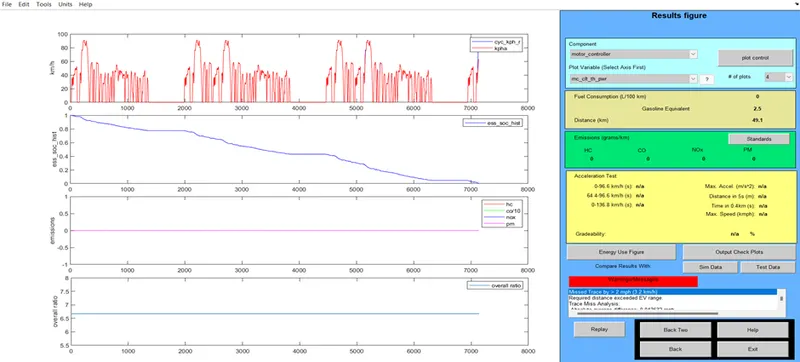
Using 3 FTP drive cycle for 30 energy storage capacity the total distance is 49.1km.
(11) 35 energy storage capacity and using 2 FTP drive cycle:
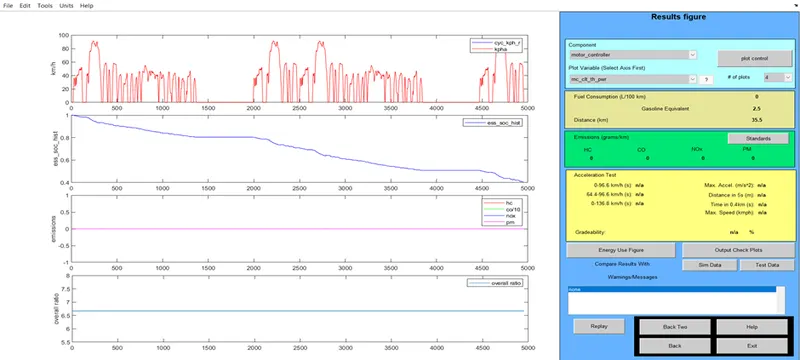
Using 3 FTP drive cycle for 30 energy storage capacity the total distance is 35.5km.
(12) 35 energy storage capacity and using 3 FTP drive cycle:
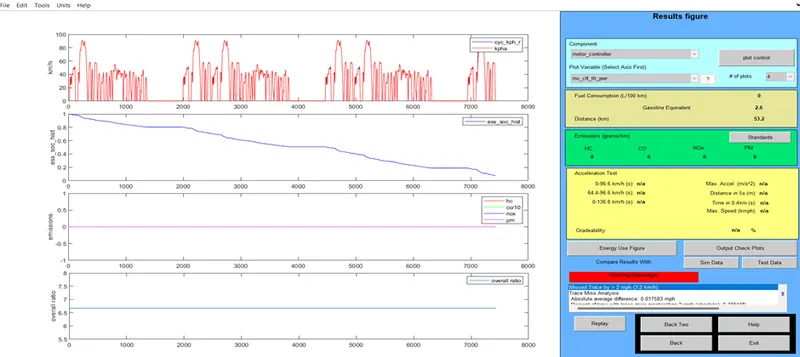
Using 3 FTP drive cycle for 30 energy storage capacity the total distance is 53.5 km.
Results:
- 28 energy storage capacity and using 3 FTP drive cycle
- 29 energy storage capacity and using 3 FTP drive cycle
- 30 energy storage capacity and using 3 FTP drive cycle,
- 35 energy storage capacity and using 3 FTP drive cycle:
The above results shows that the distance covered by the EV drivetrain is more than 45 km.
By increasing the battery capacity we can seen that range is increased. If we required more range so we adding the energy storage capacity and drive cycle also.
(3) Perform gradeability test with PRIUS_Jpn_defaults_in file
Compare your results in table and conclude.
In advisor tool vehicle input window select load file PRIUS_JPN_defaults_in load file.
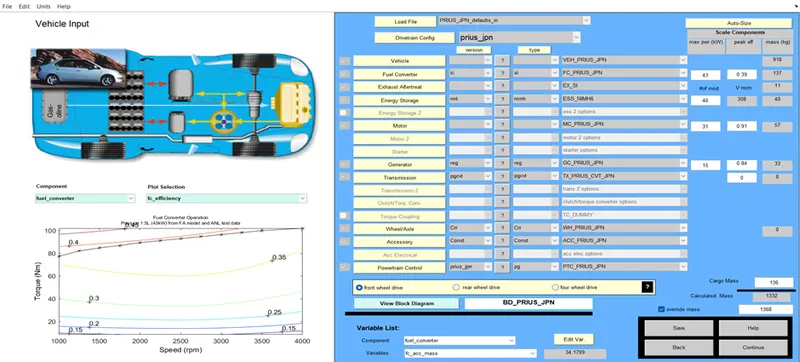
And press continue in vehicle input window.
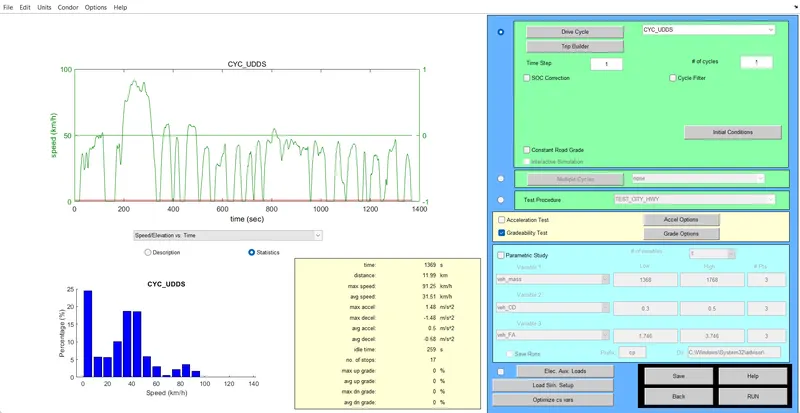
In simulation parameter window select the gradeability test.
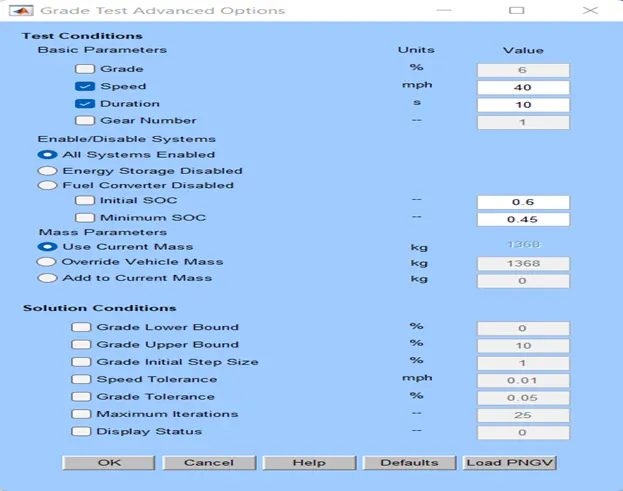
. The enable all system in grade test advanced option. in this simulation will use energy and fuel storage system. The changing the speed check the gradeability of vehicle.
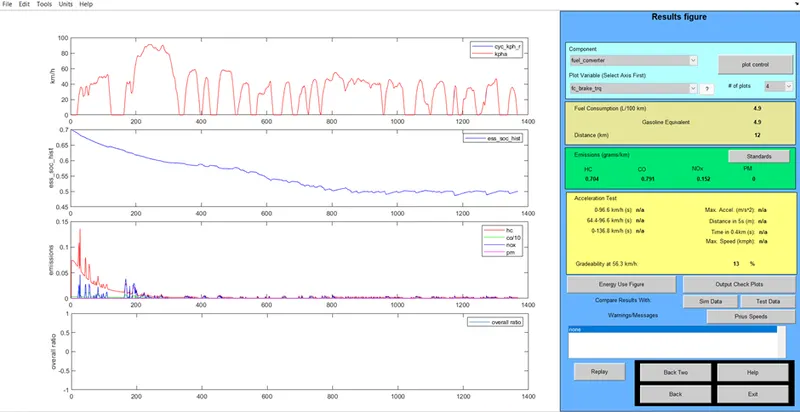
In the above results the speed is 40mph the gradeability is 11.7%
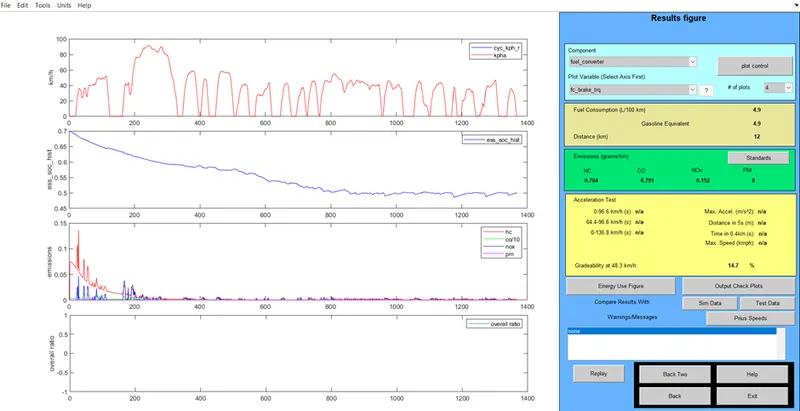
In the above model the speed is 30mph the gradeability 14.7%
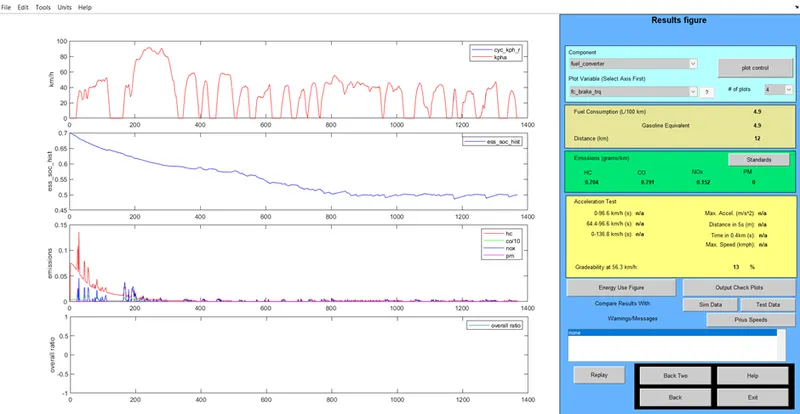
In the above model the speed is 35mph the gradeability 13%.
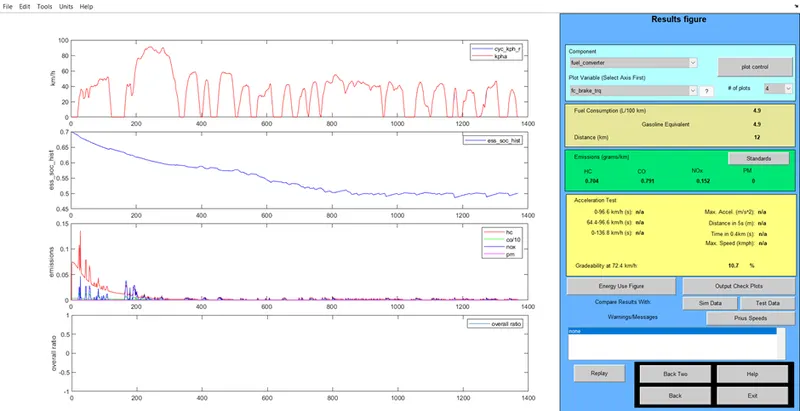
In the above model the speed is 45mph the gradeability 10.7%.
Result:
|
Speed(mph) |
Gradeability(%) |
|
20 |
19.8% |
|
25 |
16.5% |
|
27 |
15.6% |
|
30 |
14.7% |
|
33 |
13.7% |
|
35 |
13% |
|
37 |
12.5% |
|
40 |
11.7% |
|
44 |
10.9% |
|
45 |
10.7% |
|
48 |
10.1% |
|
53 |
9.2% |
|
55 |
8.9% |
From the above table shown that the speed of the vehicle is increases the gradeability of vehicle is decreases, and the vehicle speed is decreases the vehicle gradeability is increases.