Project
AIM: To study and analyze different model of BAJA ATV (ALL TERRAIN VEHICLE) MODEL using matlab Simulink.
BAJA ATV MODEL:
- BAJA CVT MODEL
- BAJA CVTR MODEL
- BAJA CVT MODEL WITH DASHBOARD
- BAJA CVT MAPPED WITH LOOKUP TABLE
- BAJA CVT RATIO WITH LOOKUP TABLE
ATV:
All terrain vehicle is a three and four wheeler vehicle. It is vehicle used to the single seater motorised vehicle which can all type of road condition, such as off road and on road condition. This vehicle can be customised for industrial and racing application purpose. This vehicle has rigid structure, rider safety as offroad vehicle. This vehicle determined to performance capability in acceleration, hill climb. To ensure the vehicle performance well in competition and be completed in time structured designed used to define customer needs to make conceptual decision.
Simulation Block used:
1.signal builder: input of brake, throttle and CVT gear ratio.
2.step: adjust input value for defined time interval.
3.solver configuration: to solve specify parameter before starting simulation.
- PS to Simulink converter: to convert simscape signal to Simulink signal.
- Mechanical reference: all mechanical components connected to ground.
- Generic engine: running the engine with value of speed and torque as input.
- Rotational motion sensor: sense the rotational motion from engine and give output in RPM
- PS terminator: used for unconnected physical signal output.
- look up table: put CVT value from workspace.
- PS constant: generate constant physical signal.
- Vehicle Body: used BAJA ATV vehicle body.
- Inertia: represents an ideal mechanical rotational inertia.
- Double shoe brake: used to apply brake for a vehicle.
- Rotational free end: Use to a node to rotate freely without torque.
- variable gear ratio: used to vary speed according to gear.
Main Component:
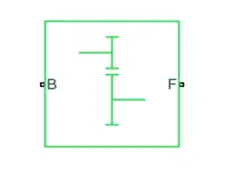
1.simple gear: Gear ratio is defined as the ratio of follower gear speed to the base gear speed. It having base(B) and follower(F) mechanical rotational conservating ports.
2.Vehicle Body: The Vehicle Body block represents a two-axle vehicle body in longitudinal motion. The vehicle can have the same or a different number of wheels on each axle. The block used for body mass, aerodynamic drag, road incline, and weight distribution between axles due to acceleration and road profile.
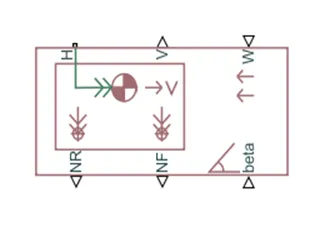
Ports on vehicle body:
Input ports: W- Head wind speed (m/s)
Beta- Road incline angle (rad)
H — Horizontal motion
Output ports: V — Longitudinal velocity (m/s)
NF — Front axle normal force (N)
NR — Rear axle normal force (N)
3.Generic Engine: The Generic Engine block represents internal combustion engine. Engine types include spark-ignition type engine and diesel ignition type engine. Generic Engine model uses connection between torque and speed, modulated by the throttle signal.
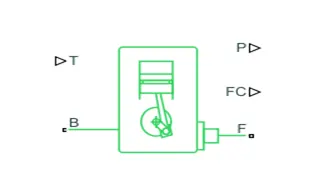
Ports:
B: Rotational conserving port representing the engine block.
FC: Physical signal output port reporting the fuel consumption rate (kg/s)
T: Physical signal input port specifying the normalized engine throttle level
F: Rotational Conserving port representing the engine crankshaft
P: Physical signal output port reporting the instantaneous engine power (W)
- Variable Gear ratio:
The Variable Gear Ratio block represents a gearbox that dynamically transfers motion and torque between the two connected driveshaft axes, base and follower.
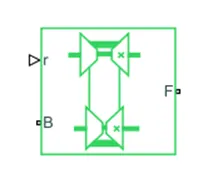
Ports: r- variable transmission ratio
F- follower pulley
B- base pulley
5.Tire: The Tire block shows rigid wheel-tire combination in contact with the road and subject to slip. When torque is applied to the wheel axle, the tire pushes on the ground and transfers the resulting reaction as a force back on the wheel.
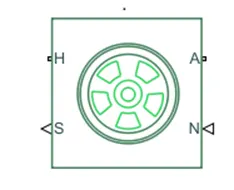
Ports:
N- Normal force
S- Slip
A- Axle
H- Hub
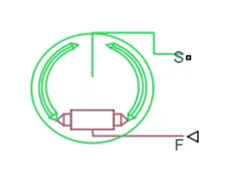
- Double shoe Brake: Double-shoe brakes provide high braking torque with small actuator deflections in applications that include motor vehicles and some heavy machinery. The model employs a simple parameterization with readily accessible brake geometry and friction parameters.
BAJA ATV MODEL WITHOUT DASHBOARD:
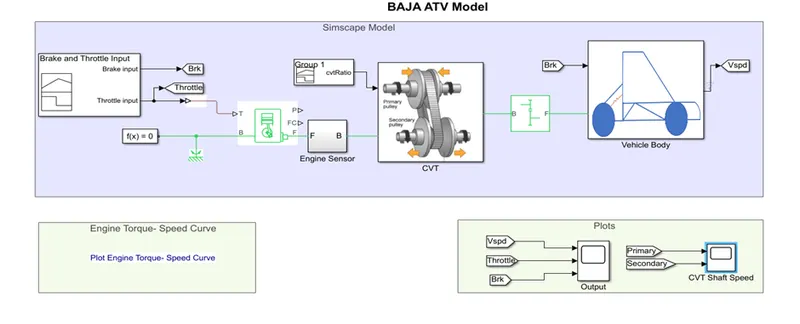
Explanation: In this Model, give the input through the signal builder. this input provided generic engine through the PS Simulink converter. The generic engine used in initially stage of spark ignition. The input provided from the throttle and this is specifies the torque demand from engine as a maximum possible torque. The generic engine mechanical port and CVT connected through the engine sensor. They sense the speed two mechanical rotational node. In the CVT connected CVT Gear ratio as take physical input signal through the signal builder and the variable gear ratio taking physical signal input defines ratio of input to output angular shaft velocities. CVT and vehicle body are connected through the simple gear.
CVT:(continuous variable transmission)
In the CVT is the automatic transmission that changing a continuous range of gear ratio.in CVT with controlling engine to operates at constant RPM while the vehicle moving at varying speed.
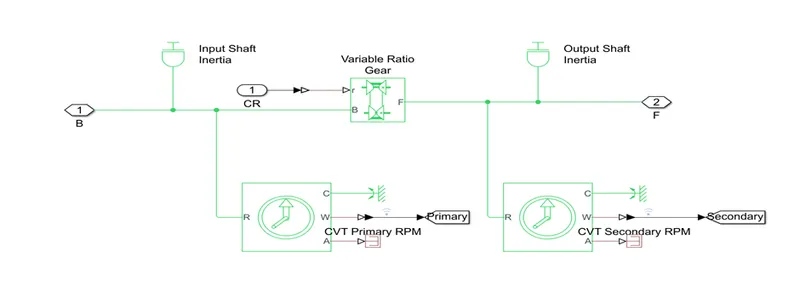
CVT using two pulleys has variable diameter that results transmission used to infinite gear ratio, that reason the flow of power from engine to wheel is continuous and uninterrupted, good fuel economy and smooth driving experience with fixed number of the gear.
VEHICLE BODY:
In the vehicle body include body mass, incline road, weight distribution between axel, aerodynamic drag to acceleration and road profile. The vehicle body consist of a vehicle body block connected four wheel, and wheel and vehicle block are configured.
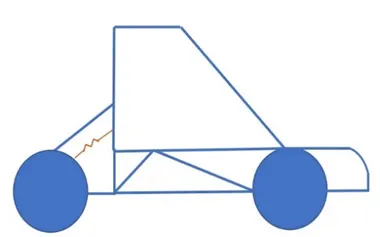
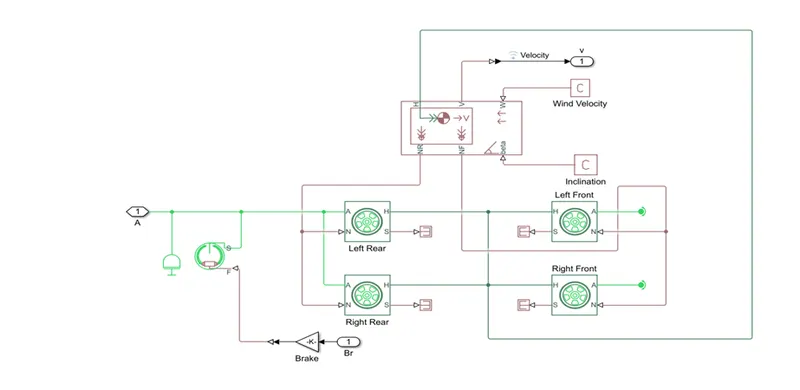
The wheel used in system is tire (magic formula). the block is build from tire road interaction and simscape foundation library wheel and axel block. the effect of tire, damping and stiffness can be included. Vehicle body contain two front wheel and two rear wheel which connected inertia output shaft and double shoe brake.
ENGINE SENSOR:
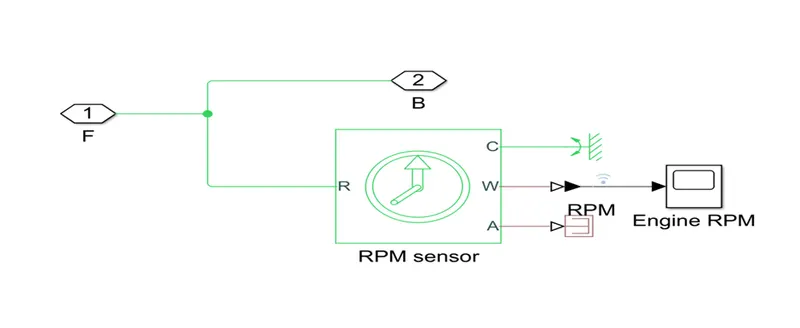
In the engine sensor block used ideal mechanical rotational motion sensor represents device used to measured speed of engine in the given system. The engine sensor taking input from the generic engine, and the output connect to the RPM sensor measured speed.
ENGINE SPEED OUTPUT:
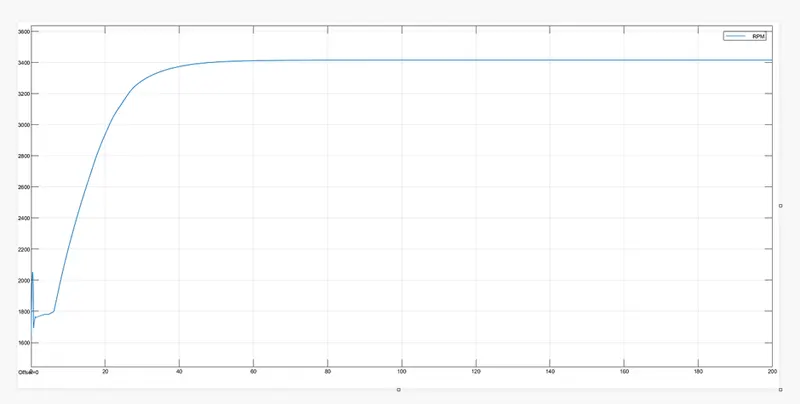
Engine speed is provided as input to CVT block. The speed of the engine is starts 1800 rpm and gradually increases and after 40 sec 3400RPM.
WORKSPACE:
BRAKE AND THROTTEL INPUT:
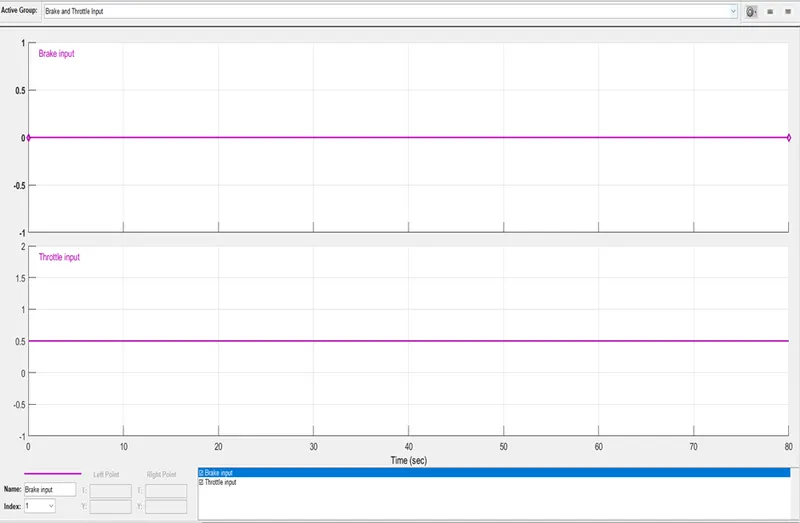
the signal builder block used to the giving input of the model. Brake input is constant zero for time duration 80s. and throttle input is constant 0.5 for 80 s time duration.
CVT GEAR RATIO:
The following gear ratio in the signal builder.
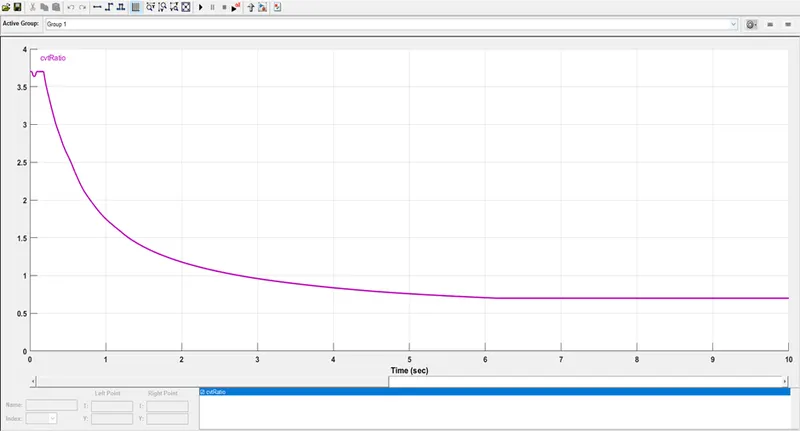
CVT gear ratio at starting 3.7 for 0sec time duration. and falls down gradually with time to 6 sec and 0.7 and after they constant at 0.7value.
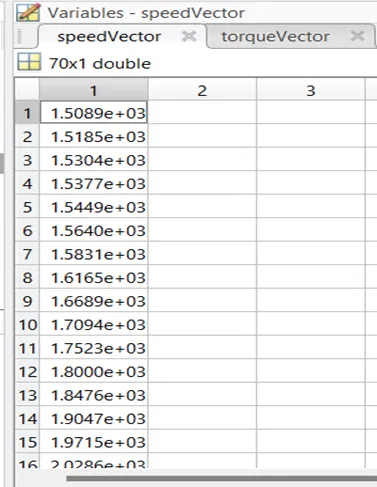
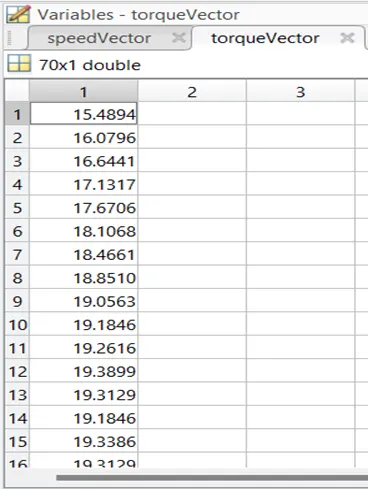
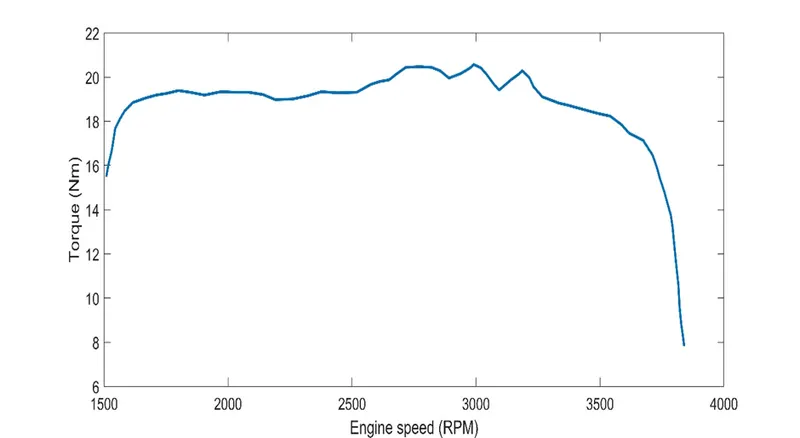
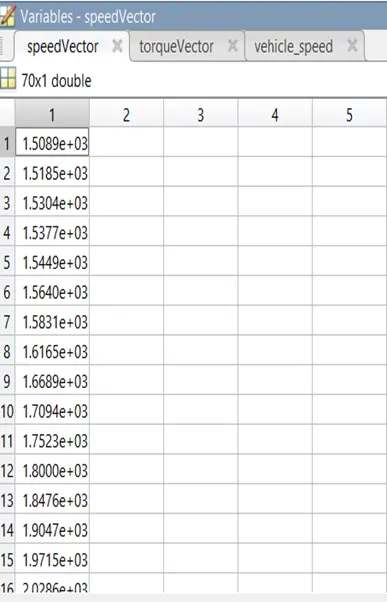
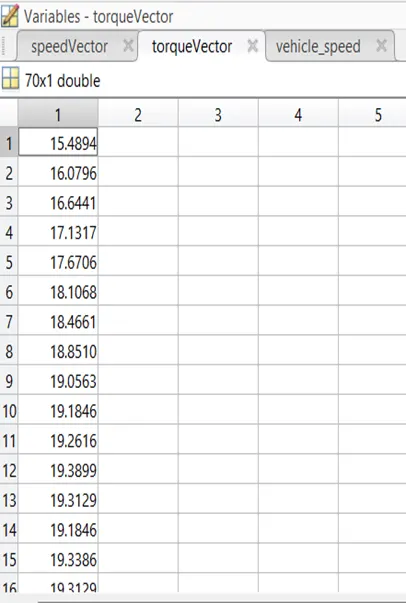
ENGINE SPEED TORQUE CURVE: At starting engine speed 1509 rpm and torque is 15.49 Nm and at end engine speed is 3840 rpm and torque is 7.8 Nm the speed is increased the torque will be decreased.
OUTPUT:
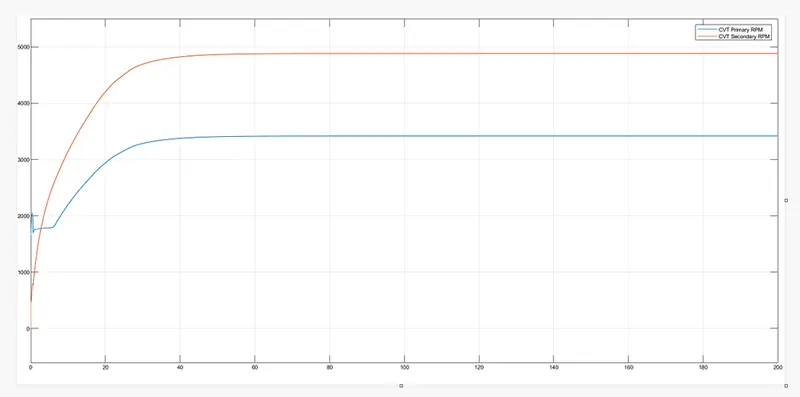
Above graph CVT primary speed and CVT secondary speed shown. Primary speed will starts at 2000rpm and constant at 40sec, 3400rpm and secondary speed will be starts in 500 rpm they gradually increases 40 sec. after 40 sec secondary speed also constant 4800rpm.
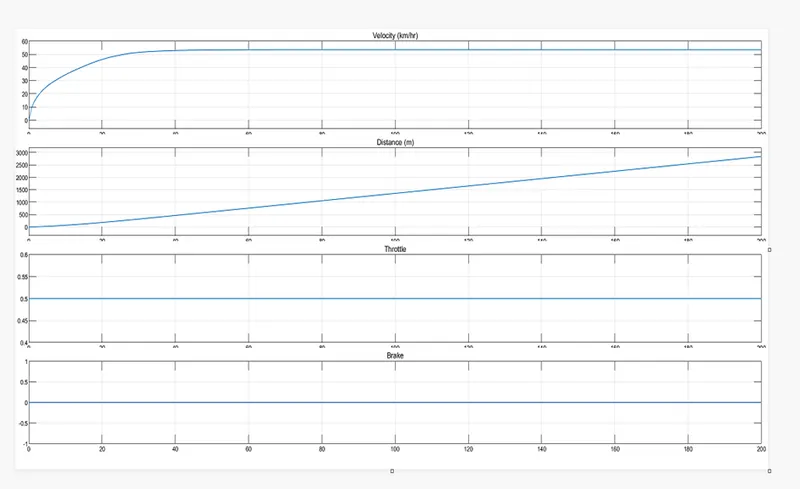
The velocity of the vehicle is gradually increases, after 20 sec, velocity is above 60 km/hr.
BAJA ATV MODEL WITH CVTR
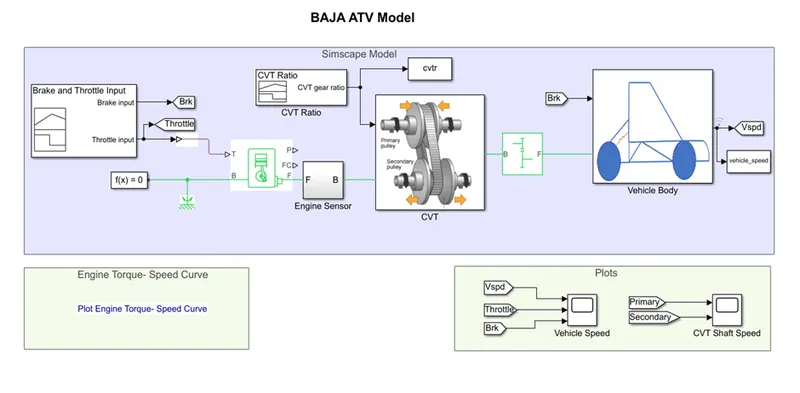
In this model used two signal builder, one signal builder used in break and throttle input. And other signal builder used to provide CVT ratio.
BRAKE AND THORTTEL INPUT:
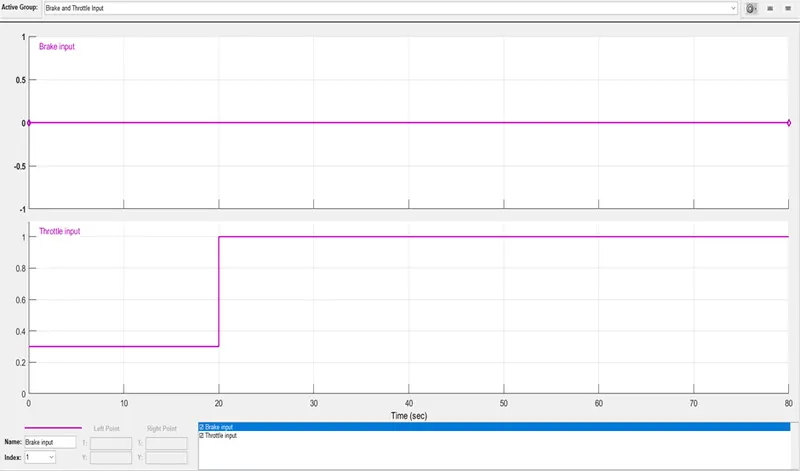
In CVTR model brake input is 0 and throttle input is 0.3 for 20sec and after throttle is increased 1 for 20sec and then constant at 1.
GEAR RATIO:
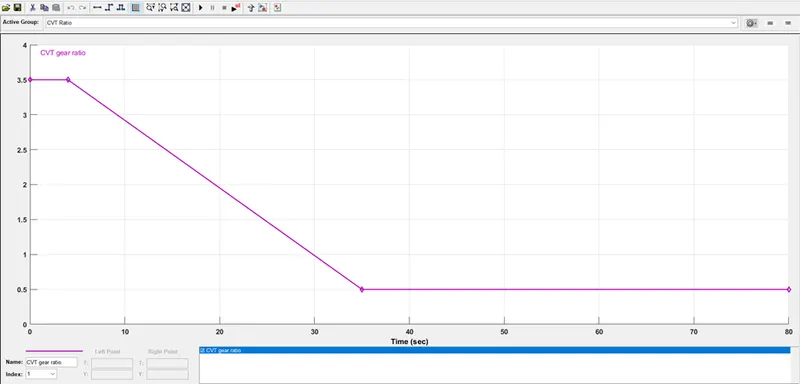
Gear ratio is starts at 3.5 at 0sec duration and after 5 sec decreases to 0.5 for 35sec, and after the value will be constant at 0.5 value for 80sec.
ENGINE SPEED:
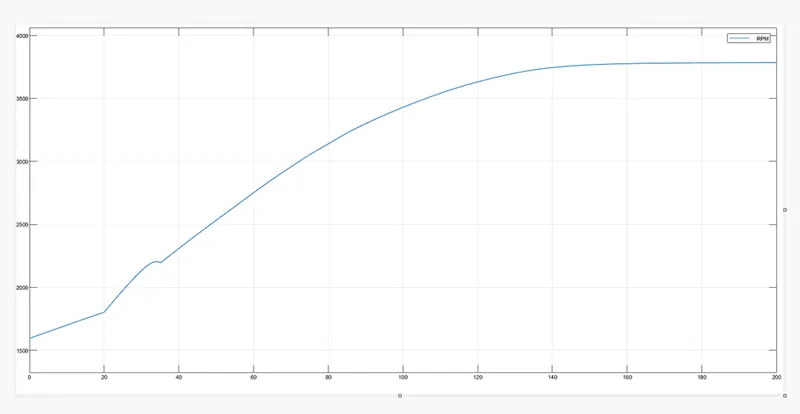
The engine speed od CVTR model are starts 1600 rpm and after 20 sec they reaches gradually increases to 3800rpm.
VEHICLE SPPED:
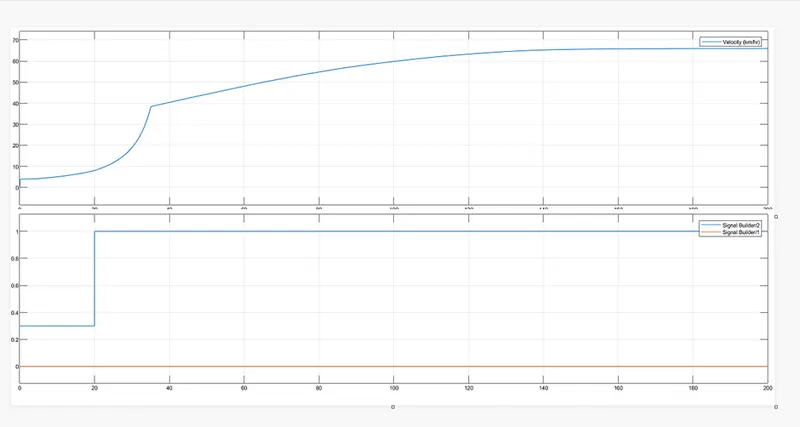
Above graph shows signal builder input break and throttle input and vehicle velocity. velocity will starts 5 km/h and gradually increases velocity 40 km/h at 35 sec. after 35 sec will be increases velocity at 65km/h for timespan 200sec.
CVT SHAFT SPEED:
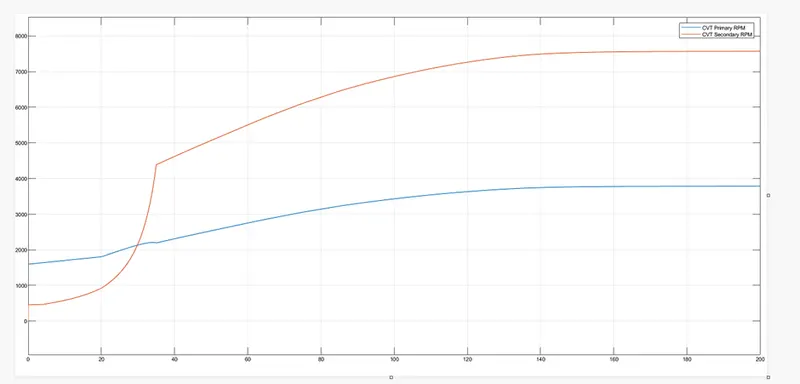
Above graph shows CVT primary and secondary speed. The primary speed will start at 1600 rpm for first 20 sec and they increases 2200 rpm for next 15 sec. after 35 sec primary speed will be increases 3800 rpm and secondary speed will starts 500 rpm and gradually increases for 35 sec 4500rpm and at the end 7600rpm.
WORKSPACE:
BAJA ATV MODEL WITH DASHBOARD:
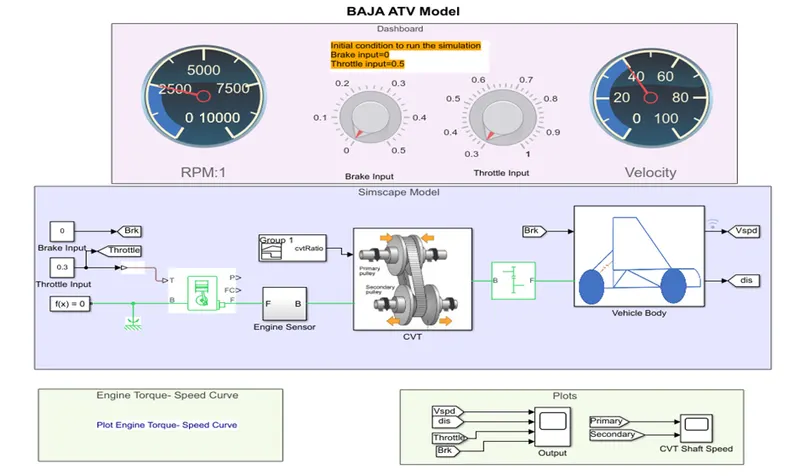
In this BAJA ATV Model with dashboard added. The brake input and throttle input give to the dashboard, the brake and throttle input are controlled by the user with the knob.
OUTPUT:
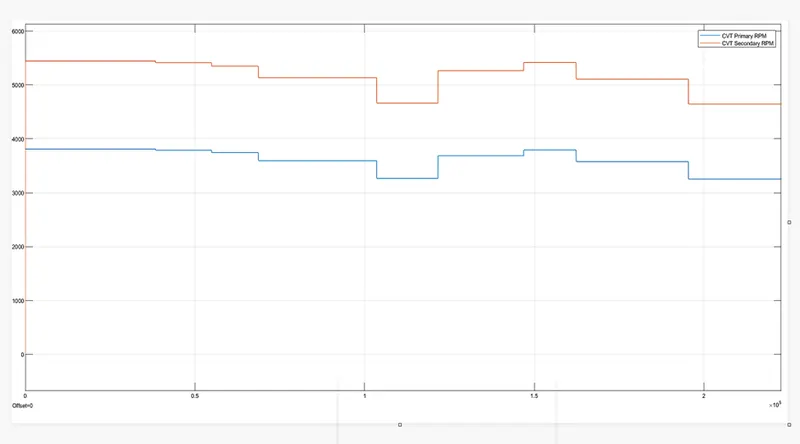
In the observation CVT secondary speed is higher than CVT primary speed. The throttle input goes decreases speed will also decreases in CVT.
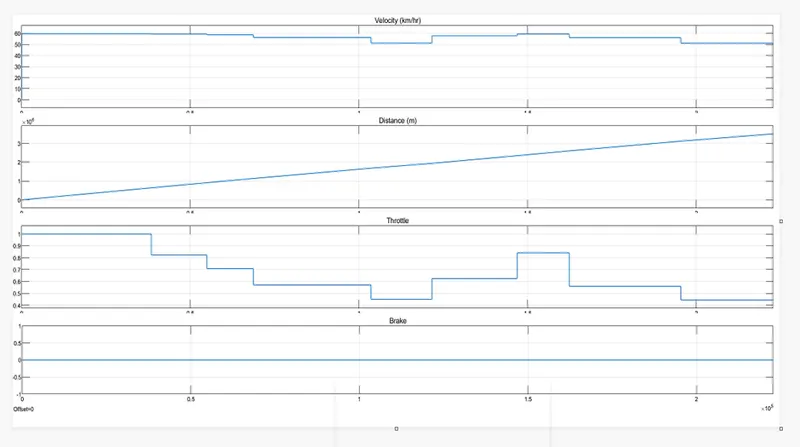
At the starting the velocity increases to 60 km/hr. as the throttle input decreases the velocity also decreases. The velocity goes down due to a throttle input decrease.
ATV BAJA WITH LOOK UP TABLE ( MAPPED MODEL):
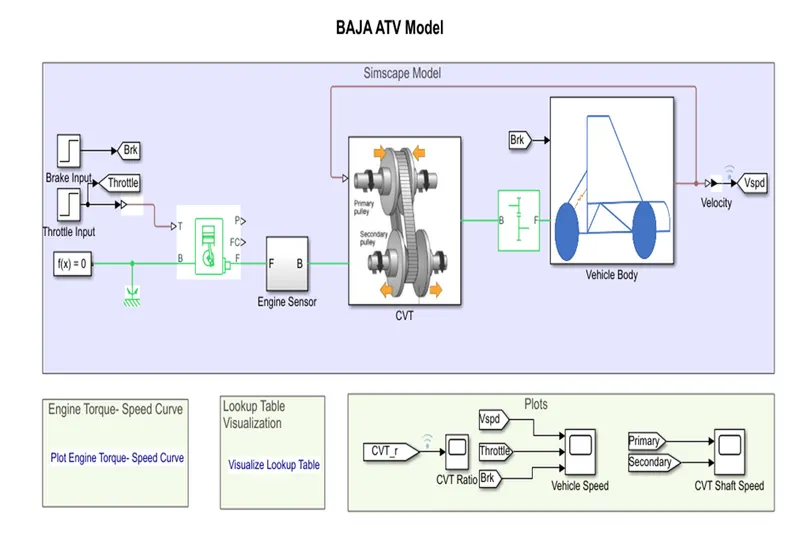
The model working process is same as the process of BAJA ATV model without dashboard.in this model used step input instead of signal builder. At 20 sec throttle input increases 0.3 to 1and brake input 35 sec step value is 0.
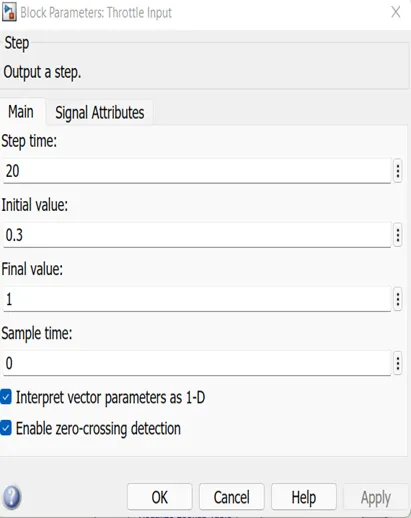
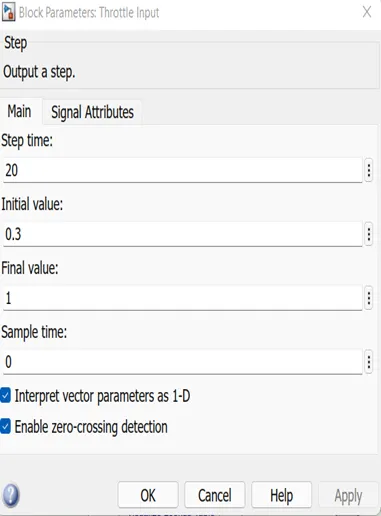
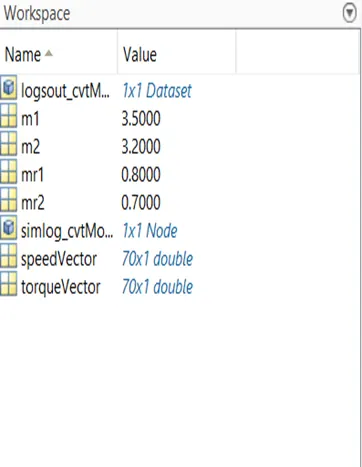
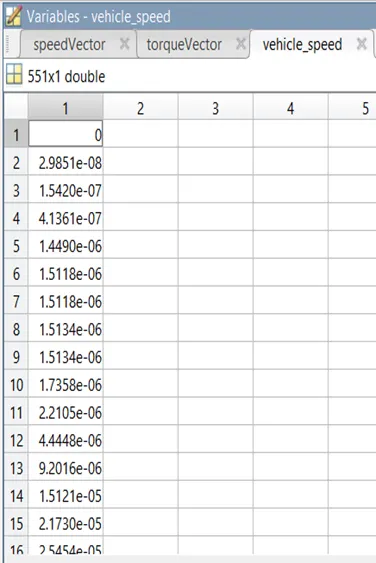
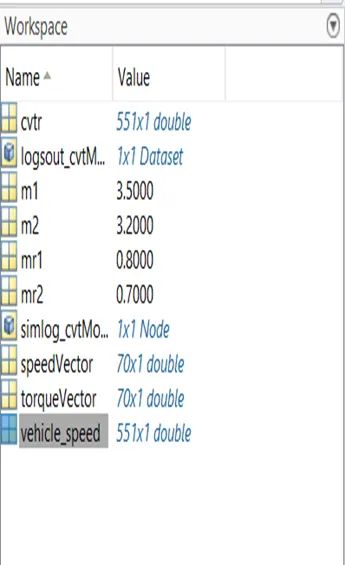
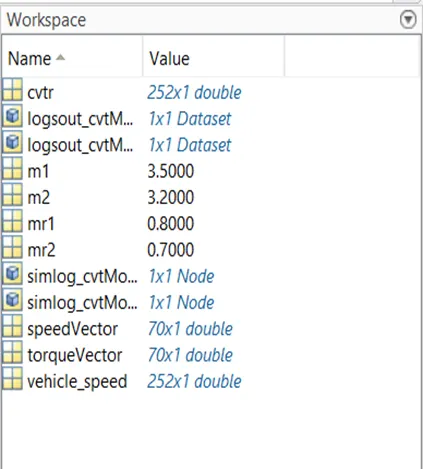
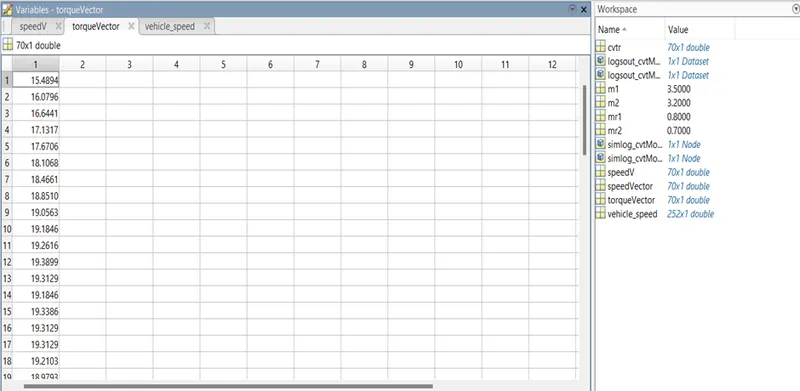
This model taken the physical signal lookup table shown data in vehicle speed vector in a workspace in ascending and descending order.
CVT SUBSYSYTEM:
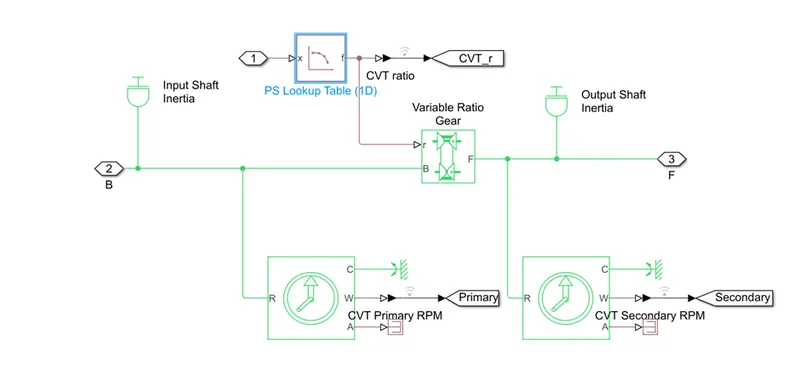
In this CVT subsystem used lookup table used in CVT ratio. The other CVT model used signal builder as a CVT ratio.
LOOKUP TABLE VISUALIZATION:
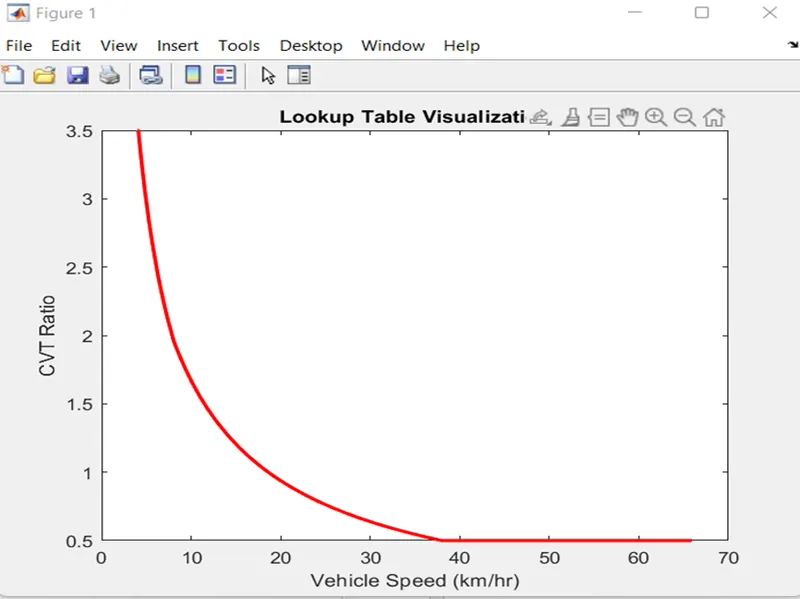
The graph shows the vehicle speed is high, the CVT ratio are decreases.
LOOKUP TABLE OUTPUT:
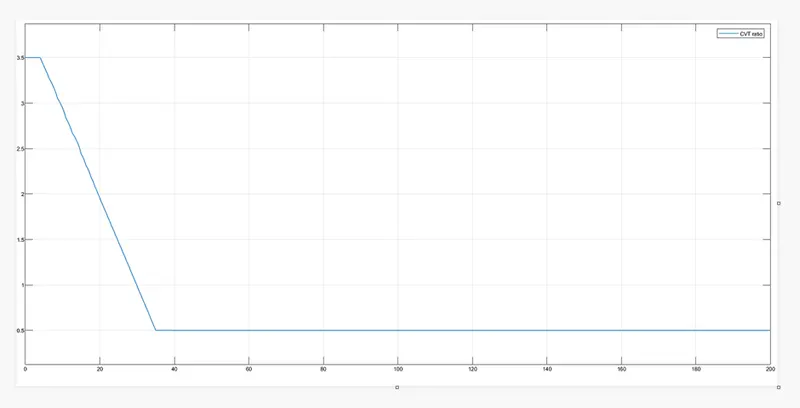
MODEL OUTPUT:
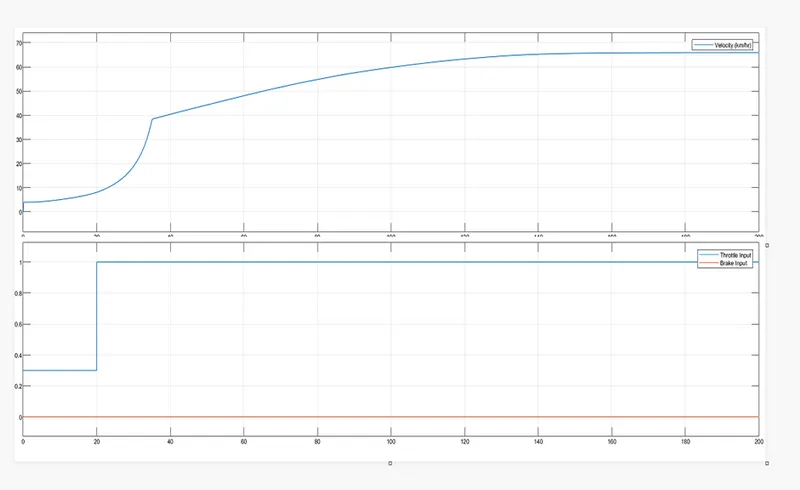
The velocity of vehicle is 65km/hr when compared to previous model. In this model used in step block for break and throttle input.
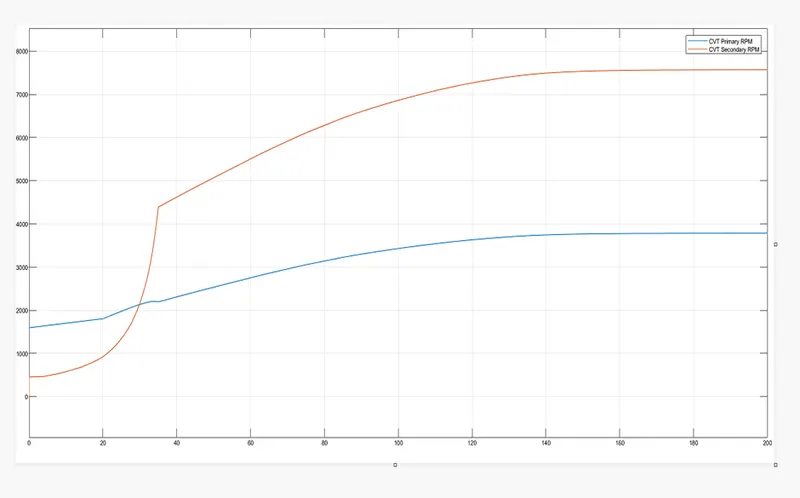
BAJA CVT MODEL CVTRATIO RPM:
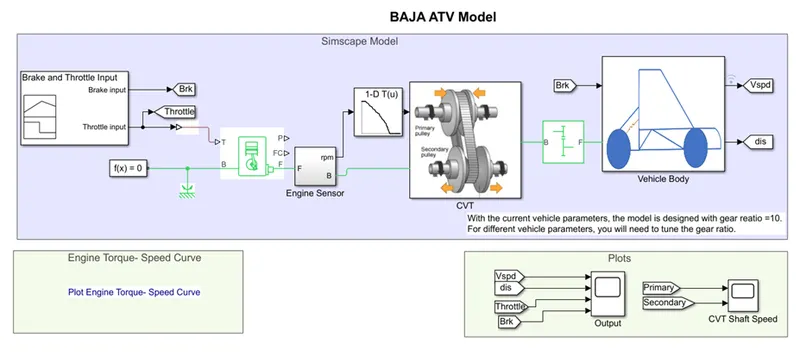
In this model, use lookup table instead of signal builder putting a different gear ratio data. this data imported to the matlab workspace, in simulation is running this data receive from the workspace and providing to the CVT subsystem.
LOOKUP TABLE DATA:
OUTPUT:
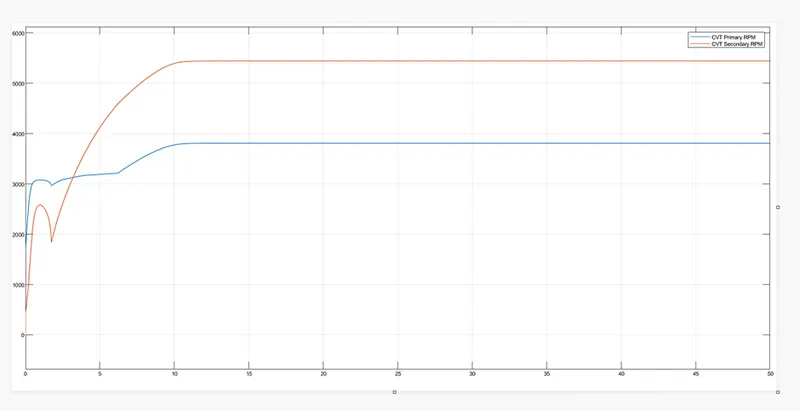
The above graph shows the CVT primary and secondary rpm. The primary rpm will be 3800 rpm and secondary rpm will be 6400 rpm. During starting the primary and secondary rpm will be gradually increases.
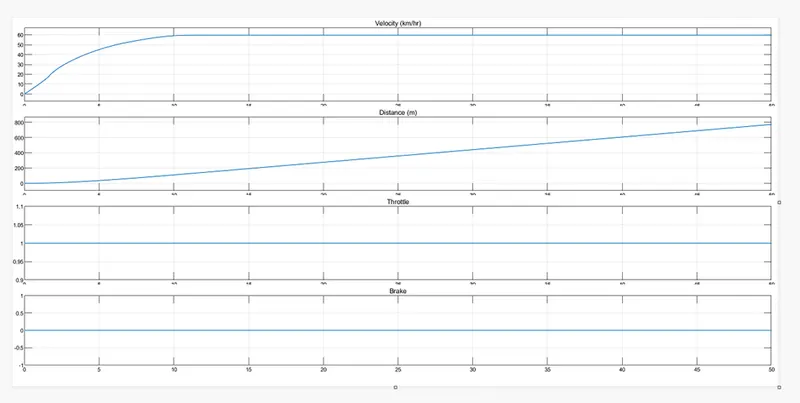
The velocity is gradually increases 60km/hr.
Conclusion:
- We have studied all the models BAJA ATV with giving different input throttle, dashboard, lookup table and studied that variation of outputs.
- System level simulation of an BAJA ATV without and with lookup table is done and all result are plotted.