Week-3 Challenge: ADVISOR Tool
Objective: Using the ADVISOR tool, need to determine the following questions
1. For the EV_defaults_in file, if cargo mass is 500 kg with all other default conditions, can the vehicle travel for 45 km with the FTP drive cycle? Conclude your observations.
2. In the above case, try changing the battery capacity and repeat the simulation.
3. Perform gradeability test with PRIUS_Jpn_defaults_in file. Compare your results in the table and conclude.
Theory part:
ADVISOR (Advanced Vehicle Simulator) Tool - It is a system analysis tool for advanced vehicle modeling. It is written in Matlab/Simulink environment and is developed by the National Renewable Energy Laboratory. It has huge data set of Vehicles at every possible perspective in order to give a much deeper analysis of Vehicle's fuel economy, performance, battery life, electric motor efficiency.
Solution:
1. Case 1: So as per the given question I have taken the EV_defaults under the Vehicle category. I also assigned the cargo mass to 500 kg. Except for this, I have not made any other changes in the default settings.
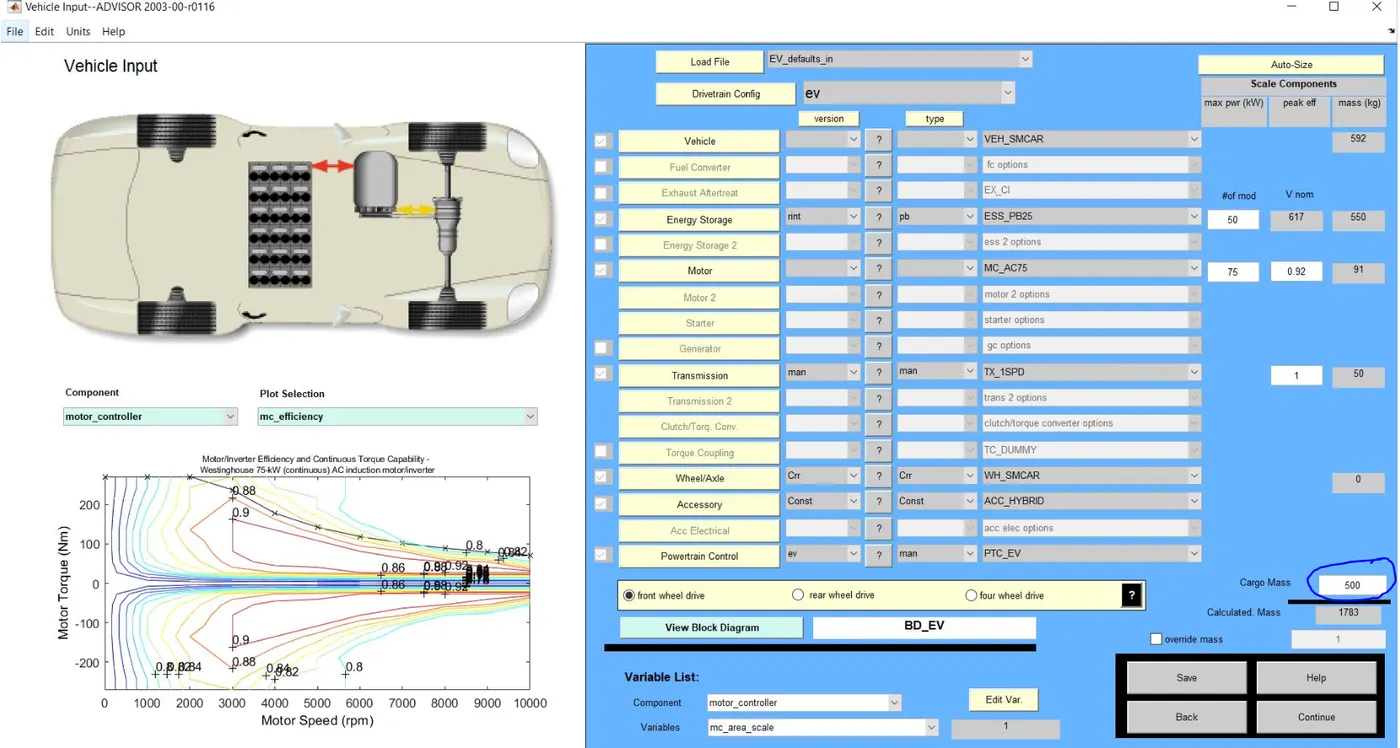
Here I'm gonna compare the difference between Lithium-ion powered battery with the Lead-acid battery for this Electric vehicle.
As per the question, the drive cycle is also changed to FTP.
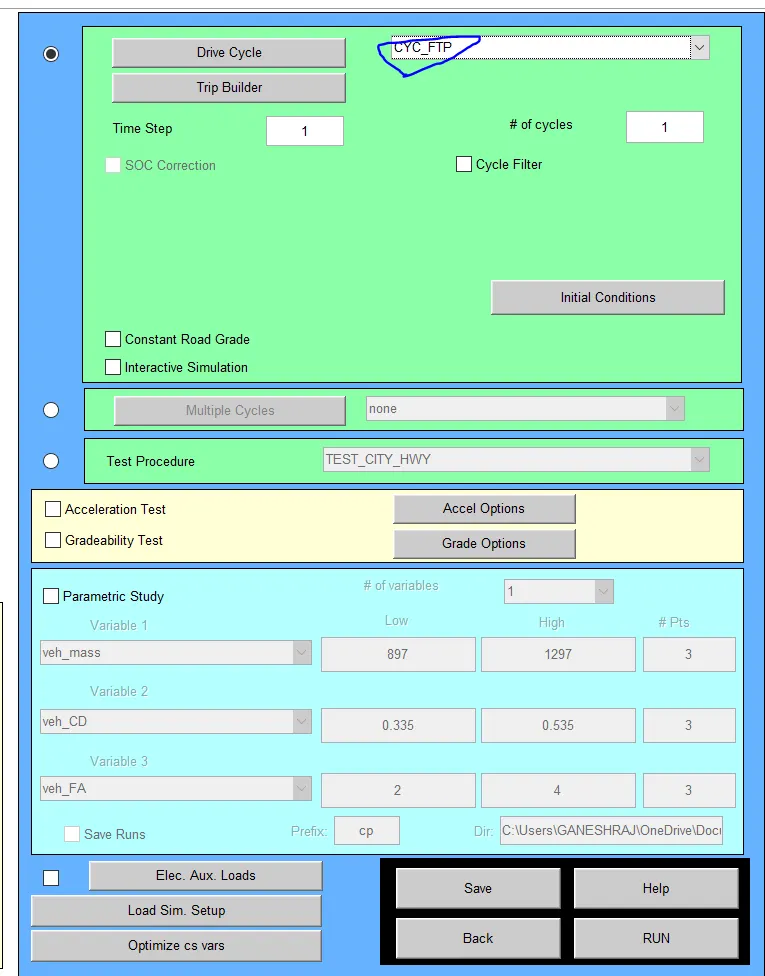
Then after this, I proceeded with the RUN button.
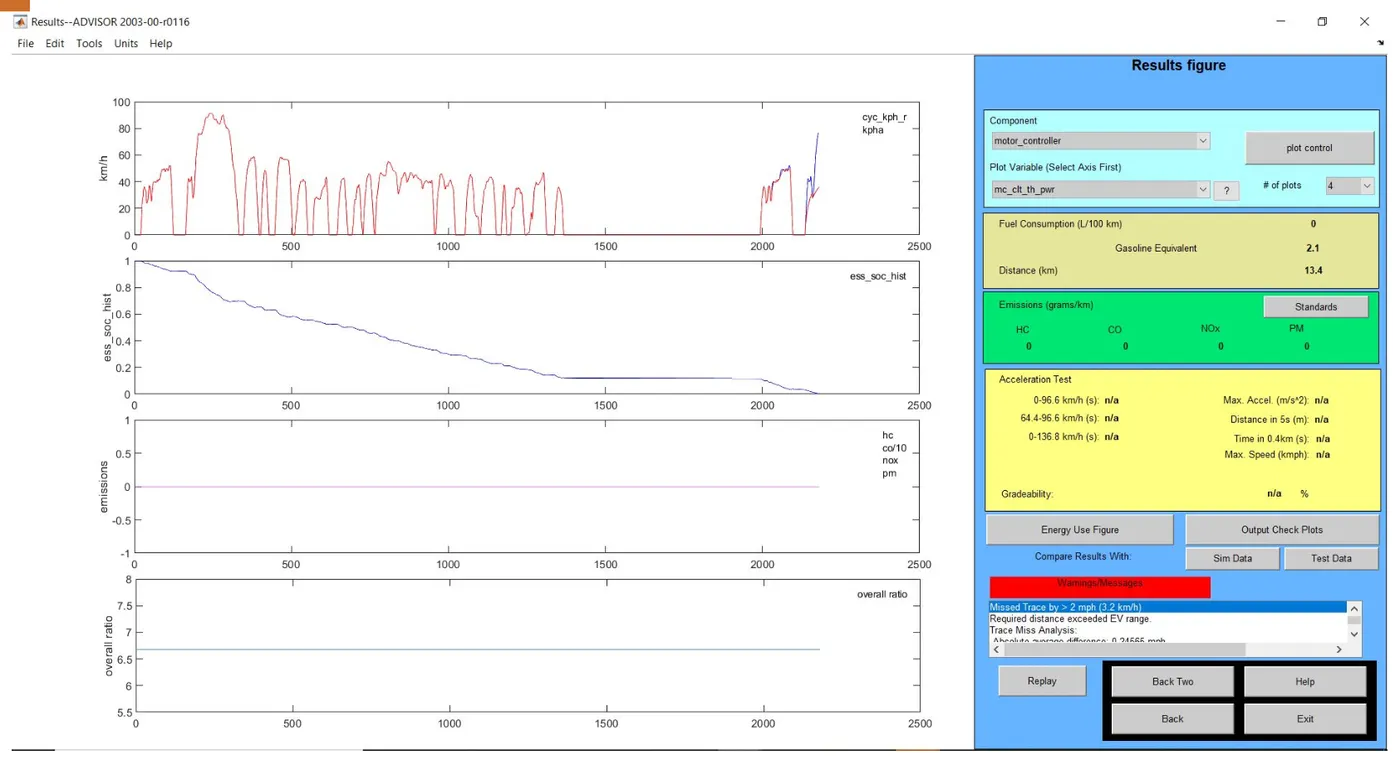
Here for the first cycle, the Electric Vehicle powered by the Lithium-ion battery ran up to 13.4 km.
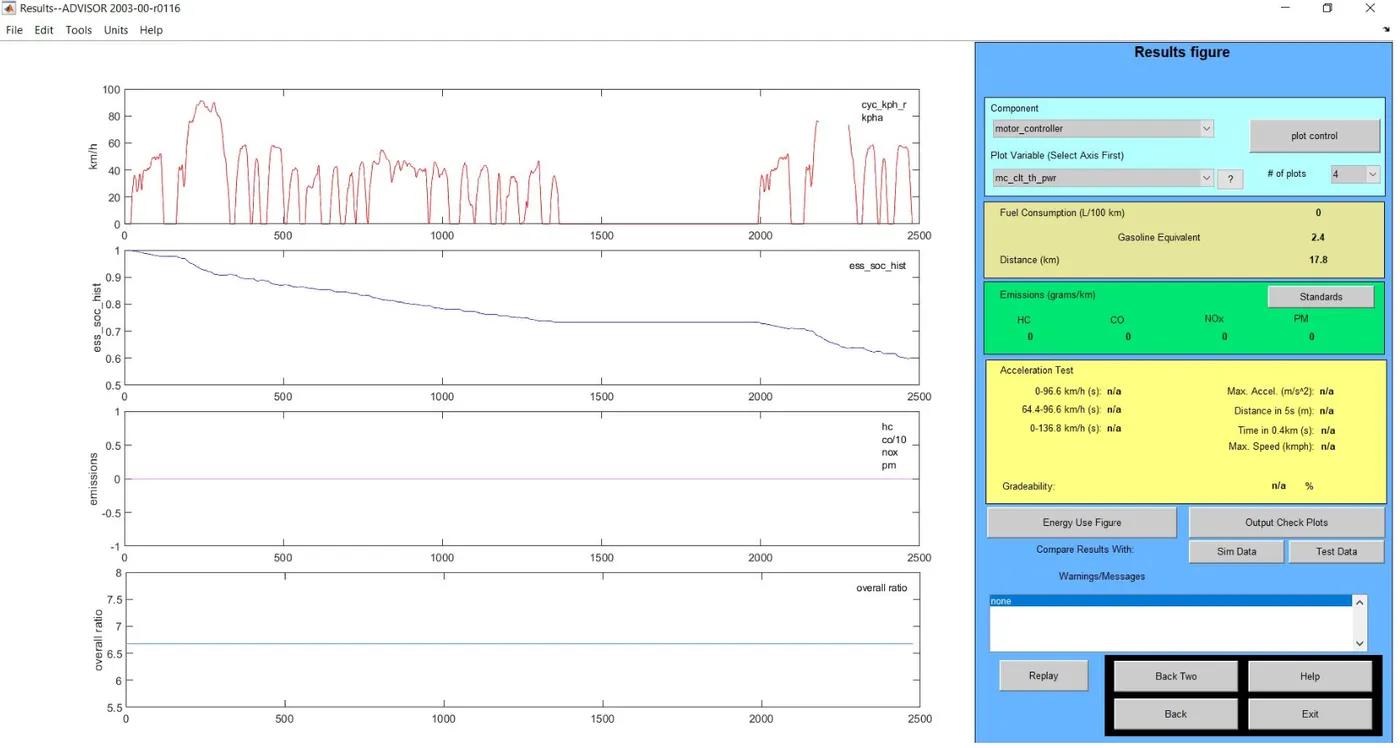
The simulation was made to run with the same default parameters except in this case it is powered by a Lead-acid battery. Here the EV ran up to 17.8 km.
The below table illustrates the data that is obtained from both the Lithium-ion and Lead-acid battery.

It is clear that Lead-acid battery has more capacity than the Lithium-ion battery, thereby in order to make an apple to apple comparison, the capacity of the Lithium-ion battery has to be matched with Lead-acid battery and thereby the which is approx., 4.33 times. Thereby the distance is also multiplied by the same constant 13.4*4.33 = 58 km. Considering the increase in the weight of the Vehicle in the Lithium-battery, the approximate distance covered by the Lithium-ion battery will be 45-50 km.
Hence the answer to the first question will be if the EV vehicle is powered by Lead-acid it will not cover 45km whereas if the Vehicle is powered through a Lithium-ion battery it will definitely go beyond 45km considering the FTP drive cycle.
2. Here the simulation is carried with increased battery capacity for the same simulation as carried out before.
I have considered a 100% increase in the battery capacity for both the Lead-acid and Lithium-ion battery.
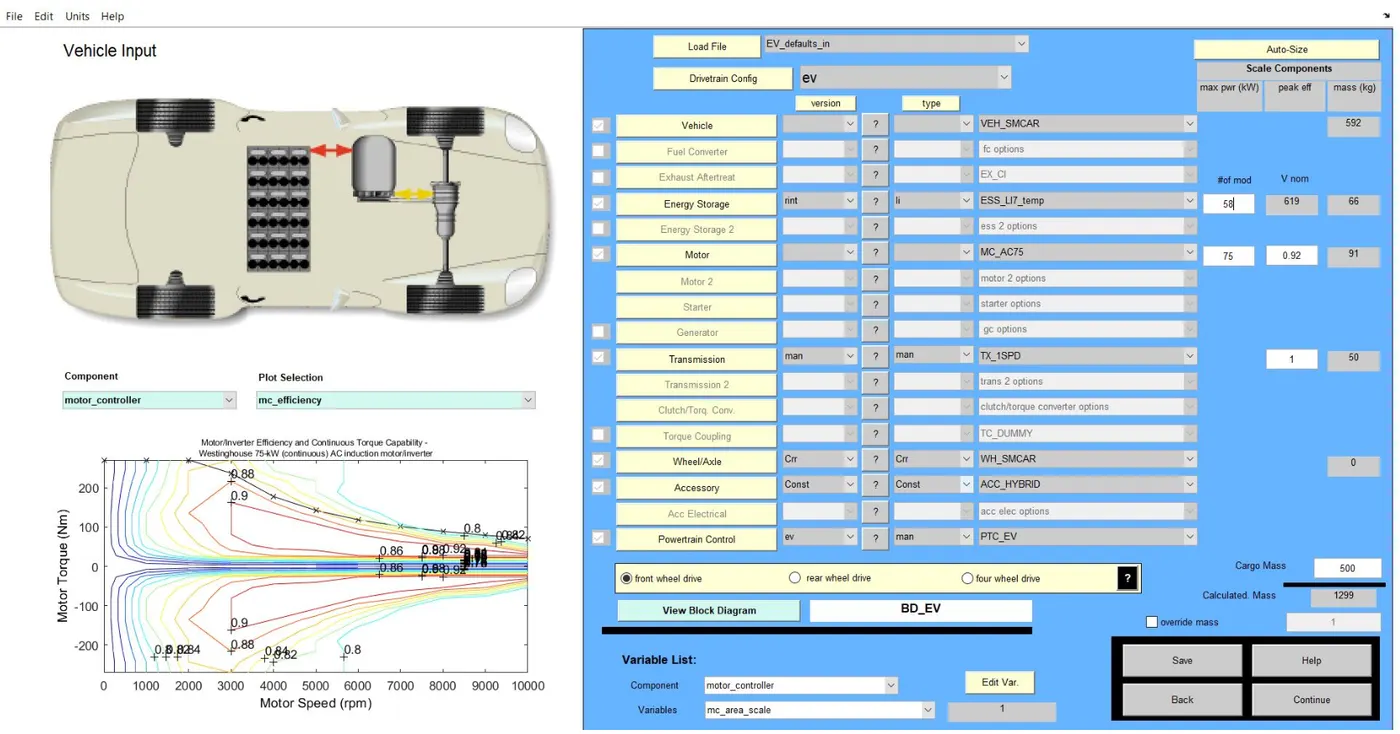
I have not changed the drive cycles and other default parameters. Here the distance covered by the Lithium-ion battery has increased from 13.4 km to 17.8 km for the same cargo mass and the curb weight.
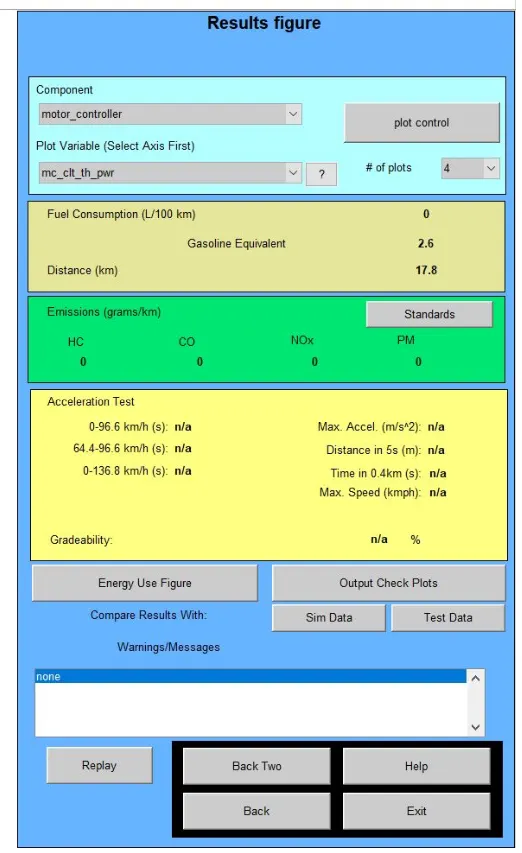
The data obtained for both the Lithium-ion and Lead-acid battery is explained below,

Here are the few important observation that is made,
1. Increasing the battery capacity of the Lead-acid battery actually added more weight to the Vehicle when compared to the Lithium-ion battery. This is the reason why there was no difference observed in the efficiency despite increasing the battery capacity of the vehicle.
2. As we calculated earlier in case 1, the actual distance covered will be 17.8*4.33 = 77.07 km, again considering the weight Lithium-ion battery the distance covered will be approx above 65 - 70 km.
Why Lithium-ion battery is best when compared to Lead-acid?
Except for the cost perspective, the Lead-acid doesn't have many advantages as like Lithium-ion. The following are some of the advantages of Li-ion battery,
a. Less weight and better efficiency
b. Requires lesser charging time
c. Very good Battery management system
d. Easily rechargeable
e. Less harmful when compared to Lead-acid
3. Prius car
Toyota Prius is Hybrid Vehicle where the Engine is used to power the Vehicle and as well as charges the Battery. (Series-Parallel connection). Hence Plug-in charging is not required.
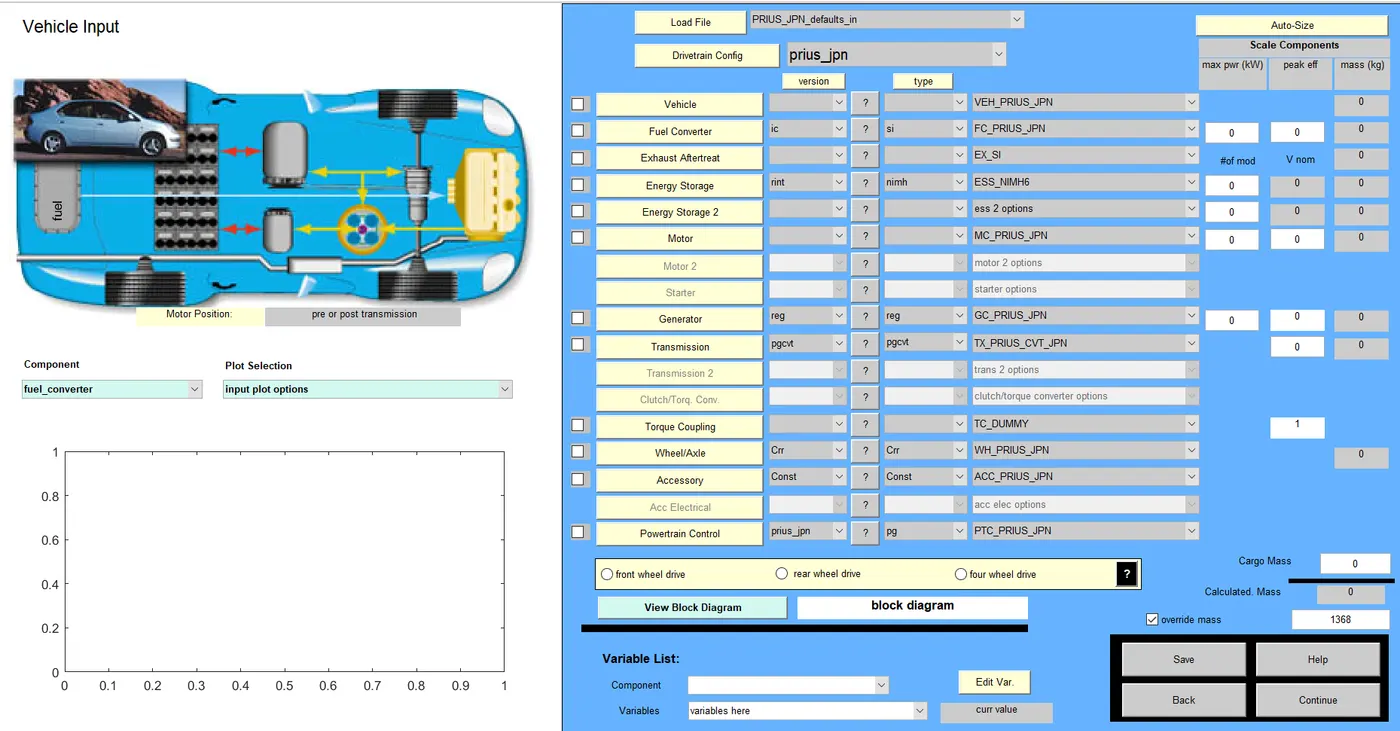
Here the Prius is default data was not changed and it is made to run only varying certain the gradeability parameters
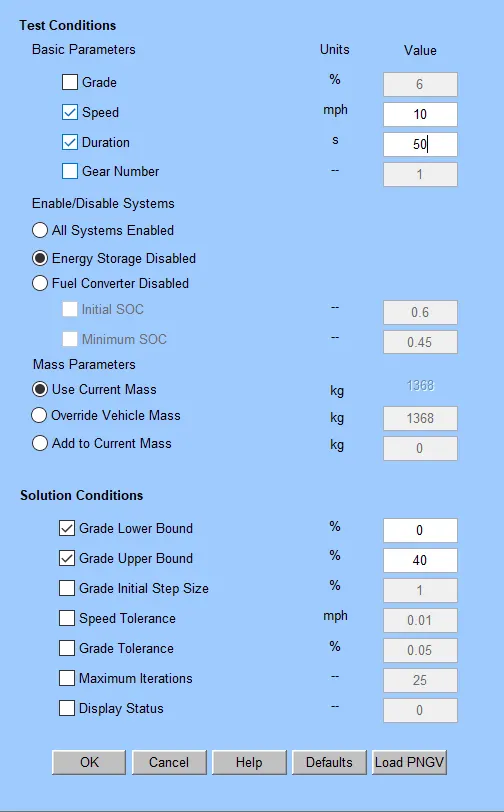
Here gradeability can be checked for the Vehicle at different speeds, in the above case it is considered as 10 mph for a duration of 50 seconds.
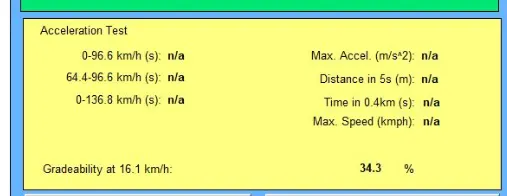
The Gradeability of the vehicle at 16.1 kmph is 34.3%. Similarly this kind of simulation is carried out till 80kmph. The relationship of the Gradeability with respect to Speed can be understood from the following data,
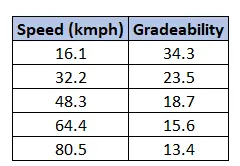
As long as the length of the Steep is higher (higher will be the gradeability in this case) the lesser will be the Vehicle speed and that is what has exactly reflected from the above data.
Conclusion:
1. Lithium-ion battery gives more efficiency when compared to a Lead-acid battery which was evident from the results.
2. Vehicle speed increases as the Gradeability decreases.