Week-3 Challenge: ADVISOR Tool
1. For EV_defaults_in file, if cargo mass is 500 kg with all other default conditions, can the vehicle travel for 45 km with FTP drive cycle? Conclude your observations.
Solution 1:
opening the ADVISOR tool GUI in MATLAB under the Drivetrain configuration we can select the EV option.

and futher load the file EV_Defaults_in for selecting the desired vehicle model.
we have to keep the rest of the parameters as default and just increase the payload/cargo mass to 500 kg
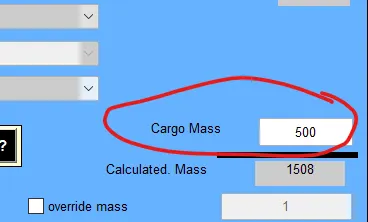
changing the cargo mass to 500 kg, total mass is now 1508 kg.
Question: can the vehicle drive for 45 km with FTP drive cycle?
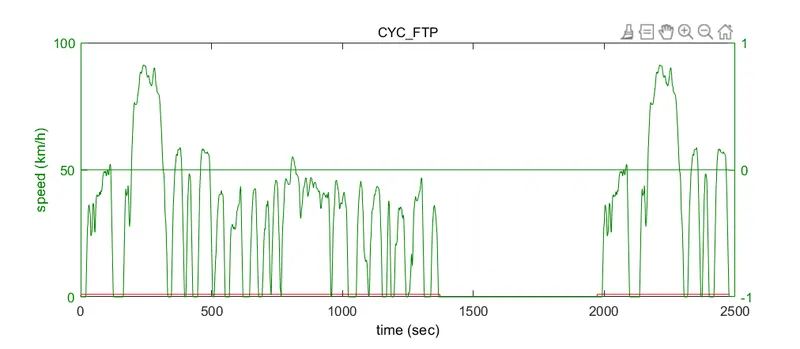
Fig: FTP drive cycle speed time representation/visualisation
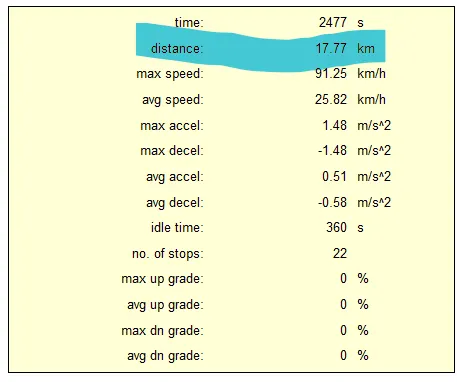
we see that one cycle has 17.77 km of distance travelled by it. so for 45km we will have to take at least 3 complete FTP cycles.
3 FTP cycles = 17.7*3 = 53.1 km
Running the simulation we will be able to see if it can run for at least 45 km
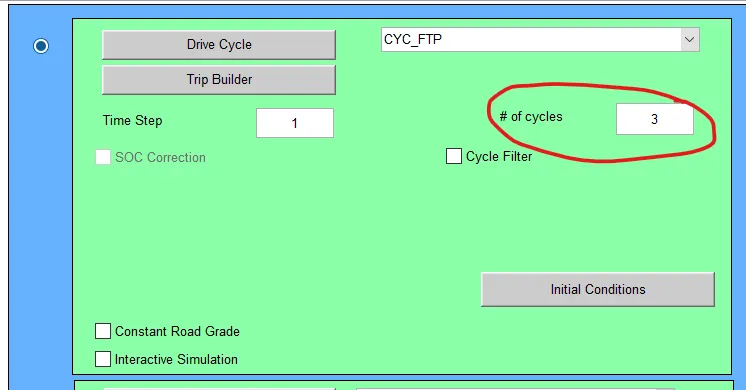
Fig: keeping number of drive cycles 3 for simualtion to be able to see if 45km can be fulfillled
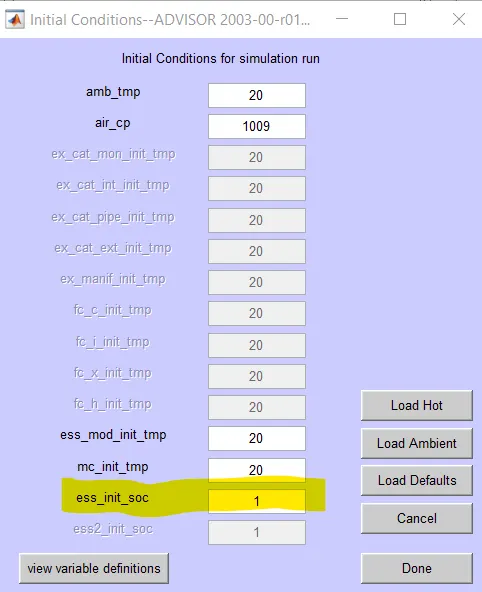
Fig: keeping intital SoC=1 that is 100% charged ess_init_soc = 1
Running the Simulation:
after tunning the simulation using the above parameters we can obsreve the results in the Result Window
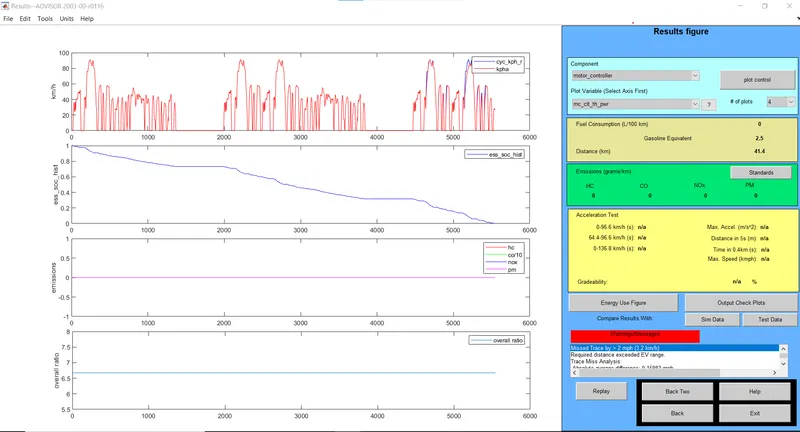
Fig: Result window after the simulation.
question: will it make to 45km or not?
answer is NO
we see that in the:
- SOC of ESS(battery) falling to 0 before even the time of the 3 cycles(2477*3 = 7431 sec) is completed
- distance in km travelled is only 41.4 km under the results figure option on the right of the interface

Fig: State of charge hiiting 0 at a time smaller than the drive/trip required for 45km

Fig: Zooming in - we see SoC reaches 0 at around 5545 sec , much before the complete 3 FTP cycles = 7431 sec
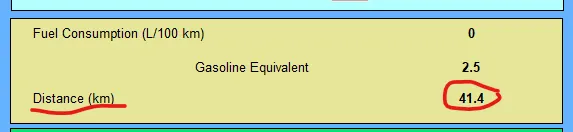
Fig: another information displayed for the user in the Result window showing the distance run by the vehicle, 41.4 km
so it does not make a distance of 45km on fully charged battery
------------------------------------------------------------------------------------------------------------------------------------------------
2. In the above case, try changing the battery capacity and repeat the simulation.
Solution 2:
changing the battery capacity: this can be done by changing the number of modules in the battery pack
changed them from 25 to 35 cell modules in the battery pack and running the simulation again

Fig: changing the number of battery cell modules in the pack from 25 to 35
Result: now we see that it does make upto 45 km as after the 45 km point in the drive the state of charge is not yet 0

Fig: State of Charge is not yet completely depleted , that is not 0 , even after 3 cycles of FTP

Fig:Zooming in - makes it till 7431 sec which is exactly equal to 3*2477s as 2477 is time period of 1 FTP and still SoC>0
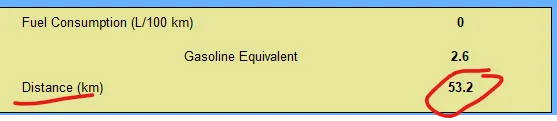
Fig: completed the 3 FTP cycles successfully , hence 17.7*3 = 53.1 km
------------------------------------------------------------------------------------------------------------------------------------------------
3. Perform gradeability test with PRIUS_Jpn_defaults_in file
Compare your results in table and conclude.
Solution 3:
selecting the PRIUS_Jpn_defaults_in file which lies under the 'Parallel' Drievtrain configuration.
keeping all parameters default

Fig: selecting the Gradability test to perform its simulation
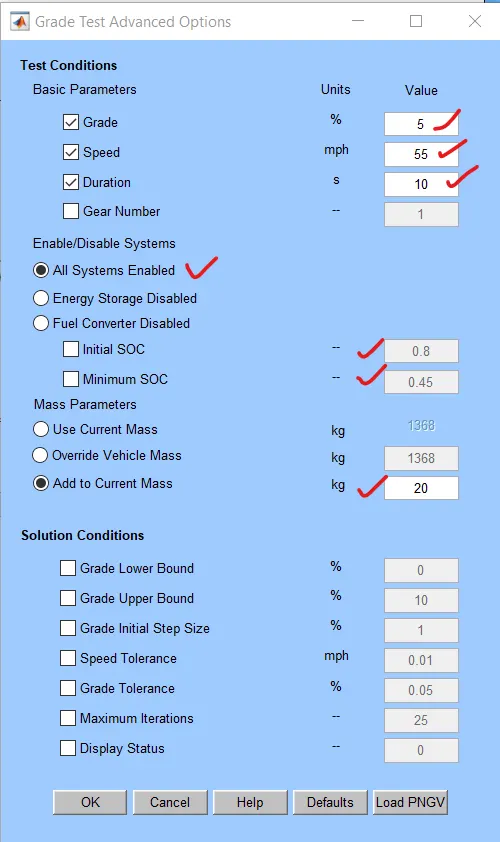
Fig: Gradability test option window.
parameters:
speed = 55mph
duration of test = 10 sec
all systems are enabled (ICE and Machine)
initial SOC = 0.8
Minimum SOC permissible = 0.45
added extra mass for compensating rotating parts = 20kg
Result : for the above parameters and simulation conditions

Fig: we see as pre defined the minimum soc always stays above the 45% SoC
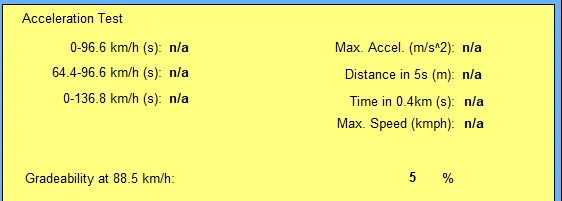
Fig: Since we used the 5% Grade in the Gradability test
if we add a constant grade of 5% and then simulate again, we will be able to see the difference in the perfomance of the same vehicle
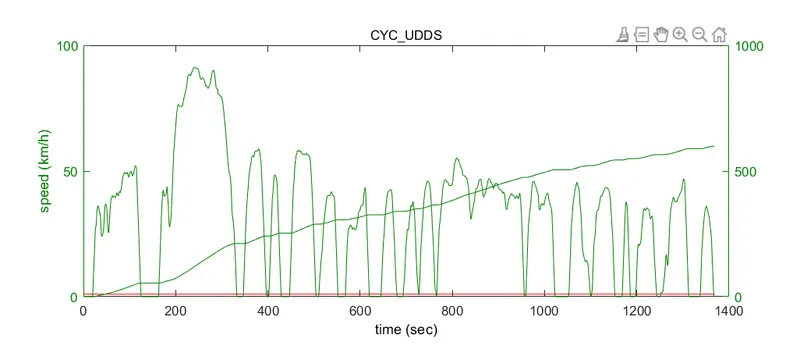
Fig: constant road grade of 5% provided to the driving conditions


Fig: SOC in both cases (top: no grade, bottom: 5% constant grade) . We see steeper depletion in SoC in case of grade present
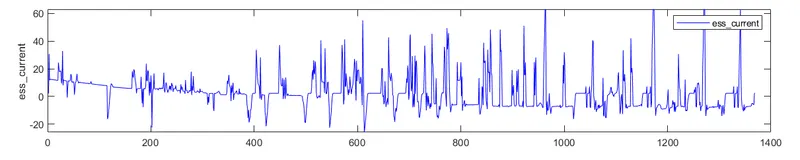

Fig: ESS current we see higher current needed in Grade case since higher Torques needed , also in res time the vehicle will move backward due to the slope of the road and hence will generate energy as we see in t=200s to t=300 s


Fig: Motor Troque requirement . Again will be more needed in case of grade(bottom plot) as has to also overcome grade of the road
Performing Gradability test:
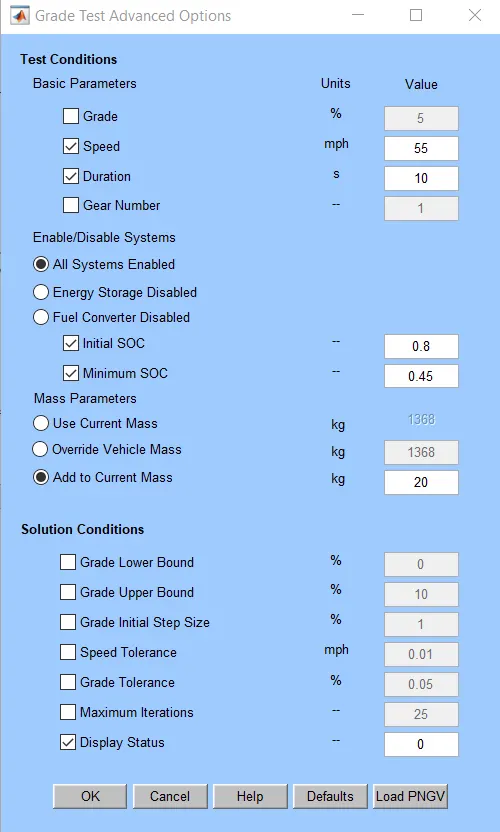
Fig: providing the above parametric values
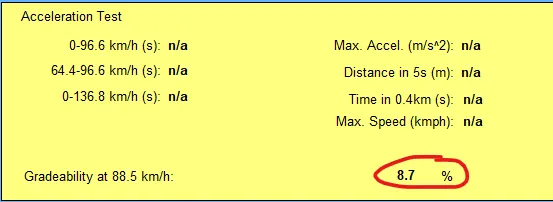
Fig: Gradeability is 8.7% for our vehicle for 88.5 kmph, meaning the vehicle can efficiently move it at this speed upto this Grade
------------------------------------------------------------------------------------------------------------------------------------------------