Week-3 Challenge: ADVISOR Tool
ADVISOR:
- ADvanced VehIcle simulatOR is used for steady state vehicle models (based on the level of details) that use macro statistics from duty cycles and cycle average efficiency of computatuion for near instantaneous prediction of fuel consumption and performance.
- Used for simulation of vehicle types such as conventional, electric and different types of hybrid vehicles to understand the fuel economy, emissionns, optimization and to analyze the vehicle test perfomance.
- They give a quick computation on high level behavioral models which are not much into the depth and have a sample time of 1 second.
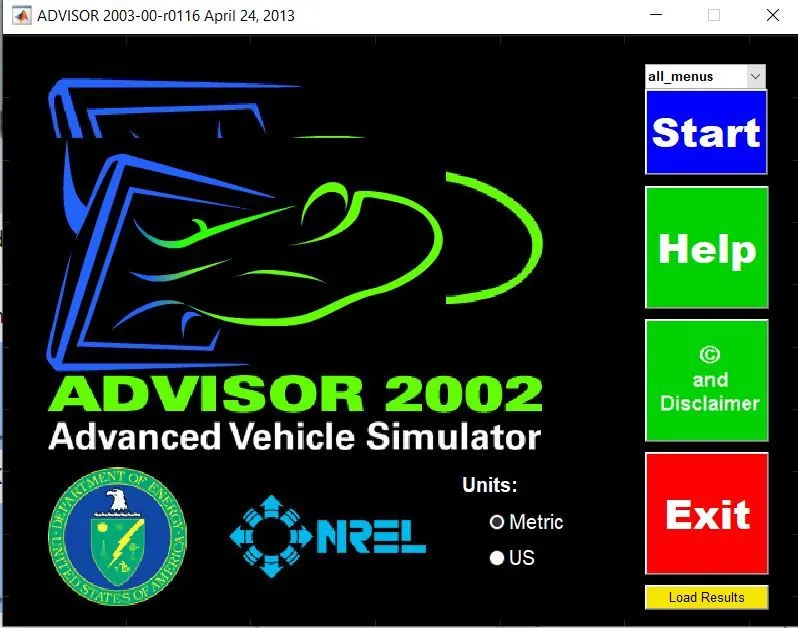
The ADVISOR runs on the MATLAB environment. This is mostly associated with script files. The data is in the form of script files. The advisor.m file should be executed for the advisor to run on MATLAB environment, and accordingly the directory path is adjusted. After execution typing 'advisor on the command window opens the advisor tool. The initial interface is shown below and for our calculations the metric unit is chosen and proceeded to start.
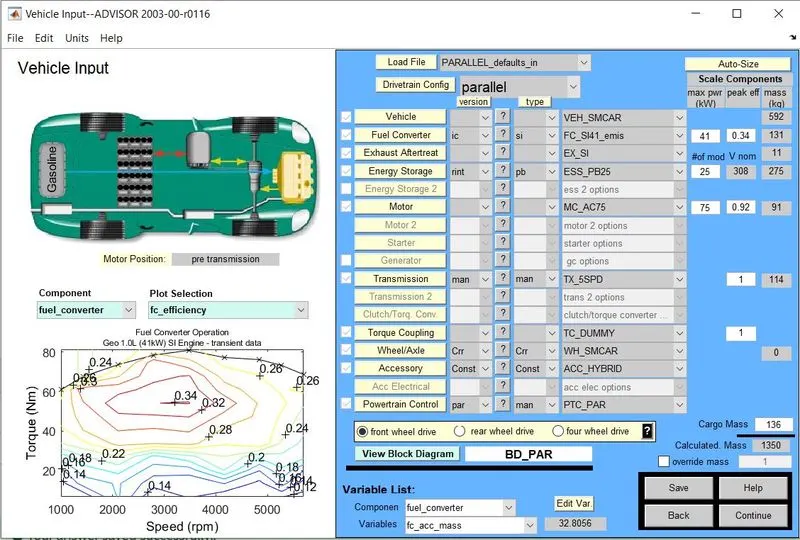
After pressing start the first screen consist of parallel_defaults_in file as default GUI.
1. For EV_defaults_in file, if cargo mass is 500 kg with all other default conditions, can the vehicle travel for 45 km with FTP drive cycle? Conclude your observations.
From the drop down available in the load file we can choose the file 'EV_defaults_in' and the window for the corresponding model is displayed below. In this model all the default values are kept constant except for the cargo mass is changed from 136 Kg to 500 Kg. The calculated mass is also changed from 1144 Kg to 1508 Kg respectively.
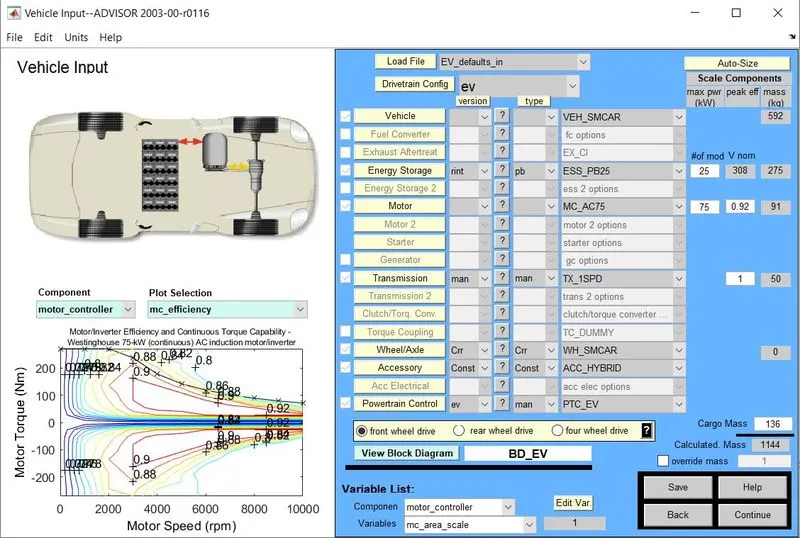
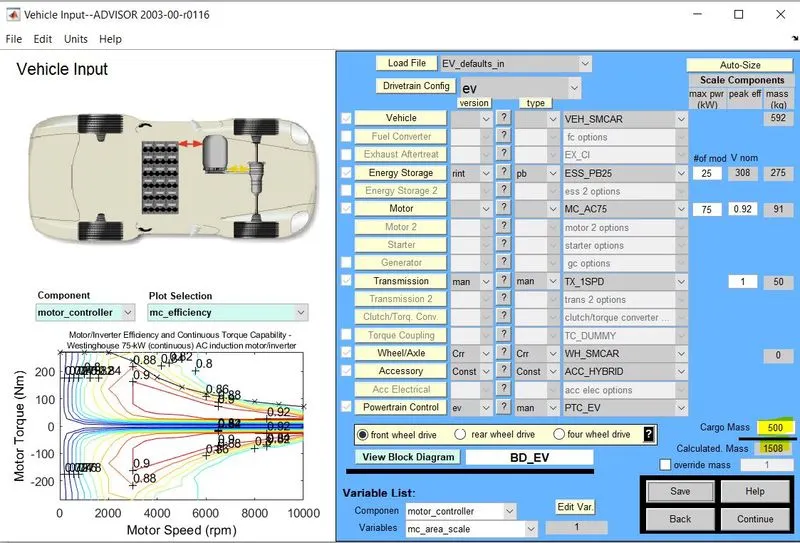
keeping all other default conditions and moving to the next window by the continue gives us the simulation parameters window as shown below. From the drive cycle drop down 'CYC_FTP' is chosen and the other parameters are kept as such without changing.
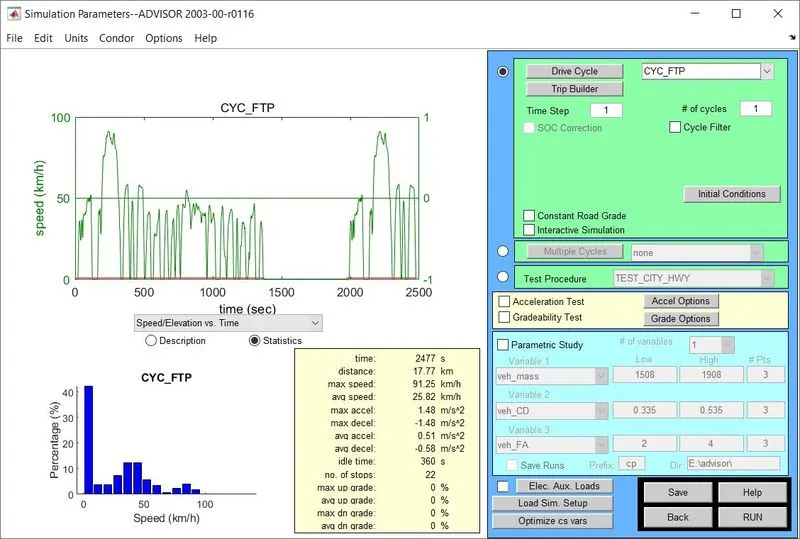
The time taken by 1_'FTP CYCLE' is 2477 seconds to cover the distance of 17.77 Km. The max speed of the vehicle is 91.25 Km/hr and the average speed achieved during this time period is 25.82 Km/hr. By hitting the run buttion we can visualise the simulation results in the form of graphs.
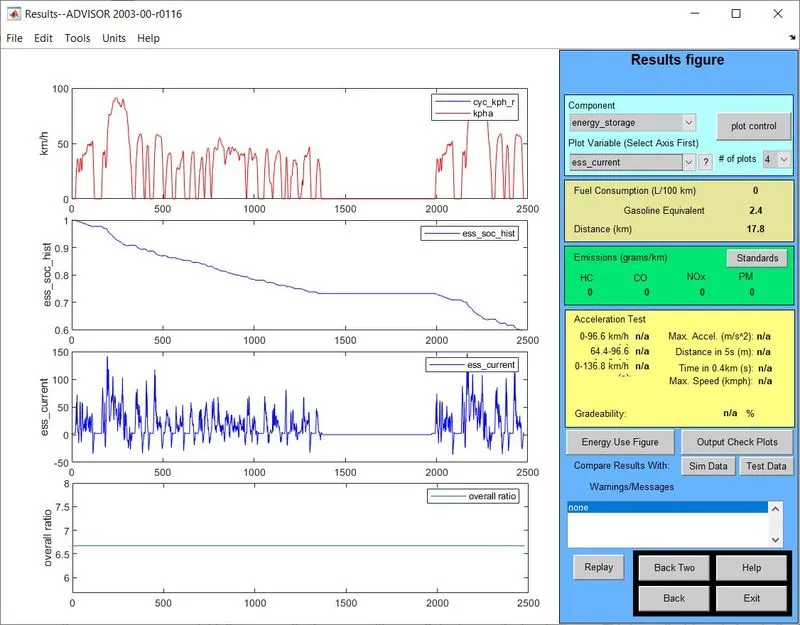
- In the result window a maximum of 4 plots can be viewed. The default plots are speed travelled or the drive cycle execution, battery soc, emmision and overall ratio. Since this is a pure electric vehicle in the simulation the emission results will be 0. Hence we can change that plot. Here we have replaced the emission plot with battery current usage.
- The simulation is executed without any error displayed in the warning message box and the overall ratio of the vehicle is 6.7. The gradeability and acceleration are not tested for this model.
- The output check plots is used to view the other plots such as traffic eff., ess chagre eff., ess discharge eff, etc.
- The maximum distance covered in 1_FTP is 17.8 Km to check if the vehicle can achieve 45km, we must iterate and interpret the result by increasing the number of drive cycles.
By increasing the number of drive cycles to 2 the maximum distance coverd is 35.5km. further increasing to 2.5 gives 41.4 Km.
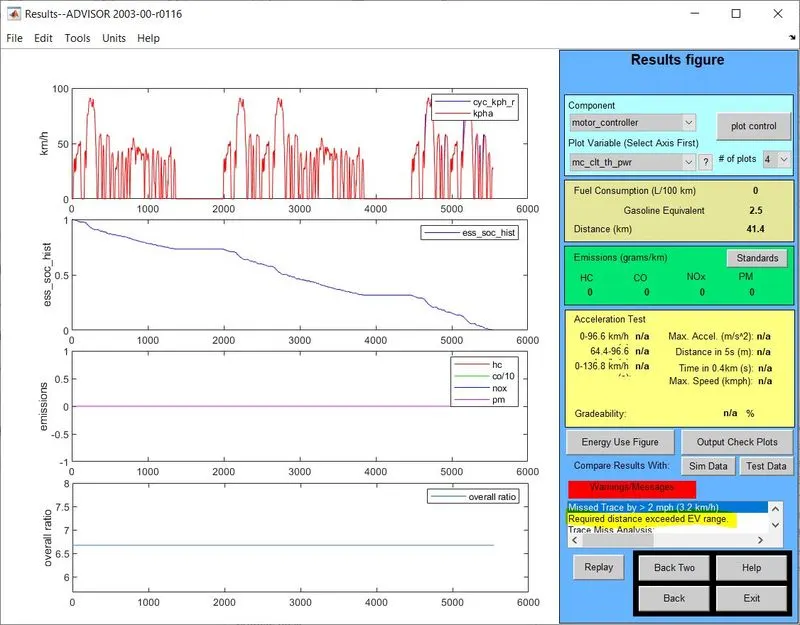
As we can see, there comes a warning message when the drive cycles number is increased. When the drive cycle is increase to 2 the state of charge falls below 30% of the battery capacity and further increasing it to 2.5 cycles the 'ess soc' falls to zero value which is displayed in the warning message as exceeded the EV range.
CONCLUSION:
The EV model in the EV_default_in file cannot run for the distance of 45 Km with the battery capacity of 25 modules. Hence to achieve the desired range the battery capacity should be increased.
2. In the above case, try changing the battery capacity and repeat the simulation.
The above simulation is repeated with cargo mass 500 Kg and the battery capacity is adjusted from 25 to a higher value by a series of iterative simulation.
Here we can consider two cases for comparative performance and to arrive the conclusion.
Case-i:
# of modules: 33 and # of drive cycles: 2.5 .
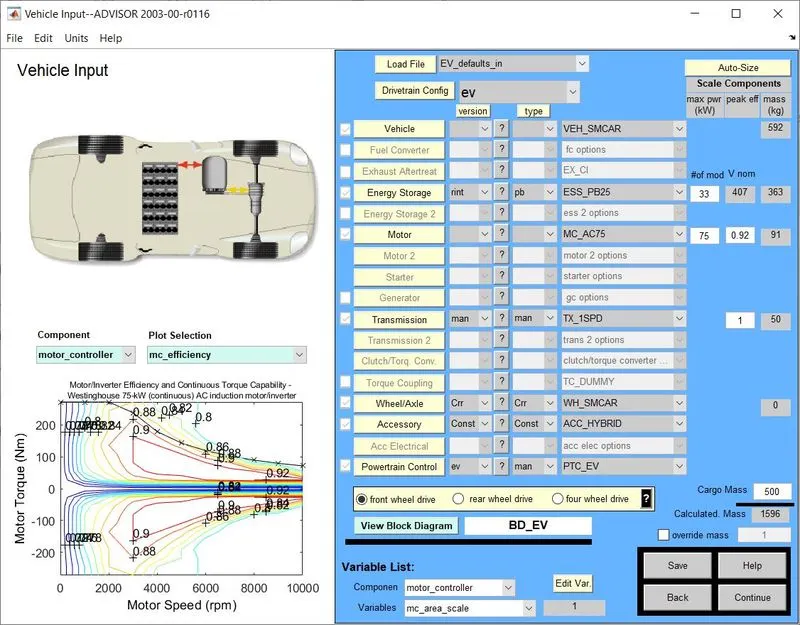
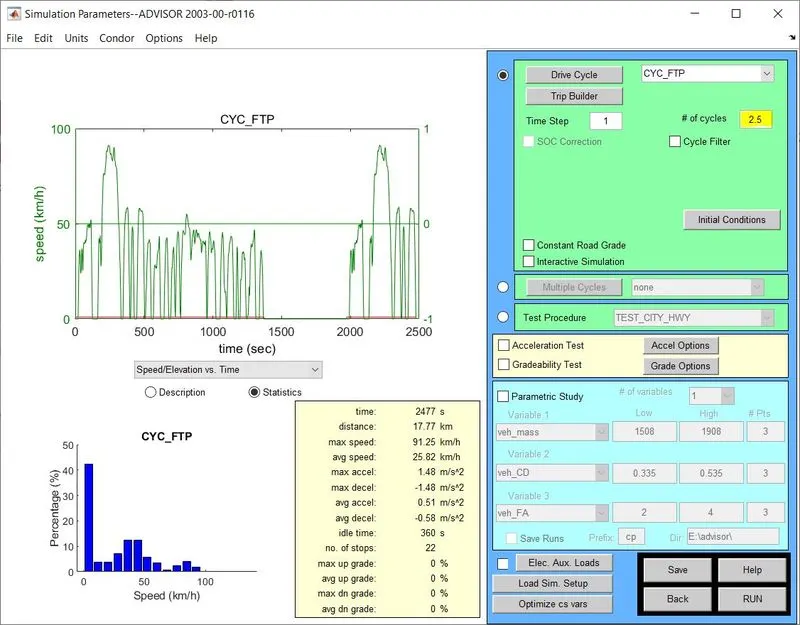
Here the ess module is increase to 33 and the the drive cycle is kept as 2.5 and the nominal voltage produced by the lead acid battery is 407 V.
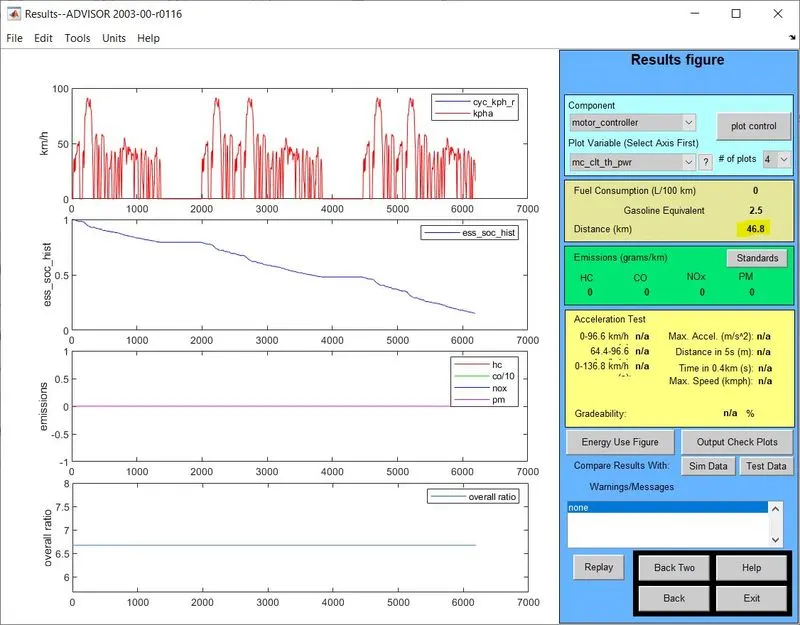
AS shown in the result above the required speed of 45 Km is achieved with this iteratio of battery module of 33 packs and with number of drive cycles as 2.5. Here the 'ess soc' range is in the range of 15-20%. The further increase in the speed (increase in no. of drive cycles) detoriates the soc value and the warning given as 'ev range exceeded'.
Case-ii:
# of modules: 35 and # of drive cycles: 2.5 .
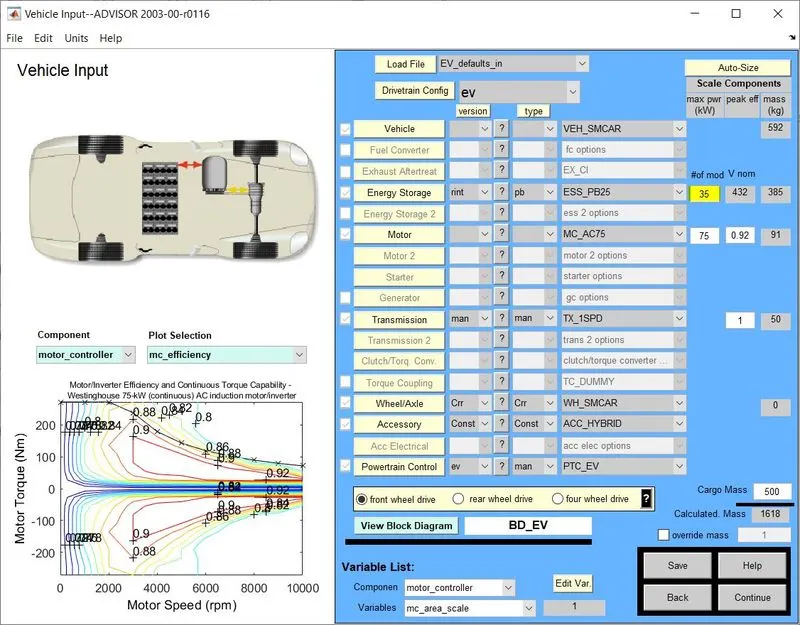
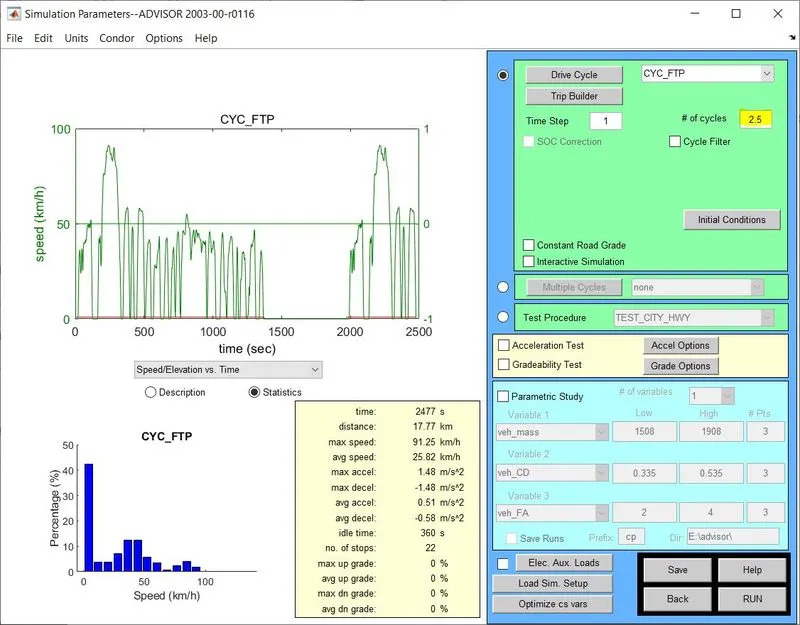
Here the ess module is increase to 35 and the the drive cycle is kept as 2.5 and the nominal voltage produced by the lead acid battery is 432 V.
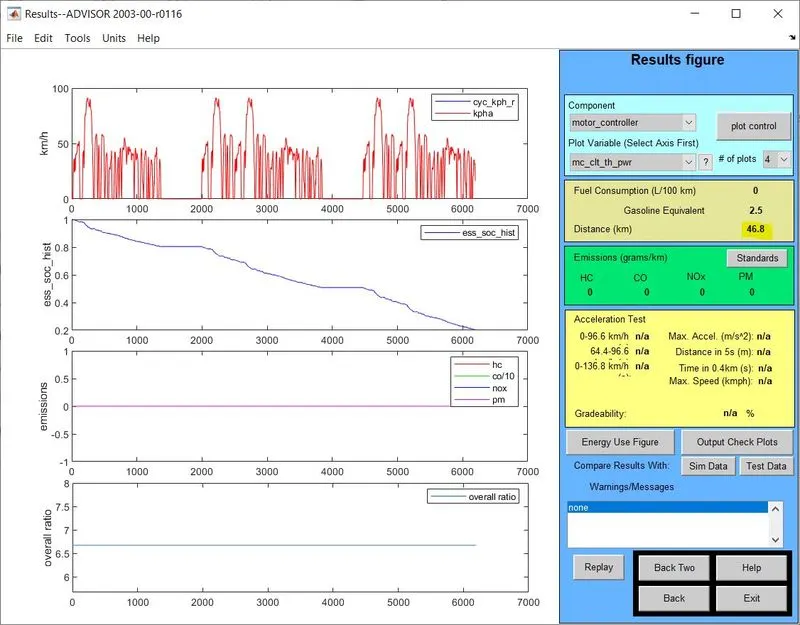
AS shown in the result above the required speed of 45 Km is achieved with this iteratio of battery module of 35 packs and with number of drive cycles as 2.5. Here the 'ess soc' range is in the range of 20%.
CONCLUSION:
- By increasing the battery pack values and the number of driving cycles contributes to the requires results. The soc is maintained in higher state when the drive cycle values are less. The further increase in the value of no. of drive cycles detoriates the battery performance as shown in the previous mode of 25 battery modules.
- To maintain the soc, drive cycles value should be within the typical range. By the comparison of case-i and case-ii, we can conclude that higher the battery pack present in the ev lower is the soc discharge time and it helps us achieve the required speed range.
3. Perform gradeability test with PRIUS_Jpn_defaults_in file. Compare your results in table and conclude.
Toyota Prius is a hybrid vehicle model consisting of IC engine and motor set.
The PRIUS_Jpn_defaults_in file is chosen from the drop down of the load file and the vehicle input is shown below. The values of the simulation is kept constant except for the gradeability since we are going the perform gradeability test.
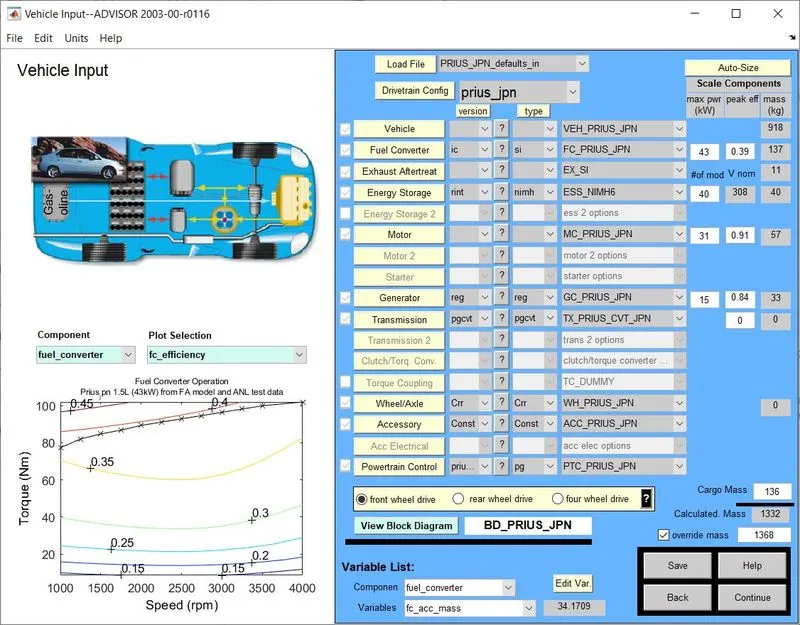
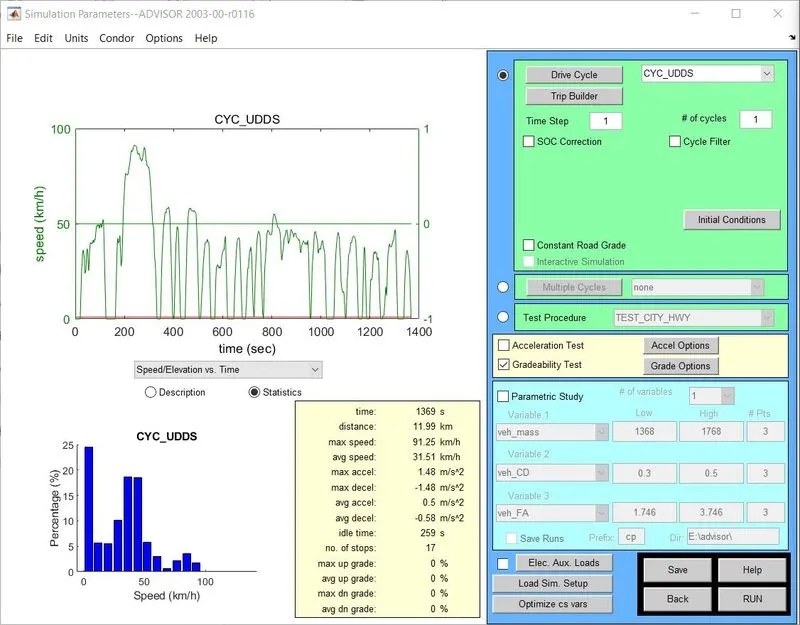
To test the gradeability the gradeability test is checked and parameters are changed using grade options.
case-i:
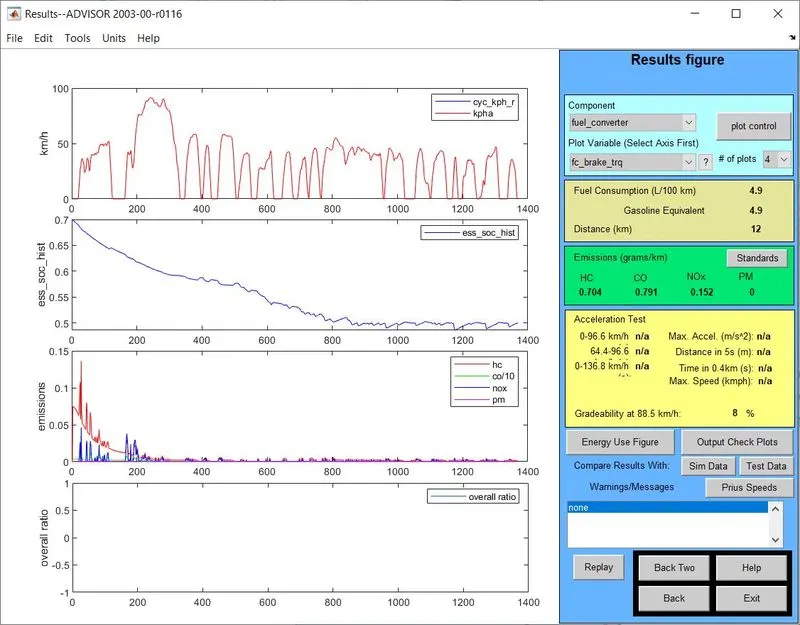
The grade is checked and the value of 8% is given as grade input with the speed of 55mph to be executed for a time period of 45 seconds.
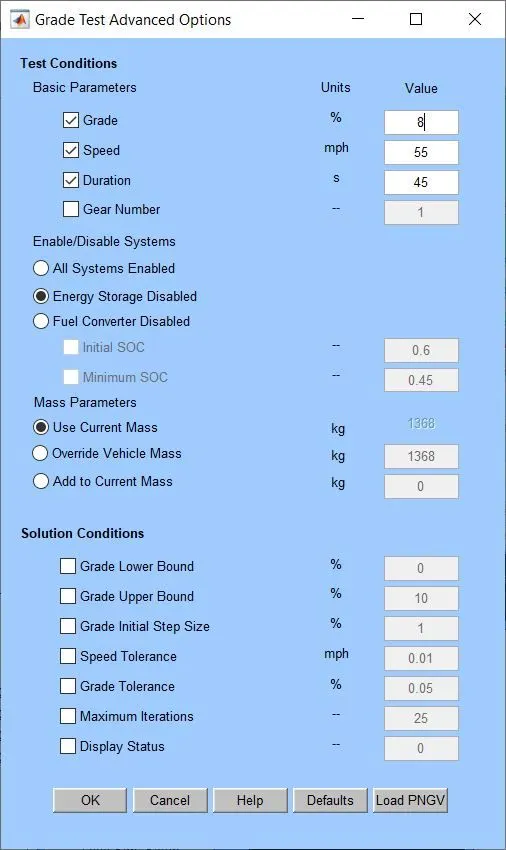
NOTE: The gradeability test is achieved only when the result window shows the percentage grade which we have inputted in the grade options window. If there is the same number of grade% in the result window the gradeability test is a pass for the typical vehicle speed else the test is concluded as a failed case.
The grade test is executed with 8% grade for the speed of 88.5km/h which is 55mph
case-ii
- The same vehicle model from the above is considered with the default values and proceeded with the continue button to the simulation parameters window.
- The gradeability test is checked and the grade options are adjusted as shown below.
- The grade is checked and the value of 8% is given as grade input with the speed of 50mph to be executed for a time period of 45 seconds.
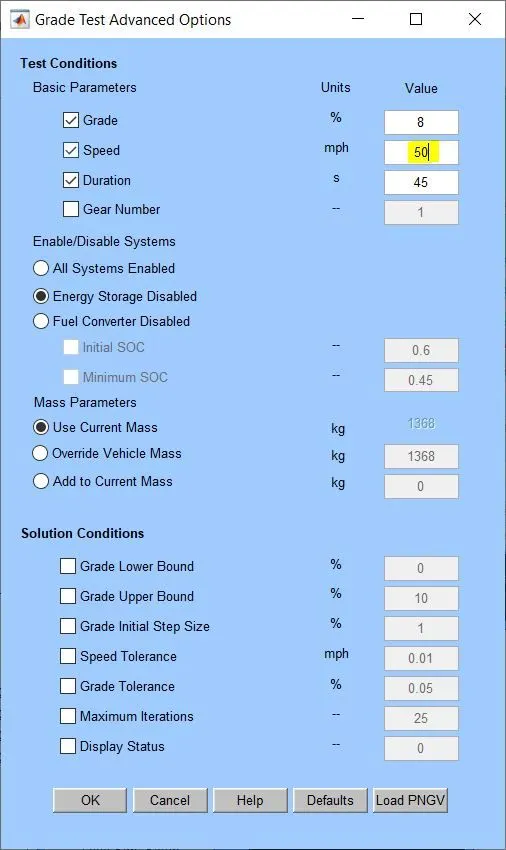
The grade test is executed with 8% grade for the speed of 80.5km/h which is 50mph
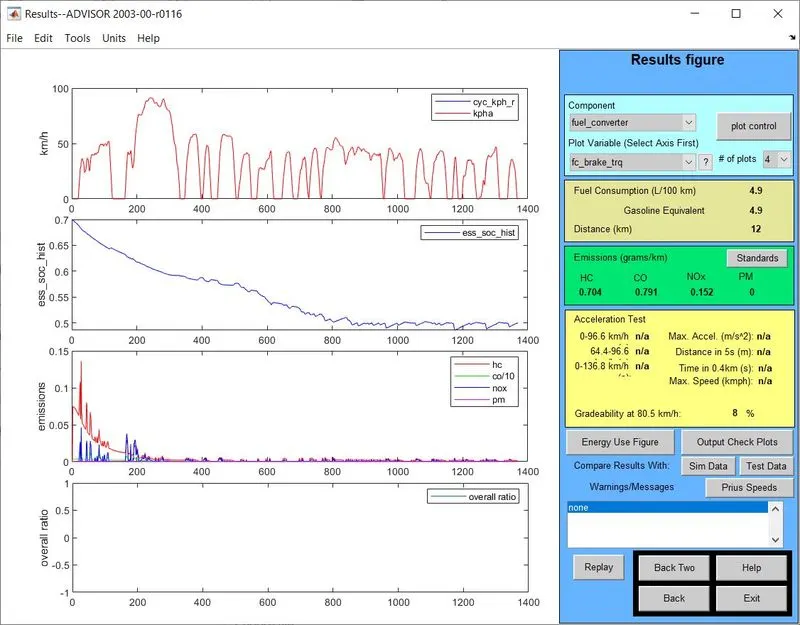
Result: grade test pass.
case-iii:
The grade is checked and the value of 8% is given as grade input with the speed of 45mph to be executed for a time period of 45 seconds. The procedure to come to this window is same as case-i and ii.
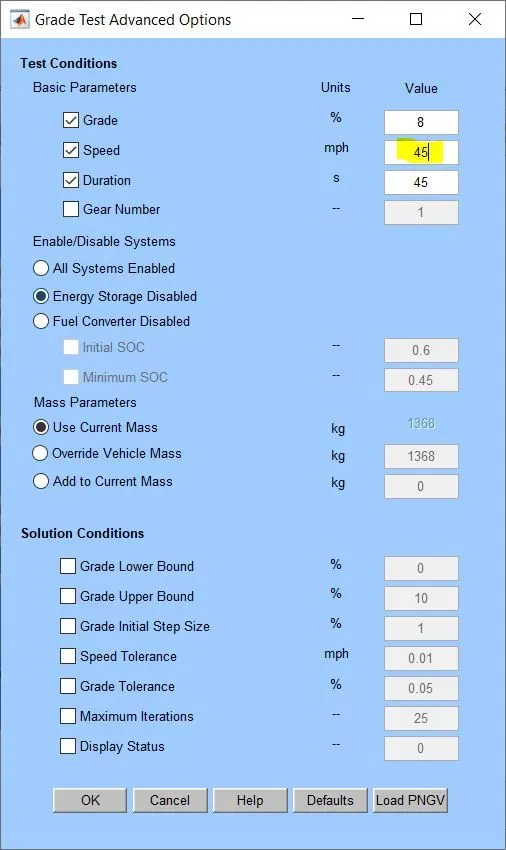
The grade test is executed with 8% grade for the speed of 72.4km/h which is 45mph
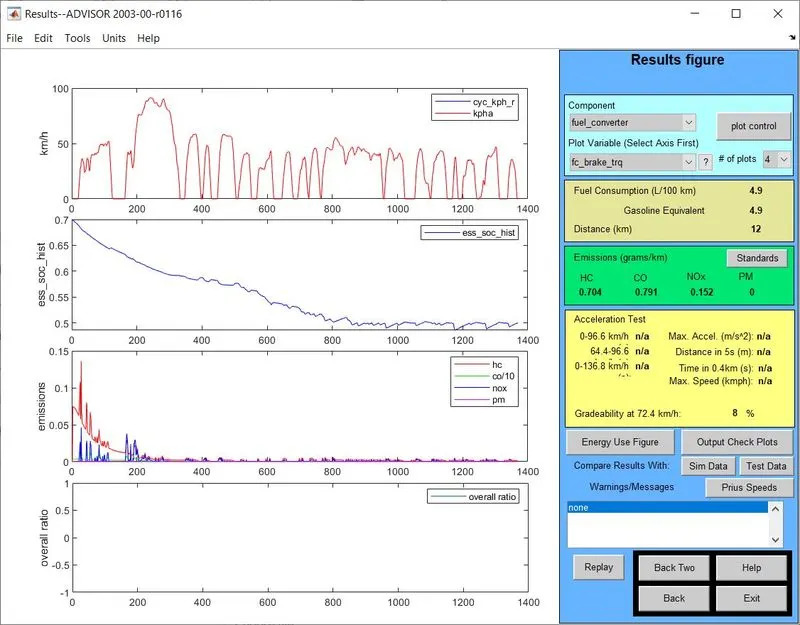
Result: grade test pass.
case-iv:
The grade is checked and the value of 8% is given as grade input with the speed of 45mph to be executed for a time period of 45 seconds. The procedure to come to this window is same as case-i and ii.
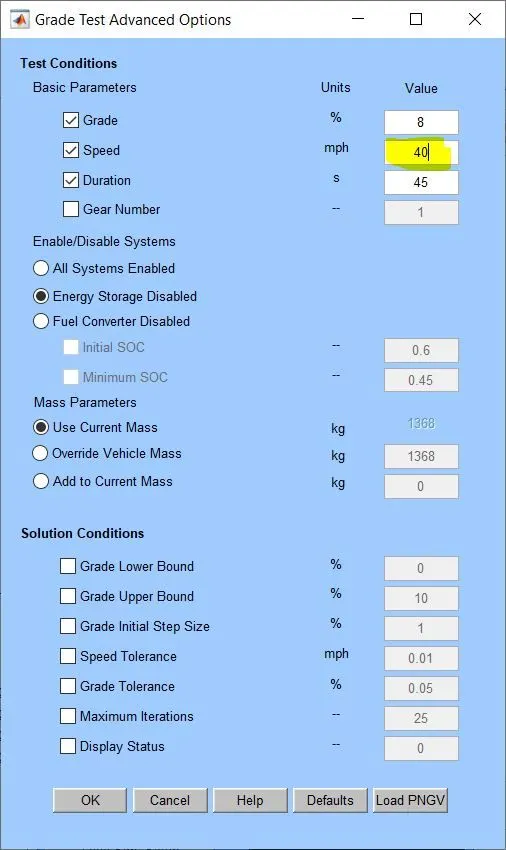
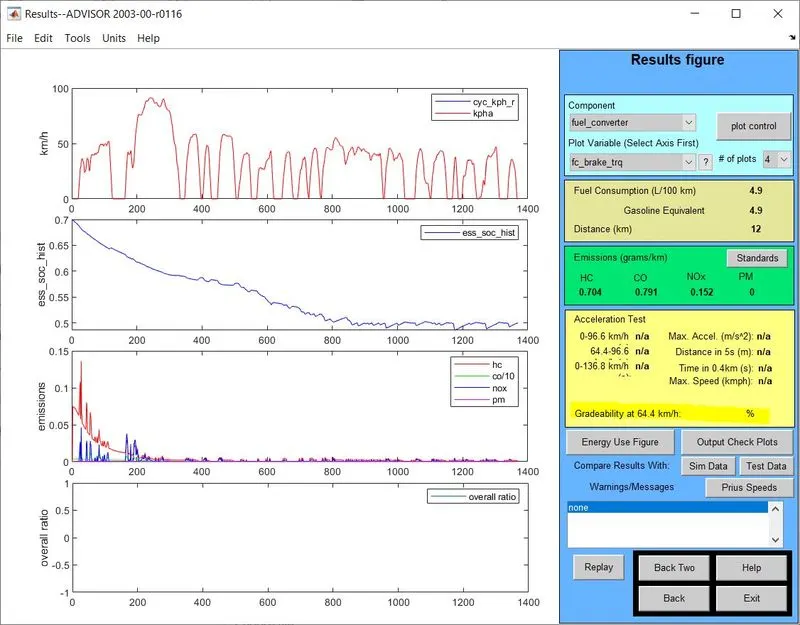
Result: The grade test is executed with 8% grade for the speed of 64.4km/h which is 40mph is a failed test as no grade percentage is shown.
CONCLUSION:
This concludes that the vehicle must require atleast 45mph (72.4km/h) speed to pass the gradeability test with 8% grade and the simulation time of 45seconds condition. This conclusion is based on the default values given to the vehicle model and the above stated condition.