Week-3 Challenge: ADVISOR Tool
AIM:
To simulate the following by using ADVISOR tool,
-
For EV_defaults_in file, if cargo mass is 500 kg with all other default conditions, can the vehicle travel for 45 km with FTP drive cycle? Conclude your observations
-
In the above case, try changing the battery capacity and repeat the simulation
-
Perform gradeability test with PRIUS_Jpn_defaults_in file then compare your results in table and conclude
OBJECTIVE:
- Simulate the models with the given inputs
- Follow the instructions of each questions
- Conclude with the neat explanation
ADVISOR TOOL:
- ADVISOR, NREL’s "Advanced Vehicle Simulator", is a set of model, data, and script text files for use with Matlab and Simulink. It is designed for rapid analysis of the performance and fuel economy of conventional, electric, and hybrid vehicles
- ADVISOR also provides a backbone for the detailed simulation and analysis of user defined drivetrain components, a starting point of verified vehicle data and algorithms from which to take full advantage of the modeling flexibility of Simulink and analytic power of MATLAB
Benefit from using ADVISOR,
- Estimate the fuel economy of vehicles that have not yet been built
- Learn about how conventional, hybrid, or electric vehicles use (and lose) energy throughout their drivetrains
- Compare relative tailpipe emissions produced on a number of cycles
- Evaluate an energy management strategy for your hybrid vehicle’s fuel converter
- Optimize the gear ratios in your transmission to minimize fuel use or maximize performance, etc
1. FOR EV_DEFAULTS_IN FILE, IF CARGO MASS IS 500 KG WITH ALL OTHER DEFAULT CONDITIONS, CAN THE VEHICLE TRAVEL FOR 45 KM WITH FTP DRIVE CYCLE? CONCLUDE YOUR OBSERVATIONS
Given Data
Vehicle model: EV default [Pure EV]
Cargo mass: 500 Kg
Drive cycle type: FTP cycle
Total Distance travelled: 45 Km
OBSERVATION
- Let's go with the initial given data,
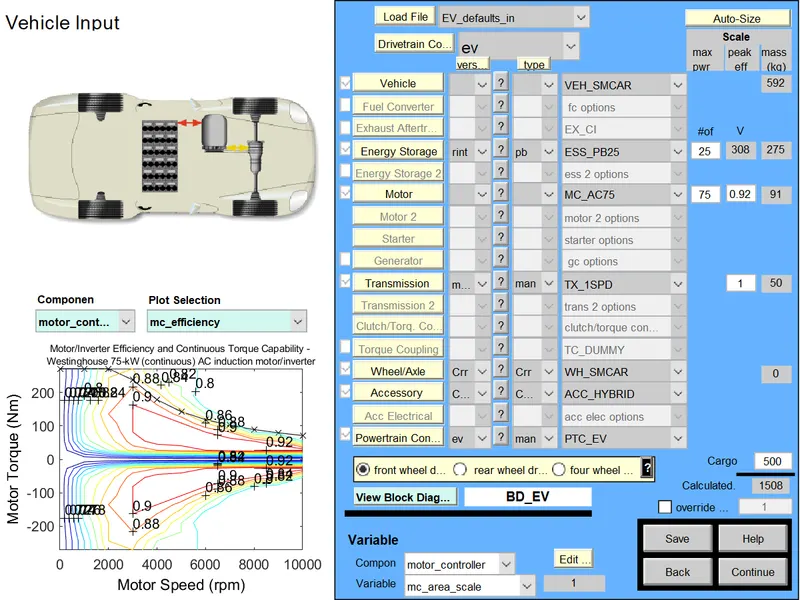
- EV default file has loaded and cargo mass changed to 500Kg. Now move to the next process of drive cycle selection
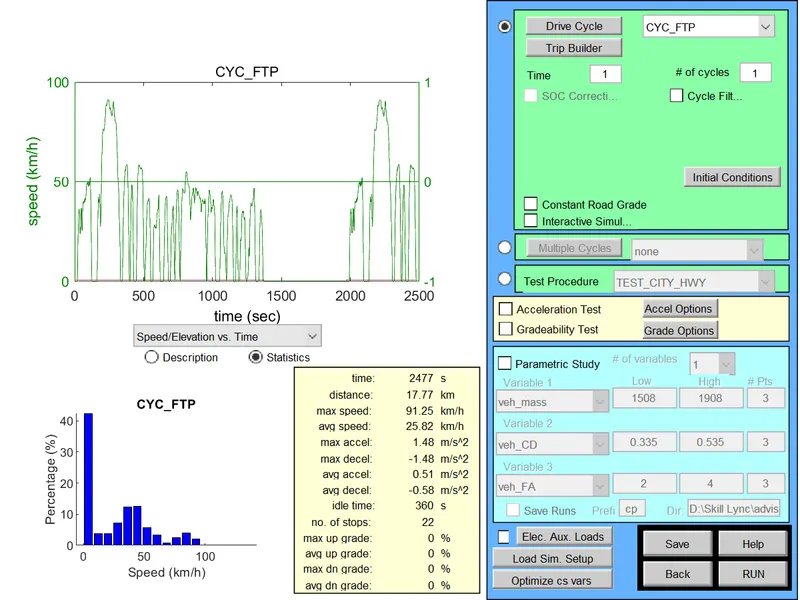
- Here the drive cycle has choosed as per the given data, now take the program run as each cycle case wise
CASE 1 - Run the model at 1 drive cycle
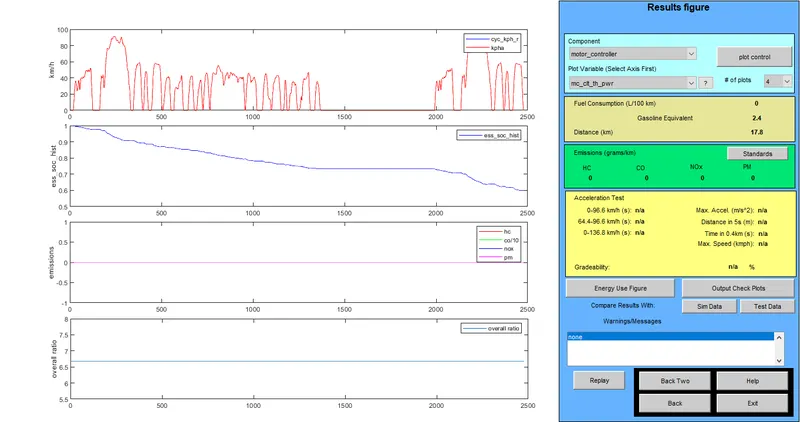
- From the case 1, There is only 17.8 kms has this vehicle travelled at one drive cycle and the battery has used upto 40%. So we have to try again by increasing drive cycle
CASE 2 - Run the model with 2 drive cycles
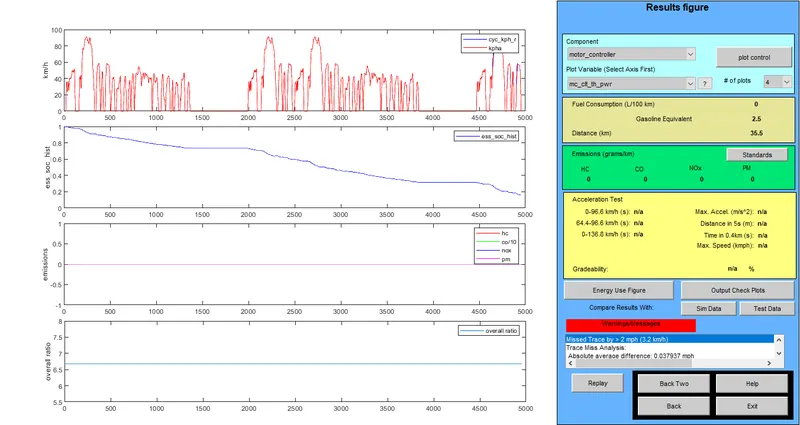
- In case 2, The vehicle travelled 35.5 kms at two drive cycle. Now the battery has used upto 80%. So we have to try with adding one more drive cycle
Case 3 - Run the model at 3 drive cycles
| DRIVE CYCLE | MASS (KG) | REMAINING BATTERY LEVEL(%) | DISTANCE TRAVELLED (KMS) |
| 1 | 1508 | 60 | 17.8 |
| 2 | 1508 | 20 | 35.5 |
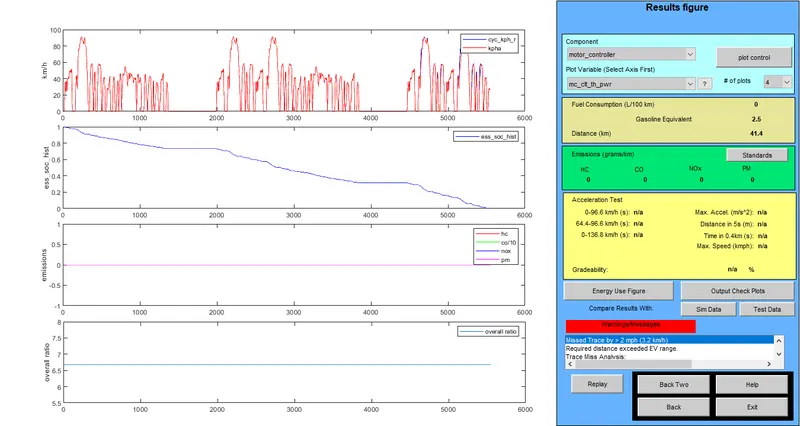
| 3 | 1508 | 0 | 41.4 |
- In case 3, Full storage of battery has used, but still the vehicle has reached only 41.4 kms and 3rd cycle aslo has stopped before it ends due to the battery got dried
- The conclusion from above analysis of 'Default_EV' model under 'FTP' cycle, the total battery capacity of this model is only run the vehicle upto 41.4 kms approx on the average speed of 25.82kmph
- So there is no possible way to travel for 45 km with FTP drive cycle in this model
2. IN THE ABOVE CASE, TRY CHANGING THE BATTERY CAPACITY AND REPEAT THE SIMULATION
- By repeating the same condition of simulation with battery capacity changes,
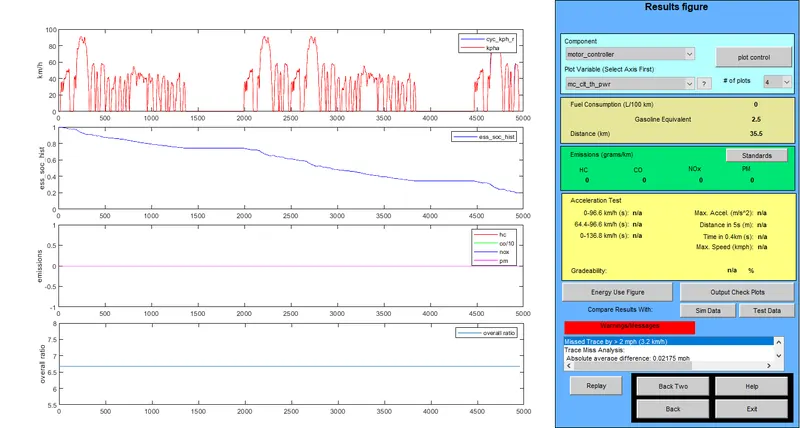
CASE 1 - Increasing battery capacity module to 26,

i) Run the Model with 2 drive cycle
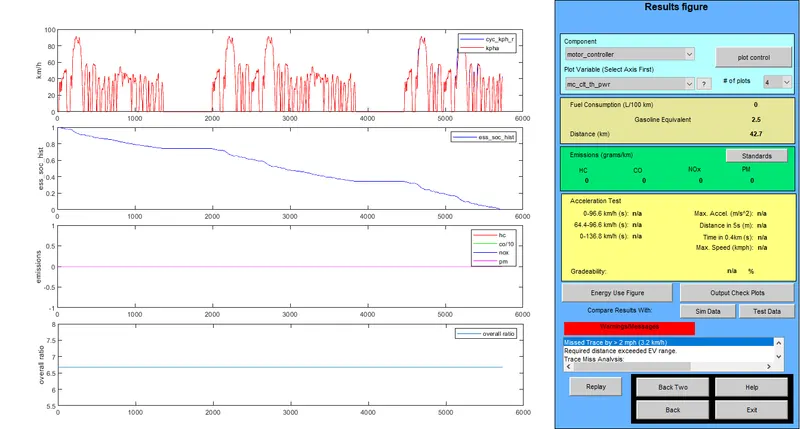
ii) Run the Model with 3 drive cycle
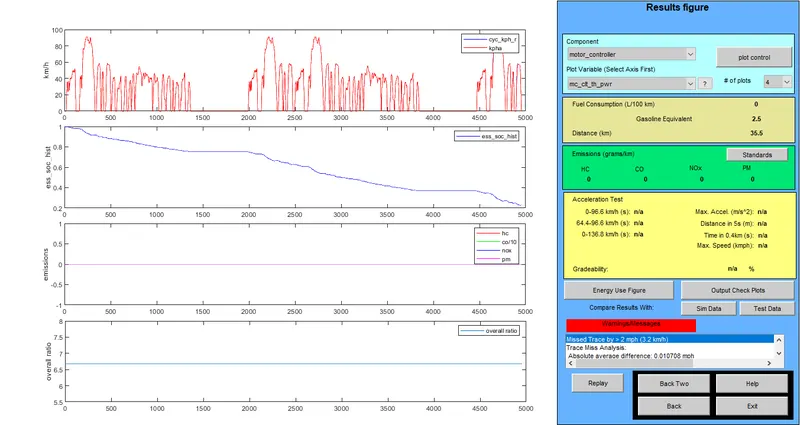
CASE 2 - Increasing battery capacity module to 27,

i) Run the Model with 2 drive cycle
ii) Run the Model with 3 drive cycle
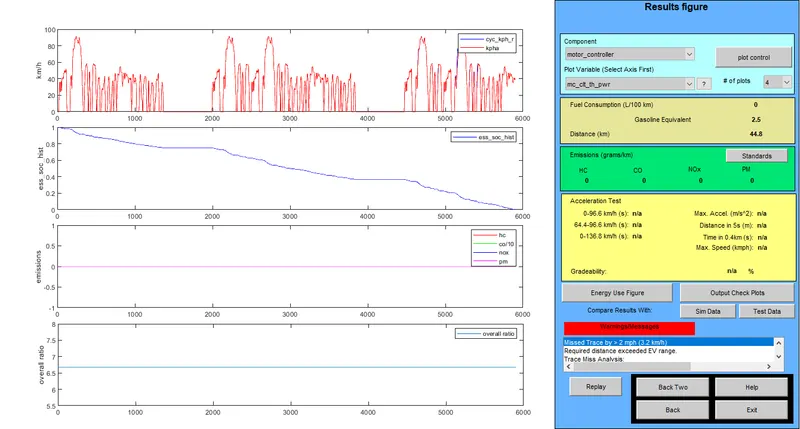
CASE 3 - Increasing battery capacity module to 28,

i) Run the Model with 2 drive cycle
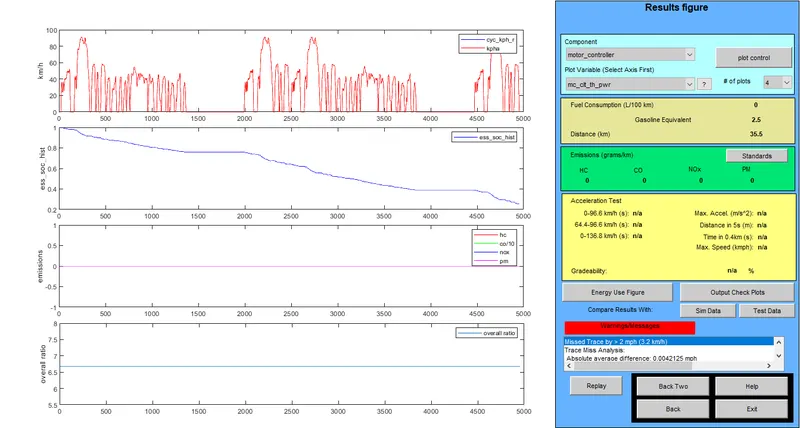
ii) Run the Model with 3 drive cycle
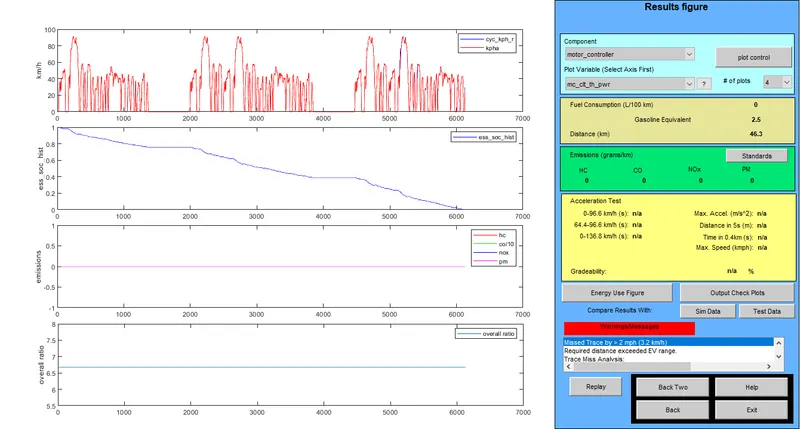
Therefore,
- From 2 drive cycle
| ENERGY STORAGE MODULE | VOLTAGE (V) | BATTERY MASS (KG) | DISTANCE TRAVELLED (KMS) |
| 26 | 321 | 286 | 35.5 |
| 27 | 333 | 297 | 35.5 |
| 28 | 345 | 308 | 35.5 |
- From 3 drive cycle
| ENERGY STORAGE MODULE | VOLTAGE (V) | BATTERY MASS (KG) | DISTANCE TRAVELLED (KMS) |
| 26 | 321 | 286 | 42.7 |
| 27 | 333 | 297 | 44.8 |
| 28 | 345 | 308 | 46.3 |
- By the above analysis of pure electric vehicle, the 3 drive cycle has achieved the required distance (46.3 kms) by using the 28 module energy storage battery
3. PERFORM GRADEABILITY TEST WITH PRIUS_JPN_DEFAULTS_IN FILE THEN COMPARE YOUR RESULTS IN TABLE AND CONCLUDE
Gradeability:
Gradeability is the steepest gradient a machine can climb, compared to the Operating Angle which is the steepest gradient a machine will operate on. In the world of access, gradeability specifically refers to the size of the incline that a machine has the capacity to climb up or down
Toyota Prius Model:
The Toyota Prius is a full hybrid electric automobile developed and manufactured by Toyota since 1997. Initially offered as a 4-door sedan, it has been produced only as a 5-door fastback hatchback since 2003
- Following are the steps to perform the gradeability of Prius HEV,
Step 1 - Open the 'ADVISOR' tool in the matlab and load the 'PRIUS_Jpn_defaults_' file
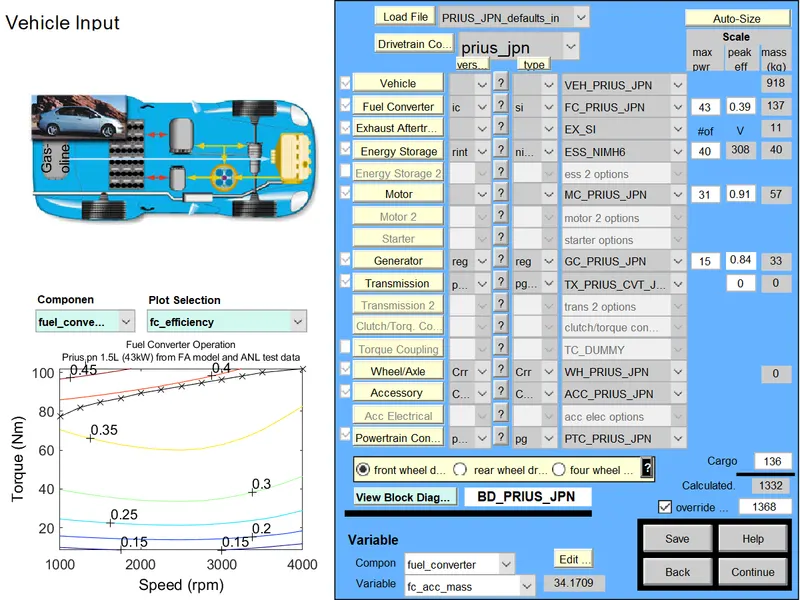
Step 2 - Without any changes, continue to the simulation parameters procedure by click the continue button, then use the default drive cycle (CYC_UDDS) and enter no.of cycles as 3. Now select the 'Gradeability Test' and choose the 'gradeability options'
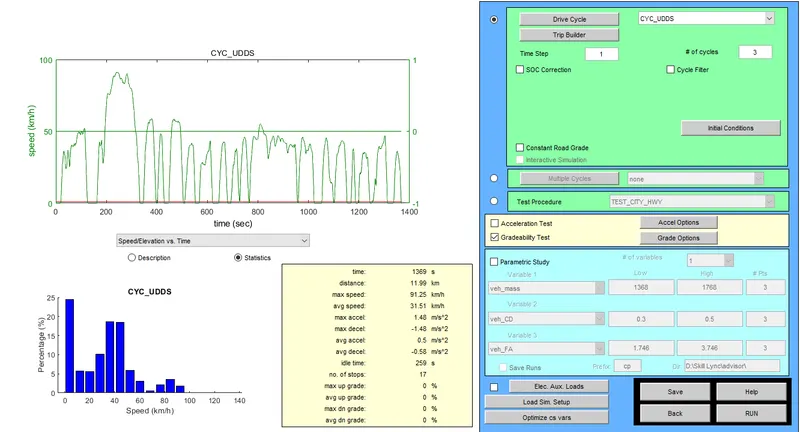
Compare the result of Gradeability by changing the Speed w.r.t Time:
- Enable All systems in the Grade test options
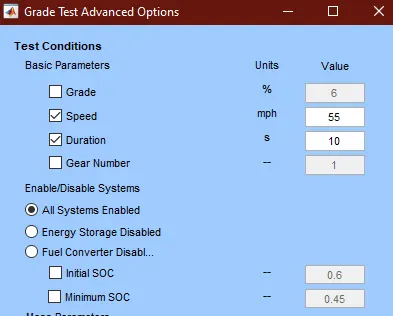
- Now compare this model by changing the speed from 25 - 55 mph with the duration of 10 seconds
Run the model for 10 seconds duration at different speeds
- For 25 mph / 40.2 kmph
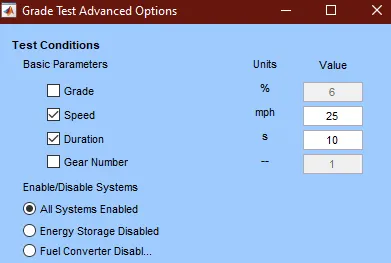
Gradeability: 16.5%
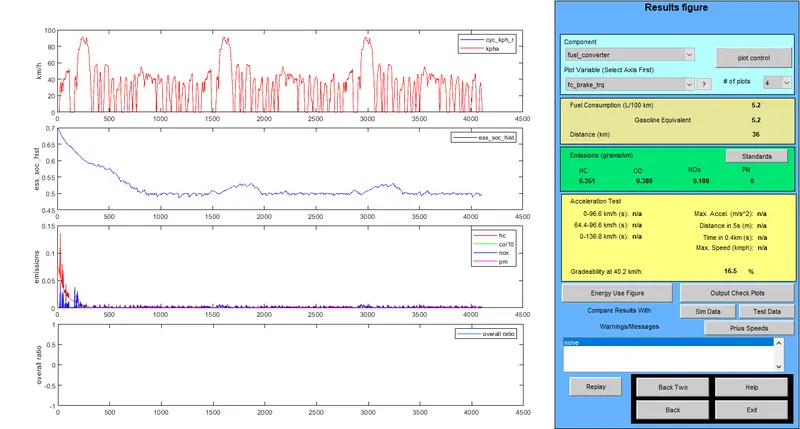
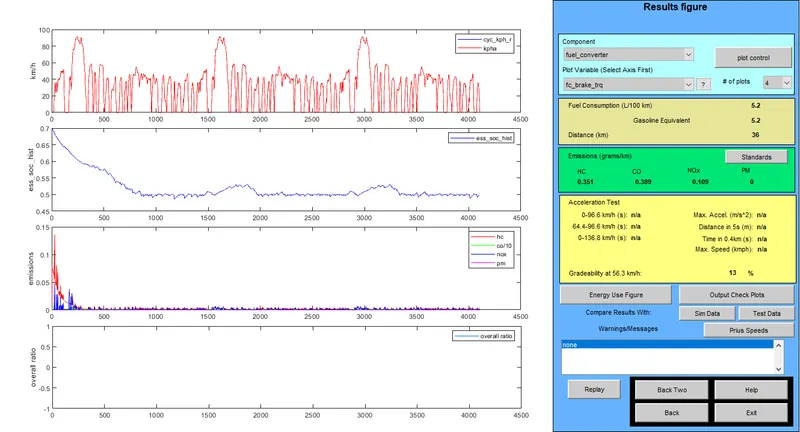
- For 35 mph / 56.3 kmph
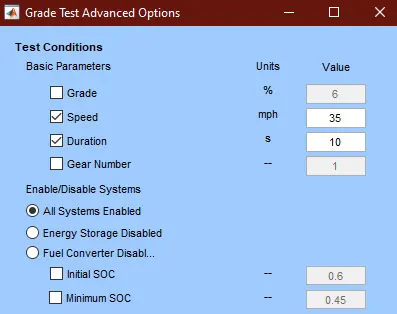
Gradeability: 13%
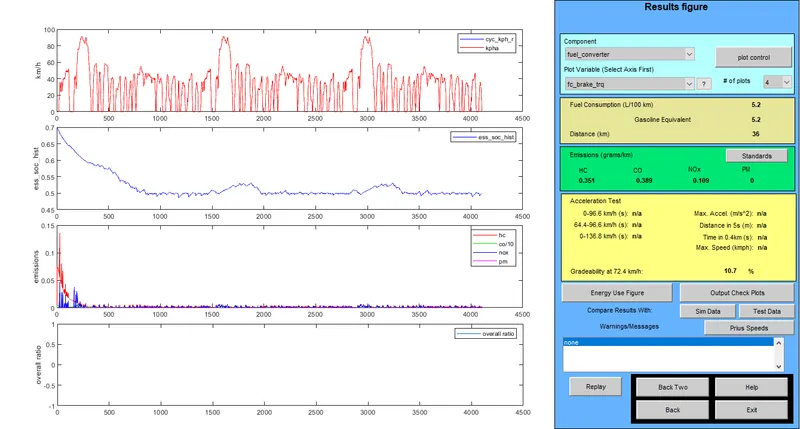
- For 45 mph / 72.4 kmph
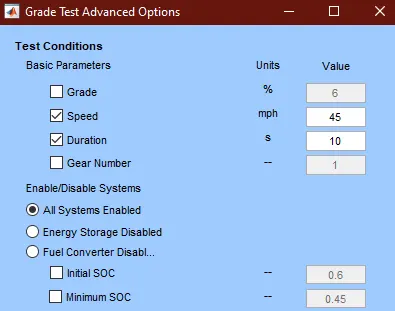
Gradeability: 10.7%
- For 55 mph / 88.5 kmph
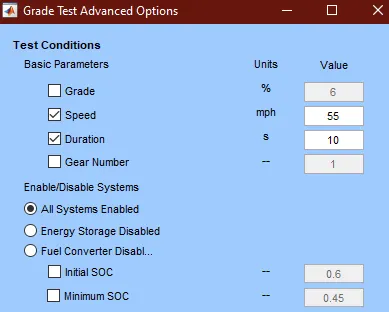
Gradeability: 8.9%
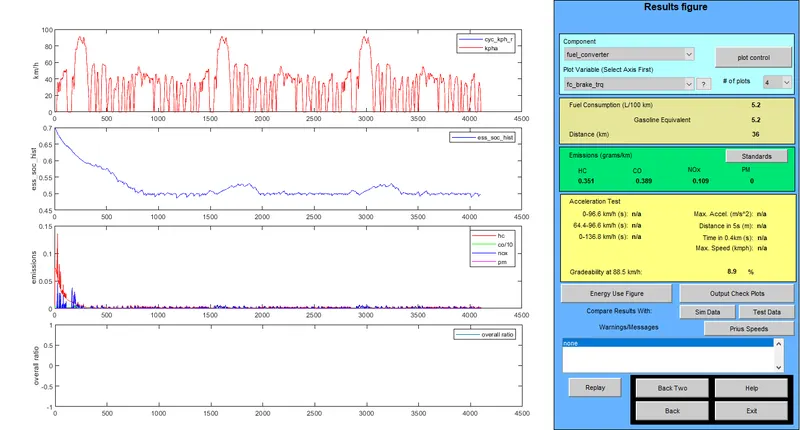
- From the above analysis of the test results on different speeds at 10 seconds, the gradeability for each has shown below,
| Speed (mph) | Speed (kmph) | Gradeability (%) |
| 25 | 40.2 | 16.5 |
| 35 | 56.3 | 13 |
| 45 | 72.4 | 10.7 |
| 55 | 88.5 | 8.9 |
- From the table, when the vehicle speed has increase, at the time percentage of gradeability has decreased under the UDDS drive cycle
CONCLUSION:
- Storage of energy and vehicle travelled distances has achieved and understood as well
- The gradeability performance has compared and resulted
- The usage of ADVISOR tool has learned successfully by testing different models