Week-3 Challenge: ADVISOR Tool
1. For EV_defaults_in file, if cargo mass is 500 kg with all other default conditions, can the vehicle travel for 45 km with FTP drive cycle? Conclude your observations.
Ans:
Advisor:
This project holds the latest releases for canonical versions of the ADVISOR® Software and "Advanced Vehicle Simulator". ADVISOR is a MATLAB/Simulink based simulation program for rapid analysis of the performance and fuel economy of light and heavy-duty vehicles with conventional (gasoline/diesel), hybrid-electric, full-electric, and fuel cell powertrains. New features are developed under the title "Advanced Vehicle Simulator". Periodically, stable versions of Advanced Vehicle Simulator will be submitted for consideration as the next canonical version of the ADVISOR software.
ADVISOR is a registered trademark of the Alliance for Sustainable Energy, LLC, the manager and operator of the National Renewable Energy Laboratory for the United States Department of Energy. Trademark used under license.
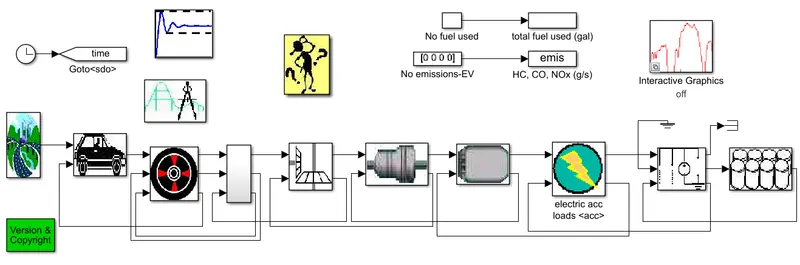
Block Diagram of the EV_default_in:
Procedure:
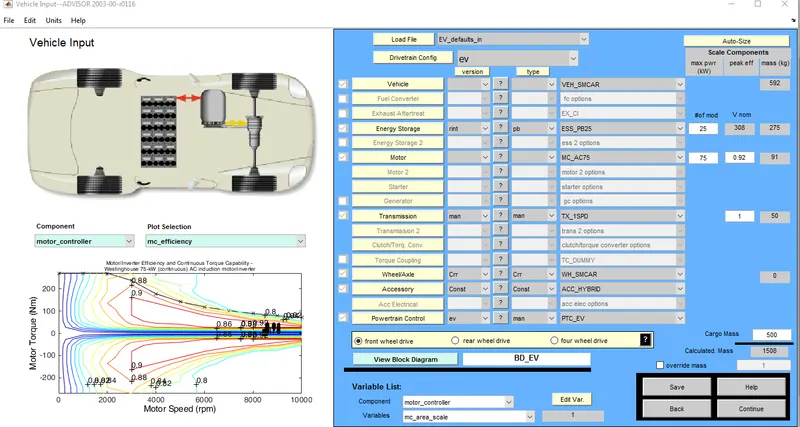
- First we need to change the load file from Parallel_default_in to EV_default_in from vehicle input window.
- After we changed the cargo mass as 500kg and we obserbed how the calculated mass has been changed.
- By clicking on the continue button will get new window as shown in below:
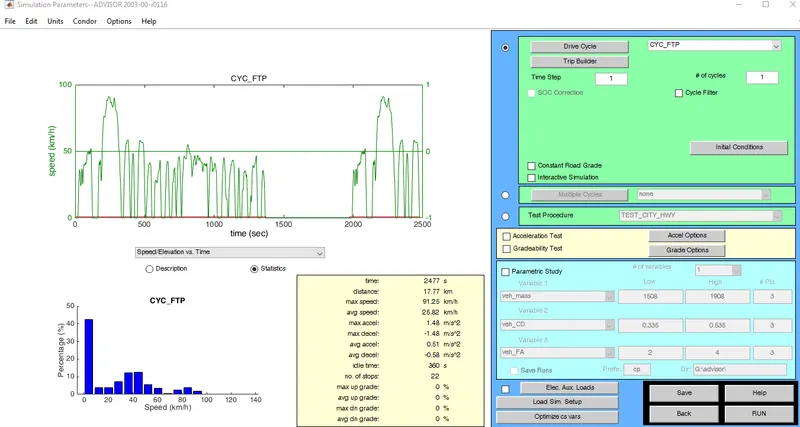
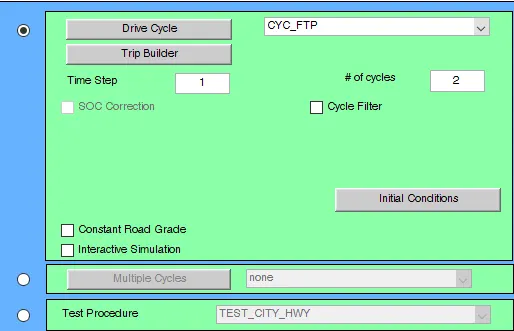
- From the above window we changed the drive cycle to CYC_FTP by selecting the menu of drive cycle.
- Below that we will see #of cycles in which we gave only one drive cycle.
- After that by clicking the RUN button the simulation will starts and we getting output as shown in below:
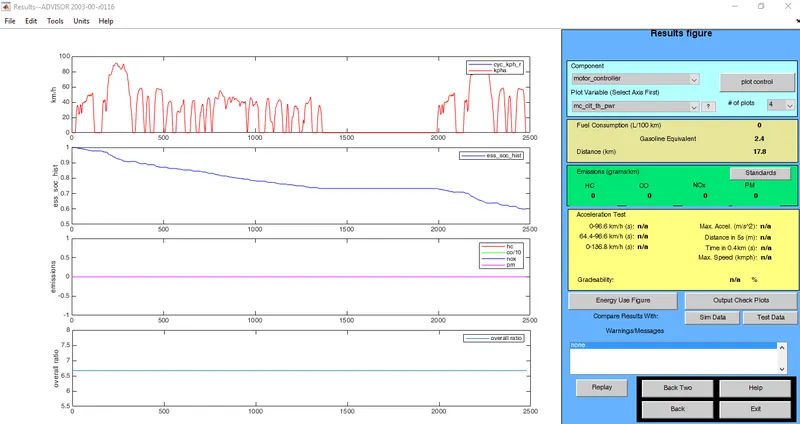
The distance travelled by the vehicle in one drive cycle is 17.8km.
Increasing the number of driving cycle as two:
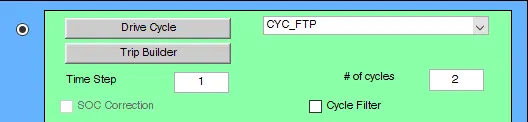
Output of drive cycle two:
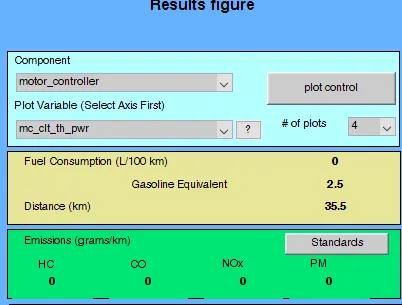
The distance travelled by the vehicle in two drive cycle is 35.5km.
Increasing number of drive cycle to 3:
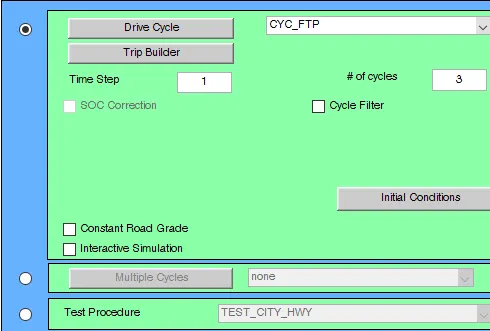
Output:
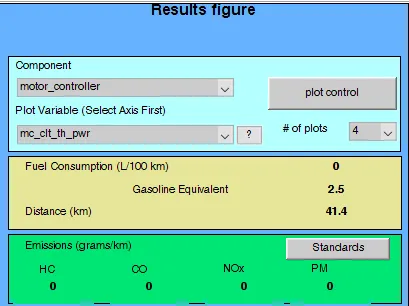
The distance travelled by the vehicle in three drive cycle is 41.4km.
| Number of Drive Cycles | Distance travelled in km |
| 1 | 17.8 |
| 2 | 35.5 |
| 3 | 41.1 |
Conclusion:
The above results shows that the vehicle cannot travel 45km to any drive cycles. As we seen in the three drive cycle it travels upto 41.4 km only. From the one drive cycle it travels 17.8km and for two number of drive cycles it travels 35.5km and for next drive cycle was 41.1km, and if we still increses the number of driving cycles the distance will be constant as 41.4km.
--------------------------x--------------------------------------------x----------------------------------------
2. In the above case, try changing the battery capacity and repeat the simulation.
Ans:
Procedure:
- As we knoe that first we need to change the load file as EV_default_in from the Parallel_default_in.
- Then we changed the cargo mass as 500 kg and obserbed how the calculated mass was changed.
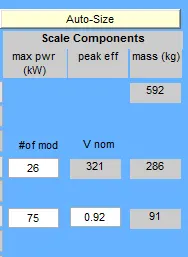
- To change the capacity of battery we need to edit the #of mod it means number of modules of battery.
- Along with we also need to change the number of driving cycles as 2 or 3.
26 modules with 2 driving cycles:
Output:
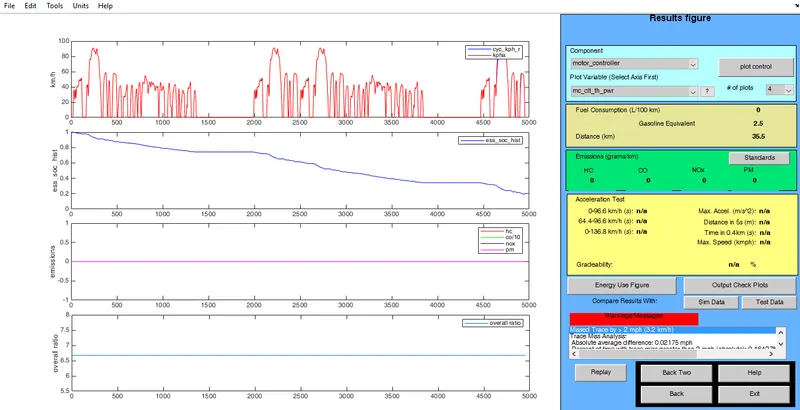
From this modules and cycles we got the distance of 35.5 km. hence we increasing the battery capacity to the next module.
27 modules with 2 drive cycles:
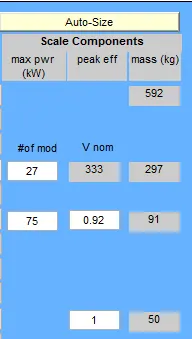
Output:
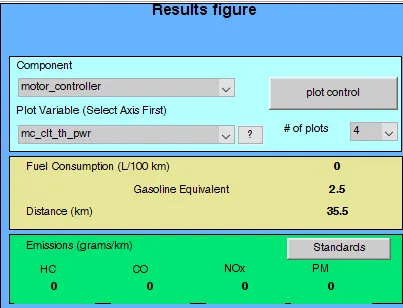
From this modules and cycles we got the distance of 35.5 km. hence we increasing the battery capacity to the next module.
28 modules with 2 driving cycles:
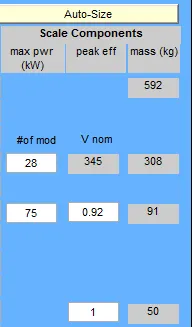
Output:
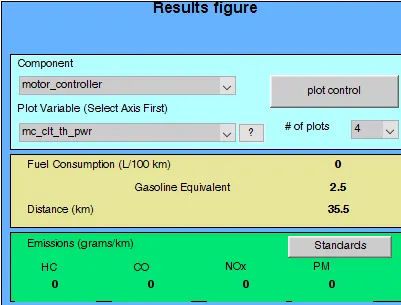
From this modules and cycles we got the distance of 35.5 km. hence we increasing the battery capacity and number of driving cycles to next level.
26 modules with 3 driving cycles:
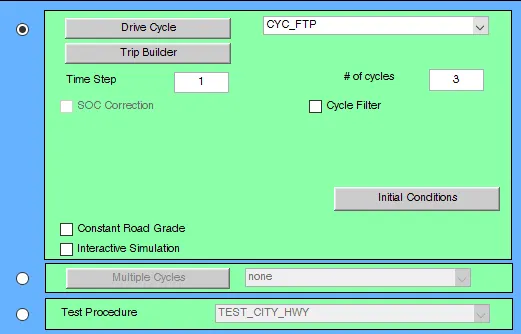
Output:
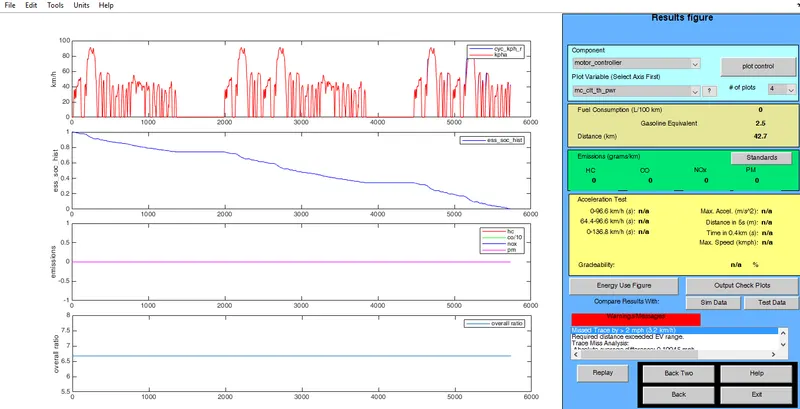
From this modules and cycles we got the distance of 42.7 km. hence we increasing the battery capacity to the next module.
27 modules with 3 driving cycles:
Output:
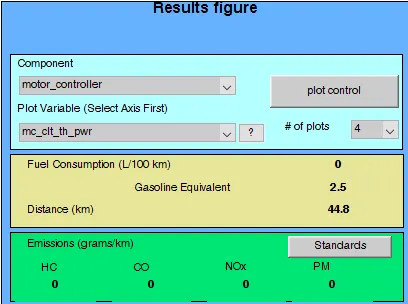
From this modules and cycles we got the distance of 44.8 km. hence we increasing the battery capacity to the next module.
28 modules with 3 driving cycles:
Output:
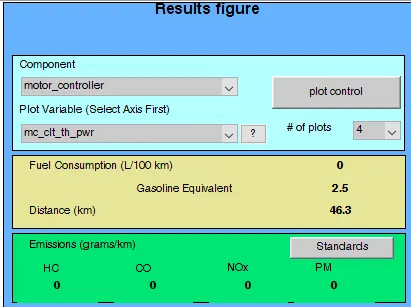
From this modules and cycles we got the distance of 46.3 km.
| Number of modules for 2 drive cycles | Distance travel in km |
| 26 | 35.5 |
| 27 | 35.5 |
| 28 | 35.5 |
| Number of modules for 3 drive cycles | Distance travel in km |
| 26 | 42.7 |
| 27 | 44.8 |
| 28 | 46.3 |
Conclusion:
From this we conclude that by increasing the number of modules for two drive cycles it will not reached the distance of 45km. Hence we incresed number of drive cycle as three for the same modules we reached the distance of 45km for module number 28. Hence to achieve the 45km distance we need 28 module and 345 volts as battery capacity.
----------------------------x-----------------------------------------------x------------------------------------
3. Perform gradeability test with PRIUS_Jpn_defaults_in file
Compare your results in table and conclude.
Ans:
Procedure:
- Open the advisor tool and in vehicle input window select the load file as PRIUS_Jpn_defaults_in.
- Next by clicking the continuw button a new window will open which is shown in below.
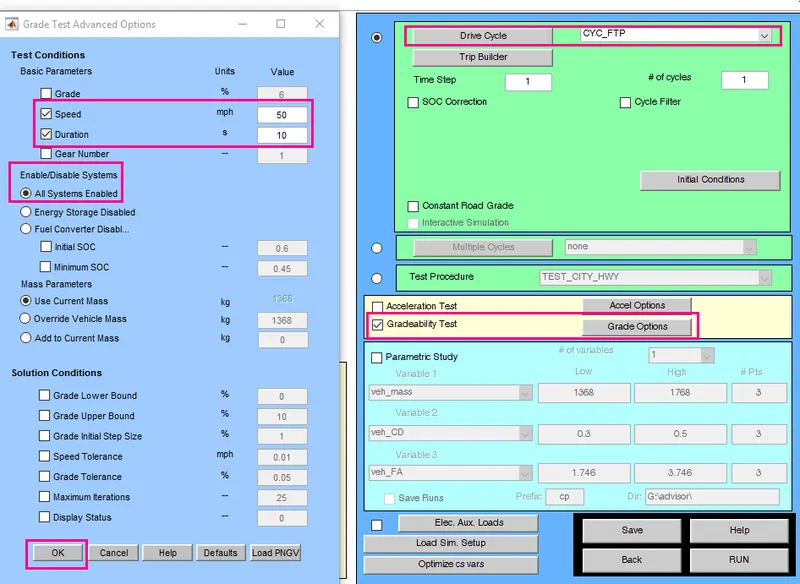
- In that we need to test gredeability hence by clicking the grade option will get another window.
- Then we have to change the speed and time respectively.
- After clicking the Ok button we need to RUN the simulation and observe the results.
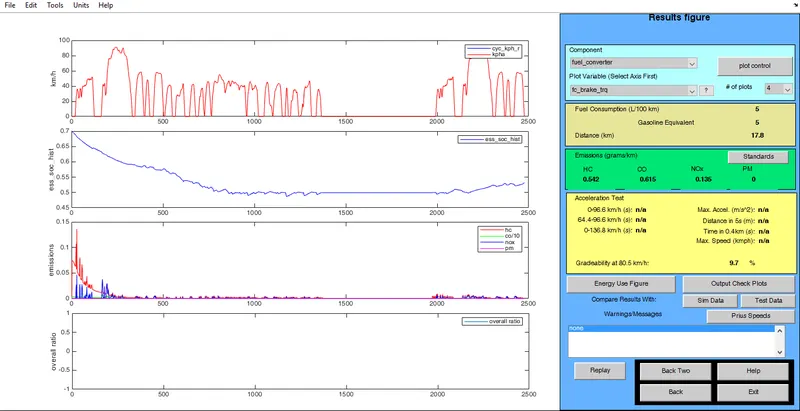
Output for the duration of 10 sec:
(i) Speed = 50 mph or 80.5 kmph
Gredeability = 9.7 %
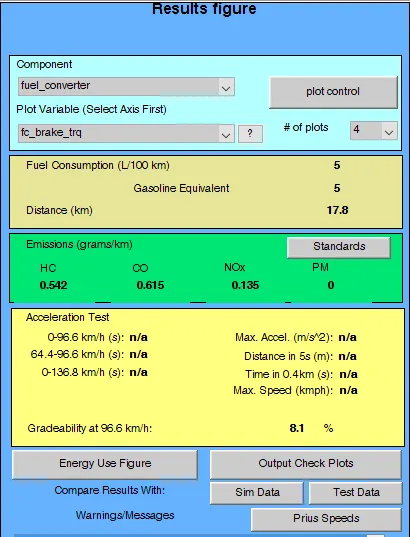
(ii) Speed = 60 mph or 96.6 kmph
Gredeability = 8.1 %
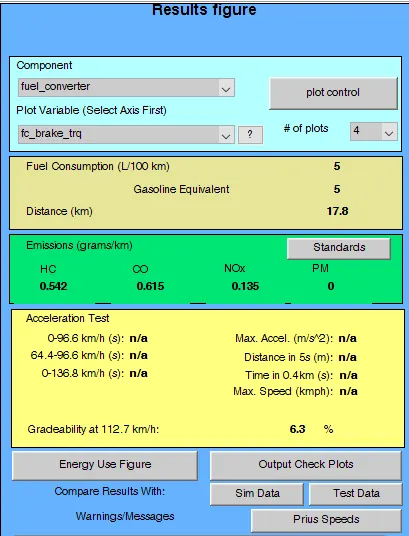
(iii) Speed = 70 mph or 112.7 kmph
Gredeability = 6.3 %
(iv) Speed = 80 mph or 128.7 kmph
Gredeability = 4.5 %
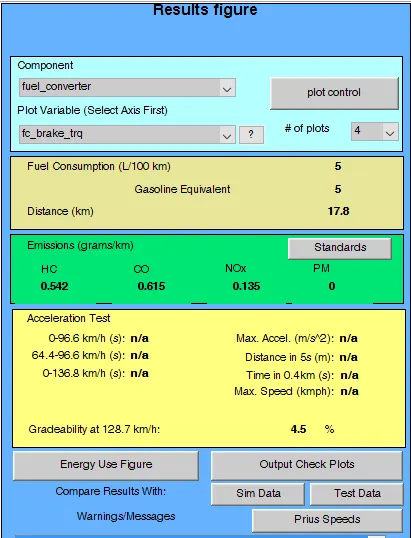
Comparision table for duration of 10 sec
| Speed in mph | Speed in kmph | Gredeability in % |
| 50 | 80.5 | 9.7 |
| 60 | 96.6 | 8.1 |
| 70 | 112.7 | 6.3 |
| 80 | 128.7 | 4.5 |
Output for the duration of 30 sec:
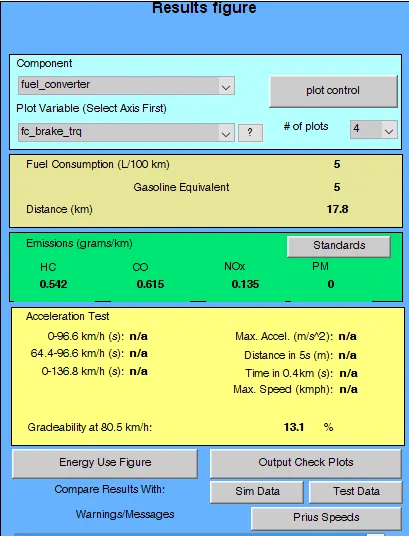
(i) Speed = 50 mph or 80.5 kmph
Gredeability = 13.1 %
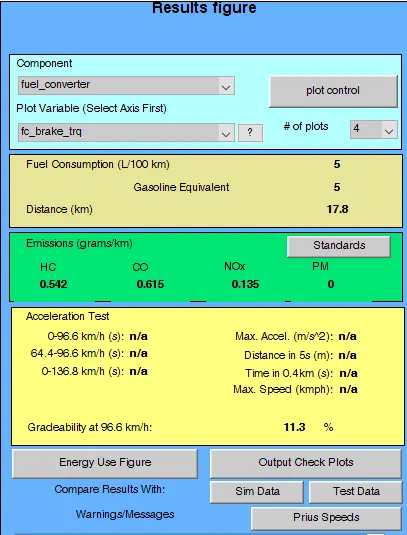
(ii) Speed = 60 mph or 96.6 kmph
Gredeability = 11.3 %
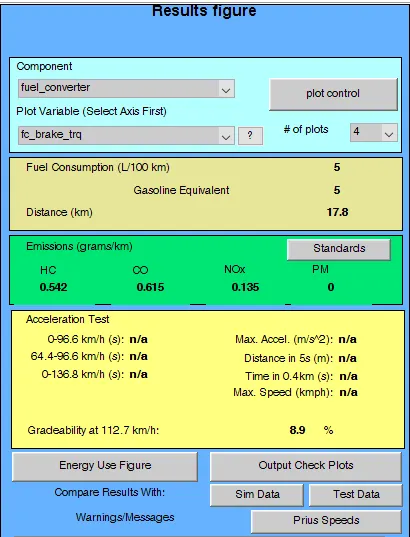
(iii) Speed = 70 mph or 112.7 kmph
Gredeability = 8.9 %
(iv) Speed = 80 mph or 128.7 kmph
Gredeability = 6.7 %
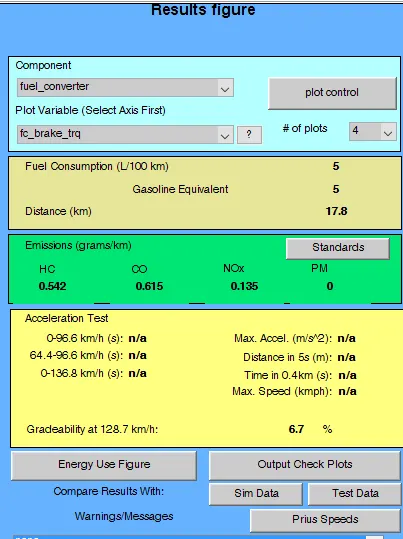
Comparision table for duration of 30 sec
| Speed in mph | Speed in kmph | Gredeability in % |
| 50 | 80.5 | 13.1 |
| 60 | 96.6 | 11.3 |
| 70 | 112.7 | 8.9 |
| 80 | 128.7 | 6.7 |
Conclusion:
From this we conclude that the Gredeabilty was decreases as increase in the speed. And also conclude that by increasing the time for the same speed we got more gredeability.Hence when vehicle speed increases there is a decrease in Gredeability.
---------------------------x-------------------------------------------x----------------------------------------