Week-3 Challenge: ADVISOR Tool
Aim: To use the ADVISOR tool for solving the Question and simulate the vehicles.
OBJECTIVES:
- For EV_defaults_in file, if cargo mass is 500 kg with all other default conditions, can the vehicle travel for 45 km with FTP drive cycle? Conclude your observations.
- In the above case, try changing the battery capacity and repeat the simulation.
- Perform gradeability test with PRIUS_Jpn_defaults_in file Compare your results in a table and conclude.
INTRODUCTION:
ADVISOR, (NREL’s ADvanced VehIcle SimulatOR), is a set of model, data, and script text files for use with Matlab and Simulink. It is designed for rapid analysis of the performance and fuel economy of conventional, electric, and hybrid vehicles. ADVISOR also provides a backbone for the detailed simulation and analysis of user-defined drivetrain components, a starting point of verified vehicle data and algorithms from which to take full advantage of the modeling flexibility of Simulink and analytic power of MATLAB. ADVISOR was preliminarily written and used in November 1994. Since then, it has been modified as necessary to help manage the US DOE Hybrid Vehicle Propulsion System subcontracts. Only in January 1998 was a concerted development effort was undertaken to clean up and document ADVISOR.
ADVANTAGES of ADVISOR
- Estimate the fuel economy of vehicles that have not yet been built
- Learn about how conventional, hybrid or electric vehicles use (and lose) energy throughout their drivetrains
- Compare relative tailpipe emissions produced on a number of cycles
- Evaluate an energy management strategy for your hybrid vehicle’s fuel converter
- Optimize the gear ratios in your transmission to minimize fuel use or maximize performance, etc.
Objective 1 - For EV_defaults_in file, if cargo mass is 500 kg with all other default conditions, can the vehicle travel for 45 km with FTP drive cycle?
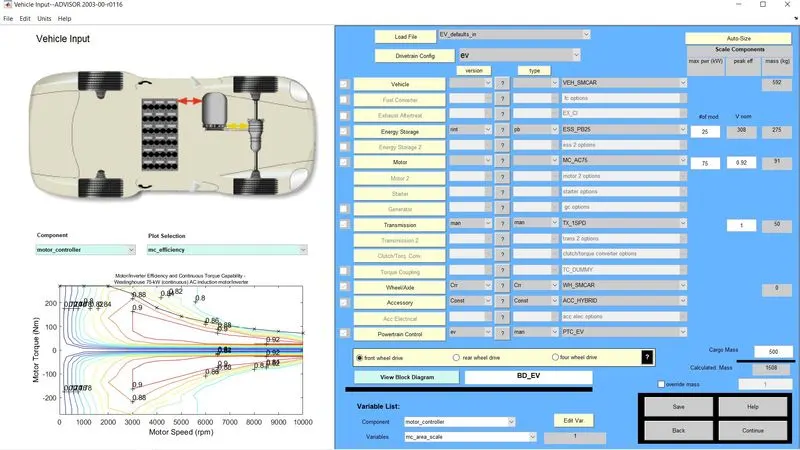
- We have changed our model from the load files to EV_defaults_in, and we have changed the cargo mass to 500kg as given in the condition keeping all other parameters same we have to clock continue so that we will go to next window.
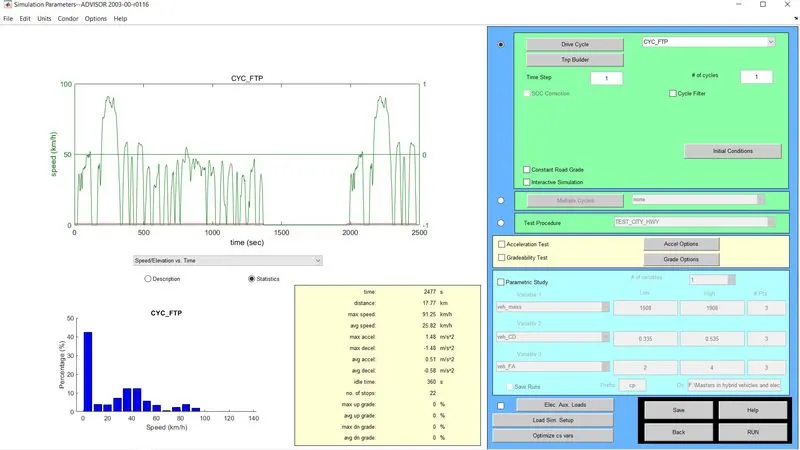
- In the next window, we have to change the Drive cycle to CYC_FTP and the number of driving cycles as per requirement.
FOR DRIVING CYCLE 1
- As we selected the number of driving cycles as 1 and hit the run button we got the following results.
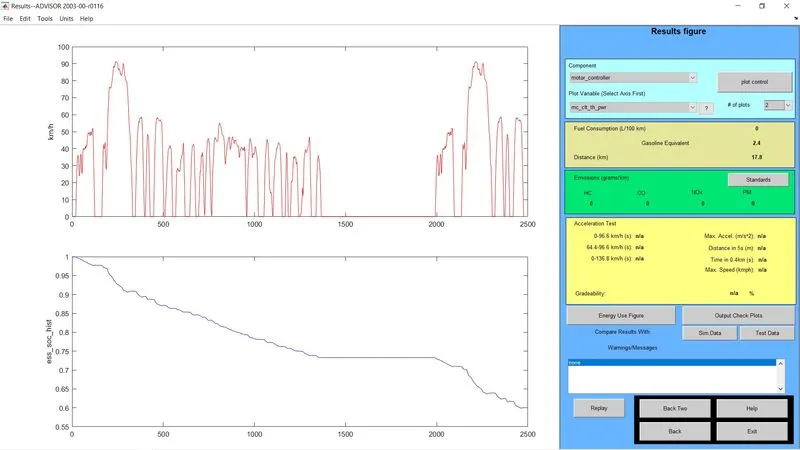
In one cycle the car had traveled 17.8 Km of distance.
FOR DRIVING CYCLE 2
- As we selected the number of driving cycles as 2 and hit the run button we got the following results.
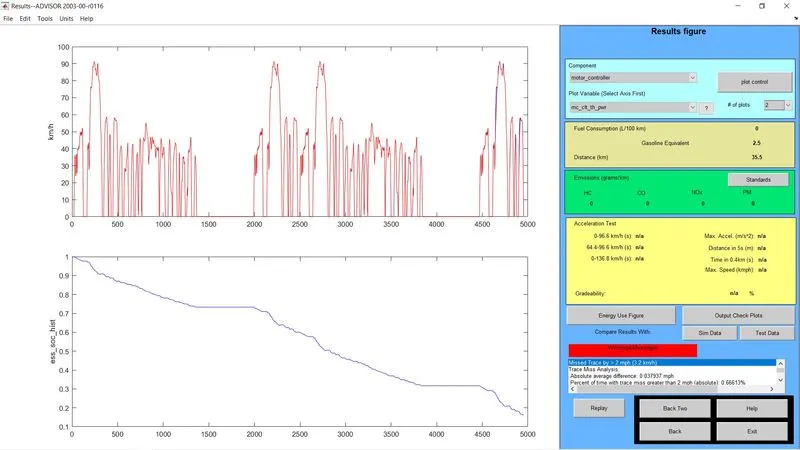
In one cycle the car had traveled 35.5 Km of distance.
FOR DRIVING CYCLE 3
- As we selected the number of driving cycles as 3 and hit the run button we got the following results.
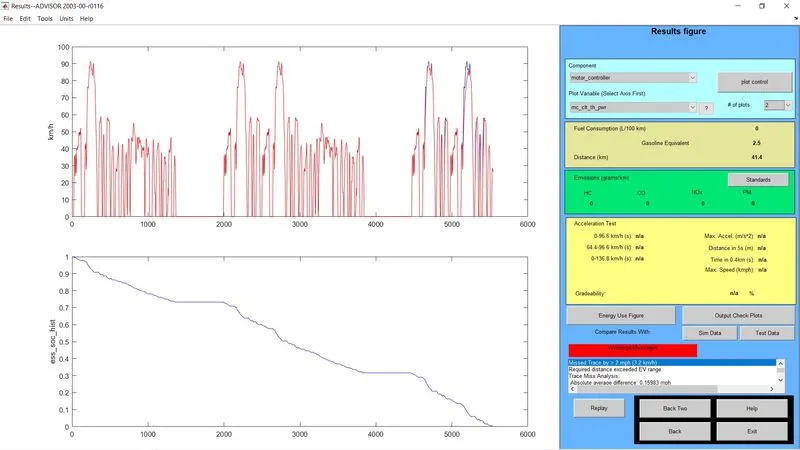
After applying for a total of 3 number of driving cycles the battery storage unit of the car was completely drained out and the car could not travelled further. The maximum distance traveled by car is 41.1 Km.
| SR. NO | NO. of cycles | Total distance traveled (Km) | Battery state |
| 1 | 1 | 17.8 | Charged |
| 2 | 2 | 35.5 | Charged |
| 3 | 3 | 41.4 | Consumed (Extended EV range) |
OBSERVATION:
From the above Simulation, we have seen that with the increase in the cargo mass the car was not able to travel up to 45Km.
OBJECTIVE 2 - In the above case, try changing the battery capacity and repeat the simulation.
In this simulation, we will be changing the number of battery modules to increase the traveling capacity of the car, but we will keep all the other parameters the same. But as we increase the number of battery the total weight of the car is also going to increase.
Battery module - 26, Cargo weight - 500Kg
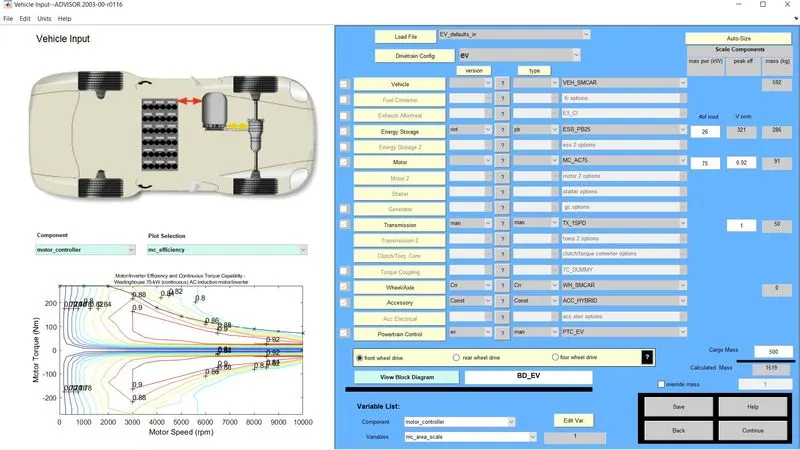
For Drive cycle 1
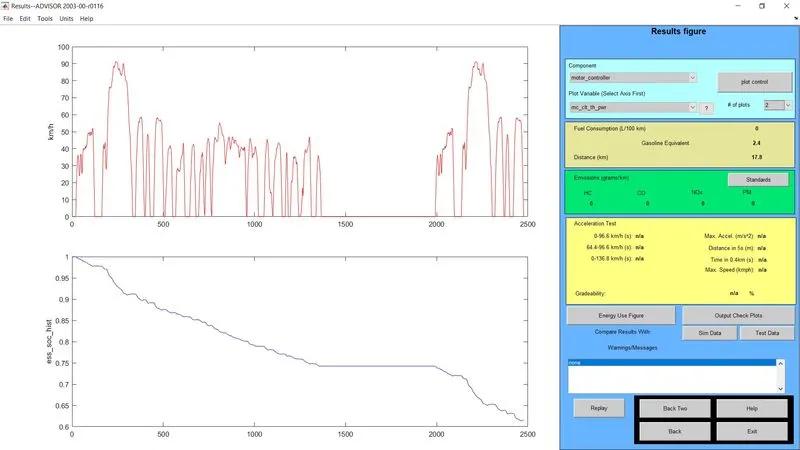
The distance traveled is 17.8 Km and we still have considerable charge left in the battery as we have increased the number of modules which is better than the previous case.
Drive cycle 2
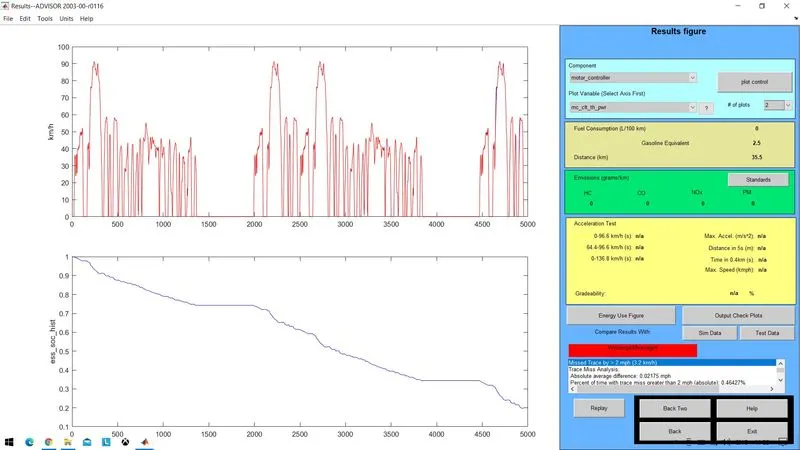
Here the distance traveled is 35.5 Km, but we still have some charge left as compared to the previous case.
Drive cycle 3
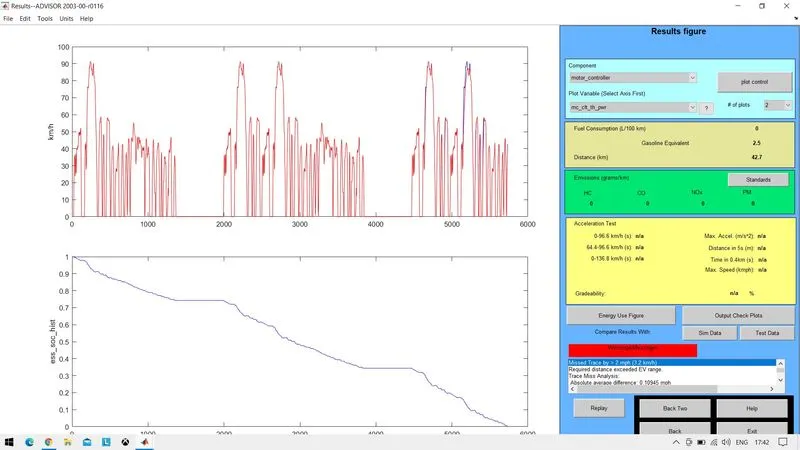
After 3 cycles the battery was completely drained out the distance traveled was 42.7 Km and the time taken for the battery to get completely discharge was also more.
Battery module - 27, Cargo weight - 500Kg
Drive Cycle 1
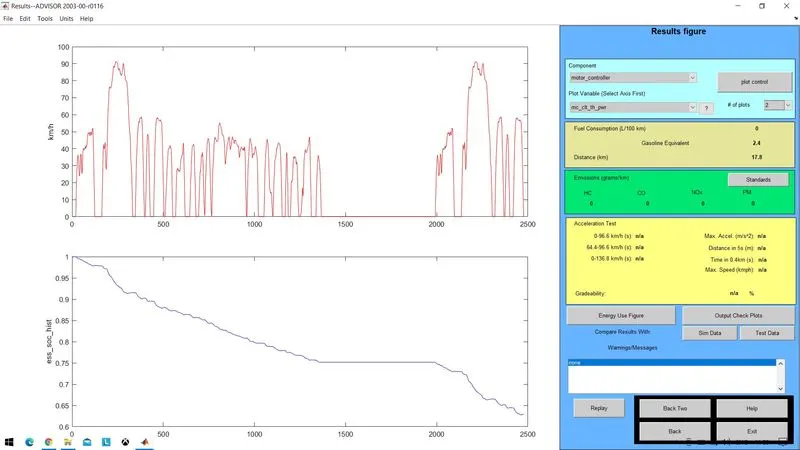
The distance traveled is 17.8 Km and we still have considerable charge left in the battery as we have increased the number of modules which is better than the previous case.
Drive cycle 2
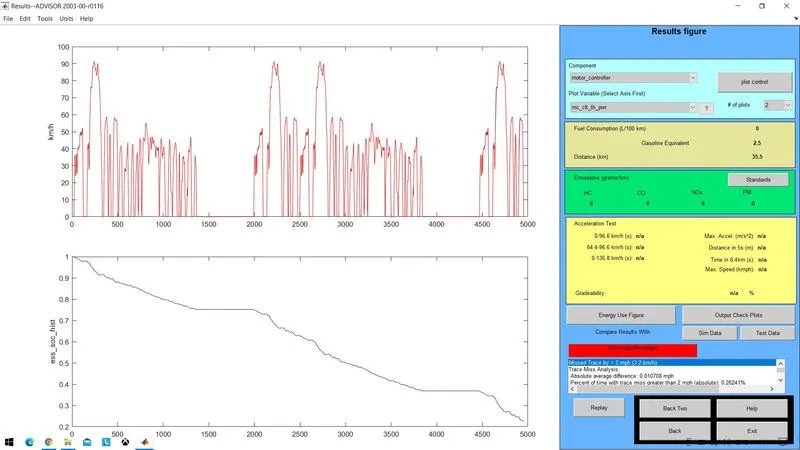
Here the distance traveled is 35.5 Km, but we still have some charge left as compared to the previous case.
Drive Cycle 3
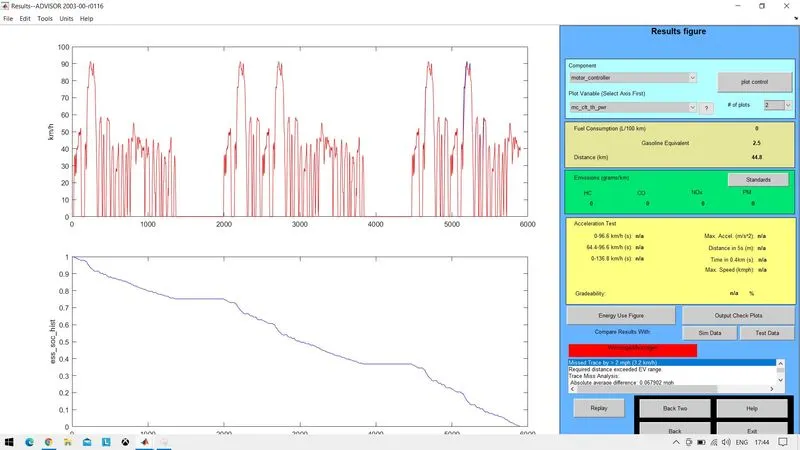
After 3 cycles the battery was completely drained out the distance traveled was 44.8 Km and the time taken for the battery to get completely discharge was also more.
Battery module - 28, Cargo weight - 500Kg
Drive cycle 1
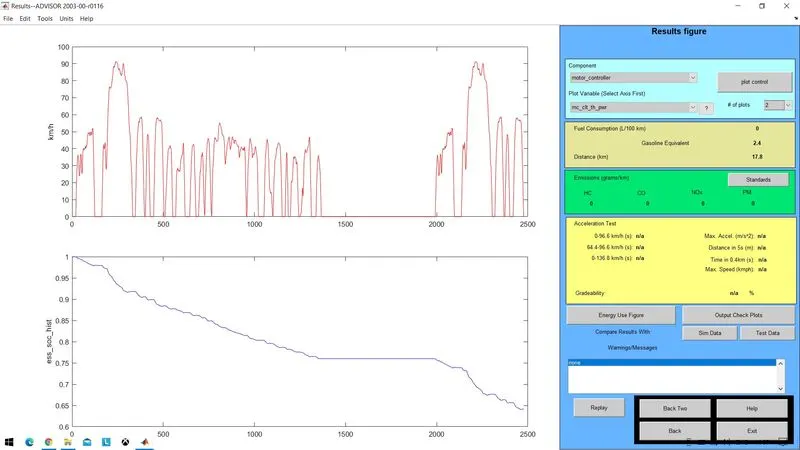
The distance traveled is 17.8 Km and we still have considerable charge left in the battery as we have increased the number of modules which is better than the previous case.
Drive cycle 2
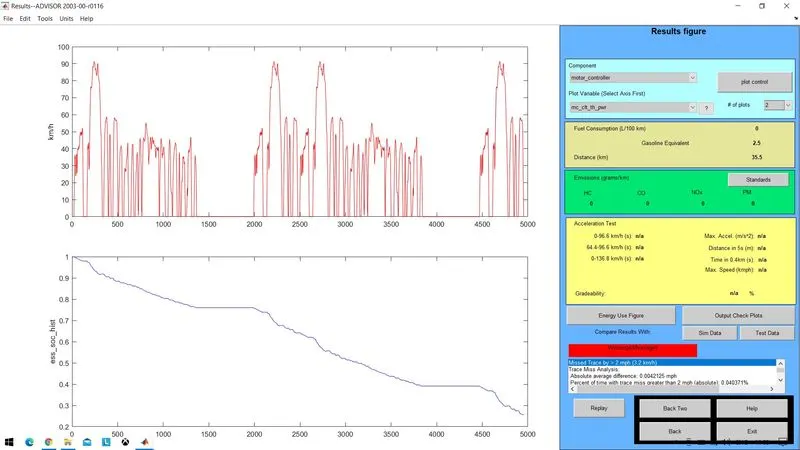
Here the distance traveled is 35.5 Km, but we still have some charge left as compared to the previous case.
Drive cycle 3
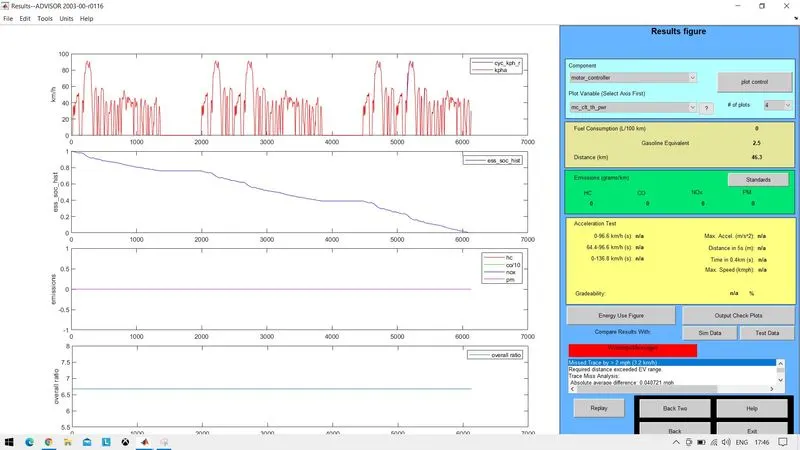
After 3 cycles the battery was completely drained out the distance traveled was 46.3 Km and the time taken for the battery to get completely discharge was also more. Here we have achieved the required distance as mentioned in question 1.
Battery module - 29, Cargo weight - 500Kg
Drive cycle 1
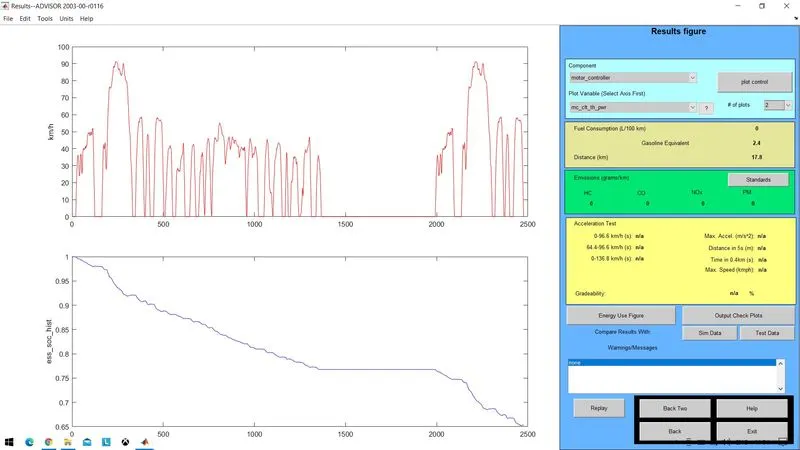
The distance traveled is 17.8 Km and we still have considerable charge left in the battery as we have increased the number of modules which is better than the previous case.
Drive cycle 2
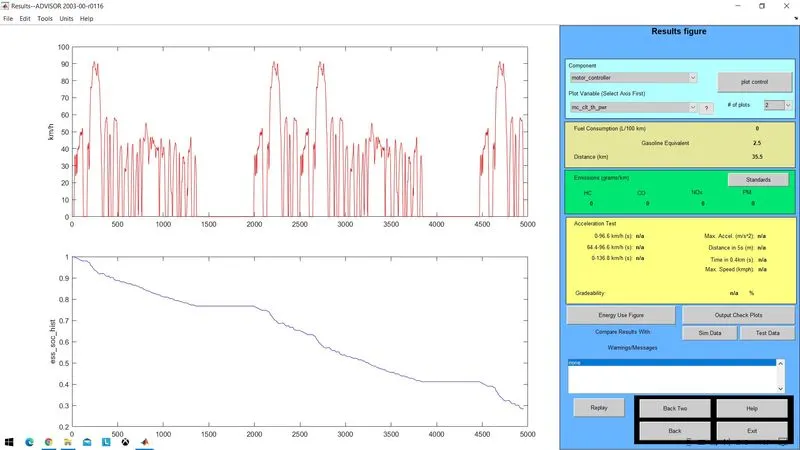
Here the distance traveled is 35.5 Km, but we still have some charge left as compared to the previous case.
Drive cycle 3
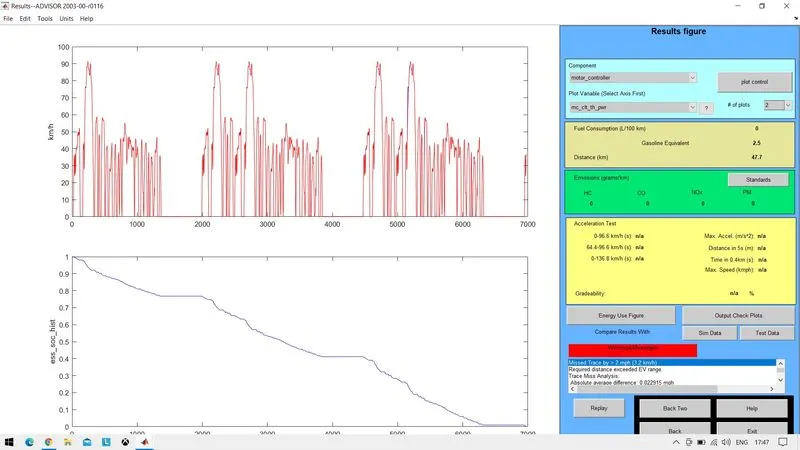
After 3 cycles the battery was completely drained out the distance traveled was 47.7 Km and the time taken for the battery to get completely discharge was also more. Here we have achieved the required distance as mentioned in question 1.
Battery module - 30, Cargo weight - 500Kg
Drive cycle 1
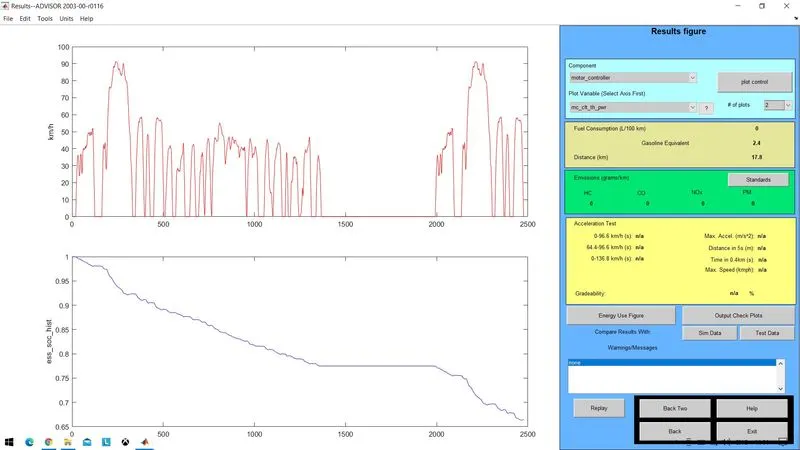
The distance traveled is 17.8 Km and we still have considerable charge left in the battery as we have increased the number of modules which is better than the previous case.
Drive cycle 2
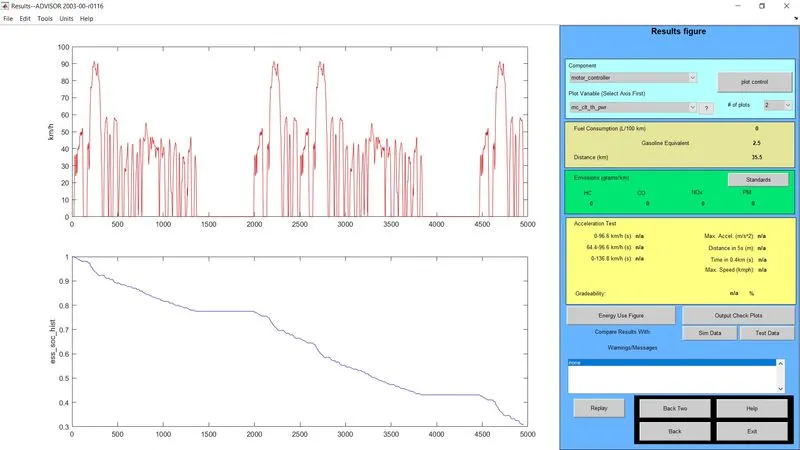
Here the distance traveled is 35.5 Km, but we still have some charge left as compared to the previous case.
Drive cycle 3
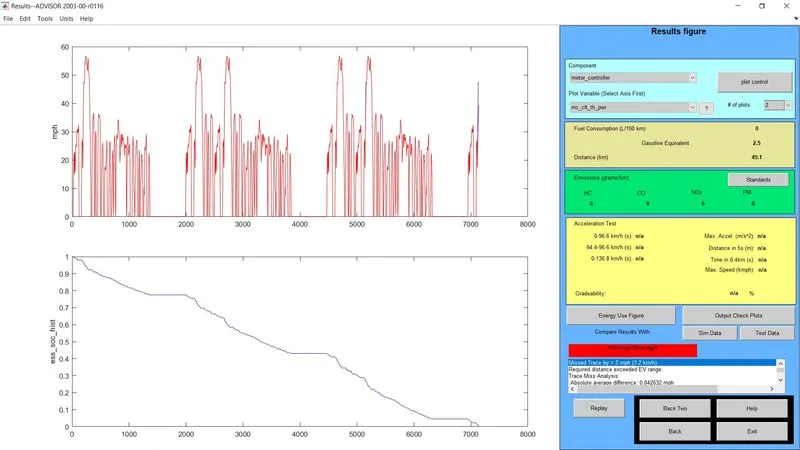
After 3 cycles the battery was completely drained out the distance traveled was 49.1 Km and the time taken for the battery to get completely discharge was also more. Here we have achieved the required distance as mentioned in question 1.
Results
Battery Module 26
| SR. NO | No. of cycles | Distance traveled (Km) | Battery Condition |
| 1 | 1 | 17.8 | Charged |
| 2 | 2 | 35.5 | Charged |
| 3 | 3 | 42.7 | Consumed |
Battery module 27
| SR. NO | No. of Cycles | Distance traveled (Km) | Battery Condiction |
| 1 | 1 | 17.8 | Charged |
| 2 | 2 | 35.5 | Charged |
| 3 | 3 | 44.8 | Consumed |
Battery Module 28
| Sr. No | No. of cycles | Distance traveled (Km) | Battery Conditions |
| 1 | 1 | 17.8 | Charged |
| 2 | 2 | 35.5 | Charged |
| 3 | 3 | 46.3 | Charged up to 45 Km |
Battery Module 29
| SR.NO | No. of cycle | Distance Traveled (Km) | Battery Conditions |
| 1 | 1 | 17.8 | Charged |
| 2 | 2 | 35.5 | Charged |
| 3 | 3 | 47.7 | Charged up to 45 Km |
Battery module 30
| SR.NO | No. of cycle | Distance traveled (Km) | Battery Conditions |
| 1 | 1 | 17.8 | Charged |
| 2 | 2 | 35.5 | Charged |
| 3 | 3 | 49.1 | Charged up to 45Km |
OBJECTIVE 3 - Perform gradeability test with PRIUS_Jpn_defaults_in file Compare your results in a table and conclude.
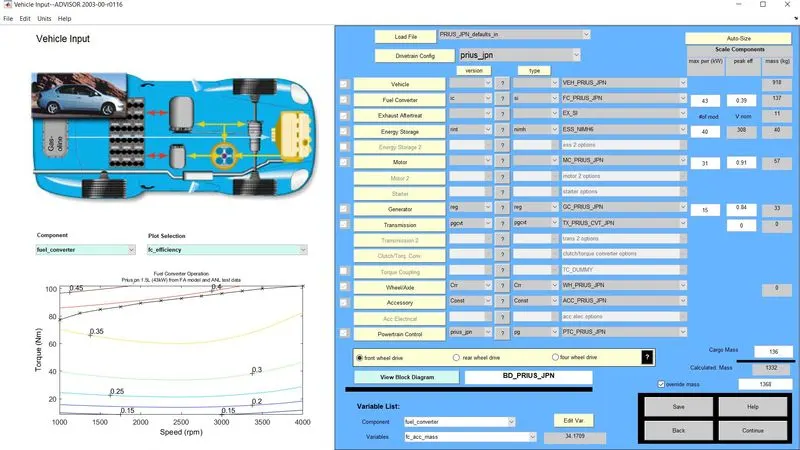
We will be selecting the PRIUS_Jpn_defaults_in from the load Files and will keep all the parameters default. Will be clicking continue and go to the next window.
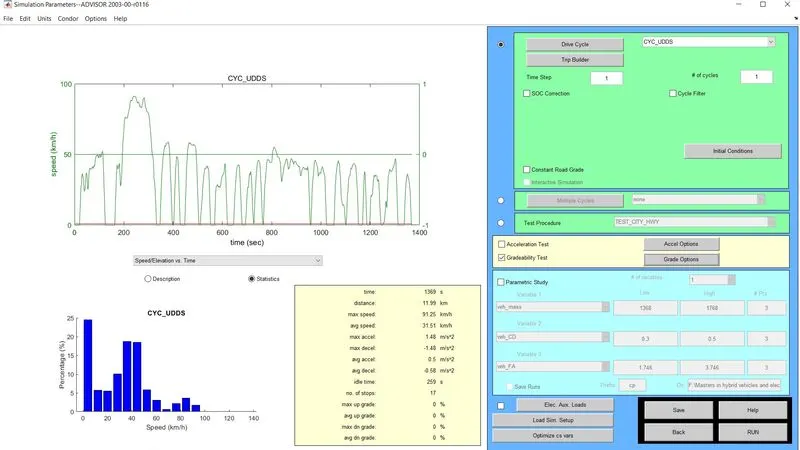
Here the cycle will be UDDS and we will enable the Gradability test option for running the grade test. The conditions can be configured from the Grade options.
FOR 10 Seconds
First case Speed - 50 mph
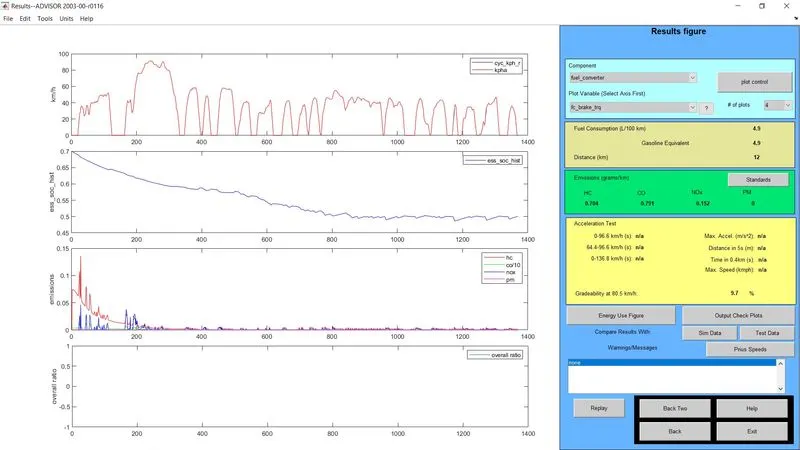
The gradability calculated is 9.7
Speed - 60 mph
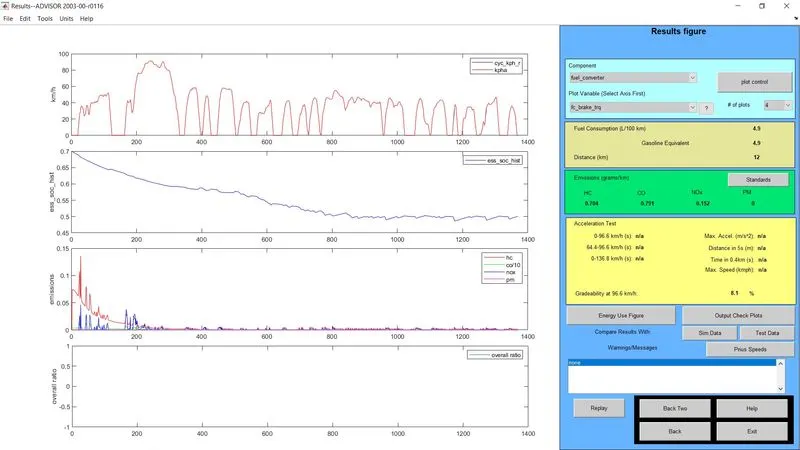
The gradability calculated here is 8.1
Speed - 70 mph
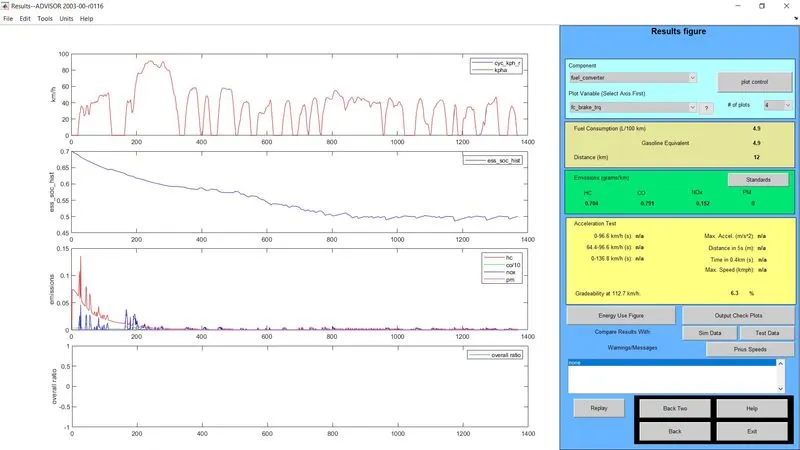
The gradability calculated is 6.3
FOR 20 SECONDS
For speed 50 mph
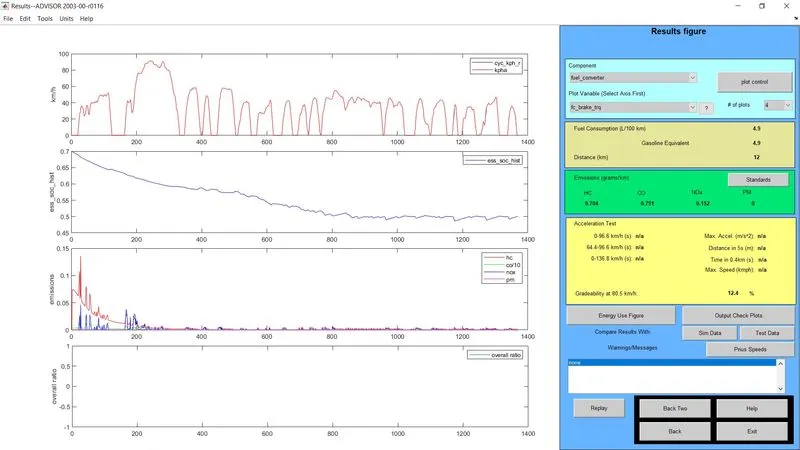
The gradability is 12.4
Speed 60 mph
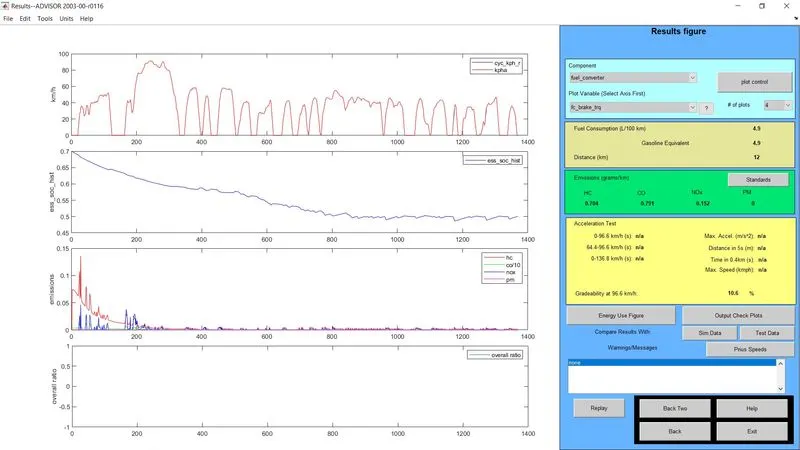
The gradability is 10.6
Speed 70 mph
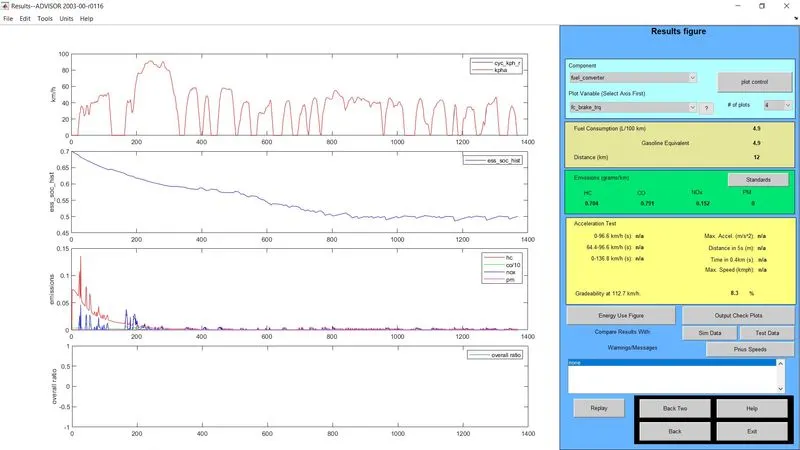
The gradability calculated is 8.3
RESULTS
For 10 seconds
| Sr. No. | Speed (mph) | gradability |
| 1 | 50 | 9.7 |
| 2 | 60 | 8.1 |
| 3 | 70 | 6.3 |
For 20 seconds
| Sr. No | Speed (mph) | Gradability |
| 1 | 50 | 12.4 |
| 2 | 60 | 10.6 |
| 3 | 70 | 8.3 |
CONCLUSION
- In the first objective of Ev_default_in the vehicle was unable to travel the set distance of 45 Km. After 3 driving cycles, the total distance traveled was 41.1 km and the battery was all consumed. Hence we can prove that as the driving cycles increase the distance increase but the battery power decrease.
- To get the required distance we have to increase the battery modules. The total number of modules as 28,29,30 can be used for the working to cover the distance of 45 km. By adding the battery the voltage capacity increase and we can achieve the distance.
- In the third case, we can conclude that as the vehicle speed increase the gradability decrease, as the time increases the gradability increase.