Week-3 Challenge: ADVISOR Tool
ADVISOR TOOL
In November of 1994, NREL's Center for TransportationTechnologies and Systems created a simulation model foradvanced vehicles called ADVISOR (ADvanced VehIcleSimulatOR) in the graphical, object-oriented programminglanguage of Simulink/ MATLAB from the MathWorks, Inc.
The model was created in support of the hybrid vehiclesubcontracts with the auto industry for the Department ofEnergy. ADVISOR approximates the continuous behaviorof a vehicle as a series of discrete steps during each ofwhich the components are assumed to be at steady state.That is, at each time step, the effects of changing current,voltage, torque, and RPM are neglected. This allowsefficiency or power loss tables, which are generated bytesting a drivetrain component at a fixed torque and RPM(and current and voltage, if applicable), to be used to relatethe power demands of the components at each time step. Asignificant advantage of using a model that is in theSimulink/MATLAB environment is the flexibility and easeof changing the model, such as replacing one controlstrategy or regenerative braking algorithm with another.MATLAB also allows easy plotting of results that makesdetailed analysis of vehicle configurations possible.ADVISOR is driven by the input driving profiles which canbe the classic speed vs. time, such as the federal urbandriving schedule (FUDS), or a speed and grade vs. timedriving profile. With a given driving profile goal,ADVISOR then works its way backwards from the requiredvehicle and wheel speeds to the required torques and speedsof each component between the wheels and the energysource, which is either fuel from the hybrid power unit(HPU) or electricity from the batteries. Limits for each ofthe components are included, so the actual speed vs. timeprofile computed is the one that is within the limits of allcomponents and includes all component losses and vehicle drag.
1 For Ev_defaults_in file,if cargo mass is 500 kg with all the other dafault conditions can the vehicle travel for 45 km with FTP drivecycle?conclude your observations.
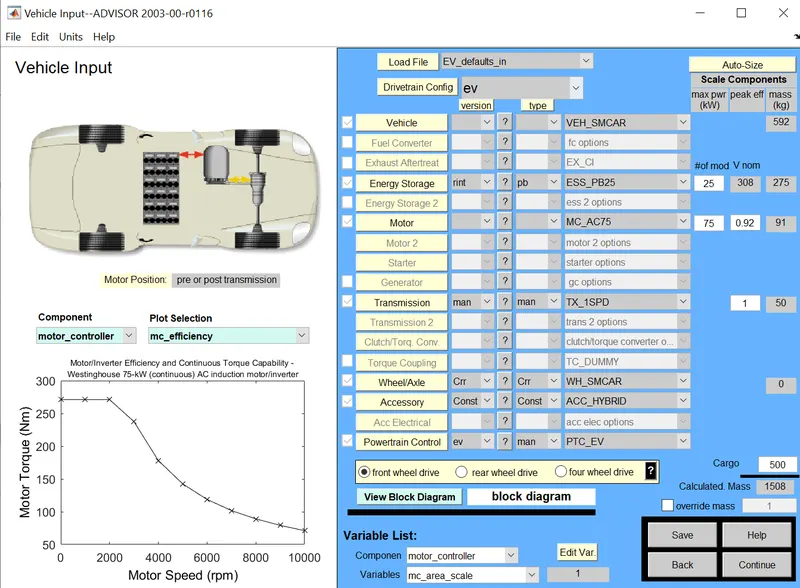
The advisor tool is opened in the matlab
Here the load file is changed to EV_defaults_in
The Drivetrain configuration is changed to ev and the cargo mass to 500 kg
In simulation paramater the drive cycle is changed to CYC_FTP
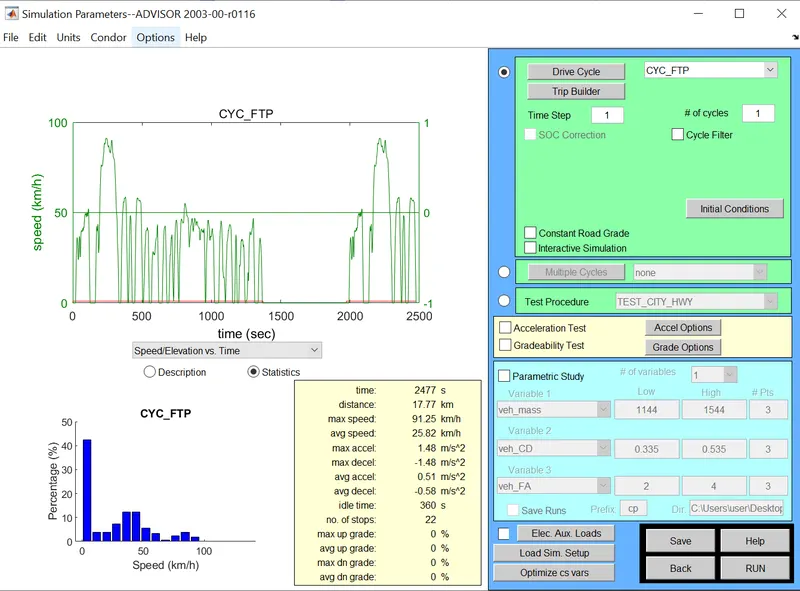
Press the RUN button and simulation starts
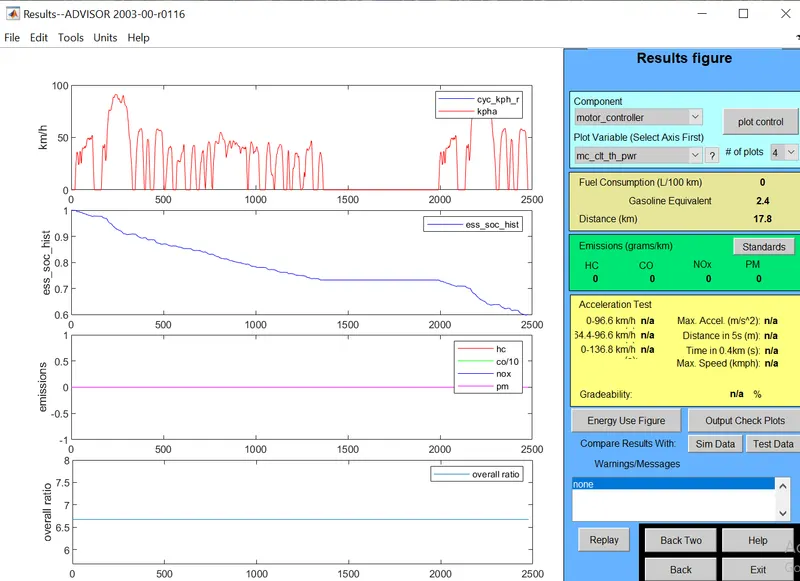
For one cycle the distance traveled is 17.8 km
by changing the number of cycles to 2 the following results are produced
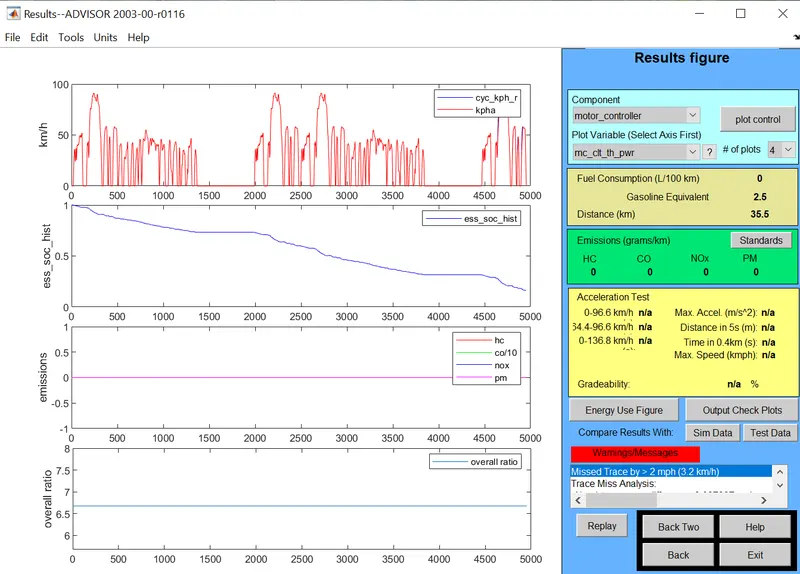
so the distance traveled is 35.5 km
For the 3 cycles distance traveled is 41.4 km
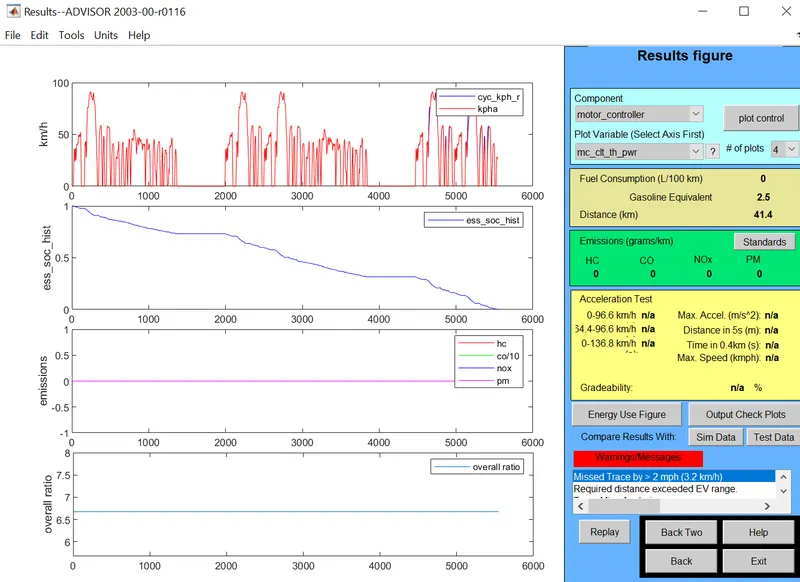
from the soc graph it can be noticed that the charge has reached zero.still we try to do one more cycle and see what happens
for 4 cycles
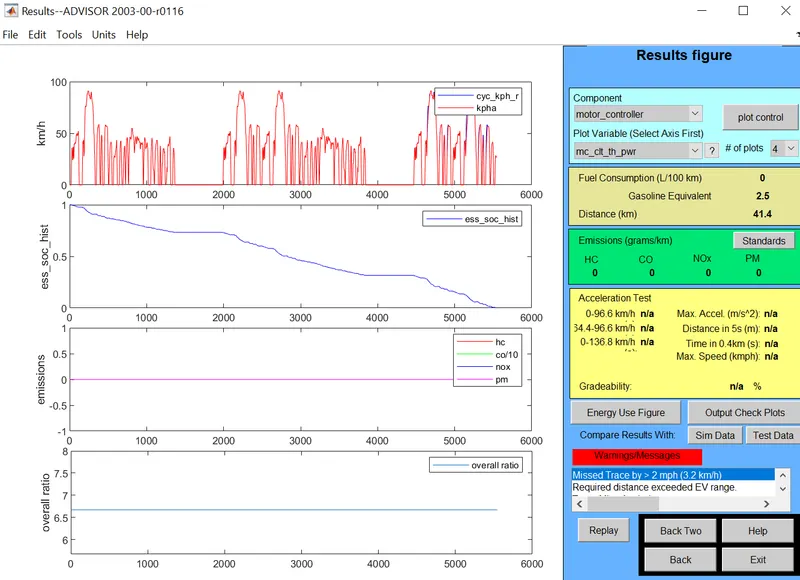
again the kilometers travelles is 41.4 kilometers where we can understand that the state of charge is zero and hence it cannot travel anymore.
so by one full charge of battery can only travel 41.4 kilometers and cannot attain 45kilometerd.
to attain 45 kilometers the battery should be recharged.
2 Try Changing the battery capacity of the vehicle and repeat the simulation
Here the battery capacity is changed from 25kw to 50 kw and keeping all other parameters same
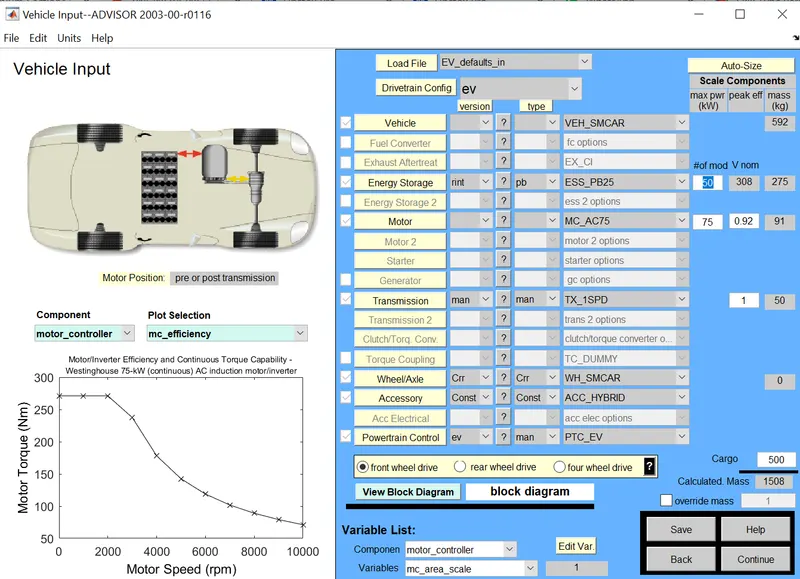
Running the simulation for 50 kws
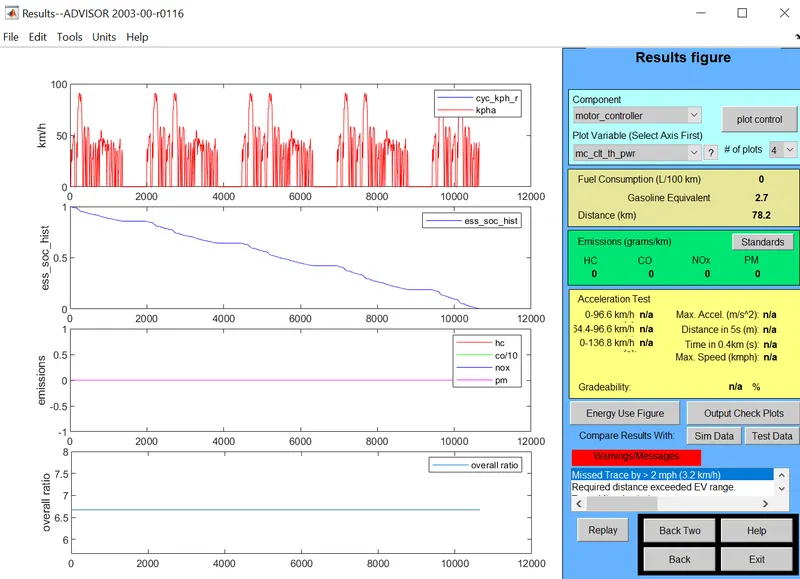
By 50 kws of battery the vehicle can travel for 78.2 kilometres in a single charge
changing battery capacity to 100 kws
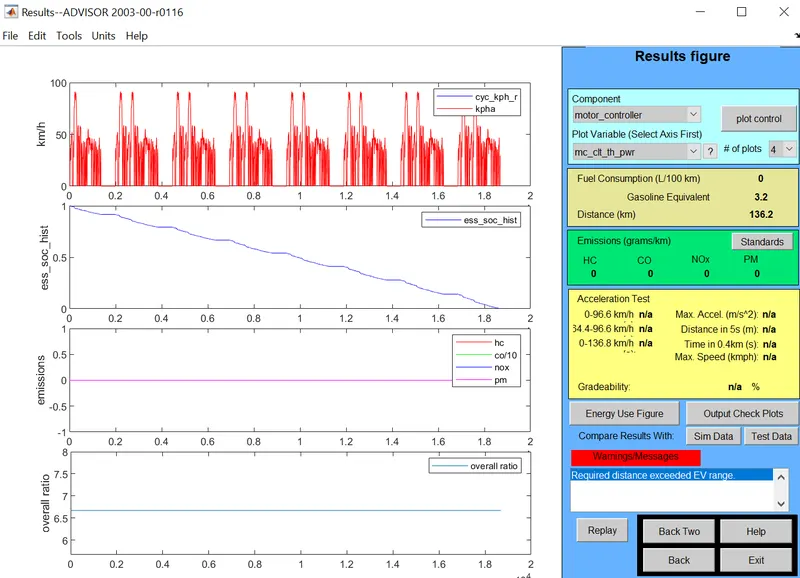
The 100kws capacity battery can run 136.2 kilometers in a single charge
3 Perform Gradeability test with PRIUS_jpn_defaults_in file compare the results in table and conclude.
open the PRIUS_jpn_defaults drive train configuration
step to the next and go for gradeabilty test
enable all the systems change the speed accordingly
Run the gradeability test.
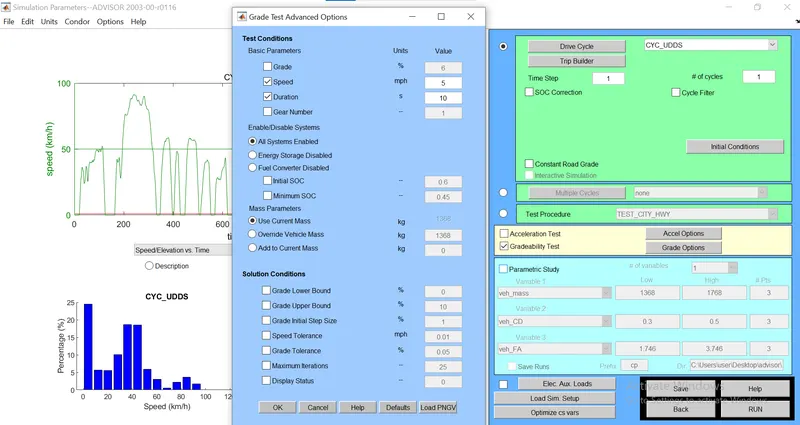
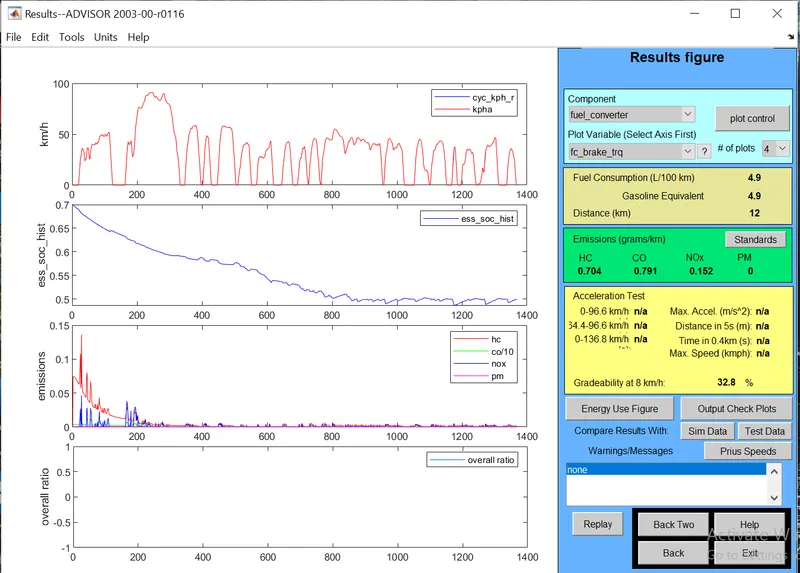
for 5mphr(8kmph) Gradeabilty = 32.8 %
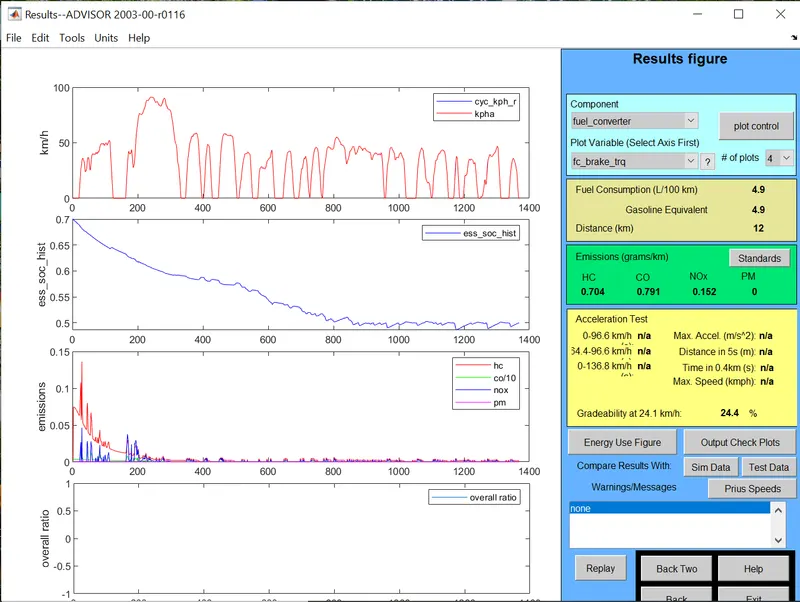
speed = 15mph(24.1 kmph) gradeabilty = 24.4 %
speed 30mph = 48.3 kmph gradeability = 14.7%
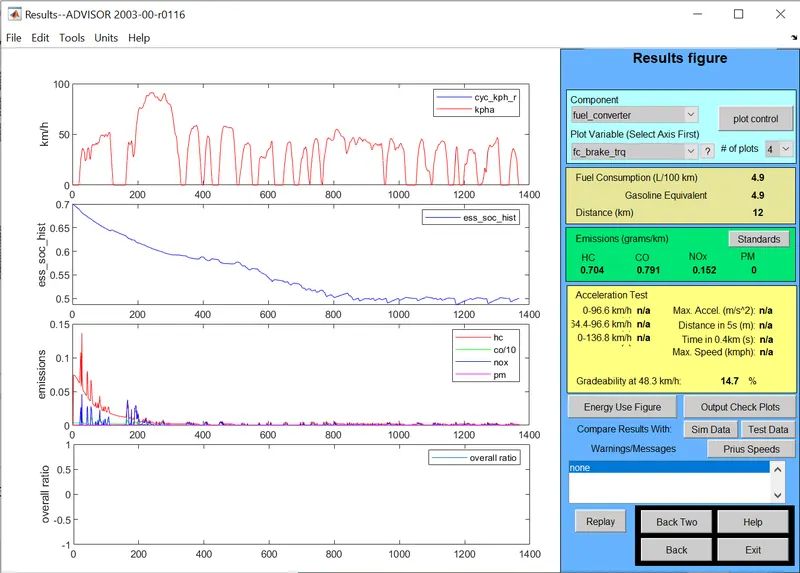
speed 55 mph(88.5 kmph) gradeability = 8.9%
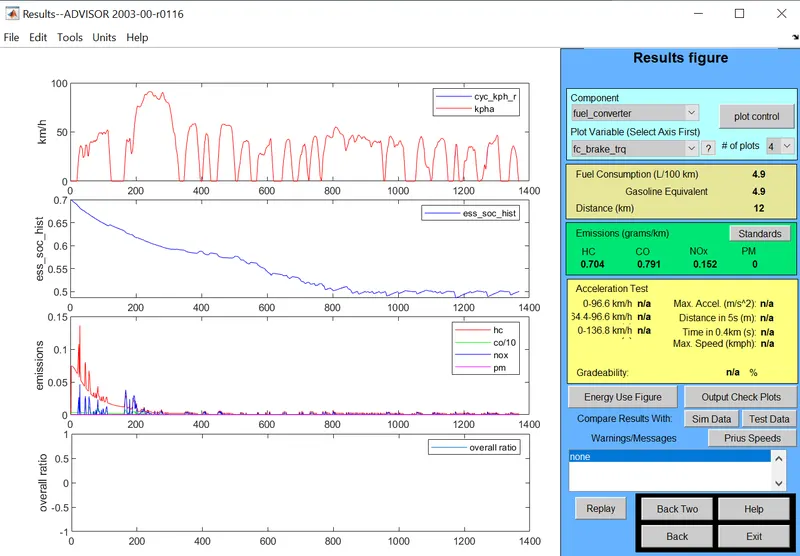
for speed = 60mph(96.6 kmph) gradeability = na its because for 55 mph the gradeability was 8.9% suppose. so keeping the gradeability values as 8.9 and same speed it wills how blank since the vehicle is not able to climb the slope with a constant speed of 55 mph.