Week-3 Challenge: ADVISOR Tool
AIM: - Use ADVISOR tool for simulation.
Objective:-
- For EV_defaults_in file, if cargo mass is 500 kg with all other default conditions, can the vehicle travel for 45 km with FTP drive cycle and Conclude your observations.
- In the above case, changing the battery capacity and repeat the simulation.
- Perform gradeability test with PRIUS_Jpn_defaults_in file. Compare your results in table and conclude.
Introduction of ADVISOR (Advanced Vehicle SimulatOR):-
It was created by the U.S Department of Energy’s National renewable Energy Laboratory’s (NREL) in the year 1994. It allows the users to simulate and analyze conventional, light and heavy vehicle also includes hybrid electric and fuel cell vehicles. This tool can run in MATLAB/Simulink software.
Merits of using ADVISOR tool
- It uses a Backward flow (Driving cycle to energy storage).
- It can estimate the fuel economy of vehicle before actual model was built.
- Evaluate an energy management strategy for your vehicles fuel converter.
Installation and starting of ADVISOR tool: -
- Search ‘Advance vehicle simulator tool’ in google or copy the link ‘https://sourceforge.net/projects/adv-vehicle-sim/’ and download the tool.

- Now extract the folder and copy it to MATLAB.
- Then open MATLAB and select the advisor folder from Current folder.
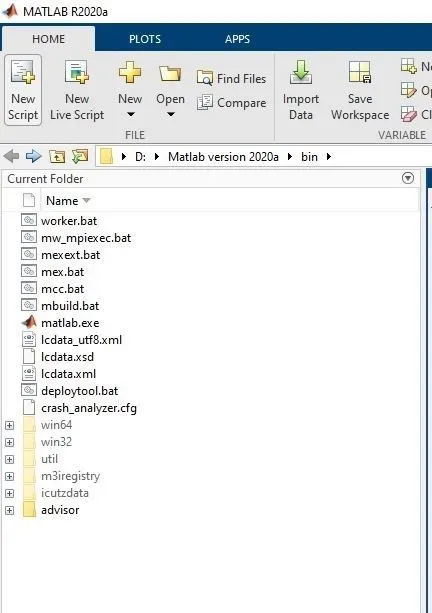
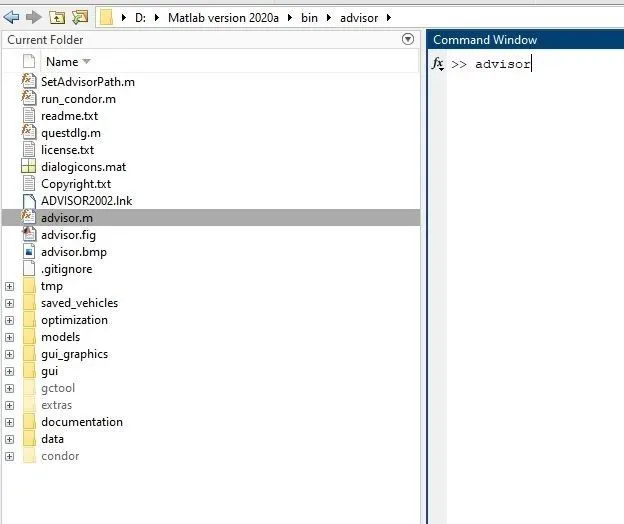
- Now double click on ‘advisor.m’ file and enter ‘advisor’ on command window as shown below.
- Then select ‘Metric’ and click on ‘start’ as shown below.
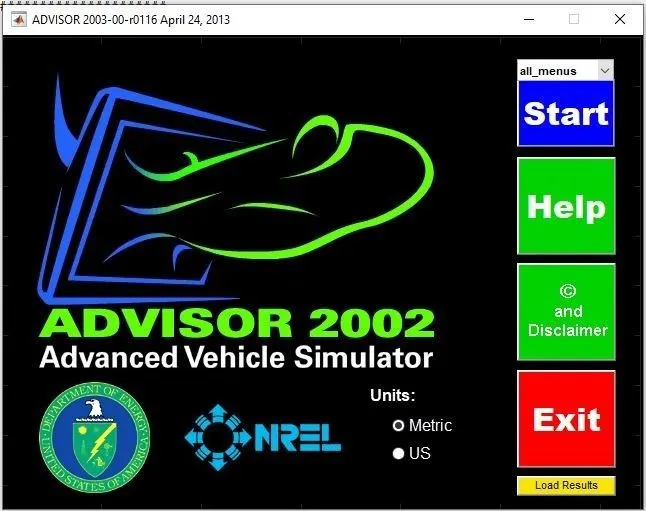
- Now the ADVISOR tool is opened in your ‘MATLAB’.
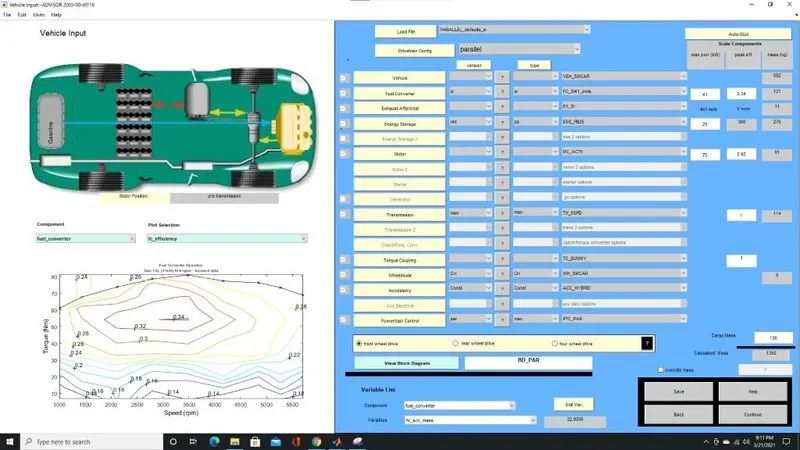
Solution 1: -
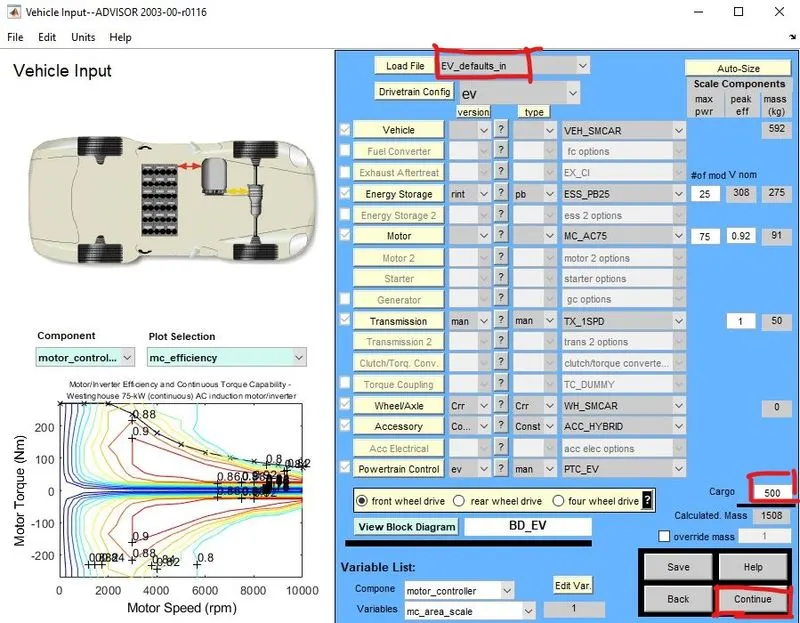
Select ‘ EV_defaults_in’ in load file and enter the cargo mass ‘500’. Now press on continue as shown in figure below.
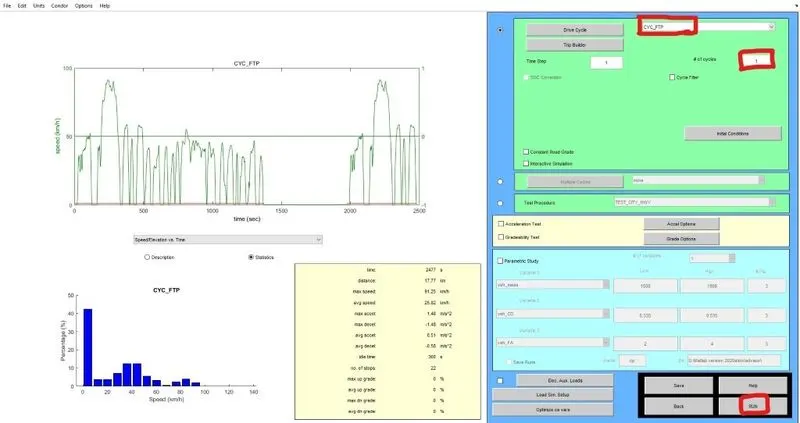
Now a new window will open where we have to enter drive cycle as ‘CYC_FPT’ and give No of cycles. Here in the below figure the no of cycle is given one and click on RUN.
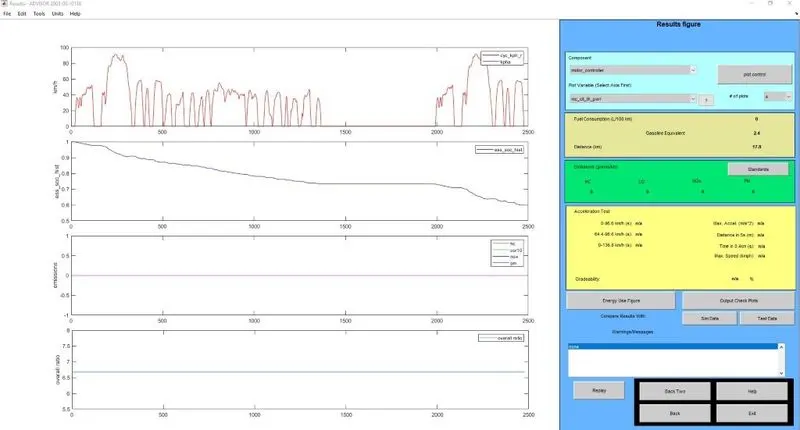
Now in the below figure we observe that for one drive cycle the distance travelled is 17.8 km at 40% SOC.
If the drive cycle is increased to two as shown below.
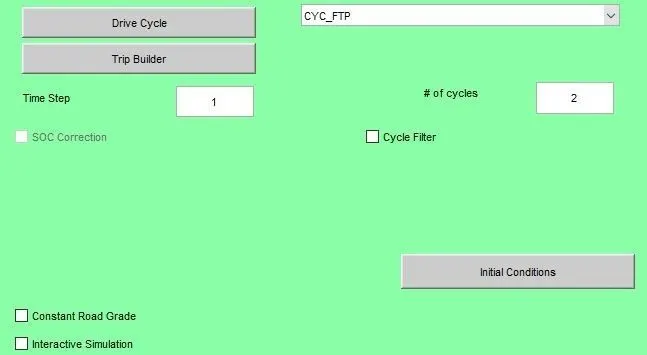
The distance travelled by the vehicle is 38.5km at 82% of SOC.
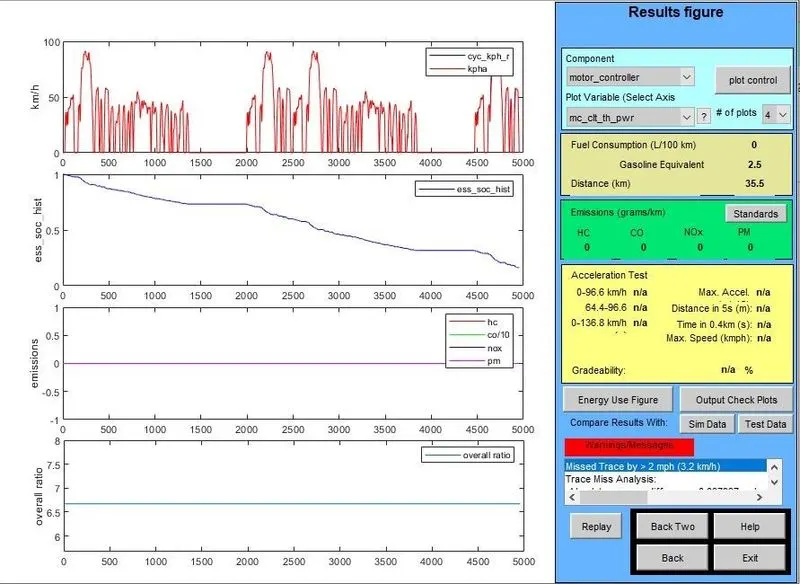
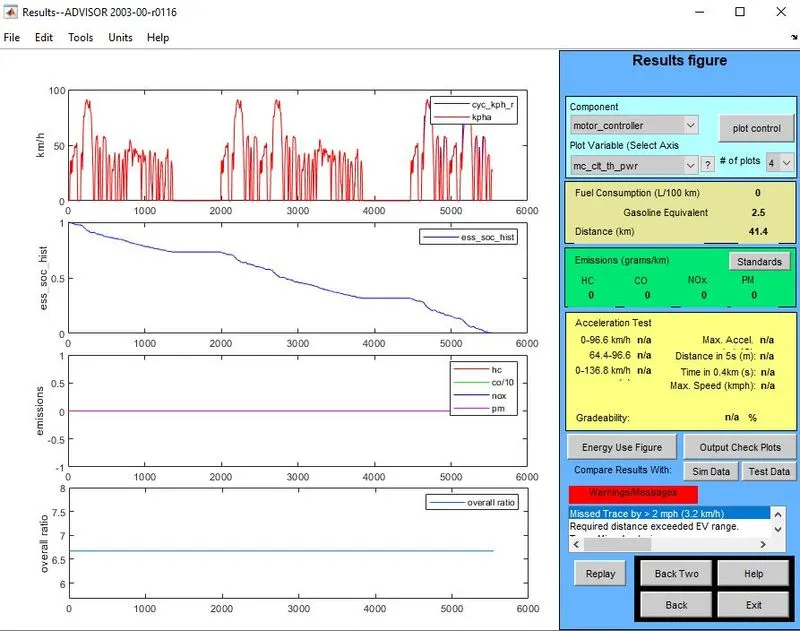
Now if the drive cycle is increased to 3, the distance traveled by the vehicle is 41.4km and it utilized the 100% of SOC. Therefore, the SOC is not sufficient to travel a distance of 45km.
CONCLUSION: -
The vehicle cannot travel the 45km with the given SOC. If the battery capacity is increased then only it can travel 45km.
SOLUTION 2: - Changing the Battery Capacity and Repeating the Simulation.
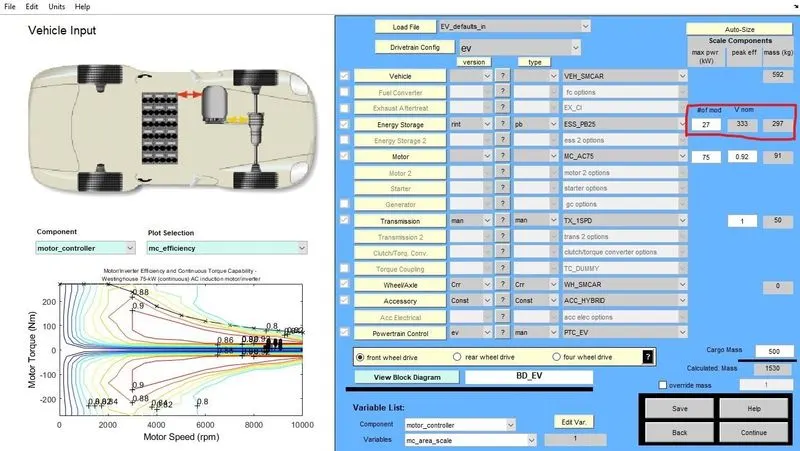
- The battery capacity can be changed in vehicle input window in energy storage block.
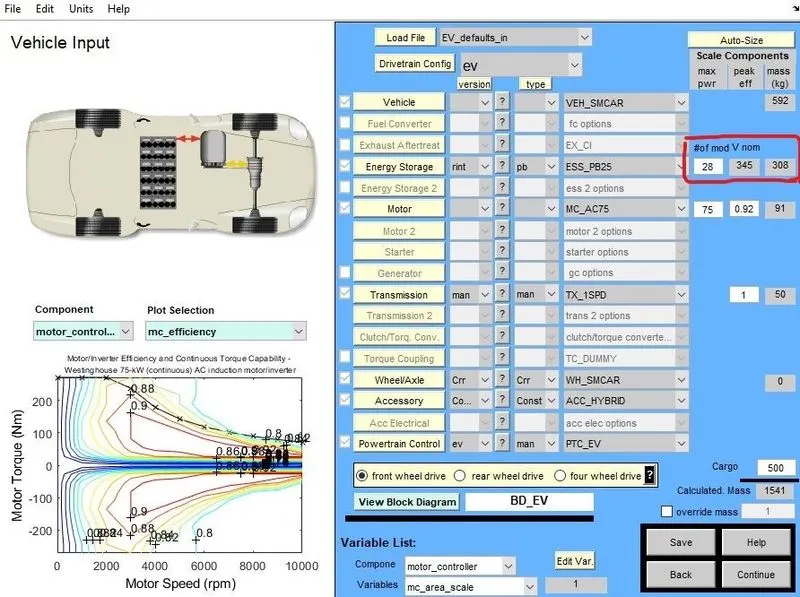
- ‘ # of mod & V nom’ Represents the module number of battery, Voltage and weight of the battery as shown in the figure below.
Case1: - Giving the battery module 27 & the drive cycle number 3 as shown in the figure below.
Result :-
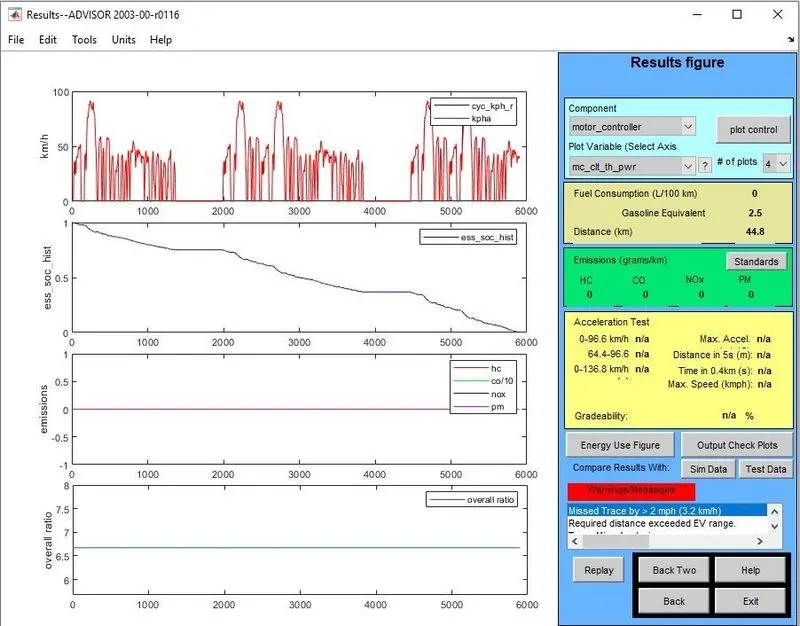
Distance is 44.8km for 27 module of battery.
Case 2: - Giving the battery module 28 & the drive cycle number 3 as shown in the figure below.
Result graph: -
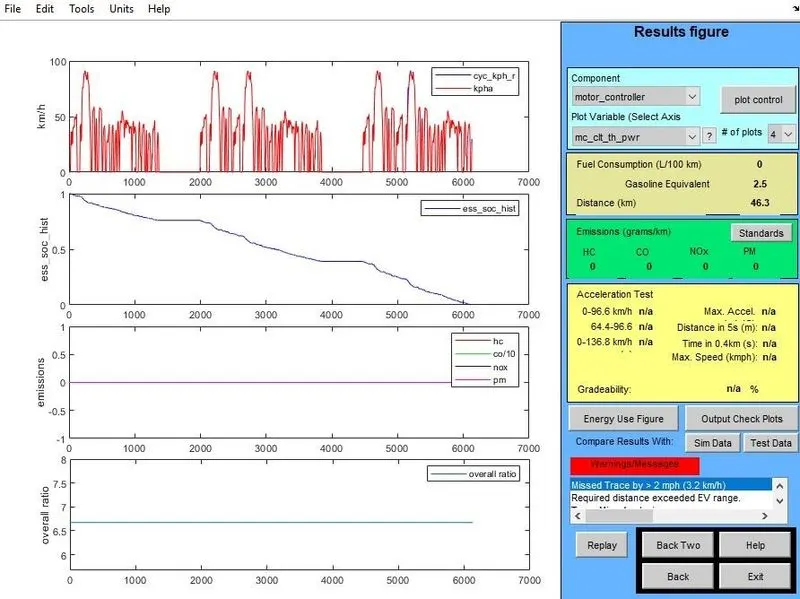
distance travelled is 46.3km for 28 module of battery.
Comparison: -
|
Sl.No |
Module of battery |
Voltage |
Weight in kg |
Distance travelled in km |
|
1 |
27 |
333 |
297 |
44.8 |
|
2 |
28 |
345 |
308 |
46.3 |
Conclusion: - By increasing the battery capacity the distance travelling capacity also increases.
SOLUTION 3: - performing a gradeability test on PRIUS_Jpn_defaults_in file
Compare your results in table and conclude.
Introduction to Prius:-
The Toyota Prius is a full hybrid electric automobile developed and manufactured by Toyota since 1997. Initially offered as a 4-door sedan, it has been produced only as a 5-door fastback hatchback since 2003.
In 2007, the United States Environmental Protection Agency (EPA) and California Air Resources Board (CARB) rated the Prius as among the cleanest vehicles sold in the United States, based on smog-forming emissions. The 2018 model year Prius Eco ranked as the second-most fuel-efficient gasoline-powered car without plug-in capability available in the US that year, following the Hyundai Ioniq Blue hybrid.
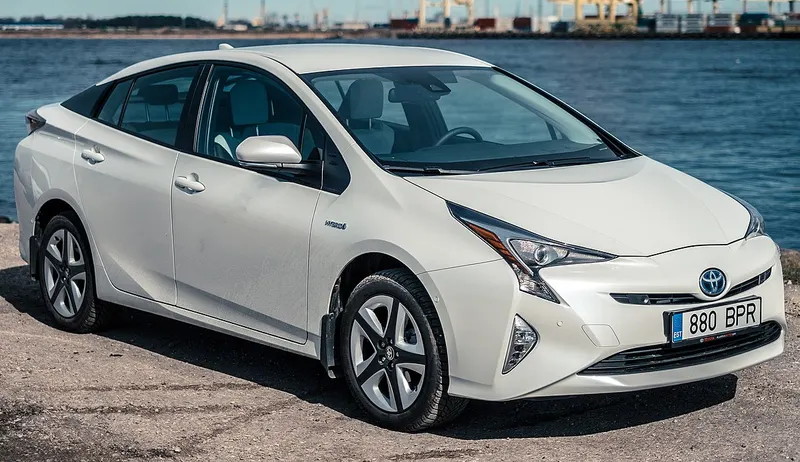
The Prius first went on sale in Japan and other countries in 1997, and was available at all four Toyota Japan dealership chains, making it the first mass-produced hybrid vehicle. It was subsequently introduced worldwide in 2000. Toyota sells the Prius in over 90 markets, with Japan and the United States being its largest markets. Global cumulative Prius liftback sales reached the milestone 1 million vehicle mark in May 2008, 2 million in September 2010, and passed the 3 million mark in June 2013.Cumulative sales of one million were achieved in the U.S. by early April 2011, and Japan reached the 1 million mark in August 2011. As of January 2017, the Prius liftback was the world's top selling hybrid car with almost 4 million units sold.
Gradeability Test: -
- Open advisor tool vehicle tool window and select PRIUS_Jpn_defaults_in Load file and click on continue as shown in the figure below.
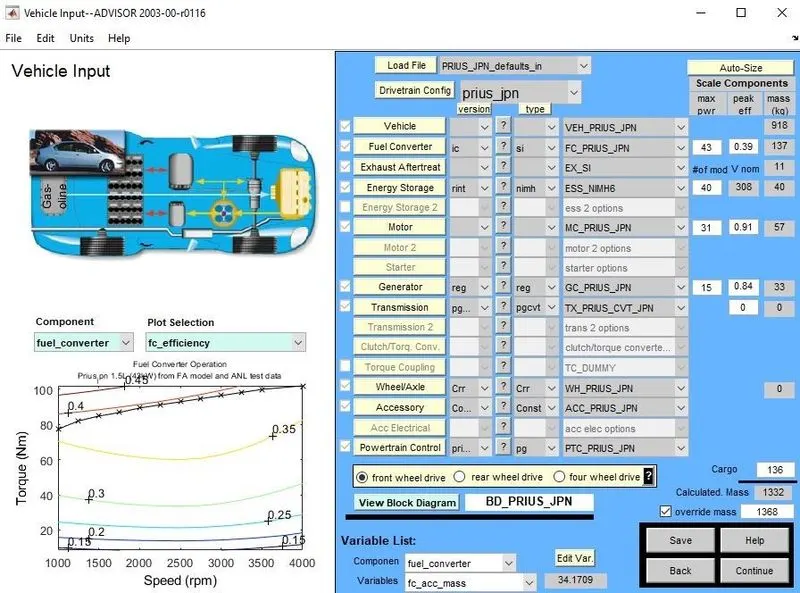
- Now a simulation parameter will open and select the Gradeability test and click on the grade option box, then a new dialogue box will open as shown in the figure below.
- Click on all system enable, give speed in mph, duration and click on OK
- After that click on RUN for the processing.
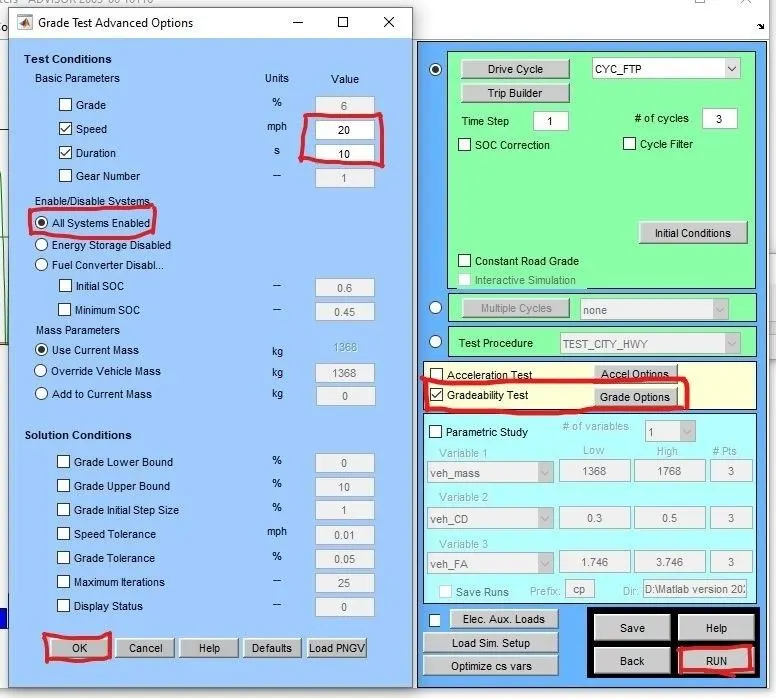
Case-1:- with a speed of 20mph (32.2 kmph) and duration of 10 sec is shown below. We observed that the gradeability is 19.8%.
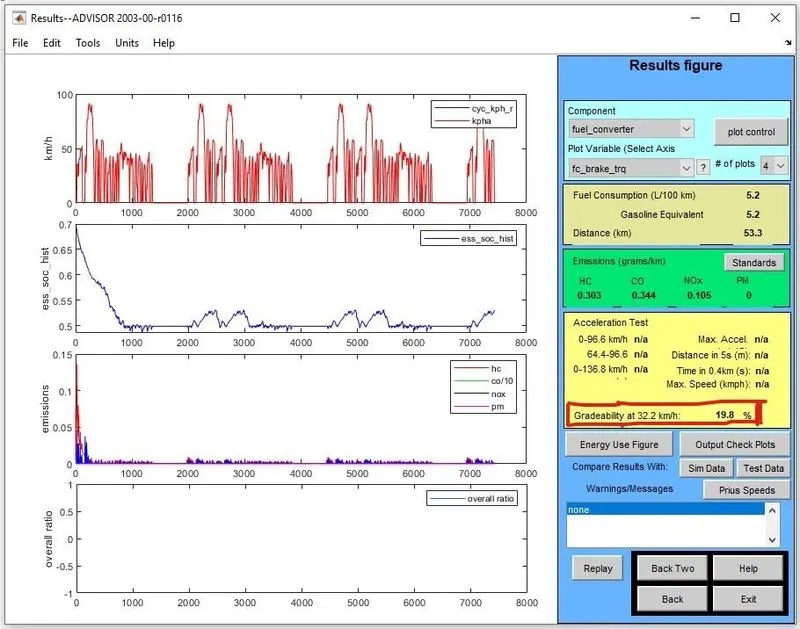
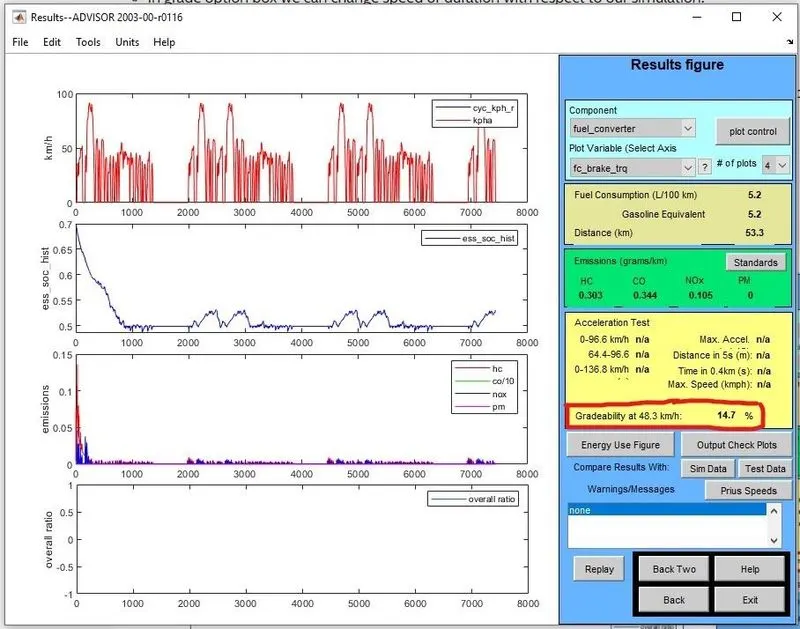
Case-2:- For a speed of 30mph (48.3kmph) and duration of 10sec the gradeability is 14.7%.
Case-3:- for the speed is 40mph (64.4kmph) and duration of 10sec the gradeability is 11.7%.
|
S.No |
Vehicle speed in mph |
Vehicle speed in kmph |
% gradeability |
|
1 |
20 |
32.2 |
19.8 |
|
2 |
30 |
48.3 |
14.7 |
|
3 |
40 |
64.4 |
11.7 |
Conclusion: - from the above data it is clear that as the %gradeability increases the vehicle speed decreases.