Week-3 Challenge: ADVISOR Tool
AIM - To use the advisor tool and simulate the conditions given to me.
OBJECTIVES - To use the advisor tool and to simulate the following:
- For EV_defaults_in file, if cargo mass is 500 kg with all other default conditions, can the vehicle travel for 45 km with FTP drive cycle. conclude the observations.
- For the same above case i have to change the battery capacity and repeat the simulation.
- To Perform gradeability test with PRIUS_Jpn_defaults_in file. compare the results and conclude.
PROCEDURE - INTRODUCTION OF ADVISOR MODEL
The U.S. Department of Energy (DOE) and the National Renewable Energy Laboratory (NREL) have worked with industry partners to develop a sophisticated systems analysis tool that can answer crucial questions about specific component and vehicle designs. ADVISOR (Advanced Vehicle Simulator) is a model written in the widely used MATLAB/Simulink software environment. It can be used to simulate and analyze conventional,advanced, light and heavy vehicles,including hybrid electric and fuel cell vehicles. ADVISOR tests the effect of changes in vehicle components (such as motors, batteries, catalytic converters, climate control systems, and alternative fuels) or other modifications that might affect fuel economy, performance, or emissions. The user can alter simulation results by selecting vehicle component types, sizes, and parameters.
TECHNOLOGY - ADVISOR uses basic physics calculations and measured component performance to model conceptual vehicles. The user defines a vehicle using overall vehicle data and prescribes a speed-versus-time trace, along with road grade, that the vehicle must follow ADVISOR then puts the vehicle through its paces, making sure it meets the cycle to the best of its ability. It calculates predicted torque, speed, voltage, current and power passed from one component to another.
ADVANTAGES OF USING ADVISOR - 1) It reduces testing time to evaluate various vehicle powertrain alternatives.
2) Provides a shared simulation tool for government and industries.
3) Assist the automotives industry to develop fuel efficient vehicles and components.
For the first part - For this i have to simulate the output of a default electric vehicle in advisor. An electric vehicle is a vehicle that uses electric motor for propulsion.An electric vehicle may be powered through a collector system by electricity from off-vehicle sources, or may be self-contained with a battery, solar panel, fuel cells or an electric generator to convert fuel to electricity.
The general diagram of an electric vehicle is shown below
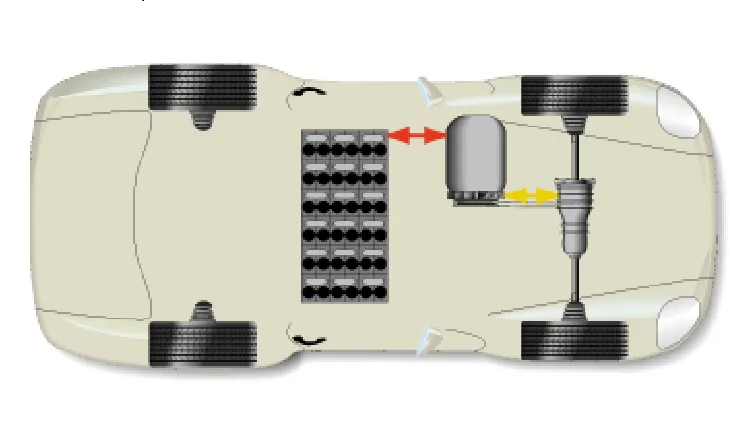
In the above shown fig. you can see that the battery is giving the power to motor/generator and that power is further transferred to the wheels/axles by the transmission system.
In the condition given to me that is i have to check whether the vehicle is capable of travelling 45km distance with FTP driving cycle if the cargo mass is 500kg.
The advisor interface for this condition is shown below
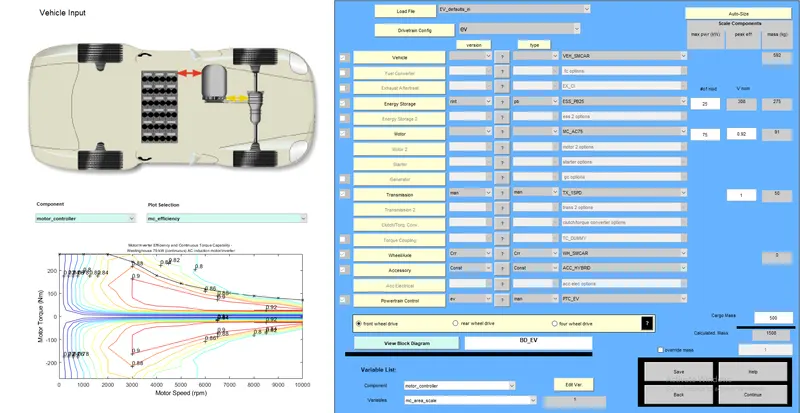
The inputs i have to give here is the cargo mass as 50kg and the rest parameters will be deffaults only.

after keeping the mass as 500kg i will click on continue because i have don't have to change any other values
after clicking on continue the second interface will be opened which looks like this
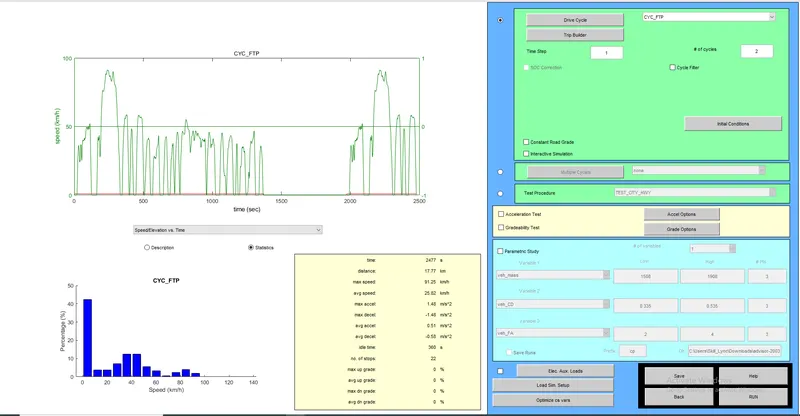
here on the type on driving cycle i have to keep the FTP driving cycle and i have to give the value of number of driving cycles.
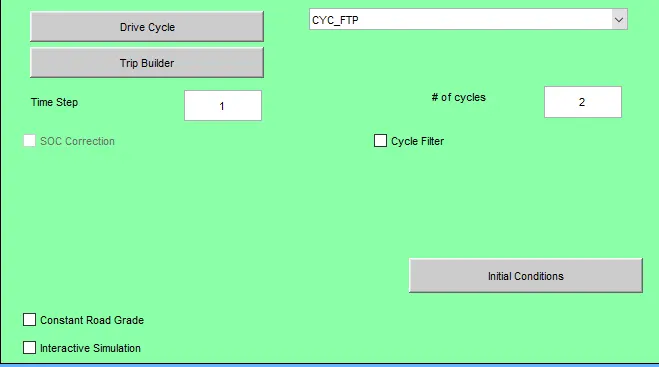
So for starters i have kept the number of driving cycles as 2 and the rest parameters as default and then i have to just click on run.
the result is diplayed below.
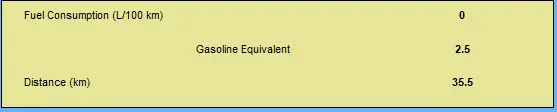
The distance travelled by the vehicle 2 drving cycles is 35.5km
Now i will go back to the second interface and increase the number of driving cycle from 2 to 3 and run simulation again. The results from the simulation is shown below.

The distance travelled by the vehicle in this case is 41.4km
Now again i will do the same thing and increase the value of number of driving cycles from 3 to 4 and will run the simulation again. The results from the simulation is shown below.

In this case the distance travlled by the car is 41.4km which is similar to the case with 3 number of driving cycles.
This is happening due to the reason that the battery which is powering the motor is fully utilized and it needs to charge again for travelling more distance.
The consuption plot is shown below

In the above plot you can see that the battery is discharged from 100% to 0%.
For the second part - For this case i have to perform the same simulation as previous case but with one change from previous case that is i have to change the battery capacity of the vehicle.
The default values used for the battery capacity in the first case is shown below

Here you can see that the value of battery capacity used is 25 modules which has a storage of 308V.
So now i will incrase the modules from 25 to 35 and will observe the changes

Here you can see after increasing the modules to 35 the storage capacity of the batttery is also increased from 308 to 432V but it has also increased the mass from 275 to 385kg.
The interface will look like this
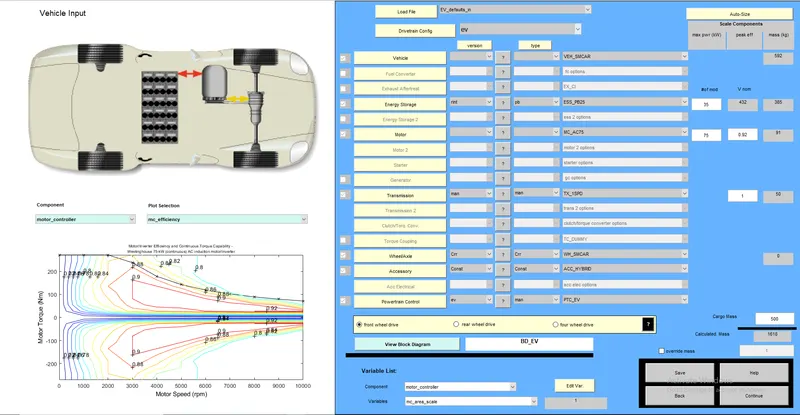
Apart from changing the battery capacity rest everything is same as previous case after this i will click on continue and will the run simulation for 3 no. of driving cycles because in the first case i have observed that during the 3 driving cycle the battery is fully consumed.
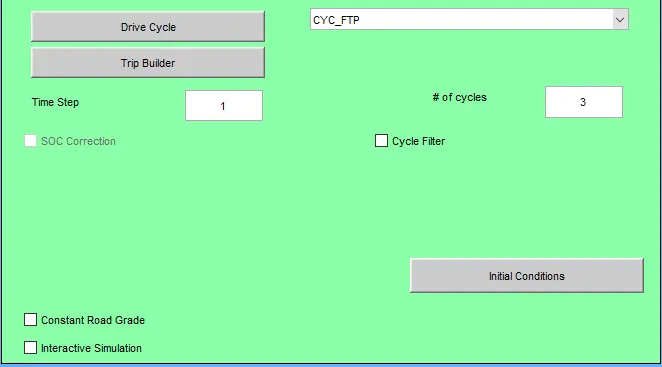
The results from this simulation is displayed below.

Here the distance travelled by the vehicle is 53.2km.
The consumption plot for the case is shown below

In the above shown plot you can see that the battery is 90% consumed for 3 driving cycles. unlike in the previous case where the battery is fully consumed in 3 driving cycles here it is still 10% charge left in the battery which can cover few more distance. The distance travelled by the car in the previous case was 41.4km but after increasing the battery capacity the disatnce travelled for 3 driving cycles is 53.2km.
For the third part - For this case i have to simulate the Toyota prius model in advisor and to perform the gradeability test on the car.
Toyota prius is a fully hybrid electric automobile developed and amnufactured by Toyota since 1997 Initially offered as a 4-door sedan, it has been produced only as a 5-door fastback hatchback since 2003.
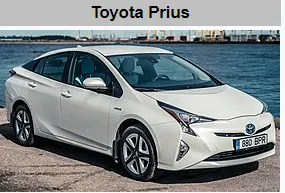
The layout of the toyota prius from the advisor is shown below:
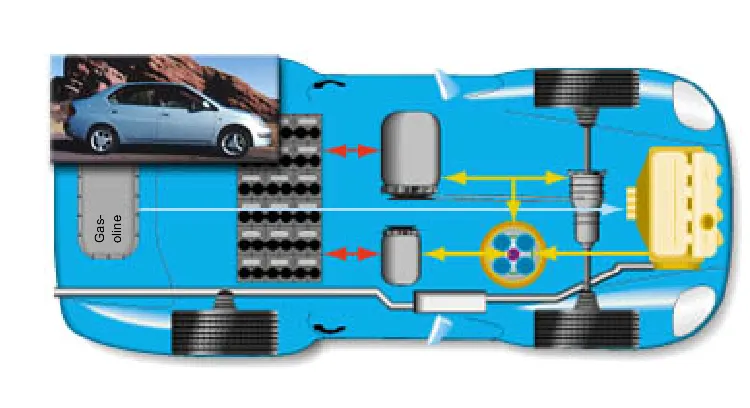
In the above shown fig. you can see that both battery and engine can give the power to the wheel/axle through the transmission system.
here i have to perform the gradeability test for this car so what i will do here is i will just vary the inputs of the grade options that is the speed.
and rest all the parameter will be the default ones.
The advisor interface for the toyota prius is shown below
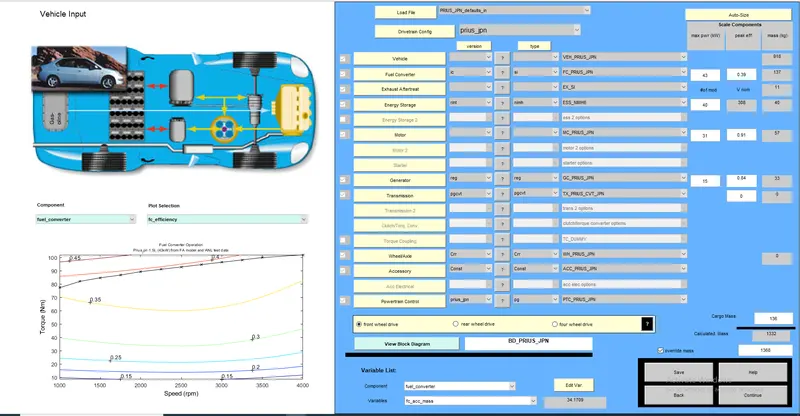
In the above interface i have not made any changes the default values are used as it is.
In the second interface i will just make changes in the grade options and the type of driving cycle and number of driving cycle will be the default ones.
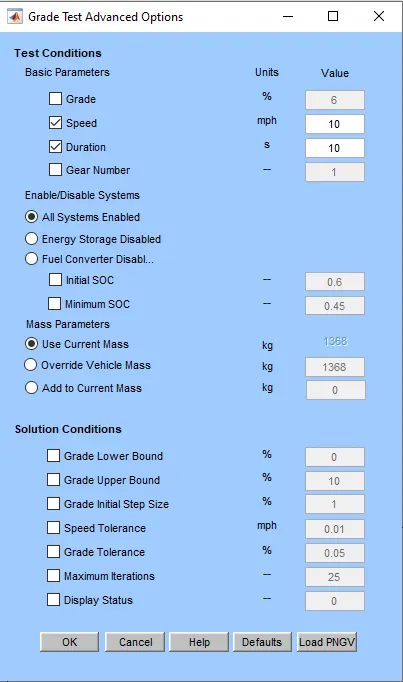
Here you can see that i have first kept the speed as 10mph or 16.09kmph and duration will be 10s. The output for this condition will be:
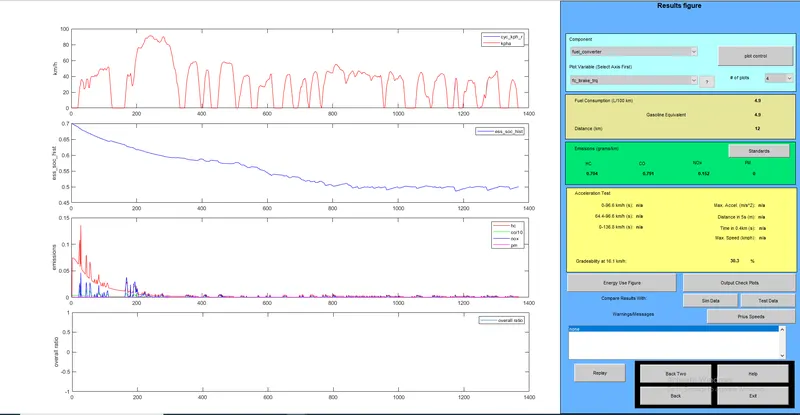
The gradeability i got for 16.1kmph speed is 30.3%.
- Now i will increase the speed to 20mph or 32.2kmph and will observe the gradeability
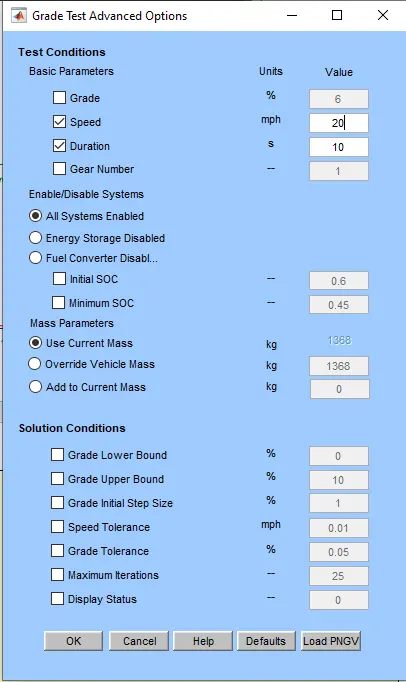
Tme will be same and all other parameters will also be same. Then the output will be
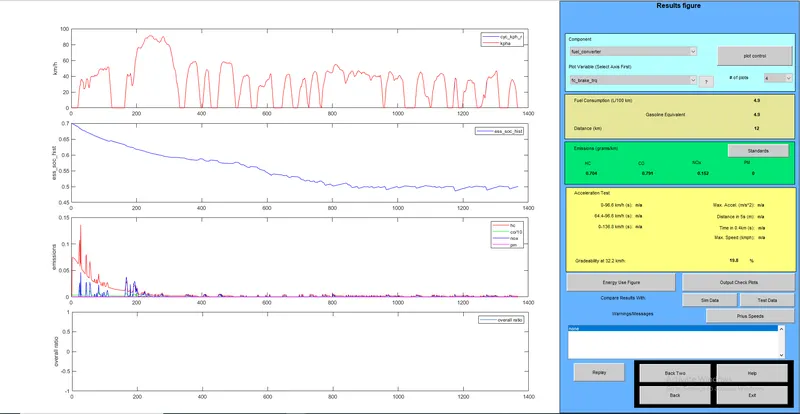
The gradeability of the vehicle at 32.2kmph or 20mph is 19.8%.
- Now again i will increase the speed to 30mph and will observe the output.
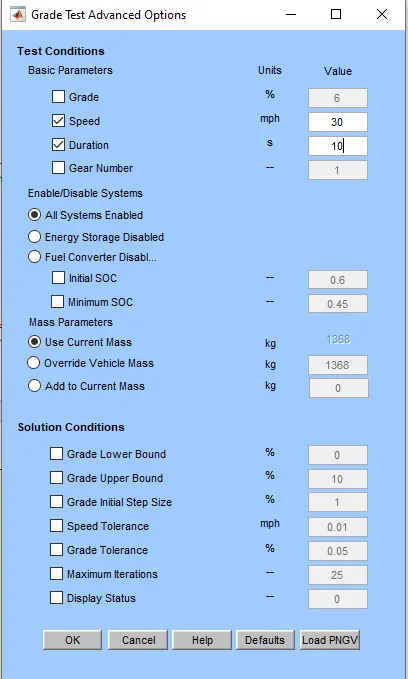
Apart from speed rest parameter will be same. The output of the case is shown below:
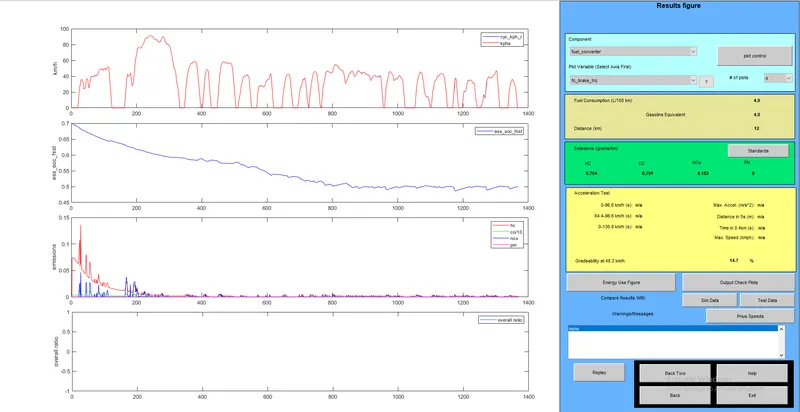
The gradeability of the car at 30mph or 48.3kmph is 14.7%
- Again i will do the same and this time speed is increased to 40mph
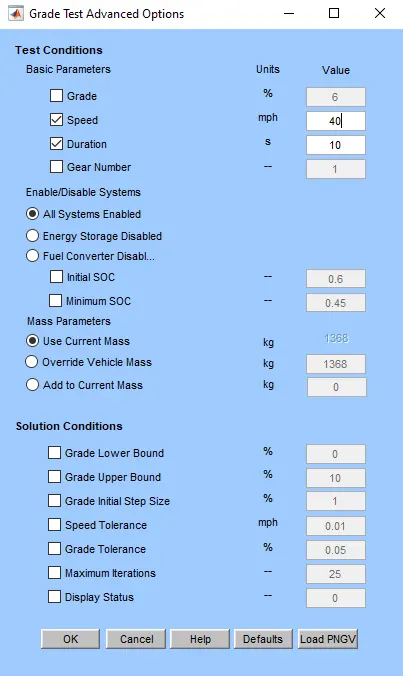
The output will be:
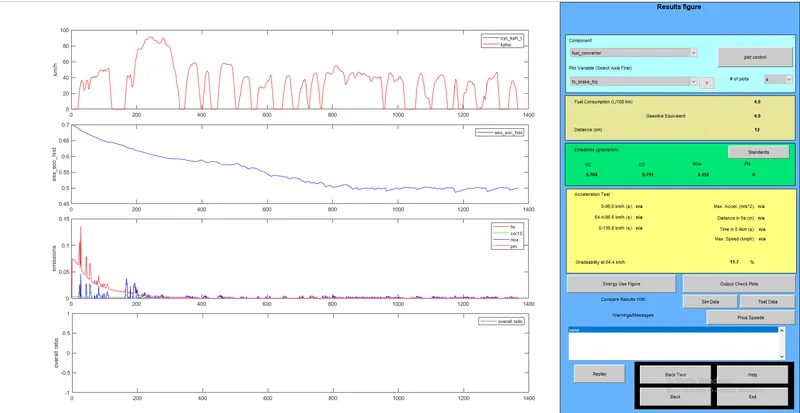
The gradeability of the car at 40mph or 64.4kmph is 11.7%.
For one final time i will increase the value of speed in grade option to 50mph and will observe the output.
So at 50mph or 80.5kmph the output is shown below:
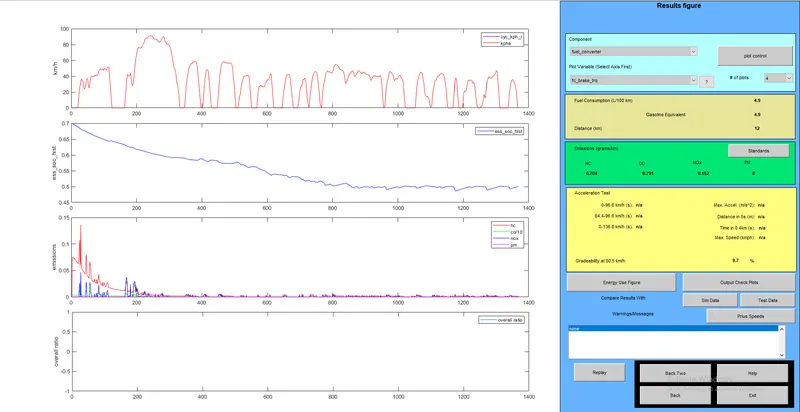
The gradeability of the car at 50mph or 80.5kmph is 9.7%.
The table is shown below for the inputs and outputs i got from the simulation:
| S.NO | SPEED(MPH) | GRADEABILITY(%) |
| 1 | 10 | 30.3 |
| 2 | 20 | 19.8 |
| 3 | 30 | 14.7 |
| 4 | 40 | 11.7 |
| 5 | 50 | 9.7 |
RESULTS - 1) For EV_defaults_ in advisor it is not possible for the car to travel a distance of 45km given that the cargo mass is 500kg and battery capacity used is default one. This is because during the 3 driving cycle the battery is fully exhausted for the given capacity.The maximum distance that i got was 41.4km so after 41.4 the battery needs to be charged again to travel more distance.
2) For the previous case that i used just by changing the battery capacity that is 25 modules to 35 modules i observed that for the same number of driving cycle the car distance travelled by the car was found out to be 53.2km. For no. of modules required for car to travel the distance atleast 45km i will change the modules from 25 to 28 :

for 28 modules the battery storage will be 345V,the output is

The distance covered by the car is 46.3km so i can conclude that atleast 28 modules of battery required for the car to travel the distance of atleast 45km or more.
3) The table for the gradeability test of Toyota prius is shown below
| S.NO | SPEED(MPH) | GRADEABILITY(%) |
| 1 | 10 | 30.3 |
| 2 | 20 | 19.8 |
| 3 | 30 | 14.7 |
| 4 | 40 | 11.7 |
| 5 | 50 | 9.7 |
In the above table for different input speeds the gradeability i got is mentioned and we can conclude that as the speed is increasing of the vehicle the gradeability is decreasing.
CONCLUSION - The tasks that are given to me has been completed successfully and the results are shown in result section.