Week-3 Challenge: ADVISOR Tool
ADVISOR TOOL CHALLENGE
Objective 1: For EV_defaults_in file, if cargo mass is 500 kg with all other default conditions, can the vehicle travel for 45 km with FTP drive cycle? Conclude your observations.
Objective 2: In the above case, try changing the battery capacity and repeat the simulation.
Objective 3: Perform gradeability test with PRIUS_Jpn_defaults_in file
Compare your results in table and conclude.
Introduction: Advisor tool is an advance vehicle simulation tool of matlab software. By using advisor tool the different vehicle models(mathematical equations which gives vehicle behaviour) are tested and simulated by giving different inputs.
Aim 1: Is to check whether the vehicle can travel a distance of 45 km with FTP drive cycle or not?
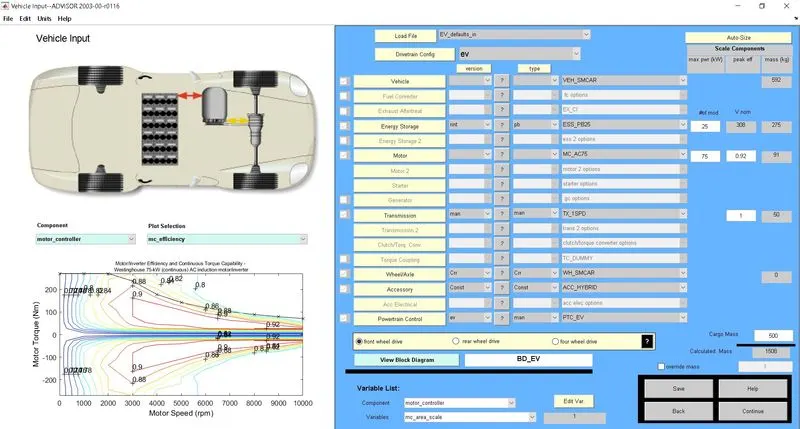
Part 1: By using advisor tool the file taken for simulation is EV_dafaults_in and the cargo mass is changed from default 136 kgs to 500 kgs, battery packs are 25 with the motor rating of 75 kw by default as shown below by keeping the other vehicle parameters unchanged, we proceed to the next step by clicking continue below.
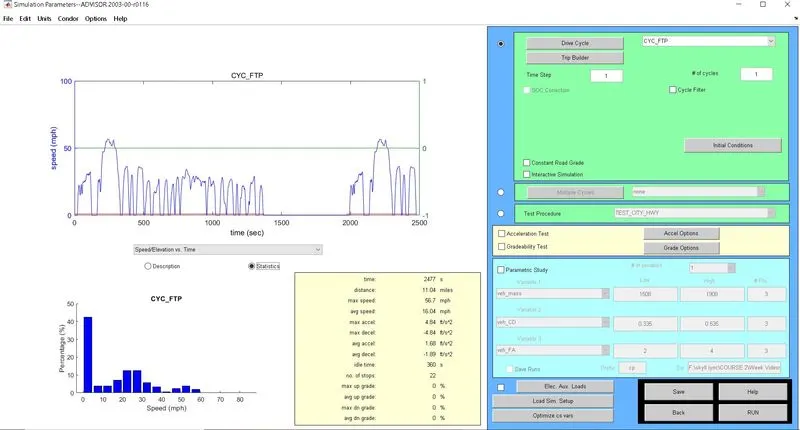
Step 1: The drive cycle considered for this simulation test is CYC_FTP , the no of drive cycles taken are 1 with a time step 1. Now we RUN the simulation to check the vehicle distance covered and the battery SOC (state of charge) with 25 battery packs and motor rating of 75 kw.
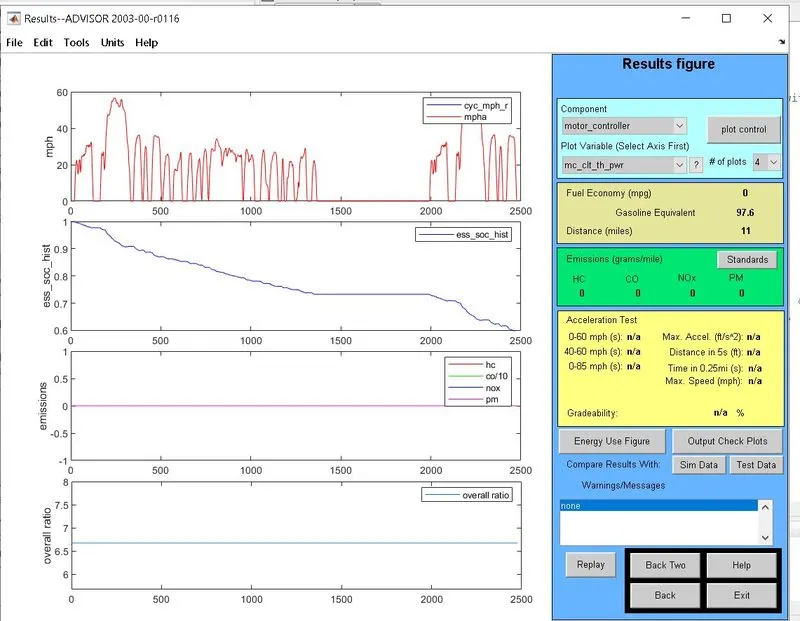
Step 2: Now the results are plotted where the vehicle covered a distance of 11 miles for 1 drive cycle and the battery SOC(state of charge) used upto 40 %.
Step 3: Increased the no of drive cycles to 2 with a time step 1. Now we RUN the simulation to check the vehicle distance covered and the battery SOC (state of charge) with 25 battery packs and motor rating of 75 kw.
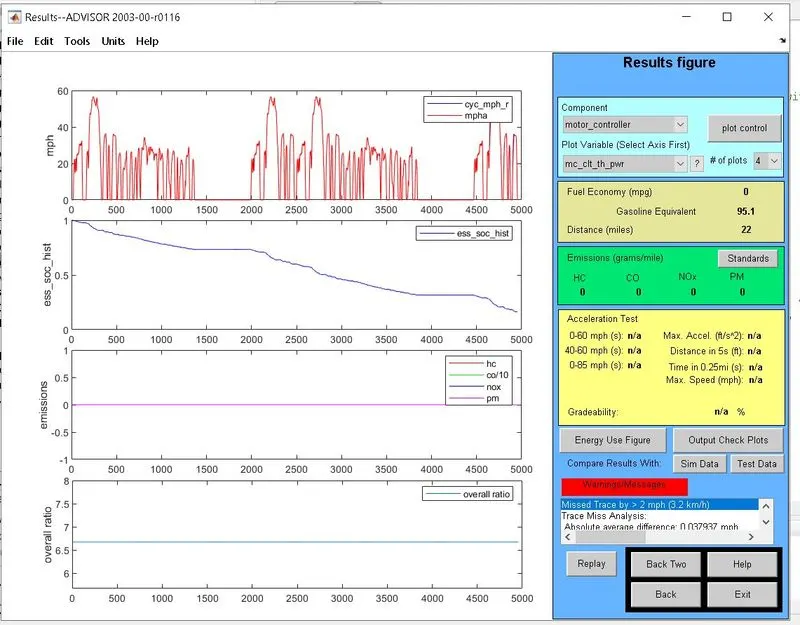
Conclusion: From the above results where the vehicle covered a distance of 22 miles i.e 35.4 kms for 2 drive cycles and the battery SOC(state of charge) used upto 80 % and there is only 20 % battery SOC is left with that the vehicle cannot travel the remaining 6 miles or approximate 10 kms. If the vehicle need to travle upto 45 kms more battery capacity required.
Aim 2: Try changing the battery capacity and repeat the simulation of the above vehicle model EV_defaults_in file with all the parameters same as above.
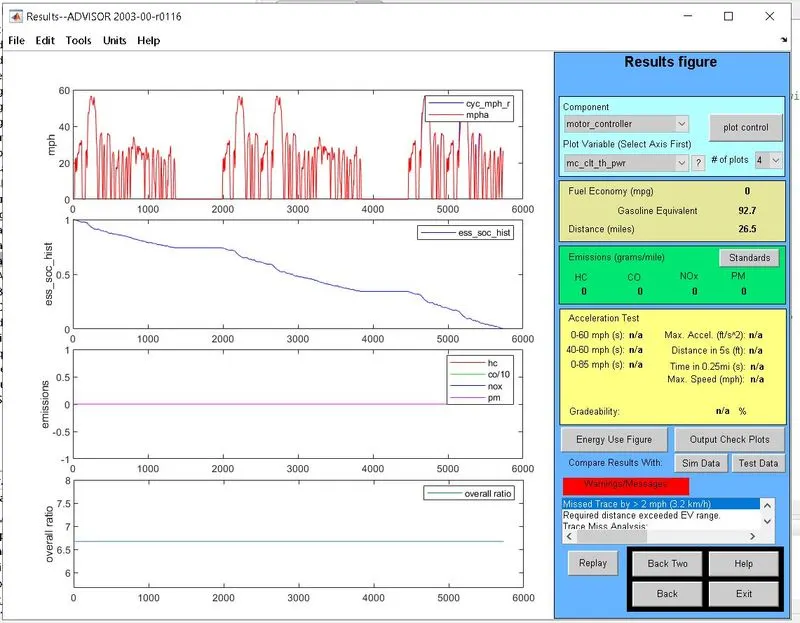
Step 1: Changing the battery capacity by increasing the battery packs from 25 to 26 and continue the simulation with 3 drive cycles and check the vehicle travels upto 45kms or not.
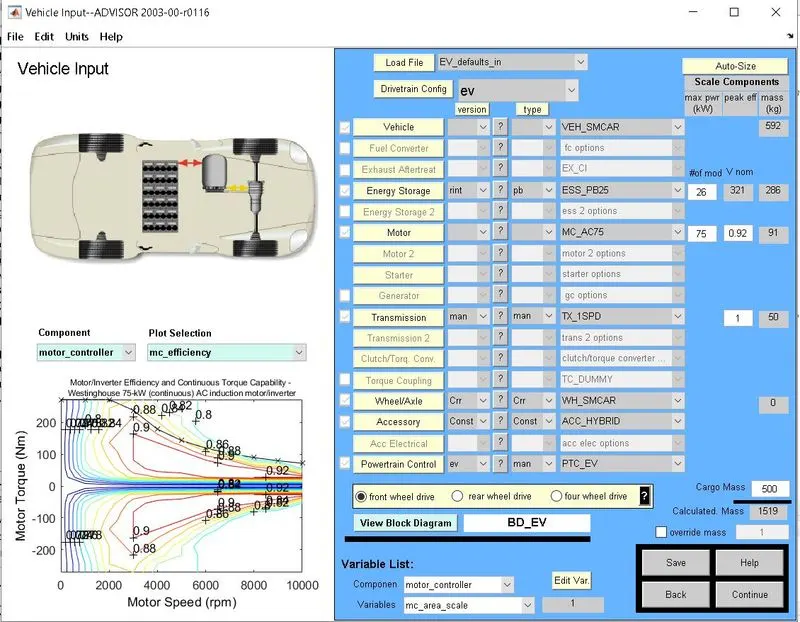
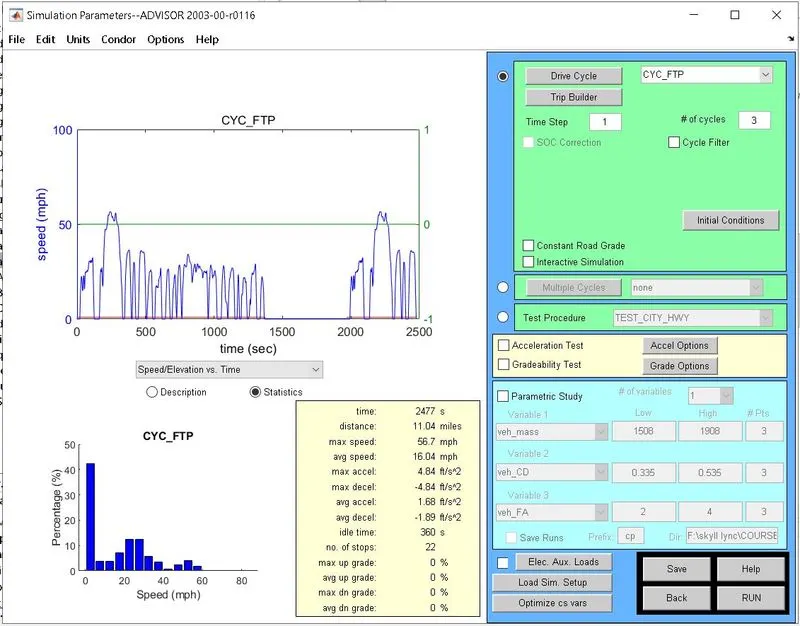
Results: with the battery capacity increased to 26 the vehicle travelled upto 26.5 miles or 42.6 kms.
Step 2: Changing the battery capacity by increasing the battery packs from 26 to 27 and continue the simulation with 3 drive cycles and check the vehicle travels upto 45kms or not.
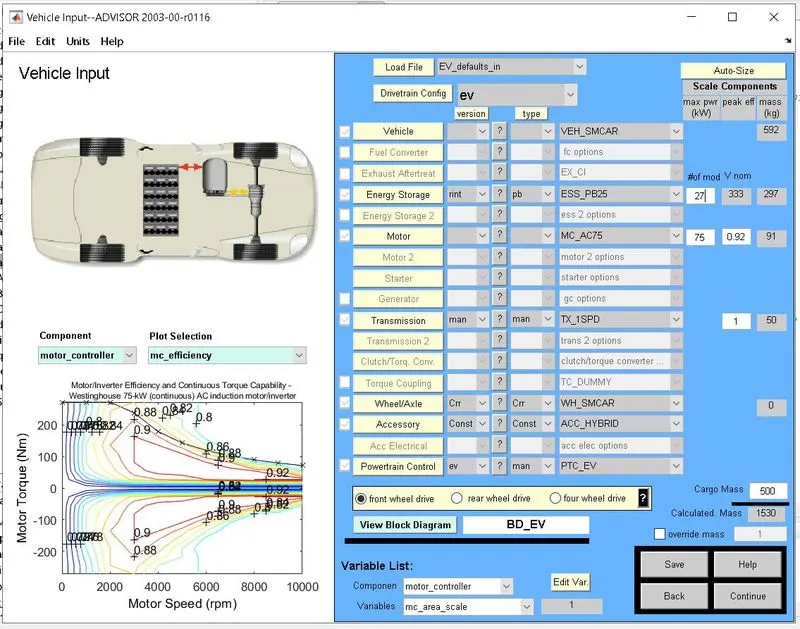
Results: with the battery capacity increased to 27 the vehicle travelled upto 27.8 miles or 44.7 kms.
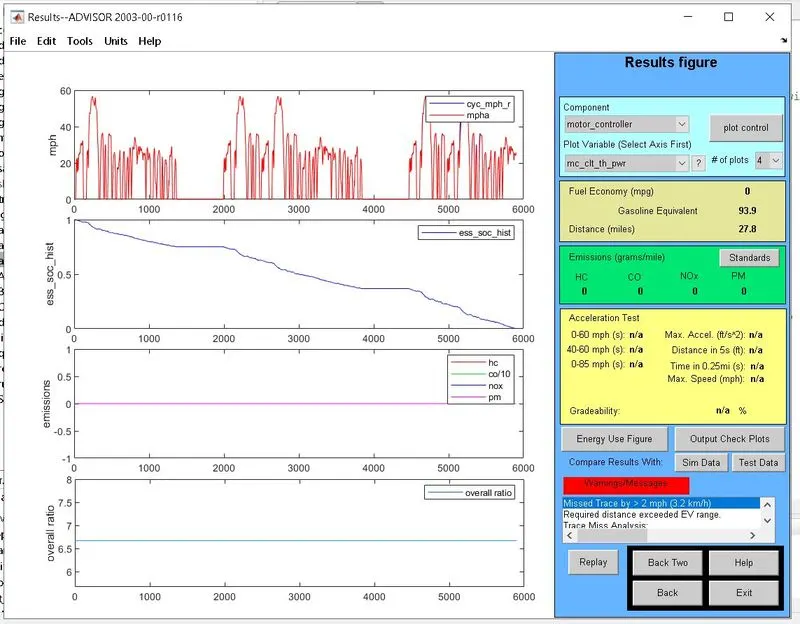
Step 3: Changing the battery capacity by increasing the battery packs from 27 to 28 and continue the simulation with 3 drive cycles and check the vehicle travels upto 45kms or not.
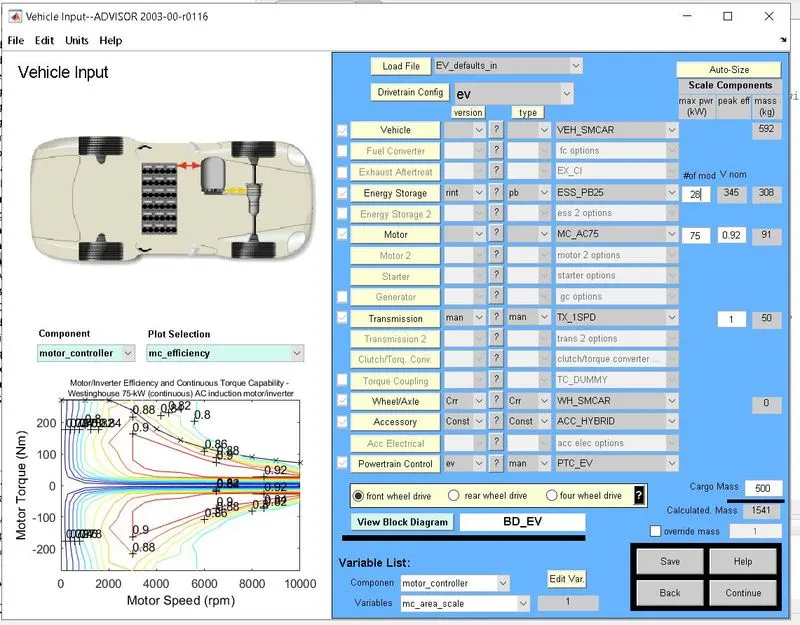
Results: with the battery capacity increased to 28 the vehicle travelled upto 28.8 miles or 46.3 kms.
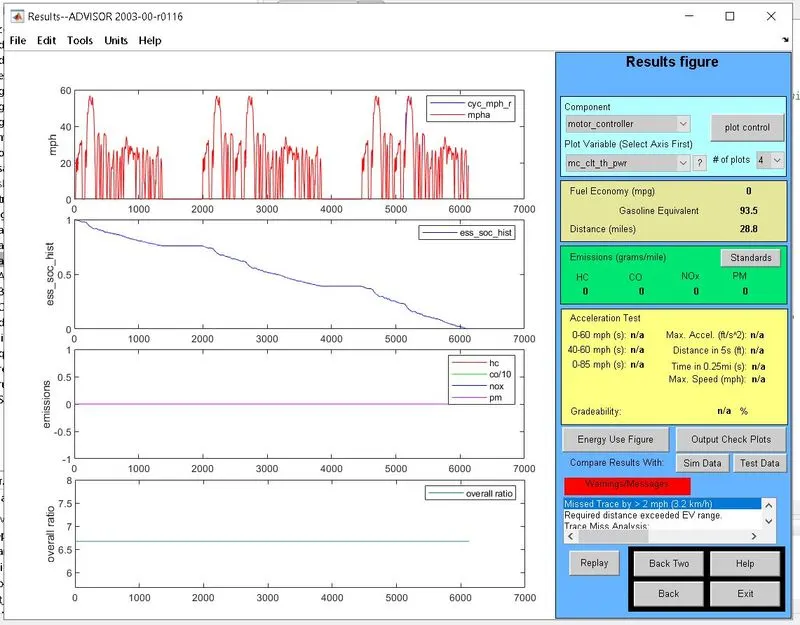
Conclusion: From the above results the vehicle covered a distance of 28.8 miles i.e 46.3kms for 3 drive cycles only because the battery capacity is increased. So to increase the vehicle travelling distance obviously the battery capacity need to be increaased.
Aim 3: To Perform gradeability test with PRIUS_Jpn_defaults_in file.
Gradeability is the truck's or any other vehicle's ability to climb slopes. Example: A truck with a gradeability of 5% at 60 mph can maintain 60 mph on a grade with a rise of 5%. Gradeability is used for off-road vehicle e.g. construction vehicles etc where it matters actually.
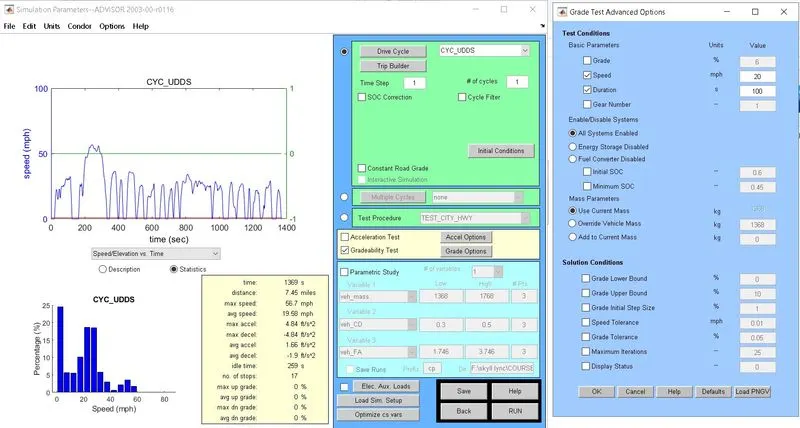
Step 1: Taking the vehicle model as PRIUS_Jpn_defaults_in file with all parametrers kept default and continue to next step to perform gradeability test.
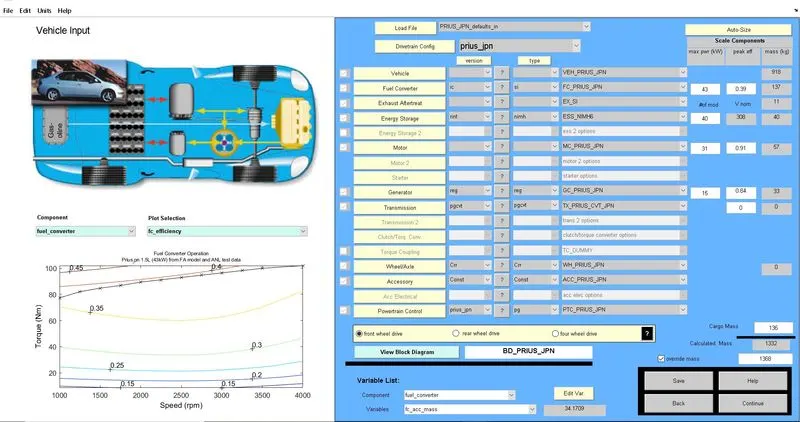
Here we select Gradeability test where the speed = 20 mph, duration = 100 sec and Enabling all systems of vehicle to continue to next step for simulation to know the gradeability of vehicle.
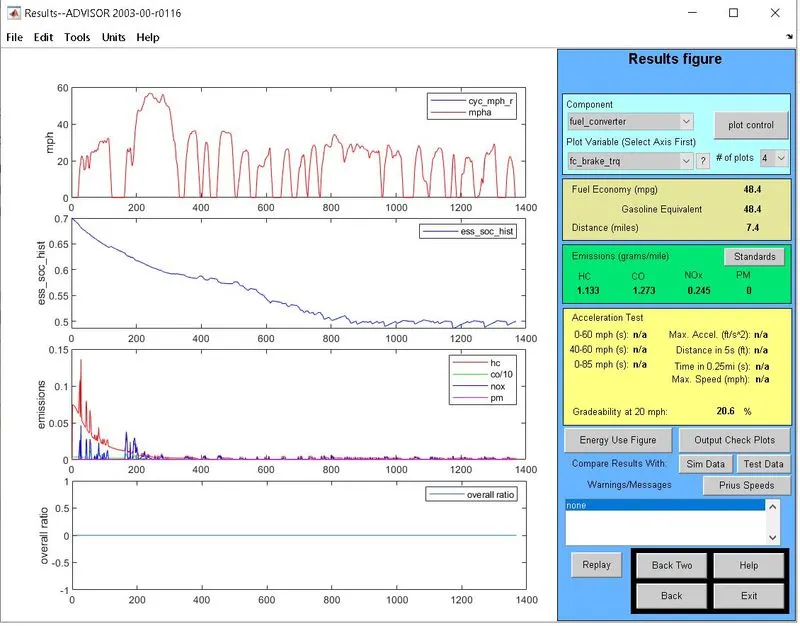
Results: From the result obtained the Gradeability is 20.6%
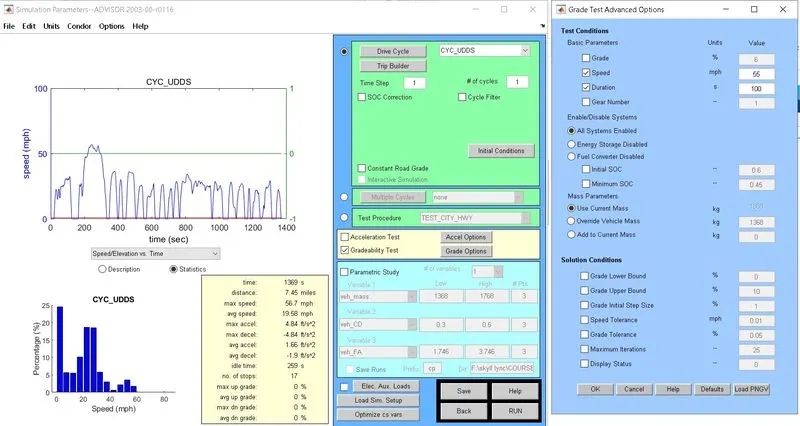
Step 2: Taking the Gradeability test again where the speed = 55 mph, duration = 100 sec and Enabling all systems of vehicle to continue to next step for simulation to know the gradeability of vehicle.
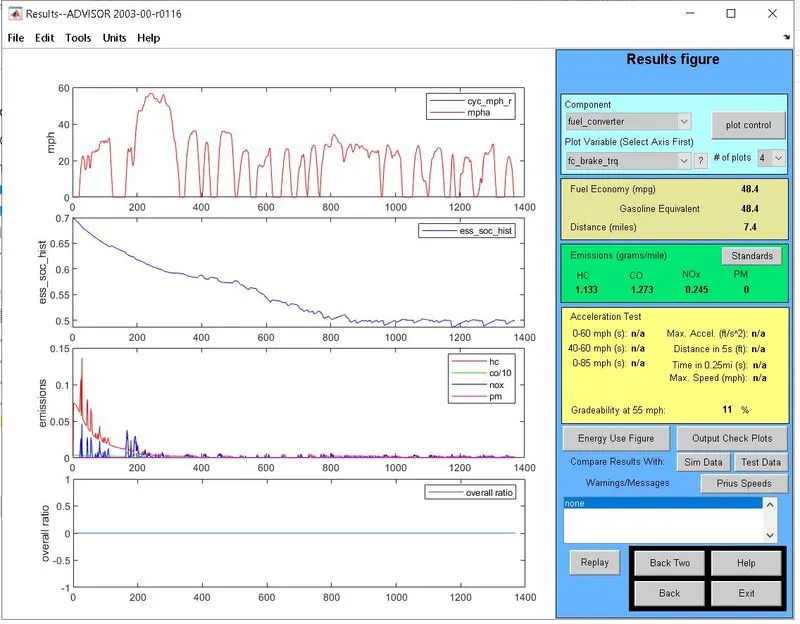
Results: From the result obtained the Gradeability is 11%
Step 3: Taking the Gradeability test again where the speed = 55 mph, duration = 10 sec and Enabling all systems of vehicle to continue to next step for simulation to know the gradeability of vehicle.
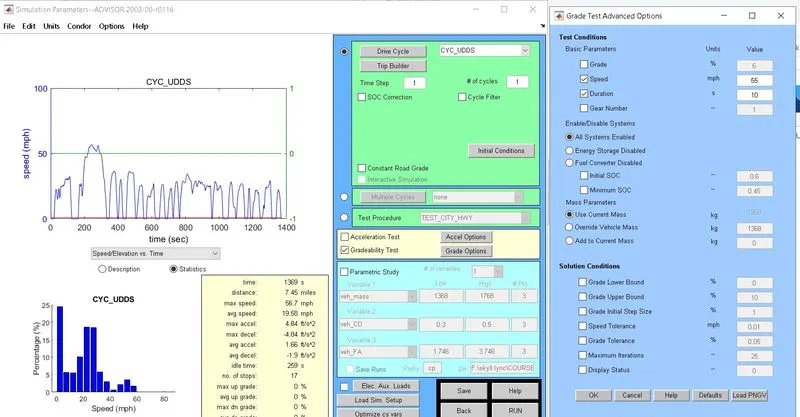
Results: From the result obtained the Gradeability is 8.9%
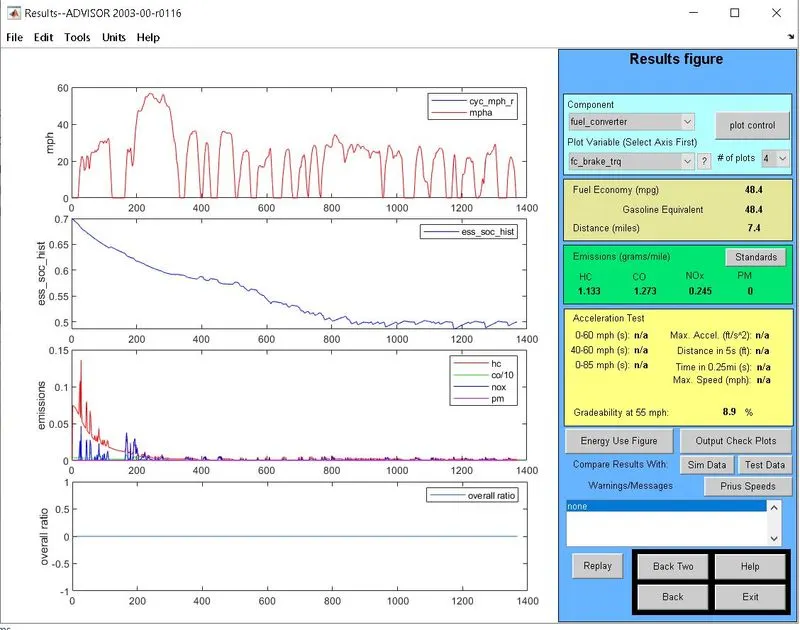
Conclusion: Speeds(mph) Time(sec) Gradeability(%)
20 100 20.6
55 100 11
55 10 8.9
From the above variables we conclude that gradeability of vehicle depends on both speed and time with increase in speed the gradeability decreases and with decrease in speed the gradeability increases keeping time constant. But with decrease in time the gradeability decreases slightly not as much as when the speed increases. so the vehicle speed will have greater impact on the gradeability and also other parameters and variables which we have not discussed here.